Stanbic Bank
Stanbic Bank
21.2 C
Kampala
Stanbic Bank
Stanbic Bank
Home Blog Page 1227

Kenya Airways selects GE Aviation for digital flight operations

Kenya Airways has selected GE Aviation for the Flight Operations suite of digital products across the airline’s fleet of Boeing 737, 787 and Embraer E190 airplanes. Kenya Airway’s fleet adds to the 15,468 unique aircraft assets that are connected to GE Aviation’s digital solutions. Implementation is currently underway with completion this year.

“Kenya Airways was looking for a way to monitor fleet performance, implement and track fuel saving initiatives across their network and empower their pilots to help drive efficiency,” said John Mansfield, chief digital officer for GE Aviation at the signing ceremony held on June 18th at the Paris Air Show. “The Flight Operations suite provides these insights and is scalable to provide additional functionality.”

The Flight Operations suite integrates GE’s Event Measurement System (EMS), flight analytics, FlightPulse and fuel efficiency services. GE’s EMS and FOQA systems are being used on 8,932 aircraft including flight analytics service integrating data sources like flight information, weather, navigation, flight plans, and other operational data to provide valuable insights for airline customers around fuel use and operations. Kenya Airway’s 425 pilots add to the 57,702-airline crew relying on GE Aviation’s Network Crew Optimization.

Paul Njoroge, director of operations, Kenya Airways said, “The partnership with GE Aviation will empower Kenya Airways to optimise its fuel costs and excel in flight operations. GE brings a wealth of knowledge to help the airline fast track efficiencies enabling improvements in operations and customer experience.”

Clare Ward, chief information officer, Kenya Airways, noted that the airline chose GE Aviation because of its leadership and innovation in flight analytics and deep aviation experience. “By partnering with GE, Kenya Airways is accelerating the move to leading edge technologies in analytics and machine learning,” she said.

“Our aim is to help Kenya Airways reduce their multi-million-dollar fuel bill and increase their overall efficiency, said Mansfield. “The fidelity in our flight analytics, together with the team’s experience from analyzing more than 175 million flights, will enable Kenya Airways to better manage operations with data-driven solutions. We are bringing together analytics with physical assets to help significantly reduce cost.”

Stories Continues after ad

Bobi Wine named 2019 International Humanitarian Award Winner

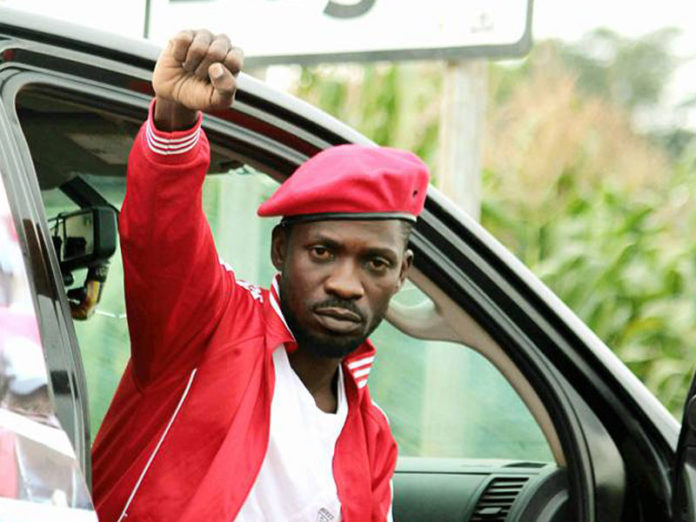
Bobi Wine with his award

Kyadondo East Member of Parliament, Robert Kyagulanyi aka Bobi Wine, has been named the 2019 International Humanitarian award winner, received in recognition for advocacy for civil and human rights.

Bobi Wine was a warded during the five-day Rainbow PUSH Coalition convention, a gathering of civil rights icons, business leaders, high tech executives, foreign dignitaries, gospel giants, hip hop artists, elected officials, sports legends, scholars and students.

Rainbow PUSH Coalition the multi-racial, multi-issue, progressive, international organization that was formed in December 1996 by the Reverend Jesse L. Jackson.

“I am profoundly humbled to get this International Humanitarian Award, dedicate it to the men, women and children of Uganda who have paid the ultimate price in our struggles for democracy. Those are the true heroes of our nation. Thank you Rev Jesse Jackson Sr and the entire leadership of Rainbow PUSH Coalition for this recognition,” he said in Chicago, USA.

Kyagulanyi said the recognition only confirms to them that their cries for freedom are reaching the ears of the world and encourages them to work even more until our country is truly free from oppression, suppression and exploitation.

During the ­convection, Bobi wine also informed the world that, “another activist an academic giant, a woman, Dr. Stella Nyanzi, continues to rot in jail simply because she wrote a poem that criticizes President Yoweri Museveni who has been president of Uganda for 33 years.”

With headquarters in Chicago and offices in Washington, D.C., Atlanta, Detroit, Houston, Los Angeles, New York and Oakland, the organization works to make the American Dream a reality for all citizens while advocating for peace and justice around the world.

It is dedicated to improving the lives of all people by serving as a voice for the voiceless. Its mission is to protect, defend and gain civil rights by leveling the economic and educational playing fields while promoting peace and justice around the world.

Stories Continues after ad

AU Partners with the EAC to promote Kiswahili as a language of wider communication in Africa

EAC countries

The African Union (AU) has partnered with the East African Community (EAC) to set the pace for the recognition and promotion of Kiswahili as a Language of wider communication in the whole of Africa.

Under The Dar-es-Salaam Framework of Action adopted by the African Academy of Languages (ACALAN), AU’s specialized institution mandated to develop and promote African Languages, and the East African Kiswahili Commission (Kamisheni ya Kiswahili Afrika Mashariki (KAKAMA), an EAC institution charged with harmonization, coordination and promotion of the development and use of Kiswahili for regional integration and sustainable development, the two organizations agreed and committed to work closely and with other organizations on the continent and beyond to achieve the set goal.

Addressing a Consultative Meeting on the Promotion of Kiswahili as a language of wider communication in Africa held on 26th-28th June, 2019 in Dar-es-Salaam, the Minister for Information, Culture, Arts and Sports of the United Republic of Tanzania, Dr. Harrisson G. Mwakyembe, challenged participants drawn from across the continent to galvanise the spirit and energy of Pan-Africanism and the need for Africa and persons of African descent to be united.

He said Kiswahili provides a platform for the promotion of a feeling of solidarity and pride among the people of the African world by inculcating pride in African values and consciousness. Mwakyembe said there was a legitimate need and interest in the promotion of Kiswahili as a Pan-African language of integration and development as a response to globalization and regionalization movements now in vogue across the world. He said the cases of the United Republic of Tanzania and the EAC are excellent examples of the potential of Kiswahili to achieve integration and development.

In Remarks delivered by the Executive Secretary of the East African Kiswahili Commission Prof. Kenneth Simala, the Secretary General of the East African Community, Amb. Liberat Mfumukeko said the establishment and operationalization of KAKAMA demonstrates the realization and commitment of political leadership and policy organs of the EAC of the importance of Kiswahili for regional integration and sustainable development.

The SG said that Kiswahili is imperative to creating awareness and understanding of the challenges and opportunities that come with integration and development. The language is a strategic resource for communication and active citizen participation in development. He welcomed the decision by the AU to promote Kiswahili as a Pan-African lingua franca and promised the EAC’s support in using Kiswahili as a catalyst to achieving AU’s Agenda 2063.

The Head of UNESCO Office and Representative to the United Republic of Tanzania, Tirso Dos Santos, hailed the AU and EAC for the importance they attach to Kiswahili as a medium and tool of communication relevant and necessary for educational, scientific and cultural development of Africa. He noted that UNESCO is alive to the realities of African culture in general, and language in particular. He hailed the emerging collaborative partnership between ACALAN and KAKAMA as specialized language agencies and pledged UNESCO support to these initiatives for the sake of economic and social development of the continent.

On his part, Prof. Baye Mekonen, Chairperson of ACALAN-AU Assembly of Academicians reiterated the importance of Kiswahili as a Pan-African language of identity and tool of communication and development. He acknowledged that Africa is highly multi-lingual hence the need to focus on recognizing and promoting Kiswahili as a common language, without neglecting other equally important African languages of identity.

The ACALAN Executive Secretary, Dr Lang Fafa Dampha and his EAKC counterpart, Prof. Kenneth Simala, reaffirmed the visions of both the AU and EAC to harmonize and nurture the growth and development of Kiswahili at continental and regional levels. They collectively committed to maintain their collaborative momentum and closely work together to develop and execute a clear strategy of implementation of The Dar-es-Salaam Framework of Action and ensure that declarations about the development and use of Kiswahili at continental and regional levels are followed through.

Stories Continues after ad

Annual bankers’ conference to focus on supporting agricultural sector

Lady in her garden

Uganda Bankers Association (UBA), an umbrella of over 20 commercial banks, is to hold the 3rd Annual Bankers Conference (ABC) 2019 under the theme:‘De-risking Financing and Investment in agriculture to promote decent youth employment and inclusive growth.

The one-day conference is slated for July16, 2019 at Kampala Serena Conference and will comprise a keynote address followed by a high-level panel discussion.

While addressing a press conference, Wilbrod Owor the UBA Executive Director said, “This year’s conference aims to facilitate a focused discussion among key players and stakeholders regarding financing of agriculture while leveraging on several perspectives for mitigating risk including market incentives, technology, insurance, research, specific policy frameworks, a wider support and collaborative framework to ensure sustainable growth & investment in the agriculture sector of Uganda.”

Patrick Mweheire, the UBA Chairman said, “We have chosen agriculture for a number of reasons, one being the strategic importance of the sector to Uganda’s social and economic progress.

Agriculture is the main source of livelihood to the majority of Ugandans, employing over 70 per cent of the workforce, and is also a major source of export revenue and raw materials for the agro-industry.”

Recent studies show that investment in agriculture continues to increase, but not as high as other sectors of the economy. Private Sector Credit to agriculture hovers between 12 percent- 13 percent compared to other sectors like trade, and real estate well at over 19 percent and 20 percent respectively.

“We would like as an industry to increase lending towards the Agricultural sector through interventions that address risks inherent in agricultural financing and the undertaking of agriculture as a business with all the discipline required therein,” Mweheire said.

Patricia Amito, Head Communications and Corporate Affairs, said the conference will focus on making financing agriculture attractive to financial institutions, leveraging on technology as an enabler to provide a range of support information required to unlock the potential in Uganda’s Agriculture sector, and using growth & transformation in the agricultural sector and its related value chains to promote financial inclusion and decent youth employment.

She said: “We expect over 500 participants including banking and non-bank financial sector executives, players from the insurance sector, international development partners and multilateral agencies, investment advisors, regulators, research associates and academia, policy makers, technocrats from governments, farmer groups and representatives from the various divisions of the agricultural sector (Crop, Animal, Fisheries, Forestry, Poultry) and the supporting service providers and players therein.

Prime Minister Dr. Ruhakana Rugunda is expected to preside over the opening ceremonies. The Bank of Uganda the Governor, Prof. Emmanuel Tumusiime-Mutebile the Minister for Agriculture Matia Kasaija are expected with a keynote address to be delivered by Marianne Schoemaker Managing Director, Rabo Partnerships.

MasterCard, the official sponsor of the event expressed its commitment to supporting financial sector growth through capacity building, development of new products/services and initiatives to drive financial inclusion.

Stories Continues after ad

Dr. Stella Nyanzi: Exiled in her own country

Betty Aol Ocan

By Betty Aol Ocan

On behalf of all the forces of Change in Uganda, I congratulate Hon. Robert Kyagulanyi upon the recognition at the International Human Rights Ceremony in Chicago. The award is a representation of every individual in this Nation who has stood up to the violent claws of the dictatorship of President Yoweri Kaguta Museveni.

The award is a representation of the pivotal role that the youth have got to play in the Liberation of this Nation. The Opposition leadership is humbled by the International Community’s recognition for the demand for increased civic space and fair Democracy in Uganda.

We are at a time when the incarceration of Dr. Stella Nyanzi brings to light the true fangs of a dictatorship that thrives in the suffocation of free speech, the Rights to Expression, and Women’s Rights. The Museveni regime is caught between the rock and the deep blue sea. Being militaristic in administration and Operations, it faces a double-edged sword from the mostly educated women elite whose muzzle is the pen and the bullet is ink.

Times have evolved, the youthful Population is more conscious of its needs and more resilient women-led, non-violent activism has emerged across the world, the most recent inspired by Alaa Salah of Sudan. Dr. Stella Nyanzi is a proof of the State’s hypocrisy on Women’s Health and Rights, and it undermines the doctrine of affirmative action in as far as creating a wider space for women participation in mainstream politics is concerned.

Dr. Stella is a prisoner of ink, she tears through the core fabric of the State’s brute, she antagonises the status quo and without a single gunshot, threatens a bloodless regime change, something the Establishment is unwelcome to dictatorships across the world are more afraid of an educated and empowered mass than they would lose sleep over a gun-revolution.

The regime never knows how to go about it, they are broken in the most humiliating and amorphous manner they’d never anticipate, and the most distressing of them all, is one which places Women and youth at the Centre of it all.

Rather than suffocate their voices with intimidation and oppression, this category of the Population has proven a thorn into the flesh of the regime, and Dr. Stella Nyanzi represents Hundreds of thousands of Women activities across the world who will shoot at oppression with the muzzle of ink, at the expense of their uteri. A very traumatising and brutal experience from a regime that pretends to promote Women and Children Health rights.

It’s only a matter of time that the entire nakedness of the regime is presented for all to witness. Above all, Humanity must prevail, and the State must account for dead foetus resulting from the Miscarriage of Dr. Stella Nyanzi while in incarceration.

The writer is Woman MP, Gulu District and Leader of Opposition

Stories Continues after ad

Afcon 2019 Knockout Stage: Round of 16 fixtures

AFCON

Sixteen of the twenty-four teams that made it to Egypt continue with the dream of becoming champions after completion of the group stages.

The top two finishers of the six groups and the four best third place teams made up the line-up for the last 16.

Host Egypt topped group A with nine points while Uganda came second with four points. DR Congo squeezed through to the knockout phase as one of the best third teams.

Madagascar shocked tournament favorites Nigeria to finish top of Group B with seven points. The Super Eagles finished in second with six points. Guinea qualified as a third best team from the same group.

Algerians topped group C with the maximum nine points while Senegal came second with six points.

Morocco finished with nine points at top of Group D. The Atlas Lions were joined by Ivory Coast who came second and South Africa who squeezed through as one of the third-best teams.

Mali won Group E after beating Angola 1-0, and Tunisia claimed second after a goalless draw against Mauritania.

Ghana won group F after defeating Guinea-Bissau 2-0, with holders Cameroon taking second with a goalless draw against Benin. Benin qualified as one of the best third teams.

Angola, Burundi, Guinea-Bissau, Kenya, Mauritania, Namibia, Tanzania and Zimbabwe are the teams that crashed out.

Action will resume on Friday, 5 July when the first two games of the round of 16 are played. Two games will be played on the 6th, 7th and 8th to determine the eight quarter finalists.

Friday, July 5

Morocco vs. Benin, 7pm

Uganda vs. Senegal, 10pm

Saturday, July 6

Nigeria vs. Cameroon, 7pm

Egypt vs. South Africa, 10pm

Sunday, July 7

Madagascar vs. DR Congo, 7pm

Algeria vs. Guinea, 10pm

Monday, July 8

Mali vs. Ivory Coast, 7pm

Ghana vs. Tunisia, 10pm

Stories Continues after ad

Let’s reinforce power sector regulations to attract investments – African energy stakeholders

African roundtable of energy stakeholders.

Africa’s power sector policies and regulations must be sharpened to enhance efficiency to attract commensurate investments, a technical roundtable for energy stakeholders in Abidjan heard last week.

Callixte Kambanda, Manager for Energy, Policy, Regulation and Statistics at the African Development Bank said while many countries have established a Regulatory Authority with the necessary legislation, there are still critical gaps that need to be addressed, particularly in terms of independence of these Authorities.

“Effective regulation is a key enabler of an improved business environment,” Kambanda said in opening remarks at a donors’ roundtable on Electricity Regulatory Index (ERI) for Africa. The roundtable was organized on the sidelines of the 3rd Africa Energy Market Place, an energy sector platform for governments, private sector, and development partners to review Africa’s power sector priorities.

In 2018, the African Development Bank launched the ERI for Africa, a comparative, country-by-country assessment of regulatory development on the power sector. The Index diagnosed the regulatory environment, identified gaps and recommended appropriate interventions to address them.

Kambanda noted that power sector regulators generally face challenges in finding the balance between protecting the interests of consumers and those of investors.

In collaboration with development partners, the Bank seeks to implement the recommendations of the 2018 Index through targeted support by providing technical assistance to some 15 countries covered in the assessment. They are Cameroon, Cote d’Ivoire, Gambia, Ghana, Kenya, Lesotho, Malawi, Namibia, Nigeria, Senegal, South Africa, Tanzania, Togo, Uganda, and Zimbabwe.

John Irons, Partnerships Director at Power Africa, noted that the ERI would engender best practices among regulators in Africa’s electricity sector through the sharing of experiences. He pledged Power Africa’s commitment to supporting the Index to become more sustainable.

KfW, the German Development Bank, is collaborating with African Development Bank on the implementation of the ERI recommendations in Cote d’Ivoire on behalf of the German Federal Ministry for Economic Cooperation and Development (BMZ).

As part of the German “reform partnership” for mobilizing private investments and sustainable economic development in the context of the G20 initiative “Compact with Africa”, Germany is providing comprehensive support to Ivorian institutions in the electricity sector.

To ensure optimal impact, both banks are coordinating their activities. Esther Drumm, project manager at KfW, stated that the ERI “provides a great starting point to see where countries stand in terms of regulation. Since it is a continuous effort, it can also be used to develop ongoing interventions and measure their impact.”

Collins Magalis, Chief Executive, Malawi Energy Regulatory Authority, reiterated the importance of the Index for the continent’s electricity sector and suggested that it should be expanded.

Initiated by the African Development Bank, the AEMP is a collaborative platform of key government representatives, development partners, and private sector investors, set up to address barriers to mobilizing and scaling-up private investment into the energy sector.

It is designed to promote high-level dialogue to fast-track reforms, transactions and initiatives through peer-to-peer learning and knowledge exchange, networking and partner engagement.

Stories Continues after ad

Africa Cup of Nations group stage tops and flops

Madagascar

Hosts Egypt swept into the last 16 of an expanded Africa Cup of Nations and were joined by the rest of the continent’s elite, while newcomers Madagascar delivered the shock of the tournament by advancing as group winners.

AFP Sport takes a look at the standout performers and those who failed to hit the heights during the group phase:

Tops

Trezeguet and Ahmed Elmohamady (Egypt)

Mohamed Salah arrived at the tournament shouldering the weight of expectations for a country of almost 100 million, but while influential in his side’s safe passage to the knockout phase he was ably supported by Mahmoud ‘Trezeguet’ Hassan and Captain Ahmed Elmohamady. Kasimpasa midfielder Trezeguet bagged the winner in the opening 1-0 defeat of Zimbabwe and shone again as the hosts rode their luck in a 2-0 win over DR Congo, setting up Salah to open his account with a gliding run and incisive pass. Elmohamady, who helped Aston Villa earn promotion back to the Premier League, popped up with a pair of goals of his own — the first an alert finish against DR Congo and the second a sweet strike to seal a 2-0 victory against Uganda.

Madagascar

Ranked so low that they had to beat Sao Tome e Principe just to reach the qualifying competition for this tournament, Madagascar assured themselves of a spot in the knockout rounds in emphatic style with a shock 2-0 win over three-time champions Nigeria. Midfielder Ibrahim Amada insisted “there is no secret” to their success and said the team was simply “trying to make the most of each second” in Egypt. After a commendable 2-2 draw with Guinea, Nicolas Dupuis’ side earned their first win by edging fellow debutants Burundi by a single goal. That set the stage for a remarkable upset of the Super Eagles, with Charles Andriamatsinoro netting his second goal in three games after Lalaina Nomenjanahary opened the scoring in front of Malagasy CAF president Ahmad Ahmad.

North African sides

Egypt, Algeria and Morocco marched into the next round with a perfect three wins from three, the north African conditions clearly suiting a trio of teams capable of going far. Riyad Mahrez’s Algeria got the better of Sadio Mane and title favourites Senegal, while Herve Renard, who is looking to lift the trophy with a third different country, guided Morocco to a series of 1-0 wins — most notably silencing an Ivory Coast attack led by prized asset Nicolas Pepe. However, Elmohamady warned Egypt not to get carried away. “Nine points out of three games is something Egypt is used to – the difficult part is what comes next.”

Flops

Knowledge Musona (Zimbabwe)

Zimbabwe crashed out in disheartening fashion after a 4-0 rout by the Democratic Republic of Congo, but it was the preceding 1-1 draw with Uganda that will leave the Warriors feeling the most regret. Zimbabwe fell behind to an early Uganda goal before rallying strongly, but a number of glaring misses — the team’s leading scorer in qualifying Musona the chief culprit — saw them fail to collect maximum points which could well have prolonged their adventure.

Amr Warda (Egypt)

Egypt brushed their group opponents aside but the host nation’s title push has been overshadowed by sexual harassment allegations surrounding midfielder Amr Warda. The Greece-based player was initially booted from the squad after multiple women posted screenshots and testimonies of Warda’s alleged lewd comments, as well as explicit videos attributed to the player. But after appeals from team-mates Warda was reinstated less than 48 hours later amid a heated debate about women’s rights. Reactions have ranged from the pious to the political, with many celebrities coming out to defend Warda and others pointing out his lurid history of sexual misconduct. One of the most popular Twitter hashtags in the wake of Salah and others defending the midfielder was “National team of sexual harassers”.

Tunisia

Tunisia were one of five African representatives at last year’s World Cup, but they have performed well below expectations as the continent’s second-ranked side. At 25th in the world they trail only Senegal but the Carthage Eagles edged through to the last 16 on the back of three draws in a favourable group featuring Mali, Angola and first-timers Mauritania. “We are not satisfied with the performance,” said midfielder Youssef Msakni. Former France star Alain Giresse’s chances of winning the tournament at the fourth attempt as a coach look remote.

Stories Continues after ad

Survey finds local investors paying more taxes than multinationals

Local firms need protection from government.

A report titled, “Attracting Investments Using Tax Incentives in Uganda: The Effective Tax Rates” authored by the Economic Policy Research Centre (EPRC) has established that domestic investors in Uganda pay more taxes than multinationals.

The report that examines effective tax rates to assess Uganda’s tax policy and inform policy-makers about the likely effect of existing tax incentives, estimates and compares the effective tax burden imposed by tax incentives on domestic and foreign corporations.

“In this regard, we calculate both marginal and average effective tax rates using the well-known Devereux Griffith approach and its extension – an exercise that has not been done so far for the case of Uganda,” says Corti Paul Lakuma, the lead researcher.

“The study finds a high level of discretion in Uganda’s capital income tax system. In this regard, there are differences in effective average tax rates driven by a mix of tax incentives, tax discrimination and preferential treatment.”

Beside capital allowances, the difference in the effective tax burden between companies with and without tax incentives amount to 28 per cent. The study also finds that domestic investors pay more taxes than multinationals.

The effective tax rates for equity financing according to Lakuma are significantly lower than the statutory corporate tax rate. However, debt-financed investments trigger relatively lower effective tax rates, due to the interest deductibility.

In both cases, he adds high inflation and market interest rates have discouraged investment environment in Uganda highlighting the importance of macroeconomic fundamentals in terms of effective taxation in Uganda.

Downstream oil and gas companies, that cannot claim preferential corporate tax rates or tax holidays, pay an average of 8 per cent effective income taxes.

Meanwhile, companies operating in free zones, with a preferential tax treatment have a negative effective tax burden (-20 per cent). Most benefits from tax holidays are generated in the first 4 years as economic depreciation declines, and effective average tax rates start increasing in the 5th year as the holiday expires.

This supports one important criticism that footloose industry in Uganda benefits most from such kind of tax exemptions. The study also reveals discretion in granting preferential corporate income tax rates in Uganda. As a result, some companies have been granted special capital allowances for specific assets and tax holidays.

These policy actions present several challenges key among them a complexity in tax administration, obscurity in the real effects of the tax burden, and sizable tax revenue loss.

Furthermore, tax incentives like tax holidays produce tax avoidance strategies and substantially lower compliance across taxpayers.

This calls for reforms of the tax system with a view to disposing or reducing tax holidays and a large number of preferential corporate tax rates.

The reforms can add transparency to the tax system as a whole, save resources within the administration, and most likely will improve tax revenue. Moreover, additional revenue will be conducive to improving the sustainability of public finances, thereby contributing to the improvement of the macroeconomic environment.

“This, in turn, has the potential to reduce effective tax rates significantly, as our findings highlight the importance of macroeconomic variables such as the inflation rate in terms of effective taxation in Uganda,” says Lakuma.

Stories Continues after ad

She Cranes move up to 6th in World Netball rankings

She Cranes

Ahead of the Vitality Netball World Cup 2019, the International Netball Federation has released its annual INF World Rankings update. The latest rankings are inclusive of matches up to 30th June 2019.

The Uganda National Netball Team, known as The She Cranes have moved one place up in the released INF Rankings.

The She Cranes are now 6th in the world having accumulated a total of 2241 points with a rating of 125.

They have also moved to 2nd in Africa, behind South Africa (5th).

Malawi at 9th overall, Zimbabwe at 13th and Zambia at 15th, complete Africa’s top five best countries.

Australia, Jamaica, England, New Zealand and South Africa are the best five countries.

Malta has been dropped from the rankings as they have played no matches since July 2015, and Switzerland and Tonga have been relegated from the rankings as they have played fewer than eight matches since July 2015. 42 teams now having an INF World Ranking.

Uganda She Cranes are among the sixteen countries that will take part and are in Group D alongside the host England (3rd), Samoa (14th) and Scotland (7th).

The 2019 Netball World Cup will be the fifteenth staging of the premier competition in international netball, contested every four years. Australia are the defending champions.

Stories Continues after ad