Stanbic Bank
Stanbic Bank
17.1 C
Kampala
Stanbic Bank
Stanbic Bank
Home Blog Page 1226

Sport is not reserve for male children alone-VP Ssekandi

VP Ssekandi in middle. In gomesi is Minister Sseninde and her daughter Jean next to VP


The Vice President Edward Kiwanuka SSekandi has appealed to parents to let their girl-children to pursue sport disciplines like their male counterparts and stop the prejudice and discrimination against them.

During a meeting with the FIFA Women’s Football Chief, Sarai Bareman, who was accompanying the CEO Sseninde Foundation, Jean Sseninde at the new Government Building in Kampala, Ssekandi said that many females who have greatly developed their talents in the fields of Football and Boxing can match the stature of men and could even beat them if it were allowed to hold mixed gender sporting competitions.

He said that female gender sports disciplines are steady taking firm root in the country and said that government is committed to supporting women teams in various national and international tournaments like FIFA women’s world cup, IAAF Athletic competitions, International Federation Netball world cup, among others, upon their qualification.

Nigeria’s Minister for Sports and Youth Development, Solomon Dalung, who was part of the delegation said that women are pivotal in development and that sports is the new lucrative sector that Africa’s women must be allowed to pursue to full professionalism and which will ably improve the welfare of their communities back home.

State Minister for Primary Education, Rose Mary Nansubuga Sseninde, flanked by her Husband Zephaniah Kizza Sseninde regretted her earlier position of stopping her daughter Jean Sseninde from chasing her footballing dream on the assumption that it was unwomanly especially in the African setting, but thanked her husband for staying firm and encouraging their daughter, Jean Sseninde, who is now a professional Footballer in the UK and who is also trotting the globe to encourage other young women into professional women football ranks.

FIFA Women’s Football Chief, Sarai Bareman, said that FIFA attaches great importance to the development of Women’s football and added that many countries are now benefiting from the wages of their sports women at the level of national teams and at clubs in Europe and Americas.

Sseninde Foundation has organized a female youth women’s football tournament and talent search that will be taking place at Kayeka Sports Ground in Mbarara town commencing this Saturday.


Stories Continues after ad

All is set for Sudhir versus BoU disputed Shs397b case ruling

Chairman of Ruparelia Group, Mr. Sudhir Ruparelia.


The Head of Commercial Court, Justice David Wangutusi is next week on Monday expected to deliver his ruling on the preliminary objection by city tycoon Sudhir Ruparelia in the case in which the Bank of Uganda took him to court,  with the aim of recovering Shs397 billion.

Bank of Uganda (BoU) /Crane Bank in Receivership sued Sudhir Ruparelia and Meera Investments Limited of allegedly fleecing  the defunct  Crane Bank Limited (CBL) of Shs397 billion that the central bank wants refunded. However, Mr. Sudhir maintains his bank was fraudulently taken by BoU and subsequently given away to Dfcu bank.

Lawyers representing both sides already submitted arguments in favour of for their clients and Justice Wangutusi will base his ruling on the submissions of either side. The general public and the members of banking sphere are waiting for the ruling expected to topical in the local banking sector.

As a recap, on June 30, 2017, BoU filed a suit against Sudhir and his Meera Investments Limited, which the businessman says was in breach of clause 12 of the Confidential Settlement and Release Agreement (CSRA) that was reached by both parties after BoU closed and liquidated CBL for allegedly being undercapitalized.

The clause stipulates that, “Without prejudice to the immediate forging should any legal or administrative proceeding of any kind ensue against SR [Sudhir Ruparelia] as defined in the agreement, the agreement stands voided and BoU shall immediately return to SR the value of the settlement.”

In a counter claim, Sudhir wants BoU to pay him US$8 million (about Shs28.8 billion) for breach contract. Sudhir argues  that on January 25, 2017, BoU sold, at an undisclosed sum, assets of Crane Bank to Dfcu bank Limited yet by mid-January 2017, the central bank had approached and urged him to settle the dispute.

The businessman, who runs Ruparelia Group of companies, says that between January 29 and March 20, the parties held a series of meetings meant to amicably resolve the dispute. He adds that under clause 3.1 of the CSRA, they agreed that he pays US$60 million in part cash and property.

In return for the above payments, Sudhir says they agreed that BoU would assign a number of loans totaling to Shs63.6 billion to him, release all securities of those loans, and remove Crane bank from receivership.

On April 4, 2017, Sudhir says that David Mpanga, one of BoU’s lawyers, wrote on behalf of himself and MMAKS, the other BoU lawyers, setting out the implementation timeline of the CSRA, clearly spelling out what each party was required to do in the said agreement.

In the letter, Mpanga said Sudhir was to provide the property list with an aggregate fair market value of US$42 million and that BoU would avail the assigned deed and loan statements to Sudhir with respect to the agreed loan.

That upon receiving the first installments, Mpanga wrote that BoU would release securities of loans worth about US$8million on the account of Sunbury Investments (U) Ltd and Main Freight ICD Limited. That upon receipt of the balance of US$10 million, Mpanga wrote that BoU would release the securities of the remaining portion of the agreed loans.

“A joint valuation team would determine the value of the properties and would compile a list that would constitute the settlement titles,” reads Mpanga’s letter, which is copied to BoU governor Emmanuel Tumusiime-Mutebile, and Justine Bagyenda, the BoU executive director for supervision.

Sudhir claims he went ahead to implement the agreement by giving up his properties to BoU, which included titles for land found in FRV 130 folio 18 plot M418 Nakawa Industrial Area and LRV 1239 folio 2 plot 7 Parliamentary avenue Kampala.

On April 19, 2017, Sudhir claims, BoU acknowledged receipt of US$1.1 million as payment towards the agreed loans and informed him that his deficit on the first installment of US$8 million was $6.9m, which they demanded he must pay that very day.

On April 20, 2017, Sudhir says he paid BoU US$6.9 million. That meant he paid a total of US$8 million on the same day. Despite paying the said money, he said, BoU never released securities of loans representing a total value of approximately $8m on the account of Sunbury Investments, Main Freight and also the central bank did not return his land titles.

That, Sudhir says, was a total breach of the CSRA. In compliance with the agreement, Sudhir says, he had supplied a list of titles, 10 of which were in the names of Mahmoud Bharwani, who had agreed to surrender his titles to settle his indebtedness to Crane bank.

Earlier on April 7, 2017, he said he arranged a meeting between Mpanga and Bharwani after BoU raised a number of issues in regard to Bharwani’s land titles and that it’s Mpanga who wrote the minutes.

“Mr Mpanga’s minutes indicated that the professional valuer conducts the joint valuation to avoid unilateral conclusion by one party. Any defect in title would be established in the joint valuation process,” Sudhir claims.

He said he put an additional eight titles to the property list to give BoU comfort. Nevertheless, Sudhir says, BoU in further breach of the CSRA implementation agreement and the Bharwani meeting, backtracked on the joint valuation.

As if that was not enough, Sudhir says that BoU threatened criminal prosecution if he did not agree with their demands, which were not in accordance with the CSRA.

On June 28, 2017, he says, Mpanga sent him an email with a notice to sue, demanding that by close of business on June 29, he unequivocally undertakes in writing to pay the balance of $52 million and that the payment must be made in cash by July 15.

He said that on June 30, BoU filed a suit against him in court, which was in breach of clause seven of the CSRA.

BoU sold some of CBL’s assets to its rival Dfcu Bank at Shs200 billion in January 2017. Dfcu bank would in first half of 2017 earn Shs114 billion in net profit, with a great percentage of the profits attributed to the acquisition of Crane Bank Limited.

During COSASE probe of BoU between late October 2018 and Late Feb 2019, its officials would disagree on how much CBL was undercapitalized. But Ben Sekabira, the then Director of banking , told MPs on COSASE that CBL at the time of its closure only needed Shs150 billion to remain operating, much as BoU claimed to have injected Shs478 billion in CBL as liquidity support while it was under receivership. During COSASE probe BoU officials failed to account for Shs478 billion.

In the preliminary suits of the main case, Sudhir succeeded in ensuring that conflicted lawyers of MMKAS Advocates, David Mpanga of AF Mpanga-Bowmans  and Sebalu & Lule Advocates were barred from representing BoU and any party in cases involving Ruparelia Group, having worked for the company.


Stories Continues after ad

Eight steps to stop killing yourself as a micro-manager

Martin Zwilling
 

By Martin Zwilling


For a few, delegating comes easily, maybe too easy. For others who are perfectionists, letting go of even the most trivial task is almost impossible. If you are in this second category, you probably don’t like the references behind your back that you are a “control freak” or a “micro-manager.”

London business school professor John Hunt notes that only 30 percent of managers think they can delegate well, and of those, only one in three is considered a good delegator by his or her subordinates. This means only about one manager in ten really knows how to empower others.

The challenge is delegating the right things, and not delegating the wrong things. If you don’t get it right, you are busy, but working on the wrong things. Almost every entrepreneur needs to improve their skills in this area, so I did some research on the basics. Jan Yager, in her classic book “Work Less, Do More,” has outlined eight key steps to effective delegation which I endorse:

Choose what tasks you are willing to delegate. You should be using your time on the most critical tasks for the business, and the tasks that only you can do. Delegate what you can’t do, and what doesn’t interest you. For example, non-computer types should consider delegating their social media, website, and SEO activities.

Pick the best person to delegate to. Listen and observe. Learn the traits, values, and characteristics of those who will perform well when you delegate to them. That means give the work to people who deliver, not the people who are the least busy. This requires hiring people with the right skills, not the least expensive or friends and family.

Trust those to whom you delegate. It always starts with trust. Along with trust, you also have to give the people to whom you delegate the chance to do a job their way. Of course the work must be done well, but your way or the highway is not the right way.

Give clear assignments and instructions. The key is striking the right balance between explaining so much detail that the listener is insulted, and not explaining enough for someone to grasp what is expected. Think back to when you were learning, when you were a neophyte.

Set a definite task completion date and a follow-up system. Establish a specific deadline at the beginning, with milestones. In this way you can check up on progress before the final deadline, without fuzzy questions like “How are you doing?”

Give public and written credit. This is the simplest step, but one of the hardest for many people to learn. It will inspire loyalty, provide real satisfaction for work done, and become the basis for mentoring and performance reviews.

Delegate responsibility and authority, not just the task. Managers who fail to delegate responsibility in addition to specific tasks eventually find themselves reporting to their subordinates and doing some of the work, rather than vice versa.

Avoid reverse delegation. Some team members try to give a task back to the manager, if they don’t feel comfortable, or are attempting to dodge responsibility. Don’t accept it except in extreme cases. In the long run, every team member needs to learn or leave.

Almost everyone who has grown their startup from a one-person entity to a going concern with many employees has struggled with letting go of any task. On the other hand, executives who come from a large company to a startup tend to delegate too much, resulting in high costs and lack of control.

Finally, every entrepreneur needs to set aside their fear of delegating. If you do it right, as outlined above, every task will likely be done better than you could do it. The only thing you can’t delegate is “the buck stops here” role. That can only be done by the person in charge, and it better always be you.

The writer is a veteran startup mentor, executive, blogger, author, tech professional, professor, and investor. Published on Forbes, Entrepreneur, Inc, Huffington Post, etc.

Stories Continues after ad

The story of Villa Park should be dawn to reality

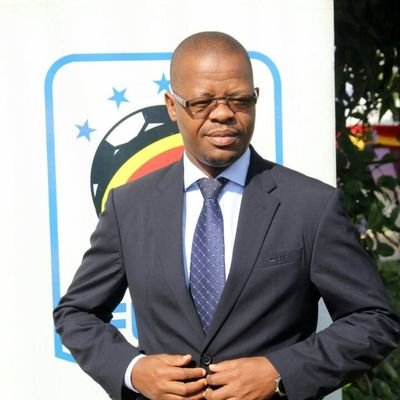
Moses Magogo
 

By Eng. Moses Magogo


I woke up to pictures of Villa Park being graded by tractors for the construction of the Clock-Tower Flyover. This is the place of my first contact with Ugandan football when I was just 11 years old and instantly started my lifetime love with SC Villa. The theatre for Uganda’s greatest footballers that I ever saw is now history and this is the reality. This is simply because we did not plan for posterity. We continued to write history on water for over 40 years. This has inspired me to write this article and kindly appreciate my emotions.

As a non-Ugandan who has worked with Ugandans for a long time, I have no option but listen to his mind. I quote Mr. Milutin Sredojević aka Micho that Ugandan’s are famed for finding fault, claiming glory and making excuses

It is not part of us as Ugandans to stand up and take fault and be sorry neither is it in our DNA to stand in front of those we consider mighty and point out their fault. Many a people just keep quiet for fear of the ire of the popular wrong. Many praise things they know are wrong for their instant benefit or for popularity. I love the fact that I have as many friends as foes over my being straight in giving my mind even if it is unpopular

Property is acquired from the bona fide owner by purchase, donation, inheritance or in some cases by creation and documentations are required to certify ownership. Staying long in a place cannot give you ownership

The British allocated land to the parties that took interest in the early 1900s and the following entities did not buy but were allocated land in square miles

Churches, Mosques, Schools, Markets, Hotels, Hospitals, Universities, Police, Army, Prisons, Kingdoms, Industries, forests etc and the rest of the unallocated land was handed to the Government of Uganda as the custodians on behalf of Ugandans. Sport was not helped by the fact that there was no strong central entity that would hold land on behalf of the sports fraternity and only Nakivubo by the 1954 Nakivubo Act of Parliament and Lugogo allocated to the Uganda Sports Union were the only pieces reserved for Sports. In the countryside the Stadiums and Boma Grounds, reserved for community activities and not specifically sports, were left in the hands of the local governments that have since given them all away in the name of development

The challenge we are facing as Sport and football in particular is that there was no plan to own or demand for land by the forefathers of FUFA and the Clubs. The bitter fact is that the principal owners of the land in Uganda did not buy it from anyone neither was it allocated to them by God. They simply took advantage of being present at the sharing table. As sport we are unfortunate not to have been present then. This is the price we are paying and a reality we must deal with now and not tomorrow.

The Baganda have a saying that “ Enkoko yo mutamivu ….” Literally meaning that a chicken belonging to a drunkard only counts the night it says. This is the scenario of sports activities squatting on others peoples land.

There is no club in Uganda which is not in the same boat with SC Villa. The posterity minds must look clearly at matters beyond the current status.

1) Does KCCA FC own the Star Times Stadium?

2) Does SC Vipers own the St Mary’s Stadium?

3) Does any other Club own any sports infrastructure?

We now all aware that Express FC is also a squatter as Mutesa II Stadium

Sport, one of the fastest world growing industries, is an industry without infrastructure and without legislation but serving over 80% of Uganda’s population

It is therefore important to raise the bar of sports management in this country to start engaging the authorities for posterity. The Government is the biggest holder of land and has demonstrated that it can give out land to foreign investors who make a case. The Sports Fraternity should as well be allocated land by the government. We need to make a case not petty bickering.

As FUFA, we are going to organise a stakeholders’ workshop about sports infrastructure and engage the authorities in a civilise manner so that Sports is allocated land throughout the country.


The writer is FUFA President and CAF Executive


Stories Continues after ad

WHO says Ebola appears contained in Goma, but flares in other parts of Congo

BUTEMBO, CONGO - JULY 27: A healthcare member inoculates a man for Ebola suspicion to take precautions against the disease in Butembo, Democratic Republic of the Congo on July 27, 2019. (Photo by JC Wenga/Anadolu Agency via Getty Images)


Ebola appears to be under control in the border city of Goma in DR-Congo but it has flared in other parts of the country, where aid workers are combating insecurity and disinformation on social media, the World Health Organization (WHO) said on Friday.

The latest infections include the mysterious case of a woman in her 70s with no known history of travel or visitors, said Dr. Michael Ryan, head of WHO’s health emergencies department.

The woman, in the remote village of Pinga in the northeast of Democratic Republic of Congo, may have caught the deadly haemorrhagic fever by eating bushmeat or from another animal source, he said.

Nearly 3,000 cases have been confirmed, including 1,965 deaths, since the outbreak began a year ago, the second biggest toll in the disease’s history, the latest figures show.

“Over the last couple of weeks we have seen worrying extensions of the disease…we have had a cluster of cases in Mwenga, to the south of Bukavu, we have a case in Pinga – which is very difficult and inaccessible area to the northeast of Goma,” Ryan told a news conference.

The case in Pinga, announced earlier this week by the health ministry, is in a militia-controlled territory of Walikale, hundreds of kilometres from where previous cases near the border with Uganda and Rwanda occurred.

“The challenge is this case has no apparent epidemiologic links to other cases or no recent travel outside or visitors from outside,” Ryan said.

“We obviously need to ensure that we haven’t had another spillover from the forest or from a zoonotic or animal source. That is currently under investigation and there is further testing going on and genetic sequencing,” he said.

Goma, a lakeside city of nearly 2 million people on the Rwandan border, has been on high alert for weeks after a gold miner with a large family contaminated several people before dying himself last month.

There are currently no cases in Goma, where four cases have been recorded, without further spread, Ryan said.

“We haven’t seen secondary transmission in Goma – and it represents a huge credit to the teams on the ground in a city the size of Goma that we are approaching the end of the observation period for all of the contacts with no evidence of further transmission within the metropolitan area,” he said.

Monitoring of 232 contacts of infected people will end in coming days, he said.

A vaccine and two experimental drugs, which have showed survival rates of as much as 90% in a clinical trial, are effective tools, but face some opposition, he said.

“There are negative social media campaigns, people who have tried to convince populations that the vaccine is used to infect you and the therapeutics are used to finish you off,” Ryan said.


Stories Continues after ad

USPA and Standard Chartered Bank give Shs18m facelift to Mulago casualty ward

UPSA President, Patrick Kanyomozi (right) with the Standard Chartered Bank Head of Corporate Affairs,Brand&Marketing Regina Mukiri (left) and the Head of the accident&casualty unit at Mulago Hospital Dr Alexander Bangirana(middle) shortly before we started the renovation of the casualty ward as part of the USPA Road Safety Campaign 2019.


Uganda Sports Press Association (USPA) in partnership with Standard Chartered Bank under the Road Safety Campaign 2019 have given painted the casualty ward at Mulago National Referral Hospital at the cost of Shs18 million contributed by the bank.

The painting of the casualty ward is one of the week-long road safety campaign initiatives organised by the sports journalists in memory of colleagues who perished in a road accident. The activities are being held under the theme, “Look out for Each other”.

While delivering her remarks Regina Mukiri, the Head of Corporate Affairs Brand and Marketing Standard Chartered Bank stated:

“Standard Chartered encourages employees to help their local communities develop, as part of the bank’s overall sustainability strategy and to help us live our brand “Here for good”. She said the bank’s employees are all entitled to three- days paid leave to commit their time and skills to the causes that the bank support supports, ‘allowing us to make a collective difference as well as the causes we are personally passionate about.”

“As a bank we are very happy to partner with USPA to paint the Mulago casualty ward as part of the 2019 road safety campaign initiative. I also want to appreciate Mulago Hospital for supporting us implement this initiative. I am glad we chose to support this particular initiative this year as touring this casualty ward and is sobering, and a much-needed wakeup call on how much more we all need to do to curb road carnage,” she said.

She urged other stakeholders and organisations to support the hospital and to fight road carnage. “I believe that If everyone makes a small contribution, the cumulative effect will make a significant difference and we shall have saved lives and prevented several other societal challenges,” she said.

The USPA president, Patrick Kanyomozi expressed gratitude to Standard Chartered Bank, Mulago Hospital and the employees of the Bank who came out to volunteer and participate in the painting for their generosity.

While delivering his remarks Mr. Kanyomozi said: “I want to once again appreciate the contribution of Shs 18 million that the bank is investing in painting inside and outside the Mulago Casualty Ward as part of this year’s Annual Road Safety campaign.”

“I also want to thank the management of Mulago Hospital for their receptiveness, responsiveness and support of this initiative. The involvement of Bank in the USPA road safety campaign over the past 12 years is very commendable,” he said.

He said Standard Chartered Bank has had tremendous impact upon the communities not just in this initiative but also in several others and that USPA is pleased to associate with the bank.

“Your consistent support to the sports fraternity is appreciated and will always be a remembered. It is our hope that you will continue to have a positive influence on our society through initiatives that such as these,” he said.

Prominent journalists with The New Vision and another with The Monitor, were on August 27, 2001 killed after their vehicle collided head-on with a pick-up truck near Lugazi. Kenneth Matovu, Simon Peter Ekarot and Leo Kabunga were all sports journalists with The New Vision while Francis Batte was Monitor’s deputy sports editor.

In May 1998, two Monitor journalists, died in a crash in Moroto in a motor rally debut.

The road safety campaign is supported by Standard Chartered Bank, City Tyres, UNRA, NCS, and KCCA FC.


Stories Continues after ad

Standard Chartered Bank, international consultancy launch Shs300m programme to support youth entrepreneurship

The CEO of Stanchart Albert Saltson, the ED PSFU Gideon Badagawa and Director Challenges Uganda Neil Fleming at the launch of the Futuremakers programme


Standard Chartered Bank in partnership with Challenges Uganda has today launched a 6-month youth employability programme under its Futuremakers initiative valued at Shs300 million. The “Youth-to-Work” initiative which has been unveiled at Kampala Serena Hotel to over 100 guests will benefit 40 young and enthusiastic out of university youths with an opportunity to work with Small and Medium sized enterprises (SMEs) in Kampala.

The objective of the Youth to Work programme is to position and equip young people with skills and opportunities to create economic and employment changes across the economy for sustainable and measurable impact. In this regard, the young people will become implementers of change, rather than standalone programme beneficiaries.

Through a 3-month training the youth will be able to develop & refine their skills, work with inspiring entrepreneurs, acquire Level 5 certificate from the Chartered Management Institute and help drive business performance of an SME. For the candidates to be eligible for the Youth-to-work programme they will be required to be graduates from any academic background, be 21-30 years or 21-35 for persons with disability, be Ugandan nationals, attend an assessment day, have some experience, skills or aptitude for business and entrepreneurship.

Challenges Group Director Neil Fleming while addressing the guests at the launch said:

“We are taking Challenges’ considerable experience of delivering development and business-growth projects, combining it with our on-the-ground knowledge and networks in Kampala and the UK to provide an initiative that will help 40 firms and young people directly, while also acting as a catalyst for wider growth within Kampala’s business community and supporting hundreds of university students. Each of these young adults will also be provided additional training so they can then take their knowledge, experience and new-found expertise and share it with hundreds of other ambitious young Ugandans who will be entering the labour market in the years ahead.”


Neil argued that; “Uganda, like many other African countries, is facing a crisis in regards youth unemployment. An estimated 200 million young people are either unemployed or in vulnerable employment globally. In Uganda, about 65% of the country’s unemployed population are aged between 18 and 30. Thankfully the global community is at last moving past the failed model of hand-outs. Challenges has long understood that entrepreneurship, effective management and job creation are critical to growing prosperity of individuals and communities. The Youth at Work pilot is about building a business ecosystem where enterprises and talented young people can thrive, and where innovation and prosperity can grow. Our expertise in delivery is critical to this.”

While unveiling the technical aspects of the programme, Vivian Achan the Challenges Uganda Business Development Manager said: “The Challenges Uganda and Standard Chartered’s Youth to Work programme will take 40 young adults and provide them with key management consultancy training, then position them in one of 40 small and growing businesses. Once in post, they will provide strategic business development services, with the aim of improving performance. For some of the SMEs, this would enable them to become investment-ready and lead to further expansion, which in turn would better enable job creation. The programmes activities will also reach hundreds of university students and enterprise ecosystems.”

Vivian added: “This is a fantastic partnership with Standard Chartered that has great benefits for the successful youths and the small businesses where they will be placed over the 3 months period. Some of the benefits for the 40 SMEs that will register on the Challenges Website to participate in this programme will include; Enterprises will receive on-site business development and investment readiness support, the junior associates will receive accredited business management training from the Chartered Management Institute (CMI), Enterprises will be supported to grow their peer-networks and in strengthening their ecosystem. Furthermore, enterprise staff skills will be enhanced through training, they will receive access to senior mentors from Uganda and the UK to provide expert input into their businesses, and lastly, enterprises will receive support to their business leaders to enable them to identify personal barriers and strengths to growing their companies and help them maintain momentum and motivation to improve. We’re all looking forward to delivering this brilliant and far-reaching project on behalf of Standard Chartered.”

The CEO of Standard Chartered Albert Saltson while delivering his remarks, said: “we are very excited to launch the “Futuremakers by Standard Chartered” programme, a new initiative that will tackle inequality and promote greater economic inclusion for young people in our communities. The programme aims to empower the next generation to learn, earn and grow through programmes focused on three pillars – education, employability and entrepreneurship.Under Futuremakers, we will expand Goal, our education programme to empower girls and young women, and develop new programmes focused on employability and entrepreneurship with a continued emphasis on financial education.”

Albert continued alleging that; “The Youth to Work Programme we are unveiling here today in partnership with Challenges Uganda is part of Futuremakers by Standard Chartered programme that aims to raise $50million by 2023 to tackle inequality and increase economic inclusion for young people who are out of work or live in low-income poverty. Our ambition is that this initiative will enable disadvantaged young people – especially girls and the visually impaired – to gain new skills and expertise to improve their chances of getting a job or starting their own business.”

The Youth to work programme aims is to solve one of the country’s most pressing social issue affecting young people that is unemployment. It will offer young professionals with a unique opportunity to undertake an initial 3-month consultancy placement in an SME where they will assess the enterprise’s strengths and areas for development, develop action plans to help them improve, support the enterprise leadership teams to deliver the action plans, deliver network strengthening activities among others.


Stories Continues after ad

Umeme scoops top award in South Africa


African enterprises are excelling in their efforts to establish intelligent enterprise capabilities and take advantage of the immense opportunities of the Fourth Industrial Revolution.

This was one of the key outcomes at the 2019 SAP Quality Awards, which were held in Johannesburg and which recognized some of Africa’s most innovative public and private sector SAP customers.

Uganda’s electricity distributor Umeme Ltd was one of the top winners, bringing home a gold accolade in the Fast Delivery category.

Their Chief Information Officer Roger Bentley said shortly after the award: “This was a business project, not an IT project, and it has supported the business by introducing completely new functionality. This project was such a success that, for our next phase, we will simply try to repeat the success of this first phase.”

According to Nazia Pillay, Head of Active Quality Management for Africa at SAP Africa, this year’s nominees represented one of the strongest fields yet in the awards’ 15-year history.

“All entries underwent stringent assessment and were judged according to our ten principles of quality. The high standards on display point to a bright future for technology-driven organisations operating in Africa.”

Other winners were: Standard Bank South Africa, which took Gold in the Business Transformation category; the City of Cape Town, which took top honours for Innovation; and Discovery Group, which claimed Gold in the newly-introduced Success Factors category.

The SAP Quality Awards were established in 2005 as a means of recognizing companies that have excelled in their use of SAP technologies to achieve digital transformation against a number of key metrics. This year, a total of 19 organizations from West, East and Southern Africa were recognized for their outstanding results across a number of successful implementations.

SAP has supported thousands of innovative African enterprises since its first office on the continent was established in Johannesburg in 1982.

Today, the company works with more than 1800 customers across Africa, collaborating with 500 partners in 20 countries to help local enterprises, governments, SMEs and NGOs build Intelligent Enterprise capabilities and claim the benefits of the 21st-century digital economy.

“This year, we added a new category for outstanding projects using SAP Success Factors to recognize African enterprises’ efforts in the on-going global talent war,” said Pillay.

“Judging by the quality of submissions in the new category, African enterprises are making great strides toward attracting and retaining the continent’s growing talent pool, one that is expected to be the world’s largest in the coming decades.”

Kammy Sing, Head of HR Operations at Discovery Group, said the implementation team worked seamlessly with the Discovery team.

“Most importantly, they understood what our end-goal was: to build the best people capabilities by combining data, skills and technology to attract and retain the best talent.”

Dawn Msibi, Manager: ERP Support Centre at the City of Cape Town said: “Well done to the implementation team, who integrated the value of our assets, the cost of work done and the scheduling of the work to create a single view that has empowered the City of Cape Town to improve service delivery to its citizens.”

Karuna Kuni, SAP Platform Manager at Standard Bank, said: “Together with our partners including SAP, we took on a big undertaking with this project. Without their help and support, and that of our executive sponsors, we would not have been able to achieve this success in such a short space of time.”

Pillay adds: “What set these projects apart was the extent of business value achieved through each implementation, their time to value, how well they employed change management throughout and to what extent the implementations have achieved business readiness. The fact that we’ve nearly doubled our winners’ list compared to last year only reasserts the level of quality inherent in this year’s group of nominees.”

According to Cathy Smith, Managing Director at SAP Africa, the quality of entries points to a bright future for Africa’s public and private sectors.

“The Fourth Industrial Revolution will create enormous opportunity – at the same time, it brings immense challenges.

“Encouragingly, African public and private sector leaders are taking up the challenge and are deploying technology in innovative and ground-breaking ways to solve problems and future-proof their business strategies. We look forward to continuing our close collaboration with customers and partners in the years ahead.”

The full winners’ list consists of:

Fast Delivery:

*             Umeme Limited (Gold)

*             MWEB (Silver)

*             Dangote (Silver)

*             Mukwano (Bronze)

*             Builders Warehouse (Finalist)


Business Transformation:

*             Standard Bank SA Limited (Gold)

*             RCL Foods (Silver)

*             Rossing Uranium Limited (Bronze)

*             Britehouse (Finalist)

*             Delta State (Finalist)

*             Rural Electrification Authority (Finalist)


Innovation:

*             City of Cape Town (Gold)

*             The Royal Swaziland Sugar Corporation (Silver)

*             Sodiam (Bronze)

*             KCB Group (Finalist)


SuccessFactors (new):

*             Discovery Group (Gold)

*             AECI (Silver)

*             Liberty Group (Bronze)

*             PG Group (Finalist)


Stories Continues after ad

Panicky MTN executives summoned before COSASE over alleged massive tax evasion

Mr. Wim Vanhellaputte speaking at a past event.
Stories Continues after ad

Japan, UN agency to construct training centre in Luwero for handling heavy equipment

Officials exchanging signed documents
 

The Government of Japan has provided 262 million Japanese Yen (about US$ 2.4 million) grant to the United Nations Industrial Development Organization (UNIDO) as an implementing partner, to construct a training center in Luwero to boost the capacity of heavy equipment operators in Uganda.

The training center aims to empower and train 50 Ministry of Works and Transport (MoWT) construction equipment instructors; 360 MoWT and local district government construction equipment operators and 80 young Ugandans seeking employment in the industry.

The training center, when completed, will ensure that the training of equipment operators’ efficiencies is optimised and are continuous, thus resulting in the sustainable utilisation of the heavy equipment. UNIDO’s has significant experience in heavy duty/construction equipment, which expertise will be provided in the implementation of this project.

The project will also involve expertise from Japan to establish a new training curriculum and capacity for road construction management and methods, in close collaboration with the project partners like Komatsu Ltd., and the Ugandan Ministry of Education and Sports.

The government has in the recent past procured units of road construction/maintenance equipment that has been distributed to District Local governments across the country. There is therefore a need to match the investment in road machinery with an equivalent investment in human resources to operate the equipment. UNIDO has the much-needed expertise in Technical and Vocational Education and Training (TVET).

The project will support the Uganda Vision 2040 and in particular focus on bridging the skills gap so that building, maintaining and improving the country’s road infrastructure can be done by skilled Ugandans.

The signing ceremony was attended by project partners, representatives from the Ministry of Local Government, Ministry of Finance and Economic Development, Ministry of Education and Sports, and Foreign Affairs.


Stories Continues after ad