Stanbic Bank
Stanbic Bank
17.1 C
Kampala
Stanbic Bank
Stanbic Bank
Home Blog Page 1227

New project to help Uganda boost exports to South Korea

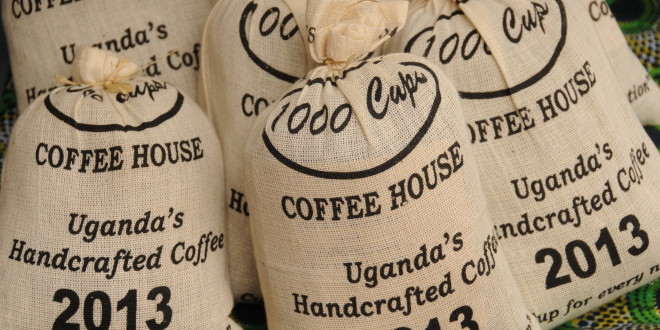
Uganda coffee


Uganda and South Korea have commenced a project aimed at increasing and diversifying the former’s exports to the latter, which is in line with the National Development Plan II and the National Export Development Strategy.

The 12-year project, dubbed, ‘Market-Linked Korea’, is funded by Korea-Africa Economic Cooperation Trust Fund (KOAFEC) to the tune of US$ 500,000.

Through the project, Uganda is expected to grow its exports to South Korea especially coffee, tea and spices and olive trees among others.

John Lwere of Uganda Export Promotions Board (UEPB), market-focused studies will be done on behalf of the local exporters to identify high potential sectors, market entry requirements and trends, and most importantly potential customers.

“This information will be shared with exporters interested in this market,” said Lwere.

He notes that through the export readiness program and business development support component, UEPB will assess interested exporters for readiness to export to South Korea.

“Export –ready companies will be linked to potential buyers. Others will be supported depending on the identified need and available resources,” said Lwere.

Under the project, UEPB will work closely with the exporters to ensure that prospective buyer has all information necessary to make a buying decision including addressing all buyer needs.

The agency and stakeholders also organize a Sales Mission to South Korea where a tailored itinerary of appointments with interested buyers, the shipment of samples, assistance with inland travel and logistics to the meeting places will be done.

UEPB will further provide aftercare services to exporters to ensure that they fulfil export orders and for continuous in-market support.

Uganda and South Korea have had a cordial relationship and diplomatic relations since 2014. Uganda exported to Korea goods worth US$ 1.34 million in 2016, US$ 0.21 million in 2017and US$1.03 million in 2018. Imports from Korea were; US$0.46 million in 2016, US$0.69 million in 2017 and US$0.86 million in 2018.

Uganda’s Major exports to Korea are mainly agricultural products such as coffee, tea and spices; and live trees and other plant bulbs.

Specifically, coffee exports were; US$ 1.34 milllion, US$ 0.21 million and US$ 0.56 million in 2016, 2017 and 2018 respectively, Tea and spices were; US$ 0.004 million and US$ 0.17 million in 2017 and 2018 respectively, while Live trees and other plant bulbs were; US$ 0.004M and US$ 0.001million in 2017 and 2018 respectively.

Uganda majorly imports from Korea items such as; bulldozers, graders, excavators, levellers, machines and other mechanical appliances, laboratory equipment, automatic data processing machines, office machines, pharmaceuticals.

The project, MarketLinked Korea, will assist all Ugandan producers and exporters of products with potential market in South Korea. But the products must be compliant with the minimum standards, health and safety requirements.

Also export trading companies that are recognized by or with strong and demonstrable linkages, that have a good business track record, already exporting or deemed export-ready through the export readiness assessment will be eligible to participate.

“Exporters with the capacity to address product and production issues promptly, as may be required by the market, interest groups such as PWD, producers groups that are well organized and duly registered to do business are encouraged to participate,” said Lwere.

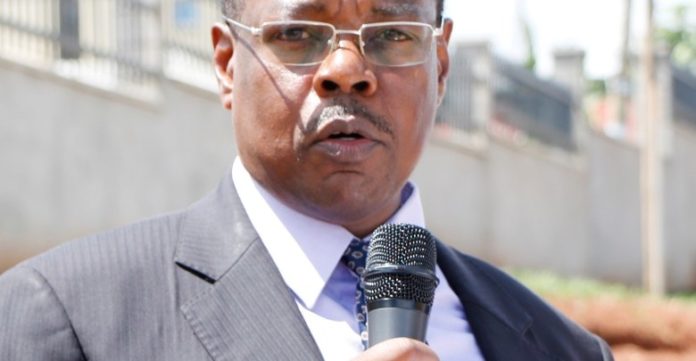
While launching the project at Golf Course Hotel Kampala, Uganda’s State Minister for Trade, Michael Werikhe said they will as well market and export other products where Uganda have potential to export like cereals, fish and fish products, edible fruits and nuts, meat and edible meat offal, among others.

“However, the major challenge Uganda is still facing is exporting mostly bulky, low value or with minimum value addition, while we import high-value products from Korea,” said Werikhe.

He said Uganda has proposed a number of Strategies to grow trade between Uganda and South Korea like attracting investments to boost production, holding trade fairs in South Korea, preferential treatment for our exports to Korea, capacity building / Development Assistance in Quality Assurance, private Sector to Private Sector engagement and contract farming.

He said that the Government of Uganda strongly wishes to encourage contract farming between South Korean Companies and Ugandan farmers involved in the production of agricultural products such as; Coffee, tea and spices, among others so as to boost quantity and quality of such products.

Werikhe said the Government of Uganda has invested in new power generation plants and by 2020, the Annual National Power Generation Capacity of Electricity will be about 2,600 Megawatts. This expanded power generation capacity will foster industrialization.

 

Stories Continues after ad

AfDB concerned as Intra-African trade drop 14.4 %

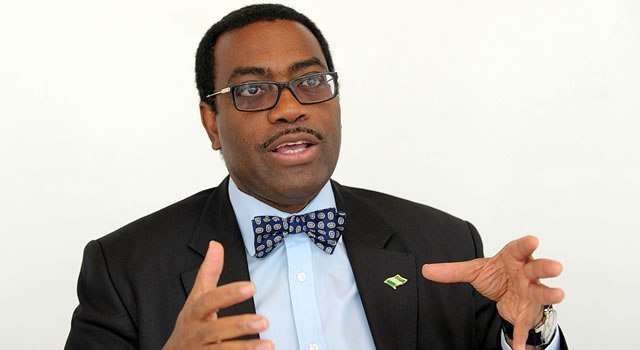
ADB President, Dr. Akinwumi Adesina


Intra-African trade declined to 14.4 per cent in 2018, with the continental countries trading more with the Asia, according to a review by the African Development Bank (AfDB)

The Annual Development Effectiveness Review 2019, indicates the activity was low against a 2015 baseline of 14.6 per cent and a target for 2018 at 17 per cent. The trade is expected to reach 25 per cent in 2025.

AfDB said non-tariff barriers and a lack of political goodwill to address the challenges impede progress.

It also cites poor infrastructure in roads and energy transmission lines constructed or rehabilitated to enhance cross-border trade.

“Intra-Africa trade could grow by up to 15 per cent if the bilateral tariffs that are applied today in Africa are eliminated and the rules of origin kept simple and transparent,” AfDB said.

The bank points to barriers that could restrain the African regional economic integration that was given a boost in March 2018 with the established African Continental Free Trade Area (AfCFTA).

The AfCFTA is projected to increase intra-African trade by 52 per cent by 2022. Kenya ratified the deal.

AfCFTA became operational in July after meeting the ratification threshold from other 22 countries.

“By committing countries to remove tariffs on 90 per cent of goods, liberalising tariffs on services and addressing other non-tariff barriers, AfCFTA is expected to significantly increase the value of intra-Africa trade and investment,” notes the report.

According to the bank, barriers such as cost of trading across borders remains high, more than Sh245,000 (at $2384), after falling slightly in 2017.

According to AfDB, the countries are making initiatives to complement AfCFTA including boosting protocol on the free movement of persons, right to residence and right to establishment and the single African air transport market.

However, trade has declined over time especially in low-income countries from 22.6 per cent in 2015 to 20.4 per cent in 2018.

By comparison, inter-regional trade in Asia accounts for 59 per cent of total trade.

The report however reported a significant rise in Africa-to-Africa Investment.

The bank reports that cross-border investments reached $12 billion in 2018, up from $2 billion in 2010.

Nairobi has been reported as among other cities Johannesburg, Casablanca, Cairo and Lagos as the most significant sources and recipients of intra-Africa investment.


Stories Continues after ad

KFC introduces mac & cheese bowls: The fan-favorite side dish is now a main meal

The new bowls


Kentucky Fried Chicken have announced the addition of a new menu item that will have mac & cheese fans rejoicing! Introducing Mac & Cheese Bowls – a cheesy twist on KFC’s popular Famous Bowls – available as part of KFC’s US$5 Fill Up line up in participating restaurants nationwide starting August 26.

Crafted as a main dish, Mac & Cheese Bowls combine KFC’s rich and creamy mac and cheese, topped with crispy popcorn chicken, and sprinkled with a three-cheese blend. Those who love heat can kick it up a notch with a Spicy Mac & Cheese Bowl with KFC’s Nashville Hot sauce.

“Mac and Cheese has a cult-like following, and bowl food is a trend that isn’t going away anytime soon,” said Andrea Zahumensky, KFC U.S. CMO. “So, it made perfect sense to call up a favorite side dish to the big leagues, in a way that only we could, with Mac and Cheese Bowls.”

To give a sneak peek into how the KFC Mac & Cheese Bowls come together, KFC partnered with food critic and host of OMKalen, Kalen Allen, to hilariously provide Colonel-worthy commentary during his exclusive first taste and review of the new menu combination. You can check out the video here.

“My reaction said it all! KFC’s new Mac & Cheese Bowl is ridiculously good and if you watch my shows, everyone knows how I feel about unseasoned or flavorless food, so I wouldn’t be saying this if it wasn’t true,” said Kalen Allen. “The combination of KFC’s mac and cheese, popcorn chicken, and then sprinkled with MORE cheese is Kalen approved.”

Arriving just in time for “back to school” season, the new Mac & Cheese Bowl $5 Fill Up comes complete with a medium drink and chocolate chip cookie. It’s an abundant, convenient, filling and affordable meal that’s a perfect grab-n-go dinner (or lunch!) for the whole family for just $5 (price and participation may vary; tax extra). In addition to Mac & Cheese Bowls, KFC offers a full line up of $5 Fill Ups, featuring KFC’s world famous fried chicken, Pot Pies and Famous Bowls.


Stories Continues after ad

UNBS maintains ban on cosmetics containing mercury and hydroquinone

Dr. Ben-Manyindo, UNBS Executive Director.


The Uganda National Bureau of standards (UNBS) has maintained the ban on cosmetics that contain mercury and hydroquinone.

Hydroquinone and Mercury are common active ingredient that are found in a number of skin care products. These ingredients are designed specifically to lighten or bleach the skin.

In 2016, UNBS banned the manufacture, importation and sale of cosmetics that contain mercury and hydroquinone.

The ban was effected after UNBS tested some cosmetics and were found to contain mercury exceeding the level permitted by the UNBS standards (US EAS 377-1:2013), while others contained potent ingredients like hydroquinone.

Hydroquinone has been banned in many countries like Japan, the European Union and Australia.

Research has established that hydroquinone is a carcinogenic or a cancer causing chemical (yamaguchi et al, 1989). Hydroquinone has also been linked to the medical condition known as ochronosis in which the skin becomes dark and thick.

Studies also report that mercury is a “toxic heavy metal” that can lead to rashes, skin discoloration and blotching. Long-term exposure to high levels of mercury can also cause damage to the kidneys, as well as digestive and nervous systems and other vital organs.

Cosmetics are governed by a number of compulsory Uganda Standards including Uganda standard (US EAS 377-1:2013, which state that there shall not be any hydroquinone or mercury in cosmetics to be used for skin applications.

The standard however states that two percent hydroquinone is permissible for cosmetics to be used on hair.

UNBS would like to inform the public that cosmetics containing hydroquinone on the market have been smuggled into the country through various porous borders but are not cleared by UNBS as alleged by the public.

UNBS also advises the public to be cautious when purchasing cosmetic products from the market. It is advisable to buy such products from reliable and reputable sources such as registered pharmacies or established retail stores. We would like to urge the public to report cases of substandard products on the market.


Stories Continues after ad

UK Minister impressed by Uganda’s efforts to fight Ebola 

Alok Shama
 

The United Kingdom (UK) through its Department for International Development (DFID) has provided eight million pounds to assist countries bordering the Democratic Republic of Congo (DRC) to prevent Ebola Virus Disease (EVD) from crossing borders in the region.

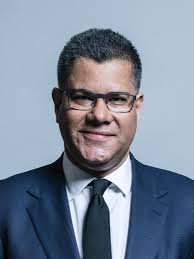
This was announced by Honorable Alok Shama the UK Secretary of State (DFID) while visiting Kasese district yesterday. “We have a good working relationship with the government and that is a relationship we want to continue building. Ebola is a huge issue in this region and obviously for the United Kingdom. We will, therefore, continue working with you and your government on this,” he said.

“The good news is that in the last month Uganda has been declared free of Ebola in Kasese district. But the reality is that we cannot be complacent. There are 800,000 crossing between these two countries every month and therefore the risk of Ebola crossing borders is higher” he added.

“The UK has been playing a leading role in combating the spread of Ebola. UKaid has been giving support in terms of vaccines, screening systems, ambulances and protective clothing. We have been helping local communities to combat the stigma that comes with vaccination and convalescing people. It is absolutely vital that we continue this work to prevent Ebola from spreading” Hon Shama noted.

At Mpondwe border crossing, Hon Shama accompanied by the WHO Country Representative and Dr Yonas Tegegn Woldermariam, the British High Commissioner to Uganda HE Peter West and the Acting Director-General of Health Services Dr Henry Mwebesa observed the screening process conducted by volunteers and health workers. He particularly sought to know how health workers deal with possible EVD importation into Uganda given the long and porous border between the two countries.

“The main approach has been to ensure that communities are sensitive and that community surveillance and risk communication actually work so that people are able to identify and report suspected cases. We hold community dialogues and regular engagements with community leaders, volunteers, religious and cultural leaders,” explained WHO Innocent Komakech.

“We are also using radios and distributing IEC materials in local languages in all communities which have raised community awareness. We have procured and distributed telephone sets through which people report to health workers. Training of health workers in government and private health units on infection prevention and control has been emphasized as well,” added Dr Yonas.

Indeed, through such approaches, over 920 alerts have been reported to health workers from communities in one year. On average, weekly nine alert cases are reported and responded to in Kasese district alone.

Fortunately, most of these have turned out negative for EVD. This level of community sensitivity leads health workers to conclude with reasonable confidence that there is no active EVD transmission in the community.

The in-charge of Bwera Ebola Treatment Unit (ETU) Dr Luise  Kabyanga explained to Dr Shama the history and operation of the ETU that was constructed by WHO and MSF with support from UKaid. “This is the only ETU in the District. Other places have small holding units. When they get alert cases, they only hold them in the isolation units. It’s our responsibility to pick them from there and manage them from here” she explained.

Since June 2019, the Bwera ETU has treated over 68 alert cases with four deaths. The deaths include two confirmed Ebola cases. Others have been due to other causes.

At Isango sub-county Hon Shama and his delegation interacted with local leaders, Village Health Teams and community members who they found in a community meeting. He was impressed by their enthusiasm, the invaluable messaging through songs and dramas and their tremendous contribution to Ebola work in the communities.

“It’s when you come out here that you realize how serious this is. I take this opportunity to thank you very sincerely for the work you do in the community. You are at the frontline of all this and I am humbled to be standing in front of you,” he said.

Stories Continues after ad

FUFA submits 26 names for 2020 FIFA badges

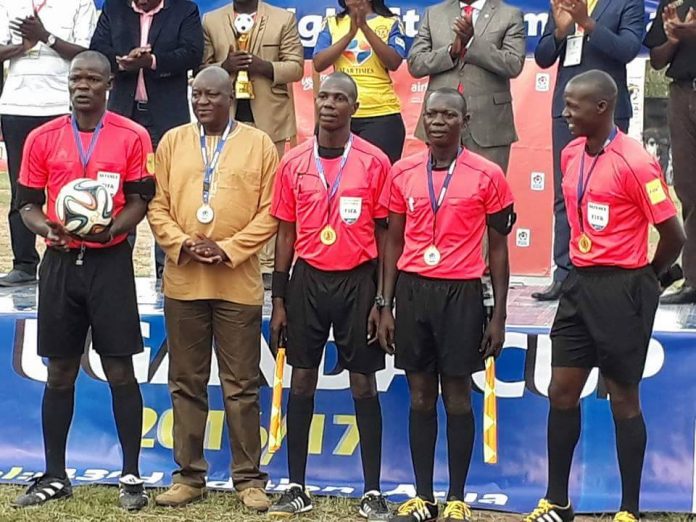
Ugandan referees during the Uganda cup final


FUFA has shortlisted twenty-six referees and forwarded them to FIFA for approval of FIFA referee badges for the year 2020.

The names of the referees were approved during the 21st FUFA Executive Committee meeting held in Mengo on Wednesday 21st August 2019 where the FUFA President Eng. Moses Magogo chaired the seating.

The list consists of five male referees, seven assistant male referees, three female referees, four female assistant referees, four beach soccer referees and three futsal referees.

Nsubuga Brian Emmy, Sengendo Isaac and Kamala Benon are some of the new faces that have been included on the list by FUFA.

Uganda currently has 22 International referees but FIFA decides on the allocation of referees to each Member Association.

FIFA will confirm the referees suitable for the 2020 FIFA badges before the end of this year.

Uganda FIFA Referees Proposed list has;

Referees (Men): Ssali Mashood, Muhabi Alex, Sabilla Ali Chelangat, Oloya William and Madanda Ronald

Assistant referees (Men);Okello Dick, Katenya Ronald, Okello Lee, Balikoowa Musa Ngobi,  Masembe Issa, Mulindwa Hakim and Okudra Emmanuel

Referees (Women): Nabadda Shamirah, Murungi Diana, Tiwuwe Eunice

Assistant referees (Women); Nantabo Lydia Wanyama, Nakitto Marex Nkumbi, Mutonyi Jane, and Docus Atuhaire

Beach Soccer: Kintu Ivan Bayige, Mugerwa Shafic, Ssenteza Muhammad and Kawagga Bazirio Keneddy

Futsal Referees: Nsubuga Brian Emmy, Sengendo Isaac and Kamala Benon

Stories Continues after ad

Junior Agogo, former Ghana,Sheffield Wednesday and Nottingham Forest striker, dies at age 40

Late Junior Agogo


Former Sheffield WednesdayNottingham Forest and Ghana striker Manuel ‘Junior’ Agogo has passed away in a London hospital at the age of 40, it was announced on Thursday.


The cause of Agogo’s death is currently unknown, but he was known to have had a stroke in 2015, just three years after hanging up his boots following a season-long stint with Scottish side Hibernian.

Born in Accra, Ghana, the striker spent most of his youth in the UK before returning to the country of his birth to complete secondary school studies.


Signing up to Wednesday’s youth system in 1995, Agogo was promoted to the Owls’ first team two years later, but spent the majority of the following years on loan before taking in a year in Major League Soccer.

A prolific stint with Colorado Rapids contributed to the rising of Agogo’s stock, with successful spells at Barnet, Bristol Rovers and Nottingham Forest following before his career began to wind down.


On his home continent of Africa, the former forward will no doubt be remembered most for his standout performances for Ghana at the 2008 Africa Cup of Nations on home soil, where he scored three goals in six outings in what would ultimately end in a third-place finish.

His notable contribution during the continental competition was his late match-winning effort that gave the Black Stars a 2-1 win over arch-rivals Nigeria.


Stories Continues after ad

Stanbic Bank named best performer in govt securities

Mutebile and Stanbic CEO Patrick Mweheire.


The Bank of Uganda (BoU) on Wednesday recognised Stanbic Bank Uganda as the best performing commercial bank in Uganda government securities for the months June and July 2019.

Launched in 2005, the Primary Dealer (PD) system aims to promote participation in Uganda government securities markets where treasury bills and treasury bonds are traded.

It also aims to foster the development of financial markets, to improve the secondary market trading system as well as to ensure efficiency in the operations related to the government securities market at the central bank.

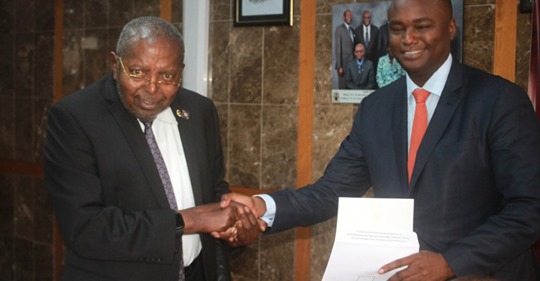
BoU Governor, Emmanuel Tumusiime-Mutebile handed over the award to the Chief Executive Stanbic Bank Patrick Mweheire during the quarterly Uganda Banker’s Association meeting held at BoU headquarters in Kampala.

Mutebile said as part of BoU’s commitment to make investing in government securities easier and more accessible to the public, the BoU launched Phase I Reforms to the PD System in October 2016 where all licensed commercial banks in Uganda have direct access to the primary market for government securities.

“I wish to acknowledge the role that Stanbic Bank Uganda Ltd has played especially for participating in the primary auctions, market making capabilities, consistent pricing as well as timely market intelligence,” said Governor, Tumusiime-Mutebile.

“These reforms have eased the client registration process on the CSD as evidenced by increased retail participant registrations, enabling faster and more efficient secondary market trading as all banks can complete client sale and purchase orders online without using the old BoU physical instrument for transferring CSD forms,” he said.

Banks are all eligible to open Central Securities Depository (CSD) accounts at the BoU for their clients through a web interface on any business day.

They are all able to accept and process their clients’ bids for Government securities. All banks settle their clients’ successful bids and all banks can buy their clients’ securities if the client wishes to sell in the secondary market.

According to a statement from BoU, alongside the retail segment, the participating banks have also enhanced liquidity in the secondary market transactions.

The governor applauded banks for their contribution towards the marked improvement in the development of the government securities market.


Stories Continues after ad

NSSF, police to ensure security companies remit workers’ contributions

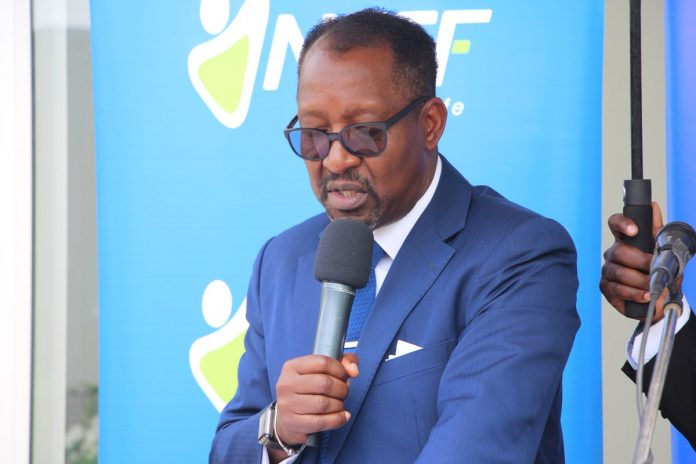
NSSF Managing Director Richard Byarugaba


The National Social Security Fund (NSSF) has established a partnership with Uganda Police Force to ensure that private security companies in the country comply with the remittance of social security contributions for their employees by way of making possession of NSSF clearance mandatory.

The ceremony to establish the partnership was held at Imperial Royale Hotel in Kampala on Thursday.

The partnership will help security companies’ employees who fear that they will retire in poverty if their employers continue with the habit of not remitting their NSSF contributions.

Under the partnership, the security companies will now be required to obtain an NSSF clearance certificate as a prerequisite for an annual operation license.

“We received over 245 complaints through our whistle blower platform from employees of private security companies between January 2018 and February 2019. That prompted us to carry out compliance audits and from our analysis, we found that over 7,000 workers’ contributions had not been fully remitted to NSSF,” said NSSF Deputy Managing Director Patrick Ayota.

He said that recovering of the contributions has been difficult mostly because the security companies under-declare information like the number of employees and salaries paid. He said they also withhold financial records during social security audits.

“I encourage employers to compile because the benefit doesn’t go to the Fund but to the security guard and your organisations’ reputation,” he said.

The NSSF Head of Business, Geoffrey Ssajjabi stated that, ”Security companies are one of the biggest defaulting employers registered with the Fund, security guards play a very crucial role in our society and lives and it is vital that we take care of their future.”

On the issue of NSSF not paying benefits to its members, the Corporate Relationship Manager, Ian J. Mwesigwa stated that the Fund paid out over Shs400 billion to eligible members in the last financial year.


Stories Continues after ad

Police arrests city fraudster

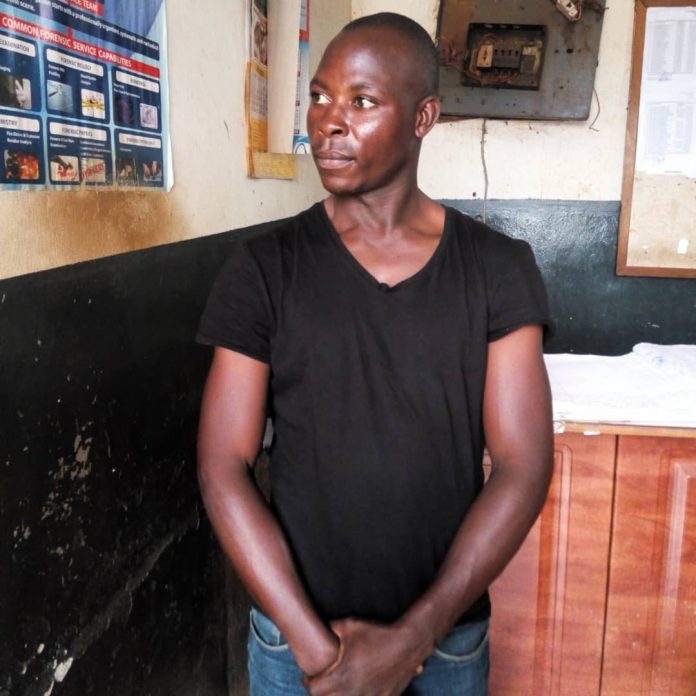
Alvin Bruno

Police in Kajjansi has netted one Alvin Bruno who have been defrauding people through selling properties that don’t belong to him.
Bruno was arrested in Kajjansi C cell, Kitende ward, Kanjansi Town Council, Wakiso District.

He was nabbed with forged land titles and National identity cards while his counterparts survived arrest. They were about to receive Shs20 million on someone’s vehicle which was parked in Kampala.

Their mode of operation is to identify and forge logbooks and land titles for vehicles and plots of land which are on sale after which they present people who disguise to be the owners and very sick and therefore, badly in need of money for treatment. After receiving the money they disappear.

According Kampala Metropolitan police,the holding charge is forgery.
“when planning to buy a property carry out background check on the people selling you the property and the property itself”.

Stories Continues after ad