Stanbic Bank
Stanbic Bank
17.9 C
Kampala
Stanbic Bank
Stanbic Bank
Home Blog Page 1229

Proline FC name squad for CECAFA Kagame Cup

Proline FC

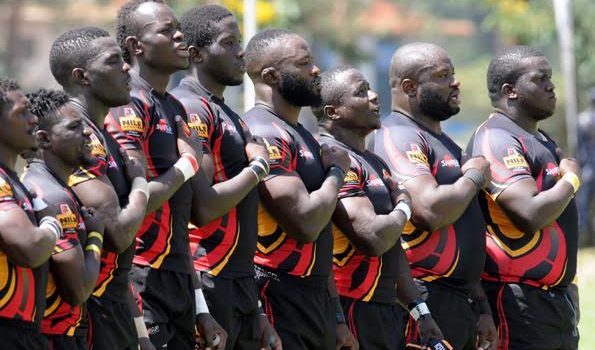
Newly promoted Uganda Premier League side and Uganda Cup winners Proline FC have named their squad for the 2019 Cecafa Kagame Club championship.

Twenty-one players have been named by Coach Shafiq Bisaso to Kigali, Rwanda with four new recruits on the team.

Benard Muwanga joins on loan from KCCA FC, goalkeeper Shatif Magoola signs from Kiboga Young on a three year contract, Andrew Okiringi Isiagi also signed a three year contract from Police FC and Yusuf Mukisa on a two year deal from SC Villa Jogoo.

Proline FC were pooled in Group C with three-time CECAFA Kagame Cup winners APR FC of Rwanda, Zambia’s Green Buffaloes & and Somalia’s Heegan FC.

KCCA FC is the other Ugandan team that will represent Uganda in the regional club cup championship.

The winner of the annual regional tournament stands to pocket $30,000 in prize money while runners up will receive $20,000 and $10,000 respectively.

The tournament will be played from July 7th to 21st in Kigali and Rubavu, Rwanda.

The team will leave for Rwanda on Wednesday 3rd July.

Proline’s fixtures:

6 July: Proline vs APR

8 July: Proline vs Heegan

11 July: Proline vs Green Eagles

Travelling squad

Goalkeepers: Hassan Matovu, Shatif Magoola

Defenders: Bernard Muwanga, Musitafa Mujuzi, Saka Mpima, Richard Ajuna, James Begesa, Yusuf Mukisa, Andrew Okiringi Isiagi, Sam Kintu.

Midfielders: Noordin Bunjo, Joseph Okiror, Bright Anukani, Arnold Sserunjogi, Joseph Mandela, Ibrahim Wammanah.

Forwards: Hakim Kiwanuka, Ivan Bogere, Allan Egaku, Ibrahim Bonyo.

Team officials

Team manager- Shafik Bisaso

Deputy CEO- Bashir Asuman

First team coach- Baker Mboowa

First team assistant coach-Richard Luyima

Goalkeeping coach- William Ssebagala

Team Physiotherapist- Isaac Ssenoga

Administrator- Joan Nalugya

Stories Continues after ad

Rwenzururu Kingdom woes: Omusinga Mumbere strips his brother Kibanzanga of traditional title

Christopher Kibanzanga

The King of Rwenzururu Kingdom, Charles Wesley Mumbere, has withdrawn the title of Chief Prince from his brother, Christopher Kibanzanga, for abusing the rights and responsibilities of his title and watering down the integrity that befits the position.

In a suspension letter dated June 25, Mumbere said, “By the virtue of powers entrusted to me by the constitution of Obusinga Bwa Rwenzururu and the royal family and Abanya Rwenzururu, I hereby suspend your position and title of the Chief Prince that you have been holding in the royal family until further notice.”

Kibanzanga is accused of making decisions on behalf of the royal family and executing them without consultation with Omusinga Irema-Ngoma and other members of the royal family.

“Your intentional disrespect and abuse of the person of his majesty the Omusinga Bwa Rwenzururu, Charles Wesley Mumbere and the kingdom. Your disrespect to the cultural norms of the Bayiira and your lack of respect to the elder,” the letter reads in part.

“Your behavior on June 14 worsened our grief. I was particularly upset including your other siblings (members of the royal family), when you aggressively stormed Buhinga Hospital mortuary and took away the body of our mother Her Royal Highness Christine Biira Mukirania,’’

“Your highhandedness and arrogant actions denied your siblings, the deceased grandchildren and daughters’ in-law and kingdom members to pay their last final respect for our mother. And in fact by doing so, some cultural rituals that would have been performed in respect to our mother were suspended,” he wrote.

On 14 June, High Court judge, Eva Luswata relaxed stringent bail conditions for the Rwenzururu king, Charles Wesley Mumbere and permitted him to go and attend the burial ceremony of her Queen Mother, Her Royal Highness Christine Biira Mukirania.

Court has granted you 14 days to go and perform cultural functions and burial of your mother. He was reportedly blocked from attending the burial ceremony by the UPDF and other security agencies.

Stories Continues after ad

Safaricom appoints new boss to replace late Bob Collymore

Michael Joseph

Telecoms giant Safaricom has turned to tested hands to steer the telecommunications firm in wake of the death of its chief executive officer Bob Collymore on Monday.

In a special meeting of the directors held on Monday, the board picked the telecom’s former boss Michael Joseph to lead in an interim capacity with immediate effect.

“Mr Joseph will hold this position until the board communicates in due course, on a permanent appointment,” Safaricom said in a statement on Tuesday.

Mr Joseph sits on the Safaricom board and is also the current chairman of Kenya Airways.

Collymore took over from Mr Joseph in November 2010.

Mr Joseph retired from Safaricom in 2010 after overseeing the telco’s growth from a scrappy mobile operator to a market leader.

Attachments area

Stories Continues after ad

Afcon 2019: Uganda to face Senegal at last 16 stage

Uganda Cranes

Uganda Cranes will play Senegal during the round of 16 stage at the ongoing 2019 Africa Cup of Nations in Egypt.

The tie was confirmed following the completion of the group C matches on Monday night as Senegal thrashed the Harambee stars of Kenya 3-0.

Uganda Cranes finished second in group A with four points behind Egypt and were to face the second team in group C.

A brace from team captain Sadio Mane and a goal from Ismaila Sarr was all the Lions of Teranga needed to beat Kenya in their Group C Day three clash and cement their place at the next round.

Algeria topped the group on the maximum nine points, three richer than Senegal with Kenya on three points. Tanzania finished at the bottom pointless.

Kenya will have to wait till all groups complete their games to learn if they may scrap through as one of the four best third place teams.

The match will be played at Cairo International Stadium, where Uganda Cranes have played all their group stage matches.

AFCON 2019

Friday, 5th July 2019

Round of 16 stage

Uganda Cranes vs. Senegal – Cairo International Stadium, 10 pm.

Attachments area

Stories Continues after ad

Fall Armyworms: Eating their way around the world

Fall Armyworm

Foreign invaders have conquered China. The attackers are mud-colored grubs from the Americas, whose deadliest weapon is their appetite. Which is, to be clear, titanic.

Armyworms, and more specifically Spodoptera frugiperda or fall armyworms as they are commonly called, are more than your average very hungry caterpillar. They’re larval eating machines—feared by farmers from Argentina to Florida for turning hundreds of acres of cropland into vegetal stubble in a single night.

In 2016 fall armyworms appeared in Africa for the first time and have since destroyed billions of dollars worth of crops. Since then they’ve marched steadily east, to India, Nepal, China, Taiwan, and the Philippines, turning untold acres of crops into worm food. They don’t bite, sting, or ooze slime, but their appetites alone qualify them as a global scourge.

What will the armyworm invasion do to food prices in China?

The timing of the armyworm incursion is very bad indeed. Thanks to African swine fever, which has wiped out about a fifth of the country’s pork supply, food prices are already climbing, leaping 7.7% in May, versus the same month a year ago. The armyworm outbreak may exacerbate that trend. Though a grain and vegetable shortage in China might benefit US farmers, the tariffs China imposed on American agricultural products certainly won’t help curb prices.

Despite the alarming swiftness of the infestation, grain prices have so far stayed flat. But the armyworm swarms now hover on the edge of the North China Plain, the country’s top grain-producing region, which is scary news for a nation with pre-existing food supply woes and a slowing economy.

Life cycle

There are four distinct stages in an armyworm’s life, and during the summer months the entire cycle lasts about 30 days, 60 in the fall, and closer to 90 in winter months.

Eggs: Adult moths lay eggs in clusters of 50-200 on young plants. They hatch in waves.

Larvae: The most distinctive phase—these are the worms that just keep eating and eating, and eating.

Pupae: After around two weeks of all-you-can-eat corn, peanuts, rice, or Bermuda grass, the larvae burrow into the ground and pupate for a week to a month.

Moths: They emerge as dun-colored moths that will spend the next 10 days laying up to 2,000 eggs, while covering as much ground as possible. And it starts all over again.

Betting on bacteria

Bacillus thuringiensis (Bt) is a naturally occurring bacterium found in soil. It’s also one of the most widely used microbial pesticides in the world. When sprayed on crops, it’s deadly to a wide range of insects, safe for humans, accepted by organic farmers, and often used against armyworms. In the US, the vast majority of commodity corn is a genetically modified variety that has been approved by the US Department of Agriculture since 1996, and contains a Bt gene that staves off infestation by the likes of the fall armyworm. African and Chinese farmers are also looking to Bt corn as an armyworm solution, but suspicion of GM crops and the companies that sell GM seed has made planting Bt corn as political as it is agricultural.

Armyworms on the march

In the Americas, fall armyworms devour corn, rice, sorghum, and even grass, and they’re a familiar, if perennially dreaded, foe of farmers, landscapers, and lawncare fanatics alike. In January of 2016, they showed up in Nigeria, the species’ first known trip to Africa, and their spread across the continent and beyond has been rapid and devastating (pdf). In May of 2017, Ghana declared a state of emergency in response to armyworm crop damage, and by September of 2018 (pdf), their presence was confirmed in Gujarat, India.

In January, farmers near China’s border with Myanmar noticed fall armyworms for the first time. Now, less than six months later, the infestation spans the entire southern half of China, and has jumped to Taiwan and to the Philippines. In colder regions, like most of the US, armyworms are kept in check by the seasons—they can’t survive the winter. The pests are far more challenging to control in warmer regions where they can’t be frozen out.

Fun fact!

Fall armyworms aren’t just voracious consumers of crops—they also eat each other, even when there’s plenty of other food available.

Fighting bugs with bugs

“Biological control” involves introducing a predator to control the population of some undesirable critter—kind of like adopting a cat to keep out mice. Farmers in southern China started using citrus ants to control pests at least 1,700 years ago, and ladybugs and other beetles are still often used to combat crop-destroying insects. In the ongoing battle against armyworms, farmers in the Americas have used native insect predators known as parasitoid wasps. These critters lay their eggs inside other insects. A hatchling bides its time by feeding on its host’s insides until it finally bursts forth, Alien-style—an event that usually results in the host’s death.

With the armyworm barbarians now at the gates of China’s corn belt, the government is exploring biological control with an unlikely ally—stinkbugs. China’s top research institute is raising these predatory insects by the millions, with a mind to deploy them against the caterpillar invaders (link in Chinese). Stinkbugs kill by paralyzing their armyworm prey, then sucking the moisture out of the boneless bodies. One of the stinkbug species being tested can dispatch more than 40 armyworms a day, according to the research institute, and the plan is to breed 10 million stinkbugs annually, says Bloomberg.

By digits

14: Lifespan in days for an armyworm larva during the prime eating season of summer

1,500: Eggs a female armyworm lays on average during the 10-day moth stage of the life cycle

60 miles–300 miles (100 km–500 km): Distance an armyworm moth can travel in a single night

$600 million: Amount Brazil spends protecting crops from armyworms each year

20 per cent–50 per cent: Yield loss in corn crops in Africa, when infested

$2 billion–$6 billion: Estimated value of crop losses in Africa in 2018 due to armyworms

1 inch (2.5 cm): Average length of an armyworm

82 per cent: Share of the US commodity corn crop grown that is genetically modified to stave off pests, including armyworms

Stories Continues after ad

Invest home, be Uganda’s good will ambassadors – Ssekandi tells Diaspora

Vice President Edward Ssekandi receiving a book (RESTORED) authored by a Ugandan-Canadian Noah Mugenyi and his wife Jane, a Flight Engineer who was a Motivation Speaker during the convention.

The Vice President, Edward Kiwanuka Ssekandi, who is on five days visit to Canada addressed the Uganda Community during their annual Ugandan Canadian Diaspora Business Expo and Convention 2019.

Ssekandi urged all investments groups of Ugandans in Canada and in elsewhere in the world to invest back home, saying it elevates the national pride.

He urged to Ugandans abroad to be good will ambassadors of government and the country and urged them to work with Uganda Investment Authority (UIA) to attract more investors to the country.

He assured Ugandans of the already leveled ground of making UIA a one stop center, besides the incentives and availability of opportunities of investment such as minerals, power, and agro processing among others.

“Whatever area you think as far as your discussions concerned, to be addressed by government bring it out for Uganda’s historical mission of transformation to bear fruits to benefit all of us living there,” he said.

He told the gathering that there are some challenges like unemployment among the youth, unhealthy lifestyle, malnutrition which overshadows the already visible achievements. He however said Uganda was moving forward in the face of global economics slow down. “The economy has recovered, and GDP is growing at 6% over the last 2 years,” he said.

Vice President and Speaker of Parliament Rebecca Kadaga attended a multi-faith service led by Ugandans themselves at Court-Yard by Marriot Hotel. The prayers were led by Rev. Joseph Kiirya of River Jordan Ministries, Ottawa, Bishop Isaiah Mbuga, Rev. Eddie Jjumba and Sheik Fahad Amir Nsubuga.

Rev. Kiirya appealed to the congregation to fund-raise money in order to build a reception center comprised of 3 homes at US$5000 each. When completed the center will be used by new Ugandan migrants to Canada. Both Vice president and speakers contributed US$1000 and US$300 respectively.

Kadaga called up on all Ugandans to respect leaders and dialogue always because it’s the government which sets the methods to enable them travel abroad. She gave them an example of a passport that contains an appeal of the President of Uganda to allow the bearer in that particular country on his behalf. She had already addressed the Convention a day before during the opening on June 29, 2019.

In her speech Kadaga had highlighted many investment opportunities back home and the legislations in place to protect the investments.

Kadaga was accompanied by a number of MPs Wamayi, Nankabirwa Annan Maria Woman Kiboga and Makumbi Mityana among others.

Uganda’s High Commissioner to Canada Joy Ruth Acheng and Uganda Canadian Diaspora Business Expo and Convention President Joh Nalima welcomed every participant, the government and corporates who worked tirelessly for the success of the event.

Stories Continues after ad

Ground-breaking ceremony for construction of IGG head quarter building set for this month

The IGG Irene Mulyagonja and a developer show off the artistic impression of the building

The Inspectorate of Government has officially handed over the site for the construction of its headquarters to the contractor, a joint venture between Roko Construction Limited and Roko Construction (Rwanda) Limited.

The 15-storey building will be constructed to the tune of close to Shs70 billion. The ground-breaking ceremony is slated for July 18, 2019 on Plots 71-75, Yusuf Lule Road And 24-26, Clement Hill Road.

While handing over the documents to developers, the IGG, Justice Irene Mulyagonja, said a strict procurement process was followed, which she added shows her office is not a corrupt.

She urged the developers to adhere to the contractual terms and handover the building in three years. She cautioned them against doing shoddy work, saying “this is one of the best designs submitted to government according to Ministry of Finance.”

The Secretary to IG, Mrs. Rose Kafeero, commended the Evaluation Committee for doing an excellent job during the procurement process. She also revealed a Contract Management Team chaired by the Director of Leadership Code, Ms. Annet Twine, which will work closely with the Consultant to manage the contract.

The Managing Director of Roko Construction Ltd, Mark Koehler, thanked the Inspectorate for putting trust in them and pledged to do quality work.

He said Roko’s most experienced project and construction managers will be in charge of the project.

Koehler hailed Roko’s achievements in the region, adding that it is a local company with 99.3 percent Ugandan staff.

Roko was the best evaluated bidder among seven bidders. The other bidders were: CRJE (East Africa) Ltd, Chine WU Yi Co. Ltd, Seyani Brothers & Co. (U) Ltd and Parbat Siyani Construction Ltd JV, China National Aero-Technology International Engineering Corporation, China Civil Engineering Construction Corporation and China State Construction Engineering Corporation Ltd.

Stories Continues after ad

Katushabe murder: Court hands 40 years jail term to Ssebuwufu and his co-accused

Late Donah Katushabe. Inset is Muhammad Ssebuwufu

High Court has sentenced Muhammad Ssebuwufu, the proprietor of Pine Car Bond to 40 years in jail over the murder of his client, a businesswoman, Donah Katushabe.

Last week, High Court judge, Flavia Anglin Ssenoga found Ssebuwufu and seven others suspects guilty of murder, kidnap and robbing of businesswoman Katusabe as the businessman demanded Shs9 million debt that remained after the late bought a car.

In a court sentence delivered by justice Ssenoga, the group was ordered to compensate family of the late with Shs 100 million.

Earlier, Defense lawyer led by Evans Ochieng, objected to death sentence say circumstances don’t meet conduits of the rarest of the rare noting that the facts of the case don’t reveal a meticulously planned, pre-meditated action.

He asked court that being first time offenders, it would be outside of legal provisions to pass down a maximum sentence of death.

“Muhammad Ssebuwufu shouldn’t be handed a maximum sentence or very long custodial sentence because, he is married with seven children who will suffer and runs a business empire employing over 500 Ugandans who could end up unemployed,” he said before being sentenced.

Justices Ssenoga said the events may not have ended into death evidence adduced by 26 witnesses, Flavia Anglin Ssenoga ruled that the accused unlawfully picked Donah Katushabe from Bwebajja over a loan of Shs9 million before torturing her, which eventually led to her death.

One of the witnesses said he reached the crime scene and saw Ssebuwufu kicking and boxing the late Donah on the breasts and in her private parts. The convicted have however been remanded to Luzira till July 1, 2019 when they will be sentenced.

Ms Katushabe was reportedly tortured on October 21, 2015, at Pine Car Bond on Lumumba Avenue in Kampala and later killed by a group of people led by city businessman Muhammad Sebuwufu, a dealer in second hand cars and owner of Pine car bond on Lumumba Road, after the deceased failed to clear a debt of Shs9 million.

Court records indicate that Katusabe acquired a Toyota Premio registration number UAX 481H from Ssebuwufu at Sh17 million and remitted sh8 million thereby remaining with a balance of sh9 million debt with is said to have caused her murder.

The seven found guilty include; Paul Tasingika, Shaban Odutu alias Golola, Philip Mirambe, Kayiza Godfrey, Stephen Lwanga, Yoweri Kitayimbwa, and Damaseni Ssentongo.

Initially, they were battling the charges together with former Kampala Central Police Station commander, Aaron Baguma but his charges were dropped at the commencement of the trial last year.

In January last year, the Director of Public Prosecutions (DPP) has today withdrawn all murder charges brought against the former Central Police Station (CPS) District Police Commander (DPC) Superintendent of Police (SP), Aaron Baguma, charged in relation to the murder of businesswoman Donah Katushabe.

In 2016 Katushabe’s relatives wrote to DPP requesting that charges against SP Baguma be dropped, owing to the support he had rendered the family of the deceased, which, among others, includes facilitating the relatives to meet the Inspector General of Police (IGP) General Kale Kayihura.

Stories Continues after ad

French army general commends UPDF for peace keeping missions

General Gernez in white meeting UPDF officers

The Commander of French Airforce based in Djibout, Maj Gen. Eric Gernez, has commended the Uganda People’s Defence Force (UPDF), saying the force has played an excellent role in keeping peace on the African continent. General Gernez made the remarks while paying a courtesy call to UPDF Leadership at the MODVA headquarters at Mbuya hill.

Gen Gernez applauded the forces for the good work executed in all their deployments in the region. “Thank you for your tireless endeavors towards the peace in Africa,” he said.

The General also said that the mutual relationship between Uganda and France is a beneficial one and that France would continue to support Uganda because of its significant contribution in stabilising the region.

The meeting provided an opportunity for the two delegations to share lessons and experiences in order to put another step in the security issues of Africa.

He pledged support from the French Airforce in Djibouti to Uganda People’s Defence Air Force (UPPDAF) in terms of further training and other military to military engagements.

Lt Gen Joseph Musanyufu who represented the Chief of Defence Forces (CDF) Gen. David Muhoozi, appreciated the French support given to UPDF in various capacity building areas mostly at the Peace Support Training Centre in Singo, Mountain Warfare Training School, mountain training in the Rwenzori, military exercises and French language training in Jinja; which have immensely boosted the UPDF.
“The support has gone a long way in opening UPDF’s doors to the French speaking Missions which was not the case before as language was our main barrier,” noted Gen Musanyufu.

The Joint Chief Of Staff also added that Africa Armies should work as a team not in isolation due to having language barrier as a major obstacle.

He emphasised that the support the UPDF gets from the French has torn down the barriers and promised to make much better strides.

Also in attendance was Maj Gen Gavas Mugyenyi the Deputy Commander Airforce, Maj Gen Willis Byarugaba, the UPDF Chief of Training among others.

Stories Continues after ad

Gen. Muhoozi inspects training of cadets

The cadets showing off the skills.

The Chief of Defence Forces of the UPDF, Gen. David Muhoozi, on Sunday inspected the Special Combined Training Exercise code named “UNGOZI BORA” for officer cadets undergoing training at Uganda Military Academy Kabamba.

“The main objective of the exercise was to test cadets on their physical fitness, combat endurance and platoon tactics especially for conducting special Combined Arms operations” the UPDF statement reads.

The training support was drawn from various UPDF units; Air forces, Armed Warfare Kalama, Motorized Infantry and Artillery.

During the inspection, Gen Muhoozi thanked the entire Academy leadership for “the job well-done and applauded both the instructors and the Cadets for their endurance throughout the training”.

Brig James Kinarwa representing UPDF Chief of Training and Recruitment, Brig Deus Sande, the Commandant of Armoured Warfare Training School, Brig Joseph Ssemwanga Commander of Armoured Brigade in Masaka were present during the inspection.

Stories Continues after ad