Stanbic Bank
Stanbic Bank
17.9 C
Kampala
Stanbic Bank
Stanbic Bank
Home Blog Page 1230

The price of capital goods and the threat to investment

Capital goods

Over the past three decades, the prices of machinery and equipment have fallen sharply relative to overall prices. Rising trade and sweeping technological improvements have led to more efficient production of capital goods. This has helped countries around the world raise real investment and improve living standards.

However, trade tensions and sluggish productivity growth could slow the decline in the relative price of machinery and equipment, which would hold back investment growth worldwide.

Our chart of the week from the April World Economic Outlook shows that since 1990, the price of machinery and equipment relative to the price of consumption fell about 40 percent in emerging market and developing economies.

In advanced economies, the price drop was even higher—around 60 percent. These were dramatic declines when compared with the prices of other types of capital assets, such as housing and commercial structures, which more closely tracked the price level of consumption.

According to the IMF’s research, international trade has been the biggest factor behind falling prices of machinery and equipment relative to the price of consumption. And the decline in the price of capital goods, in turn, provided a sizable boost to real investment.

The IMF’s analysis reveals that, for the average emerging market and developing economy, about one-third of the increase in the real investment rate in machinery and equipment in the past three decades can be attributed to the cheapening of capital goods relative to consumption. Stronger macroeconomic policies and other factors contribute the rest.

For all economies, avoiding protectionist measures and reviving trade liberalization would help maintain the pace of decline in the relative price of capital goods. This would also provide a boost to the lackluster investment growth in advanced economies and support the capital deepening still very much needed in developing countries. Promoting innovation in the capital goods producing sector in both advanced and emerging market and developing economies is also crucial.

Stories Continues after ad

Uganda to face either Senegal or Kenya in last 16

Uganda Cranes

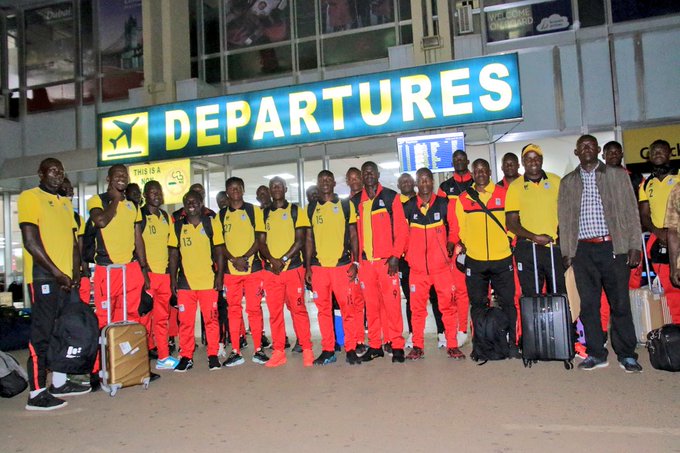
Uganda Cranes yesterday finished second in group A with 4 points and automatically qualified for the knockout stage in the round of 16. It is the first time that Uganda qualified for the knock out phase of the competition since 1978.

The Cranes are now in line to face the team that will finish second in Group C, and that could be either Senegal or Kenya who lock horns today.

Both Kenya and Senegal are tied on three points and fighting for a top two finish that will guarantee passage to the round of 16. Algeria, who play Tanzania, lead the group on six points.

Kenya has never beaten Senegal. The two teams have previously met three times, all at the Africa Cup of Nations. Their first meeting in 1990 ended 0-0.

The Teranga Lions defeated Kenya 3-0 two years later and again 3-0 in 2004.

A draw will leave Senegal in second place ahead of Kenya on goal difference to lineup a round of 16 fixture against Uganda Cranes while all what the Harambee stars need is a win.

Meanwhile, Uganda Cranes head coach Sebastien Desabre was forced to make a change in the goalkeeping department as Denis Onyango paved way for Robert Odongkara.

Onyango was stretchered off as he felt dizzy due to the bout of flu that attacked him two days before the game on Sunday. Hassan Wasswa Mawanda took over the Captain’s during the absence of Onyango.

The captain has been cleared by the medical team and will be in contention to start in the next game.

The knockout match against Senegal or Kenya will be on Friday 5 July, 2019 at Cairo International Stadium at 10 pm.

Stories Continues after ad

Distress as a 16 year boy goes missing

Parents of Michael Nuwagira are distressed as their son, a 16 year old has reportedly gone missing from home.
It is said that Nuwagira left their Najjera home on June 11 for school but never reached school until today. The family is now appealing to the public for any information of his whereabouts or report whoever the suspect could have kidnapped the child.

Stories Continues after ad

Pictural: Sierra Leone president arrivals in Uganda

President Museveni receiving his guest at State House Entebbe.

Sierra Leone President Julius Maada Bio has arrived in Uganda for Africa Blockchain conference.

President Bio arrived in Entebbe this morning for a three day state visit under the invitation of President Yoweri Museveni.

The two leaders are expected to hold bilateral talks and later address a press conference and thereafter, proceed for the Blockchain conference at Serena Hotel.

Stories Continues after ad

Why digital skills training is so important if we are serious about closing the digital divide

Susan Teltscher

By Susan Teltscher

In 2018, numbers on Internet usage made headlines announcing that more than half the world is online.

This is indeed great progress given that 15 years earlier (in 2003) only 12 of the world’s people were using the Internet.

Despite this enormous growth, however, nearly half of the world’s people are still not using the Internet and so unable to reap many of the benefits of today’s digital economy. Even worse, Internet user growth rates in developing countries are slowing.

So what can be done to get everyone online and be part of the digital society and economy?

Providing digital skills training – along with lower costs and more relevant content – are some of the key factors to bridging the digital divide, but first it is important to have a clear idea of the reasons why more people are not using the Internet.

Why are people not using the Internet?

It is often wrongly assumed that people are not online because they don’t have access to Internet services (e.g. no Internet where they live). The facts do not support this argument.

Today, more than 90 per cent of the world population lives within reach of a 3G (if not 4G) mobile broadband network. So in theory, people could buy a data package from a local operator and go online.

One could argue that global Internet usage could stand at 90 per cent (instead of 50 per cent) if everyone who had access to the service bought it. But we know that this is not the case. We need to look for, and understand, other barriers or reasons for why people choose not to use the Internet so that appropriate action can be taken.

Affordability is certainly a major reason. Although smart phone prices have dropped across the globe, they are still high – as much as people’s monthly income in a number of countries. Data packages are also costly and the quality of the connection is often low which doesn’t incentivize people to buy the service.

“The policy focus has to shift from a discussion on infrastructure/access-related measures towards digital literacy and human skills development measures.”

This, coupled with the lack of attractive applications with relevant content is reason enough not to spend the little money available. The mobile revolution took off since it addressed a basic need of people – to be able to communicate. Even poor households spend a large share of their income on mobile telephony (sometimes more than on food) since they value it highly.

Unless such basic needs will be met by Internet-enabled services, the Internet revolution will not take off in poor countries.

Lack of education and skills is a key barrier to Internet uptake

One of the main barriers to Internet uptake is a lack of capacity and skills of people to use the Internet and take advantage of what it offers.

Data collected in developing countries through national representative household surveys and compiled by ITU (see MISR 2018), as well as through the After Access surveys, provide revealing insights in this regard: when asking people why they are not using the Internet, around 65% of the answers are linked to education and skills (e.g. “don’t know what the Internet is”, “don’t know how to use it”).

Even in more advanced countries, 60 per cent of the population lack standard digital skills. There is a strong correlation between people’s levels of education and Internet usage.

The gap between people having access to Internet and not using it is largest in the least developed countries (70 per cent 3G service coverage compared with 20 per cent Internet usage in 2018). In these countries, the gender Internet user gap is also the largest and it is often girls and women who are also less educated and digitally illiterate.

What needs to be done?

Therefore, the policy focus has to shift from a discussion on infrastructure/access-related measures towards digital literacy and human skills development measures in order to effectively close the digital divide and ensure that all citizens will be part of the evolving digital society.

This will require a concerted effort by all stakeholders involved in the digital skills ecosystem, ranging from policy makers across different sectors to private companies, academic and educational institutions, as well as community-based organizations.

This is now increasingly being recognized by national governments and the international development community. Programmes and initiatives addressing the digital skills gap are mushrooming.

Digital skills are needed at all levels: at the basic level, to help people connect and benefit from Internet services and applications; at the intermediate level, to help students and job seekers get the necessary skills required by the digital economy; and at the advanced level to increase the pool of ICT experts and meet the demands of the industry.

How ITU contributes

Strengthening capacities in the field of digital technologies is a core mandate of ITU.

The ITU Academy is the main gateway to ITU’s activities on capacity and skills development. It offers a large number of training courses on topics ranging from cybersecurity, Internet of Things, spectrum management, to e-government, innovation and digital inclusion.

The portal has recently been revamped and now facilitates easier and more user-friendly access to ITU capacity development activities, courses and workshops. The ITU Centers of Excellence are key partners in the delivery of training.

There is ample evidence that shows how digital technologies can improve people’s lives and help achieve the United Nations Sustainable Development Goals (SDGs). This will only be achieved through a digitally literate population.

The writer is Head of ITU’s Human Capacity Building Division

Stories Continues after ad

URA’s Dicksons Kateshumbwa elected Chairperson of global customs body

Dicksons Kateshumbwa

The Commissioner of Customs at Uganda Revenue Authority (URA), Dicksons Collins Kateshumbwa, has been elected new Chairperson of the World Customs Organization (WCO) Council.

Kateshumbwa was elected during the WCO Council meeting that took place in Brussels, Belgium from 27 to 29 June 2019.

Kateshumbwa follows in the footsteps of Mr. Pravin Gordhan, the current Minister of Public Enterprises, Republic of South Africa who was the Chairperson from 2001 to 2006. The first ever from Africa.

He is tasked to steer the global customs agenda to focus on key WCO priorities and emerging areas such as implementing the Trade Facilitation Agreement, Capacity building for members, comprehensive review of the harmonized system, the revised Kyoto Convention, r-Commerce, Illicit Financial Flows, Customs Performance Measurement, emerging technologies, Security, Revenue Collection Compliance among others.

As Council Chairperson, Kateshumbwa will preside over WCO’s Policy Commission that meets twice a year. He will also chair all council meetings that take place annually.

Last year Uganda was the first African country to host the WCO AEO Global Conference that attracted over 1000 delegates. Kateshumbwa remains the Commissioner Customs at URA.

Several elections took place during the meeting. Pranab Kumar Das of India was elected Director of the Compliance and Facilitation Directorate and Taeil Kang of Korea was elected Director of the Capacity Building Directorate, and both will join the Secretariat in January 2020. Additionally, Mr. Dicksons Collins Kateshumbwa, Commissioner of Uganda Customs, was elected as the next Chairperson of the Council.

Among the important tools discussed and adopted by the Council was the 2022 version of the Harmonized System. Some notable amendments are new defining Notes for new or major technologies, electronic waste (e-waste), various gases with high global warming potential, rapid diagnostic kits for Zika virus and other mosquito-borne diseases, new fentanyl opioid derivatives, cultural articles, edible oils produced by microbes, edible insect products and minimally processed quinoa.

The Council endorsed an E-Commerce package and agreed to continue developing additional technical specifications. To further enhance Customs-Post cooperation, the Council adopted the “Joint WCO UPU Guidelines on exchange of electronic advance data between Posts and Customs.” An implementation strategy, an action plan and a capacity building mechanism aimed at ensuring the widespread adoption and implementation of the Framework of Standards were also adopted.

In addition, the Council adopted the new WCO Strategic Plan for 2019/2022 with its nine priority areas, namely coordinated border management, security and safety, the Revised Kyoto Convention, e-commerce, the Harmonized System, the Capacity Building Strategy, performance measurement, integrity, and digital Customs and data analysis.

“The annual Council Sessions were characterized by meaningful debate, aimed at bringing Members together to address common challenges,” said WCO Secretary General Dr. Kunio Mikuriya. “Indeed, the decisions taken by the Council will enhance the leadership role of Customs in border management and contribute to building future-proof Customs administrations around the globe,” he added.

Stories Continues after ad

Explosion hits Afghan capital Kabul, media reports

Two explosions have hit Afghan capital Kabul

Interior ministry spokesman Nasrat Rahimi said the blast hit a densely populated area where the ministry of defence is located.

A powerful explosion has rocked the Afghan capital Kabul, rattling windows and sending smoke billowing from Kabul’s downtown area near the US Embassy, according to media reports.

The explosion occurred early on Monday as the streets in the capital were packed with morning commuters.

Witnesses told Reuters the sound shook their building in the diplomatic area of Kabul.

Officials and police were at the scene of the blast and few details were available, including casualties.

Interior ministry spokesman Nasrat Rahimi said the blast hit a densely populated area where the ministry of defence is located.

Kabul’s chief police spokesman, Firdous Faramaz, could only confirm the explosion, but was unclear on the target or the type of explosive device, according to Associated Press.

The attack comes as the Taliban and the United States hold talks in Qatar, where the armed group maintains a political office.

Stories Continues after ad

Afcon 2019: Caf outlines tie breaker rules

AFCON Trophy

The final day matches of the group stage of the Total Africa Cup of Nations Egypt 2019 got underway as the race for places at knockout stages gathers momentum.

The top two teams in each group, along with the best four third-placed teams of the six groups will advance to the knockout phase; the round of 16.

So far hosts Egypt, Uganda, Nigeria, Madagascar, Algeria and Morocco are the six teams to have confirmed their places at the Round of 16. They will be joined by 10 other teams for the knockout stages including the best four placed teams.

DR Congo at 3 points and Guinea with 4 points are still the third-placed teams and await their fate as other groups’ final matches unravel.

It is the first time the third placed teams will qualify to the next stage of the premier continental Championship, and it is due to the expansion to 24 teams.

Tie-breakers for Group Stage

Article 74

In case of equality between more than two teams at the end of the group matches, the teams will be ranked according to the following criteria in the order listed below:

74.2.1 The greatest number of points obtained in the matches between the teams concerned;

74.2.2 The goal difference in the matches between the teams concerned;

74.2.3 The greatest number of goals scored in the matches between the teams concerned;

74.2.4 If after applying criteria 74.2.1 to 74.2.3, two teams are still tied, 74.2.1 to 74.2.3 criteria are again applied to matches played between the two teams in question to determine the final ranking of the two teams. If this procedure does not allow separating them, the criteria listed from 74.2.5 to 74.2.7 are applied in the indicated order;

74.2.5 The goal difference in all group matches;

74.2.6 The greatest number of goals scored in all group matches;

74.27 A drawing of lots conducted by the Organizing Committee.

Stories Continues after ad

Safaricom CEO Collymore passes on

Bob Collymore

Safaricom Chief Executive Officer Bob Collymore is dead. According to a statement from the telecommunication company, Collymore passed on at his home on Monday morning.

“It is with deep sorrow that we announce the passing away of Robert William Collymore CEO of Safaricom PLC which occurred at his home in the morning of 1st July 2019,” read the statement from Safaricom.

In October 2017, Collymore went to the UK to receive treatment for Acute Myeloid Leukemia and returned in July 2018 to resume duties.

CONDITION WORSENED

“He has been undergoing treatment for this condition since then in different hospitals and most recently at Aga Khan University Hospital in Nairobi,” the statement said.

He has since been in and out of hospital but, according to the statement, his conditions worsened in the past two weeks.

Collymore leaves behind his wife, Wambui Kamiru, whom he married in 2016 and four children.

CONDOLENCES

“On behalf of the board of Safaricom. PLC, we extend our deepest condolences to his family, staff, partners and the nation at large who he served selflessly and with joy,” Safaricom chairman Nicholas Nganaga said.

Collymore joined the telecommunications company as the CEO in November 2010 taking over Michael Joseph and has stayed at the helm till his death.

He has been credited for growing the fortunes of Kenya’s largest mobile network operator, valued at an estimated $11.7 billion in 2

Stories Continues after ad

Why environment activists accused Total of breaching French corporate duty law in Uganda

Oil equipment

Ugandan and French environment campaign groups including Friends of the Earth days ago filed a legal notification with oil firm Total, claiming it has failed to address the human and environmental impact of its Ugandan operations as required by French law.

Under France’s Corporate Duty of Vigilance regulation, large French companies are obliged to publish annual plans that address the adverse impact of their activities, and those of subsidiaries and suppliers, on people and the environment.

In their June 24 notification, the campaign groups say Total’s 2018 plan makes no specific reference to its Ugandan Tilenga project, and thereby violates the law.

A spokeswoman said Total was waiting to receive the group’s full notification before commenting, and said Friends of the Earth had not responded to an invitation to discuss the firm’s projects in Uganda and neighbouring Democratic Republic of Congo.

The six groups claim Total has intimidated and failed to properly compensate local land-owners, and has failed develop adequate environmental safeguards to protect the surrounding national park through which the Nile river flows.

The notification triggers a three-month period for Total to show it meets its obligations, or else victims can bring the issue before a judge.

“We fought for years to see this law passed. This first case is a real test to see if it does indeed allow us to prevent future human and environmental catastrophes,” Juliette Renaud of Friends of the Earth said in a statement.

The French multinational hopes to begin producing oil in Uganda in 2022-2023.

Uganda discovered crude reserves more than 10 years ago but production has been repeatedly delayed by disagreements with field operators over taxes, while a lack of infrastructure such as a pipeline and a refining facility have also held up output. China’s CNOOC and Total and London-based Tullow Oil have stakes in two areas. CNOOC is the operator of Kingfisher area, while Total leads the development of Tilenga.

Stories Continues after ad