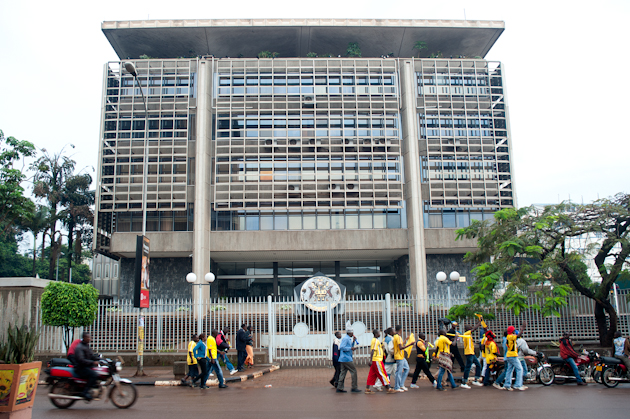
Stanbic Bank
Stanbic Bank
17.3 C
Kampala
Stanbic Bank
Stanbic Bank
Home Blog Page 1246

To reduce inequality, employ young people

Isabelle Kubwimana (Youth Think Tank Researcher)

By Burcu Hacibedel and Priscilla Muthoora

Rising economic growth has reduced inequality in low-income and emerging market countries over the years. In good economic times, young people working helps reduce inequality in both groups of countries. But when growth slows down and jobs are lost, more young people out of work in low-income countries leads to a rise in inequality. In emerging markets, the story is a bit different and we’ll explain why.

The results in our coauthored recent paper, which studies a group of 71 low-income and emerging market countries, emphasize the importance of both the quality of jobs created and a country’s policies to support employment, which helps reduce inequality and foster more inclusive growth.

A new way of knowing

The relationship between inequality and long-term growth has been closely studied, but the relationship between short-term fluctuations in growth and inequality—both in good times and in bad times—is a rich mine for more research.

To study this relationship, we decided to use an approach called mediation analysis, most often used in psychology, but rarely used in macroeconomics. The idea is to identify what the driving force is behind why something happens, and how these are connected. Another big advantage is it can help pinpoint how important the different driving forces behind any changes may be.

This matters because if policymakers know more about why something is happening, they can design better policies to tackle it head on.

We defined good times and bad times in a given year using two criteria: first, whether a country’s GDP per capita growth rate was positive or negative, and second the difference between that number and the country’s average GDP per capita growth rate between 1981 and 2014.

In good economic times, young people working helps to reduce inequality.

We looked at the impact of good and bad economic times on inequality through unemployment, access to finance, and government spending. We found that in low-income and emerging market countries, unemployment, especially among young people, is an important driver of inequality during good and bad times.

In good times, reduced unemployment in general explains 41 percent of the reduction in inequality in low-income and emerging market economies. Young people working more explains about over one third of that reduction. In bad times, 28 percent of the increase in inequality is because of an increase in unemployment. The increase in unemployment among young people is a key contributor to the rise in inequality.

https://blogs.imf.org/wp-content/uploads/2019/06/eng-may-22-inequality-1.png

However, youth unemployment explains less of the rising inequality in bad times in emerging markets. The results suggest that more jobs are created in good times, and fewer jobs lost in bad times in emerging markets compared to low-income countries. This difference could be due to even higher levels of self-employment and informality in low-income countries.

Policy fix

There are two key policy implications from our findings.

First, the quality of jobs created and policies to support employment are important to reduce inequality in low-income and emerging market countries.

Also, reforms to the structure of a country’s economy to boost productivity and long-term growth should design policies that reduce big differences in the distribution of income.

And, since the bulk of the effect of growth on inequality comes from youth unemployment, governments should design policies to increase the employability of younger workers and reduce their vulnerability to economic downturns.

Stories Continues after ad

AfDB, AU launch instrument for private sector agricultural finance

ADB President, Dr. Akinwumi Adesina

The African Development Bank (AfDB) and the Fund for African Private Sector Assistance (FAPA), a multi-donor trust fund financed by the Governments of Japan and Austria, today launched the African Agri-Business Engine (AABE) in Malabo, Equatorial Guinea to finance the private sector in the agricultural sector.

FAPA provides grants for technical assistance activities in Africa, and is one of the components of the Enhanced Private Sector Assistance (EPSA) initiative hosted at the African Development Bank.

The African Agri-Business Engine will identify investment and finance opportunities in agriculture and agribusiness, and focus its activities in Mozambique, Zambia, Ethiopia, Rwanda, and Kenya.

The project will be implemented by Grow Africa and hosted in the African Union Development Agency – New Partnership for Africa’s Development (AUDA-NEPAD). One of the proposed outcomes of the African Agri-Business Engine is the submission of business-ready deals with leading continental partners at the African Investment Forum in Johannesburg at the end of this year

Jennifer Blanke, Vice President of Agriculture, Human, and Social Development of the African Development Bank said the launch of the African Agri-Business Engine is significant because private financing is critical for the agriculture sector to move up the value chain, so that Africa can start to feed itself and ultimately the world.

The African Development Bank is building an integrated business pipeline that generates and activates investments for agribusinesses and agricultural SMEs to be financed in priority value chains on the continent. It is critical to enable inclusive financing within the agribusiness sector and develop market access for SMEs and smallholder farmers.

Mr. Symerre Grey-Johnson, Head of the Regional Integration, Infrastructure and Trade Programme of AUDA-NEPAD said that hosting the African Agri-Business Engine in NEPAD was appropriate and that this was a clear demonstration of the excellent cooperation between NEPAD and FAPA.

He also looked forward to the Bank’s second annual Africa Investment Forum in Johannesburg.

Mr Shinichi Isa, Parliamentary Vice-Minister for Finance, Governor to the African Development Bank, Government of Japan, expressed the appreciation and approval of the Japanese government and said he was convinced of the particular importance and influence of technical assistance in building capacity from his previous experiences in development finance and projects.

The specific objectives of the African Agri-Business Engine are to create market insights and business intelligence at country level for priority value chains, and develop business engine value chain platforms for a flow of bankable and innovative agricultural SME proposals. Through these objectives, the project will identify commercial investment opportunities in strategic commodity value chains and provide a reliable pipeline of bankable projects that will quickly find investment funding.

Also in attendance at the launch were Governors and government representatives from Africa and foreign governments and senior Bank staff, including Vice President Finance Bajabulile Swazi Tshabalala.

Stories Continues after ad

EU releases additional Shs14b to tackle Ebola in Uganda and South Sudan

Congolese officials and the World Health Organization officials wear protective suits as they participate in a training against the Ebola virus near the town of Beni in North Kivu province of the Democratic Republic of Congo, August 11, 2018. REUTERS/Samuel Mambo

As the deadly Ebola virus outbreak in the Democratic Republic of Congo (DRC) continues, with the first cases emerging in neighbouring Uganda this week, the EU has announced further emergency funding of €3.5 (about Shs14 billion) million, of which €2.5 million is for Uganda and €1 million for South Sudan. The aid package will strengthen rapid detection and reaction to Ebola cases.

Today’s funding comes on top of the €17 million in EU funding for Ebola response since 2018 in the Democratic Republic of Congo and prevention and preparedness actions in Uganda, South Sudan, Rwanda and Burundi. Christos Stylianides, Commissioner for Humanitarian Aid and Crisis management and EU Ebola coordinator said: “We are doing all we can to save lives and stop further Ebola cases. Today, our main task is not only to help the Democratic Republic of Congo, but also assist neighbouring countries like Uganda. Here, our funding is helping with surveillance, work with local communities, and boosting local capacities for these countries to take timely and effective action. We are committed to continue our assistance to bring this outbreak to an end, for as long as it takes.”

In co-ordination with other international donors and in line with the World Health Organisation’s Regional Strategic Ebola Response and Preparedness Plans, EU funding is contributing towards measures that include mainly: the strengthening of disease surveillance at community level, health facilities and points of entry (border crossing points) and the training of rapid response teams.

Other measures include; the training of healthcare and frontline workers on contact-tracing, infection prevention and control measures, psychosocial support, and safe and dignified burials; local capacity-building by equipping medical treatment facilities; and community awareness-raising. EU humanitarian health experts in the Democratic Republic of Congo, in Uganda and in the region are coordinating and they are in daily contact with the health authorities in these countries, the World Health Organisation and operational partners.

The EU has been assisting countries on the frontline since the beginning of the outbreak in 2018, providing financial support, experts, and the use of the ECHO flight service to deliver supplies and has activated the EU Civil Protection Mechanism.

On 11 June 2019, the Minister of Health of Uganda confirmed that a first patient had tested positive to Ebola virus disease (EVD) in Kasese district and died yesterday.

Given the high population mobility in the region between Ebola-affected areas in the Democratic Republic of Congo and neighbouring countries, the threat of a crossborder transmission of the Ebola virus has always been evaluated by the World Health Organisation as very high.

The EU Humanitarian Aid department along with the United Kingdom’s Department for International Development is currently carrying out a field mission in south-west Uganda, with the participation of a regional health expert from the European Commission. The EU has also financially supported Ebola vaccine development and research on Ebola treatments and diagnostic tests.

Stories Continues after ad
Thomas Kwoyelo’s trial: International Criminal Court camps in northern Uganda

Thomas Kwoyelo

The International Crimes Division of the High Court (ICD) has camped in the Acholi districts of Gulu and Amuru for a week-long community outreach and updating the region about the trail of the former Lord’s Resistance Army (LRA) Commander, Thomas Kwoyelo.

Areas targeted by this campaign include Lamogi Sub-County, Pagak Primary School, Lamogi Local Government Council Hall, and Pabbo Local Government Council Hall, Gulu District Hall, among others.

The campaign that commenced this week is aimed at informing the public about the mandate of ICD and updating the communities on the progress of the ongoing trial of Kwoyelo.

The ICD teams were led by Lady Justice Margaret Oguli Oumo, Head ICD together with the Ag. Assistant Registrar Esther Rebecca Nasambu. Others in attendance include the Victim Counsels, led by Ms. Amooti Magdalena, Defense team led by Mr. Caleb Alaka and the Prosecution team led by Mr. William Byansi.

Kwoyelo was abducted by LRA on his way to school in 1987 and remained in captivity and later became colonel.

Kwoyelo is currently grappling with 93 counts of murder, aggravated robbery, extensive destruction of property, causing serious injury to body or health and inhuman treatment, rape and torture among others. He is accused of having committed the crimes against the civilian population of northern Uganda, southern Sudan and the northeastern regions of the Democratic Republic of the Congo (DRC).

The worst attack of the paramilitary group that was under the leadership of Joseph Kony occurred in Haute-Hele Province (DRC) in December 2008, the so called Christmas massacre where over 200 were killed and over 800 house razed down.

The rebels split up in groups to attack the villages Faradje, Batande, Duru, Bangadi and Burgi. They waited until people had gathered for Christmas festivities, then surrounded and killed them with axes, machetes and clubs.

In March 2009, Kwoyelo was injured during hostilities between the Ugandan army and the LRA in DRC and brought into Uganda for medical treatment and subsequently into custody.

His trial however commenced in July 2011 before ICD, a division of Uganda’s High Court however Constitutional Court resolved that the suspect’s trial should stop as it found grounds for the failure by the DPP and the Amnesty Commission to act on Kwoyelo’s application.

In 2015, Supreme Court decided that Kwoyelo’s trail should resume. His is currently trial in Gulu on of the areas where LRA is said to have committed atrocities against humani

Stories Continues after ad

You don’t have powers to restart fresh investigation into BoU over closed banks-Kadaga tells Munyagwa

Munyagwa and his Makindye East colleague, Ibrahim Kasozi.

The Speaker of Parliament Rebecca Kadaga has curtailed the efforts of MP Mubarak Munyagwa, the Chairperson of Parliament’s Committee on Commissions, State Authorities and State Enterprises (COSASE), who days ago constituted a select sub-committee led by Makindye East MP Ibrahim Kasozi, to do a fresh probe of Bank of Uganda over the closure of seven commercial banks.

Before Kadaga’s intervention that a fresh probe BoU cannot be done without following House rules, Munyagwa and Kasozi had been insisting that they intended to do it, saying they had received complaints from clients, customers and shareholders of the banks that were closed. The banks included; Teefe Trust Bank, Greenland Bank, International Credit Bank, Cooperative Bank, National Bank of Commerce, Global Trust Bank and Crane Bank Limited (CBL).

It should be recalled that COSASE under MP Abdu Katuntu probed BoU on the closed banks based on the special audit report of the central on closed banks by the Auditor General John Muwanga, which committee wrote a report that was adopted by parliament in February this year and according to Kadaga, MPs are awaiting government response as far as the recommendations in the report are concerned.

“Please be… advised that once the recommendations were adopted, it is incumbent upon government to respond by way of A Treasury Memorandum, which has not yet been done,” Kadaga wrote in a letter dated June 10th to Munyagwa as Chairperson COSASE.

Kadaga says that no other report has been authored by the Auditor General to parliament in respect to closure of commercial banks in Uganda by BoU to warrant an inquiry into the same by the committee. “Similarly, no authority of the House has been granted to freshly investigate the closure of commercial banks,” says Kadaga.

“…I am of the firm opinion that your action in trying to reopen a matter that was already been substantively considered and finalised by parliament in the very recent past, in the absence of a fresh report of the Auditor General on the subject or authority of the House, whose delegates…is not founded in the Constitution or indeed in the Rules of procedure of Parliament,” she continued.

The Speaker in the letter referred Munyagwa to Rule 219 and Rule 219 (2) of the Rules of Procedure. Rule 219 states: “It is out of order to attempt to reconsider any specific question upon which the House has come to a conclusion during the current session.” Kadaga in a letter says Munyagwa breached Rule 219.

She also faults Munyagwa on rule 219 (2) that states: “Notwithstanding sub rule (1), the House may reconsider any questions upon which a decision has been taken by the House if the motion for revision is taken by a vote of half of all members of parliament participating in that decision.” Kadaga says no motion was moved either by Munyagwa as Chairperson or by any other member to that effect.

Kadaga in letter also says that it was prudent parliament allows BoU to implement resolutions of parliament that were made.

Kadaga received two separate petitions from concerned citizens on May 29 and 31st respectively objecting to reopening investigations by COSASE into closed commercial banks by BoU. The petitioners argued that the second exercise would be a water of taxpayers’ money since the committee did the f did the same work and presented to parliament for adoption. They also argued that the second exercise had an invisible hand behind to help BoU officials implicated in the first probe to clear their names.

Kadaga’s decision that no fresh probe of BoU over closed banks should be carried out by COSASE has dealt a blow to BoU officials who thought they would clear their names, having been faulted in the first probe that stretched from Later October to late February 2019.

Days ago BoU Deputy Governor appeared before COSASE with some documents related to the Shs478 billion supposedly injected into CBL but were sent back. The Auditor General in the first probe faulted BoU officials for failure to account for Shs32o billion of that money.

Kadaga has advised Munyagwa to work on other entities and leave BoU alone. “I am sure that there i8s more than enough work concerning other entities before your committee that equally deserve the attention of your committee,” she wrote.

Stories Continues after ad

French Ligue 1 to be renamed ‘Ligue 1 Uber Eats’

French-Ligue-1-

French soccer’s Professional Football League (LFP) has announced that food delivery service Uber Eats will become the new naming rights sponsor of Ligue 1 from the start of the 2020/21 campaign.

Uber Eats will serve as an official partner of French soccer’s top flight next season before putting its name to the competition for the following two years, with the league set to be known as Uber Eats Ligue 1 until the end of the 2021/22 campaign.

According to French daily newspaper Le Figaro, Uber Eats will pay the LFP €32 million (US$36.1 million) over the course of the agreement, marking a significant increase on the reported €20 million paid by furnishing and household appliances retailer Conforma, Ligue 1’s previous title sponsor.

“This major agreement reflects the new dimension taken by Ligue 1,” said LFP chief executive Didier Quillot. “We are very proud to be able to count on the support of Uber Eats, a major global brand, to support the development of the French championship.

“From 2020/2021, the title partnership agreement will seal a major alliance. After partnership agreements with major US sports franchises, we are very proud that Uber Eats has chosen Ligue 1 as the first European sport partnership with the aim of supporting its development. We are also particularly pleased to be able to associate Ligue 1 with a very strong brand among young consumers.”

An official release added that the partnership will ‘offer many opportunities’ to French soccer fans, including ‘unique experiences’ when watching live matches.

Stéphane Ficaja, Uber Eats’ general manager for Western and Southern Europe, added: “Football is a sport that federates all generations and is a major focus of many French and Uber Eats application users. Through this partnership, we want to continue to be part of their daily lives by registering in the long term and by offering them new experiences.” – (Sportspromedia)

Stories Continues after ad

Livingstone Mbabazi rejoins Onduparaka FC

Charles Livingstone Mbabazi has returned to Onduparaka Football Club on a three year deal, the Arua-based club has announced.

“Back like He never left! We are delighted to announce the return of tactician Charles Livingstone Mbabazi who has rejoined us on a 3 Year deal!! Welcome Back Chief! #AmaOnduparaka #GodsTeam” said Onduparaka’s Club Statement.

Mbabazi returns to the club where he resigned over a year ago due a string of poor results the Caterpillars obtained with the highlight of it being losing their unbeaten run as SV Villa beat them at the Green Light stadium.

He is expected to work with Simeone Masaba as his assistant and Leo Adraa as the technical director.

The tactician resigned from his role as head coach at Mbarara City last month before flying to Durban in South Africa for COSAFA 2019 championship where he was the assistant coach to Abdallah Mubiru.

He was also linked with a move to newly promoted Uganda Premier league side Wakiso Giants and SC Villa Jogoo.

The CAF “B” licenced has also managed at Bright Stars FC, URA FC, Kyetume FC. He also managed the Somalian National team in 2015.

Stories Continues after ad

Bugisu MPs ask gov’t to secure loan for fast resettlement of Bududa mudslide suvivours

Legislators from Bugisu sub-region in eastern Uganda, have appealed to the Speaker of Parliament, Rebecca Kadaga, to urge government secure a loan for quick resettlement of the Bududa landslide suvivours who now are suffering as a result of mudslides washing away their homes and properties.

The members of parliament (MPs) under their umbrella body, Bugisu Parliamentary Caucus said that the rate at which the central government has been handling resettlement of the affected families does not match with the rate at which landslides are occurring in the mountainous region on the border with Kenya.

The MPs proposed that government compensates the affected families rather than construct houses for them because the latter has dragged for so long and that those in settlement areas in Kiryandongo and Bulambuli districts are already crying of lack of certain amenities.

“For now it is urgent that government takes a loan and compensates people just like in the road construction case. It can even be half the money they are using to construct a house – even if it is Shs20 million per household because people are desperate,” said Bubulo County West MP, Rose Mutonyi,

Kadaga concurred with the legislators and noted that the Bududa situation has persisted for a long time. “The livelihood and resettlement of people in the highlands of Bududa is something which government should address. We need to take a decision and deal with the issue completely,” the Speaker said.

She pledged to engage the President Yoweri Museveni on the proposal to borrow funds for resettlement of the landslide victims. President Yoweri Museveni, according to the legislators, is scheduled to travel to Bududa in a fortnight.

MPs told Kadaga that residents in Bududa are living in fear of not only the landslides but also reports on the cracks developing and the land that is sagging downward.

“We have got a very big crack which goes across Kenya, Bududa, Namisindwa and Sironko,” said Mbale Municipality MP, Jack Wamanga Wamai, adding that in Namisindwa, the land is sagging downwards, there is some bad smell from the ground and we fear it could turn into a crater lake.

The MPs were also concerned that the annual allocation of Shs8 billion for the resettlement is inadequate, “The money has been used to purchase food and to put up temporary shelter,” said MP Mudimi Wamakuyu.

The office of the prime minister recently completed the construction of over 100 houses for the resettlement of the landslide survivors.
The houses are the first phase of a total of 900 houses that are being constructed for the 6300 people to be relocated from Bududa to Bunambutye Subcounty in Bulambuli District

Six people have been confirmed dead so far while many have sustained injuries following the recent mudslide in the area.

Stories Continues after ad

WorldRemit launches new product for business payments to Uganda

Ugandan entrepreneurs and contractors selling goods and services to small and medium-sized enterprises (SMEs) in the U.K. can now receive payments faster and more conveniently following the launch of WorldRemit for Business.

Launched by leading digital remittances firm WorldRemit, the new service enables U.K.-based SMEs to quickly pay their employees and contractors in 140 countries worldwide, including fast-growing emerging markets such as Kenya, Uganda and South Africa. The new service will first be available to U.K.-registered businesses.

For Ugandan entrepreneurs and contractors doing business with clients in the U.K., this service will lead to significant time and cost savings. Traditional bank payments, which are still the dominant international transfer method for businesses sending money abroad to Uganda, can take up to a week, and often incur high fees and exchange rates. In contrast, WorldRemit’s low fees and exchange rates are shown up-front and customers can send money easily via the app or website.

Additionally, transfers to Uganda are processed within 24 hours or less and local entrepreneurs can receive payments via bank account, mobile money or cash pick-up—whichever method is most convenient for them. Users sending funds to Uganda can easily track their transfers in real-time on the WorldRemit app and opt-in to receive daily exchange notifications to send money at the optimal time.

The U.K. is one of Uganda’s most important trading partners, with Uganda mainly exporting tea, coffee and horticultural products. However, with the advent of digital technologies such as e-commerce, smaller entrepreneurs have been able to capture a growing share of U.K.-Uganda trade, especially in the services sector. WorldRemit for Business will enable this new class of digital savvy Ugandan entrepreneurs to get paid quickly and securely.

Ismail Ahmed, Founder and Executive Chairman at WorldRemit, comments: “When I first started WorldRemit, I was frustrated with the high charges and long delays in sending money abroad both as a business owner and consumer. Over the past 9 years, we’ve made it easier for 4 million people around the globe to send and receive money.

Today, we’re pleased to extend that service offering to businesses, and put an end to the steep fees that many pay, especially when sending to Uganda. We’re committed to making it quick, safe and easy for you to pay individuals across borders, leaving you to focus on growing your own business.”

Shane Lennox, Senior Product Manager for Business, comments: “With more people moving and settling across borders, the nature of business is becoming increasingly global. This new product offering is catering for those in need of a digital service that solves a number of pain points faced by SMEs with international staff and contractors. This new product launch will enable millions of SMEs to benefit from our award-winning convenient service.”

WorldRemit customers complete over 1.4 million transfers every month from over 50 countries to over 140 destinations using its app or website and remains committed to providing innovative solutions to meet money transfer needs across the world. Earlier this year, the company announced a new partnership with FINCA and Diamond Trust Bank to further solidify its vast partnership network.

Stories Continues after ad

The risks that could frustrate performance of the 2019/20 national budget

Minister of Finance Matia Kasaija displays a briefcase carrying national budget document

The fiscal risks statement, prepared by the Ministry of Finance, Planning and Economic Development (MoFPED) shows a number of risks facing the government of Uganda over the short to medium term as 2019/20 Shs41 trillion national budget sets in. Fiscal risks are factors that may cause fiscal outcomes to deviate from expectations or forecasts. They include potential shocks to state revenue, expenditure, assets, or liabilities that may not be reflected in budget forecasts.

“The realisation of any or all of these risks can lead to additional government obligations, expanded public debt, refinancing difficulties or more serious fiscal events. Identifying, analysing and mitigating such risks is an important aspect of fiscal planning. The government recognises that sound overall management of the public finances is the starting point for managing risk,” says the ministry in a statement.

It notes that in recent years, Uganda has made substantial progress in implementing financial reforms under the Public Finance Management Act of 2015 (PFM), improving the state’s ability to raise revenue, strengthen budget credibility and increase transparency.

The statement which covers budget outcomes for 2019/20 and examines some longer-term concerns, is Uganda’s first standalone fiscal risk statement. The current statement expands the range of risks assessed as put below:

External risks

The primary external risks to Uganda’s fiscal plans stem from the global economic and trade environment, regional conflict and commodity price volatility. In recent years, the global economy has been marked by rising geopolitical tensions – including trade conflicts – alongside higher debt levels in both developed and developing economies. Growing trade tensions, which affect a range of Uganda’s major trading partners, could put pressure on foreign investment and remittance inflows, with negative consequences for the exchange value of the shilling.

At the regional level, civil strife in the South Sudan, Congo and Burundi have severely disrupted trade and welfare. These conflicts have led to both economic and fiscal costs, including loss of earnings, property, employment, and remittances. Before the recent conflict, South Sudan accounted for about 20 per cent of Uganda’s exports, and was one of the leading remitters of income into the country.

As a member of the East African Community, Uganda is a signatory to the East African Monetary Union protocol, which plans to establish a single regional currency by 2024. The convergence criteria for monetary union include benchmarks for debt, inflation, fiscal balances and external reserves. At present there are significant imbalances within the region, and the pace of achieving and maintaining these benchmarks could lead to future fiscal risks.

Volatility in global commodity prices has a major impact on economic growth, with knock-on effects for the public finances. Rising oil prices would impose large costs on Uganda given our level of oil imports. Subdued global prices for export commodities such as coffee and cotton – and increased competition from other commodity producers – creates greater uncertainty and risks to foreign earnings and the value of the currency. The government recognises these risks and works to ensure that prudent management of risks.

Grants revenue has consistently underperformed relative to expectations. The average shortfall in grants is about 0.5 per cent of GDP each year, and reached nearly 1.0 per cent of GDP in 2009/10. This persistent shortfall poses a significant risk to the fiscal outlook, requiring the government to either delay projects or borrow unexpectedly to cover the funding gap.

Total Expenditure

Expenditure forecasts and outcomes since 2009/10 have underperformed in all years except 2010/11. This, according to analysts mirrors the shortfall in grants, which are usually tied to key projects. The resulting delay of these projects reduces government expenditure and lowers GDP growth. The notable exception was 2010/11, where expenditure was higher than projected given unanticipated election costs and exchange rate depreciation.

Analysis of recurrent and development expenditure performance

According to the statement, since 2015/16, Expenditure and Lending has averaged around 90 per cent of the forecast, but this masks notable differences in recurrent and development expenditure. Recurrent expenditure (or the spending by Government on wages and salaries of its employees, and the goods and services the government uses) has averaged 112 per cent of the forecast, whereas development expenditure (or the spending on growth-supporting infrastructure and activities) has averaged only 85 per cent of the forecast. The figure below shows performance of recurrent and development expenditure against forecast.

The performance of development expenditure reflects the performance of grants, which are tied to financing development expenditure yet they have performed below their forecast for most years. The resulting underperformance of development expenditure could have a negative impact on economic growth. Additionally, the performance of development expenditure is partly explained by the variations in domestic and external financing outcomes compared to their forecast. External financing is usually linked to development expenditure yet it has performed below the anticipated levels especially for FY 2016/17 and FY 2017/18.

Budget Sensitivity Changes in macroeconomic conditions can affect the fiscal accounts to varying degrees. Revenue estimates are particularly sensitive to changes in macroeconomic assumptions given the effect of these changes on the tax base. A one percentage point reduction in real GDP, for example, would reduce revenue by Shs55 billion. Expenditure is generally sensitive to changes in prices (inflation) and exchange rate.

Public debt

At the end of June 2018, Uganda’s total public debt, defined as the outstanding stock of government securities and foreign loans, stood at US $10.74 billion. This was equivalent to 41.5 per cent of GDP. Debt as a share of GDP is expected to increase to a peak of about 52 per cent in FY 2021/22 and then decline to about 40 per cent by FY 2024/25. Foreign debt accounts for 68 per cent of Uganda’s total public debt. The main fiscal risk associated with foreign debt is the possibility of large, sustained movements in the exchange rate. A depreciation in the Ugandan shilling could result in higher debt-service costs.

However, the external debt is mainly on concessional terms and denominated in longer maturities, which provide some buffer against this risk. Much of the public domestic debt is denominated in instruments with a one-year maturity or less. The short-term nature of the domestic debt portfolio creates a large re-financing requirement and higher costs than longer-dated debt. In addition, the practice of rolling over existing debt creates risks if interest rates rise. At the end of June 2018, nearly 37 per cent of domestic debt was due to mature within one year. While this is close to the benchmark of 40 per cent established in the 2013 Public Debt Management Framework, it is down slightly from over 38 per cent in June 2017.

To manage the fiscal risk associated with public domestic debt, the government will continue to restructure the debt portfolio, shifting from shorter-dated to longer-dated securities. The government will also ensure that annual domestic borrowing remains under one per cent of GDP. Interest payments as a share of domestic revenue have been on an upward trend for the past six years. This reflects both expanded borrowing and higher interest rates over this period. In 2018/19, interest is expected to be about 18 per cent of revenue, up from 6 percent in 2010/11. This increasing non-discretionary expenditure can present a risk for the government, particularly if economic conditions change unexpectedly.

Contingent Liabilities

Contingent liabilities are payment obligations that only arise if a particular event occurs. The government’s main contingent liabilities stem from loan guarantees and the debts of public corporations.

Loan guarantees

The government’s main contingent liabilities are associated with loan guarantees. The government’s guarantee portfolio is currently about US $55 million. Exposure to these guarantees stood at US $53 million at the end of June 2018, equivalent to about 0.2 per cent of GDP. This is a 34 per cent increase in exposure from US $40 million in June 2017, mainly as a result of the recently issued guarantee to Islamic University in Uganda worth just under US $14 million. Default on any of these guarantees would result in an unbudgeted commitment of funding. However, despite the increase in exposure, all loans are performing well, and the risk associated with the portfolio is low.

Debt of Public Corporations

Public entities contribute to the country’s development by providing energy, water, environmental, development finance, civil aviation and other services. In order to maintain fiscal sustainability, these need to be financially sound. Debt acquired through on-lending from the government to public corporations can create fiscal risk where these entities fail to service these debts. However, this debt forms part of the stock of Uganda’s total public debt. The debt of public corporations amounted to about Shs6 trillion (US $1.7 billion), equivalent to about 6 per cent of GDP as at June 2017. Of this debt, 87 per cent is held by two entities: the Uganda Electricity Generation Company and the Uganda Electricity Transmission Company. The government monitors these corporations to ensure they are operating optimally and that they are on course to repay the funds on-lent to them.

Mitigation measures for contingent liabilities

The government maintains a proactive policy stance to mitigate contingent liability risks: For example; all borrowing by public corporations and sub-national governments, and government-issued guarantees, must be approved by the Minister of Finance, all public corporations that intend to borrow, as well as entities requesting guarantees, are required to be financially sound, as determined by MoFPED and all projects to be funded must be in line with the National Development Plan and sector priorities.

Natural disasters

Drought, landslides and floods are relatively common occurrences in Uganda. Such events pose risks to economic growth and social welfare, and can have significant consequences for the national budget in the form of unplanned or emergency spending. In the years ahead, an increase in extreme weather events associated with climate change is expected to put increased pressure on government budgets.

Over the past four years, government has spent an annual average of Shs114 billion on disaster mitigation measures. Significant events included drought in the western district of Isingiro in 2016/17, and the army-worm outbreak that affected agricultural harvests in 2017/18. In 2017/18, the government allocated Shs35 billion for disaster relief following landslides in eastern Uganda. Long-term planning to mitigate the effects of natural disasters includes budgeting for costs related to disaster and refugee management, and building new dams, irrigation and bulk water supply schemes.

The government is also working to increase the functionality and use of meteorological data to support sector-specific early warning to combat the effects of extreme weather events. A contingency fund has been established to respond to unforeseeable and unavoidable expenditure, including natural disasters. The law requires this fund to be replenished with 0.5 per cent of the budget each year, though this commitment is yet to be met.

Legal Claims

The government continues to accumulate liabilities arising from court awards. The stock of arrears from these awards stood at about 33.2 per cent of the total domestic arrears as at end of June 2018. The MoFPED is devising a mechanism to halt the accumulation of arrears using commitment control systems.

Pension Liabilities

Under the state’s pension plan for public-sector employees, pension payments for each financial year are budgeted and paid out of government revenues for that year. The structure of this plan, combined with changes in staffing levels and demographic shifts, is a source of fiscal risk.

Government is accumulating future pension liabilities without setting aside resources to fund these liabilities, even as demand on the fund grows. Uganda’s public service grew from 300,372 in 2015 to 308,451 persons in 2016. Between 2002 and 2016, life expectancy improved from 50.4 to 63.3. Pension payments have grown from less than 1 per cent of the budget in 2015/16 to more than 2 per cent in 2017/18. As a percentage of GDP, pension pay-outs have doubled from 0.2 per cent to 0.4 per cent over the same period. Even though these are relatively small shares, over the long term, the share of the budget allocated to meeting pension liabilities is expected to increase.

To reduce the risk of a growing, unfunded liability, a contributory public sector pension scheme, to which both public service employees and the government contribute, is under consideration in the retirement benefits liberalisation bill before parliament.

The ministry says sound public financial management is the most important contribution to managing fiscal risks, and Uganda intends to build on the progress it has registered in this respect in recent years. While a number of external risks to fiscal plans are not within our control, the government is expanding its assessment and monitoring of fiscal risks, and putting mitigating measures in place to reduce their impact on the public finances.

Stories Continues after ad