Stanbic Bank
Stanbic Bank
21 C
Kampala
Stanbic Bank
Stanbic Bank
Home Blog Page 1247

Brazil police end Neymar rape probe over lack of evidence

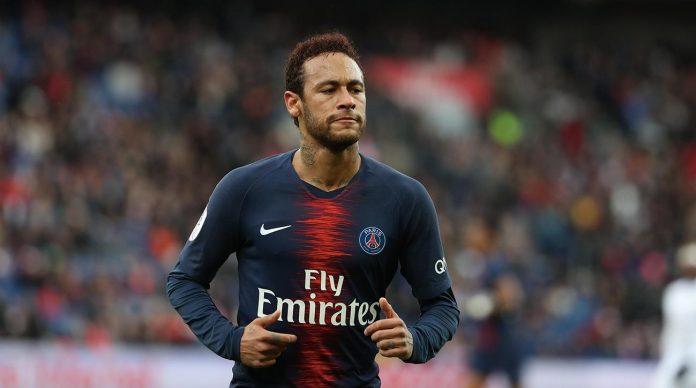
Neymar


Police in Brazil probing rape allegations against football superstar Neymar have closed the case due to a lack of evidence, the Sao Paulo attorney general’s office said Monday.

The police decision will be sent to prosecutors on Tuesday, who will have 15 days to evaluate the case, a spokeswoman for the attorney general’s office told AFP.

A final ruling on the case will be made by a judge.

A spokesman for Neymar said he was not able to comment on the police decision. Sao Paulo police are due to hold a news conference on Tuesday.

Neymar has vehemently denied allegations he raped a Brazilian woman in a Paris hotel in May.

The ugly affair, which has dominated headlines and conversations in the soccer-mad country for weeks, overshadowed Brazil’s preparations for the Copa America.

Hosts Brazil went on to win South America’s showcase tournament earlier this month without their biggest player, who was injured in a warm-up friendly before the opening match.

The scandal blew up on June 2 when Neymar published a seven-minute video on Instagram, where he had first been in contact with Najila Trindade, revealing that he had been accused of rape.

In an attempt to defend himself against the allegations, Neymar’s video was accompanied by WhatsApp messages and images of his encounter with Trindade — without her consent, possibly breaking Brazilian law.

– Police questioning –

The drama quickly snowballed. Extracts of a televised interview with Trindade, in which she accused Neymar of “aggression together with rape,” aired just one hour before he was about to enter the pitch for the pre-Copa game between Brazil and Qatar.

Neymar tore his right ankle ligament in the 20th minute, ruling him out of the tournament.

In the following weeks, Neymar was questioned by police over the WhatsApp messages.

He also appeared before police in Sao Paulo, where Trindade had filed her complaint at the end of May.

As the case dragged on, police filed a defamation suit against Trindade — who was dropped by multiple lawyers — after she insinuated the force was corrupt.

“The police are bought, aren’t they? Or am I crazy?” she told television channel SBT last month in response to questions over the police investigation of an alleged theft of a tablet device from her home that contained a short video she claims has conclusive evidence she was assaulted.

Despite the seriousness of the allegations, polls have shown that most Brazilians believe Neymar is innocent.

Controversy has followed the Paris Saint-Germain player, who flew back to France earlier this month.

Neymar, who joined PSG in 2017, has made clear he wants to return to Barcelona.

He has yet to feature during PSG’s pre-season tour in Asia and French media reported he will miss Tuesday’s game against Sydney in China.

Stories Continues after ad

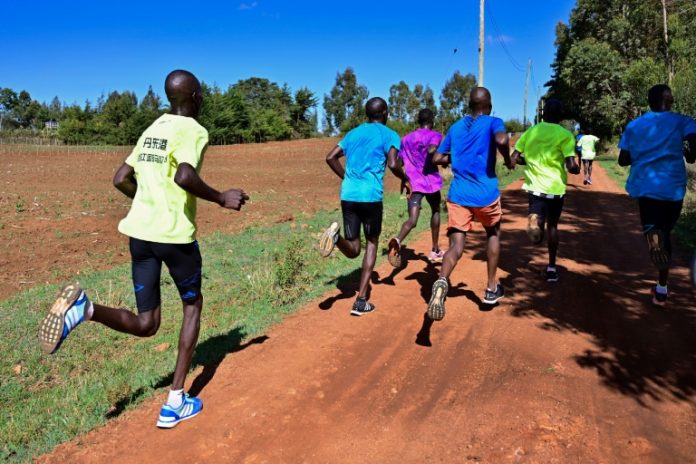
Kenya makes strides on doping, but hurdles remain

Kenya athletes


Kenya suffered international embarrassment in 2016 when a string of doping scandals brought the country famed for its distance runners within a whisker of disqualification from the Rio Olympics.

“It was a time when Kenya faced an enormous challenge in terms of the very integrity of our sports,” said Japhter Rugut, who heads the Anti-Doping Agency of Kenya (ADAK), established in the wake of the scandal.

Kenya scraped through to Rio. But while its sporting authorities promised to clean up their act, Kenyan athletes have proved harder to convince.

A year after the scare, Jemima Sumgong — who in Rio won Kenya’s first-ever Olympic gold in the women’s marathon — tested positive for the banned substance erythropoietin (EPO) and was suspended.

In 2018, three-time world champion and Olympic 1,500 metre winner, Asbel Kiprop, tested positive for EPO and was also banned.

Between 2004 and August 2018, 138 Kenyan athletes tested positive for performance-enhancing drugs, according to a World Anti-Doping Agency (WADA) report published in September 2018.

The report concluded that nandrolone, an anabolic steroid, corticosteroids and EPO were the substances most used by local athletes.

However it found there was “no evidence of an institutionalised system” of doping in Kenya.

Thirty-six Kenyan runners are currently suspended, according to the Athletics Integrity Unit.

– Building awareness –

Nevertheless, efforts to clean up the sport are beginning to bear fruit.

Since its inception, the number of anti-doping tests conducted by ADAK has mushroomed more than 10-fold, from about 100 in 2016 to 1,150 in 2018.

It has created biological passports for about 40 elite athletes to track their data over time, a development made possible by the opening of a WADA-approved blood testing laboratory in Nairobi in 2018.

ADAK, under its slogan “Stay Clean, Win Right”, has also launched a nation-wide awareness-raising program aimed at athletes, coaches and medical staff.

In line with International Association of Athletics Federation (IAAF) guidelines, Kenyan athletes selected for the 2019 World Championships starting in Doha in September will be subject to a minimum of four blood and urine tests.

“Qualification will be done on time and testing,” says Jackson Tuwei, president of the Kenyan Athletics Federation.

“We have made this very clear to all our athletes that those who want to go to worlds, must also qualify by being tested.”

But beyond the elite level, tackling doping remains a monumental challenge.

There are 4,000 top-level athletes registered with the athletics federation — four times more than in France for example — stretching oversight resources.

These athletes see running — and winning — as the only way out of a life of poverty, and go undetected by the checks and controls as Kenya focuses on its elite athletes.

“There are easily more than 500 top marathon runners… so it is difficult for the federation, given its limited resources, to monitor and control each athlete,” says specialist journalist Elias Makori.

“Every weekend, there are dozens of Kenyans winning marathons all over the world.”

– ‘A culture of honesty’ –

“In East Africa, unlike anywhere else in the world, hundreds and hundreds of professional athletes make a very good living from road running,” says Brett Clothier, director of the Athletics Integrity Unit (AIU), a watchdog set up to police anti-doping in athletics.

“Many of these athletes are never tested out of competition.

“Such athletes have the motivation, opportunity and financial means to boost themselves, and therefore there is a high demand for doping products.”

For Brother Colm O’Connell, legendary coach of two-time Olympic 800m champion David Rudisha, the education of athletes is at the heart of combating the scourge.

“I also think we must instil in our young people, as they grow up through the ranks, becoming athletes, we must instil a culture of honesty, fair-play, that you can win without, you can win clean,” he said.

Other significant hurdles remain.

No one is tracing doping substances stocked by pharmacies and hospitals. The regulation of athletics agents is lax. Allegations of corruption, too, have marred efforts to clean up the sport.

Even identifying athletes can sometimes prove problematic, with runners registered under different names from one document to the next.

Political support is also not assured. Kenya’s parliament this year cut funding for ADAK by nearly 15 percent, trimming its budget to around $2.5 million (2.2 million euros).

With the Tokyo Olympics looming less than a year away, Kenya is confident it will avoid a repeat of the Rio Games controversy, even if more work needs to be done.

“For now, there are signs that our joint efforts are working and that we are on the right track,” says Clothier.

“The main thing is that the struggle, and close collaboration, with AIU continues.”

Stories Continues after ad

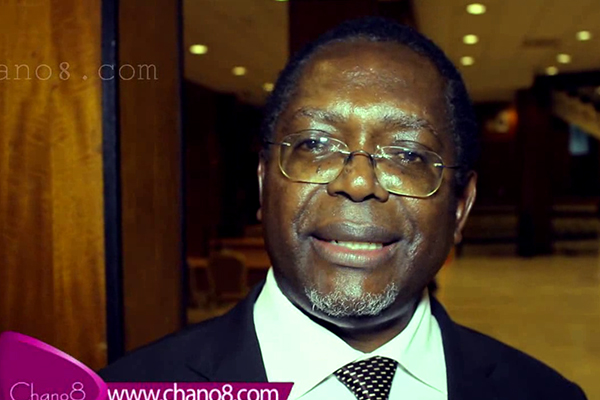
URSB suspends two top performing rights society officials over misappropriation of funds

SUSPENDED: Mr. James Wasula

The Uganda Registration Services Bureau (URSB), has suspended two top officials Uganda Performing Rights Society (UPRS).

The two are the Chief Executive Officer Mr. James Wasula and the Compliance Officer Mr. Dickson Matovu over mismanagement of funds and remittance of royalties collected from rights users.

Their suspension follows a number of complaints raised by various members of the society with allegations of mismanagement of finances and remittance of royalties corrected from rights users.

“On this day July 29th 2019, Uganda Registration Services Bureau (URSB) acting under powers contained in Section 75 of the Copyright and Neighboring Rights Act, 2006 as Uganda’s National Intellectual Property Office and the National Copyright Information Center suspended the following officials of the Uganda Performing Rights Society (UPRS). These persons are the Chief Executive Officer Mr. James Wasula and the Compliance Officer Mr. Dickson Matovu”.

The suspension of the above officials is to allow for an effective ongoing Inquiry into the Constitution, Workings and Financial Conditions of the Society in accordance with the above provision of the law. There have also been a number of complaints from members of the society with allegations of mismanagement of finances and remittance of royalties collected from rights users which URSB would also like to look into critically.

Further, in accordance with the section 75 (4) of the Copyright and Neighbouring Rights Act 2006,  independent professional caretakers, Mr.Kabiito Karamagi and Ms. Rita Baguma Birungi of Ligomarc Advocates have been appointed in consultation and with the cooperation of the Board of Directors of the Society to temporarily oversee the management of UPRS. The activities of the Caretakers shall be supervised by URSB and the Members of the Board of UPRS.

During this period, URSB is going to be in constant engagement with all stakeholders and urges them to cooperate with the Caretaker. The regular activities of the Society are expected to continue smoothly and URSB calls upon all stakeholders and Ugandans generally to support this process.


Stories Continues after ad

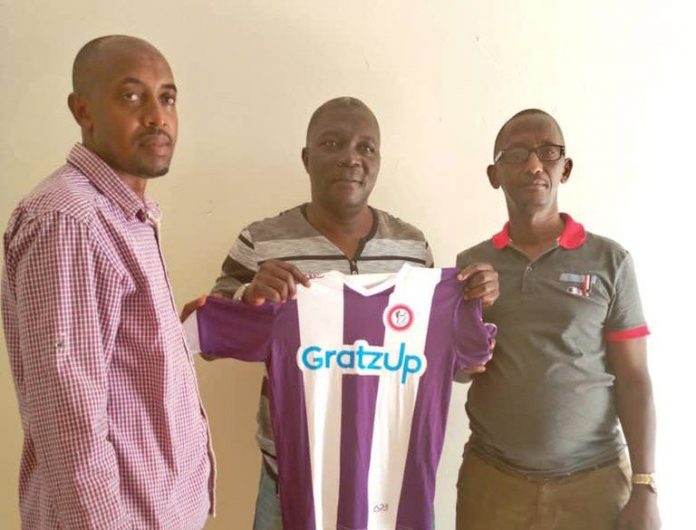
Moses Basena lands coaching role in Rwanda

Basena holding a T-shirt


Moses Basena has been appointed as the new head coach of Rwanda Premier League side Sun Rise FC on a two-year contract.

The former SC villa manager has been unemployed since he left the Jogoos in November 2018 when results were not going his way. .

Basena is a Germany trained tactician who holds a CAF ‘A’ coaching license with over fifteen years’ experience in football management.

Basena has recently been in charge of a number of top flight clubs including Simba in Tanzania, UPDF, Express, KCCA FC and URA FC in Uganda.

He also served as the Cranes interim for six months after Micho resigned until December 2017 when FUFA appointed Sebastien Desabre as Uganda’s national team coach.

During his playing days, he featured for Coffee, Sports Club Villa (winning three League titles with Sports Club Villa in 1990, 1991 and 1993) and the national team Uganda Cranes.

Sun Rise completed last season one place above relegation and they hope Basena turns their fortunes around.

Stories Continues after ad

WHO launches new report on the global tobacco epidemic

WHO
 

The Director-General World health organisation (WHO), Dr Tedros Adhanom Ghebreyesus, has urged governments to implement Tobacco cessation services as part of efforts to ensure universal health coverage for their citizens.

Dr Tedros, said during the launch of the seventh WHO Report on the global tobacco epidemic analyses and national efforts to implement the most effective measures from the WHO Framework Convention on Tobacco Control (WHO FCTC) that are proven to reduce demand for tobacco.

He said Tobacco cessation services include national toll-free quit lines, Cessation services to reach larger populations via mobile phones, counselling by primary health care providers and cost-covered nicotine replacement therapy

“Quitting tobacco is one of the best things any person can do for their own health,” said Dr Tedros. “The MPOWER package gives governments the practical tools to help people kick the habit, adding years to their life and life to their years.” Said Dr Tedros

“Tobacco use has also declined proportionately in most countries, but population growth means the total number of people using tobacco has remained stubbornly high. Currently, there are an estimated 1.1 billion smokers, around 80 percent of whom live in low- and middle-income countries (LMICs).” He said

He said Progress is being made, with 2.4 billion people living in countries now providing comprehensive cessation services. But only 23 countries are providing cessation services at the best-practice level, making it the most under-implemented MPOWER measure in terms of number of countries offering full coverage.

The report indicates that many countries are not adequately implementing policies, including helping people quit tobacco that can save lives from tobacco.

These measures, like the ‘MPOWER’ interventions, have been shown to save lives and reduce costs from averted healthcare expenditure.

The MPOWER report was launched in 2007 to promote government action on six tobacco control strategies in-line with the WHO FCTC to Monitor tobacco use and prevention policies, Protect people from tobacco smoke, Offer help to quit tobacco use, Warn people about the dangers of tobacco, Enforcing bans on tobacco advertising, promotion and sponsorship and Raising taxes on tobacco.

Michael R. Bloomberg, WHO Global Ambassador for No communicable Diseases and Injuries and founder of Bloomberg Philanthropies, said the report shows government-led efforts to help people quit tobacco work when properly implemented.

“More countries are making tobacco control a priority and saving lives, but there’s still much more work to be done,” said Mr Bloomberg. “The WHO’s new report shines a spotlight on global efforts to help people quit using tobacco and it details some of our most important gains.”

The report, funded by Bloomberg Philanthropies, showed that while only 23 countries have implemented cessation support policies at the highest level, 116 more provide fully or partially cost-covered services in some or most health facilities, and another 32 offer services but do not cost-cover them, demonstrating a high level of public demand for support to quit.

Stories Continues after ad

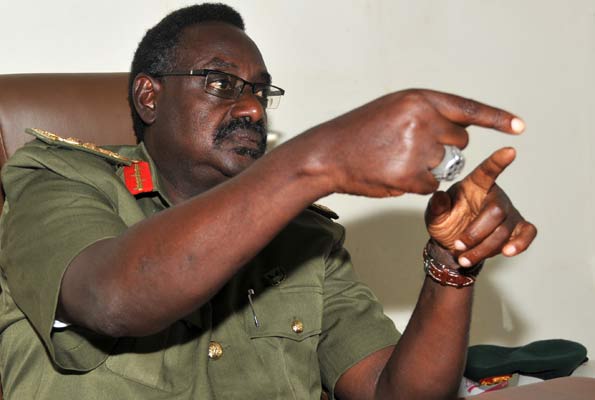
I don’t need UPDF retirement, says Gen Sejusa

Gen. David Sejusa


The former coordinator of intelligence agencies, Gen David Sejusa has said he is already retired from the army after the High Court ruled in 2016 that he was no longer a serving UPDF officer since he had spent years without getting benefits from the army.

In an interview with Eagleonline, Gen Sejusa on why he was missing on list of the 19 UPDF generals who retired today at State House, the maverick general said he doesn’t need UPDF retirement.

“I hear people asking why I was left out on the retirement list! Retire from what? I was retired by court and I suppose everyone knows that. Whether they retire [me] or they don’t, I’m retired,” he told Eagleonline in a recent interview.

In her ruling, Justice Margeret Oumo said that Gen Sejusa was entitled to constructive discharge from the army since he no longer receives a salary and other benefits nor he has been deployed by the UPDF for one and a half years.

Last year, the UPDF had put Gen Sejusa on the list of the 19 Generals who retired on Monday but the name was later removed.

Among those retired on Monday is Gen Joram Mugume, who is the chairman of National Enterprise Corporation, an economic wing of the UPDF.

Gen Joram Mugume had also served as the Deputy Army Commander and Coordinator of Alliance for National Transformation, Maj Gen Mugisha Muntu.

Gen Elly Tumwine, who was put in the list in 2017 among the officers to retire is reported to have said that he wanted to remain serving.

The other officers who have retired include;  Maj Gen Nathan Mugisha, Maj Gen Sam Turyagyenda, Brig. Ramadan Kyamulesire, Maj Gen Timothy Sabiiti Mutebile, and Brig. Charles Angulo Wacha.

Others include Brig. Sam Kakuru, Brig. Matthew Ssewankambo, Maj Gen.Jimmy Wills Byarugaba, Maj Gen Sam Wasswa Mutesasira, Brig. Gyagenda Kibirango, Brig.Tom Tumuhairwe, Maj. Gen. Ambrose Musinguzi, Brig. Mulondo, and Brig. John Mulindwa.

The UPDF spokesperson, Brig Richard Karemire yesterday saluted the retired officers. “The UPDF salutes the gallant 19 General Officers set to retire today at a ceremony presided over by H.E, the President and Commander-in-Chief. Their years of sacrifice during active military service have not been in vain. Uganda is now peaceful. We wish them well,”

Stories Continues after ad

Police investigates BIzibu of grabbing Asian’s land as his contract is questioned

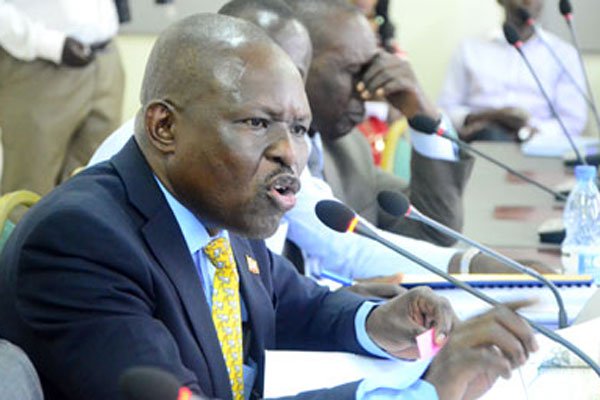
Geogre William Bizibu appearing before the parliament committee before. Photo credit, Daily Monitor.


The Executive Secretary of the Departed Asian Property Custodian Borad, Geogre Bizibu is under investigations by the Land Protection Police Unit (LPPU) over allegations of land grabbing at Ssisa Estate in Wakiso district.

The probe into Bizibu was initiated after a complaint was brought against him on the land which has its owners through Ladha Kassam & Company Ltd, the complainant, says before former president Idi Amin expelled Asians in 1972; the company had a model farm of cotton, coffee, poultry and animals on the land.

The company alleges that in 1991 when it re-possessed the land, it was all smooth-sailing until recently when Mr Bizibu claimed 130 acres of the same land.

“Our client has learned that DAPCB through its Executive Secretary is fraudulently laying claim on our client’s land through a letter enclosed herewith,” reads a July 26 letter by the company lawyers, Lwere, Lwanyaga & Company Advocates, to LPPU.

Documents show the land was registered in the company name on July 4, 1955.

Documents including a certificate authorizing repossession dated November 21, 1991, signed by the then Finance Minister, Dr Crispus Kiyonga. The land was originally registered as Freehold Register Volume 3 Folio 15 Busiro Block 408 Plot 3 land at Sisa.

Meanwhile, police is also investigating Bizibu of allegedly holding the office without a valid contract since it expired sometime back.

“We want to establish when he was reappointed and whether the job was adverted because we are also aware that he was a campaigning agent for one of the politician in the Ministry of Finance. How did he end up at DAPCB? Said a police source on condition of anonymity because he isn’t authorized to speak to the press.

Police sources also say, the purported list of properties that was compiled by Bizibu could be an alleged ploy by some people to use it as a money making scheme.

Police further say they also intend to establish whether custodian board especially Mr Bizibu are allegedly trying to use underhand methods by debuting the current owners of properties so as to get compensated by government having failed to get through previously. Mr. Bizibu recently authored a report to Parliament’s Committee on Commissions, State Authorities and State Enterprises (COSASE) asking the legislator to investigate claims of double payments and irregular accusation of plots and building.

This website failed to get a comment from Mr. Bizibu on the allegations above as his known mobile telephones  were switched off by the time of uploading this story.


Stories Continues after ad

Muhammad Shaban terminates contract with Raja Casablanca

Uganda Cranes forward Muhammad Shaban has terminated his contract with Raja Casablanca of Morocco after just one year.

The former Onduparaka striker leaves the club after failing to secure a starting role in the first team and spending most of the time in their reserve team.

His agent Niwagira Ronald Santos confirmed the development through a statement on his facebook page;

“Ronnie santos sports Management, the official representative of Mohamed Shaban – Uganda cranes have this afternoon reached an agreement with Raja Casablanca to end our relationship which started 13th.August 2018.

“Due to some reasons which remain confidential per now, we have agreed to terminate the contract effective today 29th July 2019.

“We wish to thank Raja Casablanca for giving us a chance to work with you, it’s been a pleasure putting on the green and colours.”

Muhammad Shaban joined the Moroccan side from KCCA FC on a three year deal for $130,000 in August 2018.

During his time at the club, they won the CAF super cup defeating Tunisian side Esperance 2-1 in Qatar but was unused substitute.

Stories Continues after ad

Kawempe S.S dominates Airtel Rising Stars Kampala Regional Tournament

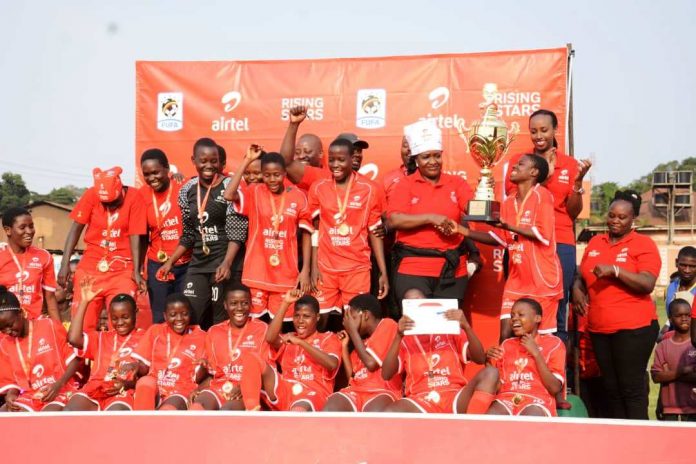
Kawempe Muslim S.S. girls celebrate victory at the Airtel Rising Stars Kampala Regional tournament
 

This weekend, Airtel Uganda hosted the best youth football teams from Kampala district at Sendi grounds in Wankulukuku for the Airtel Rising Stars Kampala Regional tournament – the first regional tournament of the 2019 competitions.

The 3-day tournament, which had 16 boys’ and 8 girls’ teams, saw Kawempe Muslim SS dominate on both fronts with their boys team defeating 2018 winner Kampala Junior Team (KJT) 5-4 in penalty shoot-outs following a goal-less draw after 90 minutes.

The Kawempe Muslim SS girls’ team also defeated Uganda Martyrs 2 -1 in an exciting and nerve-wracking match watched by Honorable Nabilah Naggayi, the Kampala Woman MP, FUFA leadership led by 2nd Vice President Darius Mugoya and Airtel Uganda Brand and Strategy Manager Ms. Noela Byuma.

Following their victory, both Kawempe Muslim boys and girls teams walked away with a trophy, gold medals each and 1.5 million shillings each. Runners up KJT (boys) and Uganda Martyrs (girls) also took home a trophy, silver medals for the players and 1 million shillings.

Uganda Martyrs’ Kevin Nakachwa was named girls MVP while Jeremiah Jabel from St. Mary’s took home the boys MVP accolade.

Commenting about this tournament, Airtel’s Noela Byuma congratulated the winners and encouraged all the other teams to continue training for their comeback in the 2020 tournament.

“The talent that we have seen over the past three days has been a clear indicator for the need to continue investing in grassroots talent development. These youth are skilled, passionate and determined and these are the values that Airtel Rising Stars aims to develop as they go on to pursue professional careers in football,” she noted.

Since 2011, the Airtel Rising Stars grassroots football tournament has given talented boys and girls between the ages of 13 and 17 an opportunity to compete against fellow youth from across the country with hopes of being scouted to join the local league, football clubs all over the world and the Uganda national team.

Today, the Uganda national men and women football teams both consist of a number of players who took part in this tournament.

Stories Continues after ad

World Cup 2022: Draw for the first round of the African qualifiers held

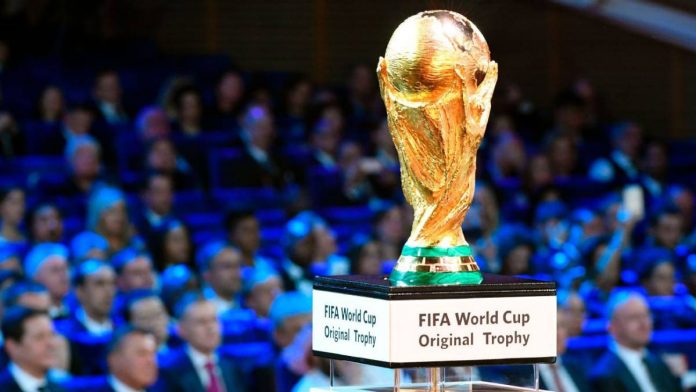
Qatar 2022


Just ten days after Algeria triumphed at the Caf Africa Cup of Nations 2019 in Egypt, Caf staged the draw for the first round of qualifying for the 2022 FIFA World Cup in Qatar.

Only 28 of the continent’s teams – those ranked lowest in July’s edition of the FIFA/Coca-Cola World Ranking – were involved in the draw. The sides will play home-and-away knockout fixtures.

The teams involved in the first qualifying round were: Somalia, Eritrea, Djibouti, Seychelles, Sao Tome, Chad, South Sudan, Gambia, Mauritius, Liberia, Ethiopia, Comoros, Botswana, Lesotho, Eswatini, Equatorial Guinea, Rwanda, Burundi, Sudan, Togo, Malawi, Angola, Guinea Bissau, Mozambique, Sierra Leone, Namibia, Central African Republic and Tanzania.

The 14 winners will join the continent’s top-ranked 26 sides, who have been exempted from the initial round of qualifiers.

The 40 teams will then be split into ten groups of four for the second qualifying round.

The details for group stage draw will be communicated later. However, the matches will kick off in March 2020.

The ten winners of those groups will then be drawn against each other in home-and-away fixtures, with the five victors advancing to Qatar 2022.

The Qatar World cup will be played from 21st November to 18th December 2022.

The 14 ties of Caf’s first qualifying round for the 2022 World Cup: The games will played between 2nd and 10th September.

Ethiopia vs Lesotho

Somalia vs Zimbabwe

Eritrea vs Namibia

Burundi vs Tanzania

Djibouti vs Eswatini

Botswana vs Malawi

Gambia vs Angola

Liberia vs Sierra Leone

Mauritius vs Mozambique

Sao Tome e Principe vs Guinea-Bissau

South Sudan vs Equatorial Guinea

Comoros Islands vs Togo

Chad vs Sudan

Seychelles vs Rwanda

Attachments area

Stories Continues after ad