Stanbic Bank
Stanbic Bank
21 C
Kampala
Stanbic Bank
Stanbic Bank
Home Blog Page 1248

Electoral reforms are intended to restrict us from getting funds for campaigns- Bobi wine

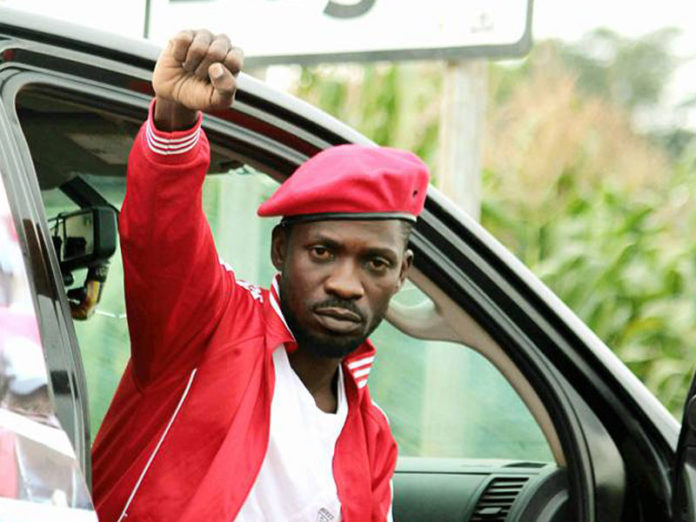
Bobi Wine

Kyadondo East MP, Robert Kyagulanyi aka Bobi Wine,  has said some of the proposed amendments of the electoral reforms are intended to restrict people power  from getting funds for campaigns.

Last week, the Attorney General, William Byaruhanga, tabled the long-awaited electoral reforms as directed by the Supreme Court. The proposals are contained in the Presidential Elections (Amendment) Bill 2019, Parliamentary Elections (Amendment) Bill 2019, Electoral Commission (Amendment) Bill 2019, Political Parties and Organisations (Amendment) Bill 2019 and Local Government (Amendment) 2019.

The bill proposes that the parties should not allies with a political pressure groups aiming at fighting against ruling government.

Government also intends to prohibit use of cameras and mobile phones at polling stations while the Electoral Commission will be given powers to gazette restricted voting areas. When the proposals are passed by Parliament, the Electoral Commission will be free to tally results in the presence of only five people.

“Cameras and phones banned from polling stations so no one records evidence of rigging or captures official declaration forms is an indication that government is threatened by people power, a political pressure group,” said Mr Kyagulanyi.

He said seeing that majority of our soldiers and police officers on the side of the civilians, they are requiring them to vote five days before everyone else so that they are intimidated properly and their results tampered with, as opposed to voting with everyone else.

“Clear signs of a regime in panic- afraid of the people. The same people they dismissed as inconsequential, Once again, if President Museveni claims to be popular, I challenge him to a free and fair election.” He wrote

Stories Continues after ad

Arsenal agree club record £72m fee for Nicolas Pepe

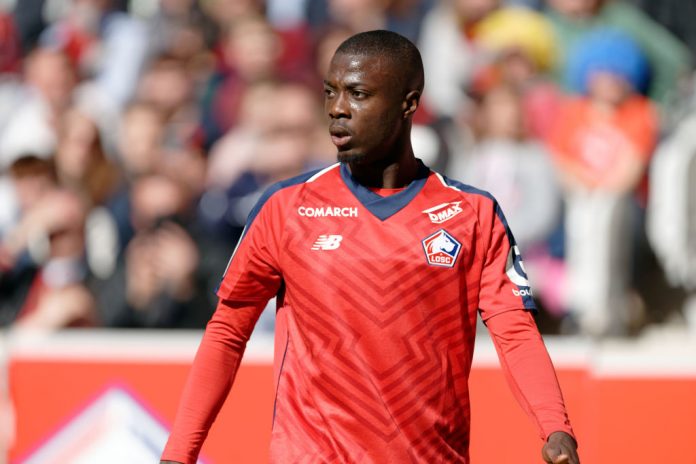
LILLE, FRANCE - MAY 12: Lille's player Nicolas Pepe during the match Lille vs Bordeaux at Stade Pierre Mauroy on May 12, 2019 in Lille, France. (Photo by Sylvain Lefevre/Getty Images)


Arsenal have reached an agreement with French club Lille to sign Ivory Coast winger Nicolas Pepe in a deal worth 80m Euros (£72m).

According to BBC, the Gunners will pay for the 24-year-old via a series of instalments that suit their restricted budget for this summer.

Arsenal are poised to break the existing record of the £60m that the club paid Borussia Dortmund in January 2018 for striker Pierre-Emerick Aubameyang.

An agreement between Arsenal and Pepe’s representatives still needs to be finalized but the transfer is expected to be completed in the next 24 hours.

Italian side Napoli also met Lille’s asking price, but their proposal was rejected by the player’s camp.

Pepe tends to operate on the right wing and cut in on to his left foot, but can also be used as a striker in a 4-4-2 formation.

He scored 23 goals for Lille last season and satisfies Arsenal’s need for a wide player with pace and high technical ability.

The Ivory Coast international also attracted attention from the French giants Paris Saint-Germain, but pulled out of the deal on grounds of the financial fair play system.

Arsenal offered £40m for Crystal Palace’s Ivory Coast winger Wilfried Zaha earlier this month, but their Premier League rivals value the player at about £80m.

Pepe will become the fourth summer signing for Arsenal after the club announced the double-signing of defender William Saliba and Dani Ceballos from St Etienne and Real Madrid respectively and Gabriel Martinelli from Brazil.

Attachments area

Stories Continues after ad

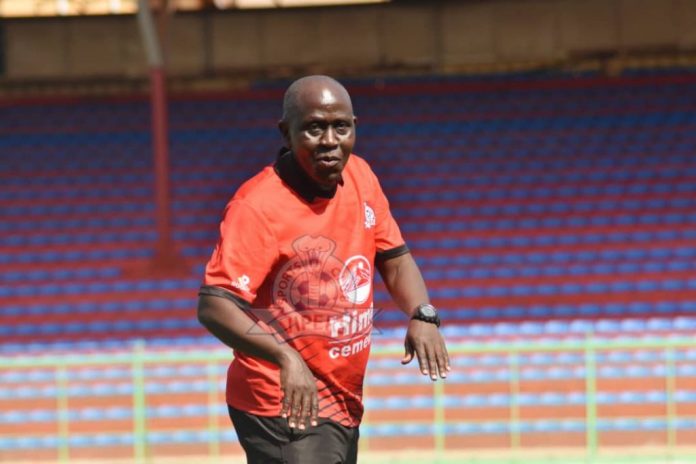
Vipers SC appoint Edward Golola as new head coach

Edward Goloola


Vipers Sports Club have announced Edward Golola as their new head coach.

Golola returns to The Venoms for his third stint (2009-2011, 2014-2015) at the helm having served as an assistant coach to Portuguese tactician Miguel Da Costa (2017-2018) and Kenyan Michael Nam Ouma (half 2019).

“I am immensely proud to be returning as head coach. Everyone knows my love for this club and the history we have shared, however, my sole focus is on the job in hand and preparing for the season ahead,” Golola remarked according to the Vipers website.

Club President Lawrence Mulindwa confirmed the new development to the players during the morning training session at St Mary’s Stadium.

“As the executive we can confirm Edward Golola as our next coach and we will give him all the support he needs this season.”

Golola will be deputised by Richard Wasswa, who also returns to the club for his third spell.

He replaces Ouma whose 6-month contract expired last month and was not renewed.

The technical team that was dissolved earlier has been reappointed with Ram Nyakana Mpuga (fitness coach), Edward Ssali (second assistant coach), Mathius Kassagga (physiotherapist) and Moses Oloya as goalkeeping coach.

Vipers SC will start the 2019/20 football season with participation in the Pilsner Super eight tournament.

The opening game will be on July 31 against Proline FC at StarTimes Stadium, Lugogo.

Stories Continues after ad

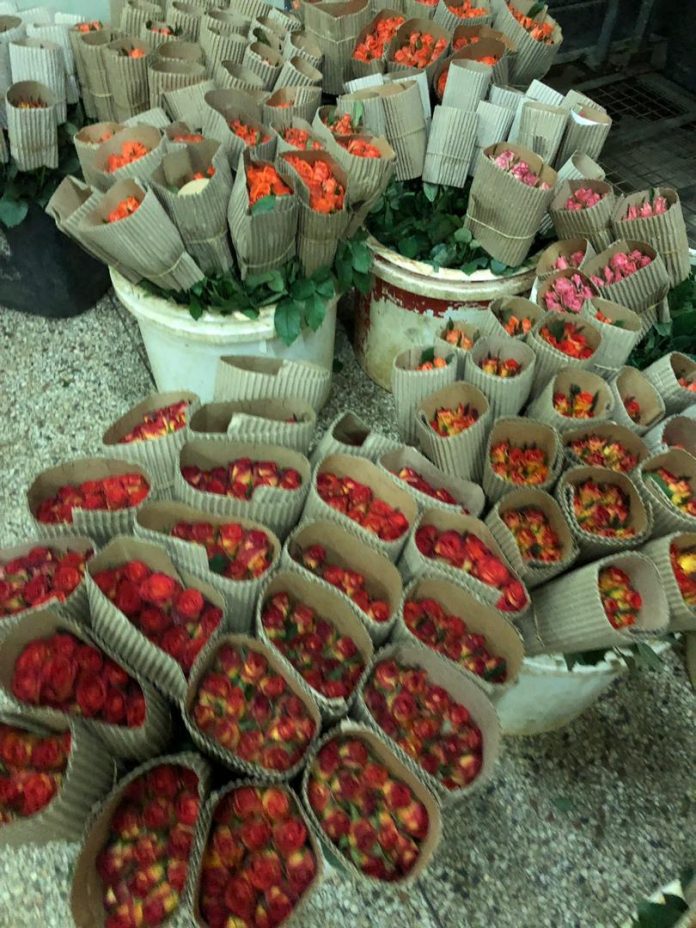
Sudhir starts exporting flowers to China

City business tycoon Sudhir Ruparelia through his  Rosebud company has started exporting fresh flowers to China.

The deal to penetrate China was reached after Mr. Rajiv Ruparelia, who is the Managing Director of the Ruparelia Group of Companies signed an agreement with authorities in China.

Flowers from Uganda expecially Rosebud are regarded as the best in the whole world and they have dominated both European and American markets for decades.

“The first commercial shipment to China is ready , all the flowers inspected myself ,looking good. First Shipment to China as very very historical. Very historical as first Ugandan Roses to china by Rosebud”  said Mr. Sudhir.

Stories Continues after ad

Uganda, Ethiopia joins financial intelligence network


Financial Intelligence Units (FIUs) of two COMESA Member States, Uganda and Ethiopia were among those recently admitted to the Egmont Group, a global financial network that formulates coordinated policies and responses to financial crimes such as money laundering and terrorist financing.

Their admission alongside the Dominican Republic, Palestine, Papua New Guinea and Turkmenistan was a key highlight of the 26th Plenary of the Egmont Group of FIUs held at the Hague, Netherlands, 1st – 5th July.  This brings the membership of the Egmont Group to 164 countries.

The processes leading to the attainment of the standards required for a Financial Intelligence Unit to gain membership to the Egmont Group are long and can take many years. It therefore requires, among other things that the country has enacted sound laws and legislation as guided by the Financial Action Task Force (FATF).

FAFT is the intergovernmental body that sets standards, develops and promotes policies to combat money laundering and terrorism financing. It has so far developed a set of 40 rules to provide measures against money laundering given that the crime is transnational and the success in combatting it requires international cooperation

Among these rules is a requirement for a country to establish a national center for receipt and analysis of suspicious transaction reports and other information relevant to money laundering and terrorism financing.

Following this development, the Head of Peace and Security programme in COMESA Ms. Elizabeth Mutunga said Ethiopia Financial Intelligence Center (FIC) and Uganda Financial Intelligence Authority will now benefit from among other things, the ability to exchange financial intelligence with other FIUs through a secured communication platform.

“Their personnel will also benefit from regular training by experts in the field as well as opportunities for personnel exchanges to enhance the effectiveness of the FIUs,” Ms. Mutunga said.

She added:

“Given the trans-national nature of money laundering, information exchange between jurisdictions is very important but because of the sensitive nature of the information, FIUs are only willing to exchange information with peers that are established within the international standards.”

Considering the benefits that member states derive from membership to Egmont, as well as an assurance of sustainability of COMESA MASE capacity building efforts, COMESA has prioritized support to FIUs to join group.

Mauritius FIU was the first COMESA Member State FIU to join the Egmont Group in 2003.  Others include the FIU of Seychelles, which joined in 2013, Egypt Money Laundering and Terrorist Financing Combatting Unit (2004), Malawi Financial Intelligence Unit (2009), Sudan Financial Information Unit (2017) and Zambia Financial Reporting Center (2018).

Mauritius, Seychelles and Zambia are beneficiary countries to COMESA Maritime Security (MASE) programme. They attained membership to the Egmont Group before commencement of COMESA MASE support.

COMESA facilitated Ethiopia FIC to improve its operations and its ICT systems as wells as sponsoring study tours to other countries with well-developed systems. COMESA MASE is currently working with the Madagascar FIU known as SAMIFIN towards its successful application for Egmont Group membership.


Stories Continues after ad

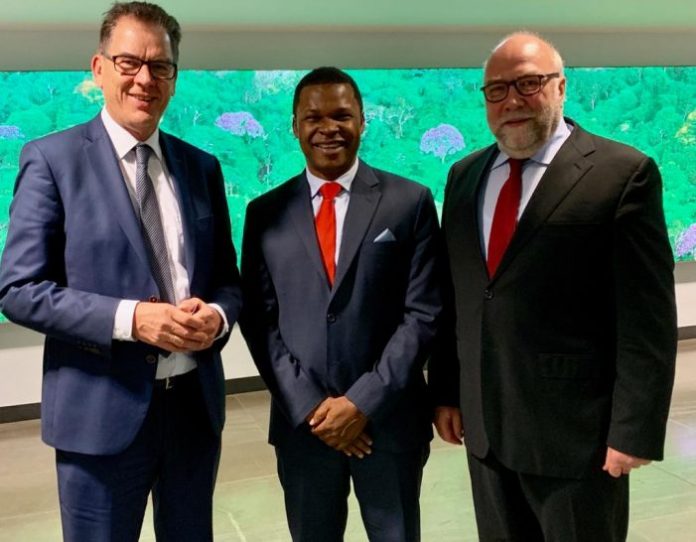
Germany- Africa business forum announces multi-million Euro funding commitment to invest in German-African energy startups

Officials after announcement of the funding


The Germany- Africa Business Forum e.V. (“GABF”), whose goal is to strengthen investment ties between German and Africa, announced it has, in collaboration with private partners from the energy industry, launched a multi-million Euro funding commitment to invest in German energy startups that focus on Africa. The funding commitment, which pledges funds to German startups with exposure to African energy projects, will be the first such intra-regional initiative.

“Our initial goal is to support the investment in German companies and to start with funding allocations by the end of this year”, said Sebastian Wagner, co-founder of the GABF. “Through our partners, we will immediately get involved in investing in solutions-driven German startups with pragmatic business models to solve Africa’s energy challenges through the provision of German technology and innovation,”he added.

“The future of Africa’s energy industry will depend on technology and innovation. When German start-ups and Africans work together, we can build something unique for both our peoples. I applaud the GABF for this well-thought-out initiative. I believe it is in line with the goals of the G20Compact with Africa, driven by Germany,”stated NJ Ayuk, a pan-African energy dealmaker, CEO of Centurion Law Group and Executive Chairman of the African Energy Chamber, a supporter of the initiative.

Anchored in the private sector, the GABF brings together Africa’s foremost executives with German companies, investors and innovators with the aim of driving change. Founded in 2017 as a “private for privates”, the GABF encourages German investors to consider the African continent as a profitable and important investment destination. Through a series of initiatives, the GABF draws together African business and political leaders with Germany’s preeminent innovators to develop fresh investment concepts that shape German and African business ties, as well as economic thought.


Stories Continues after ad

CNOOC  to take a stake in Ugandan crude oil pipeline

Oil pipeline


Chinese oil firm China National Offshore Oil Corporation (CNOOC) says it aims to have a stake in an oil pipeline being developed to export Ugandan crude, the firm said on Friday.

Uganda discovered crude oil reserves about 13 years ago but commercial production has been delayed partly because of a lack of infrastructure, such as an export pipeline.

The 1,445 kilometre East African Crude Oil Pipeline (EACOP), costing $3.5 billion, will pass through neighboring Tanzania to the Indian Ocean port of Tanga.

“CNOOC shall participate in the EACOP project,” Aminah Bukenya, spokeswoman for the firm’s Ugandan unit, told Reuters, adding that the level of its equity stake would be determined by the joint venture partners.

The company jointly owns Uganda’s oil fields with France’s Total and Britains’s Tullow.

Total has previously said it was interested in financing the pipeline. Tanzania and Uganda are both expected to take stakes.

About two thirds of the pipeline’s cost will be financed by debt and a Ugandan unit of South Africa’s Standard Bank Group and Japan’s Sumitomo Mitsui Banking Corp are jointly helping to raise the credit.

Ugandan officials have said the government is now aiming to have commercial crude production start in 2022.

Government geologists estimates the country’s reserves, in the Albertine rift basin near the border with Democratic Republic of Congo, at 6 billion barrels.

Bukenya said CNOOC also planned to produce gas and use some of it to generate up to 42 megawatts of electricity for the company’s use and for sale to the national grid.

Energy Minister Irene Muloni said in December that Uganda’s oil fields had associated natural gas reserves estimated at 500 billion cubic feet.


Stories Continues after ad

Mo Ibrahim Foundation announces the 2019 Ibrahim Leadership Fellows

Mo Ibrahim


The Mo Ibrahim Foundation is pleased to announce the 2019 intake of selected Ibrahim Leadership Fellows, who will make up the programme’s eighth cohort. The incoming Fellows have taken up the following posts: Nadia Hamel (Algeria) has joined the African Development Bank (AfDB), Anta Taal (Gambia) has joined the International Trade Centre (ITC) and Emmanuella Matare (Zimbabwe) has joined the United Nations Economic Commission for Africa (UNECA).

The Ibrahim Leadership Fellowships programme is a selective programme designed to identify and prepare the next generation of outstanding African leaders by providing them with mentoring opportunities in key multilateral institutions. The candidates, chosen from a pool of over 2,000 applicants, will benefit from the direct mentorship of the current heads of the institutions.

Commenting on the new Ibrahim Leadership Fellows, Mo Ibrahim said:

“Congratulations to the three new Ibrahim Leadership Fellows, who will be joining a cohort of 20. My aspiration for the newcomers is that they immerse themselves in this unique opportunity to gain in-depth knowledge and understanding of how such organisations function and use their learnings to continue to contribute to a more prosperous Africa.”

The 2019 Ibrahim Fellows:

Nadia Hamel has joined AfDB. She is an international development professional with extensive experience in policy research and advice, strategic programme management, and communications. She has worked with organisations such as the Organisation for Economic Cooperation and Development (OECD), and has supported projects with the Agence française de développement (AFD), the European Union (EU), and the United States Agency for International Development (USAID).

Anta Taal has joined ITC. She is an economist with ten years of professional experience in International Development, trade and investments, public-private partnerships and capital markets development. She has worked for the Ministries of Finance and Economic Affairs; Trade, Industry and Employment and Economic Planning & Industrial Development in Gambia. She has represented Gambia in key negotiations in the areas of energy, infrastructure and petroleum sectors.

Emmanuella Matare has joined UNECA. Emmanuella is an economist whose main interest is in the improvement of fiscal, economic and social conditions in African countries, with extensive experience in macroeconomic research and policy analysis, capacity building and programme management. She has worked with the African Forum and Network on Debt and Development, USAID Strategic Economic Research and Analysis Program and the Southern African Research and Documentation Centre.

The application process for the 2020 Fellowships programme will open on 12 August 2019.


Stories Continues after ad

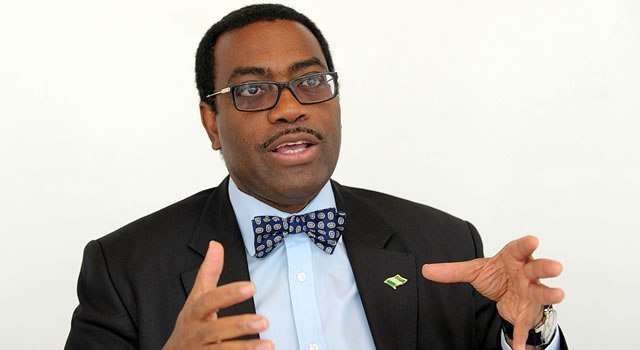
AfDB welcomes Fitch’s affirmation of AAA Rating: Driven by extraordinary shareholder support

ADB President, Dr. Akinwumi Adesina
 

The Fitch rating, of the African Development Bank (AfDB), published July 24, in London, is affirmed as AAA, with a stable outlook, on improved assessments, qualifications and estimates. The rating provides a significant boost for the Bank at a time when it is discussing a substantial general capital increase to finance its strategy and activities over the next few years.

Fitch Ratings is one of the leading global providers of credit ratings, commentary and research. The agency upgraded the intrinsic assessment to ‘aa’ from the previous ‘aa’-driven by an improvement in Fitch’s assessment of the Bank’s business environment.

The Bank’s ‘aaa’ support from its shareholders was based on Fitch’s forecasts that the Bank’s net debt will be fully covered by callable capital from ‘AAA’ rated member countries by 2021.

The projection assumes shareholder approval of an increase in subscribed capital from 2020, and lending growth averaging 7 per cent year on year in 2019-2021.

Other key points from the Fitch rating include the following:

The Bank’s solvency assessment of ‘aa’ primarily reflects its ‘strong’ capitalisation.

The equity to asset and guarantees ratio remains within the ‘strong’ range.

Fitch’s usable capital to risk-weighted assets (FRA) ratio, newly introduced, was just below the threshold for an ‘excellent’ assessment (35 per cent) at end-2018 and is likely to be ‘excellent’ in 2019.

Overall risk is rated as ‘low’, with risk management policies seen as conservative and assessed as ‘excellent’.

Concentration risk is considered ‘low’ and has benefited from the Exchange Exposure Agreement with other development finance organisations.

Equity participation is expected to remain below 5 per cent of the banking portfolio by 2021, in line with the internal limit of 15 per cent of risk capital.

FX and interest rate risks are very limited and conservatively managed.

The liquidity assessment is ‘aaa’ and the quality of liquid assets is ‘excellent’.

The Bank’s business environment now translates into no negative adjustment (from a one notch negative adjustment previously) to the improved intrinsic rating, which reflects a stronger assessment of the bank’s strategy to ‘medium’ risk from ‘high’ risk.

The Bank’s outlook is rated as Stable.

As the Fitch rating states, the process for a General Capital Increase (GCI-VII) is expected to be completed by end-2019, including a final agreement on its amount.

The President of the African Development Bank, Akinwumi Adesina welcomed the assessment and said, “I am delighted by the affirmation of the AAA rating as well as the accompanying explanations, which clearly explain the solid and comprehensive reasons for the overall improvements in the intrinsic rating, as well as the ‘extraordinary support’ we receive from our shareholders. It is a massive boost for the Bank to be encouraged so strongly in the year of the General Capital Increase and with so much hard evidence provided.”

He added that “It is also a tribute to all our stakeholders, partners, and those who have been working at and with the Bank during this past year. Fitch’s rating is not just about our credit; it speaks volumes for the Bank’s solid achievements, consistent strategy, development impact, leadership, and overall direction.”


Stories Continues after ad

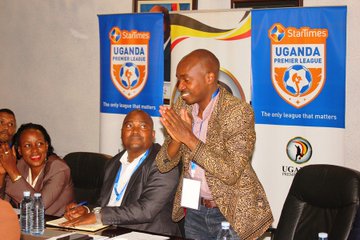
Fufa Super League board retained

Rugendo giving a speech after being returned.


The Fufa Super League Limited has today re-elected the same board members who will be in charge for the next four years.

The election was conducted today during the extra ordinary general assembly at the Mandela National Stadium with the Uganda Premier League club chairpersons.

The event was graced by the FUFA CEO Edgar Watson, second Vice President Darius Mugoye, third Vice President Florence Nakiwala Kiyingi as well as Executive Committee members Hamid Juma and Ronnie Kalema.

The board will continue to be led by Arinaitwe Deo Rugyendo as the board chairman, David Serebe (Vice-chairman), Peter Kibazo, Francis Kawuma and Humphrey Mandu as the board members until 2023.

Rugyendo was re-elected with eleven out of the thirteen votes, Serebe also obtained eleven votes, Kibazo got 12/13, Kawuuma obtained 7/13 votes while Mandu obtained maximum votes.

The three newly promoted clubs (Wakiso Giants, Proline and Kyetume) did not vote because they are not yet admitted members according to the FUFA constitution.

“I have just been reelected Chairman of the Uganda Premier League for another 4 year term. Thank you UPL. My team and I promise Vision, Stability, Progress and Integrity in the game. It is Our game. It is Our country.” Rugyendo tweeted after retaining his position.

The Chairman will appoint the secretary and treasurer in due course.

Fufa Super League Limited Board Members (2019-2023):

Chairman: Arinaitwe Rugendo

Vice Chairman: David Sserebe Bunya

Members: Humphrey Mandu Watenga, Fredrick Ivan Kawuma, Peter Kibazo Kyasanku


Stories Continues after ad