Stanbic Bank
Stanbic Bank
16.8 C
Kampala
Stanbic Bank
Stanbic Bank
Home Blog Page 1249

600 plant species extinct

The Chilean crocus: Rediscovered in 2001 after years of searching

Almost 600 plant species have been lost from the wild in the last 250 years, according to a comprehensive study.

The number is based on actual extinctions rather than estimates, and is twice that of all bird, mammal and amphibian extinctions combined.

Scientists say plant extinction is occurring up to 500 times faster than what would be expected naturally.

In May, a UN report estimated that one million animal and plant species were threatened with extinction.

Humans ‘threaten 1m species with extinction’
Nature’s emergency in five graphics
What does a biodiversity emergency mean for humans.

Researchers say their analysis of all documented plant extinctions in the world shows what lessons can be learned to stop future extinctions.

Most people can name a mammal or bird that has become extinct in recent centuries, but few could name an extinct plant, said Dr Aelys Humphreys of Stockholm University.

“This study is the first time we have an overview of what plants have already become extinct, where they have disappeared from and how quickly this is happening,” she added.

The lost plants include the Chile sandalwood, which was exploited for essential oils, the banded trinity plant, which spent much of its life underground, and the pink-flowered St Helena olive tree.

The biggest losses are on islands and in the tropics, which are home to highly valued timber trees and tend to be particularly rich in plant diversity.

What did the study find?
Scientists at the Royal Botanic Gardens, Kew, and Stockholm University found that 571 plant species had disappeared in the last two and a half centuries, a number that is more than twice the number of birds, mammals and amphibians recorded as extinct (a combined total of 217 species).

This data suggests plant extinction is happening as much as 500 times faster than what would be expected normally, if humans weren’t around.

The researchers believe even these numbers underestimate the true levels of ongoing plant extinction.

One positive, though, was evidence that some plants once thought extinct have been rediscovered, such as the Chilean crocus.

Why does plant extinction matter?
All life on Earth depends on plants, which provide the oxygen we breathe and the food we eat.

Plant extinctions can lead to a whole cascade of extinctions in other organisms that rely on them, for instance insects that use plants for food and for laying their eggs.

Plant extinction is bad news for all species, said Dr Eimear Nic Lughadha, co-researcher and conservation scientist at Royal Botanic Gardens, Kew.

“Millions of other species depend on plants for their survival, humans included, so knowing which plants we are losing and from where, will feed back into conservation programmes targeting other organisms as well,” she explained.

What lessons can we learn?
The researchers are calling for a number of measures to stop plant extinction:

Record all the plants across the world
Support herbaria, which preserve plant specimens for posterity
Support botanists who carry out vital research
Teach our children to see and recognise local plants.
Dr Rob Salguero-Gómez, of the University of Oxford, who was not part of the study, said understanding the how, where, and why of plant loss was of paramount importance, not only for ecologists but also for human societies.

“We depend on plants directly for food, shade and construction materials, and indirectly for ‘ecosystem services’ such as carbon fixation, oxygen creation, and even improvement in human mental health through enjoying green spaces,” he commented.

The research is published in the journal, Nature Ecology and Evolution.

Stories Continues after ad
Four axed as Desabre names final 23-man squad for 2019 Afcon

Cranes Coach Desabre

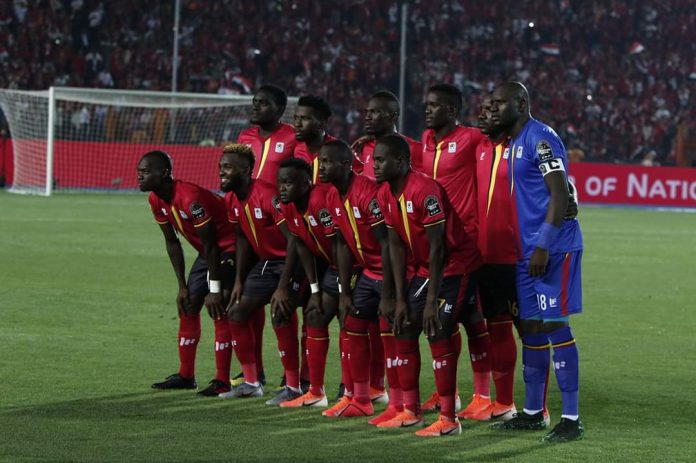
Uganda Cranes Head coach Sebastien Desabre has named the final 23-man squad for the 2019 Africa Cup of Nations tournament in Egypt.

Sadam Ibrahim Juma (KCCA FC), Alexis Bbakka (Carlstad United, Sweden), Charles Lukwago (KCCA FC) and Kirizestom Ntambi (Coffee FC, Ethiopia) are the players who have been dropped from the squad while in the camp in Abu Dhabi.

Moses Waiswa sustained a knee injury which automatically ruled him out from the competition.

Denis Onyango is the team captain and will be deputized by Hassan Wasswa Mawanda.

14 of the players who played at AFCON 2017 in Gabon return for the Egypt edition.

The team will play with Ivory Coast in an international friendly game on Saturday, 15th June 2019 before flying to Cairo, Egypt.

Uganda are in Group A alongside the hosts Egypt, Democratic Republic of Congo and Zimbabwe.

The final squad consists of three goalkeepers, nine defenders, seven midfielders and four strikers.

Cranes final 23 man Team:

Goalkeepers: Denis Onyango (Mamelodi Sundowns, South Africa), Jamal Salim (Al Hilal-Sudan), Robert Odongkara (Adama City, Ethiopia)

Defenders: Nico Wakiro Wadada (Azam, Tanzania), Brian Ronald Ddungu Mukiibi (Ostersunds, Sweden), Murushid Jjuuko (Simba, Tanzania), Bevis Mugabi (Yeovil Town, England), Isaac Muleme (FK Viktoria Zizkov, Czech Republic), Hassan Wasswa Mawanda (Un attached), Joseph Ochaya (TP Mazembe, DR Congo), Timothy Denis Awanyi (KCCA FC, Uganda), Godfrey Walusimbi (Un-attached)

Midfielders: Mike Azira (Montreal Impact, Canada), Allan Kateregga (Maritzburg, South Africa), William Kizito Luwagga (Shakhter Karagandy, Kazakhstan), Khalid Aucho (Church Hill Brothers, India), Faruku Miya (HNK Gorica, Croatia), Abdul Lumala (Syrianska, Sweden), Tadeo Lwanga (Vipers SC-Uganda)

Strikers: Patrick Henry Kaddu (KCCA FC, Uganda), Derrick Nsibambi (Smouha, Egypt), Allan Kyambadde (KCCA FC Uganda), Emmanuel Arnold Okwi (Simba, Tanzania)

Stories Continues after ad

Mali could be disqualified from 2019 Afcon

Mali team

The Mali national football team face a risk of being disqualified from the 2019 Africa Cup of Nations in Egypt that kicks off on 21st July.

The Mali Eagles could be kicked out due to crisis that is weakening their football federation for almost two years now.

Since December 2017, the Mali Football Federation has been under the supervision of a standardisation committee put in place to draft new statutes within the Federation, and to re-organise current affairs.

Unfortunately, very little has been achieved as far as the missions are concerned.

FIFA is said to have issued an ultimatum to all stakeholders in Mali ahead of their general meeting scheduled for Saturday, June 15.

FIFA’s director of development for Africa and the Caribbean Veron Mosengo-Omba revealed on his twitter that the West African country may be banned if they fail to get it right in their congress coming up this weekend.

“Fifa President Gianni Infantino is clear: if the GA of June 15 turns into a fiasco, the competent bodies of Fifa may suspend Mali. This sentiment is echoed by the president of Caf, Mali risks being suspended from the CAN, which begins on June 21. We will not allow few people to take Malian football hostage.” Omba tweeted.

The General Assembly may not be able to approve the new statutes and the new organisation of current affairs proposed by the standardisation committee. If there are no solutions to the crisis plaguing the Federation, the Country may also be suspended at all levels in world football.

A potential disqualification may make CAF opt to leave only three teams to compete in Group E which comprises of Tunisia, Mauritania and Angola.

They may also consider other options, which include allowing the third-placed team (Gabon) during the qualifiers in Mali’s group to come in as a replacement or grant it to the best third-placed team overall during qualifiers which is Burkina Faso.

Stories Continues after ad

Makerere: Cut off points, private & district quota admission lists 2019/2020 out

Makerere University Administration Building.

The Office of Academic Registrar, Makerere University has released lists applicants admitted under the Private Direct Entry Scheme, Bachelor of Laws Private Day and Evening Programmes, district quota under government Sponsorship as well as Ugandan Students with foreign qualifications admitted on Private admission for the academic year 2019/2020.

Also released are the Cut-Off Points for Private Students’ Admissions for the Academic Year 2019/2020

Click on the link below to view details

https://bit.ly/2ZotR8x

Stories Continues after ad

Rwandan rebels appoint new Spokesperson after arrest of Sankara

Capt. Hermani Nsengimana, new Spokesperson.

The Rwandan rebels of National Liberation Forces have appointed a new spokesperson after the arrest of its former spokesperson Maj Callixte Nsabimana aka Sankara.

Capt Hermani Nsengimana is the new rebel publicist.

He was born in the Rwandan Southern province.
” I hold a post graduate diploma in Business Administration from Amity University in India,” he said in an interview with Eagleonline.

Sankara before his arrest said they had no option but to fight President Paul Kagame, who he described as “a dictator and murderer”.

In an interview with Eagle online before his arrest, Maj Sankara said the kidnap of refugees, harassing of the opposition and lack of freedom of expression are the reasons why his group has launched an armed struggle against the Kigali regime in Nyungwe National Park in Rwanda near Burundi border.

“MRCD and our FLN we are a revolutionary movement, we are fighting for democracy! Kagame and his junta they are killing, torturing, kidnapping, non-freedom of expression, non-independent media, opposition leaders some of them are in jail for nothing, thousands of Rwandans are refuges in different countries most of them fear to lose their lives,” he said.

Mouvement Rwandais pour le Changement démocratique [MRCD] is the political and FLN is the armed wing of the a coalition of three political parties, PDR Ihumure headed by Paul Rusesabagina, CNRD headed by Gen Wilson Irategeka and RRM headed by Major Callixte Sankara that have launched an armed struggle against Kagame.

Stories Continues after ad

What the awarding Heroes medals to UPDF soldiers means to Justice Bamugemereire and her team

Justice Bamugemereire

Five Uganda Peoples’ Defence Forces (UDPF) soldiers were among 100 Ugandans awarded medals by President Museveni on Heroes Day which was celebrated in Wakiso district. The soldiers were awarded for blocking Justice Catherine Bamugemereire-led land probe from accessing a disputed piece of land in Mbuya that also houses a military installation. The officers including; Sgt. Julius Katuliba (commander of the team), Sgt.David Kyabona, Sgt. Tumusiime Venalenda, Kanyihira Robert and Siraf Igga.

The soldiers were awarded the medals for the ‘exceptional courage and professionalism with which these officers conducted themselves during a scuffle with the head of the Commission of Inquiry into land matters’, according to organisers of the medal awarding committee.

The government spokesperson, Ofwono Opondo, said, “because of the meticulous way they conducted themselves, the President Yoweri Museveni decided to confer on them meritorious awards. “They refused to be disarmed by people who are not their commanders. This clearly proved that the officers had a command,” he said.

The decision by government to award medals to the officers was criticised by some members in the public who argued that the government was trying to undermine justice Bamugemereire and impact of land wrangles in the country but what does that mean to the Chairperson of the land probe and her team?

First some analysts say Justice Bamugemereire failed to observe protocol by wanting to visit the place without clearance from top army officers. Ofwono while commending the soldiers blamed the Commission for trying to access land well knowing they don’t have authority to stand down the security they didn’t command.

An analyst further said Bamugemereire Commission must learn how to work with senior government officials much as the Commission has powers to arrest. In February Bamugemereire had a sharp exchange of words with the Deputy Attorney General Mwesigwa Rukutana, who she felt had been unruly or uncooperative and not giving the commission due respect.

After this, Justice Bamugemereire dismissed Rukutana from the public hearing. Rukutana in his response was that the Commission should “go and hang”, and his later comment to journalists was, “I don’t give a damn”.

Following the above public spat between the two officials, the President of the Uganda Law Society Simon Peter Kinobe condemned the incident, calling for sobriety in land probe. Sections of the public think Bamugemereire sometimes becomes so tough on senior government officials who come to the Commission to give their side of the story.

Tension between Uganda’s judiciary and a commission of inquiry headed by one of the judiciary’s own members further heightened following a new Court of Appeal decision. The appeal judgment refused to stay a huge, court-ordered payout of about Shs9.7 billion to a local pastor and land broker, as ordered by the inquiry, and warned that the independence of the judiciary was at stake if court decisions and orders could be countermanded by a commission of inquiry.

An analyst has written that the unsuccessful application, dismissed with costs, has dealt the attorney general, the commission and the inquiry a significant blow. Outsiders, who had hoped the inquiry would get to the bottom of land-related corruption and fraud, must be feeling increasingly frustrated at the sight of the commission, the inquiry and the courts locked in battle with each other – rather than with the land sharks and embezzlers that the inquiry was intended to uncover.

There have also been spats between Judge Bamugemereire and other members of the judiciary, including the Chief Justice of Uganda Bart Katureebe, over her remarks critical of judges for the role they have been playing in land-related matters. Justice Katurebe felt then that Bamugemereire should have used internal mechanisms of the judiciary to address issues rather than mentioning them in the press.

Bamugemereire, who has led the Commission of Inquiry into Land Matters for the past two years, is living in fear following a suspected attack on her home in Buziga, Kampala, on the night of May 24. It is not clear what the intention of the attack was. However some people say it could be related to her work while other say the attackers might have been mere robbers.

Stories Continues after ad

President Kagame makes 30 yrs in marriage

Rwanda President, Maj.Gen. Paul Kagame has day made 30 years in marriage. He married First Lady, Jeanette Nyiramongi Kagame on this day in Kampala in 1989 and his best man was later Gen. Aronda Nyakirima, the former Chief Defence Forces.

President Kagame was later on the best man of Gen. Kale Kayihura.

Stories Continues after ad

COSASE: Kadaga furious over Kasekende, Mugerwa meeting at Serena Hotel Kigo

Mr. Jimmy Mugerwa, the board chairman of Dfcu bank who is accused by some shareholders for the bank's poor management.

The Speaker of Parliament Rebecca Kadaga is reportedly furious after reports emerged that the Bank of Uganda (BoU) Deputy Governor Dr Louis Kasekende, Chairman of DFCU Bank Jimmy Mugerwa who also doubles as Managing Director of Tullow Oil and city lawyer Apollo Makubuya from MMAKS Advocates and Chairman Equity Bank, two days ago met at Serena Hotel Kigo in a bid to frustrate her impending decision to block fresh probe of BoU by MPs over irregular closure of seven commercial banks including; Crane Bank Limited (CBL), Global Trust Bank (GTB), Cooperative Bank and Greenland Bank among others .

Sources say Kadaga intends to write to heads of institutions where the above officials work to warn them against interfering with the work of parliament.

Two petitioners recently urged Kadaga to block a fresh probe of BoU by parliament’s Committee on Commissions, State Authorities and State Enterprises (COSASE) on grounds that the first probe extensively dealt with BoU and that what is remaining is to implement the recommendations of the report.

Sources say the officials met after realising that Kadaga would go by the call by petitioners not to allow a second BoU probe in which BoU officials wanted to take advantage of to clear their names are already tarnished as a result of the first probe that started in late October 2018 and ended in February this year, pinning BoU officials on negligence, corruption and irregular closure of banks.

BoU’s Kasekende wants a fresh audit of Shs478 billion supposedly injected in CBL but the money was not properly accounted for by BoU officials during the first probe COSASE. The Auditor General John Muwanga who did the first audit of the money has given a negative response to Kasekende, saying he finished his job and only parliament can order him to do a second audit.

Days ago Chairperson of COSASE Mubarak Munyagwa appointed a select subcommittee headed by Makindye East Member of Parliament (MP), Ibrahim Kasozi to probe BoU again over Shs478 billion injected in CBL as liquidity support between October 20 2016 and January 25, 2017. BoU closed CBL due to undercapitalisation. Watchers say BoU officials could have tricked Munyagwa to call for the second audit which is not necessary.

During the first COSASE probe of BoU, it was established that Shs478 billion was not properly utilized for the purpose as the Auditor General Muwanga established that Shs320 billion of that money could not be accounted for as BoU failed to present all the documents required, moreover it was worsened by the fact the BoU acted as a lender and borrower in the transaction.

Recently Kasekende and other BoU officials carried the documents to parliament but were sent away for not coming along with the accountant of the bank and all required documents to support the use of Shs478 billion that the bank wants shareholders of CBL to repay yet they were not involved in the transaction. Sources within the bank also say CBL only needed Shs150 billion to keep afloat even though BoU officials sold the bank to its rival DFCU Bank at Sh200 billion, paid in installments.

Petitioners

The petitioners, Michael Businge a resident of Nsambya, Kampala and Sam Kakuru a student of Uganda Christian University contest that it would be a waste of taxpayers’ money on a ‘syndicated move’ to clear BoU officials of wrongdoing through a second COSASE probe.

The Speaker who supervises all the committees of parliament is expected to look at the merits in the petitions and the rules that guide Parliament to take a decision.

The petitioners argue that the House Rules of Procedures do not give Cosase powers to re-examine its reports and accused MPs of creating a backlog.

“These exercises cost taxpayer’s money and must be performed lawfully. [We cannot keep repeating the same things uncles there is something MPs are not telling Ugandans… This is to request you to prevail on the said Committee not to spend state resources (money and time) on a re-examination which is outside its mandate” Businge says in his petition to Kadaga.

On the other hand, Mr Kakuru, another petitioner, argues that the direction being taken by the Committee amounts to “contempt of parliament” hence asking the Speaker to relieve Mr Munyagwa of his duties as Committee Chairperson.

He argues that the select sub-committee headed by MP Kasozi with instructions to hear the BoU officials in closed meetings which is questionable.

“The Sub-Committee headed by Hon Ibrahim Kasozi is ultra vires on grounds that it conducts its proceedings behind closed doors. The issues of banking sector (Central Bank) are of public/tax payer concern,” he says.

The petitioners want parliament instead to act on the recommendations listed by the first probe headed by MP Abdu Katuntu as regards the irregular closure of banks and misuse of taxpayers’ money in the process.

Stories Continues after ad

US Africa envoy to visit Sudan amid crisis to encourage talks

Former Sudan President Omar Al Bashir

The top US diplomat for Africa is going to Sudan this week amid the unrest there, the state department says.

Tibor Nagy, the US assistant secretary for Africa, will “call for a cessation of attacks against civilians”.

Workers have staged a national strike, which began on Sunday, to pressurise the ruling military government to make way for civilian rule.

Four people were killed on the first day of the strike after security forces fired tear gas and live ammunition.

The state department said Mr Nagy would “urge parties to work towards creating an enabling environment” for talks between the two sides to resume.

He will also discuss the situation with the Ethiopian Prime Minister, Abiy Ahmed, who has been trying to mediate between the military council and the opposition in Sudan, before later travelling to Mozambique and South Africa.

What happened during the strike?
Monday remained quiet in Khartoum, although some businesses started to reopen and a few buses were running.

Most shops, markets and banks in the capital, as well as in several other cities, remained closed on Monday as staff followed instructions from the Sudanese Professionals Association (SPA), the pro-democracy opposition, to not attend work.

Africa Live: Updates on this and other stories from the continent
Sudan’s violent political crisis explained
The warlord who may control Sudan’s future
The SPA called the strike after more than 100 peaceful protesters were killed by a paramilitary group, the Rapid Support Forces (RSF), on 3 June.

“The civil disobedience movement will begin Sunday and end only when a civilian government announces itself in power on state television,” the SPA said in a statement.

“Disobedience is a peaceful act capable of bringing to its knees the most powerful weapons arsenal in the world.”

Protesters have set up roadblocks across the capital. Social media users with access to a connection reported that the country’s internet was blocked by the ruling military government.

In another development, three rebel leaders were deported from the city to South Sudan.

One of the three, Yasir Arman, had only returned to Sudan last month after years in exile after he was sentenced to death in absentia.

The health ministry minder told us to follow him so that we could see the hospital’s ransacked laboratory: smashed sample tubes and more scattered files. The spokesman for the ministry, Hassan Abudulla, said this had all been the work of the protesters. They had broken in and destroyed equipment. He seemed to me to be speaking from a pre-prepared script. So I asked a question.

Q: Do you honestly believe that the violence and destruction was caused by protesters and not by men with guns?

A: I can’t be certain. The attack happened. I can’t be certain who has done it. I don’t know exactly who has done it… Everything here has been destroyed.

I wandered outside. As it happened there were some witnesses in the area. For their safety I am concealing their identities. The picture they painted was very different to the official narrative.

One man who had been there when the attack happened said that between 100 and 150 militia had descended on the building at around 05:00 on 3 June. This was as the assault was being launched on the protesters in front of military headquarters nearby. His account was confirmed by a second eyewitness.

“They swore at us and beat us… They broke into the safe and took all the money. They left nothing at all. Then they smashed everything up. They left nothing unbroken,” he told me. The witness had his watch and wallet stolen by the militia.

What happens next?

The military ousted long-time President Omar al-Bashir in April following months of protests against him. A military council promised a transition to civilian rule.

But pro-democracy campaigners say the military council cannot be trusted after Monday’s crackdown against a sit-in demonstration in Khartoum – and they have rejected an offer of talks.

However, according to Reuters news agency, opposition leaders have drawn up plans for a transitional government led by a prominent economist.

Quoting an anonymous source from the alliance of opposition and protest groups, the news agency said they will nominate Abdullah Hamdouk, a former executive secretary for the UN Economic Commission for Africa, to be prime minister.

They are also reportedly planning to nominate another eight people, including three women, to sit on a transitional council.

During a visit to Khartoum last week, Ethiopian Prime Minister Abiy Ahmed suggested something similar: a 15-person transitional council made up of eight civilians and seven army of

Stories Continues after ad

Money changers stuck with billions of Kenyan shillings as BoU declines to accept them

Central Bank of Kenya Governor Dr Patrick Njoroge holds new currencies notes that will replace the old notes on October 1, 2019.

Money changers in Uganda including commercial banks and forex bureaus and individuals are stuck with billions of Kenyan denominated shillings after the Bank of Uganda (BoU) announced it will not accept East Africa’s strongest currency at its counters.

BoU’s move follows a letter written by the Central Bank of Kenya (CBK) to its East African counterparts in Uganda and Tanzania explaining its move in issuing new series of Kenyan banknotes starting May 31, 2019 in a bid to fight illicit flows and counterfeits into Kenya.

BOU in a letter dated June 10, 2019 to commercial banks, says that changing Kenyan currency from old to new banknotes can only, for now, be done in Kenya. This means, anyone with old Kenyan notes in Uganda will have to carry them to Kenya to replace them for new ones subject to CBK’s guidelines.

CBK has also suspended currency conversion and repatriation of Kenyan currency.

“In light of the new developments the Bank of Uganda…will not accept Kenya shillings with immediate effect,” said Charles Malinga Akol, BoU’s Executive Director Operations.

Akol in a letter advised commercial banks to do an enhanced due-diligence on Kenyan currency given the recent changes it has undergone.

Bankers this website talked said they have billions of shillings of the Kenyan old currency but said they were talking to Kenyan authorities to see how to convert them into new ones. “We are working on that issue with the Kenyan authorities and soon we shall inform our clients,” said an executive of one of the leading commercial banks in Uganda.

Meanwhile, the Bank of Tanzania has also frozen exchange of Kenyan bank notes with immediate effect.

The announcement is a blow to perpetrators of illicit financial flows who have sneaked huge amount of Kenyan currency into Uganda and Kenya, hoping to launder it into local currencies.

It is also a big blow to Kenyan traders seeking to exchange money to trade in Tanzania and Uganda.

Kenya unveiled new bank notes to the public on June 1 and announced plans to phase out old generation Shs1000 notes by October 1.

Speaking to journalists in Nairobi on June 3, CBK Governor Patrick Njoroge said he will be reaching other regulators in the region to ensure a smooth transition from old to new bank notes.

‘’We are going to work closely with every stakeholder in the financial sector including our sister Central Banks in the region to ensure a smooth transaction and fight against illicit financial flows,’’ Njoroge said.

Stories Continues after ad