Stanbic Bank
Stanbic Bank
26.4 C
Kampala
Stanbic Bank
Stanbic Bank
Home Blog Page 1253

Indonesia, Australia in talks over possible 2034 World Cup bid

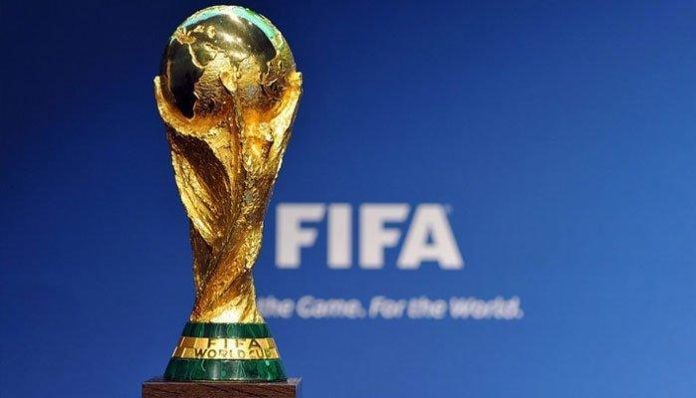
world cup trophy

Indonesia and Australia are in preliminary talks about making a joint bid for the 2034 World Cup, the Southeast Asian nation’s football association said on Thursday.

The neighbours discussed the potential proposal at a special meeting of the Asean Football Federation (AFF) in Laos last week.

“At the meeting we agreed to join with Australia to continue bidding for the World Cup,” Gatot Widagdo, spokesman for the Indonesian Football Association (PSSI), told AFP.

No comment was immediately available from the Australian side.

Widagdo said the PSSI started talks with Australia’s football federation after Thailand withdrew from a combined bid with Indonesia to host FIFA’s showpiece tournament.

The Indonesia-Australia talks come just days after Thai prime minister Prayut Chan-O-Cha announced that 10 member countries of the Association of Southeast Asian Nations had agreed to launch a bid to host the 2034 event.

It is not clear what impact the multi-country bid would have on Australia and Indonesia’s possible hosting.

Indonesia also plans to team up with Australia in a bid to host the 2021 FIFA Under-20 World Cup, Widagdo said.

Only one World Cup has been held in Asia, hosted by Japan and South Korea in 2002.

Australia spent almost Aus$46 million ($32 million) on an unsuccessful attempt to host the 2022 World Cup amid allegations that taxpayer money went to buy votes.

Stories Continues after ad

BoU pallets consignment saga: Kasekende insists no extra currency was printed as investigators zero on him

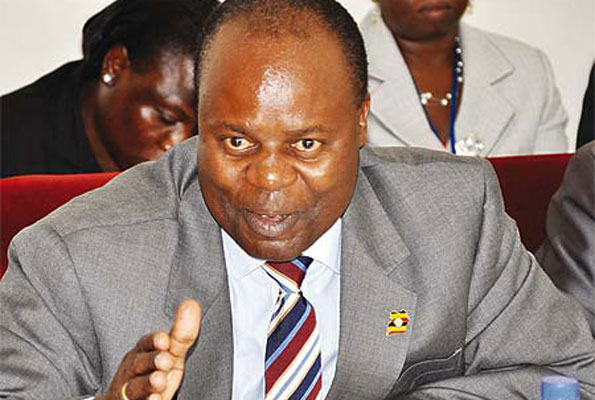
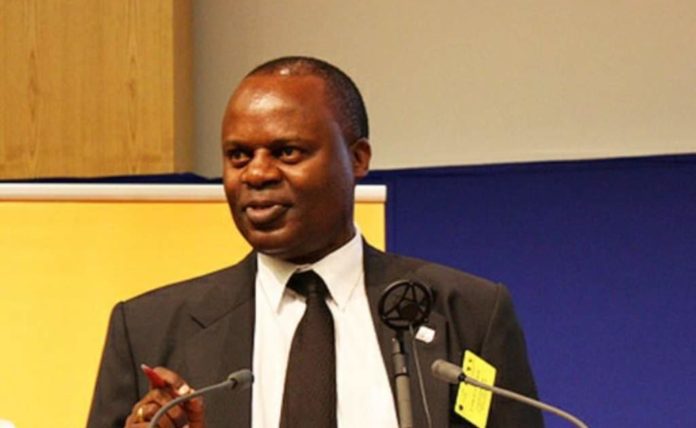
Former Deputy Governor, Dr. Louis Kasekende.

As the Bank of Uganda (BoU) currency consignment scandal continues and some officials already charged, its deputy governor, Dr. Louis Kasekende, insist there was no extra currency printed in Germany other than that approved by his boss Prof. Emmanuel Tumusiime-Mutebile.

Dr. Kasekende made the remarks on Thursday in Masaka during the At the Bank of Uganda Townhall Meeting held receive feedback from the public and discuss ways of improving the services that the institution renders to the country.

“…many of you have asked for clarification from the Bank of Uganda on the ongoing investigations by the Uganda Police and sister investigative agencies regarding the recent shipment of Uganda currency consignment. Unfortunately, the matter has progressed to court and any detailed discussion on the specific merits of the issue might be construed to be contempt of court processes…Let me also reiterate Governor Mutebile’s message, that there was no extra currency printed outside the amounts that he approved through the requisite processes,” he said.

He said currency printing like many of the work processes in BoU, is, “subject to very rigorous processes with inbuilt controls for checks and balances.” He said deliberate checks at various levels including the Currency Policy Committee headed by Mutebile himself, coupled with a strong and independent audit function, have overtime been robust enough to maintain the integrity of our currency operations.

He re-affirmed BoU’ commitment to cooperate with all arms of the state to fully investigate any breach of its operating procedures, either by the staff or procured partners. “The outcomes of these investigations shall be used to re-assess and further buttress our processes whose unquestionable integrity is central to the successful pursuit of BOU’s core mandate.

Investigators are trying to establish whether the extra money was printed without the knowledge of the top leaders of the bank. Mutebile days ago said BoU had 20 pallets of its consignment on the chartered plane from France even though it had 25 pallets in total. Investigators want to know the whereabouts of the extra 5 pallets and what was contained in there. It is alleged about Shgs190 billion was illegally printed and is hidden somewhere in the country.

On Friday, BoU Executive Director Operations Charles Malinga Akol was charged and released from the Anti-Corruption Court in Kololo on a cash bail of Shs40 million as part of the inquiry into the currency consignment scandal. Francis Kakeeto, a branch manager at Mbale and Fred Wanyama from the same branch were charged with abuse of office and in alternative corruption which they have both denied before magistrate Herbert Asiimwe. They were also released on Cash Bail of Shs 30 million and Shs25 million respectively.

Prosecution alleged that on April 26, 2019 between France, Belgium and Entebbe airport, the duo while on assignment by their employer to carry out a pre-shipment inspection of printed materials in France, in abuse of the authority to offices did an arbitrary act prejudicial to the interest of their employer and allowed the inclusion of unauthorised case on a cargo plane fully chartered by BoU.

And in the alternative, it’s alleged that they failed to refute and report the inclusion of unauthorised cargo on a plane fully chartered by BoU.

Stories Continues after ad

Humanitarian aid: EU donates Shs120b to Uganda

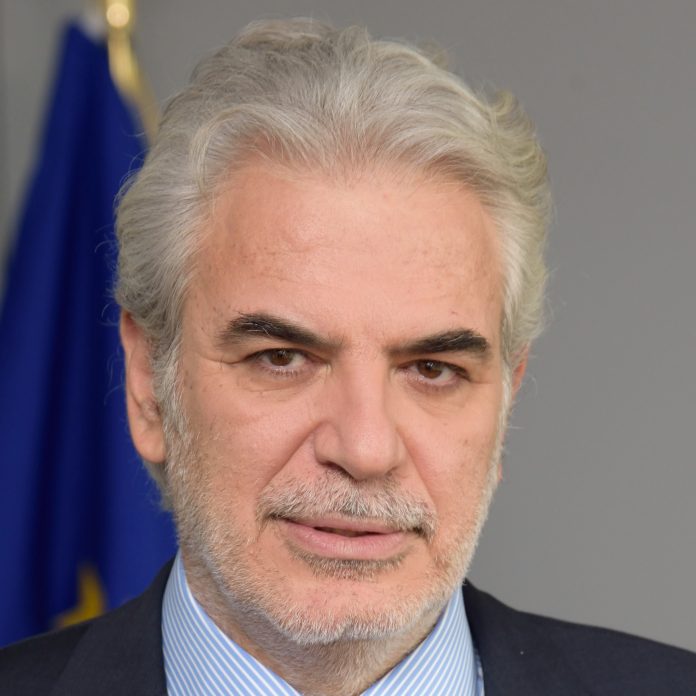
EU-Commissioner-for-Humanitarian-Aid-and-Crisis-management-Christos-Stylianides

The European Union (EU) is contributing to the effort to address humanitarian needs in Uganda, providing this year €28.5m (Shs120 billion in aid. This support to Uganda is part of a €110.5 million aid package the EU is providing the Horn of Africa region this year as the region continues to be affected by severe and prolonged humanitarian crises. Since 2018, the EU has assisted humanitarian action in the Horn of Africa with €316.5 million.

“The EU remains steadfast in its commitment to assist the people in need in the Horn of Africa. Our aid is helping to bring life-saving assistance to people who had to flee their homes, fragile host communities, and those driven to an extremely vulnerable situation by natural calamities, especially drought. It is essential that aid is allowed to reach the people who need it, in line with humanitarian principles,” said Christos Stylianides, Commissioner for Humanitarian Aid and Crisis management.

The EU funding is allocated across the following countries: Somalia (€36.5 million), Ethiopia (€31 million), Uganda (€28.5 million), Kenya (€13.5 million) and Djibouti (€1 million).

EU-funded humanitarian efforts in the Horn of Africa support the most vulnerable people, including refugees, internally displaced people and host communities. Providing them with food assistance, shelter, safe water, health and nutrition care, protection, and education for children caught up in humanitarian crises.

The EU is helping with life-saving food assistance and treatment for undernutrition in children under five years of age, while also protecting people’s livelihoods. Where possible, multi-purpose cash transfers are used to allow households to feed and sustain their family.

The EU supports basic health care and the strengthening of disease outbreak prevention and response measures. For example, the EU has contributed €2.5 million in humanitarian aid this year to the Ebola rapid detection and reaction efforts in Uganda.

Taken together, Somalia, Ethiopia, Uganda, Kenya and Djibouti host more than 2.7 million refugees, mainly from South Sudan, Somalia, the Democratic Republic of Congo and Burundi. Moreover, conflicts and weather-related disasters have forced over 6 million people into internal displacement in Somalia, Ethiopia and Kenya.

The Horn of Africa region is prone to epidemic outbreaks due to low vaccination coverage, high undernutrition rates and mass population movements.

Repeated spells of drought and floods continue to exacerbate the vulnerability of people in the region. An estimated 11 million people in the region are in need of food assistance as a direct consequence of extreme weather events or displacement, and as many as 4 million children under five years of age suffer from undernutrition.

Stories Continues after ad

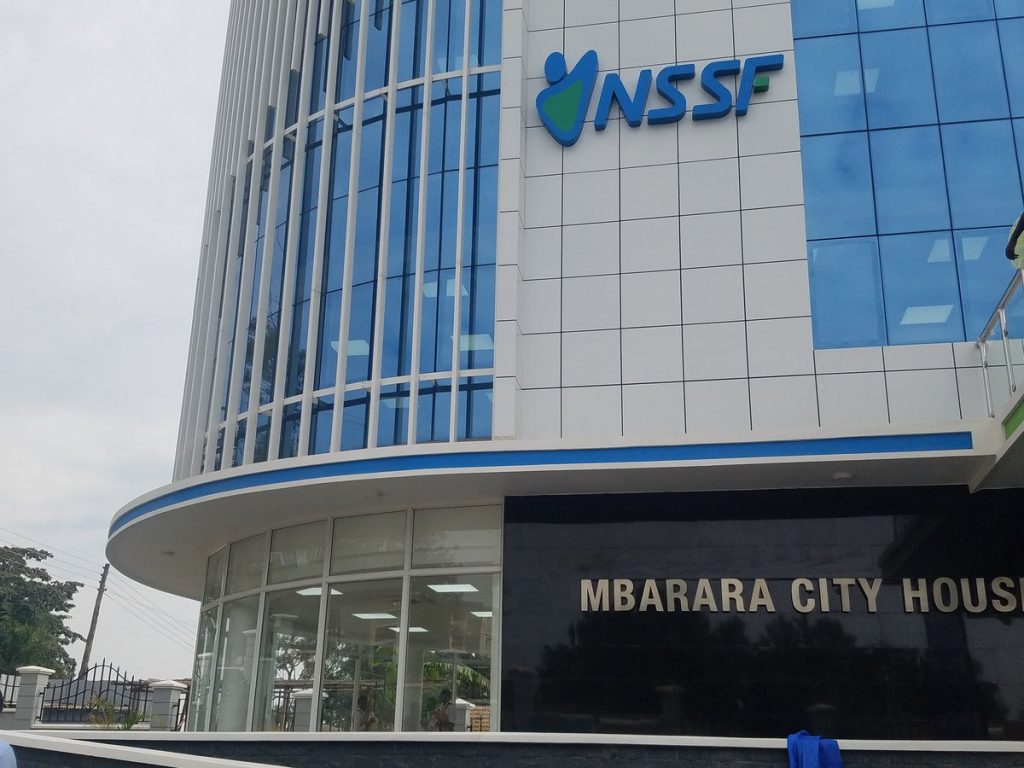
NSSF unveils new commercial building in Mbarara

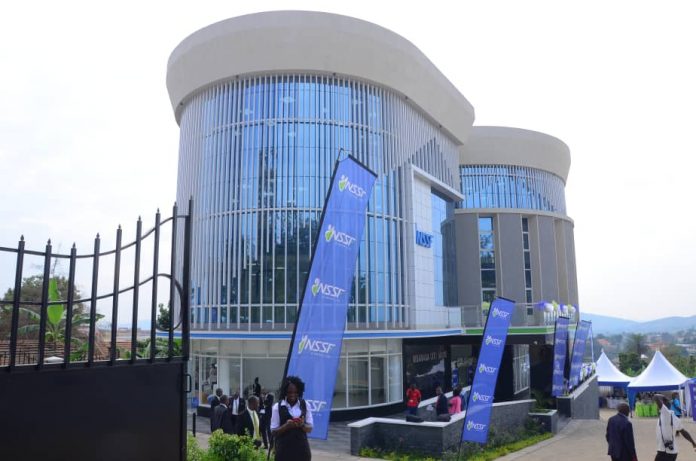
The National Social Security Fund (NSSF), has unveiled the newly constructed NSSF Mbarara City House, a building that exhibit the Fund’s commitment to investing in real estate.

The complex was built at a cost of Shs3.9 billion with a total built-up area of approximately 1,500 square metres and parking capacity of up to 40 vehicles. The Fund has a number Real Estate projects under its belt these include; Mbuya II SoHo Apartments and Lubowa Housing Project developed on the Fund’s 600 acres of land comprising of 2,741 housing units.

Speaking at the unveiling ceremony, the State Minister for housing, Chris Baryomunsi, said government would continue to support organisations and individuals that are improving the lives and standards of the people of Uganda.

“It is also gratifying to hear that most of this money is invested within the Ugandan economy, significantly contributing to the country’s socio-economic development. I was elated to hear that your members, were paid an interest of 15 per cent in the last financial year, this is very good for the savers and with more investment and frugality,” he said.

The Chairman Board of Directors, Patrick Byabakama Kaberenge, said the completion of NSSF Mbarara City House reiterates the board’s commitment to ensure we conclude all these projects in order to enable the Fund to deliver a better return to its two million members.

He said over the next few years, NSSF will bring onto the market houses that will cater to all categories of our members and Ugandans in general. These include the Off Taker project, which is a set of affordable housing units that will cater for the low-income earners.

“Real estate, therefore, continues to be a key avenue for investment and the Fund will continue to invest across major cities,” he said.

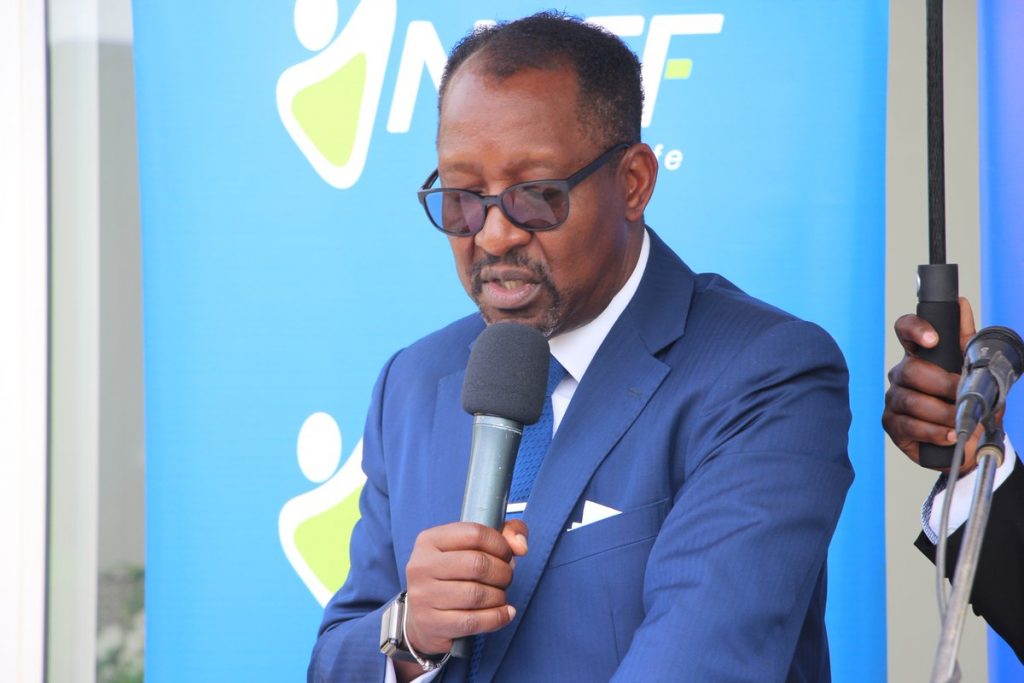
The Managing Director of NSSF, Richard Byarugaba, said in a bid to preserve Members savings, they invest this money in three asset classes; Fixed Income 79 per cent, Equities 14 per cent and Real Estate seven percent.

NSSF MD, Richard Byarugaba who is credited for turning around the fund.

“We are not only changing the skylines of these cities, but we are also providing modern commercial space fitted with modern amenities at affordable prices,” he said.

Byarugaba said the unveiling of NSSF Mbarara City House a milestone for the Fund towards the realization of our Real Estate strategy, focused on creating value for our members through the construction of commercial buildings and housing estates in major towns of Uganda.

The building is the second real estate development outside Kampala, after the first one was opened in Jinja City.

Stories Continues after ad

Advisory council to regulate Islamic banking in offing-BoU boss

The deputy governor of bank of Uganda (BoU), Dr. Louis Kasekende, has said they are finalising consultations to establish a Shariáh Advisory Council that shall regulate and supervise Islamic banking when it is finally operationised in the country.

Islamic banking model was permitted by the enactment of the Financial Institutions (Amendment) Act, 2016.

Islamic banking is a non interest system for financing projects that relies on the viability of the project and less about collateral, facilitating direct trade finance and equity joint venture partnership. Making money out of money is unacceptable, financial transactions must be asset backed, prohibition of speculative behavior, only Shariáh’-approved contracts are acceptable, the sanctity of contracts.

The bank is a partner to the corporation or entrepreneur and they share profits and losses.

Kasekende said currently, BoU is processing three applications that have been received from entities seeking to offer Islamic banking services.

“One of these applicants, that currently offers traditional banking services in Uganda, seeks to open up an Islamic finance window; while the other two applicants that are entities outside Uganda are interested in acquiring Islamic banking licenses,” he said during BoU meeting in Masaka.

As part of BoU’s effort to increase public awareness of the Islamic banking model, Kasekende, said they are preparing details and key features.

“The details will include business activities permissible or not under Islamic banking, and what will be required of you as customers, the financial institutions that seek to offer this service, and the Bank of Uganda as a regulator,” he said.

Kasekende also announced that the construction of that new currency centre in Masaka has been completed and its awaiting official opening by President Yoweri Kaguta Museveni, July 2019.

“I express gratitude on behalf of the Board of Directors, Management and staff, to the Masaka Municipality leadership led by Mr. Kayemba, for the unwavering support extended to the Bank of Uganda in its quest to build a new currency centre,” he said.

He said the currency centre shall have the requisite capacity to serve the increasing and future demands of this economic hub.

Stories Continues after ad

Construction of MV Sigulu in the final stages at Masese-UNRA boss

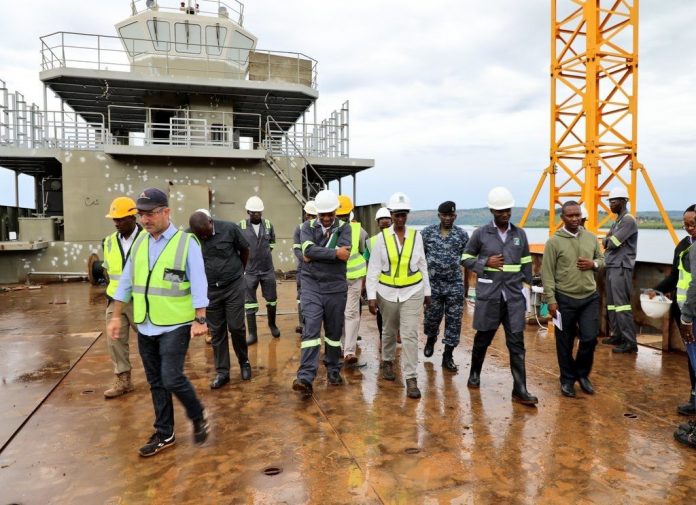
Kagina inspecting MV Sigulu in May

Uganda is will soon add another boat on Lake Victoria to ease transportation, according to the Executive Director of Uganda National Roads Authority (UNRA) Allen Kagina who has disclosed that the construction of MV Sigulu is in the final stages at Masese landing site, Jinja district.

The vessel will connect Namayingo district to the Islands of Lolwe and Sigulu. Kagina said the vessel will provide safe means of transport to the communities of Namayingo, Lolwe and Sigulu Islands at no cost, “The physical progress is 95 per cent,” she said.

She after inspecting the ongoing works on the ferry which will on completion be Uganda’s largest passenger and cargo ferry on Lake Victoria carrying 300 passengers.

“Overall, the project will positively impact the communities through increased volumes of trade, tourism and access to social services,” she said.

She said the contractor, Johs Gram-Hanssen (JGH), Western Marine Shipyard Limited Joint Venture has already finalized the steel works and has embarked on painting works and installation of electrical, propulsion and navigation equipment. The construction works started in September 2018.

Key features include the hull, propulsion systems, wheelhouse, and sheltered passenger seating areas, crest rest room, a medical room and a cafeteria.

Stories Continues after ad

2021 elections: Brothers Chameleon and Pallaso join DP

Chamleone and Pallaso

Democratic Party (DP) have confirmed that Musicians Joseph Mayanja aka Jose Chameleone and his brother Pius Mayanja aka Pallaso have officially joined the political party ahead of the elections in 2021.

The pair were unveiled at the party’s headquarters at City House in Kampala on Wednesday.

Chameleone officially declared his interest in the race for the Kampala Lord Mayor on DP ticket while Pallaso will contest for the parliamentary seat of Kawempe South come 2021.

Chameleone has been a supporter of the ruling party NRM, often rallying for president Museveni but often mentioned that he did not belong to any political party.

“I Thank the entire Democratic Party comrades for honoring me this invite to your Headquarters at City House today evening to discuss the best way we can work together for the beat benefit of our Countrymen and Country at large,” Chameleone tweeted.

The Democratic Party is a moderate conservative political party in Uganda led by Norbert Mao.

Stories Continues after ad

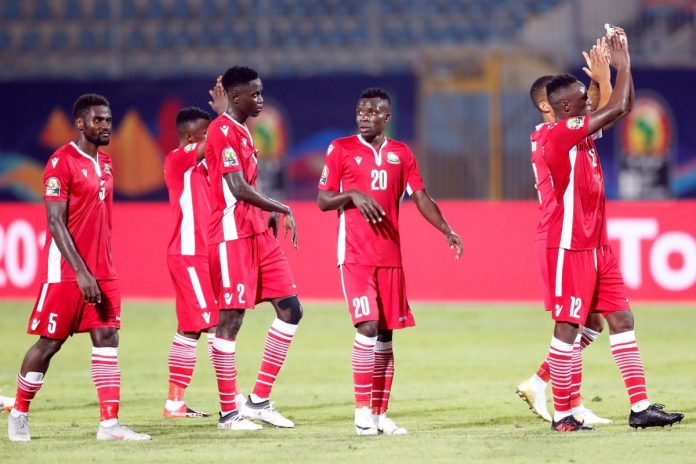
Afcon 2019: Neighbours Kenya and Tanzania to clash in East African derby

Harambee Stars of Kenya

The East African neighbours Kenya and Tanzania clash on Thursday for the first time in the history of the Africa Cup of Nations in their second game of Group C expected to raise temperatures among the citizens of both countries.

Both sides lost to a score line of 2-0 to giants Algeria and Senegal respectively in the group opener matches and each of the two neighbours will be keen to bounce back when they face off other in the East Africa derby.

The Harambee Stars failed to get a shot on target as they fell to defeat in their opening clash of the 2019 Africa Cup of Nations against Algeria and will have to respond quickly if they are to have a chance of progressing to the knockout stages.

They were poor for large spells and did not do enough with their share of the ball as Algeria looked threatening every time they got forward with Kenya needing to improve on both sides of the ball.

Kenya never looked like getting in to the game and after going in two goals behind at the break against Algeria, the game was over before half-time with Kenya coach Sebastien Migne likely to make changes with Francis Kahata’s place in the side in jeopardy.

Tanzania were never expected to get anything out of their opening game of the Africa Cup of Nations and that proved to be the case as they were outclassed by one of the pre-tournament favourites in Senegal.

The Senegalese made light work of the Tanzanians and in truth, the 2-0 scoreline did not really reflect how the game unfolded with Tanzania failing to offer anything in front of goal with them failing to get a single shot on target.

The Taifa Stars coach Emmanuel Amunike has said his side looked nervous in their opening game and the change he made when he took Feisal Salum Abdalla off before the break highlighted that with changes expected as a result.

Head-to-head

A long running rivalry between these two sides with 44 previous meetings. Kenya have won 20, drawn 14 and Tanzania have 14 wins.

Key Opta facts

It will be the first game between Kenya and Tanzania in the Africa Cup of Nations.

Kenya have won only seven per cent of their Africa Cup of Nations games (1/15), the worst rate among the teams with at least 15 matches in the competition.

Tanzania are winless in their four games in the Africa Cup of Nations (D1, L3), conceding at least two goals in three of their four outings.

Kenya have failed to score in nine of their last 12 Africa Cup of Nations games (five goals).

Tanzania had three shots against Senegal in on matchday one (none of which were on target). Only Uganda against Egypt in 2017 have had fewer (two) in a single match since Opta began to analyse the competition in 2010.

Stories Continues after ad

Enhancing preferential market access for Ugandan goods and services under the EAC COMESA and SADC Tripartite and African Continental Free Trade Area negotiations

Minister Amelia Kyambadde

By Amelia Kyambadde

The African Continental Free Trade Area (AfCFTA) was adopted during the 30th Ordinary Session of the African Union Heads of State and Government held in Addis Ababa, Ethiopia in January 2018. With membership of fifty five (55) countries, the AfCFTA is the second largest trading arrangement after the World Trade Organisation (WTO) with 164 members. The Pan African Free Trade market will have a total market of 1.3 billion people, including a growing middle class and a total GDP of US$2.255 trillion as of 2017

As you may already be aware, Uganda has been chairing the negotiations process for the African Continental Free Trade Area. I wish to inform you that because of the Trust and Confidence bestowed upon our leadership by the rest of the African Union (AU) Member States and the AU Commission, our tenure of stewardship of this process was unanimously extended till the July 2019 Extra Ordinary Summit that will be held in Niamey, Republic of Niger.

As the Minister of Trade, Industry and Cooperatives, I have steered the Bureau and chaired the negotiating sessions including the African Ministers of Trade (AMOT). The Extra-ordinary Summit in Niamey, Niger scheduled for the second week of July 2019 is expected to flag off the AfCFTA by launching the following Instruments:

Tariff offer concessions portal, Africa trade observatory mechanism, Non-Tariff Barriers identification and reporting mechanism, and Product rules of origin among others.

The AfCFTA framework agreement negotiations will cover Trade in Goods, Trade in Services, Investment, and Trade Related Intellectual Property Rights, Competition Policy the Protocol on the Rules and Procedures on the Settlement of Disputes.

The negotiations will take place in two phases. Phase I which is on-going covers Trade in Goods and Trade in Services, while phase II will cover Investment, Competition and Trade Related Intellectual Property Rights

How is Uganda benefiting from the AfCFTA?

AfCFTA is a broader market for Uganda. Our export performance in general has improved over the last three years, rising from US$2.482 bn 2016 to US$2.901bn in 2017 and US$3,087bn in 2018 – excluding informal trade. Our exports to Africa account for 51% of total exports in 2017 and 2018; and are on a positive trajectory.

The top export destinations for the last three years have been: Kenya, Rwanda, DRC, United Republic of Tanzania, Morocco, Zambia, Ethiopia and South Africa.

With the conclusion of the negotiations of the AfCFTA, will therefore lead to tariffs reduction for a number of our strategic export products to especially African countries such as Coffee, Tea, Tobacco, Cereals, Iron and Steel, Dairy and Dairy products, Sugar and Sugar Confectionary among others.

Reduction of Non-Tariff Barriers (NTBs) and creation of a mechanism for addressing any remaining NTBs is also a key benefit. These frameworks will certainly lead to further growth of our exports, thus economically benefitting our people that are engaged in the production process.

Overall and in line with the National Trade Policy of Uganda, these negotiated markets are expected to provide preferential market access for Ugandan goods, facilitate development of trade related infrastructure for cross-border trade among others.

The initiatives are also expected to provide a predictable trade regime amongst Member/Partner States as well as stimulate industrial development through creation of value chains and facilitate movement of business persons.

Progress on Ratification of AfCFTA

The Agreement establishing the AfCFTA entered into force on 30th May, 2019 following the deposit of the Instruments of Ratification by the 22nd signatory member state – the Republic of the Gambia – with the African Union Commission.

According to the agreed modalities, Member states are to liberalize up to 90 percent of their trade in a period of 5 and 10 years for Non-Least Developed and Least Developed Countries (LDCs) respectively. In this regard, the Ministry, in liaison with the relevant ministries, departments and departments(MDA)s, is in the process of finalising Uganda’s tariff schedule for submission.

Progress on the Tripartite Preferential Market access negotiation

The Tripartite Preferential market combines the EAC, COMESA and SADC, equally my Ministry coordinates Uganda’s engagement in the COMESA-EAC-SACU Tripartite Free Trade Area (TFTA) negotiations. The TFTA was launched on 10th June 2015 by the Summit and is aimed at establishing a single market for the twenty seven (27) African economies drawn from the Common Market for Eastern and Southern Africa (COMESA), the East African Community (EAC), and the Southern Africa Customs Union (SACU).

The TFTA has a combined population of about 700 million people (57% of Africa’s population), and Gross Domestic Product of over USD 1.4 trillion. The structure of the TFTA is built on three pillars; a) market integration b) infrastructure development, and c) industrial development

On the sidelines of the African Continental Free Trade Area meeting in Addis Ababa Ethiopia (6th of June 2019), the EAC and SACU countries held a Ministerial level meeting to conclude tariff negotiations under the TFTA framework.

Under the Agreement, Uganda together with the other EAC Partner States have been granted market access in to the SACU market of (Botswana, Eswatini, Lesotho, Namibia and South Africa) to up to 87.2 percent product lines on entry into force of the Agreement and under a 5-year tariff phase-down.

The conclusion of SACU-EAC negotiations, therefore, marks a significant step towards realising the benefits of the TFTA for Uganda and the EAC region. The concession by SACU provides the EAC (Uganda) a commercially meaningful market access for their private sectors. The offer provides ground for new and dynamic markets for exports as well as new sources of inputs for domestic production processes. Targeted sectors for export interest for EAC include; edible oil, textile and apparel, tea, coffee, beef, plastic among others

Furthermore, emphasis has also been on the development of regional value chains in a wide range of sectors such as automobiles, textiles and apparel, sugar and confectionery among others, with a view to deepen integration of Uganda’s economy into international markets and value chains.

The writer is the Minister of Trade, Industry and Cooperatives

Stories Continues after ad

URA releases shame list of tax defaulters, big names included

URA Commissioner General Doris Akol

The Uganda Revenue Authority (URA), has released a list of tax defaulters owing the agency about Shs47 billion in total.

According to the latest notice published, URA demands tax arrears from both individuals, companies, schools and civil society organisations. The taxes are in form of PAYE, Income tax, VAT and customs duties.

“Uganda Revenue Authority reminds the under listed taxpayers, their respective guarantors and directors to settle their outstanding tax liabilities and/or provide evidence of full payment to the Debt Collection Unit within seven days from the date of this publication,” said the notice.

URA in the notice says whoever will not settle their outstanding liabilities and or produce evidence of payment within the said period shall be enforced upon in accordance with the relevant tax laws.

Some of the big defaulters include Spear House Ltd owned by businessman Gordon Wavamunno and Mugoya Estates Limited owned by Erias Mugoya. The two owe URA about Shs4.9 and Shs7.2 billion, respectively.

Others include Sam Otada and Victoria Asiimwe of Otada Transport Company that owe URA about Shs268 million in PAYE, Paul Amoru (about Shs21.9 billion- customs duties), Prominent lawyer Mathias Nalyanya (Shs76.7 million- income tax), Sebaggala & Sons (about Shs2 billion in VAT), Steller (U) Limited (Shs2.9 billion VAT) and Tirupati Development (Shs318 million -VAT)

Below is attached list.

Below is attached list

SHAMELIST 2019

Stories Continues after ad