Facebook Twitter
  • Home
  • Politics
  • Business
  • Investigation
  • Opinion
  • Magazine
  • Education
  • Health
  • Regional
  • Games & Sports
Search
Stanbic Bank
Stanbic Bank

Eagle Online

Eagle Online

21 C
Kampala
Facebook
Instagram
Linkedin
Twitter
Stanbic Bank

Eagle Online

  • Home
  • Latest
    • Politics
    • World
    • Africa
    • Regional
  • Opinions
    • Our Take
  • Money
  • Games & Sports
  • Arts
    • Gossip
    • Health
    • Travel
    • Entertainment
  • Magazine
Stanbic Bank
  • Home
  • Latest
    • Politics
    • World
    • Africa
    • Regional
  • Opinions
    • Our Take
  • Money
  • Games & Sports
  • Arts
    • Gossip
    • Health
    • Travel
    • Entertainment
  • Magazine
Home Blog Page 1254

Museveni spends Shs33.2b on tours in three months- FDC

By
Geoffery Serugo
-
July 22, 2019
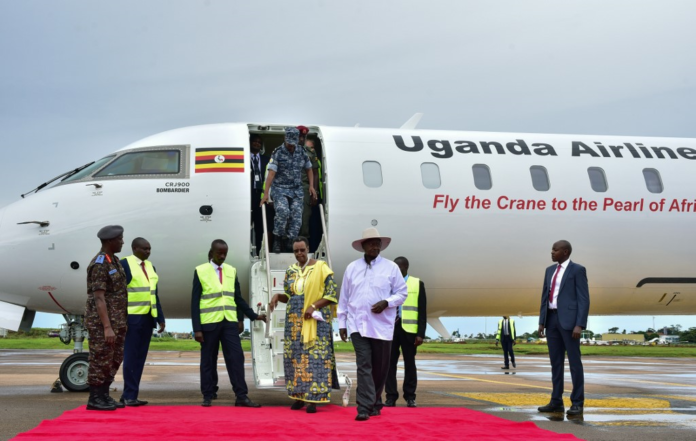
President Museveni and his wife Janet Museveni after having feel of new Uganda Airlines airplane

The Forum for Democratic Change (FDC), has expressed its concern over taxpayers’ money, saying  President  Yoweri Museveni  has spent too much money  on his wealth creation tours “whose unstated aim is creation of a poor and vulnerable population dependent on handouts from a permanently vote seeking ruler.”

Recently, parliament allocated Shs31.6 billion for inland travel under State House during the financial year 2018, however supplement him with Shs17.5 billion to specifically finance tours.

Speaking at party headquarters, FDC spokesperson Ibrahim Semujju Nganda, said Museveni has spent Shs17.5 billion touring the country under the guise of promoting Wealth Creation, “In fact in a supplementary request he made in May 2019, he also asked for Shs15.7 billion for classified expenditure under his residence,” he said.

“He has officially spent Shs33.2 billion on tours in three months, everywhere he has gone, he has been bribing councilors with Shs300,000 transport refund who in return are required to pass a resolution declaring him sole Presidential candidate president,” he said.

However, Mr. Don Wanyama, the Senior Presidential Press Secretary dismissed FDC’s assertion saying the opposition party never sees anything useful in whatever Mr Museveni does and therefore, he would be surprised if they instead praised him.

“I would be surprised if FDC actually found anything positive about Museveni. Its a party founded on criticizing Museveni, what more can they say? But just for their education, the President has the mandate to meet Ugandans at any time and engage them on any subject he deems to be important. This time, it is the idea of sensitising the masses on how to move into the money economy. This is an obviously important subject. It’s why a government even exists in the first place; to improve the people’s welfare. And information, in this push, is important. That’s what the President is doing – – educating the public.” Mr Wanyama said.

Adding “If the public at these meetings choose to endorse the President to run in 2021, that is not Mr Museveni’s problem and he can’t stop them. At least he’s stuck to the primary reason for this nationwide tour.
And yes, in executing his duties, the law allows taxpayers to facilitate the President. There’s nothing criminal there”.

Semujju said, the country knows, that Operation Wealth Creation is now five years, however has been as disastrous as all his earlier campaign slogans such as Modernization of Agriculture and Prosperity for all, “the aim was never to help the population out of poverty. Today, more than 70 per cent of the population is still producing for the stomach (subsistence farming),” he said.

“Not surprising that Museveni himself and his brother Gen. Salim Saleh, commander of Operation Poverty Creation disguised as Wealth Creation are some of the few most successful farmers the regime has created in the last three and half decades,” he said.

He said Farmers have perennially complained about limited access to credit for production, lack of water for production, limited access to market, poor and inadequate storage and processing facilities leading to poor-harvest management.

In May 2013 and the months is always May and two years to an election, Museveni processed a supplementary request of Shs49.8 billion for 20 community outreach each costing Shs2.49 billion. He had already given himself Shs13.7 billion for what he called mobilization of masses towards poverty reduction under code 1611093.

Stories Continues after ad

IGP Ochola orders senior officer to resign

By
Our Reporter
-
July 22, 2019

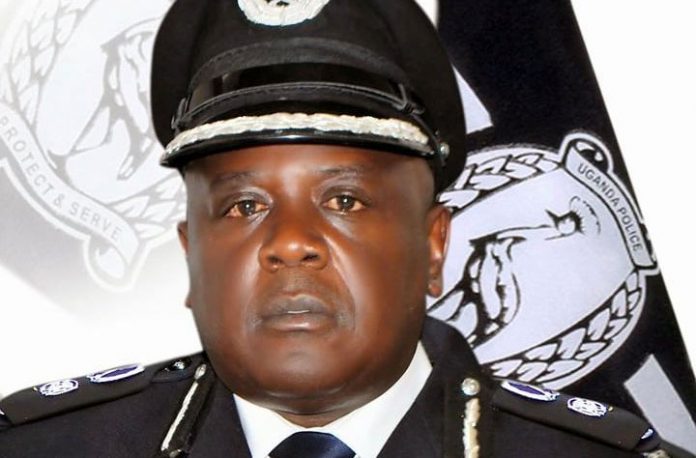
The Inspector General of Police Martins Okoth Ochola recently directed a senior officer to resign from his job.

In the letter dated July19, 2019, Ochola directed Police Director of Engineering and Logistics, Godfrey Bangirana, to handover office not later than Monday July 22, 2019.

Ochola told Bangirana that his contract was yet to be renewed hence the need for him to hand over office.
“Records available indicate that your contract that was renewed on July 17, 2017 expired on July 16, 2019. It is also on record that you applied to the Secretary Police Authority for consideration for renewal which has not yet been done,” Ochola’s letter reads in part.

He said: “While we await the decision of police authority, it is only proper that you hand over office to SPC Richard Edyegu who is one of the Deputy Directors in that Directorate.”

September last year, The Inspectorate of Government launched an investigation into Godfrey Bangirana, the police director of Engineering and Logistics, accused of superintending several fraudulent procurements.
The whistleblower accuses the police chief of inflating costs for the repair of a – seven-seater Bell 206B helicopter that had been grounded for 15 years.

According to the whistleblower, Bangirana quoted an exorbitant price of Shs 10 billion for the chopper’s repair. On the day of its launch before cameras by the deputy Inspector General of Police Brig Muzeyi Sabiiti at Kajjansi airstrip, the chopper initially failed to take off until engineers fixed a few things.
The Force could have procured at least two more choppers with the same amount spent on repairing the 33-year-old chopper.

Bangirana is also accused of flouting procurement processes – awarding contracts to companies in which he has personal interest.

He is also accused of endorsing payments for only friendly companies or individuals. ‘’He is the man behind the fuel scam where he paid billions of shillings to petrol companies and had his proxies fetch police fuel but also sometimes going through back doors to pick physical cash from the fuel stations,” the whistleblower wrote.

Stories Continues after ad

Kisoro mourns top lawyer

By
Our Reporter
-
July 21, 2019
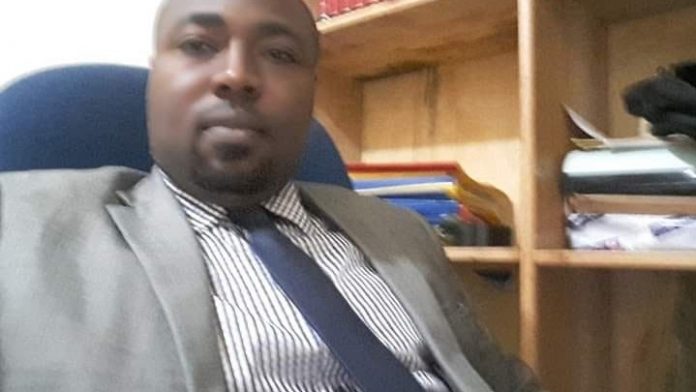
Gunned down, Isaac Sendegeya

Kisoro town woke up to bad news after Isaac Sendegeya, a top lawyer was shot dead by unknown gunmen at his gate at Nturo ward in the wee hours of the night.

According to reports, Sendegeya was shot at about 2.30 am as he approached him gate and according. However, according to police spokesperson in the area, Elly Maate, the murder took place at 2 am.He said despite police responding on time, the gunmen had fled and investigations are on going.

the killing of Sendegeya in Kisoro which is about 490 poses more questions as to whether the rampant killings in Kampala Metropolitan area and such as this are linked or it was an isolated incident.


Stories Continues after ad

Gov’t, WHO clarify on a 22 year old woman who died of Ebola

By
Our Reporter
-
July 21, 2019
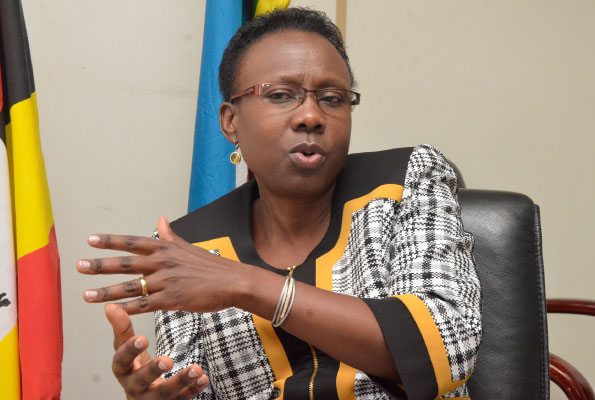
Health Minister, Dr.Ruth Aceng making a point during a past. presentation. She is reported to be against the idea by government to have companies process Marijuana here.


Government and world Health Organisation (WHO), have confirmed that a 22- year old lady who recently died in Democratic republic of Congo (DRC) did not travel to Uganda before she died of Ebola.

The Ministry of Health and WHO in Uganda were alerted of the woman who was thought to have a history of travelling to Uganda from DRC and who later died in DRC and was confirmed EVD positive.

According to a joint statement released by WHO and Ministry of Health, their surveillance teams began investigating and ascertaining the various locations where this Lady visited and possible contacts arising from her business movements in Uganda.

“In the process of investigation and contact tracing our teams interacted with various people who were knowledgeable about the deceased lady movements. Various rumors and unverified information were gathered by our Surveillance and contact tracing Teams, among which was allegation that the deceased Lady travelled to Goma and Gisenyi,” reads part of the statement.

The surveillance team has since revisited this information and at this point cannot confirm or verify that the said Lady travelled to Gisenyi, as alleged.

“We therefore regret and retract information that appeared in our Situation Report (Sitrep), which caused an impression of confirmed travel by the deceased lady to Gisenyi in Rwanda, which information was from community informants and is not verifiable at this moment.” They apologized

The statement says surveillance teams receive information on a daily basis in regard to movements of suspects, alert and confirmed cases from colleagues in DRC, and endeavor to investigate all received information (rumors and unverified) as is the practice and standard by WHO for ensuring highly sensitive surveillance systems. Let’s in this spirit that the unverified information of movement to Gisenyi and Goma was included in our Sitrep.

“Following information sharing with investigation teams in DRC through WHO, we now believe the deceased lady did not travel to Gisenyi or Goma as earlier on suggested,” the statement says.

Stories Continues after ad

Businessman Wavamunno attacks Museveni in new book, tells him ‘it is time to go’

By
Isaiah Mwebaze
-
July 21, 2019
Gordon Wavamunno.
 

City businessman Gordon Wavamunno in his new book has released his frustrations and urged President Yoweri Museveni “it’s time to go.”

Wavamunno in his 139-paged-book condemns Museveni for the removal of presidential term limits from the 1995 Constitution of Uganda in 2005. He accuses Museveni for the mismanagement of the succession debate even after staying over 30 years in power.

The businessman says that having ruled Uganda for this long, Museveni ought to have left the chair many years ago, giving a chance to young budding people within or outside the National Resistance Movement (NRM) to take charge.

“To avoid being splashed with all the mud, rulers should stay for a reasonably short time and above all choose people around them very carefully,” he says, it’s a major failure for Museveni not to have named a successor up to now.

“There is no shortage of people capable of governing Uganda properly,” he writes, adding that at all times leaders will emerge. “In the last 30 years, no grooming school has been set up either. Thirty years of relative stability is enough to establish a grooming school so that the next generation of leaders can go through their paces and become seasoned leaders,” he says.

On political succession, Wavamunno, also blasts leaders for dismally botching the process since independence culminating into mayhem and political instability.

“…leaders like Museveni “owe it to their country to make sure that their departure is not followed by the shedding of blood and martyrdom [because] that is the real measure of their success in the high office.”
Wavamunno says Mr. Museveni should reflect and emulate his mentor, former Tanzanian president Julius Nyerere and retire for any of the successors he is ideally supposed to have groomed in the last 30 years.
“[He] apologized to Tanzanians in 1985 when he realized that Ujamaa had failed. He then left the stage and enjoyed his elevation to elder statesman until his death. He remains one of the most highly regarded and respected leaders Africa has had.”

Wavamunno who claims he has interacted with all Uganda’s post-independence governments by virtue of the conspicuous business roles he has played, says gun rule is one of the many common features he has noticed whereby leaders stay in power by virtue of the gun more often than for the votes they get.

He says this unleashing of violence on political foes has been a constant.

The businessman also gives his assessments on all post-independence governments, blaming former presidents such as Idi Amin and Milton Obote before attacking Museveni over his long stay in power.

He who fell out with the regime also attacks the way the oil and petroleum resource has been managed – telling Ugandans that they should forget about the oil.
In the book, Wavamunno further castigates Museveni for intriguingly referring to the resource as “my oil.”

He says this presents what he calls indicators that oil has already “been mortgaged” to Chinese and other foreigners under the guise of funding numerous mega infrastructure projects costing over $15bn “implying oil discovery isn’t a big deal and it’s not something that makes Museveni special in any way.”

He claims the powerfully connected NRM actors (he refers to them as oligarchs) have already accepted gratifications (like trips to casinos in Las Vegas, fancy cars, mansions on the Riviera etc) in order to betray the poor Ugandans especially in oil-rich Bunyoro/Buliisa regions.

Wavamunno equated the NRM gurus to forefathers who accepted “brightly colored beads and bottles of hard liquor” centuries ago to agree in the slave trade by slave traders whose greed for material accumulation he equates to that of oil companies targeting contemporary Uganda.

He concludes by calling upon Museveni to emulate Nyerere and leave power, arguing it’s the only way all he worked for can be sustained for him to have an enduring legacy.


Stories Continues after ad

Rebalancing the Global Economy: Some Progress but Challenges Ahead

By
Guest Writer
-
July 21, 2019
Gita Gopinath, the John Zwaanstra Professor of International Studies and of Economics at Harvard University was recently appointed as Chief Economist with the International Monetary Fund, IMF. Here she is seen in her Littauer Building office. Kris Snibbe/Harvard Staff Photographer


By Gita Gopinath

Following the global financial crisis, overall current account surpluses and deficits fell sharply from about 6 percent of global GDP in 2007 to about 3.5 percent in 2013. Since then, as shown in our new External Sector Report, global current account imbalances have declined only slightly to 3 percent of world GDP in 2018, while rotating toward advanced economies and away from emerging economies, including China whose current account is now broadly in line with fundamentals.

Trade actions and tensions have so far not significantly affected global current account imbalances, as trade has been diverted to other countries with lower or no tariffs. Instead, as highlighted in an earlier blog, these trade tensions and related uncertainties are weighing on global investment and growth, especially in sectors most integrated into global supply chains (where production is carried out across multiple countries).

Despite the narrowing of global current account imbalances, stock imbalances (measured as the sum of countries’ net foreign assets and liabilities) have continued to increase, as creditor countries have run surpluses and debtor countries have run deficits for the most part. At 40 percent of GDP, stock imbalances have reached a historical peak and are four times larger than in the early 1990s. Moreover, gross external debt liabilities of sovereigns and corporates have risen sharply in some economies in recent years, supported by benign global financing conditions. This entails financial stability risks not only for borrowers in deficit countries but also savers in surplus countries.

Risks from external imbalances

External imbalances are not necessarily a cause for concern, as there are good reasons for countries to run deficits and surpluses at certain points in time. For example, it is natural for young, fast growing economies to run deficits and borrow from aging advanced economies with weaker growth potential. But just as over-indebted households may lose access to credit if their earnings become insufficient to repay their debts, economies that borrow too much and too quickly from abroad may become vulnerable to sudden stops in capital flows. This would, in turn, negatively affect creditor economies as they would suffer losses on their external assets. Therefore, the challenge lies in determining when they are excessive or pose a risk.

Using a combination of numerical tools and country-specific insights, we estimate that about 35–45 percent of overall current account surpluses and deficits were excessive in 2018. Excessive current account surpluses remained centered in the euro area (driven largely by Germany and the Netherlands) and in other smaller advanced Asian economies (Korea and Singapore), while excessive current account deficits remained concentrated in the United Kingdom, the United States, and some emerging market economies (Argentina and Indonesia).

After many years of excess current account surpluses, China’s external position moved to become more broadly in line with fundamentals in 2018. This decline reflected a combination of structural factors and expansionary credit and fiscal policies, but also greater exchange rate flexibility and the associated real appreciation over the last decade.

Risks from the current configuration of external imbalances are generally contained, at least in the near term as current account deficits and debtor positions are largely concentrated in advanced economies that issue reserve currencies. That said, not everyone is immune. An intensification of trade or geopolitical tensions—with negative repercussions for global growth and risk appetite—could affect economies that are highly dependent on foreign demand or external financing.

Over the medium term, in the absence of corrective policies to reduce imbalances, trade tensions could become entrenched. Moreover, a further increase in countries’ external debts in key countries could trigger costly disruptive adjustments that could spill over to the rest of the world.

That’s why both surplus and deficit countries must work together to reduce excess global imbalances in a manner supportive of global growth and stability.

How to tackle imbalances

Many countries are now near full employment and have limited room to maneuver in their public budgets. So, governments need to carefully calibrate their policies to achieve domestic and external objectives. Countries with excess current account deficits, like the United Kingdom and the United States, should adopt or continue with growth-friendly fiscal consolidation, while those with excess current account surpluses, like Germany and Korea, should use fiscal space to boost public infrastructure investment and potential growth.

Moreover, carefully tailored and sequenced structural policies should play a more prominent role in tackling external imbalances, while boosting domestic potential growth. Reforms that encourage investment and discourage excessive saving—for example through the removal of entry barriers or stronger social safety nets—would support external rebalancing in excess current account surplus countries. Reforms that improve productivity and workers’ skill base are appropriate to promote exports in countries with excess current account deficits. Even economies with external positions that we assess to be broadly in line with fundamentals, like China and Japan, need to adopt policies that address domestic imbalances and prevent a resurgence of external imbalances; this requires structural reforms that facilitate competition in sectors like services.

Exchange rate flexibility remains key to facilitating external adjustment. As highlighted in this year’s analytical chapter, varying features of international trade, including the extent of integration into global value chains and trade invoicing in a dominant currency like the US dollar, can weaken some mechanisms of external adjustment and limit the benefits of exchange rate flexibility in the short term. So, exchange rate flexibility may need to be supported with other policies that bolster the export response, including through improved access to credit and transportation infrastructure. Allowing exchange rates to play their role, however, remains key to deliver durable medium-term rebalancing.

More generally, all countries should avoid policies that distort trade, as they tend to come at the expense of global trade, investment, and growth. Instead, surplus and deficit countries should work toward reviving international trade and strengthening the rules of the multilateral trading system that have served the global economy well over the past 75 years.


Stories Continues after ad

10 ways your startup co-founder is like a good spouse

By
Guest Writer
-
July 21, 2019
Martin Zwilling


By Martin Zwilling


As a long-time business advisor and angel investor, I’m a believer that “two heads are better than one” in building a new business. Very few entrepreneurs have the range of skills and experience to be the solution creator as well as business creator, or operational as well as sales leader. The challenge is to recognize and recruit that ideal partner match early with minimal cost and risk.

In fact, I would broaden the definition of partner from co-founder to “business partner.” The reason is that good attributes apply equally well to “external” partners, as they do to internal partners, like a co-founder or CTO. A good overall example is the synergy between Google co-founders Sergey Brin and Larry Page, as well as long-time Executive Chairman Eric Schmidt.

In all cases, the challenge is the same, of finding people that you can work with and enjoy in the business relationship. The relationship has to have trust, communication, and respect in order to work. Otherwise, like a marriage, it will be doomed to constant conflict, second guessing, and unhappiness. So the following traits have to apply to both sides of the partnership to work:

Capable of working collaboratively. Some people are too independent to be partner material. If they or you find it hard to trust others, love to work alone, always have to be in control, or insist on micro-managing, it may be time for change or looking elsewhere.

Neither partner needs to be managed. Good partners are people who are confident in their own abilities, and willing and able to make decisions, take responsibility for their actions, and able to provide leadership, rather than require leadership.

All partners have compatible work styles. Most entrepreneurs work long hours and weekends to get the job done. If you team with a partner who likes to sleep late, and reserves the weekend for other activities, the partnership will likely not work.

Agree on a common vision and commitment. It doesn’t take long to sense someone’s real commitment, or vision and desired outcome of a joint project. Is your project seen by both as an end in itself, or a means to another end? Conflicting visions won’t work.

Believe in similar values and goals. If one of your core values is exceeding your customer expectations for quality and service, and your potential partner ascribes to the low cost, high profit mantra, a successful partnership is highly unlikely over the long-term.

Operate with a comparable level of integrity. High levels of integrity are important in business, but more important is your level of comfort with your partner’s integrity. This is a critical element of a good relationship, but a tough one. This is probably the best place to apply your “gut” feeling.

Brings complementary skills and experience. If both of you are experts at software development, even though one loves design and the other loves coding, that still won’t get the marketing done. Look at the big picture first of development, finance, and marketing/sales.

Feels a real passion and love for their role. The passion has to be in the business context – meaning results oriented, customer oriented, and sensitive to competition. In many cases, experts with academic or research credentials are not good partners for a business venture.

Believe in the same ethical and diversity boundaries. How the leaders of your company handle adherence to the spirit as well as the letter of the law will be seen by all employees, customers, and investors. Ethics and the view of personal boundaries should be explored fully.

Carry minimal historical baggage. Partner decisions are more important than team member hiring decisions. Thus you should do the same or more due diligence on educational background, previous work, and references. Look impartially from all angles and do the follow-up on all relevant previous roles.

Beyond the core team of two or three startup partners, every startup should seek to “outsource” the rest of their strategic requirements to external business partners. It’s faster and cheaper than building a large team in-house, and usually more effective.

By using this checklist, you should be able to objectively match potential partners with your own needs and expectations. Then, as I always recommend, it’s time to establish a formal agreement or contract to cement the partnership. With that, you will have a strong foundation for success, as well as a great working relationship for the next thirty years.

The writer is a veteran startup mentor, executive, blogger, author, tech professional, professor, and investor. Published on Forbes, Entrepreneur, Inc, Huffington Post.


Stories Continues after ad

Museveni commissions first greater Kampala road project

By
Geoffery Serugo
-
July 21, 2019
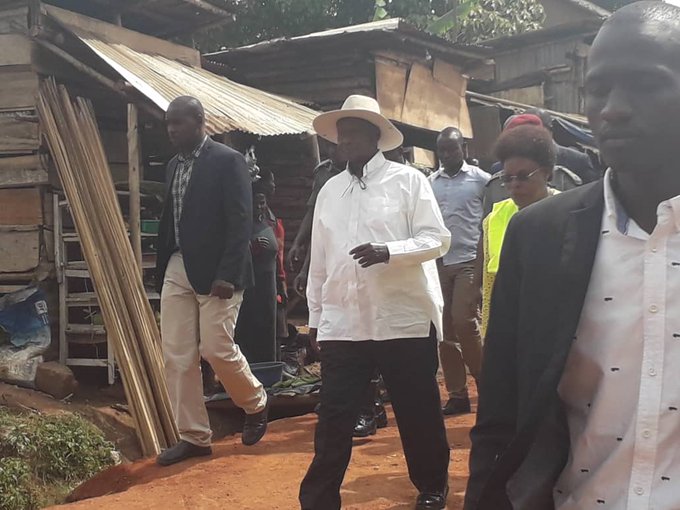
President Museveni arrives in Bunamwaya to commission Kabuusu-Bunamwaya -Lweza road.


President Yoweri Museveni on Friday commissioned the construction of the Kabuusu -Bunamwaya-Lweza road in Makindye Ssabagabo, the first project under the proposed Greater Kampala Economic Development Strategy.

Construction of the road, estimated to cost Shs97 billion, is funded by the World Bank through the second phase of the Kampala Institutional Infrastructure Development Project 2 (KIIDP 2). The road covers 2.66km in Kampala and 5.4km in Wakiso district.

Works on the road began in May, 2019 and the project is being undertaken by China State Construction and Engineering Corporation Ltd. It is expected to be completed within 15 months. The road which is currently leveled, will be paved with covered drains, raised pedestrian walkways and solar street lights with traffic signal functions at Kabuusu and Lweza junctions.

According to Kampala Capital City Authority (KCCA), 208 people are affected by the project, 198 of whom offered part of the land without compensation. KCCA spokesperson Peter Kaujju, said the authority would work with the leadership of Wakiso district to implement the project.

The road will serve as an alternative route to Kajjansi and Entebbe connecting to major highways like Kampala Northern bypass and Entebbe Expressway.

The Minister in Charge of Kampala Beti Olive Kamya said that the project is a great start of the cooperation between Kampala and Wakiso, which forms part of the metropolitan area for the capital city. She says that the two districts cannot work in isolation because Wakiso not only surrounds Kampala but hosts millions of people that work in the city.

Makindye Ssabagabo, Emmanuel Ssempala Kigozi, welcomed the development saying it would improve the welfare of the people. He says that in working with Kampala, emphasis should be put on Wakiso because it hosts households that conduct business in Kampala and asked the government to construct more drainage channels in the Municipality to control flooding.

A total of 26 km roads are lined up for construction by KCCA in the second phase of the KIIDP 2 project which is worth 262 billion Shillings altogether.


Stories Continues after ad

UPDF battle group feted for role in peacekeeping in Somalia

By
Our Reporter
-
July 21, 2019
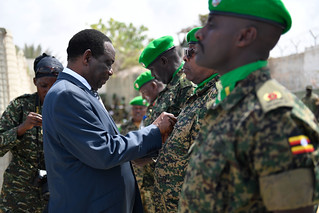
Ambassador Francisco Madeira, the Special Representative of the Chairperson of the AU Commission (SRCC) for Somalia, pins a medal on a Ugandan soldier during a medal award ceremony for Ugandan soldiers serving under the African Union Mission in Somalia (AMISOM), who have completed their tour of duty in Somalia. The event took place in Mogadishu on July 18, 2019. AMISOM Photo / Ilyas Ahmed

The African Union Mission in Somalia (AMISOM) has awarded medals and certificates to a Ugandan battle group for its contribution to peace and stability in Somalia.

The officers, belonging to Uganda People’s Defence Force (UPDF) Battle Group 25, operated in Eljale, Bufow, Marka, Shalnabot, Qoryoley and Mashalay among other areas in South West State.

“During the last 12 months, you have managed to implement the programme of the African Union Mission in Somalia (AMISOM) by going to your Forward Operating Bases (FBOs) to fight the enemy and bring peace and stability to the residents of Sector One,” said the Special Representative of the Chairperson of the African Union Commission (SRCC) for Somalia, Ambassador Francisco Madeira, who presided over the medal award ceremony.

“The African Union is in Somalia not for any other purpose other than helping to liberate this country from the scourge of a ruthless and destructive Al-Shabaab,” Ambassador Madeira added.

The SRCC commended the battle group for promoting dialogue and reconciliation among communities residing in its area of operation and also thanked them for rehabilitating flood water channels in Marka town and providing medical support to locals.

AMISOM Deputy Force Commander in charge of Operations and Plans, Maj. Gen. James Lakara, lauded officers of Battle Group 25 for supporting and mentoring Somali National Army (SNA) personnel in the Lower Shabelle region.

“The battle group was deployed to Lower Shabelle and was headquartered in Eljale, that covered areas of Shanlabot, Mashalay, Qoryoley, Marka, and were mentoring Somali National Army officers in Elsalid and Barire,” said Maj. Gen. Lakara.

The battle group commander, Col. Paul Muhanguzi, thanked the AMISOM leadership for their guidance and support which he said enabled the contingent to achieve its mandate.

“Battle Group 25 supported the Somali National Army in capturing Marka, which is the second largest city in the region. The 25th battalion has also supported and nurtured the local forces who were later recruited into the ranks of the Somali NISA (National Intelligence and Security Agency) force,” said Col. Muhanguzi.

The officers took over from Battle Group 28 and were responsible for maintaining peace and security in parts of south west Somalia.


Stories Continues after ad

DFCU Bank hacking scandal: Three officials grilled at CID as accomplices reported fled country

By
Our Reporter
-
July 19, 2019
Mathias Katamba, Dfcu bank MD


Three Dfcu bank officials have appeared at the Criminal Investigations Directorate (CID) in for interrogation in connection to the theft of unspecified amount of money from the bank.

Charles Twine, the CID Spokesperson confirmed that the three officials whose names remain anonymous for now were interrogated a day ago.

Twine said the officials were grilled after top managers of the bank lodged by the complaint.

“The Dfcu case was formally reported here and investigations are ongoing, he said, adding that, “Some three people were picked, interrogated and released on bond. Because this is a crime that was committed electronically.”

Although Twine declined to reveal how much money was stolen, a forensic audit involving police detectives showed that about Shs10b had illegally been withdrawn from the clients’ accounts.

He also said detectives and their cybercrime team have already picked the logs and are analyzing them to establish how the fraudulent transactions were done.

Police said some of the suspects in the crime are not workers of the bank and are actually outside the country.

“They were within the bank and others outside. They gave in their story but with electronic offences we don’t rely on stories. There are people were vigorously looking for and one of them is outside the country. We shall use the normal process to trace for him and bring him back,” Twine said.

Early last week, this website reported that the heist was masterminded by insiders and outsiders who are well conversant with modern technology used by several banks.

Police has urged Dfcu bank customers to be patient because steps are being taken to ensure culprits are brought to book.

Corroborating on the same, Dfcu bank management on Monday confirmed that Police were notified on the high-level fraud and that bank staffs are being investigated.

“In May 2019, the bank detected a case of fraud that immediately reported to the police (CID HDQTRS GEF 604/2019) and investigations are ongoing,” reads a statement released by the bank.


Stories Continues after ad
1...1,2531,2541,255...2,421Page 1,254 of 2,421
Eagle Online

© Eagle Online. All rights reserved.

Facebook
Twitter

About Us

  • About us
    • Our Staff
    • History
  • Employment Opportunities
  • Contact Us
  • Privacy Policy
  • Eagle Online

Popular Category

  • News13895
  • Business3395
  • Games & Sports2372
  • Africa1081
  • Entertainment936
  • Health706

Editor Picks

EBOLA OUTBREAK: Parliament limits physical attendance at State of the Nation Address

May 22, 2026

DPP urges caution as parliament graft probe deepens

May 22, 2026