Stanbic Bank
Stanbic Bank
29.6 C
Kampala
Stanbic Bank
Stanbic Bank
Home Blog Page 1255

Cabinet okays National Health Insurance Scheme Bill 2019

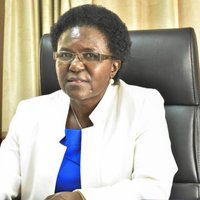
Minister of Health Dr. Jane Ruth Aceng

Cabinet has approved the National Health Insurance Scheme (NHIS) Bill, 2019 aimed at facilitating the provision of accessible, affordable acceptable and quality healthcare services to citizens.

The bill seeks to maintain high standard of healthcare delivery services under the scheme, improve and harness private sector participation in the provision of healthcare services. It is also aimed at ensuring that residents have access to equitable and affordable healthcare services which.

According to Minister of Health, Dr. Jane Ruth Acheng, since 2002, discussions on the bill have been in the process, 17 years of drafting, discussions and negotiations and engagements.

“It’s a great step forward for the health sector. The bill can now be gazette and sent to Parliament for debate, amendments and approval for enactment into law. It is envisaged that the NHIS will reduce catastrophic expenditure on health that leads to impoverishment of many households that cannot afford health care,” minister Acheng said.

The minister said the bill will regulate the cost of healthcare services and ensure equitable distribution of costs among the different income groups. She said health insurance would be implemented as a complementary mechanism of healthcare financing.

Stories Continues after ad

Opposition parties want share of LoP budget

Leader of Opposition in Parliament, Betty Aol Ocan has asked Education Minister to resign.

Opposition members on the Inter-Party Organisation for Dialogue (IPOD) want the budget allocated to the Office of the Leader of the Opposition (LoP) in Parliament distributed among all opposition parties in the House.

In a meeting with the Speaker of Parliament, Rebecca Kadaga, the IPOD delegation requested her to cause the sharing of the opposition budget.

The IPOD Council Chairman, Dr Gerald Blacks Siranda, proposed that 40 per cent of LoP’s budget should be shared on an equal basis among all parties represented in the House and 60 percent quota divided on the basis of numerical strength.

“The funding allocated to the Office of the Leader of the Opposition be structured out to all parties represented in the House; instead of all the money being allocated to the LOP, 40 per cent should be shared on equal basis and 60 per cent on individual merit,” said Siranda who leads the platform that has the National Resistance Movement (NRM) as a member.

The Speaker used the opportunity to criticise the Shs3 million charged as fees for nomination of Ugandans aspiring to become Members of Parliament.

This, said Kadaga, is exorbitant and unacceptable, a position she announced earlier this year during the Commonwealth Youth Inclusion Conference hosted by the Parliament of Uganda.

“I still think the Shs3 million was exorbitant because it used to be about Shs 400,000 and it was hiked to Shs 3 million; this is prohibitive…I am not saying I cannot afford it, but it will stop the young people and others who cannot afford it,” said Kadaga.

In the run-up to the 2016 general elections, Parliament voted to hike the nomination fees, despite a call for caution by Speaker Kadaga.

It received rebuke from Parliamentary candidates across the political divide, who slammed it as a ploy by then incumbent MPs to ring fence the seats for themselves.

Kadaga said since Prime Minister Ruhakana Rugunda, also Leader of Government Business in Parliament, is a Member, he (Prime Minister) should hasten the move to present a Bill to reform the electoral system and include all the IPOD ideas for the Legislature’s consideration.

The Speaker has on several occasions asked government to present the electoral reforms right in time for Parliament’s consideration, but the calls are yet to attract government’s consideration.

IPOD has had a rocky journey, with main opposition Forum for Democratic Change (FDC) recently terming it a collusion between the ruling National Resistance Movement Party and ‘fringe’ political parties to get back at FDC.

The FDC Party spokesman, Ibrahim Semujju recently took to local media to dismiss the IPOD as inconsequential.

FDC’s sibling rivalry with the Democratic Party (DP) could escalate if Dr Siranda’s proposal is considered.

Stories Continues after ad

BoU currency scandal: official released on Shs40m cash bail

Mr. Malinga on the right with other colleagues who were charged last week.

The Bank of Uganda (BoU)Executive Director Operations Dr. Charles Malinga Akol, has been released from the Anti-Corruption Court in Kololo on a cash bail of Shs40 million as intelligence officers continue to investigate BoU officers and others over the currency consignment scandal where a plane chartered by BoU delivered 25 pallets containing Ugandan currency but only 20 belonged to BoU.

It said Dr. Malinga was supposed to collect the consignment but didn’t go, instead he delegated his juniors to fly to German and bring the consignment that came with other items that did not belong to BoU.

Malinga before being aligned in Court was interrogated about his role in the whole scandal where it is said 5 pallets containing the Ugandan currency of about Shs90 billion disappeared upon reaching Entebbe International Airport.

Last Friday, two BoU officials were charged at Anti-Corruption court sitting at Kololo Kampala, on allegations of inclusion of unauthorised cargo on BoU chartered plane. Francis Kakeeto, a branch manager at Mbale and Fred Wanyama were charged with abuse of office and in alternative corruption which they have both denied before magistrate Herbert Asiimwe.

Prosecution alleged that on April 26, 2019 between France, Belgium and Entebbe airport, the duo while on assignment by their employer to carry out a pre-shipment inspection of printed materials in France, in abuse of the authority to offices did an arbitrary act prejudicial to the interest of their employer and allowed the inclusion of unauthorised case on a cargo plane fully chartered by BoU.

And in the alternative, it’s alleged that they failed to refute and report the inclusion of unauthorised cargo on a plane fully chartered by BoU.

Investigators are also trying to establish how such big sums of money could be printed without the knowledge of the top leaders of the bank including both the Governor and his deputy. However, Eagle Online has learnt that by the time of the incident, Governor Mutebile had sought for leave as he was seeking medical treatment abroad. It is said his deputy Dr. Louis Kasekende was in-charge. Governor Mutebile is said to be undergoing treatment at his Kololo home as for the last one month, he hasn’t stepped in office.

Stories Continues after ad

BoU’s director Malinga in court over money printing saga

The director of Currency department at Bank of Uganda, Charles Malinga has brought to Anti Corruption court in Kololo over the extra printing of money.

This is after sources at CID say the BoU Deputy Governor Dr Louis Kasekende had told them he wouldn’t appear before them for questioning on grounds that he was not involved in the saga and that he is above the level of the officials to be questioned as regards the matter.

Last Friday, two BoU officials were charged at Anti-Corruption court sitting at Kololo Kampala, on allegations of inclusion of unauthorised cargo on BoU chartered plane.

Francis Kakeeto, a branch manager at Mbale and Fred Wanyama were charged with abuse of office and in alternative corruption which they have both denied before magistrate Herbert Asiimwe.

Prosecution informed court that on April 26, 2019 between France, Belgium and Entebbe airport, the duo while on assignment by their employer to carry out a pre-shipment inspection of printed materials in France, in abuse of the authority to offices did an arbitrary act prejudicial to the interest of their employer and allowed the inclusion of unauthorized case on a cargo plane fully chartered by BoU.

And in the alternative, it’s alleged that they failed to refute and report the inclusion of unauthorized cargo on a plane fully chartered by BoU.

The development at BoU suggest there are factions within the central bank, one controlled by Kasekende and another controlled by Mutebile. However, Mutebile looks like he has lost direction and hold onto the mantle at BoU because the latest development indicates it is Kasekende in charge of operations of the central bank.

Stories Continues after ad

Winnie Byanyima shortlisted for UNAIDS top job

Oxfam Executive Director Dr Winnie Byanyima

Uganda’s Winnie Byanyima is among five candidates competing for the top job at the Joint United Nations Programme on HIV/AIDS to replace Michel Sidibé, who led the organization since 2009 and left in May this year amid controversy.
Ms Byanyima is a strong critic of the Kampala regime and is wife to opposition strongman Kizza Besigye who is a four time contender for the national presidency. The shortlist includes only one woman and four men.

The shortlist includes:

• Salim Abdool Karim, director of the Centre for the AIDS Program of Research in South Africa or CAPRISA.
• Sani Aliyu, director general of the Nigerian National Agency for the Control of AIDS or NACA.
• Chris Beyrer, professor at Johns Hopkins Bloomberg School of Public Health.
• Winnie Byanyima, executive director of Oxfam International.
• Bernard Haufiku, former minister of health and social services of Namibia.

Whomever emerges as the finalist from the shortlist will take over from Gunilla Carlsson, currently acting executive director of UNAIDS. Carlsson was appointed to the position in May, following the resignation of Sidibé, who had a controversial legacy at the organization. The new leader will also be tasked with fixing what was described by an independent panel as a “broken organisational culture” at UNAIDS.

In December 2018, the panel came out with a damning report describing how the aid agency was “in crisis,” with its leaders, as well as its organizational policies and processes, having failed to prevent or respond to allegations of sexual harassment, bullying, and abuse of power. Sidibé, according to the panel’s findings, had “created a patriarchal culture tolerating harassment and abuse of authority.”

For the organization to recover, the panel underscored the need for a new “trustworthy, energetic leader” who has the skillset and experience, including “emotional intelligence,” to foster and implement a “genuinely open culture” where harassment, bullying, and abuse of power no longer exists.

Following the publication of the report, Sidibé announced he would step down in June, but decided to leave earlier to take over as minister of health and social affairs of Mali.

Process confidentiality
In December, UNAIDS’ program coordinating board called for the “immediate initiation” of the selection process for the next executive director, and a search committee was formed to oversee the process. In a published letter, the chair of the committee highlighted the experience and competencies required for the position. The letter stated they were looking for a leader with strategic management skills, including the “ability to manage organizational change and innovation, including leading transformation and reform processes in work culture” and the “ability to effectively address all forms of harassment, discrimination, bullying and abuse of power.”

Get development’s most important headlines in your inbox every day.
Email
Subscribe
The committee encouraged female applicant and geographical diversity among the candidates. It also encouraged applications from people living with HIV, as well as those living with disabilities.
The committee added: “Candidates will be submitted to a rigorous, competitive and transparent selection process.”

Information on the succeeding meetings of the committee were published on UNAIDS’ website, but without publishing the names of candidates vying for the position. This had created numerous rumors about who might be in the running for the top job at UNAIDS.

In response to an inquiry from Devex, Michael Hollingdale, communications manager for UNAIDS, told Devex that the board had decided to follow a process similar to 2008, and that the process “seeks to protect confidentiality of the candidates to the maximum extent possible.”

“Board members have the possibility to express views on the different candidates. Subsequently the Committee of Cosponsoring Organisations, under the leadership of UNFPA’s Executive Director, Dr Natalia Kanem, will be providing its consensus recommendation to the UN Secretary-General who will appoint the Executive Director. There are still several steps left in the process, which reinforces the need to protect the confidentiality of the candidates,” he wrote in an email.

Next steps
Last week, the search committee, during its ninth meeting in Geneva, interviewed shortlisted candidates and has since submitted its report to the program coordinating board. According to the timelines published on the UNAIDS website, the board will meet on June 28 to discuss and consider the report. Afterwards, the search committee will send the list to the Committee of Cosponsoring Organizations — which includes 10 U.N. agencies, the World Bank, and the UNAIDS secretariat — along with any comments and recommendations from the board.

The CCO will conduct a round of interviews with the shortlisted candidates before sending its recommendation to the U.N. secretary general the first week of July.

Stories Continues after ad

Let’s think education not money, not building

Mr. Kaggwa Njala

The Ministry of Education’s budget for the financial year 2019/20 is estimated at Shs3.3 trillion three times up from Shs1.1 trillion since the First lady Janet Museveni took over the docket in 2016. Earlier this month, the ministry sounded their own trumpet praising the first lady for the achievements that they had reached since she took office.

Among them is infrastructure development which included the construction of 256 new classrooms in 45 districts across the country. According to the Ministry of Education policy statement, 23 new primary schools this financial year. For this, I join in in singing the chorus of praise for this improvement registered. Well as this is welcomed, it does not mean that learning happens inside the four walls. In fact, there is a growing body of evidence that suggests there is a learning crisis in many of the government schools, at its core, a teaching crisis. The most recent report by the World Bank speak of this crisis. “less than half of the pupils in primary six have acquired competencies in Numeracy and English literacy specified in the P6 curriculum. It is an easy win to build a few classrooms it is much harder to build an educated population.

For pupils to learn, they need good teachers and a system that monitors not only their presence in the classroom but also what they do in classrooms if we are to have learning gains. Unfortunately, the ministry of education has paid little attention to this despite knowing the challenges of teacher absenteeism and poor lesson delivery for decades. Teacher training and support is essential if we want good schools. Teaching is so important and yet many teachers are left in schools alone with learners, no help, no materials, no coaching. They stand at the front of the classroom struggling with the material they teach.

Attention now should be shifted to the quality of teachers that we have in the classrooms, their abilities to deliver lessons; the training and coaching they receive and establishing a “monitoring system” that will light red when they do not turn up in class. The ministry also needs to establish systems that will assess who is learning in the classroom and who is not especially in congested classrooms widely observed in several schools across the country. The ministry has little idea what is happening in remote classrooms or schools or who is present. This is were technology plays an important role. Uganda appreciates the advantages of technology so why not use it to improve our school system which is struggling? Once established, it can take the burden from school inspectors who have been challenged by financial support from the center for executing their work, it can make sure that data is consistent and it can help the ministry control and improve what is happening in the classroom.

Speaking of technology, it might be time now for the ministry do some bench marking on some of the institutions that have embraced technology in registering learning gains, which schools and institutions are delivering strong PLE results. Bridge Schools for example have a technology platform that could be easily adopted by government not only to deal with teacher absenteeism but also lesson delivery inside the classroom. Other Governments in Africa – like Nigeria – are using it and some are transforming their public education systems with it, why is Uganda not when Bridge has been here for many years. Why are others leapfrogging us?

While the ministry is trying to address the low salaries for teachers by raising it to Shs469,000 up from Shs280,000, constructing houses for them, and building few schools. They are missing the point. What use is a classroom if no learning happens. Why do parents want a textbook, if their children can not read it? There is a need to focus in Uganda – as the rest of the world is focusing – on whether children are learning; whether they can read, write and count and help Uganda grow as they become adults. The Ministry needs to establish a system that will ensure that it gets value for money from the millions of shillings spent on teachers and schools. This can only be evaluated by assessing the learning gains of the pupils inside them. New school buildings are always welcome, but without a system that means that learning happens within them, it is pointless.

Simon Kaggwa Njala
Journalist at NBS and Akaboozi

Stories Continues after ad

Motorsport: Rajiv Ruparelia wins rally on second outing

Rajiv Ruparelia won the Federation of Motorsport Clubs of Uganda (FMU) 2019 Autocross event on Sunday 23rd June in Kayunga on which was just his second competitive event.

Rajiv finished an impressive time of 05:18.5, ahead of the experienced Lwakataka who came in second place at a time of 05:22.2. Ronald Sebuguzi came third while Arthur Blick Jr settled for fourth.

Mr Rajiv at Sisa

In his first race, Rajiv came second after clocking a time of 10:44 in the Enduro Autocross Championship 2019 at Zion Estates in Ssisa.

The Son to city tycoon, Sudhir Ruparelia, received specialized training at the Rallystar Motorsport Academy in Johannesburg, South Africa.

Rajiv Ruparelia Rally Team nicknamed Double Trouble cruises in a VW Polo Proto imported from Poland. Rajiv is navigated by Ronnie Walia and managed by Dipu Ruparelia while Mike Mwangi is the Chief Mechanic

The team is now in preparation for the Africa Rally Championship event which will also double as the fourth round on the calendar scheduled for August 2 to 4.

Stories Continues after ad

Rwandan forces enter DR Congo, intense fighting going on

KAMPALA- There is intense fighting going on in the eastern DR Congo between the Rwandan Special Forces and armed groups opposed to Kigali government.

According to security sources in DR Congo, many Banyamulenge have been pushed by the fighting in South Kivu and there is a looming humanitarian catastrophe.

The Rwandan troops are said to be expanding their operations to Beni and Bunia.

The source says the Rwandan troops have been operating in DR Congo since March. There were also reports of hundreds of refugees fleeing the areas of Beni to Uganda because of the fighting between ethnic armed groups.

This is not the first time Rwandan forces have entered DRC. For instance in 2004, the forces entered after Paul Kagame had repeated warned that his forces would invade Congo to deal with rebel Hutu militias that the Kigali regime claims had begun cross-border attacks on Rwandan citizens.

In July 1997, Kagame while defence minister acknowledged for the first time his country’s key role in the overthrow of late DRC president Mobutu Sese Seko, stating the Rwandan government planned and directed the rebellion that toppled Mobutu and that Rwandan troops and officers led the rebel forces.

Rwandan forces at the time participated in the capture of at least four cities – Kinshasa, Lumbumbashi, Kenge and Kisangani, which fell on March 15 in what was considered the key battle of the war, Kagame said.

Between 1999-2000, Rwandan and Ugandan forces would fight inside the DRC, with each side saying had interested to protect. It later emerged individual military officers on either side benefited from the Kisangani clashes as they looted DRC’s natural resources like minerals and timber, among others.

Stories Continues after ad

San Siro to be demolished

San-Siro

The iconic San Siro stadium is likely to be bulldozed in the next few years after Inter Milan joined AC Milan in deciding that a new £630 million home should be built.

The two Serie A clubs will now submit design plans to the Milan authorities for the shared project, which would open its doors for the 2022-23 season.

According to Gazzetta dello Sport, Milan had already decided a 60,000-capacity new stadium was necessary some time ago but Inter favoured a renovation of the existing 80,000-seater stadium.

However, Inter have now come on board with the plans for a new ground, that will be constructed on the car parks adjacent to the present San Siro.

It will be set partly below street level to reduce the visual impact on the neighbourhood and the area around the stadium will also be developed.

Both teams will be able to continue playing at the San Siro during the construction of the new arena next door.

Another reason for Inter eventually rejecting the renovation option was because it would have meant a reduced capacity for several seasons while the work was carried out.

Inter and Milan have the two highest average attendances in Italian football at 58,789 and 54,651 respectively for the 2018-19 season.

The clubs will now work together to finalise the plans and try and get a green light from the city council to begin work by the end of next season.

The Mayor of Milan, Beppe Sala, warned earlier this month that the new stadium won’t come cheap.

He said: ‘Building a new stadium is a very expensive undertaking, but I don’t want to influence anything.

‘I’m waiting to see the proposal from Inter and Milan. Hopefully it’ll arrive before the holidays. In my opinion, San Siro is a wonderful facility.’ – Daily Mail.

Stories Continues after ad

BoU money saga: Kasekende reportedly says he can’t appear before CID for interrogation

Former BoU Deputy Governor, Dr. Louis Kasekende.

Uganda Police’s Directorate of Criminal Investigation and Crime Intelligence (CID) headed by Assistant Inspector General of Police, Grace Akullo, continues to quiz Bank of Uganda (BoU) and other officials in relation to the ongoing currency consignment scandal.

However, sources at CID say the BoU Deputy Governor Dr Louis Kasekende has told them he won’t appear before them for questioning on grounds that he was not involved in the saga and that he is above the level of the officials to be questioned as regards the matter.

“He has indicated to us that he is not supposed to appear, his juniors who were involved in the saga having appeared,” a source said, adding that the inquiry is likely as well to contact BoU Governor Prof Emmanuel Tumusiime-Mutebile, who said days ago that he called in State House’s Anti-Corruption Unit (ACU) after detecting an anomaly in the consignment of the currency.

Despite Kasekende’s alleged plea that he won’t go to Kibuli for questioning by the CID, Akullo’s department is to ensure effective detection, investigation and prevention of crime in Uganda and it is the reason why it is working with ACU to dig deep into saga where BoU officials, some of them now behind bars, are said to have printed extra currency in Germany as they were sent to pick the Uganda Shilling notes.

Last Friday, two BoU officials were charged at Anti-Corruption court sitting at Kololo Kampala, on allegations of inclusion of unauthorised cargo on BoU chartered plane.

Francis Kakeeto, a branch manager at Mbale and Fred Wanyama were charged with abuse of office and in alternative corruption which they have both denied before magistrate Herbert Asiimwe.

Prosecution informed court that on April 26, 2019 between France, Belgium and Entebbe airport, the duo while on assignment by their employer to carry out a pre-shipment inspection of printed materials in France, in abuse of the authority to offices did an arbitrary act prejudicial to the interest of their employer and allowed the inclusion of unauthorised case on a cargo plane fully chartered by BoU.

And in the alternative, it’s alleged that they failed to refute and report the inclusion of unauthorised cargo on a plane fully chartered by BoU.

The development at BoU suggest there are factions within the central bank, one controlled by Kasekende and another controlled by Mutebile. However, Mutebile looks like he has lost direction and hold onto the mantle at BoU because the latest development indicate it is Kasekende in charge of operations of the central bank.

Stories Continues after ad