|
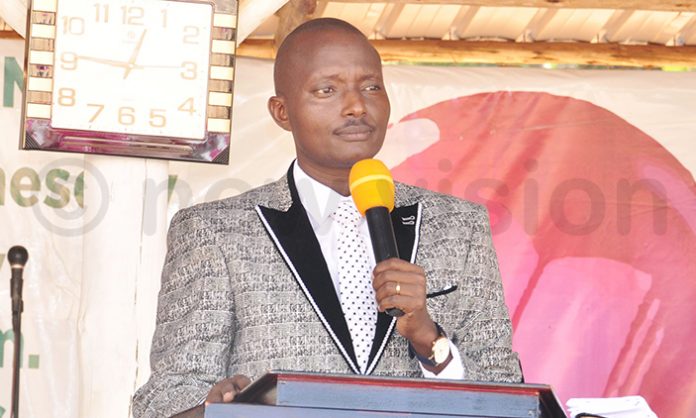
Parliament has warned the controversial house of prayer ministry’s (HPM) pastor, Aloysius Bugingo over offensive, utterances against his estranged wife Teddy Naluswa Bugingo. In a speech that has since gone viral, Bugingo remarked that his wife is suffering from fistula, which he said has been a major problem in the marriage for over 10 years. He would quickly be criticized by women groups, who later held demonstrations, which were dispersed by police, leaving scores arrested. Bugingo would later boast that government couldn’t arrest him, a speech widely criticized. Acting Information and National Guidance Minister, Chris Baryomunsi, said government took note of the offensive communication uttered by the pastor and the Uganda Communications Commission has since written to him warning him not to offensively communicate again. “It is wrong for anybody to condemn a woman simply because she has that kind of condition…I want to join you in condemning that act,” he said during the plenary. Baryomunsi sought to reassure MPs that the Uganda Communications Commission (UCC) is studying the footage and recordings containing Bugingo’s remarks to ascertain if they breach the minimum broadcasting standards. MP Nabilah Naggayi Ssempala complained about the alleged utterances, by way of raising a matter of national importance. “As MPs we are in shock and as mothers we are in pain…no person should be condemned because of an illness, he has been ashaming and degrading his wife and the mother of his children,” said MP Nagayi. Chief Opposition Whip Ibrahim Ssemujju) read double standards in government’s position on the issue. “Joseph Kabuleta who is also a pastor has been jailed for days for offensive communication and has been released without charge, for this one [Bugingo], you have just warned him…do you have standards?” said Ssemujju. An adamant Baryomunsi maintained that the law will be applied without discrimination. “Nobody should use the pretext of faith to break the law,” said Baryomunsi. In the recent past, the controversial pastor has been battling a breaking marriage, which has seen him make public utterances seen to be targeting his wife, who he is seeking to divorce. |
Gov’t condemns, warns Pastor Bugingo
Moses Magogo elected on the CAF Executive Committee
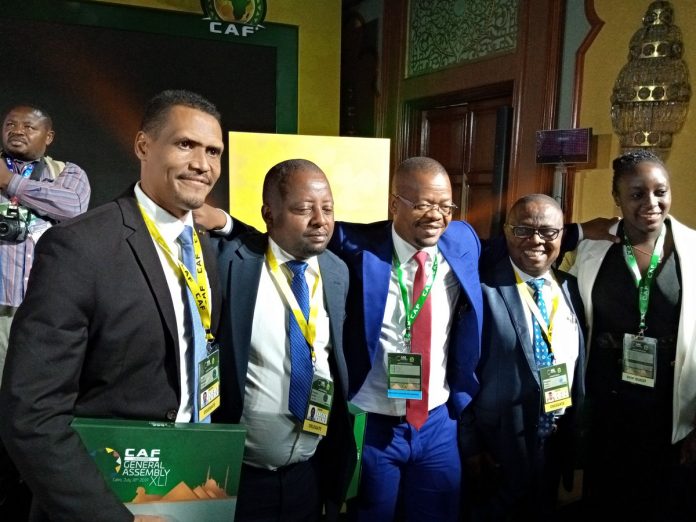
FUFA President Eng. Moses Magogo has been elected as the new Caf Executive Member for the East and Central zone.
Magogo obtained 33 votes out of 54 defeating the President of Tanzania Football Federation (TFF) Tenga Leodegar who received 19.
The election took place during the 41st Ordinary General Assembly for the Confederation of African Football Association (CAF) at Aida ballroom in Cairo, Egypt on Thursday, 18th July 2019.
Magogo replaces Tenga who was re-elected unopposed four years ago after Djibouti’s Hassan Suleiman stepped down.
The Central and East zone consists of all the Council for East and Central African Football Associations (CECAFA) countries that include Uganda, Kenya, Tanzania, Rwanda, Zanzibar, Somalia, Burundi, Ethiopia, Eritrea, Djibouti, Sudan and South Sudan.
Magogo was co-opted as an executive committee member of Caf by Ahmad Ahmad in 2017 but is now a full member after winning with the most votes.
Senegal’s Augustin Senghor is for the Western Zone A, Sita Sangare (Burkina Faso) is for Western Zone B and Central Africa Republic’s Patrice Edouard Ngaissona is for Central zone.
Libya’s Abdulhakim Abraheem Abdulrarazzik Al Shalmani won the Northern region vote.
Ugandan security ‘expert’ Dixon Bond to handle 2019 Afcon final
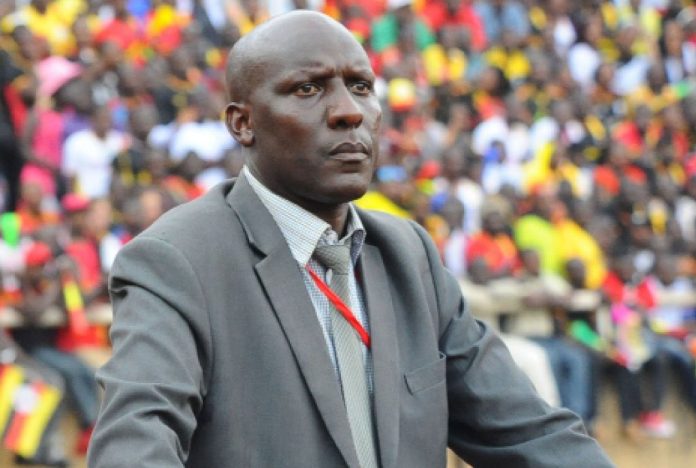
Experienced FUFA, CAF and FIFA Ugandan security personnel Dixon Bond Okello has been selected to head security matters at the 2019 Africa Cup of Nations final between Senegal and Algeria on Friday 19th July.
Okello has been at various sporting events concerning matters of security concerning big crowds. He was at the 2010 Fifa World Cup in South Africa and the 2012 Olympic Games in London.
He has been a regular figure at Caf events like the champions league and confederations cup games and currently among the security officers for the 2019 FIFA U-20 World Cup in Poland.
Okello’s experience over the years in handling high profile Caf engagements has seen him handle highly charged Caf Competitive matches on the continent.
Elsewhere, Cameroonian centre referee Alioum Alioum with two of his assistants in Evarist Menkouande and Elvis Nguegoue, also coming from Cameroon, will handle Africa’s biggest showpiece.
Zakhele Siwela of South Africa has been appointed as the fourth official for the final while Efraim Benjamin Kramer will head the doping control for the match.
Over 32 editions of Africa’s showpiece football tournament, this is just the fifth final that witnesses two local (African) coaches on helm of the finalists’ technical staff. Just four times before the final was an All-African coaches affair. Senegal are searching for the first title while Algeria their second.
Attachments area
Why Museveni directed Minister Anite to audit UTL
President Museveni has directed State Minister for Privatisation and Investment, Evelyn Anite to institute an audit in the activities of the struggling Uganda Telecommunication Limited (UTL).
In a letter dated July 16, 2019, Museveni said he had “heard of some allegations”.
“This is to direct you to institute an audit in the activities that are going on in Uganda Telecommunication Limited,” reads part of Museveni’s letter, a copy of which was seen Eagle Online.
For more than two years, UTL has been placed under administration and there is no sign that the company will change for the better.
In early 2017, UTL was in debts of more than Shs700 billion when the Libyans, who held 69 per cent shares, left.
At that time, government had to liquidate the firm or save its collapse by putting it under provisional administration to allow a search process for competent investors to take it over.
In May 2017, UTL went under Administration Deed and government appointed the Registrar General of Uganda Registration Services Bureau (URSB), Twebaze Bemanya, as the provisional administrator.
One of his tasks was to find an investor to buy UTL within six months. Others were to clear liabilities to all creditors.
However, the company did not attract a new investor and Bemanya’s provisional administration was extended twice by the Finance Ministry.
In May 2018, Museveni ordered that all government ministries, departments and agencies (MDAs) sign up UTL as their sole provider for internet services as part of efforts to make the company more attractive to a prospective investor.
Also the National Backbone Infrastructure (NBI) would be given to UTL by the National Information and Technology Authority (NITA) to ensure fiber network connectivity across the country.
A Shs200b debt UTL owed to government was also written off and turned into shares under Uganda Development Corporation (UDC).
In April last year, Cabinet extended UTL’s operational licence for 20 more years. This also included a directive that Uganda Communications Commission (UCC) expands the UTL reach to cover the whole country.
UTL remains indebted to the tune of Shs536b, according to a bi-annual progress report for November 22, 2018 to May 22 this year that the administrator sent to the Commercial Court, all creditors and shareholders indicated.
The relationship between UTL and UCC is also on the rocks.
In an April 29 letter, Godfrey Mutabazi, the regulator’s executive director, wrote to Bemanya, saying it may not renew the UTL licence in June 2020 because the latter had not met the application process requirements under the law.
He also said that UTL owes his agency Shs49.8 billion in pre-administration debt and Shs10.2 billion as part of the administration. Mutabazi also accused the company of failing to comply with the Uganda Communications Act 2013 which requires an installation of an Intelligence Network Monitoring System (INMS) to enable state agencies monitor telephone calls for security purposes.
He further faulted UTL for underutilising assigned mobile and fixed phone numbers, not complying with the directive on implementing Location Based Services (LBS), not submitting any of its networks and end-user device/terminals to UCC for approval; poor quality of service, using networks that no longer have manufacturer’s support services and failure to seek UCC approval prior to using short codes used by other network services.
Bemanya versus Anite
There has also been a protracted fight between Mr Bemanya and the Ministry of Finance.
Early this year, the ministry failed to have UTL audited on two occassions. The first was when Finance minister Matia Kasaija requested the Auditor General, John Muwanga, to audit UTL.
In April, Mr Muwanga wrote back to the ministry, saying he could not audit the company because “it is being supervised by court.”
The second attempt was by State Minister for Privatisation and Investment, Evelyn Anite, who asked Bemanya to allow the ministry audit the company.
Bemanya declined, saying such an exercise can only be conducted after the lapse of the Administration Deed in November.
After a week of confrontation through letters between Ms Anite and Attorney General, William Byaruhanga, and his deputy Mwesigwa Rukutana, President Museveni last Thursday ordered Justice and Constitutional Affairs minister Kahinda Otafiire to ensure UTL issues are presented before Cabinet before any further action is taken. The President insists efforts to revamp UTL through getting another investor must be explored first and Cabinet must take a decision on that.
The following day, Otafiire wrote to Bemanya to expedite the process of finding an investor before the company is liquidated.
“As the administrator of the company, you are requested to expedite the process of sourcing a strategic investor. You are required to continuously update me on the progress to enable me report to Cabinet accordingly,” Otafiire stated.
There are also other limitations that undermine the successful search for an investor for UTL as listed in the 2017 audit report of PricewaterhouseCoopers Uganda.
Anite in her recent communication said some individuals were oraginsing to take over UTL properties.
It noted that there was need for a restructuring plan that would include conversion of the Shs224 billion debt UTL owes to Ucom, a company owned by the Libyans, into equity.
The firm also recommended that the Uganda Posts and Telecommunications Corporation pension liability of Shs206 billion be taken over by government and converting the combined debt of Shs134 billion owed to government entities such as Uganda Revenue Authority, National Social Security Fund and UCC into equity.
The auditors argued that this would reduce the debt to Shs145 billion. However, this has not been done.
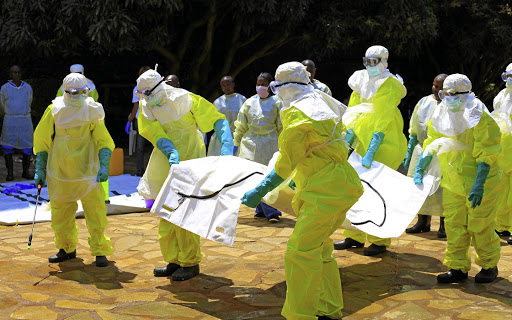
Ebola outbreak in the Democratic Republic of the Congo declared a Public Health Emergency of International Concern

The director general of world health organisation (WHO), Dr. Tedros Adhanom Ghebreyesus has declared the Ebola virus disease (EVD) outbreak in the Democratic Republic of the Congo (DRC) a Public Health Emergency of International Concern (PHEIC).
The declaration followed a meeting of the International Health Regulations Emergency Committee for EVD in the DRC. The Committee cited recent developments in the outbreak in making its recommendation, including the first confirmed case in Goma, a city of almost two million people on the border with Rwanda, and the gateway to the rest of DRC and the world.
This was the fourth meeting of the Emergency Committee since the outbreak was declared on 1 August 2018.
“It is time for the world to take notice and redouble our efforts. We need to work together in solidarity with the DRC to end this outbreak and build a better health system,” said Dr. Tedros. “Extraordinary work has been done for almost a year under the most difficult circumstances. We all owe it to these responders coming from not just WHO but also government, partners and communities — to shoulder more of the burden.”
The Committee expressed disappointment about delays in funding which have constrained the response. They also reinforced the need to protect livelihoods of the people most affected by the outbreak by keeping transport routes and borders open. It is essential to avoid the punitive economic consequences of travel and trade restrictions on affected communities.
“It is important that the world follows these recommendations. It is also crucial that states do not use the PHEIC as an excuse to impose trade or travel restrictions, which would have a negative impact on the response and on the lives and livelihoods of people in the region,” said Professor Robert Steffen, chair of the Emergency Committee.
Since it was declared almost a year ago the outbreak has been classified as a level 3 emergency – the most serious – by WHO, triggering the highest level of mobilization from WHO. The UN has also recognized the seriousness of the emergency by activating the Humanitarian System-wide Scale-Up to support the Ebola response.
NPA boss blasts parliament over Landlord and Tenants Bill 2018, hope Museveni won’t sign it
|
The executive director the National Planning Authority (NPA), has blamed members of parliament for passing the Tenants Bill 2018, without the input of his agency. Dr. Muvawala is skeptical whether President Yoweri Museveni will assent to the Act so that it becomes law to be used in settling disputes between tenant and their landlords. “I hope the president does not sign it. How can somebody stay in a house without paying rent and the landlord has to wait for another six months in court to evict them,” he said of the legislation that has received disapproval from various stakeholders. Are our regulations transformative? We have the Tenants Bill, Sugar Bill and now the Coffee Bill…They don’t address the transformative aspect,” he said. NPA, among others, is mandated to plan for the country’s development agenda and is at the forefront of spearing the National Development Plan. The official was speaking yesterday at the Seventh Economic Forum organised by the Institute of Certified Public Accountants of Uganda (ICPAU) at Imperial Resort Beach Hotel, Entebbe, Wakiso district. Parliament last month passed the bill, with several amendments which relate to duties and rights of landlords and tenants in rented commercial and residential premises. Among the key provisions is that landlords and tenants must sign tenancy agreements for rent transactions of over Shillings 500,000 with clear terms and conditions. Also, tenancy disputes shall be handled in local council court and other courts of law. It also states the landlords can only evict tenants after securing court orders to do so. Unlawful evictions attract a penalty of Shs5 million or jail term of one year or both upon conviction. MPs also approved the provision that landlords must give tenants an eviction notice of six months. However, the most controversial provision is that all rent shall be settled and recorded in Shillings, contrary to the initial proposal that parties can agree to transact in any other currency in the agreement. The Trade, Industry and Cooperatives Minister, Amelia Kyambadde and Health State Minister, Sarah Opendi clashed on the floor with the General Duties State Minister in the Finance Ministry, Gabriel Ajedra over the issue. Minister Ajedra argued that the law shouldn’t restrict transactions in Shillings alone because some tenants such as foreign embassies pay landlords in foreign currency, a proposal that was squarely rejected. However, Kyambadde and Opendi led the group of MPs who shot down Ajedra’s proposal Tororo North County MP, Annet Nyakecho, Bokora County MP, Terence Achia Naco and Guster Mugoya, the Bukooli North County also supported Kyambadde on the need to restrict rent transactions in Shillings. Some of the provisions that have been deleted in the Bill include repealing the Distress for Rent (Bailiffs) Act, 1976. The Lands Minister, Betty Amongi explained that the Uganda Law Reform Commission advised government against abolishing the Act because it has been used by landlords to recover rent from defaulting tenants. Amongi lauded MPs for passing the Bill, which was first mooted in 2012 and subjected to consultations involving landlords, tenants, property developers. The Bill was tabled before parliament February this year. The bill now awaits presidential assent but analysts say Museveni is unlikely to sign it but instead push it back to parliament for improvement.
|
Lt. Gen. Mbadi flags off 1828 officers to Somalia
|
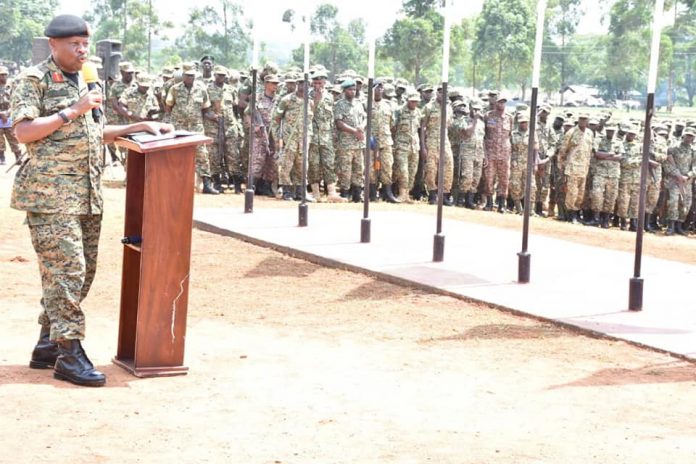
The Deputy Chief of Defence Forces Lt Gen Wilson Mbadi has flagged off a total of 1828 officers of UPDF to Somalia. The flag off took place at Singo Peace Support Operation Centre in Nakaseke District. In his remarks, Lt Gen Mbadi while expressed gratitude to the partners that have supported the UPDF in its pre-deployment training and praised the team now under a new name of Global Peace Operation Initiative (GPOI) for a job well done. He lauded the UPDF instructors for equally keeping the standard of both the centre and the training to international standards. While counseling the troops, the Gen Mbadi applauded them for perseverance and the hard work they have exhibited throughout their stay at the center. he remind them not to sleep while on mission but work harder than ever before to consolidate their predecessors’ achievements in Somalia., “implore you to save mission allowances with the UPDF SACCO, and use it well to prepare for their future retirement journey.” “You have left Uganda to go and add a productive stone in the stability of Somalia which will in the long run add to the total stability of the African continent. Strive harder so that those who judged us by our heights will remember the depth from where we started the mission”, he said. The Deputy Commander Land Force Maj Gen Sam Kavuma urged the soldiers to put Patriotism, discipline, and good fighting at the fore front as they execute their duties in Somalia since they are pillars that make UPDF stand tall as a Force on the continent. Maj Gen Kavuma lauded the Ministry of Defence and Veteran Affairs and UPDF leadership for the continued support given to the Centre which has helped it to strive to greater heights. “It is in the mandate of Commander Land Forces docket to mobilize for PSO center, but nevertheless, it takes full responsibility of the soldiers to be resilient and perform as expected during the training, I congratulate you for that,” he said. He advised them to carry forward the discipline, Patriotism, Pan-Africanism mantle and the respectable fighting skills into the mission area, everything else will run smoothly. Gen Kavuma commended the troops for appreciating the services of Wassco and reminded them that WAZALENDO is growing faster than any other SACCO in the country and to match its speed, soldiers should push up front with it by not getting and investing loans in what he referred to as liabilities but rather in assets that are income generating. The outgoing Commandant PSO Singo Brig Jackson Bakasumba told the troops that they have been ably trained and was satisfied with their readiness. He asked for nothing else but exceptional performance. He handed over the troops to the Deputy CDF for official deployment into the mission.
|
African club finals to change to one-match contests – Caf President
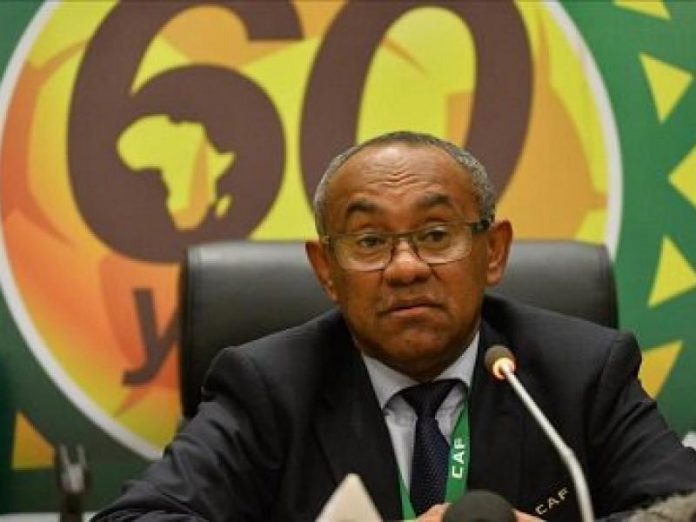
CAF club finals will be reduced from two legs to one match at a neutral venue from next season, African football boss Ahmad Ahmad announced Wednesday.
“The Champions League and Confederation Cup finals will now be played as single matches,” the CAF president said on Twitter.
The first final of the Champions League, then called the African Cup of Champions Clubs, was staged as a single match in Ghana 54 years ago.
But every subsequent final of the continent’s premier club competition has been played over two legs with the aggregate score determining the winners.
However, the result of the latest final, between Esperance of Tunisia and Wydad Casablanca of Morocco, has not been decided nearly seven weeks after the second leg was played.
Wydad refused to continue playing in Tunisia when their equaliser, which would have levelled the overall scores, could not be referred to VAR because the system had malfunctioned.
CAF presented the trophy and medals to Esperance only to order a replay at a neutral venue, a decision which has led both clubs to appeal to the Court of Arbitration for Sport (CAS).
Ahmad did not give reasons for the change in his tweet, but the decision is a huge gamble as it could result in the club season showpieces being watched by tiny crowds.
When the CAF Super Cup, an annual one-off match between the Champions League and second-tier Confederation Cup winners, was introduced in 1993, neutral venues were used.
But the crowds were so low that the format was ditched after just three editions in favour of the Champions League trophy-holders enjoying home advantage.
The ongoing Africa Cup of Nations in Egypt has confirmed a decades-old trend of football followers in the continent backing only home sides
Egypt drew capacity 75,000 crowds to the Cairo International Stadium while many attractive matches not involving them were watched by less than 10,000 spectators.
Malagasy Ahmad also tweeted that the number of qualifiers for the biennial Africa Women’s Cup of Nations will increase from eight to 12 for the 2020 tournament.
I am not pregnant for Prophet Mbonye- Former Miss Uganda Ellah threatens to sue seven media houses and Facebook
Former miss Uganda Stellah Nantumbwe aka Ellah has threatened to drag to court seven media houses and Facebook among other several other individuals for allegedly publishing stories that she became pregnant for Prophet Elvis Mbonye after the pastor gifted her with a car months ago.
In a litany of law firms that could be more than the media houses she is threatening to sue, if they continue to write about her and her alleged affair with ‘Prophet Mbonye, this could be a case that can equal that of presidential court battles between President Yoweri Museveni and Kizza Besigye.
Through her lawyers of M/S Mugisha & CO.Advocates, M/S Alaka and CO. Advocates, M/S Ochieng Associated Advocates and M/S Galisonga & Co. Advocates, Ellah has warned the media houses to desist from writing about her on that matter or else she drags them to court, saying the stories insinuate that she is an immoral and irresponsible person.
“In particular, these publications have alleged that our client Miss Nantumbwe is involved in a sexual relationship with a popular Kampala-based Prophet, who purportedly gifted our client with a car and that our client returned the favour by becoming pregnant for the said Prophet, an allegation our clients refutes completely, as it is factually unfounded and baseless,” her lawyers say.
The lawyers say such stories are intended to lower Ellah’s reputation in the eyes of the right-thinking members of society and, in particular, to cause her to be regarded with feelings of hatred, contempt, ridicule, fear or dislike, public odium and, it unchecked, have a continuous effect of causing irreparable injury to our client’s reputation.
Ellah through her lawyers says the publications on the subject matter infringe on her right to privacy, a right enshrined and guaranteed by the Constitution of Uganda.
The media houses warned are; Vision Group, Red Pepper Publications Limited, Galaxy FM, Bigeye, Bizz.com and The Insider. Other offending bloggers and social media users have been warned to desist from writing about the same subject.
Dfcu bank hacking scandal: Why banks must appreciate media scrutiny
|
There are over 20 commercial banks in Uganda in addition to other financial institutions that serve the population of Uganda and we appreciate the commercial entities for their services as they do business with the population and government. However, it is common knowledge that when these institutions land in trouble, they don’t want the media to report about those troubles on the pretext that the so-called negative stories will affect their businesses and the economy at large. Unfortunately no commercial bank or any other entity has come up with a report on how the so-called media coverage has negatively impacted their operations. Case in point is the Dfcu bank which has had its considerable share of media attention due to the bad deals the bank got involved in. For instance the deal in which Dfcu bank acquired its rival Crane Bank Limited (CBL) on January 25, 2017 was not a fair deal as parliament’s committee on Commissions State Authorities and State Enterprises (COSASE) established during the probe of Bank of Uganda (BoU) over the controversial closure of seven banks. During the COSASE probe BoU officials stated that the sale of CBL and Global Trust Bank Uganda (GTBU) had part of the process done on telephone and the MPs on COSASE said it was unfair for Dfcu bank to acquire the affected in such transactions. It was also established that some documents related to the transaction were missing and neither BoU nor Dfcu bank officials could provide them, including minutes of the meetings. The COSASE probe also said that it was unfair for BoU to inject in CBL Ssh478 billion of taxpayers’ as liquidity support but then end up selling CBL to Dfcu bank at Shs200 billion, moreover paid in installments. In fact MPs said that transaction was more of a gift to Dfcu bank. BoU also sold both banks to Dfcu bank well knowing that its staff (BoU) would benefit as they hold some share in that business. MPs said that was conflict of interest and BoU Governor Emmanuel Tumusiime-Mutebile accepted it was a mistake. At the time BoU sold (GTBU) to Dfcu bank in 2014, Dr. William Kalema happened to be on the board of BoU and at the same time on the board of Dfcu bank. The MPs still condemned it also as conflict of interest. Still Dfcu bank of recent has been a target of robbers in the recent times and yet the bank managers feel offended when the media report on such robberies at the bank. The recent is the hacking incident where billions of Ugandan shillings is suspected to have been stolen and the bank has reported the case to police. Even when some shareholders in particular CDC wanted to sell its shares and the media reported about it, Dfcu bank managers said it was not true yet the letter from CDC said otherwise. Dfcu kept on saying that media reports were false, aimed at tarnishing its image. It is surprising that Dfcu bank and the umbrella organisation, the Uganda Bankers Association do not want journalists to report about such facts. Such reports are meant to help bankers up their game and ensure corporate governance which today is one of the cornerstones of any business. Such media reports are also aimed at making government help banks operate smoothly, creating stability in the sector in the long run, thus creating investor confidence. Uganda Bankers Association (UBA) lasted year said that there had been persistent negative reporting about the banking sector by some sections of the media but it did not mention the exact crimes the media was committing. UBA at the time was defending Dfcu bank though it failed to mention the name. It said that the targeted and calculated negative reporting about the banking sector had the potential of undermining confidence in the industry and risks triggering undesired panic with unintended adverse consequences for the economy. UBA as an umbrella association should instead promote the spirit of transparence and good governance within the banking industry. UBA should also come in to help struggling members, had they intervened in CBL for example maybe it could have been saved. UBA last year said, the banking sector had in the previous couple of years witnessed overall growth with month end deposit balances averaging Uganda Shillings 20 trillion from Shs14.7 trillion in 2015, with liquidity instruments (cash or near cash) above Shs7 trillion and bank accounts now close to 11 million up from 6 million in 2015 indicating confidence in the sector. It said the banking and overall financial sector was stable and resilient, however maintaining stability remains a responsibility for all of us and not only the regulator and financial institutions. So, the media shouldn’t be killed for telling the true message but rather be praised as it highlights on the wrong doings happening in the banking sector. It is actually the role of the bank managers to tighten their internal systems so that the so called ‘hackers’ if not internal dealings to reoccur. |