Stanbic Bank
Stanbic Bank
17.7 C
Kampala
Stanbic Bank
Stanbic Bank
Home Blog Page 1257

Dr. Stella Nyanzi: Exiled in her own country

Betty Aol Ocan

By Betty Aol Ocan

On behalf of all the forces of Change in Uganda, I congratulate Hon. Robert Kyagulanyi upon the recognition at the International Human Rights Ceremony in Chicago. The award is a representation of every individual in this Nation who has stood up to the violent claws of the dictatorship of President Yoweri Kaguta Museveni.

The award is a representation of the pivotal role that the youth have got to play in the Liberation of this Nation. The Opposition leadership is humbled by the International Community’s recognition for the demand for increased civic space and fair Democracy in Uganda.

We are at a time when the incarceration of Dr. Stella Nyanzi brings to light the true fangs of a dictatorship that thrives in the suffocation of free speech, the Rights to Expression, and Women’s Rights. The Museveni regime is caught between the rock and the deep blue sea. Being militaristic in administration and Operations, it faces a double-edged sword from the mostly educated women elite whose muzzle is the pen and the bullet is ink.

Times have evolved, the youthful Population is more conscious of its needs and more resilient women-led, non-violent activism has emerged across the world, the most recent inspired by Alaa Salah of Sudan. Dr. Stella Nyanzi is a proof of the State’s hypocrisy on Women’s Health and Rights, and it undermines the doctrine of affirmative action in as far as creating a wider space for women participation in mainstream politics is concerned.

Dr. Stella is a prisoner of ink, she tears through the core fabric of the State’s brute, she antagonises the status quo and without a single gunshot, threatens a bloodless regime change, something the Establishment is unwelcome to dictatorships across the world are more afraid of an educated and empowered mass than they would lose sleep over a gun-revolution.

The regime never knows how to go about it, they are broken in the most humiliating and amorphous manner they’d never anticipate, and the most distressing of them all, is one which places Women and youth at the Centre of it all.

Rather than suffocate their voices with intimidation and oppression, this category of the Population has proven a thorn into the flesh of the regime, and Dr. Stella Nyanzi represents Hundreds of thousands of Women activities across the world who will shoot at oppression with the muzzle of ink, at the expense of their uteri. A very traumatising and brutal experience from a regime that pretends to promote Women and Children Health rights.

It’s only a matter of time that the entire nakedness of the regime is presented for all to witness. Above all, Humanity must prevail, and the State must account for dead foetus resulting from the Miscarriage of Dr. Stella Nyanzi while in incarceration.

The writer is Woman MP, Gulu District and Leader of Opposition

Stories Continues after ad

Afcon 2019 Knockout Stage: Round of 16 fixtures

AFCON

Sixteen of the twenty-four teams that made it to Egypt continue with the dream of becoming champions after completion of the group stages.

The top two finishers of the six groups and the four best third place teams made up the line-up for the last 16.

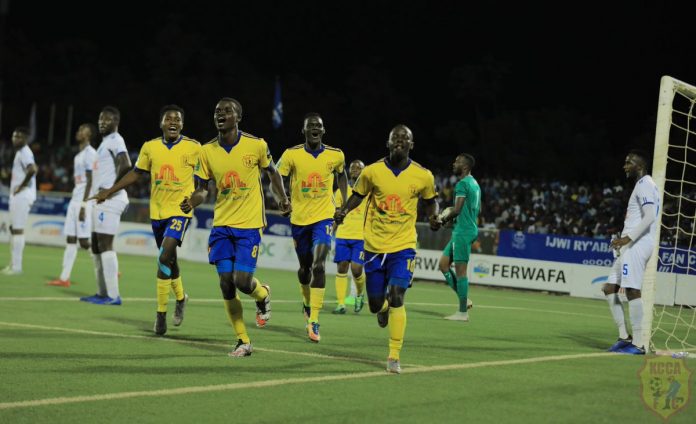
Host Egypt topped group A with nine points while Uganda came second with four points. DR Congo squeezed through to the knockout phase as one of the best third teams.

Madagascar shocked tournament favorites Nigeria to finish top of Group B with seven points. The Super Eagles finished in second with six points. Guinea qualified as a third best team from the same group.

Algerians topped group C with the maximum nine points while Senegal came second with six points.

Morocco finished with nine points at top of Group D. The Atlas Lions were joined by Ivory Coast who came second and South Africa who squeezed through as one of the third-best teams.

Mali won Group E after beating Angola 1-0, and Tunisia claimed second after a goalless draw against Mauritania.

Ghana won group F after defeating Guinea-Bissau 2-0, with holders Cameroon taking second with a goalless draw against Benin. Benin qualified as one of the best third teams.

Angola, Burundi, Guinea-Bissau, Kenya, Mauritania, Namibia, Tanzania and Zimbabwe are the teams that crashed out.

Action will resume on Friday, 5 July when the first two games of the round of 16 are played. Two games will be played on the 6th, 7th and 8th to determine the eight quarter finalists.

Friday, July 5

Morocco vs. Benin, 7pm

Uganda vs. Senegal, 10pm

Saturday, July 6

Nigeria vs. Cameroon, 7pm

Egypt vs. South Africa, 10pm

Sunday, July 7

Madagascar vs. DR Congo, 7pm

Algeria vs. Guinea, 10pm

Monday, July 8

Mali vs. Ivory Coast, 7pm

Ghana vs. Tunisia, 10pm

Stories Continues after ad

Let’s reinforce power sector regulations to attract investments – African energy stakeholders

African roundtable of energy stakeholders.

Africa’s power sector policies and regulations must be sharpened to enhance efficiency to attract commensurate investments, a technical roundtable for energy stakeholders in Abidjan heard last week.

Callixte Kambanda, Manager for Energy, Policy, Regulation and Statistics at the African Development Bank said while many countries have established a Regulatory Authority with the necessary legislation, there are still critical gaps that need to be addressed, particularly in terms of independence of these Authorities.

“Effective regulation is a key enabler of an improved business environment,” Kambanda said in opening remarks at a donors’ roundtable on Electricity Regulatory Index (ERI) for Africa. The roundtable was organized on the sidelines of the 3rd Africa Energy Market Place, an energy sector platform for governments, private sector, and development partners to review Africa’s power sector priorities.

In 2018, the African Development Bank launched the ERI for Africa, a comparative, country-by-country assessment of regulatory development on the power sector. The Index diagnosed the regulatory environment, identified gaps and recommended appropriate interventions to address them.

Kambanda noted that power sector regulators generally face challenges in finding the balance between protecting the interests of consumers and those of investors.

In collaboration with development partners, the Bank seeks to implement the recommendations of the 2018 Index through targeted support by providing technical assistance to some 15 countries covered in the assessment. They are Cameroon, Cote d’Ivoire, Gambia, Ghana, Kenya, Lesotho, Malawi, Namibia, Nigeria, Senegal, South Africa, Tanzania, Togo, Uganda, and Zimbabwe.

John Irons, Partnerships Director at Power Africa, noted that the ERI would engender best practices among regulators in Africa’s electricity sector through the sharing of experiences. He pledged Power Africa’s commitment to supporting the Index to become more sustainable.

KfW, the German Development Bank, is collaborating with African Development Bank on the implementation of the ERI recommendations in Cote d’Ivoire on behalf of the German Federal Ministry for Economic Cooperation and Development (BMZ).

As part of the German “reform partnership” for mobilizing private investments and sustainable economic development in the context of the G20 initiative “Compact with Africa”, Germany is providing comprehensive support to Ivorian institutions in the electricity sector.

To ensure optimal impact, both banks are coordinating their activities. Esther Drumm, project manager at KfW, stated that the ERI “provides a great starting point to see where countries stand in terms of regulation. Since it is a continuous effort, it can also be used to develop ongoing interventions and measure their impact.”

Collins Magalis, Chief Executive, Malawi Energy Regulatory Authority, reiterated the importance of the Index for the continent’s electricity sector and suggested that it should be expanded.

Initiated by the African Development Bank, the AEMP is a collaborative platform of key government representatives, development partners, and private sector investors, set up to address barriers to mobilizing and scaling-up private investment into the energy sector.

It is designed to promote high-level dialogue to fast-track reforms, transactions and initiatives through peer-to-peer learning and knowledge exchange, networking and partner engagement.

Stories Continues after ad

Africa Cup of Nations group stage tops and flops

Madagascar

Hosts Egypt swept into the last 16 of an expanded Africa Cup of Nations and were joined by the rest of the continent’s elite, while newcomers Madagascar delivered the shock of the tournament by advancing as group winners.

AFP Sport takes a look at the standout performers and those who failed to hit the heights during the group phase:

Tops

Trezeguet and Ahmed Elmohamady (Egypt)

Mohamed Salah arrived at the tournament shouldering the weight of expectations for a country of almost 100 million, but while influential in his side’s safe passage to the knockout phase he was ably supported by Mahmoud ‘Trezeguet’ Hassan and Captain Ahmed Elmohamady. Kasimpasa midfielder Trezeguet bagged the winner in the opening 1-0 defeat of Zimbabwe and shone again as the hosts rode their luck in a 2-0 win over DR Congo, setting up Salah to open his account with a gliding run and incisive pass. Elmohamady, who helped Aston Villa earn promotion back to the Premier League, popped up with a pair of goals of his own — the first an alert finish against DR Congo and the second a sweet strike to seal a 2-0 victory against Uganda.

Madagascar

Ranked so low that they had to beat Sao Tome e Principe just to reach the qualifying competition for this tournament, Madagascar assured themselves of a spot in the knockout rounds in emphatic style with a shock 2-0 win over three-time champions Nigeria. Midfielder Ibrahim Amada insisted “there is no secret” to their success and said the team was simply “trying to make the most of each second” in Egypt. After a commendable 2-2 draw with Guinea, Nicolas Dupuis’ side earned their first win by edging fellow debutants Burundi by a single goal. That set the stage for a remarkable upset of the Super Eagles, with Charles Andriamatsinoro netting his second goal in three games after Lalaina Nomenjanahary opened the scoring in front of Malagasy CAF president Ahmad Ahmad.

North African sides

Egypt, Algeria and Morocco marched into the next round with a perfect three wins from three, the north African conditions clearly suiting a trio of teams capable of going far. Riyad Mahrez’s Algeria got the better of Sadio Mane and title favourites Senegal, while Herve Renard, who is looking to lift the trophy with a third different country, guided Morocco to a series of 1-0 wins — most notably silencing an Ivory Coast attack led by prized asset Nicolas Pepe. However, Elmohamady warned Egypt not to get carried away. “Nine points out of three games is something Egypt is used to – the difficult part is what comes next.”

Flops

Knowledge Musona (Zimbabwe)

Zimbabwe crashed out in disheartening fashion after a 4-0 rout by the Democratic Republic of Congo, but it was the preceding 1-1 draw with Uganda that will leave the Warriors feeling the most regret. Zimbabwe fell behind to an early Uganda goal before rallying strongly, but a number of glaring misses — the team’s leading scorer in qualifying Musona the chief culprit — saw them fail to collect maximum points which could well have prolonged their adventure.

Amr Warda (Egypt)

Egypt brushed their group opponents aside but the host nation’s title push has been overshadowed by sexual harassment allegations surrounding midfielder Amr Warda. The Greece-based player was initially booted from the squad after multiple women posted screenshots and testimonies of Warda’s alleged lewd comments, as well as explicit videos attributed to the player. But after appeals from team-mates Warda was reinstated less than 48 hours later amid a heated debate about women’s rights. Reactions have ranged from the pious to the political, with many celebrities coming out to defend Warda and others pointing out his lurid history of sexual misconduct. One of the most popular Twitter hashtags in the wake of Salah and others defending the midfielder was “National team of sexual harassers”.

Tunisia

Tunisia were one of five African representatives at last year’s World Cup, but they have performed well below expectations as the continent’s second-ranked side. At 25th in the world they trail only Senegal but the Carthage Eagles edged through to the last 16 on the back of three draws in a favourable group featuring Mali, Angola and first-timers Mauritania. “We are not satisfied with the performance,” said midfielder Youssef Msakni. Former France star Alain Giresse’s chances of winning the tournament at the fourth attempt as a coach look remote.

Stories Continues after ad

Survey finds local investors paying more taxes than multinationals

Local firms need protection from government.

A report titled, “Attracting Investments Using Tax Incentives in Uganda: The Effective Tax Rates” authored by the Economic Policy Research Centre (EPRC) has established that domestic investors in Uganda pay more taxes than multinationals.

The report that examines effective tax rates to assess Uganda’s tax policy and inform policy-makers about the likely effect of existing tax incentives, estimates and compares the effective tax burden imposed by tax incentives on domestic and foreign corporations.

“In this regard, we calculate both marginal and average effective tax rates using the well-known Devereux Griffith approach and its extension – an exercise that has not been done so far for the case of Uganda,” says Corti Paul Lakuma, the lead researcher.

“The study finds a high level of discretion in Uganda’s capital income tax system. In this regard, there are differences in effective average tax rates driven by a mix of tax incentives, tax discrimination and preferential treatment.”

Beside capital allowances, the difference in the effective tax burden between companies with and without tax incentives amount to 28 per cent. The study also finds that domestic investors pay more taxes than multinationals.

The effective tax rates for equity financing according to Lakuma are significantly lower than the statutory corporate tax rate. However, debt-financed investments trigger relatively lower effective tax rates, due to the interest deductibility.

In both cases, he adds high inflation and market interest rates have discouraged investment environment in Uganda highlighting the importance of macroeconomic fundamentals in terms of effective taxation in Uganda.

Downstream oil and gas companies, that cannot claim preferential corporate tax rates or tax holidays, pay an average of 8 per cent effective income taxes.

Meanwhile, companies operating in free zones, with a preferential tax treatment have a negative effective tax burden (-20 per cent). Most benefits from tax holidays are generated in the first 4 years as economic depreciation declines, and effective average tax rates start increasing in the 5th year as the holiday expires.

This supports one important criticism that footloose industry in Uganda benefits most from such kind of tax exemptions. The study also reveals discretion in granting preferential corporate income tax rates in Uganda. As a result, some companies have been granted special capital allowances for specific assets and tax holidays.

These policy actions present several challenges key among them a complexity in tax administration, obscurity in the real effects of the tax burden, and sizable tax revenue loss.

Furthermore, tax incentives like tax holidays produce tax avoidance strategies and substantially lower compliance across taxpayers.

This calls for reforms of the tax system with a view to disposing or reducing tax holidays and a large number of preferential corporate tax rates.

The reforms can add transparency to the tax system as a whole, save resources within the administration, and most likely will improve tax revenue. Moreover, additional revenue will be conducive to improving the sustainability of public finances, thereby contributing to the improvement of the macroeconomic environment.

“This, in turn, has the potential to reduce effective tax rates significantly, as our findings highlight the importance of macroeconomic variables such as the inflation rate in terms of effective taxation in Uganda,” says Lakuma.

Stories Continues after ad

She Cranes move up to 6th in World Netball rankings

She Cranes

Ahead of the Vitality Netball World Cup 2019, the International Netball Federation has released its annual INF World Rankings update. The latest rankings are inclusive of matches up to 30th June 2019.

The Uganda National Netball Team, known as The She Cranes have moved one place up in the released INF Rankings.

The She Cranes are now 6th in the world having accumulated a total of 2241 points with a rating of 125.

They have also moved to 2nd in Africa, behind South Africa (5th).

Malawi at 9th overall, Zimbabwe at 13th and Zambia at 15th, complete Africa’s top five best countries.

Australia, Jamaica, England, New Zealand and South Africa are the best five countries.

Malta has been dropped from the rankings as they have played no matches since July 2015, and Switzerland and Tonga have been relegated from the rankings as they have played fewer than eight matches since July 2015. 42 teams now having an INF World Ranking.

Uganda She Cranes are among the sixteen countries that will take part and are in Group D alongside the host England (3rd), Samoa (14th) and Scotland (7th).

The 2019 Netball World Cup will be the fifteenth staging of the premier competition in international netball, contested every four years. Australia are the defending champions.

Stories Continues after ad

Funders avail Shs34b to support agribusinesses in Uganda

Packaging bushera

New financing to the tune of Shs34 billion has been made available to support agribusinesses in Uganda as new funding partners; Soros Economic Development Fund, part of Open Society Foundation (OSF) and FCA Investment (FCAI) join the Yield Uganda Investment Fund.

The Agribusiness Impact Fund, set up in January 2017 by the European Union (EU), through the International Fund for Agricultural Development (IFAD) and the National Social Security Fund (NSSF), with an initial £12 million investment, has now hit the £20 million (UGX 85 billion) mark in total commitments, following an £8million investment from the Open Society Foundations and FCA Investments.

“Mobilizing investment for the agro industrialization of Uganda had been the main reason for the creation of Yield Uganda Investment Fund by the EU.

“In 2017 NSSF joined the EU to launch the first investment fund and today FCA investments and open society foundations add substantial capital which will allow Uganda agribusiness companies to access the needed long-term capital for industrialization.

“As outlined in the European external investment plan, the EU is aiming at attracting capital into Uganda to foster development in agriculture, trade and industrialization,” said EU ambassador to Uganda, Attilio Pacifici.

The Yield Uganda Investment Fund is a partnership between public and private investors that offers innovative and tailored financial solutions, using equity, semi-equity and debt, to small and medium-sized enterprises (SMEs) having the potential to generate both strong financial returns and significant social impact.

Deloitte Uganda and Pearl Capital Partners Uganda (PCP) established the fund, currently managed by PCP Uganda, with the mandate to make an investment in the rage of about Shs 1 billion to Shs8.5 billion.

To date, Yield has made an investment of over Shs8 billion in SESACO limited, an agro-processing company specializing in Soya products, CECOFA, a coffee processor, and Chemiphar, an analytical laboratory providing testing and inspection services to SME businesses.

The fund targets agriculture-related business across all value chains including the supply of agricultural inputs, production and agro-processing within all sub-sectors, post-harvest storage and distribution, but also peripheral activities such as transportation, communications and certification.

The fund seeks to support businesses with a clear competitive advantage and ambitious local management.

The fund targets to improve over 100,000 rural households livelihoods through improving access to markets for their produce, higher quality agricultural inputs and services; creating jobs and employment opportunities, ensure food security while generating income, foreign exchange and new export opportunities, all fundamentally contributing to Uganda’s economic growth and goal to eradicate poverty.

High-quality Business Development Support (BDS) is critically important when modernizing and expanding yield funds investee companies to make them more effective, growth-oriented and profitable.

An integral and complementary part of the fund’s investment process is to support the operations of its investee companies through matching grants for BDS.

Typical areas of the funds BDs support include company governance, accounting, budgeting, auditing and tax compliance, innovation and technology transfer, marketing studies, and the adoption of international product quality and safety standards. This extra service to yield funds investee companies is funded with grants from the EU managed by IFAD.

“IFAD is reassured by the confidence and delighted to welcome open society foundations and FCA investment to the Yield Uganda fund as part of the 2nd close investors,” noted IFAD Country Director for Uganda, Laskhmi Moola.

“Their additional financing, to yield, and their expertise in the impact sector will add value to the existing partnerships. Together with OSF and FCAI, we will amplify the impact of the Yield Uganda fund by continuing to improve the fiscal environment for the Uganda agri-SMEs and improve the lives of the smallholder farmers they work with,” she added.

“Agriculture plays a vital role in economic growth and sustainable development. Investment in the sector is an effective instrument to alleviate poverty and enhance food security.

Gabriel Ajedra, Minister of State for Finance, General Duties further applauded the Fund saying, “Uganda is pleased to have the Yield Uganda Fund which is dedicated to Uganda to provide capital through debt and equity to agriculture-related businesses across all value chains.

Gabriel Ajedra, Minister of State for Finance, General Duties further applauded the Fund saying, “Uganda is pleased to have the Yield Uganda Fund which is dedicated to Uganda to provide capital through debt and equity to agriculture-related businesses across all value chains.
“Evidence suggests that gross domestic product (GDP) growth originating from agriculture is twice as effective in reducing poverty as GDP growth linked to the non-agricultural sectors, yet the sector is still underfunded. The Yield Uganda Investment Fund is a great opportunity for NSSF to support the sector,” said NSSF Deputy Managing Director, Patrick Ayota.

He added that the investment is in line with NSSF’s diversification strategy to increase exposure to equities to about 25% of its total portfolio from the current 18%, as well as supporting home-grown companies that have good corporate governance and are willing to provide NSSF with an exit through the stock exchange.

“Our investment in Yield fund Uganda is triple vote; in the resilience of Uganda’s Agricultural sector, in the power of the private sector to deliver improved livelihoods and in the ability of pear capital partners to direct the investment to the most deserving SMEs.

“FCA investment views the development of the private sectors as the most viable means to bring about economic development and prosperity in Uganda and with this investment, we hope to create thousands of jobs within the agriculture value chain and sustainably increase smallholder farmers’ incomes in addition to catalysing additional investment in the sector,” stated Jukka-Pekka Karkkainnen, CEO, FCA Investments.

“We invested in the Yield fund because we want to direct capital to local agribusinesses and entrepreneurs that are interested in sharing benefits with smallholder farmers, rather than exploiting them.

“We were also attracted by the fact that the fund is based in Kampala, giving it the ability to work closely with the businesses it invests in as they strengthen and expand. We believed this team is the right one to tackle some challenges that the sectors present.

“We hope that this initiative can provide a new model for successful investment in smallholder farmers that others will follow across the continent. And we are thrilled to provide our support,” added Jocelyn Songco, Principal Soros Economic Development Fund, Open Society Foundations.

“Some of the foundations and key principles from which Yield Fund Uganda was first established in early 2017 have been built around the unique conducive agri-business environment that we find here in Uganda; an environment which is not only rich in potential but which also gives us the opportunity to bring about real change and impact upon the lives of smallholder farmers and rural communities that remain the majority agri-partners in various ways now and over the coming years.

“This Ugandan domiciled yield fund is uniquely positioned to drive forward that change, by making strategic, effective and efficient on the ground investments. We are committed to bringing flexible and innovative financing solutions to the agri-business SME community, enabling several partners’ prosperity for the future.

“By utilizing our impact investing experiences and principles, we believe that we shall also create the core foundation from which the SME agri-business sector and smallholder farmer communities can develop and grow together,” said Dr Edward Isingoma, Managing Partners, Pearl Capital Partners (PCP)

Gabriel Ajedra, Minister of State for Finance, General Duties further applauded the Fund saying, “Uganda is pleased to have the Yield Uganda Fund which is dedicated to Uganda to provide capital through debt and equity to agriculture-related businesses across all value chains including, supply agricultural inputs, productions and agro-processing, post-harvest storage and distribution.

“Yield Uganda funds plan of providing first loss protection to equity investors will address the challenges of low and limited access to capital and the perceived high risk involved in agricultural business.

“Therefore an investment fund of this nature will go a long way to uplift the agricultural sector and most especially when the country is focusing on commercial agriculture, industrialization and value additions.”

Stories Continues after ad

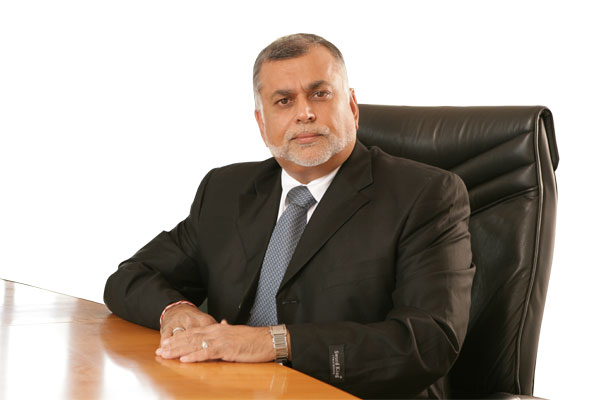
Sudhir asks court to dismiss case against him as ruling is set for August 26

City Tycoon, Sudhir and his lawyer Peter Kabatsi

Court has set 26 of August as the date when Commercial Court judge, Justice David Wangutusi, will give a ruling in the case brought against city businessman Sudhir Ruparelia by Crane Bank in receivership. During today’s submissions, Sudhir’s lawyers led by Peter Kabatsi, argued that an institution in receivership has no right to sue or be sued since the Financial Institutions Act (FIA) which is a financial governing body does not say so.

On the contrary, Crane Bank in receivership lawyer led by Dr Joseph Byamugisha, submitted that when a financial institution is placed under receivership, it does not also lose its powers to sue or be sued since it still remains a corporate entity.

In the main case BoU had asked court to compel Sudhir pay Shs397 billion. Sudhir’s lawyers led by Kabatsi objected and reasoned that an institution in receiver has no right to sue because it is an illegality and as such the institution of the suit is an illegality quoting section 92.25a of the Financial Institutions Act (FIA)

Dr. Byamugisha says the actions weren’t commenced by BoU but rather by Crane Bank that could sue and be sued.

Byamugisha further said it is only the company with the right to sue but not the board because the board is suspended. However, this was contested by Sudhir’s lawyers.

In May 2019, Sudhir Ruparelia and Meera Investments lodged an application seeking court to dismiss a suit in which CBL in receivership sued the two applicants yet it had no legal capacity to do so.

Click on the link below to read full submission

file:///C:/Users/hp/Downloads/Submission.pdf

BoU (receiver) took-over CBL before it connived with Dfcu to sell it at a throw away price.

“…I have been advised by…lawyers, which I advise I verily believe to be true, that the respondent has no legal capacity to sue applicants,” reads part of the application.
Mr. Sudhir and Meera Investments also in the application want the recovery, transfer and return of freehold property from CBL in receivership. “…I have been advised by lawyers, Kampala Associated Advocates, which advice I verily believe to be true, that under the Constitution and the Land Act, the Respondent cannot own and hold freehold property and is therefore, not capable of holding the suit property in its names,” the application continues.

Mr. Sudhir also in the application argues that he was sued as a sole shareholder of CBL, which is not true and that the respondent has no powers to commence against CBL shareholders or Sudhir himself.
“The orders sought against the 2nd applicant in HCCS 493 of 2017 are barred by law. The respondent cannot maintain an action against the 2nd applicant for recovery, transfer and return of freehold property when the respondent is a non-citizen within the meaning of the law” reads the suit.
In the application Sudhir wants CBL in receivership to pay National Social Security Fund (NSSF) the statutory debts. CBL in receivership was in the hands of BoU between October 20, 2016 and January 25, 2017 before its assets were controversially transferred to Dfcu bank by BoU.
“The claim by National Social Security Fund could only be made against the respondent,” the application states.

The application was lodged on April 30, 2019 and court has set July 3, 2019 as date to decide whether the plaintiff has no locus standi to commence actions against the applicant in High Court Civil Suit (HCCS) No 493 of 2017 against the applicants.
Court also will rule whether the plaint does not disclose the cause of action against the applicant and determine whether orders against second applicant (Meera Investments) are barred by the law but court will also determine whether the suit will be dismissed with costs as desired by applicants.

BoU in Panic

According to a legal expert that preferred to remain anonymous in this article, BoU still remain in pani after Court dismissed two conflicted law firms from representing any client in any case involving Sudhir and Ruparelia Group. He said BoU now pondering whether to use the Financial Intelligence report on CBL and a report on receivership of CBL to sue Sudhir on behalf of CBL shareholders.
The source said the officials at BoU are now wondering as to why BoU sued Sudhir and Meera Investments and should court go by proceed with the main case, the taxpayers will lose more money as Sudhir and Meera Investments will be compensated in billions of shillings, their names having been dragged to court by BoU for wrong reasons.

Barring of conflicted lawyers kills BoU hope of winning in main case
Days ago the court put a permanent injunction on law firm Lule & Sebalu Advocates in cases involving the Ruparelia Group since the law firm at one time represented Sudhir or his companies.
The High Court made the ruling in a case where Sudhir was seeking the law firm hired by the Dfcu bank and Bank of Uganda to be declared conflicted, and therefore, unfit to represent the parties in a longstanding commercial dispute.

Sudhir and his son, Rajiv Ruparelia who is the Managing Director of Ruparelia Group of companies at commercial Court

Sudhir through his Real Estate Company; Crane Management Services some time back sued Dfcu bank demanding rental arrears amounting to Shs2.9 billion and US $385,728.54 in respect of tenancies of suit properties that were formally owned by CBL. Dfcu bank which controversially bought off CBL had hired Sebalu & Lule Advocates. Sudhir said he contracted the same law firm in 2006 to draw and review tenancy agreements in respect of the said rental premises thus there is conflict between the lawyer and his client.

Further In December 2017, the Commercial Court disqualified city lawyers Timothy Kanyererezi Masembe and David Mpanga from the Shs397 billion suit in which BoU sued Sudhir and Meera Investments for recovery of that money. BoU had hired the two lawyers but Sudhir challenged them to be dropped off the case, citing conflict of interest, having hired them at one time.
In his ruling delivered on December 21, 2017, the head of the Commercial Court division, Justice Wangutusi stated that Mr. David Mpanga of A.F. Mpanga Advocates and Timothy Masembe of MMAKS Advocates acted in violation of the Advocates (Professional Conduct) regulations.

Section 4 of the regulation provides that an advocate shall not accept instructions from any person in respect of a contentious or non-contentious matter if the matter involves a former client and the advocate as a result of acting for the former client is aware of any facts which may be prejudicial to the client in that matter.

According to the source, BoU’s hope of riding on conflicted lawyers who were employed by Sudhir and his companies under the Ruparelia Group was killed by the two rulings, the reason it has opted for alternatives, having sensed it could lose the main case against Sudhir and Meera Investments. “Remember that the two sides disagreed to resolve the matter out of court,” he said.

Questioning BoU’s Shs478 billion spent on CBL in Auditor General’s report
The situation, in which BoU is in right now, according to the source, is worsened that BoU has failed to account for Shs320 billion of the Shs478 billion it claimed to have put in CBL during the receivership between October 20, 2016 and January 25, 2017. The situation is further also worsened by the fact that BoU offered to Dfcu bank CBL assets at only Shs200 billion. These statics came out during the Auditor General’s probe of BoU over seven defunct banks closed by BoU. Also during MPs probe of BoU on closed banks, a top official said CBL needed only Shs150 billion to remain operating.

The source said BoU is scared because it used the above money without the involvement of shareholders of CBL. It was the receiver and the lender at the same time and now it cannot tell CBL shareholders to refund the money which belonged to taxpayers.

Stories Continues after ad

Global coffee prices rise 7.1% in June- ICO report

Uganda coffee

The International Coffee Organisation (ICO) in its coffee market report, shows that the composite price of coffee averaged US $99.97 cents/lb (0.45kg) in June 2019, 7.1 per cent higher than in May 2019.

According to the report, that was the first increase in the monthly average since January 2019, when prices rose by 0.9 per cent to US $101.56 cents/lb.

The reports says daily composite indicator ranged between US $95.17 cents/lb on 18 June and US $105.25 cents/lb on 28 June. “The daily price rose above 100 US cents/lb for the first time since 18 February 2019 on 30 May and remained above that level on 9 out 20 days during the month of June,” it says.

May exports

In May 2019, world coffee exports rose by 19.4 percent to 11.6 million bags compared to May 2018, it says. The growth, according the report, was led by shipments of Brazilian Naturals coffee type, which rose by 65.4 percent to 3.5 million bags. However, in May 2018, shipments from Brazil were well below expectations due to a nationwide trucking strike that delayed delivery of coffee to ports. Brazil’s May exports averaged 2.73 million bags from 2013 to 2017.

Robusta exports

According to the report, Robusta exports grew by 8.3 per cent to 4.05 million bags in May 2019 compared to the same month one year ago. Significant growth in Robusta shipments from Brazil, where exports of green Robusta rose from 46,621 bags to 376,257 bags as well as increases in exports from Tanzania and Uganda offset the 5.1 per cent decline in Vietnam’s green Robusta shipments. Exports of Colombian Milds grew by 6.1 per cent to 1.15 million bags while Other Milds increased by 4.4 per cent to 2.9 million bags.

Meanwhile the report says global exports in the first eight months of coffee year 2018/19 reached 86.57 million bags, an increase of 7.5 per cent compared to the same period one year ago. Shipments of Brazilian Naturals rose by 21.9 per cent to 28.22 million bags while Colombian Milds increased by 6.8 per cent to 10.13 million bags. Robusta exports increased by 3 per cent to 30.65 million bags in October 2018 to May 2019 while Other Milds fell by 3 per cent to 17.57 million bags.

Global production

The reports says Global coffee production is estimated at 167.75 million bags in coffee year 2018/19, compared to global consumption of 164.64 million bags. Although the increase in imports during the first six months of the coffee year indicates ongoing demand growth, it has not kept pace with the rise in global production in the last two years. As a results, there is a surplus of 3.11 million bags in coffee year 2018/19 following a surplus of 3.84 million bags in coffee year 2017/18.

Imports by ICO importing Members and the United States, which on average account for around 75 per cent of global imports, increased by 4.9 per cent to 66.56 million bags in the first half of coffee year 2018/19, the report says. Imports by the EU in October 2018 to March 2019 rose by 3.5 per cent to 42.71 million bags, and those of the United States increased by 8.1 per cent to 14.98 million bags.

Imports by Japan grew by 13.5 per cent to 3.92 million bags, and the Russian Federation by 4.9 per cent to 2.77 million bags. In contrast, Switzerland’s imports declined by 7.4 per cent to 1.53 million bags in the first six months of coffee year 2018/19. Imports by Norway and Tunisia increased by 1.3 per cent to 364,958 bags and 12.9 per cent to 282,259 bags, respectively.

Stories Continues after ad

Civil society activists drag Rwanda in regional court over trade row

Gatuna border

An alliance of East African citizen groups announced Tuesday they were suing Rwanda and Uganda and in a regional court for financial losses resulting from a border dispute between the feuding nations.

Trade has been severely disrupted since late February when Rwanda abruptly closed the border at Gatuna shared with Uganda and severing a major economic land route used daily by traders and other business people on both sides.

The closure followed months of rising tensions between the two countries that have exchanged public accusations of spying in each other’s territory. Rwanda put an embargo on Uganda’s goods and stopped its citizens from traveling to Uganda, saying it could not guarantee their security.

Apart from a brief reopening of the border post in June the frontier has remained shut, damaging the local economies of both countries reliant on cross-border trade to survive. Rwandan claims it is rehabilitating the road.

Three civil society organisations, on behalf of communities along the border, said they had filed a complaint with the East African Court of Justice demanding reparations from Uganda and Rwanda for their losses.

Stories Continues after ad