‘Now is the time to act’ for victims of violence in Sudan, ICC prosecutor urges Security Council
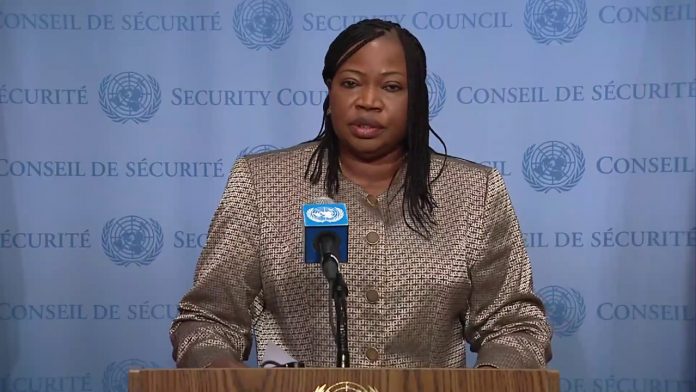
The UN Security Council must “seize this moment” presented by the current turmoil in Sudan, to provide justice at long last for the victims of violence in Darfur, and those who have suffered at the hands of the brutal military crackdown earlier this month.
That is according to the Prosecutor of the International Criminal Court (ICC), Fatou Bensouda, who said she had a “clear message to convey: now is the time to act. Now is the time for the people of Sudan to choose law, over impunity, and ensure that the ICC suspects in the Darfur situation, finally face justice in a court of law.”
She said the Council now had a “unique opportunity to decisively and effectively” address the wrongs committed by the security forces aligned with former President Omar al-Bashir in the Darfur regionbetween 2003-2008, when around 300,000 were killed and 2.7 million civilians driven from their homes, according to UN figures.
She called for the immediate cessation of violence against civilians in the capital Khartoum and elsewhere, since the 3 June wave of attacks against protesters calling for a return to civilian rule, in opposition to the ruling Transitional Military Council (TMC).
All arrest warrants for the five suspects charged with the grave crimes within the ICC’s remit – genocide, war crimes and crimes against humanity – remain outstanding, she told members. Both deposed president Bashir, and two others, are now said to be in custody she said and are legally obliged to be transferred by the TMC. Only if they could show willing to prosecute them for the same crimes, could they remain in Sudan, she said.
ictims must have their day in court
“I am ready to engage in dialogue with the authorities in Sudan to ensure that the Darfur suspects face independent and impartial justice, either in a courtroom in The Hague, or in Sudan”, said the Prosecutor. “Continued impunity is not an option. The victims of the Darfur situation deserve to finally have their day in court.”
“My expectation is that Sudan, with the support of this Council, will engage in dialogue with my Office to discuss the feasibility of a mission by my Office to Sudan in the very near future to resolve these issues.”
She said in the face of a resurgence of further alleged grave crimes by former ‘Janjaweed’ militia fighters who are now part of the TMC-sanctioned Rapid Support Forces (RSF), who led many of the alleged atrocities in Darfur over a decade ago, it was “simply intolerable” that reported attacks today were continuing.
Attacks against civilian populations in Darfur have continued during the reporting period and appear to be increasing in severity. The approximately 1.64 million internally displaced persons in Darfur remain especially vulnerable and sexual and gender-based violence continues to restrict the freedom of movement of women and girls, in IDP camps and areas of return”, she told the Council
Ms. Bensouda noted with concern “the reports that the RSF have allegedly seized facilities and assets previously held by the Africa Union-United Nations Hybrid Operation in Darfur. In this context, I support the AU Peace and Security Council’s resolve to extend UNAMID’s mandate for a period of 12 months…as well as its rejection of the TMC’s call for UNAMID to hand over assets to the RSF, and its request that these assets are handed to civilian authorities.”
She said she would not hesitate to investigate any further crimes within the ICC mandate in Darfur “and where appropriate, prosecute”.
“With this Council’s support, and the cooperation of the authorities in Sudan”, she concluded, “there is an opportunity, now, to make real progress in the pursuit of accountability and justice for the victims in the Darfur situation. The current reported violence against civilians in Darfur must stop and all the ICC Darfur suspects must stand trial. We must not squander this opportunity.”
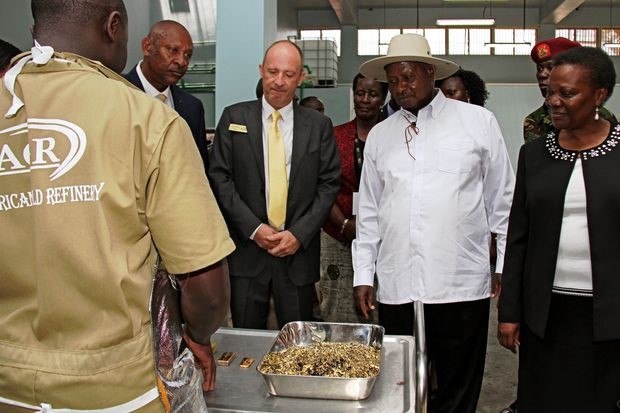
President Yoweri Museveni, in white, with Alain Goetz and gold flakes at AGR in 2017
The government of Venezuelan President Nicolás Maduro is selling off his country’s gold reserves. Some of it has passed through a secretive operation in East Africa, a gambit that evades U.S. sanctions.
On two early-March flights, at least 7.4 tons of gold with a market value over US$300 million moved from Venezuela to a refinery in Uganda, say officials in Venezuela and Uganda, a foreign diplomat and Venezuelan opposition lawmakers, who have concluded Mr. Maduro’s government exported the ingots.
The gold arrived on a Russian charter jetliner in two shipments at the international airport in Entebbe, says Ugandan national-police spokesman Fred Enanga. The accompanying paperwork identified the ingots, some with stamped labels partially scratched off, as Venezuelan central-bank property, says a senior Ugandan police officer who saw the bars and documents. Flight records show the trips originated in Caracas, Venezuela.
The shipments expose one link in a global underground economy many suspect is helping Mr. Maduro cling to power by bypassing the U.S.-dominated international finance system. Washington has recognized opposition leader Juan Guaidó as Venezuela’s legitimate president, slapped financial and other sanctions on Venezuelan officials and institutions, and threatened penalties for others doing business with the regime.
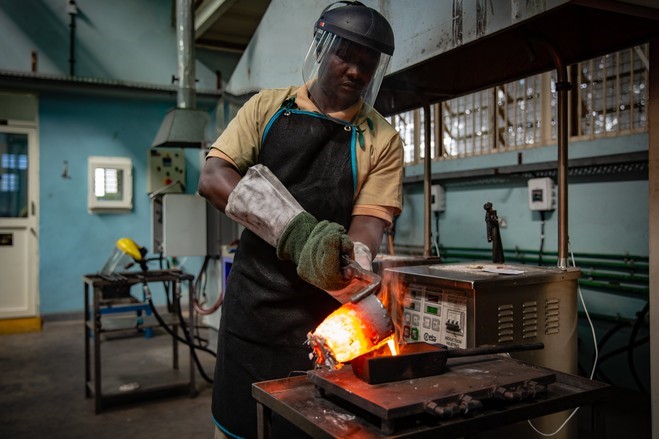
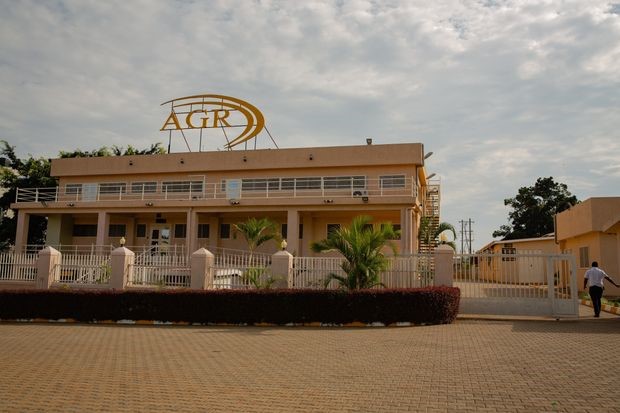
Refining gold at AGR
The standoff between the two leaders is reverberating beyond Venezuela, with some 50 countries joining the U.S. in backing Mr. Guaidó while others side with Mr. Maduro. What was once Latin America’s richest economy is starving, its oil sales have dwindled and citizens are suffering through dayslong power outages and shortages of basic goods.
Gold sales, U.S. and other officials say, are one of the government’s final financial lifelines.
The gold that arrived in Entebbe passed through African Gold Refinery Ltd., or AGR, in a compound about 500 yards from the old runway before being exported to the Middle East, Ugandan police say.
The refinery started operations in 2015. Some of the gold it processed was allegedly smuggled from conflict-torn eastern Congo and other African nations, according to officials with Ugandan police, the country’s Financial Intelligence Authority and regional smugglers.
Gold from AGR has made its way into supply chains at U.S. companies including General Motors Co. , General Electric Co. and StarbucksCorp. , the firms’ filings for 2018 with the Securities and Exchange Commission show, despite U.S. measures to discourage use of so-called conflict minerals from Congo.
GM prohibits suppliers from using forced or involuntary labor or engage in corrupt business practices, a spokesman says. GE declined to comment. Starbucks didn’t respond to requests for comment.
Gilded Age
Uganda doesn’t mine much gold of its own, but the heavy metal has become its leading export.
Sources: Uganda Bureau of Statistics (production); Bank of Uganda (exports)
AGR General Manager Cherry Anne Dacdac says the company hasn’t processed smuggled or conflict gold and declines to comment on the March shipments. She says all AGR’s business is legal and that in a March 26 management meeting it agreed it won’t accept transactions related to Venezuela.
AGR has processed and exported more than 38 tons of gold since it started operations, Ms. Dacdac says. The scale of its operation helped drive gold in 2018 to overtake coffee as the leading export from Uganda, which mines little of it.
The refinery appears to act with support from Ugandan President Yoweri Museveni, court and other documents reviewed by the Journal suggest. A spokesman for Mr. Museveni says the president “backs the plant just as he does all other investors” in his quest to transform Uganda’s economy.
The Maduro government’s prior gold sales have been an open point of contention. Between late 2017 and Feb. 1, 2019, the central bank sold at least 73.3 tons of gold, with a market value of around $3 billion, to companies in the United Arab Emirates and Turkey, the National Assembly’s finance commission announced in February.
What should Washington do to prevent gold smuggling?
The White House on Nov. 1 announced sanctions intended to stop Venezuelan gold sales. Since then, several dozen more tons have been removed from the central bank and secretly exported, say opposition lawmakers and a person familiar with the bank’s reserves. The bank for weeks was left without power and water.
“It’s a fire sale,” says one of the lawmakers, Ángel Alvarado, who is on the finance commission. “The regime is scraping the barrel, selling off anything of value to keep itself afloat.”
A U.S. Treasury Department official says: “Treasury is committed to holding accountable those operating corruptly in Venezuela’s gold sector.”
Spokesmen for Venezuela’s central bank and Information Ministry didn’t respond to requests for comment. The Maduro government has said little publicly about its gold sales and routinely dismisses sanctions and accusations of wrongdoing as part of an international campaign to besmirch Caracas.
Mr. Goetz’s gold
AGR was founded in 2014 by Alain Goetz, 54, a Belgian businessman who has worked more than three decades in the African gold trade.
Gold is almost impossible to trace to its origin once refined. The United Nations says gold is the primary mineral financing militias and parts of the military in eastern Congo, funding a conflict that has killed millions.
Even before the Venezuelan shipments, AGR had drawn the scrutiny of Ugandan authorities for processing gold allegedly smuggled from conflict zones in Congo, as well as from South Sudan and Zimbabwe, much of which later leaves the country as Ugandan gold, according to Ugandan police, the country’s Financial Intelligence Authority, regional smugglers and Congolese mining officials.
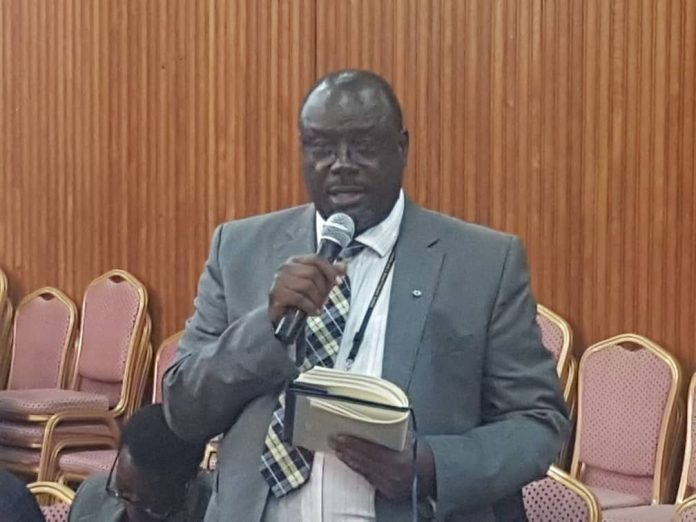
Sydney Asubo, executive director of the Financial Intelligence Authority, Uganda’s government body in charge of combating money laundering, says the agency reported the smuggling activities to authorities and requested prosecution. No charges have been filed, he says, pending the conclusion of an investigation of AGR by Uganda’s Inspectorate of Government over suspicions of tax evasion, smuggling and money laundering. Ali Munira, a spokeswoman for the Inspectorate, which is charged with investigating corruption and other abuses, confirms there is an investigation but declined to comment on details.
Mr. Goetz and AGR’s Ms. Dacdac say they have complied with Ugandan and other laws. Mr. Goetz denies there are probes. Ms. Dacdac says she isn’t aware of any investigations by the Financial Intelligence Authority or Inspectorate.
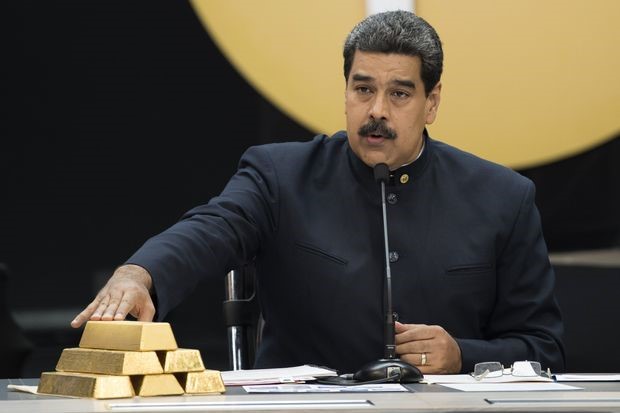
America’s 2010 Dodd-Frank Act included provisions to discourage companies from using raw materials that finance the Congolese conflict by tracing what they buy. The act doesn’t make buying these materials illegal. AGR appeared in supply chains of 237 publicly traded U.S. companies in their filings for 2018. Maduro with gold
Mr. Goetz says he has sold AGR and retains control of Goetz Gold LLC, a Dubai trading company. Goetz Gold still handles the gold coming from AGR, he says. AGR’s Ms. Dacdac didn’t respond to requests to comment on whether Goetz Gold handles the company’s gold. Uganda’s company registry shows Mr. Goetz’s AGR shares were transferred in February 2018 to Seychelles-based AGR International Ltd. Ms. Dacdac says that company is owned by individuals and companies originating from the Middle East.
Secretive shipment
On March 2, the red-tailed body of a Boeing 777 owned by a Russian charter company, Nordwind Airlines, touched down at Entebbe at 6:35 a.m. after taking off more than 13 hours earlier from Caracas, plane-tracking website Flightradar24 shows. Nordwind didn’t respond to requests for comment.
Police and private security gathered on the tarmac to receive the cargo from the jetliner, which carried no passengers, says a person who witnessed its arrival.
Airport handlers removed heavy parcels wrapped in brown cardboard, which didn’t pass through the airport’s regular customs procedures, says Mr. Enanga, the Ugandan police spokesman. Less than an hour after landing, the packages under a private-security escort reached the AGR compound just across the airport access road, he says.
Inside the cardboard were 3.8 tons of Venezuelan gold. Another 3.6 tons on the same airliner from Caracas arrived at the refinery two days later, Mr. Enanga says. By the time the police’s minerals unit, tipped off over the unusually large consignments, raided AGR on March 7, the first lot was gone, exported to the Middle East with its final destination listed as Turkey, he says.
The senior Ugandan police officer and Mr. Goetz say the gold was sent to Goetz Gold in Dubai. AGR’s Ms. Dacdac didn’t respond to requests for comment on whether the company exported the gold to Goetz Gold. Mr. Goetz says Goetz Gold didn’t send it to Turkey.
Ugandan police seized the other 3.6 tons, ingots stamped with labels identifying them as Venezuelan central-bank property, says the senior officer who saw them. Some labels appeared scratched, as if someone had tried to disguise their origin, the officer says. Paperwork with the bars showed they were from the 1940s.
Mr. Goetz and AGR’s Ms. Dacdac say police never raided the refinery and never seized any gold. Ms. Dacdac says: “AGR presented all the necessary documentations as proof that the particular transactions have been declared and captured by the Uganda Revenue Authority.”
Precious Cargo
Venezuelan President Nicolás Maduro’s government is selling off his country’s gold reserves, some of which passed in March through a refinery near Uganda’s main airport, according to officials in Venezuela and Uganda.
It wasn’t the first time authorities identified Venezuelan gold handled by Mr. Goetz. Last year, Venezuela’s central bank was selling gold to three trading firms in Turkey and the United Arab Emirates, according to the February announcement by the Venezuelan parliament’s finance commission, including to Goetz Gold, which bought 21.9 tons.
Mr. Goetz says some of that particular Venezuelan gold passed through Goetz Gold but that it came from a company outside Venezuela and didn’t break U.S. sanctions because contracts were signed before Nov. 1.
After U.S. sanctions, the central bank’s buyers were drying up. In late January, as another Nordwind 777 sat at Caracas airport, Venezuelan opposition lawmaker José Guerra, a former economist at the central bank, alleged in parliament that the plane was there to fly out 20 tons of the bank’s gold.
The U.S. publicly pressured the bank’s buyers in Turkey and the U.A.E. “My advice to bankers, brokers, traders, facilitators, and other businesses,” a tweet from national security adviser John Bolton’s account warned on Jan. 30: “Don’t deal in gold, oil, or other Venezuelan commodities being stolen from the Venezuelan people by the Maduro mafia.”
Two days later, Abu Dhabi-based Noor Capital, which had previously bought 27.4 tons of Venezuelan gold, according to the Venezuelan parliament’s finance commission, announced it was stopping such purchases. Flightradar24 shows the Boeing 777 returned to Moscow.
Noor Capital declined to comment beyond a Feb. 1 statement confirming it had bought 3 tons of gold from Venezuela’s central bank on Jan. 21 and denying engaging in illegal actions.
Two months later in Uganda, as police say that the seized Entebbe gold shipment sat in custody, relief came from President Museveni. In a letter dated March 26, a copy of which the Journal reviewed, Uganda’s attorney general, William Byaruhanga, ordered the police minerals-protection unit to release the gold and withdraw officers from AGR.
Police complied, says Mr. Enanga, the police spokesman. AGR, roughly 500 yards from the old Entebbe runway
The order to release the gold, Mr. Byaruhanga wrote in the letter, came from President Museveni, whom he said he had met the day before at State House in Entebbe. “AGR is instructed henceforth,” the letter said, to “cease and desist from any further importation of gold from Venezuela, until further notice,” citing U.S. sanctions.
Pressure on Uganda and AGR was rising from U.S. diplomats who had gotten wind of the shipments, says a person familiar with the pressure.
The spokesman for Mr. Museveni says the president directed the attorney general to release the seized gold after investigators cleared the imports. Mr. Byaruhanga didn’t respond to requests for comment. AGR’s Ms. Dacdac says the company didn’t seek Mr. Museveni’s intervention.
From there, the Venezuelan gold’s trace fades. Some time in March, two tons of gold were put up for sale in Turkey at a steep discount to market prices, say people familiar with the matter. The origin was listed as Uganda, but customs documents showed it came from Venezuela’s central-bank vault, one of them says.
Unable to find a buyer, a second attempt was made to sell the gold at a steeper discount, one of the people says, adding that it isn’t clear if anyone bought it. Mr. Goetz says Goetz Gold didn’t offer the Venezuelan gold for sale in Turkey.
There is a twist in the Venezuelan gold’s tale, says the person familiar with the central bank’s reserves: The bars almost certainly came from America in the 1940s, the person says, in payment to Venezuela for oil supplied during World War II.
By Sally Chen, Dimitris Drakopoulos, and Rohit Goel
China is embarking on the next stage of its integration into global financial markets. It is a stage that is likely to see a fresh flood of overseas investment, improved liquidity, better governance, and a broader range of instruments.
The catalyst: inclusion of Chinese stocks and bonds in a larger number of global financial-market indexes. As Chinese securities are added, investment managers who seek to match or surpass the returns of the indexes will adjust their portfolios to include Chinese stocks and bonds. And increasingly it is these benchmark-driven asset managers who are propelling portfolio flows.
In the past five years alone, foreign ownership of Chinese government bonds has quadrupled to almost 8 percent. Ownership of onshore equities has also increased but remains low compared with other emerging markets. This trend of rising foreign ownership is likely to accelerate further.
How much? To get an idea, let’s look at the decision, announced in April, to include two types of Chinese bonds in the Bloomberg Barclays Global Aggregate Index—local currency-denominated bonds issued by the central government and by state-owned policy banks such as China Development Bank. Assets tracking the Bloomberg Barclays index could total $2 trillion to $2.5 trillion, according to analysts. Assuming an expected weighting of 6 percent, China can expect to see an additional $150 billion of inflows by 2020.
That’s just the beginning. Add the widely expected inclusion of Chinese bonds and equities into FTSE and JP Morgan indexes, and China can expect to see benchmark-driven portfolio inflows of as much as $450 billion, or 3 percent to 4 percent of GDP, in the next two to three years. These preliminary estimates may be conservative, for a number of reasons:
More securities may become eligible for index inclusion. Currently, only government and policy bank bonds, which account for about 40 percent of the $12 trillion Chinese market, are included in a major global bond index. Should local government and corporate bonds also become eligible, China’s weight in these indexes could increase further. Similarly, China’s onshore A-shares (equities that are locally incorporated and listed and are traded in local currency) constitute a significant proportion of China’s equity market capitalization, but only 20 percent of these will be included in the MSCI equity index by November 2019. In comparison, benchmark indexes already include most shares of companies in other major Asian economies.
China’s public debt is projected to rise. Weights in the global bond indexes are based on debt outstanding. That means China’s weight will rise if its index-eligible public debt grows faster than that of other index constituents. Based on the IMF’s latest projections, China’s debt share among index eligible countries may increase significantly in coming years.
High risk-adjusted yields make Chinese bonds an attractive investment. Some foreign investors will like China’s local currency bond market for its large size, A+ credit rating, high yield relative to similarly rated sovereigns, and low correlation with other bond markets. For those reasons, investors might hold more than the benchmark target weights. Furthermore, managers of central bank reserves and sovereign wealth funds have invested relatively little in Chinese assets and are also likely to benefit from the improved liquidity and accessibility of Chinese bond markets.
What does this mean for China?
Greater foreign investor participation may subject Chinese markets to greater scrutiny and stricter governance standards. It should also lead to improved market liquidity and a potentially broader range of instruments, including those for hedging foreign exchange risks, which would benefit both local and foreign investors.
As discussed in the latest Global Financial Stability Report, benchmark driven investors are increasingly important drivers of portfolio flows. Portfolio flows to China increased sharply following the country’s inclusion in the MSCI equity indexes in 2018. Aggregate portfolio inflows rose to $159 billion in 2018 from $50 billion in 2016. Overseas purchases of A-shares through the Stock Connect program, which links the Hong Kong and mainland Chinese markets, were especially strong in 2018.
Bond flows from asset managers, on the other hand, were relatively subdued ahead of China’s inclusion in the Bloomberg index in April. However, they have picked up recently. Furthermore, the number of investors registered and participating in the Bond Connect program has also increased sharply in the last 12 months, suggesting that flows might increase in the medium term.
What does this mean for other emerging markets?
The news for other emerging markets may not be as good. Investors may reduce purchases of other emerging-market assets as they re-balance their portfolios to reflect China’s inclusion. As a result, emerging market government issuers could see an average reduction of allocations by $1 billion to $3 billion each. These effects could be larger for some countries, where benchmark-driven holdings constitute a significant amount of their foreign debt. More broadly, as benchmark-driven investors tend to be more sensitive to changes in global financial conditions than other investors, their greater role in international finance may mean that external shocks propagate to medium-sized emerging and frontier market economies faster than in the past.
But the reality may be more complex. Benchmark-driven investors who actively manage their portfolios can substantially deviate from the benchmark weights in an effort to outperform the index.
That said, it is clear that the inclusion of China will likely alter the risk-return characteristics of the main indexes for emerging-market local currency debt; because Chinese bonds have a better than average rating and lower yields, the average index will also have a relatively higher rating and lower yield. All things considered, we can expect a further increase in the importance of China in the emerging market universe.
Three officials from Bank of Uganda have been rearrested by CID and other agencies investigating the allegedly printing of Shs90 billion and will be produced in court.
The three face charges of abuse of office and neglect of duty. The officials are Caroline Nankabirwa, from procurement department, Simon Peter Zaribugire from currency department and Milton Opio, director security.
Investigators from the Uganda police say investigation into the Bank of Uganda continue and will soon issue a new statement on the latest developments concerning the currency consignment saga in which a chartered plane delivered five crates alongside 20 pallets of BoU consignment.
“Our officers in partnership with other agencies are still doing the investigations and I promise we will soon issue a statement to clear rumours in the media,” an officer who is part of the team said on condition of anonymity as he is not allowed to talk to the media.
The chartered plane landed at Entebbe International Airport on April 27 and was cleared by Uganda Revenue Authority (URA) customs department in the presence of BoU officials, BoU security, aviation security, police and other security agencies. However, it was reported that instead of the expected 20 pallets, the consignment had 25 pallets.
The officer said the investigations spearheaded by CID Director Grace Akullo have expanded countrywide to BoU regional currency centres of Kabale, Mbale and Fort Portal, after leads brought those centres into picture.
The detective explained that heads of BoU currency centres in the three regions are being interrogated on whether they had prior knowledge on the five extra pallets that were transported on the chartered plane, which had on board, newly printed Uganda Shilling notes.
The source said the CID team is also probing how and why the directors were transferred to regional currency centres from the head office in Kampala, prior to the arrival of the BoU consignment.
Available information indicates that the Central Bank sent its officials to pick printed cash overseas and alerted Uganda Revenue Authority (URA) about a consignment that required fast clearance.
Sources indicated that the head of Mbale currency centre who was abruptly called to witness the offloading of BoU consignment became suspicious of the extra pallets and briefed BoU Governor Prof. Emmanuel Tumusiime-Mutebile.
But Tumusiime-Mutebile on Tuesday reiterated that there was no extra consignment containing printed money besides that which was officially sanctioned by the bank.
‘I simply said that it was an anomaly in the sense that the plane came along with 20 pallets and additionally five crates (that were not ours). The 20 pallets were consigned,” Mutebile said while reading the latest monetary policy statement, urging media to ignore rumours citing that there was extra money printed.
Mutebile’s comments come after government spokesperson Ofwono Opondo disowned an investigation by police in relation to the unfolding currency scandal at Bank of Uganda.
Police spokesperson Fred Enanga told journalists yesterday that investigators were investigating allegations that additional money was printed and smuggled into the country. The figure that has been thrown about is Shs 90 billion.
But government through Ofwono Opondo, the executive director of Uganda Media Centre said they were not aware of any investigation regarding this money.
“I disagree with Fred Enanga’s statement about investigations in relation to the extra cargo of Shs 90 billion,” said Ofwono.
Opondo said government now wants Enanga to put the record straight.
“We are asking police to correct the statement [that there is an investigation over Shs 90 billion].”
Ofwono said government is investigating the extra boxes on the plane that contained equipment for testing blood.
Crown Prince Mohammed bin Salman (right) has denied any knowledge of journalist Jamal Khashoggi's murder
There is credible evidence that Saudi Arabia’s Crown Prince Mohammed bin Salman and other high-level officials are individually liable for the killing of Jamal Khashoggi, a UN expert says.
A report by special rapporteur Agnes Callamard says the evidence merits further investigation by an independent and impartial international inquiry.
Khashoggi was killed inside the Saudi consulate in Istanbul by Saudi agents.
Saudi authorities insist they were not acting on Prince Mohammed’s orders.
The Gulf kingdom has put 11 unidentified people on trial behind closed doors for Khashoggi’s murder and is seeking the death penalty for five of them.
However, Ms Callamard said the trial failed to meet international procedural and substantive standards, and called for it to be suspended.
How did Jamal Khashoggi die?
The 58-year-old journalist, a US-based columnist for the Washington Post and prominent critic of Prince Mohammed, was last seen entering the Saudi consulate on 2 October to obtain papers he needed to marry his fiancée Hatice Cengiz.
Ms Callamard, the UN’s special rapporteur on extrajudicial, summary or arbitrary executions, said Khashoggi was “brutally slain” inside the consulate that day.
Saudi Arabia’s deputy public prosecutor Shalaan Shalaan told reporters in November that the murder was ordered by the head of a “negotiations team” sent to Istanbul by the Saudi deputy intelligence chief to force Khashoggi to return to the kingdom from his self-imposed exile.
Investigators concluded that Khashoggi was forcibly restrained after a struggle and injected with a large amount of a drug – resulting in an overdose that led to his death, Mr Shalaan said. His body was then dismembered and handed over to a local “collaborator” outside the consulate, he added.
Five individuals had confessed to the murder, Mr Shalaan asserted, adding: “[The crown prince] did not have any knowledge about it.”
What does the report say?
In January, the UN’s human rights office tasked Ms Callamard with establishing “the nature and extent of states’ and individuals’ responsibilities for the killing”.
Senior Saudi officials insisted that Khashoggi’s death was the result of a “rogue” operation, but the special rapporteur’s report concludes that it was “an extrajudicial killing for which the state of the Kingdom of Saudi Arabia is responsible”.
“From the perspective of international human rights law, state responsibility is not a question of, for example, which of the state officials ordered Mr Khashoggi’s death; whether one or more ordered a kidnapping that was botched and then became an accidental killing; or whether the officers acted on their own initiative or ultra vires[beyond their authority],” the report notes.
Ms Callamard also determined that there was “credible evidence, warranting further investigation of high-level Saudi officials’ individual liability, including the crown prince’s”, according to the report.
The special rapporteur says the crown prince should be subject to the targeted sanctions already imposed by some UN member states, including the US, against other named individuals allegedly involved in the killing.
The sanctions, focusing on his personal assets abroad, should remain in place “until and unless evidence has been produced that he bears no responsibility for the execution of Mr Khashoggi”, the reports says.
The trial of the 11 suspects currently taking place in Saudi Arabia should be suspended, according to Ms Callamard, because this was an international crime, over which there is universal jurisdiction. That would allow other states, such as Turkey or the United States, to also attempt a prosecution.
The report says the UN Security Council should initiate a follow-up criminal investigation into Khashoggi’s murder to build up strong files on each of the alleged perpetrators and identify mechanisms for formal accountability, such as a tribunal.
There was no immediate response to the report from the Saudi government.
Dutch investigators have accused three Russians, Igor Girkin, Sergey Dubinskiy and Oleg Pulatov, and Ukrainian Leonid Kharchenko of involvement.
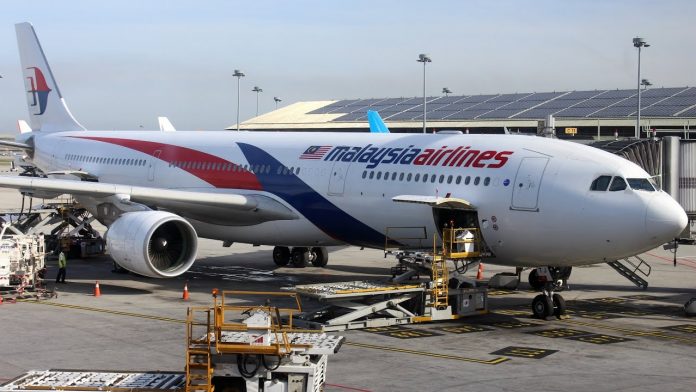
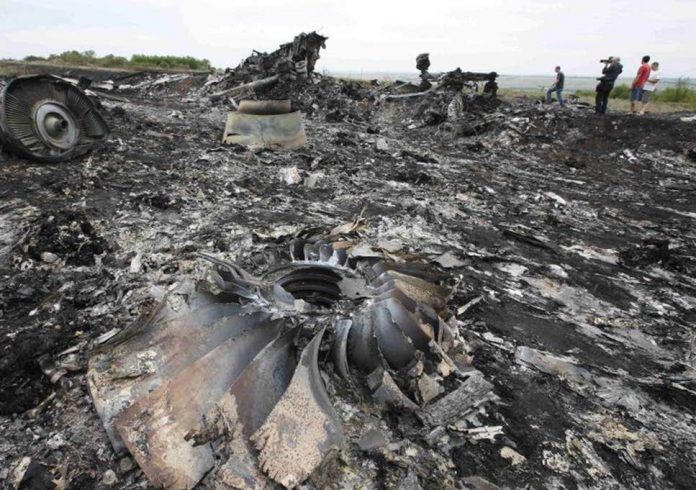
Passenger flight MH17 was en route from Amsterdam to Kuala Lumpur when it was shot down over conflict-hit Ukraine.
A court case is scheduled to begin in the Netherlands on 9 March 2020.
International arrest warrants have been issued for the four men.
On Wednesday, the Dutch-led Joint Investigation Team (JIT) said the four men named were believed to be responsible for transporting the Buk missile used to shoot down flight MH17 over eastern Ukraine.
The JIT, which seeks to try the suspects under Dutch law, has previously said it had a “long list” of persons of interest and appealed again for witnesses as the investigation continues.
Kasese leaders, including the former leader of opposition (LOP) in parliament who doubles as the Kasese woman MP, Winnie Kiiza, have threatened to reconsider the dragging of president Museveni, Maj. Gen peter Elwelu and Assistant Inspector General of Police Asuman Mugenyi to International criminal Court (ICC) over the attack of Rwenzururu kingdom in 2016 and blocking of king Charles Wesley Mumbere from attending the burial ceremony of his mother.
In December 2016, a group of Members of Parliament from the Rwenzori sub-region, petitioned ICC, requesting for investigations into the infamous Kasese killings. Over 100 civilians were killed during the assault and scores left injured, with the king currently facing terrorism prosecution.
The Queen Mother, Her Royal Highness Christine Biira Mukirania died on Tuesday last week at Kilembe Hospital where she had been admitted and was laid to rest at their ancestral land in Bundibugyo amid controversy.
After she was pronounced dead, King Mumbere through his layers led by Celeb Alaka and Samuel Muyizzi, petitioned high Court seeking for relaxation of bail conditions to allow him attend the burial ceremony of his mother.
High court judge, Eva Luswata, allowed him to travel to the three districts that constitute the Kingdom and cultural practices for the sendoff of his mother.
To her dismay, Kiiza said the Omusinga did not attend the burial ceremony after the state minister for agriculture Christopher Kibanzanga decided to transport the body to Bundibugyo where she was buried.
“We got shocked that the government expected around 15 people at the airstrip, we were also shocked that the government expected a list of people to attend the queen mother’s burial, in our culture we don’t invite people for burial. We were also surprised to know that the body of the queen mother was guarded by UPDF while in the mortuary,” she said during a press briefing.
Kiiza said till now the king has not accessed Kasese even after court relaxed her bail conditions. “We are worried that our king may not access Kasese in the two weeks that were granted to him by court. We want to consider dragging them to ICC.”
“I send my sincere appreciation to the people of Kasese that braved the sun in waiting for our King, His Majesty Omusinga Charles Wesley Mumbere. Even amidst the unfavorable circumstances, I would like to reassert that our efforts in waiting for the Omusinga are not in vain. As day follows the night, and by the grace of God, we shall today, tomorrow or the other day have him back home. We shall not give in or give up,” she said
In a couple of days, president Museveni is expected in Kasese sub region as part of his own-going campaign on poverty eradication and wealth creation.
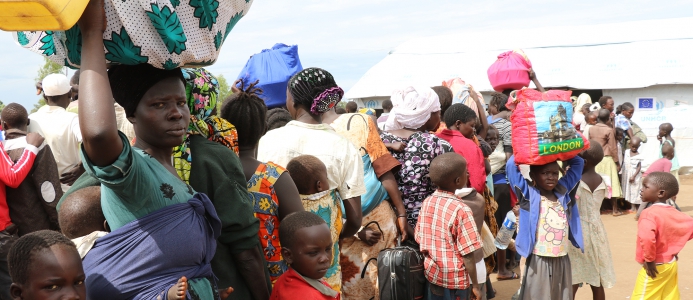
More than 70 million people were counted last year as displaced from their homes, a record that underestimates the real number of refugees and asylum seekers, the UN said Wednesday.
In its annual global trends report, the United Nations refugee agency (UNHCR) described the figure of 70.8 million at the end of 2018 as “conservative”, particularly because the number of people who fled Venezuela’s devastating crisis is undercounted.
At the end of 2017, by comparison, 68.5 million people were counted as being forcibly displaced by violence or persecution.
The UNHCR attributed the increase partly to surging displacement in Ethiopia caused by inter-ethnic conflict, and in Venezuela, where thousands are fleeing every day amid an economic collapse that has triggered shortages of basic food and medicine.
An estimated 3.3 million people have left Venezuela since the start of 2016, according to the UN.
UNHCR head Filippo Grandi told reporters in Geneva the figure of 70.8 million only includes Venezuelans who had officially applied for asylum — roughly half a million people.
Overall, the number of displaced people in the world has doubled over the last 20 years and now exceeds the population of Thailand.
The trend, Grandi said, continues to go in “the wrong direction”.
Conflicts ‘never’ end
According to Amnesty International, a refugee is a person who flees their home country and cannot or will not return due to conflict or fear of persecution.
The report lists 41.3 million internally displaced people (IDPs), 25.9 million refugees, and 3.5 million asylum seekers — those awaiting a decision on their bid for official refugee protection.
The countries with the most internally displaced people — fleeing within their own countries — are Syria, wracked by conflict since 2011 and Colombia, plagued by decades of violence, said the UNHCR.
The group of refugees, it added, included 5.5 million Palestinians scattered across several countries, notably Lebanon and Jordan.
The best solution for a refugee is to be able to return home once their country stabilises, but Grandi noted that 20 percent have been in exile for more than two decades.
“We have become almost unable to make peace,” the UNHCR chief said.
“It is true there are new conflicts, new situations producing refugees…, (but) the old ones never get resolved,” he added. “When is the last conflict that you remember was resolved?”
‘Praise’ for Germany
The UNHCR has at times sought to push back against the phrase “migrant crisis”, especially as it has been applied to an influx of people into Europe via the Mediterranean sea.
The agency has argued that while mass migration does pose serious challenges, it can be managed, particularly by wealthier nations.
Grandi praised Germany for its acceptance of migrants and its efforts to “demystify” the notion that migration is unmanageable, “even when the numbers are very big.”
“I usually don’t like to praise and criticise but I think in this case, I’d like to praise Germany for what it has done,” said Grandi in Geneva, ahead of the report’s launch in Berlin.
He noted that Chancellor Angela Merkel had paid a “heavy price” politically for her openness to migration, arguing this made her actions “even more courageous”.
International investigators are set to launch criminal proceedings against the people suspected of shooting down Malaysia Airlines Flight MH17 over eastern Ukraine nearly five years ago.
The Dutch-led international team tasked with assigning criminal responsibility for the mid-air attack on the plane will inform victims’ families of the progress in their case on Wednesday morning, and make a presentation to the media afterwards.
Dutch broadcasters RTL and NOS reported late last week that investigators would name individual suspects.
An Interfax Ukraine report on Tuesday quoted Ukraine’s Deputy Minister of Foreign Affairs Olena Zerkal in an interview as saying prosecutors would name the four “top” suspects.
MH17 was shot down on July 17, 2014 over territory held by pro-Russian separatists in eastern Ukraine as it flew from Amsterdam to Kuala Lumpur. All 298 people on board, most of them Dutch, were killed.
A joint investigation team formed by Australia, Belgium, Malaysia, the Netherlands and Ukraine found that the plane was shot down by a Russian missile.
A local Think Tank, Anti Counterfeit Network (ACN) Limited has dragged to court the World Food Programme (WFP), The Minister of Health Jane Ruth Aceng and the Attorney General William Byaruhanga over the contaminated food that killed people in Karamoja.
The agency petitioned court to declare that the supply of contaminated food by WFP to the people of Karamoja violated international standards and amounted to negligent, inhuman, degrading, illegal, unreasonable and irrational act of public misfeasance.
In March this year, food poisoning occurred, which left 262 suffering mental illness and four dead in Napak and Amudat districts.
It is alleged that the victims suffered mental illness, vomiting, headache, high fever and abdominal pains in communities resulting from consuming the super cereal corn soya blend supplied to Karamoja Sub-region by WFP.
In the case filed before Kampala High Court, ACN is seeking declaration that the supply of contaminated food was due to the negligence of WFP, the Health ministry and government.
Through its lawyers, Muwema and Company Advocates, ACN is seeking a declaration that WFP is liable for the injuries and deaths wants compensation and provision be made for costs of the suit.
“A declaration that the failure by the health minister and government to cause the reprimand, sanction or prosecution of the first respondent (WFP), its agents or servants for the acts and omissions is an act of connivance against the public which is illegal, irrational and procedurally irregular,” reads the petition in part.
It is alleged that the act of supplying contaminated food is capable of causing widespread serious bodily injury and death is an act of bio-terrorism which is criminal.
In May, the Ministry of Health issued a public statement indicating that the laboratory tests had revealed the food had bacterial contamination and the potential cancer causing aflatoxins. However the report of the tests was not released to the public and ACN wants Court to order that the report be released.
The petitioners state that WFP has a duty to ensure that food aid supplied to various communities is of quality and free from any adverse substances.