Stanbic Bank
Stanbic Bank
19.3 C
Kampala
Stanbic Bank
Stanbic Bank
Home Blog Page 1264

WHO Regional Director commends Uganda’s Ebola preparedness response

Dr Matshidiso Moeti WHO regional coordinator Africa, Yonas Tegegn WHO representative to Uganda and Minister Aceng.

The World Health Organization (WHO) Regional Director for Africa, Dr Matshidiso Moeti has commended Ministry of Health and health workers for their preparedness to respond to Ebola outbreak.

Dr Matshidiso remarked after assessing one of the high-risk districts for Ebola virus disease in western Uganda.

Dr Matshidiso toured the Kasese border area with the Minister of Health of Uganda, Dr Jane Ruth Aceng, who thanked WHO for the support the organization has provided both in preparing the country for Ebola and in responding to the recent confirmed cases.

“WHO has provided crucial support to Uganda in fighting Ebola,” said Dr Aceng. “I am glad to see how my teams on the ground have responded quickly and effectively,” she added.

Since 11 June, when Uganda declared the Ebola virus disease outbreak, there have been three confirmed cases, all of whom had travelled to the neighboring Democratic Republic of the Congo (DRC). Uganda shares a nearly 900-kilometre long, often porous border with the DRC, where the disease has claimed more than 1 400 lives since August 2018.

More than 100 people who had contacts with the confirmed cases are being monitored. Since the outbreak was declared, 1063 high-risk individuals have been vaccinated. This vaccination of contacts and contacts of contacts, known as ring vaccination, has shown good results in the DRC and other countries in West Africa.

There are currently no new, confirmed cases of Ebola in Uganda.

“I commend Uganda for its quick response to the Ebola outbreak,” Moeti said. “During my visit to the Kasese area, I spoke with health authorities who told me how the training they had received in detecting the disease meant they were on high alert for patients with any signs of infection. They were able to move swiftly when the first Ebola cases arrived in their health facility and to restrict possible exposure to relatively few health workers.”

During her two-day visit, Moeti travelled to Bwera Hospital, near the border with the DRC where two of the three people who had the infection had died. A further three suspected cases are being treated at the hospital. Due to its investment into preparedness, the hospital can now obtain presumptive results to tests for the Ebola Zaire strain within two hours.

With support from WHO and partners, Uganda has trained more than 16 000 community leaders and volunteers in remote border areas to spot the symptoms, provide medical attention to potential patients and to alert the authorities. The local teams serve as the eyes and ears of the district and national emergency systems that cover surveillance, infection prevention and control, patient care, cross-border activities and coordination with communities.

“People are aware of the problem, how to protect themselves and where to report for action and support,” Moeti pointed out.

Stories Continues after ad

Korea donates equipment to health facilities for emergency services

Edward Ssekandi
Edward Ssekandi

The Vice President Edward Kiwanuka Ssekandi, has hailed relations between South Korea and Uganda describing it as true and mutual friendship which he said Government is committed to its further promotion to benefit both countries.

He said that the Movement administration is re-aligning its priorities and also its friends who will fit its development agenda. He observed that South Korea has indicated its readiness and willingness to support Government priority areas and expressed Government commitment in working with South Korea towards a longer sustainable friendship.

Ssekandi was speaking during the handover of the equipment to Masaka Referral Hospital and Butenga Health Centre – Bukomansimbi donated by the Government of South Korea through its Korea Foundation for International Healthcare agency.

He said that, the effort was a clear testimony of the administration commitment to health and wellbeing of its people and commended the Government of Korea for the support saying it will go a long way in complementing Government efforts if providing timely and quality health care services to Ugandans and urged the beneficiaries to put the equipment to good use.

He said the donation was timely when Government is working on several health initiatives aimed at improving the lives of Ugandans saying the equipment will boost Government efforts in responding to emergencies and also providing informed, timely diagnostics and treatment.

The Vice President observed that functional emergency care and referral system are crucial in saving life and pledged Government commitment in ensuring that all hospitals in the country are equipment with the necessary personnel, equipment and drugs to handle emergency situations.

During the same function, the Minister for Health, Ruth Aceng said that the Government of Korea extended to Uganda over Shs8 billion for equipment and emergency services with Bukomansimbi receiving Shs3.5 billion, Masaka hospital Shs 3billion while about Shs2 billion was allocated for operations at ministry’s headquarters.

Under the project, she said, two ambulance vehicles had been procured for Masaka and Bukomansimbi respectively while other two ambulances at Masaka hospital were repaired, established emergency centre at Butenga hospital in Bukomansimbiand, trained 127 health workers in basic emergency care with 24 of the doctors having been trained at Yonsei University Wonju medical college in Korea.

The function was also attended by local leaders from Masaka and Bukomansimbi, Ministry of Health, Korea Ambassador Ha Byung-kyoo and officials from Korea Foundation for International Healthcare witnessed the handover of two new ambulance cars, motorcycles, Xray and ultrasound machines.

Stories Continues after ad

When disaster strikes: Preparing for climate change

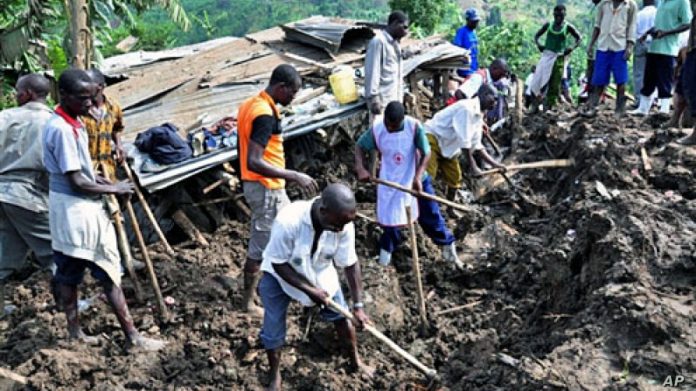
Flooding in a Ugandan village

By Seán Nolan and Krishna Srinivasan

Earlier this year, Cyclone Idai devastated Mozambique, Malawi, and Zimbabwe by leaving more than 1,000 people dead, thousands more missing, and damages in the billions. These storms were among the recent reminders of how natural disasters can cause severe and catastrophic damage. Natural disasters destroy lives and property and have large and lasting effects on economies by reducing production and increasing debt burdens. They also tend to disproportionately affect the poor, who have a limited ability to cope with the impact.

Although not alone, the small island countries in the Caribbean and Pacific are particularly vulnerable to natural disasters. They have suffered, on average, disaster-related losses of 2 to 3 percent of GDP per year over the past 30 years. Some countries have been hit far harder: when Hurricane Maria ravaged Dominica in 2017, it caused damages estimated at some 220 percent of GDP—more than twice the island’s entire annual production.

As climate change continues to affect both the frequency and severity of natural disasters, how can vulnerable countries do more to prepare and cope with their consequences?

In a new IMF paper, we outline how vulnerable countries can develop comprehensive strategies to build their resilience to disasters, based on a diagnosis of risks and cost-effective responses. Having such a strategy can also help countries attract much-needed support from the international community.

Disaster resilience strategies can draw on existing disaster response plans, supplemented by specialist expertise from development partners, and need to be based on three complementary pillars of building resilience:

Structural resilience. Many vulnerable countries lack disaster-resilient infrastructure covering vital services such as water, sewer, and electricity—even though investment in such infrastructure can have very high returns. A key obstacle is high up-front capital costs: the joint IMF-World Bank Climate Change Policy Assessments for Belize, Seychelles, and Saint Lucia estimated that annual investments of 2 to 3 percent of GDP would be required for a full decade to achieve adequate protection. But high public debt levels constrain many countries from making the needed infrastructure investments. They can still build resilience—think of enforcing strong building codes and zoning rules or improving early warning systems.

Financial resilience. The impact of disasters can be contained, but not eliminated. Planning for emergency financing needs for reconstruction must take place before a disaster strikes. One option is to make provisions in the budget, possibly in the form of a dedicated saving fund to meet disaster needs. Another is using contingency-based financial instruments that provide insurance coverage or relief from debt service payments when a disaster strikes. But regional financial markets are often insufficiently developed to provide these financing options at a reasonable cost, particularly for small countries. For example, while there are regional insurance pools like the Caribbean Catastrophe Risk Insurance Facility and the Pacific Catastrophe Risk Insurance Company, countries have sought limited coverage from them, reflecting the high costs involved. They need help to reduce these costs.

Social resilience. Scaling up structural and financial resilience will take time. This makes it imperative that countries put in place detailed emergency response plans to contain disruptions to critical public services after a disaster strikes—such as water, electricity, medical services, and security—and to limit the impact on the most vulnerable.

Formulating a disaster resilience strategy would help a country identify the areas where it’s most vulnerable and provide a road map to build resilience. The strategy needs to be grounded in strong diagnostics—including risk assessments, project identification, prioritization, and costing—and build on, rather than displace, existing response plans. Once in place, the strategy can help the country catalyze support from the international community.

Support crucial for success

Many small and low-income countries need external support—both expertise and financial assistance—to flesh out and implement a strategy. For this, all stakeholders need to chip in.

Countries themselves should raise additional domestic revenues by re-prioritizing spending and strengthening financial management. This would give incentives to external donors to provide more grants and concessional financing. Climate funds and other climate finance initiatives are also a promising avenue to obtain support, but many countries will need technical support to engage effectively with these funds.

The IMF can help countries by analyzing financing options and recommending ways to build disaster-resilience into medium-term fiscal and macroeconomic frameworks to ensure that public finances remain sustainable.

The IMF also has emergency lending facilities designed to provide speedy assistance to low-income countries hit by disasters—we disbursed more than $100 million to Mozambique less than a month after Cyclone Idai hit. And we also help build capacity within governments through training and technical assistance to help them better manage disaster risks and responses. We can, and will, do more to support countries—who face rising disaster risks as climate change intensifies.

Stories Continues after ad

Egyptian footballer expelled from Afcon squad over sexual harassment claims

Amr Warda

Egypt’s football federation on Wednesday banned midfielder Amr Warda from playing in any further matches at the African Cup of Nations over mounting sexual harrasment allegations.

“Amr Warda is banned from the national squad after discussions with the team’s technical and administrative bodies. This is to maintain the discipline and focus of the team,” said the federation in a statement posted on its website.

The sexual harrasment claims surfaced earlier this week on social media platforms. Multiple women posted screenshots and testimonies of Warda’s alleged lewd comments.

The Wednesday decision comes hours after another viral clip posted on Twitter by a social media user showed him apparently exposing himself to her. AFP cannot verify the authenticity of the brief video.

“He’s definitely out. We have a match to focus on tonight,” Ihab Leheita, the Egyptian national team’s manager, told AFP, without giving further details.

In 2017, Portuguese football club CD Feriense terminated Warda’s contract over claims that he sexually harassed the wives of two of his team-mates. His tenure lasted only three days and he was transferred to his current Greek club Atromitos.

Egypt are hosting the 2019 Africa Cup of Nations for the fifth time and play DR Congo later Wednesday in their bid to advance from the group stages.

The hosts beat Zimbabwe 1-0 in their opening match, during which Warda took to the field. The Pharaohs of Egypt will continue the tournament with only 22 players. – AFP

Stories Continues after ad

Uganda to lose Shs300m daily due to delays in Kampala flyover project – UNRA

UNRA Executive Director, Allen Kakuyo Kagina

Uganda risks losing Shs300 million daily for delays in the Kampala Flyover project that started last month.

The Shs224 billion project, sponsored by Japan International Cooperation Agency (JICA) includes the construction of flyovers at the Clock Tower, and at Kitgum House in a bid to decongest the city. The project will also cover widening of Nsambya and Mukwano Road and improvements of interfacing roads and junctions.

But the Executive Director of Uganda National Roads Authority (UNRA), Allen Kagina says that any delays in the project will be met with a fine of USD 81,000 (298.2 million Shillings), in line with the terms of the contract.

“When you translate that, it comes to 300 million Shilling per day if the equipment is standing idle. It is in the agreement, it is anticipated that when the contractor is given commencement, he must have access to land. Any delay means he will not work, when he doesn’t work, the contract requires that he charges,” said Kagina.

Kagina was on Wednesday appearing before Parliament’s Committee on Commissions, Statutory Authorities and State Enterprises (COSASE), where she was asked to explain a mischarge of Shs150 billion in UNRA expenditures for the financial year 2015/16. She blamed it on liabilities paid to contractors owing to penalties from idle equipment resulting from delayed projects.

She said a number of projects are some times delayed as a result of by failure to acquire land for works to commence, adding that UNRA had to reallocate money to pay arrears and liabilities. She said there are high chances for the country to lose money and delay of the project since some of the land required for the project has not been acquired.

Stories Continues after ad

War as arbitration centre drags gov’t to court over new competitor

ULC President Kinone and Mr. Walusimbi

The Center for Arbitration and Dispute Resolution (CADER) Uganda has dragged the Attorney General to court seeking government to do away with its competitor, the International Centre for Arbitration & Mediation in Kampala (ICAMEK), which was launched in April this year.

CADER’s petition is the 11th in the series of petitions against ICAMEK.

CADER is the statutory body with jurisdiction over arbitration matters in Uganda has tasked government to protect its jurisdiction from the alleged infringement by ICAMEK.

ICAMEK is an independent, not-for-profit organisation, dedicated to advancing Alternative Dispute Resolution in Uganda and across East Africa. ICAMEK is the first private sector Led institution focused on delivering the benefits of world-class Alternative Dispute Resolution to businesses, professionals, governments and communities alike.

ICAMEK was officially launched by the Minister of Justice and Constitutional Affairs the Hon. Major General Kahinda Otafiire (rtd) on April 25, 2019, having been registered officially by Uganda Bankers Association (UBA) and Uganda Law Society (ULS) together with other partners on July 26, 2018.

CADER’s petition comes at the time when some lawyers under ULS are questioning the registration of ICAMEK in Uganda, claiming they were not consulted.

The lawyers opposed to ICAMEK want the following questions to be addressed:

Who authorised the use of ULS as a subscriber and how! Where is the instrument?

Who appointed Gimara Director?

Isn’t appointment of Gimara as first director as ULS President emeritus conflict of interest?!Is it even ethical?

Have its accounts in Stanbic been scrutinised by assembly or even auditor general?

Can statutory body actually create private company? (That’s if its members consented?

Why are ICAMEK positions not advertised yet they say ULS participates? Is ULS for a few?

Who appointed private law firm to register this company? Was there ever Annual general meeting of (AGM) of bankers body and ULS? When and where?

Have individuals hijacked statutory ULS for personal gain?

That aside, in May, a section of lawyers petitioned court challenging the legality of ICAMEK, saying it is a privately owned company operating without the consent of the members.

In the case filed before the Civil Division of the High Court, city lawyers; Nelson Walusimbi and Andrew Wambi sued ULS and ICAMEK).

It is alleged that by subscribing as a member to ICAMEK, the ULS is modifying its statutory mandate to circumvent the limits imposed on it by statute and to aid private profit initiatives against the general public of Uganda.

Among others, they wanted court to declare that; the administration and dispensation of justice is, by virtue of the Constitution of the Republic of Uganda, a preserve of the government and therefore a private entity such as the second defendant (ICAMEK) is prohibited by law from setting up a parallel and competing system of justice and judicial administration from that which is endangered by the state.

However, in early June, ULS executives in a rebuttal asked court to dismiss the case. Through its lawyers, ULS claimed the case did not disclose a cause of action, barred by law and an abuse of the court process.

Stories Continues after ad

Azuri Technologies Launches PayGo Solar Satellite TV in Zambia

AzuriTV launch in Lusaka, Zambia

By Our Reporter

Azuri Technologies, a provider of pay-as-you-go solar home solutions to off-grid households across Africa, officially launched its 24-inch solar satellite television and home lighting system in Zambia at the British High Commission in Lusaka.

The TV launch in Zambia comes on the heels of Azuri’s announced strategic $26 million equity investment, accelerating the company’s expansion plans across sub-Saharan Africa.

The investment will help more off-grid customers across Zambia benefit from affordable, clean and reliable energy, as well as having access to modern energy-efficient appliances.

Azuri CEO Simon Bransfield-Garth said: “Azuri believes African consumers, regardless of wherever they may live, should be able to access affordable modern digital services and devices that have a positive impact on daily life and on livelihoods.”

“Pay-as-you-go solar power is connecting off-grid households to the modern digital world through reliable, clean energy and highly efficient products such as AzuriTV which delivers social and economic benefits that many urban users have experienced for years.”

Minster for Energy, Hon. Matthew Nkhuwa said: “Renewable energy such as that offered by Azuri can is a catalyst for rural development through improved access to information, improved productivity and new employment opportunities, as well as supporting Zambia’s commitment to mitigating climate change.”

AzuriTV was the first complete solar TV and satellite package designed and developed for off-grid consumers in Africa. Azuri customers pay for their solar and satellite TV service through regular weekly instalments, and once the system is paid for, all energy generated going forward is free of charge.

British High Commissioner, Fergus Cochrane-Dyet OBE said: “Solar power has the potential to transform the lives of millions of people who are still living off the grid.”

“Azuri embodies the pioneering spirit of innovation for which the UK is globally renowned. The launch today showcases the cutting-edge technology and expert services that British firms can offer to rapidly expanding markets across Africa.”

Azuri is a leading commercial provider of pay-as-you-go solar home systems to off-grid consumers across sub-Saharan Africa since 2012. Working in partnership with locally-based distributor Kazang Solar, Azuri and has been delivering affordable, clean energy to Zambians since 2016.

According to a recent study by Efficiency for Access Coalition, televisions are the second most desired off-grid appliance by consumers, with only solar lighting being ranked more highly.

Shamba Shape Up, one of East Africa’s most popular rural programmes offering farming tips and advice, which is available to AzuriTV customers, reports that 80% of viewers on average increase income, produce and or food for their households by making simple changes recommended by the show.

The AzuriTV package includes a 24-inch solar TV with 49 popular Zuku satellite TV channels and over 50 radio channels, and comes complete with solar home lighting, rechargeable radio, torch and mobile phone charging. The complete package costs as little as K98 per week.

Combining the latest solar innovation and mobile payment technology, Azuri delivers reliable, renewable and distributed power to the millions who have no access to modern powered services. Azuri operates in five key territories; Kenya, Nigeria, Zambia, Tanzania and Uganda with East Africa Headquarters in Nairobi, Kenya and West Africa Headquarters in Lagos, Nigeria.

Stories Continues after ad

Address governance issues at BoU to stop scandals: MP Abdu Katuntu urges gov’t

The Bugweri County Member of Parliament (MP) Abdul Katuntu, says there is an urgent need for government to address Governance issues in the Bank of Uganda (BoU) if the scandals rocking the institution are to be curbed.

Katuntu, who chaired parliament’s Committee on Commissions Statutory Authorities and State Enterprise (COSASE) said yesterday during the plenary that the current BoU board is led by the Governor Prof. Emmanuel Tumusiime-Mutebile as Chairman, which means, Katuntu said, Mutebile reports to himself.

In the COSASE report handed over to government after the probe of BoU over the controversial closure of seven commercial banks, MPs recommended that that anomaly be corrected. Government is yet to act on that report. Kasekende deputizes Mutebile on the BoU board. “BoU officials are very powerful and only report to themselves,” Katuntu said.

Katuntu further said there is a fight between Mutebile and his Deputy, Dr. Louis Kasekende over succession. Mutebile is set to retire in 2021 while Kasekende’s contract runs out in 2020. Kasekende was expected to succeed Mutebile, but with the scandals rocking BoU right now, a new face is likely to be brought in, according to sources close to the appointing authority.

The MP made the remarks while contributing to the debate on the controversy surrounding the extra cargo that was transported on the charted flight transporting newly printed Ugandan currency notes to Uganda. BoU chartered a plane to transport 20 pallets containing Ugandan currency from France. However, there were 25 pallets aboard the plane when it finally landed at Entebbe International Airport raising suspicion that BoU officials could have printed extra cash for themselves.

Preliminary investigations so far say the extra pallets belonged to 13 agencies and private individuals including the United Nations, United States Agency for International Development (USAID), Ministry of Health, APTECH and Mandela Millers among others.

However, Katuntu said the Governance issues at BoU and the fact that the BoU Board doesn’t report to anyone including the President and Finance Ministry makes them untouchable.

He said while probing the sale of the defunct banks, they encountered several threats includes calls to stop the probe, but Parliament threw its weight behind the committee.

Katuntu’s statement comes after the Minister of Finance in charge of Planning, David Bahati said Government was still investigating the issue of the extra pallets. Bahati urged Ugandans not to speculate on the matter but wait for police investigations.

The Government Chief Whip, Ruth Nankabirwa demanded that Government be given a time frame, under which to report to Parliament. She also demanded that Government releases details of the extra pallets instead of keeping information from the Public.

The Speaker of Parliament Rebecca Kadaga gave the Government up to mid-July to present a detailed statement in regards to the BoU investigations over the currency consignment saga where about Sh90 billion is alleged to have gone into private pockets of BoU officials.

Three BoU officials, including the executive director currency, Charles Malinga Akol, have so far been charged and released on bail. Mr Malinga was charged jointly with Francis Kakeeto and Fred Vito Wanyama, both bankers at Central Bank branch in Mbale.

Stories Continues after ad

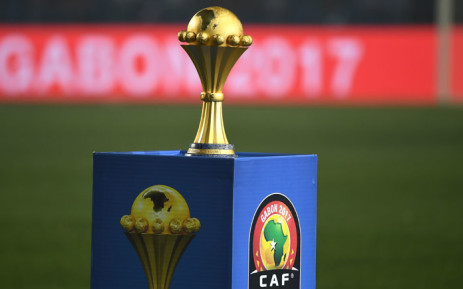
UBC is negotiating to air AFCON on credit

The home of UBC

The National Broadcaster, Uganda Broadcasting Corporation (UBC) is negotiating with the Confederation of African Football (CAF) to broadcast African Cup of Nations (AFCON) on credit.

UBC broadcast AFCON 2019 for three days and stopped for failure to clear Euros 350,000 to purchase rights to broadcast the Africa Cup of Nations (AFCON).

This has come at a time when Uganda Cranes is eager to play against the Warriors of Zimbabwe for their second group A game of the 2019 Africa Cup of Nations.

Cranes opened their campaign win with an emphatic 2-0 win over DR Congo at the Cairo International Stadium over the weekend and come into the next match looking good to make it two out of two.

Last week, parliament revealed that Ugandans will watch AFCON that kicked off on Friday, 21 June 2019 live from Egypt for free following after it directed government to money for national broadcaster to purchase rights to air all the games.

The revelation was made after UBC had petitioned the Speaker of Parliament, Rebecca Kadaga, requesting for funds to pay for the rights to air the games. Kadaga said the national broadcaster was desperate to broadcast the games live due to their big viewership.

The Minister of ICT was directed by Parliament to process a request to fund the games and update the House on the progress.

The state broadcaster says that the matter would be resolved soon.

Stories Continues after ad

Beauty queen ‘raped by ex-President’

Fatou Jallow

A 23-year-old former beauty queen in The Gambia, Fatou “Toufah” Jallow, has said she was raped by ex-President Yahya Jammeh when he was in office.

Her testimony is part of a Human Rights Watch and Trial International report that details another alleged rape and sexual assault by Mr Jammeh.

The BBC tried to contact Mr Jammeh, who now lives in exile in Equatorial Guinea, about the allegations.

A spokesman for his APRC party denied the accusations made against Mr Jammeh.

“We as a party and The Gambian people are tired of the steady stream of unfounded allegations that have been reported against our ex-president,” said Ousman Rambo Jatta, in a written statement to the BBC.

“The ex-president has no time to react to lies and smear campaigns. He is a very respectable God fearing and pious leader who has nothing but respect for our Gambian women,” the deputy APRC leader said.

Ms Jallow told the BBC she wanted to meet Mr Jammeh, 54, in court so he could face justice.

“I’ve really tried to hide the story and erase it and make sure it’s not part of me.

“Realistically I couldn’t so I decided to speak now because it is time to tell the story and to make sure that Yayha Jammeh hears what he has done.”

She said she also wanted to testify before The Gambia’s Truth, Reconciliation and Reparations Commission (TRRC), which has been set up by President Adama Barrow, who won elections in December 2016.

The TTRC is investigating human rights violations alleged to have been committed during Mr Jammeh’s 22-year rule, including reports of extrajudicial killings, torture and arbitrary detention.

He was forced from office in January 2017 after regional powers sent in troops when he refused to give up power.

‘Marriage refusal’

Ms Jallow said she was 18 when she met Mr Jammeh after winning a beauty pageant in 2014 in the capital, Banjul.

In the months following her coronation, she said the former president acted as a father figure when they met, offering her advice, gifts and money, and also organising for running water to be installed in her family home.

Then at a dinner organised by an aide to the president, she says he asked her to marry him. She refused and rebuffed other enticements from the aide to agree to the offer.

Ms Jallow said the aide then insisted she attend a religious ceremony at State House in her role as beauty queen in June 2015. But when she arrived, she was taken to the president’s private residence.

“It was clear what this was going to be,” she said, describing Mr Jammeh’s anger at her for rejecting him.

Ms Jallow says he slapped her and injected her in her arm with a needle.

“He rubbed his genitals in my face, pushed me down to my knees, pulled my dress up and sodomised me.”

‘Protocol girls’

The young woman says afterwards she locked herself at home for three days and then decided to flee to neighbouring Senegal.

Once in Dakar, the Senegalese capital, Ms Jallow sought the assistance of various human rights organisations. Weeks later, she was approved protection status and moved to Canada, where she has been living since.

Human Rights Watch (HRW) and Trial International say Mr Jammeh had a system in place to abuse women, where some were put on the state payroll and worked at State House as so-called “protocol girls”, who had some clerical duties but were mainly on call to have sex with the president.

The BBC could not verify the allegation, but a former Gambian official, who agreed to speak on condition of anonymity, said he was aware of “inappropriate things” happening at the presidency: “Protocol staff were mostly women and they were hired to satisfy the president’s fantasies.”

He remembered seeing Ms Jallow at State House, sometimes at “odd hours”.

Another woman, hired as a protocol officer at the age of 23, told HRW she was forced to have sex with Mr Jammeh in 2015.

The woman, who asked not to be named, said that one day the president called her into his room: “He started undressing me and saying that he was in love with me, that he will do anything for me and my family, that I should not tell anyone because if I do I will face the consequences.

“I felt I had no choice. That day he slept with me without protection.”

‘Some felt honoured’

Another woman who worked as a protocol officer said that they knew if one of them was called it was for sex.

“Some wanted it. They felt honoured or wanted the money,” she told HRW on condition of anonymity.

She described how she was sexually assaulted by the president at his summer house, Kanilai, in 2013 when she was 22: “One evening, a presidential aide called me and told me to come with her to the president’s private apartment. He asked me to undress.

“He told me that I was young and needed protection so he wanted to apply spiritual water on me.”

In an encounter the next day, she started crying as Mr Jammeh began to touch her body. He became angry and sent her away.

She says she was later sacked and a promised scholarship cancelled.

TRRC Executive Secretary Baba Jallow has told the BBC that the commission, launched eight months ago, will focus on sexual violence in September.

“We are aware of allegations involving Jammeh but we have not heard victims on the record yet. Investigations have already started but at this stage we can’t say who is involved and how many victims there are,” he said.

Ms Jallow wants to create an atmosphere where women will feel safer to talk about rape and sexual assault: “It’s a step-by-step thing and the first part is to acknowledge it happened.

“When many other women speak up and it becomes safer and safer,” she told the BBC.

President Barrow has said he will await the report of the TRRC before considering whether to pursue Mr Jammeh’s extradition from Equatorial Guinea.

Stories Continues after ad