Stanbic Bank
Stanbic Bank
19.8 C
Kampala
Stanbic Bank
Stanbic Bank
Home Blog Page 1265

FUFA and U17 team coach Kwasi end contract by mutual consent

FUFA appointed Samuel Fabin Kwasi in March 2019 as the head coach for the national U-17 and U-20 teams for a period of one year.
But two months within the contract, the Federation has today mutually terminated the contract of the Ghanaian.


According to Fufa, the reason for his termination was that he asked to go and handle family matters back home thus not being able to continue with the job.
Kwasi was in charge of the Uganda Cubs that competed at the 2019 AFCON finals in Tanzania from 14th-28th April 2019 where the Cubs failed to progress past the group stages.


The statement from Fufa read;
“FUFA and National Junior Teams’ (U17 and U20) head coach Mr. Kwasi Fabin Samuel have agreed to end the contract between the two parties by mutual consent.
“FUFA is happy with the work done by Mr. Kwasi in the period he has been in Uganda. However a request by the coach to go and handle family matters back home thus not able to continue with the job, saw the Executive consent to his request’
“Kwasi was in charge of the Uganda U-17 team which participated in the AFCON Finals in Tanzania from 14th-28th April 2019.
“FUFA wishes Kwasi all the best in his future endeavors.
“It is Our Game, It is Our Country.”
Kwasi is a former head coach for the Ghana U-17 national team at the 2017 FIFA U17 World Cup in India where the team finished at the quarterfinals.

Stories Continues after ad

UDB and AfDB sign Shs74b deal to support SMEs

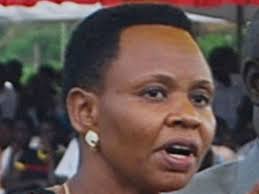
UDB MD Patricia Ojangole

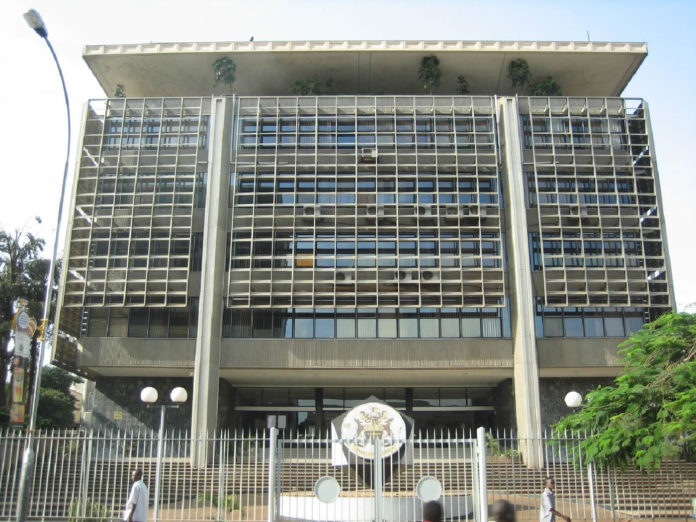
Uganda Development Bank Limited (UDB) and the African Development Bank (AfDB) have signed an agreement for funding worth US$20 million (about Shs74 billion). The signing ceremony took place on Wednesday at UDB’s Head Office at Rwenzori Towers, Nakasero.

This follows the approval by parliament earlier this year, of a sovereign guarantee to secure this funding. The funding, extended to UDB as a line of credit, shall be on-lent to Small and Medium Enterprises (SMEs) and infrastructural projects in Uganda, at favourable interest rates.

The funding is a significant intervention for UDB whose clientele is 90 percent SMEs. The funding will further bolster the Bank’s capacity to provide medium and long-term development financing to business enterprises operating in the priority sectors of the economy as outlined in the country’s national development plan (NDP II) and in line with AfDB’s “High 5” priority areas.  This funding comes along with a technical assistance grant to support UDB in strengthening her institutional capacity and assuring sustainability of the Bank’s operations.

Patricia Ojangole, the Managing Director UDB expressed her pleasure and reiterated the Bank’s commitment to accelerating socio-economic development through sustainable financial interventions. “The Bank continues to register sustained improvements in performance as evidenced by the positive trends in financial performance and development outcomes over the last couple of years; funding partnerships such as these are fundamental to enabling us not only to be a sustainable institution but more importantly enable us fulfil our mandate,” Ms Ojangole said.

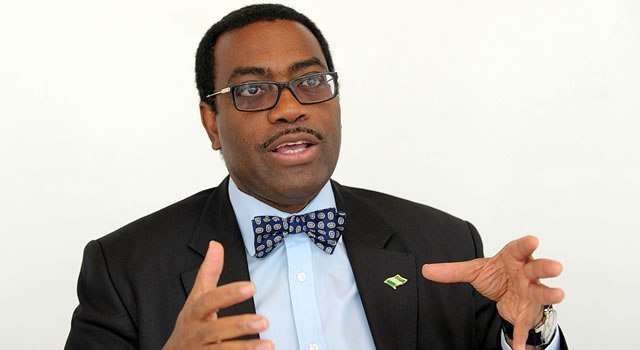
Kennedy Mbekeani, the Country Manager African Development Bank expressed his appreciation to the Hon. Matia Kasaija, Minister of Finance, Planning and Economic Development whom he said has been the anchor between the two banks. He pledged his support to working with UDB to build relationships with the beneficiaries of the funding. “We are committed to coming up with innovative ways to support all stakeholders,” he said.

The African Development Bank is a multilateral development finance institution whose overall objective is to support African countries’ economic development and social progress by promoting investment of public and private capital in projects and programmes designed to reduce poverty and improve living conditions.

Stories Continues after ad

EAC to hold simulation exercise at Namanga border to prepare for cross border disease outbreaks

The East African Community (EAC) Secretariat will convene a cross border field simulation exercise (FSX) at the Namanga border between Kenya and Tanzania from June11-14, 2019 as directed by the EAC Sectoral Council of Ministers of Health in 2015, according to the latest press release from the secretariat.


According to the press release, FSX aims to enhance the status of preparedness for and response to infectious disease outbreaks in the EAC, thereby making the region safe for the people and businesses in the region. An estimated 250 participants from Kenya, Tanzania, Burundi, Rwanda, South Sudan and Uganda and representatives from regional, supra-regional and international institutions and organisations will participate in the exercise.
Experts say seventy-five percent of infectious diseases are transmitted between animals and humans. Outbreaks affect agriculture, trade and tourism and the lives and livelihoods of the people. “Involving these sectors in prevention, response and mitigation reflects what is called the “One Health” disease management approach,” officials say.


The EAC region has experienced cases of Ebola, Rift Valley, Marburg and Crimean Congo Hemorrhagic fevers, Cholera, Polio and Plague among others. The current Ebola Virus Disease outbreak in the Democratic Republic of Congo (DRC), which has so far caused over 1,600 human cases and more than 1,000 deaths, remains a major threat to the health and socio-economic wellbeing of the people of East Africa, says the press release.

“Therefore, the region needs to be prepared and the ongoing efforts to operationalize national and regional contingency plans need to be strengthened. In this regard, the planned cross-border Field Simulation Exercise aims to strengthen the capacities of all people involved in preventing and responding to infectious disease outbreaks across different professions and sectors of society.”


An FSX is an interactive instrument to evaluate the status of preparedness for and response to disease outbreaks of organisations or other entities in the EAC region. It simulates a situation under real conditions which could occur at any time. The FSX allows participants to identify strengths and weaknesses and can facilitate practical corrective actions at all levels.


It will be used to assess coordination and collaboration mechanisms, emergency response deployment, logistics and administrative processes, risk and crisis communication as well as emergency management and leadership. Findings from the FSX will be used to further improve preparedness and response capacities in the EAC region and beyond.


The scenario of the exercise will mimic a cross border disease outbreak, aggravated by environmental factors and with impact on humans and animals, agriculture, trade and tourism, and the economy as a whole. Early warning, infections and deaths in animals and human beings will prompt the reporting and activation of national and regional preparedness and response mechanisms emphasising the importance of the One Health approach and of appropriate risk and crisis communication as well as cross border collaboration.

Based on the recent need to prepare EAC Partner States for Ebola due to the current outbreak in DRC, the fictitious component will feature a virus that will mutate into a pathogen that can be transmitted between humans causing severe fever and bleeding resulting in increased numbers of cases and deaths. This will help in assessing and building EAC Secretariat’s and Partner States’ capacities to prepare and respond to an Ebola-like situation.


The cross-border field simulation exercise is supported by the “Support to Pandemic Preparedness in the EAC Region” project, which the Deutsche Gesellschaft für Internationale Zusammenarbeit (GIZ) GmbH implements on behalf of the German Government and the EAC. The World Health Organization is providing technical support throughout the planning and implementation of FSX in line with its mandate of implementing the International Health Regulations globally.

Stories Continues after ad

History of the AFCON trophy

Ahead of the 2019 Africa Cup of Nations tournament to be held in Egypt from 21st June to 19th July, we take a brief look at the history of the iconic trophy.
Throughout the history of the African Cup of Nations, three different trophies have been awarded to the winners of the competition.


The original trophy, made of silver, was the Abdelaziz Abdallah Salem Trophy, named after the first CAF president, Egyptian Abdelaziz Abdallah Salem.
As the first winner of three African Cup of Nations tournaments, Ghana obtained the right to permanently hold the trophy in 1978.


The second trophy was awarded from 1980 to 2000, and was named “Trophy of African Unity” or “African Unity Cup”. It was given to CAF by the Supreme Council for Sports in Africa prior to the 1980 tournament and it was a cylindrical piece with the Olympic rings over a map of the continent engraved on it.


It sat on a squared base and had stylized triangular handles. Cameroon won the Unity Cup indefinitely after they became three-time champions in 2000.
In 2001, the third trophy was revealed, a gold-plated cup designed and made in Italy. Cameroon, permanent holders of the previous trophy, were the first nation to be awarded the new trophy after they won the 2002 edition.
Egypt won the gold-plated cup indefinitely after they became three-time champions in 2010, in an unprecedented achievement by winning three consecutive continental titles (2006, 2008 and 2010).


Unlike previous winners who would have then taken the trophy home, Egypt were presented with a special full size replica that they were allowed to keep. First and second time winners usually get a smaller sized replica for their trophy cabinets.
Egypt is still the most successful nation in the cup’s history, winning the tournament a record of seven times. Cameroon follows with five titles and Ghana four.

Stories Continues after ad

Global firm enables customers to request its financial services on WhatsApp

More than 1-billion people in over 180 countries use WhatsApp to stay in touch with friends and family, anytime and anywhere. It is this very reason that has driven Wari to integrate with the WhatsApp Business solution to enable customers – through strategic partnerships – to request its financial services around the world on WhatsApp.

On WhatsApp, Wari customers will be able to easily request access to frequently used services and request to initiate financial operations that include: Opening an Account, topping-up balances, sending and receiving Money and purchasing of airtime as well as Payment of Bills.


The introduction of MyWari on WhatsApp provides customers the convenience to transact and communicate directly as well as easily carry out all their operations. This Wari service on WhatsApp is currently available in the following languages: (French, English, Spanish, Italian, Portuguese) with Russian and Arabic coming soon. This will allow Wari to cater to a broader customer base with the aim of enhancing the user experience across different continents and languages.

In addition, Wari’s financial services availability on WhatsApp will enable millions of consumers to request to initiate financial transactions, regardless of where they may be located in the world.

“We have been working for several months to globalise our platform through strategic acquisitions and partnerships on all continents. We are always aiming to create a standard to interconnect people in all countries and to make financial inclusion a reality, thus building tomorrow’s world,” says Kabirou Mbodje, Wari President and CEO.

The Wari WhatsApp business solution is appropriately aligned with Wari’s ambitions to offer its customers innovative experiences through intuitive interfaces. Furthermore, it places Wari in a great position in the digital, social integration space on the international stage.

Mbodje says that plans to expand the digital offering have always been on the cards. “We are steadily and decisively pursuing our development of wide-ranging services and distribution channels,” he adds.

This offering on WhatsApp is allowing Wari to position itself as a pioneer in the digital world while pursuing its global development. “This new partnership with WhatsApp further confirms our strategic goal of ensuring our key services are accessible to the masses through a digital evolution,” concludes Mbodje.
Launched in 2010, is a digital platform offering financial services with high social added value intended for the public, companies, institutions and merchants.

The Wari digital financial platform and its services, available to this day in more than 60 countries, via 500, 000 direct points of service and partners worldwide, including 45, 000 in Africa, offers a wide range of products and services: Wari accounts, payment of water and electricity bills, TV subscription, purchase of airtime, games and lotteries, sending and receiving money, Wari bank card, insurance to name a few and can handle all payment methods (cash, bank account, bank cards, wallets and vouchers among others.

Stories Continues after ad

Uganda positions herself as a multifaceted filming destination and hub at Cannes Film Festival

The Ugandan team by yesterday was hosting the Uganda Day at the Pavilion Afrique – Cannes Film Festival. Several engagements including Panel discussion are ongoing.

In its first year at Cannes, Pavillon Afriques is one of the busiest, unique, networking and business hub at the festival this year. Uganda joined a line-up of participating countries including Nigeria, Kenya, Tanzania, South Africa, Jamaica, USA, Brazil among others.

Godfrey Mutabaazi the Executive Director – UCC and Head of the Uganda Delegation notes this is a unique opportunity for Uganda to position local film trade and promotion that outlines the diversity and plurality of Uganda at an International level to drive television content. Uganda has the potential of becoming a centre for filming in Africa.

The Pavillion Afrique is an exclusive business platform where film industry stakeholders are meeting to discuss potential trade in Cinematography taking advantage of the unique atmosphere of the Festival de Cannes.

The festival is situated within the heart of the Marché du Film, which is the world’s biggest gathering of film industry professionals seeking to expand professional networks, develop partnerships and sell films.

Under the theme ‘Connecting the Past, Present and Future’; Pavillon packs a full schedule with a mix of private and public sector round-table discussions on film financing and content distribution, a series of country destination seminars, celebrity-hosted panels, leadership workshops, film screenings and more, the programme is the most fascinating hub out of Cannes in 2019.

In a continued efforts to promote Uganda as a premier tourist and film hub within the region, the Uganda Tourism Board (UTB) and Uganda Communications Commission are participating at the Pavilion Afriques at the prestigious Cannes Film Festival that started on May 14 and will end on 25 May 2019 in France.

Pavillon Afrique is the first tent within the Film Market section of the Cannes Film Festival dedicated exclusively to the business of Film in the African continent and the diaspora.

Stories Continues after ad

American pastor ‘gave 50,000 Ugandans a “miracle cure” for malaria and HIV that was actually industrial strength BLEACH’

A pastor from New Jersey has been accused of giving up to 50,000 Ugandans a ‘miracle cure’ for malaria and HIV/Aids made from industrial strength bleach.

Pastor Robert Baldwin, 52, along with Sam Little – a former clairvoyant from England who is part-funding the project – are touting MMS (Miracle Mineral Solution) to poor Ugandans.

People and infants are being treated with chlorine dioxide – a noxious substance the FDA warns can cause nausea, vomiting, diarrhea, and symptoms of severe dehydration.

Baldwin is reportedly shipping MMS in bulk to the African country where he has trained some 1,200 clerics to treat the faithful after Sunday sermons.

Furthermore, he is offering smartphones to those who are ‘committed’ to the project, agencies reprot.

His ministry, Global Healing, described its belief in ‘using the power of Almighty God … to greatly reduce the loss of life,’ on its now deleted website.

According to Fiona O’Leary, a campaigner who spoke to The Guardian, she had a conversation with Baldwin in which he told her he distributed MMS through the church to ‘stay under the radar.’

The Guardian reported Baldwin told O’Leary: ‘When you draw attention to MMS you run the risk of getting in trouble with the government or drug companies. You have to do it low key. That’s why I set it up through the church.’

He reportedly told her he did not even refer to it as MMS because online algorithms could detect it and instead called it ‘healing water.’

He said that babies were given a half dose and that it caused no harm, just diarrhea.

The pastor – who trained as a nurse – is said to have little medical expertise.

But he strongly denied the claims made in The Guardian, telling NJ.com he had to shut down his social media accounts and website because ‘people are calling me Satan.’

‘All I wanted to do is help people using natural healing therapies,’ Baldwin said.

In addition he denied administering the phony medicine, telling the paper: ‘I just educate. I don’t treat anybody.’

His 25-year-old English backer, Little, told The Guardian he had donated $10,000 to Baldwin’s ministry and had also spent $30,000 building a home for Ugandan children.

‘Somebody in my family was cured of cancer with MMS,’ the paper quote Little as saying. ‘I started researching online and saw more and more videos of people being cured. That’s when I decided to test it myself on malaria and traveled to Africa.’

In a video posted on YouTube, which has been deleted, Little is said to have documented a trial of MMS at a small hospital in Kyenjojo district, western Uganda.

He is said to be seen in the film telling medical staff about MMS and watching them administer it to small children, including a baby of around 14 months.

Little, who has no medical background, cites a 2018 study by the University of Dusseldorf in Germany which tested chlorine dioxide on 500 malaria patients in Cameroon.

The Guardian contacted the university which stated the study had been reviewed and was found to be ‘scientifically worthless, contradictory and in part ethically problematic.’

The FDA have said: ‘The U.S. Food and Drug Administration is warning consumers not to take Miracle Mineral Solution, an oral liquid also known as “Miracle Mineral Supplement” or “MMS.” The product, when used as directed, produces an industrial bleach that can cause serious harm to health.

‘The FDA has received several reports of health injuries from consumers using this product, including severe nausea, vomiting, and life-threatening low blood pressure from dehydration.

‘Consumers who have MMS should stop using it immediately and throw it away.

‘MMS is distributed on Internet sites and online auctions by multiple independent distributors. Although the products share the MMS name, the look of the labeling may vary.’

Stories Continues after ad

People’s mindsets have to change if they want to get rid of Museveni – Gen Muntu

Gen. Mugisha Muntu

The National Coordinator of the Alliance for National Transformation (ANT), Rtd Maj Gen. Gregory Mugisha Muntu, has said Ugandans must change their mindsets is they are to remove President Yoweri Museveni and his National Resistance Movement (NRM) from power.

Muntu, said during the official unveiling of ANT after 13 months when Muntu and his close associates embarked on leaving Forum for Democratic Change (FDC) Party. The party’s move is to transform this country, first through popularizing it and recruiting party members in the first three months, Muntu said while addressing delegates on Wednesday at the Kampala Serena International Conference Centre.

“President Museveni carries around a sack of money you, find the youth anxiously waiting to receive, it’s not sustainable at all, not anywhere in the world. We must change our mindsets, we must reject the habit of handouts,” he said.

“Most times, we criticize the current regime over many things that are physical but to me, the worst form of damage is when you crash the spirits of the people. That is what we must change in this country,” said.

He said the current government leaders cannot clean up politics, alleging that the leaders are chasing for their own selfish interests. They have no will, they have no capacity, they are trapped, You cannot transform a country whose spirits have been crushed but there is nothing on this planet that someone has done that we are not able to do in this country so the burden falls on our shoulders,” he said.

Muntu said Uganda’s problems have always come from settling for less than more, stating that it’s time Ugandans came together to do more. He added endurance was needed. “We must do more than just survive, and we must do more as a nation and we must come together without fear,” he said.

“We have no reason to fear fellow citizens. We are not asking Ugandans to do the impossible. We are asking that they recognize that when working together even in the most difficult problems can be overcome.”

He also urged his counterparts in the opposition to practice politics that is mature if they are to attract the support of Ugandans.

Earlier, Alice Alaso, also a proponent of the party asked Ugandans to top blaming colonisation for the mess in Uganda’s politics. “Even when we teargas ourselves we blame the colonialists! It has come to a point where we must accept responsibility and sort out this mess,” she said.

“We steal our own money and claim that the problem started with the colonialists. We must own our mistakes and correct them. We are ready to run the marathon that will bring transformation in this country,” she said.

Quoting president Nyerere, Tanzania’s MP, Upendo Furaha, said, “We want to light a torch that will put light on top of Mt. Kilimanjaro to bring peace where there is no peace, love where there is no love, respect where there is none. May the bulb of The Alliance for national transformation will bring hope, love and peace where there is none.”

Attachments area

Stories Continues after ad

Launch of ANT further signifies divisionism in Uganda’s opposition as country moves towards 2021 general elections

ANT, the new political party national promoters, Mugisha Muntu and Alice Alaso

By Francis Mwesigye

Ugandans today witnessed the launch of the Alliance for National Transformation (ANT) in Kampala, the latest political party in Uganda, whose chief proponent is Rtd Maj.Gen. Mugisha Muntu.

While speaking at the launch Muntu said his party would involve itself in activities that transform Ugandans including contributing to all sectors such as education, agriculture, health as well as competing in politics in a bid to take over power from President Yoweri Museveni’s National Resistance Movement (NRM).

Muntu, the National Coordinator of the party pledged that it would soon begin countrywide mobilisation campaigns as it seeks to capture the support of the masses, which now is within the armpits of the NRM which has established structures in the rural areas compared to parties in the opposition. This does the NRM better as 2021 general elections come nearer with the launch of campaigns expected mid next year.

Watching among the audience, as Muntu made the pledges were veteran politicians like; Amanya Mushega, Yona Kanyomozi, Prof. Morris Ogenga Latigo and senior counsel Prof. Frederick Ssempebwa, among other delegates, some invited from abroad. In attendance were also DP boss Norbert Mao, MP Robert Kyakulanyi of People Power.

To note is that ANT’s launch in Kampala today comes at the time when the opposition political parties are totally divided that they don’t have a joint plan of uprooting Museveni’s NRM from power, yet the latter seems to be growing stronger and stronger as Museveni goes around the country with his poverty eradication mobilisation tours, which opponents say are aimed at 2021 presidential election.

Analysts say that Muntu who broke away from the Forum for Democratic Change (FDC), the party which he helped found, should have joined the Democratic Party (DP) which is second to FDC in terms of opposition strength instead of forming ANT which has added to the weakening of the opposition due to due sharing of sympathiers, thus giving the NRM an upper hand.

Muntu’s ANT also comes at the time when FDC’s former president Rtd. Col Dr. Kizza Besigye and Kyagulanyi aka Bobi Wine have emerged strong and popular as evidenced from their recent engagements with Ugandans, both in urban and some sections of rural districts. It’s unlikely that any candidate presented by ANT for 2021 presidential election will beat the two politicians who gained political support as individuals. Interestingly ANT comes at the time when some politicians like Dr. Abed Bwanika and Michael Mabike are urging Besigye to stand down for Bobi Wine come 2021 elections.

Muntu’s departure from the FDC as he stated was due to the antagonistic way leaders there approached issues, especially the street demos which he never liked. DP is more of a peaceful party that he should have joined to boost rather than weaken the opposition by founding ANT, the new kid on the block that has many mountains to climb.

Much as Muntu indicated he would work with other opposition political parties, all that is there to see is that the party wants to present its own candidate come 2021 presidential election and most probably it will be Muntu himself. Bwanika and Mabike are also likely to ask Muntu to stand down for Bobi Wine come 2021. The inner circle in the NRM is praying for the disorganization of the opposition to continue because in that way they would have clung to their votes as opposition shares theirs.

The puzzle now for ANT is whether to compete as a party to weaken the opposition or whether to join a coalition which has its own problems as regards the suitability of candidates at various levels of leadership. Watchers of events as they unfold in the opposition say they will remain weak and NRM will regain power again come 2021.

Stories Continues after ad

Minister Kasaija blames districts for delay in servants’ salaries

Finance Minister, Matia Kasaija

The Minister of Finance, Planning and Economic Development, Matia Kasaija, has blamed district officials for the delayed payment of salaries of some civil servants in the local governments.

Kasaija was responding to concerns raised by Members of Parliament during plenary that the ministry had released money for the payment of salaries to the respective local governments during last quarter release in April 2019.

“I can assure this House that wages and salaries were disbursed to the districts and the problem is not here in the central but at the districts,” said Kasaija.

MP David Abala, (Ngora County), raised the alarm on the non-payment of salaries for the civil servants and local leaders in Ngora District who had not been paid for the last two months.

“The local leaders in the districts are complaining that they have not been paid for a long period yet they have done their work. The Minister should be in position to explain why the civil servants are languishing without pay,” he said.

He also noted that the pensioners in the district had also not been paid over a period of time.

Workers Member of Parliament, Agnes Kunihira, noted that there were various regions that had actually not received any money.

“There are 78 districts in which public servants and teachers have not received their salaries over time,” she said.

Stories Continues after ad