Stanbic Bank
Stanbic Bank
18.5 C
Kampala
Stanbic Bank
Stanbic Bank
Home Blog Page 1267

WorldRemit launches new product for business payments to Uganda

Ugandan entrepreneurs and contractors selling goods and services to small and medium-sized enterprises (SMEs) in the U.K. can now receive payments faster and more conveniently following the launch of WorldRemit for Business.

Launched by leading digital remittances firm WorldRemit, the new service enables U.K.-based SMEs to quickly pay their employees and contractors in 140 countries worldwide, including fast-growing emerging markets such as Kenya, Uganda and South Africa. The new service will first be available to U.K.-registered businesses.

For Ugandan entrepreneurs and contractors doing business with clients in the U.K., this service will lead to significant time and cost savings. Traditional bank payments, which are still the dominant international transfer method for businesses sending money abroad to Uganda, can take up to a week, and often incur high fees and exchange rates. In contrast, WorldRemit’s low fees and exchange rates are shown up-front and customers can send money easily via the app or website.

Additionally, transfers to Uganda are processed within 24 hours or less and local entrepreneurs can receive payments via bank account, mobile money or cash pick-up—whichever method is most convenient for them. Users sending funds to Uganda can easily track their transfers in real-time on the WorldRemit app and opt-in to receive daily exchange notifications to send money at the optimal time.

The U.K. is one of Uganda’s most important trading partners, with Uganda mainly exporting tea, coffee and horticultural products. However, with the advent of digital technologies such as e-commerce, smaller entrepreneurs have been able to capture a growing share of U.K.-Uganda trade, especially in the services sector. WorldRemit for Business will enable this new class of digital savvy Ugandan entrepreneurs to get paid quickly and securely.

Ismail Ahmed, Founder and Executive Chairman at WorldRemit, comments: “When I first started WorldRemit, I was frustrated with the high charges and long delays in sending money abroad both as a business owner and consumer. Over the past 9 years, we’ve made it easier for 4 million people around the globe to send and receive money.

Today, we’re pleased to extend that service offering to businesses, and put an end to the steep fees that many pay, especially when sending to Uganda. We’re committed to making it quick, safe and easy for you to pay individuals across borders, leaving you to focus on growing your own business.”

Shane Lennox, Senior Product Manager for Business, comments: “With more people moving and settling across borders, the nature of business is becoming increasingly global. This new product offering is catering for those in need of a digital service that solves a number of pain points faced by SMEs with international staff and contractors. This new product launch will enable millions of SMEs to benefit from our award-winning convenient service.”

WorldRemit customers complete over 1.4 million transfers every month from over 50 countries to over 140 destinations using its app or website and remains committed to providing innovative solutions to meet money transfer needs across the world. Earlier this year, the company announced a new partnership with FINCA and Diamond Trust Bank to further solidify its vast partnership network.

Stories Continues after ad

The risks that could frustrate performance of the 2019/20 national budget

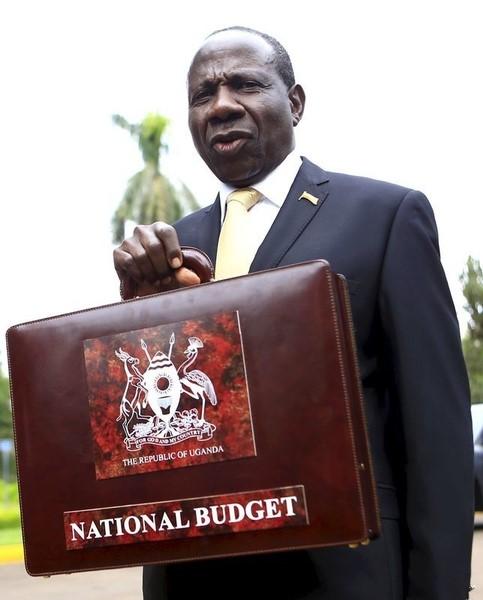
Minister of Finance Matia Kasaija displays a briefcase carrying national budget document

The fiscal risks statement, prepared by the Ministry of Finance, Planning and Economic Development (MoFPED) shows a number of risks facing the government of Uganda over the short to medium term as 2019/20 Shs41 trillion national budget sets in. Fiscal risks are factors that may cause fiscal outcomes to deviate from expectations or forecasts. They include potential shocks to state revenue, expenditure, assets, or liabilities that may not be reflected in budget forecasts.

“The realisation of any or all of these risks can lead to additional government obligations, expanded public debt, refinancing difficulties or more serious fiscal events. Identifying, analysing and mitigating such risks is an important aspect of fiscal planning. The government recognises that sound overall management of the public finances is the starting point for managing risk,” says the ministry in a statement.

It notes that in recent years, Uganda has made substantial progress in implementing financial reforms under the Public Finance Management Act of 2015 (PFM), improving the state’s ability to raise revenue, strengthen budget credibility and increase transparency.

The statement which covers budget outcomes for 2019/20 and examines some longer-term concerns, is Uganda’s first standalone fiscal risk statement. The current statement expands the range of risks assessed as put below:

External risks

The primary external risks to Uganda’s fiscal plans stem from the global economic and trade environment, regional conflict and commodity price volatility. In recent years, the global economy has been marked by rising geopolitical tensions – including trade conflicts – alongside higher debt levels in both developed and developing economies. Growing trade tensions, which affect a range of Uganda’s major trading partners, could put pressure on foreign investment and remittance inflows, with negative consequences for the exchange value of the shilling.

At the regional level, civil strife in the South Sudan, Congo and Burundi have severely disrupted trade and welfare. These conflicts have led to both economic and fiscal costs, including loss of earnings, property, employment, and remittances. Before the recent conflict, South Sudan accounted for about 20 per cent of Uganda’s exports, and was one of the leading remitters of income into the country.

As a member of the East African Community, Uganda is a signatory to the East African Monetary Union protocol, which plans to establish a single regional currency by 2024. The convergence criteria for monetary union include benchmarks for debt, inflation, fiscal balances and external reserves. At present there are significant imbalances within the region, and the pace of achieving and maintaining these benchmarks could lead to future fiscal risks.

Volatility in global commodity prices has a major impact on economic growth, with knock-on effects for the public finances. Rising oil prices would impose large costs on Uganda given our level of oil imports. Subdued global prices for export commodities such as coffee and cotton – and increased competition from other commodity producers – creates greater uncertainty and risks to foreign earnings and the value of the currency. The government recognises these risks and works to ensure that prudent management of risks.

Grants revenue has consistently underperformed relative to expectations. The average shortfall in grants is about 0.5 per cent of GDP each year, and reached nearly 1.0 per cent of GDP in 2009/10. This persistent shortfall poses a significant risk to the fiscal outlook, requiring the government to either delay projects or borrow unexpectedly to cover the funding gap.

Total Expenditure

Expenditure forecasts and outcomes since 2009/10 have underperformed in all years except 2010/11. This, according to analysts mirrors the shortfall in grants, which are usually tied to key projects. The resulting delay of these projects reduces government expenditure and lowers GDP growth. The notable exception was 2010/11, where expenditure was higher than projected given unanticipated election costs and exchange rate depreciation.

Analysis of recurrent and development expenditure performance

According to the statement, since 2015/16, Expenditure and Lending has averaged around 90 per cent of the forecast, but this masks notable differences in recurrent and development expenditure. Recurrent expenditure (or the spending by Government on wages and salaries of its employees, and the goods and services the government uses) has averaged 112 per cent of the forecast, whereas development expenditure (or the spending on growth-supporting infrastructure and activities) has averaged only 85 per cent of the forecast. The figure below shows performance of recurrent and development expenditure against forecast.

The performance of development expenditure reflects the performance of grants, which are tied to financing development expenditure yet they have performed below their forecast for most years. The resulting underperformance of development expenditure could have a negative impact on economic growth. Additionally, the performance of development expenditure is partly explained by the variations in domestic and external financing outcomes compared to their forecast. External financing is usually linked to development expenditure yet it has performed below the anticipated levels especially for FY 2016/17 and FY 2017/18.

Budget Sensitivity Changes in macroeconomic conditions can affect the fiscal accounts to varying degrees. Revenue estimates are particularly sensitive to changes in macroeconomic assumptions given the effect of these changes on the tax base. A one percentage point reduction in real GDP, for example, would reduce revenue by Shs55 billion. Expenditure is generally sensitive to changes in prices (inflation) and exchange rate.

Public debt

At the end of June 2018, Uganda’s total public debt, defined as the outstanding stock of government securities and foreign loans, stood at US $10.74 billion. This was equivalent to 41.5 per cent of GDP. Debt as a share of GDP is expected to increase to a peak of about 52 per cent in FY 2021/22 and then decline to about 40 per cent by FY 2024/25. Foreign debt accounts for 68 per cent of Uganda’s total public debt. The main fiscal risk associated with foreign debt is the possibility of large, sustained movements in the exchange rate. A depreciation in the Ugandan shilling could result in higher debt-service costs.

However, the external debt is mainly on concessional terms and denominated in longer maturities, which provide some buffer against this risk. Much of the public domestic debt is denominated in instruments with a one-year maturity or less. The short-term nature of the domestic debt portfolio creates a large re-financing requirement and higher costs than longer-dated debt. In addition, the practice of rolling over existing debt creates risks if interest rates rise. At the end of June 2018, nearly 37 per cent of domestic debt was due to mature within one year. While this is close to the benchmark of 40 per cent established in the 2013 Public Debt Management Framework, it is down slightly from over 38 per cent in June 2017.

To manage the fiscal risk associated with public domestic debt, the government will continue to restructure the debt portfolio, shifting from shorter-dated to longer-dated securities. The government will also ensure that annual domestic borrowing remains under one per cent of GDP. Interest payments as a share of domestic revenue have been on an upward trend for the past six years. This reflects both expanded borrowing and higher interest rates over this period. In 2018/19, interest is expected to be about 18 per cent of revenue, up from 6 percent in 2010/11. This increasing non-discretionary expenditure can present a risk for the government, particularly if economic conditions change unexpectedly.

Contingent Liabilities

Contingent liabilities are payment obligations that only arise if a particular event occurs. The government’s main contingent liabilities stem from loan guarantees and the debts of public corporations.

Loan guarantees

The government’s main contingent liabilities are associated with loan guarantees. The government’s guarantee portfolio is currently about US $55 million. Exposure to these guarantees stood at US $53 million at the end of June 2018, equivalent to about 0.2 per cent of GDP. This is a 34 per cent increase in exposure from US $40 million in June 2017, mainly as a result of the recently issued guarantee to Islamic University in Uganda worth just under US $14 million. Default on any of these guarantees would result in an unbudgeted commitment of funding. However, despite the increase in exposure, all loans are performing well, and the risk associated with the portfolio is low.

Debt of Public Corporations

Public entities contribute to the country’s development by providing energy, water, environmental, development finance, civil aviation and other services. In order to maintain fiscal sustainability, these need to be financially sound. Debt acquired through on-lending from the government to public corporations can create fiscal risk where these entities fail to service these debts. However, this debt forms part of the stock of Uganda’s total public debt. The debt of public corporations amounted to about Shs6 trillion (US $1.7 billion), equivalent to about 6 per cent of GDP as at June 2017. Of this debt, 87 per cent is held by two entities: the Uganda Electricity Generation Company and the Uganda Electricity Transmission Company. The government monitors these corporations to ensure they are operating optimally and that they are on course to repay the funds on-lent to them.

Mitigation measures for contingent liabilities

The government maintains a proactive policy stance to mitigate contingent liability risks: For example; all borrowing by public corporations and sub-national governments, and government-issued guarantees, must be approved by the Minister of Finance, all public corporations that intend to borrow, as well as entities requesting guarantees, are required to be financially sound, as determined by MoFPED and all projects to be funded must be in line with the National Development Plan and sector priorities.

Natural disasters

Drought, landslides and floods are relatively common occurrences in Uganda. Such events pose risks to economic growth and social welfare, and can have significant consequences for the national budget in the form of unplanned or emergency spending. In the years ahead, an increase in extreme weather events associated with climate change is expected to put increased pressure on government budgets.

Over the past four years, government has spent an annual average of Shs114 billion on disaster mitigation measures. Significant events included drought in the western district of Isingiro in 2016/17, and the army-worm outbreak that affected agricultural harvests in 2017/18. In 2017/18, the government allocated Shs35 billion for disaster relief following landslides in eastern Uganda. Long-term planning to mitigate the effects of natural disasters includes budgeting for costs related to disaster and refugee management, and building new dams, irrigation and bulk water supply schemes.

The government is also working to increase the functionality and use of meteorological data to support sector-specific early warning to combat the effects of extreme weather events. A contingency fund has been established to respond to unforeseeable and unavoidable expenditure, including natural disasters. The law requires this fund to be replenished with 0.5 per cent of the budget each year, though this commitment is yet to be met.

Legal Claims

The government continues to accumulate liabilities arising from court awards. The stock of arrears from these awards stood at about 33.2 per cent of the total domestic arrears as at end of June 2018. The MoFPED is devising a mechanism to halt the accumulation of arrears using commitment control systems.

Pension Liabilities

Under the state’s pension plan for public-sector employees, pension payments for each financial year are budgeted and paid out of government revenues for that year. The structure of this plan, combined with changes in staffing levels and demographic shifts, is a source of fiscal risk.

Government is accumulating future pension liabilities without setting aside resources to fund these liabilities, even as demand on the fund grows. Uganda’s public service grew from 300,372 in 2015 to 308,451 persons in 2016. Between 2002 and 2016, life expectancy improved from 50.4 to 63.3. Pension payments have grown from less than 1 per cent of the budget in 2015/16 to more than 2 per cent in 2017/18. As a percentage of GDP, pension pay-outs have doubled from 0.2 per cent to 0.4 per cent over the same period. Even though these are relatively small shares, over the long term, the share of the budget allocated to meeting pension liabilities is expected to increase.

To reduce the risk of a growing, unfunded liability, a contributory public sector pension scheme, to which both public service employees and the government contribute, is under consideration in the retirement benefits liberalisation bill before parliament.

The ministry says sound public financial management is the most important contribution to managing fiscal risks, and Uganda intends to build on the progress it has registered in this respect in recent years. While a number of external risks to fiscal plans are not within our control, the government is expanding its assessment and monitoring of fiscal risks, and putting mitigating measures in place to reduce their impact on the public finances.

Stories Continues after ad

Struggling in international arena: China writing new interbank rules

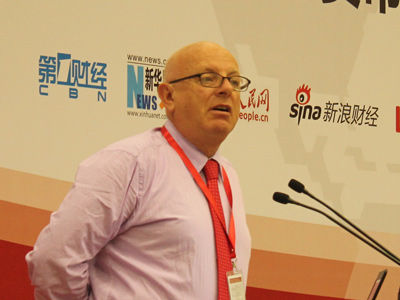
Herbert Poenisch

By Herbert Poenisch

Chinese banks have struggled in the international arena. They are the biggest in the world, but must abide by rules written over the past few decades by western banks.

This applies to interbank trading. This is either bilateral, by opening correspondent accounts, or multilateral on the global interbank market, where large positions in domestic or foreign currencies are traded and settled, based mainly on trust.

The biggest Chinese banks have operated correspondent accounts for many years and are trusted partners in the global interbank market. However, they have felt uneasy not setting the rules of the game. Consequently, they have established joint interbank associations around the world.

The first connected Brazil, Russia, India and China, followed by the Shanghai Co-operation Organisation. China later formed an interbank association with the Association of Southeast Asian Nations, as well as the China-Central and Eastern Europe interbank association, China-Arab countries interbank association and China-Africa interbank association.

These all follow the same model. A major Chinese commercial bank and the China Development Bank partners with major banks from a designated region. The Brics interbank mechanism comprises the China Development Bank, Brazilian Development Bank, Russia’s Vnesheconombank, the Export-Import Bank of India and Development Bank of Southern Africa.

The purpose of these associations is to ‘encourage financial institutions, on a voluntary basis, to continue to strengthen existing co-operation on investment and financing, introduce innovations in the mode of investment and financing to the demands of the market, create new financing instruments, strengthen the dialogue between banks and enterprises and explore co-operation on renminbi financing and green financial bonds.’

The Brics association led to agreements on currency exchange and the acceptance of letters of credit. The Shanghai Co-operation Organisation interbank association, under the leadership of the China Development Bank, aims to finance major infrastructure projects and trade, as well as support international settlements, correspondent banking relations and trust services. The China-Asean interbank association, also presided over by the China Development Bank, supplies ‘financing support for infrastructure interconnections, and to provide project contractors with comprehensive financial services to support these projects.’ The China-CEEC association met in April 2019 to strengthen co-operation among financial regulatory authorities, diversify the currencies used, and promote the renminbi.

The purpose of China’s regional interbank associations is to finance Belt and Road projects and involve regional commercial banks in their financing. The associations work to ensure that regulation of all participating banks conforms to certain standards. Further aims include creating new financing instruments and settling transactions in regional currencies. These associations are an attempt to replace the existing interbank system with Chinese-dominated financing and settlement systems, with the aim of strengthening partnership connectivity.

Given the global financial architecture in place already, it would appear China is attempting to create its own structure for banks in its orbit.

Herbert Poenisch is a Member of the International Committee of the International Monetary Institute at Renmin University of China, and former Senior Economist at the Bank for International Settlements.

Attachments area

Stories Continues after ad

Call for more inclusion at this year’s African Banker Awards

Equity-Bank

Winners of the 2019 edition of the African Banker Awards were announced at a prestigious Gala Dinner in Malabo, Equatorial Guinea. The Awards, held annually on the fringes of the Annual Meetings of the African Development Bank, have established themselves as the Oscars of African banking celebrating excellence in banking and finance on the African continent.

No one region dominated this year’s awards although there was a call from the organisers for greater effort to ensure banking was more inclusive, both in terms of gender representation across senior management in banks and lending to the small and medium sized enterprises. This call was echoed by the two main sponsors of the awards, the African Guarantee Fund and the Bank of Industry, both of whom have created a number of innovative instruments and mechanisms to lend to the SME sector.

The two big awards of the night went to development finance institutions. Afreximbank won Bank of the Year and the Trade and Development Bank’s President, Ethiopian Admassu Tadesse, won African Banker of the Year. TDB has grown its portfolio five-fold since Tadesse took over as President, largely increasing its presence in East and Southern Africa, where it operates. Afreximbank in the past 18 months has launched a number of game changing products.

This year’s lifetime achievement went to former First Rand Group CEO, South African Sizwe Nxasana. Under his leadership, the bank grew at a compound annual growth rate of 20%. In his acceptance speech, he called for even greater investment in human capital if we wanted to accelerate growth on the continent.

The African Banker Icon went to Mitchell Elegbe, founder of Interswitch, the payments service provider. His company is predicted to be Africa’s first Africa-led unicorn – tech start up whose value exceeds US$1billion.

Egyptian Central Bank Governor, Tarek Amer won Central Bank Governor of the Year, for his work in restoring faith in Egypt’s markets and contributing to making it one of the fastest growing economies in the world and one of the best performing emerging markets.

Romuald Wadagni from Benin won Finance Minister of the Year. He has managed to considerably improve the country’s macro-economic indicators as well as embarked on a number of reforms to structurally transform of the economy.

South African banks dominated the investment banking and deals of the year categories. Absa won Investment Bank of the Year. Standard Bank and RMB won the equity deal of the year with the VIVO Energy IPO. Deal of the year in the debt category went to Rothschild & Co for the Senegal $2.2bn equivalent dual-currency Eurobond and Credit Agricole and TDB’s financing of the Floating LNG platform in Mozambique won the infrastructure Deal of the Year.

In other categories, Ecobank won Retail Bank of the year; Kenya’s KCB won the prize for innovation and Equity Bank for its CSR activities. Nigeria’s Bank of Industry won the prize for Financial Inclusion.

Commenting on the impressive achievements of the banks shortlisted for the 2019 awards, Omar Ben Yedder, Publisher of African Banker said: “We’ve been following the work of the financial services industry for many years. The sector over the years has seen great returns, and 2018 was another strong year for banks. Undoubtedly FinTech was the most buoyant sector in terms of tech investments and we are yet to truly see the transformative impact it can have. Despite the positive stories from the banking sector, the words of the winner of our Banker of the Year still resonate when he said last year at the Africa Investment Forum: we need to speed up, scale up and synergise. ”

The Awards took place in Malabo, Equatorial Guinea, on the sidelines of the African Development Bank Annual Meetings which are now officially open. The country was for many years the fastest growing in Africa with massive capital expenditure. Following the fall in the price of oil however, the country is on a plan to structurally reform its economy.

The awards, which are held under the high patronage of the African Development Bank, are sponsored by the African Guarantee Fund as Platinum Sponsor, the Bank of Industry as Gold Sponsor and Coris Bank as Associate Sponsor. The Host Sponsor this year was Banco Nacional de Guinea Ecuatorial, by far the country’s biggest bank in terms of assets and footprint. The awards were preceded by a cocktail reception hosted by Afreximbank.

THE 2019 AFRICAN BANKER AWARD WINNERS

African Banker of the Year
Admassu Tadesse, TDB

Lifetime Achievement Award
Sizwe Nxasana, former CEO, First Rand Group

African Banker Icon
Mitchell Elegbe, Founder, Interswitch Group

African Bank of the Year
Afreximbank

Minister of Finance of the Year
Romuald Wadagni, République du Benin

Central Bank Governor of the Year
Tarek Amer, Central Bank Governor, Egypt

Best Retail Bank in Africa
Ecobank

Investment Bank of the Year
Absa Capital

Award for Financial Inclusion
Bank of Industry, Nigeria

Special Commendation for their contribution to the development and financing of the Rural Sector: Banco Nacional de Guinea Ecuatorial (BANGE)

Socially Responsible Bank of the Year
Equity Bank, Kenya

Innovation in Banking
KCB, Kenya

Special Commendation: JUMO, South Africa

Deal of the Year – Equity
Vivo IPO
Standard Bank & Rand Merchant Bank (South Africa)

Deal of the Year – Debt
$2.2bn Senegal Eurobond
Rothschild

Infrastructure Deal of the Year
Mozambique Floating LNG
TDB & Credit Agricole

Regional Bank of the Year
East Africa – KCB, Kenya
West Africa – Orabank
North Africa – Banque de l’Habitat (Tunisia)
Southern Africa – Mauritius Commercial Bank
Central Africa – BGFI, Gabon

Stories Continues after ad

Chinese Embassy donates laptops to UWA

Chen Huixin handing over laptops to minister Kamuntu

Uganda Wildlife Authority (UWA) has received eight computers (laptops) from the Chinese Embassy in Uganda to boost the agency’s conservation efforts.

The computers were handed over by the Deputy Ambassador of China to Uganda, Chen Huixin to the Minister of Tourism, Wildlife and Antiquities, Prof. Ephraim Kamuntu at the ministry’s headquarters in Kampala.

Huixin said China appreciates the important role UWA plays in conserving the country’s wildlife resources. He observed that protecting the environment and promoting ecosystem development is a shared responsibility where everyone should play a role.

“As people of China, we know the progress you have made in the recovery of wildlife numbers, therefore this donation is our gesture of support towards UWA’s efforts in wildlife conservation in Uganda,” said.

He said the relationship between China and Uganda is at its best ,adding that China has supported many government projects in Uganda and that the Chinese have invested in various areas such as manufacturing and construction in order to develop Uganda’s economy.

The Chinese diplomat promised to work even harder to further strengthen the ties between Uganda and China through offering training to Ugandans in wildlife protection and enhancing harmonious living between the people and wildlife.

While receiving the computers, Professor Kamuntu expressed gratitude to China for donating the computers to UWA saying that they will immensely help UWA in its conservation efforts especially in this digital era.

The minister said that Uganda’s transformation agenda is fuelled by Chinese support revealing that Uganda’s fight for independence was inspired by the Chinese experience. “We look to China for lessons to develop our own country; we need to learn from the Chinese so that we can get out of poverty like China did”

He urged UWA to work closely with China describing the country as a valuable friend of Uganda. He also urged UWA embrace the use of modern technology such as drones and helicopters which can help improve the monitoring of protected areas.

Kamuntu further expressed the need to protect Uganda’s natural resources against illicit trade, encroachment and pressure to de-gazette protected areas. “Uganda is exceptionally endowed with natural assets and they should be conserved. We must protect these resources by training our staff, sensitization of stakeholders and involving neighbouring communities in the management of the parks”.

The UWA Executive Director, Sam Mwandha, appreciated the Chinese Embassy for the donation, saying that it comes in handy to facilitate UWA’s digitisation process.

Mwandha said China last year offered training to UWA staff in cites management and that more will be going for training. He also said that a Chinese company is interested in investing in Murchison Falls National Park and start marketing Uganda in China.

Stories Continues after ad

“To integrate Africa, bring down the walls,” AfDB boss urges political leaders

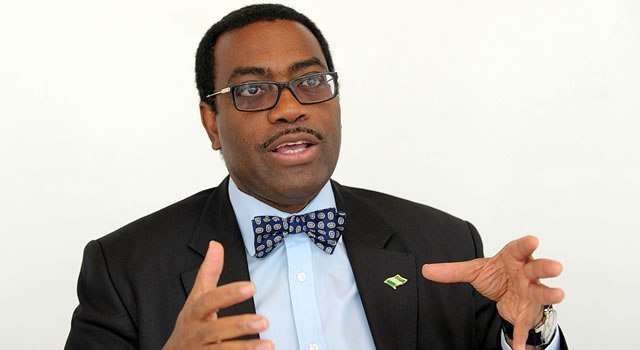
ADB President, Dr. Akinwumi Adesina

African leaders on Wednesday underscored the urgent need to fast-track the continent’s regional integration process in order to accelerate Africa’s economic transformation.

The call was made at the opening ceremony of the African Development Bank’s (AfDB) 2019 Annual Meetings, in Malabo, Equatorial Guinea, with the theme: “Regional Integration for Africa’s Economic Prosperity.”

“Apart and divided, Africa is weakened. Together and united, Africa will be unstoppable,” the Bank’s President Akinwumi Adesina told delegates at the packed Sipopo Conference Center.

Adesina urged African governments to work toward the elimination of non-tariff barriers. “Pulling down non-tariff barriers alone, will spur trade by at least 53%, and potentially double trade,” he said.

The opening ceremony was presided over by the host nation’s President Teodoro Obiang Nguema Mbasogo. Also in attendance were King Letsie III of Lesotho; President Félix Antoine Tshisekedi of the Democratic Republic of Congo; and Ambrose Mandvulo Dlamini, Prime Minister of eSwatini. High-level government officials from Rwanda, Cameroon, the Central African Republic, and Côte d’Ivoire were also present.

In his opening speech, President Obiang Nguema Mbasogo recalled that Equatorial Guinea, once one of the poorest countries in the world, has since been radically transformed with one of the highest per capita incomes on the continent.

“For me, development is not about per capita income, it is about expanding the opportunities for the people to live a more dignified life,” Obiang Nguema Mbasogo said.

“Equatorial Guinea is open for business. We are committed to regional integration for shared prosperity. We count on the African Development Bank to help us achieve economic diversification and the consolidation of social equality.”

Regional integration is one of the Bank’s strategic High 5 agendas to rapidly advance Africa’s economic transformation.

In the past several years, AfDB has invested over $13 billion in the central African region. “And for every dollar invested, the region has leveraged $36, an incredible rate of return of 36 times,” Adesina noted.

The Bank’s investments include the construction of the Central African fibre optic network that connects the population with faster and less expensive access to the Internet, and is boosting businesses and regional integration.

In his remarks, Equatorial Guinea’s Finance Minister Cesar Mba Abogo said: “Progress is the realisation of utopia. This is a country of utopia in Africa, with independence and the ability to control our own destiny. It seemed impossible at first in the last century but it was done. Now our utopia is regional integration.”

More than 2,000 participants are attending the Annual Meetings, a unique opportunity to share the Bank’s perspectives on the state of Africa’s economy. The meetings also provides updates on the Bank’s work and serves as a platform for the exchange of views on emerging issues shaping the future of the continent.

The Prime Minister of Equatorial Guinea, the president of the Senate, members of governments, the diplomatic corps as well as the African Development Bank’s Governors, Executive Directors, and other dignitaries attended the opening ceremony.

“There’s excitement in the air on Africa’s economic opportunities, and those opportunities are boundless. The newly ratified Africa Continental Free Trade Area will make Africa the largest free trade zone in the world, with a combined GDP of over $3.3 trillion,” Adesina said.

Stories Continues after ad
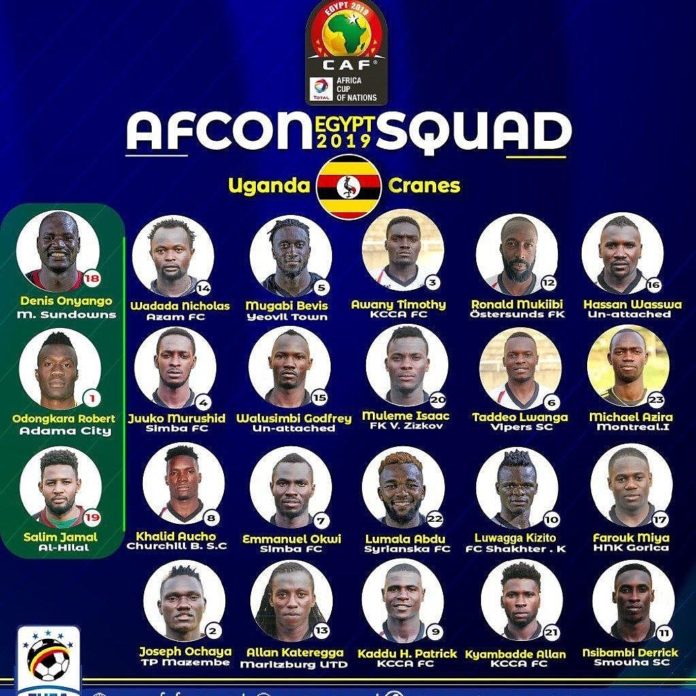
Profiling the 23 Uganda Cranes players for 2019 Afcon

Cranes players

Uganda Cranes Head Coach Sebastien Desabre revealed which players will represent the national team in the 2019 Africa Cup of Nations in Egypt.

There were a few surprises in the 23-man squad with the inclusion of Abdu Lumala and Ronald Mukiibi who are new faces on the team.

We look more closely at all the players involved:

Denis Onyango

(Age: 34, Caps: 70, Club: Mamelodi Sundowns, South Africa)

Arguably the most reliable player in the current squad. He is the captain of the team and kept five clean sheets out of the six games played in qualification stage. His ability to play the ball long and being comfortable with the ball at his feet could be just as important as his safe hands.

Robert Odongkara

(Age: 29, Caps: 29, Club: Adama City, Ethiopia)

He will be the second choice goalkeeper. His height and physical stature is good for any goalkeeper a club would want. When Onyango retires from the national team, Ondongkara will become number one He also featured in the 1-1 draw with Mali in the 2017 Afcon in Gabon.

Salim Jamal Magoola

(Age: 24, Caps: 6, Club: Al Hilal, Sudan)

At just 24, he still has a lot to learn from the two top goalkeepers. He has been the number one goalkeeper for Al Hilal who had a decent run in the Caf Champions League. He will the third choice.

Nico Wakiro Wadada

(Age: 24, Caps: 54, Club: Azam, Tanzania)

The right-back featured in all the qualifiers and he is well-known for his commitment in the attacking option more than his primary role of defending. He is good in providing the cut-back crosses.

Brian Ronald Ddungu Mukiibi

(Age: 27, Caps: 0, Club: Ostersunds, Sweden)

A new member in the set-up likely to make his debut in the central defence or right-back. Yet to wear the Cranes jersey at any competitive level.

Murushid Jjuuko

(Age: 25, Caps: 35, Club: Simba SC, Tanzania)

A regular starter with his consistent good performances, also good at the long balls from the back to the wings on the pitch. Has plenty of suitors but fitness and injury problems have disturbed his career.

Bevis Mugabi

(Age: 24, Caps: 2, Club: Yeovil Town, England)

The central defender brings self-belief and physical stature any striker wouldn’t prefer to face. Also calm with the ball under pressure when playing from the back and superb in set pieces. He has been tested on the right-back position throughout the build-ups.

Isaac Muleme

(Age: 26, Caps: 37, Club: FK Viktoria Zizkov, Czech Republic)

A natural left-back who has failed to secure a starting role in the team. Usually third choice behind Jjaja Walu and Ochaya. He’s sometimes converted to a left winger and helps in tracking back.

Hassan Wasswa Mawanda

(Age: 31, Caps: 75, Club: Unattached)

Despite not having played competitive football for the season, he is still picked and likely to start because of his experience and physique. A versatile player who can play in central defence and defensive midfield. He is the vice-captain.

Joseph Benson Ochaya

(Age: 25, Caps: 51, Club: TP Mazembe, DR Congo)

Usually played at the left wing because of his delicious crosses he puts in the box for the strikers. His effectiveness in the final third and footwork in tight spaces around the box is unmatched.

Timothy Denis Awanyi

(Age: 22, Caps: 25, Club: KCCA FC, Uganda)

Probably the best central defender in the Uganda Premier League. He’s good in the air and on one against one situations but the pecking order may not favour him.

Godfrey Walusimbi

(Age: 29, Caps: 99, Club: Un-attached)

Despite not having a team since January, he remains the most experienced outfield player and has never been made to sweat over his starting place at left-back. He is most likely to start.

Mike Azira

(Age: 31, Caps: 5, Club: Montreal Impact, Canada)

Had his last cap in Afcon 2017; weren’t convincing performances but surely must have improved since then.

Allan Kateregga

(Age: 25, Caps: 8, Club: Maritzburg, South Africa)

A good left foot who can play number 10 behind the forward. Can also operate on the right or left-hand wing and effective in most systems. Hasn’t got much playing time on the team.

William Kizito Luwagga

(Age: 25, Caps: 41, Club: Shakhter Karagandy, Kazakhstan)

Last featured for Cranes during Micho’s time and can only have improved from that time. He is blessed with great pace and dribbling ability a good winger would have.

Khalid Aucho

(Age: 25, Caps: 43, Club: Church Hill Brothers, India)

An established member in the side with his experience and his defensive midfield abilities aren’t questionable. Capable of playing long ball up forward the pitch.

Farouk Miya

(Age: 21, Caps: 57, Club: HNK Gorica, Croatia)

Has proved his worth with a key role in Desabre’s side and will be eyeing the chance to turn in again some defining performances at this level, most likely a few goals. He is an occasional captain at a young age and was our top scorer in the qualification campaign with three goals.

Abdul Lumala

(Age: 21, Caps: 0, Club: Syrianska, Sweden)

A new member in the squad who Ugandans are excited to see what he can offer.

Taddeo Lwanga

(Age: 25, Caps: 11, Club: Vipers SC, Uganda)

Hailed by Desabre as the best defensive midfielder in the Uganda Premier League. Brave in the tackle but there will be concerns over his ability at the big stage.

Patrick Henry Kaddu

(Age: 23, Caps: 6, Club: KCCA FC, Uganda)

Has a strong relationship with Desabre having given him his debut. He’s hardworking, disciplined and good at set-pieces. Most likely to start in Desabre’s team as the forward.

Derrick Nsibambi

(Age: 24, Caps: 21, Club: Smouha, Egypt)

Left KCCA over a year ago to go to Egypt and must have only improved since then. His hold up play is good and capable of creating something out of nothing.

Allan Kyambadde

(Age: 23, Caps: 13, Club: KCCA FC, Uganda)

Valued most for his discipline, pace and reliability but he may have to settle for a lesser role in the team.

Emmanuel Arnold Okwi

(Age: 26, Caps: 68, Club: Simba SC, Tanzania)

Experienced player who has featured in may leagues and a serial winner. He can play both wings and as a forward. His willingness to sprint forward with the ball and winning fouls in danger zones is next to none and also capable of scoring goals that help the team.

Stories Continues after ad

Miss World Vanessa ponce to grace the crowning of Miss Uganda

Vanessa Ponce

The reigning Miss World, Vanessa Ponce, together with the Miss World team headed by CEO Julia Morley will be jetting into the country for a six days visit from July 21-26, 2019.

According to the chief executive officer of Miss Uganda, Brenda Nanyonjo, the visit will include, going to State House, the Pearl of Africa Tour, engagement in ‘Beauty with a Purpose’ projects and conclude at the crowning finale of Miss Uganda 2019.

Nanyonjo said Uganda is one of the countries in the world listed among the friendliest places to visit, “So we look forward to welcoming the queen and the Miss World team to the Pearl of Africa.”

“We for the first time invited Miss World to come to be part of our activities which will be topped with the crowning of Miss Uganda,” she said.

Silvia Vanessa Ponce de León Sánchez known as Vanessa Ponce is the first Mexican model and beauty queen who was crowned Miss World 2018 besting 117 other hopefuls from around the globe.

In the 2018 miss world contest, Quiin Abenakyo, Uganda’s newly crowned model and beauty pageant titleholder who was crowned Miss Uganda 2018. She represented Uganda at Miss World 2018 in China and was crowned Miss World Africa 2018.

She is expected to be part of the consolidated team that will traverse the country with miss world.

Stories Continues after ad

Rugunda commends Nakasero Hospital on contribution to medical care services in Uganda

PM rRugunda admires the artistic impression of the new facility.

The Prime Minister, Dr. Ruhakana Rugunda has commended Nakasero Hospital for the role it has played in Uganda’s health sector, which includes reducing on the number of referrals to other countries and receiving international patients.

“I congratulated the hospital for being attractive enough to bring high quality health services in Uganda, we’ve been sending many people abroad for medical treatment but the number is drastically reducing the hospital has really made a big contribution to the medical care of the people of Uganda,” said Rugunda.

Speaking at the 10th anniversary celebrations of the hospital, Rugunda, said it was painful to see people who require medical care having problems to acquire it, either because they cannot afford it, or because there is no readily available medical professional who can provide that service.

Jane Ruth Acheng, the Minister of Health, appreciated the management of the hospital, saying they have done good work in complementing the government and ensuring quality services.

“I will not lie, I have also been a beneficiary of services there. I have had a number of consultations, even with the chair himself,” she said.

The Chairman of the Board of Directors and co-founder, Dr. Ben Mbonye, lauded those who have been part of the journey.

“It has not been easy. The hospital business is a different is different because there is an element of human life which surpasses profitability. We thank our partners, stakeholders and our patients for believing in us. I want to thank President Museveni for personally ordering the finance ministry to exempt the health sector from some taxes which gave it ground for growth,” he said.

Dr. Edward Rukwaro, the CEO of the hospital, shared his gratitude as well, “Ten years is quite a milestone. It’s not an easy thing for a hospital, starting from scratch to grow to the satisfaction of its community and shareholders within ten years,” he said.

“We appreciate all our clients, partners, insurance companies, suppliers, and our dedicated staff. Next, I want to thank our management team, the founders and Board of Directors, whose relentless pursuit of excellence has made ours one of the best hospitals on this beloved continent,” he said.

“Regardless of the giant strides that we have made over the last ten years, I know that the best is yet to come. I look forward to continuing this journey with all of you.”

The management of the hospital is planning a massive expansion aimed at bringing world-class services closer to Ugandans. “The expansion is centered on two broad areas one of them being recruiting consultants and specialists with the consultants expected to augment specialist service provision.

The second area included key clinical areas of focus which include Cardiology, minimally invasive Surgery, orthopedics, and maternal and child health.

Stories Continues after ad

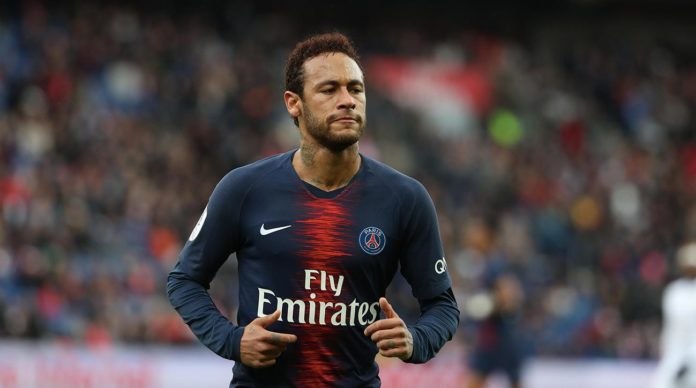
Neymar’s rape accuser abandoned by third lawyer

Neymar

The woman who has accused Brazilian football star Neymar of raping her in a Paris hotel has been dropped by a third lawyer — the latest twist in a scandal that has gripped the country.

Danilo Garcia de Andrade told broadcaster SBT late Monday he was no longer representing Najila Trindade Mendes de Souza after she questioned his competence.

Trindade alleges Neymar sexually assaulted her in the French capital last month, a charge he denies.

Garcia took on Trindade’s lawsuit against Neymar last week, but days later, he reportedly said he was considering withdrawing from the case unless the model provided more evidence of wrongdoing.

The lawyer wanted to see the content of a seven-minute video filmed during the model’s second meeting with the Paris Saint-Germain star.

Trindade maintains the recording — a few seconds of which have been leaked on social media — includes conclusive evidence that she was assaulted.

The images were filmed on a tablet device which has been stolen, according to Trindade, but the owners of the building where she lives have denied claims of a forced break-in.

Trindade’s original lawyers walked away from her case because she had initially filed a complaint of physical abuse and not rape. A second lawyer abandoned the case after briefly helping Trindade.

She gave evidence to Sao Paulo police last Friday and, after six hours of testimony, Garcia carried her out of the station.

“She says that according to the tablet’s tracker, it would be in the same street as my office,” Garcia told SBT.

“She was very emphatic and a client should not question the competence of a lawyer, much less one that leaves a police station carrying their client in their arms.”

Trindade’s dramatic appearance came a day after Neymar went to a Rio de Janeiro police station — sitting in a wheelchair after injuring his ankle in last Wednesday’s pre-Copa America friendly against Qatar.

He gave a statement in an investigation into his publication of intimate WhatsApp messages and photos of Trindade on social media without her consent.

Neymar told police that an assistant and a technician were responsible for sharing the messages and photos, TV Globo reported.

The star striker’s injury has sidelined him from the Copa America, which begins Friday.

Stories Continues after ad