Stanbic Bank
Stanbic Bank
18.4 C
Kampala
Stanbic Bank
Stanbic Bank
Home Blog Page 1268

Oil and gas: Kadaga pledges MPs will pass local content bill

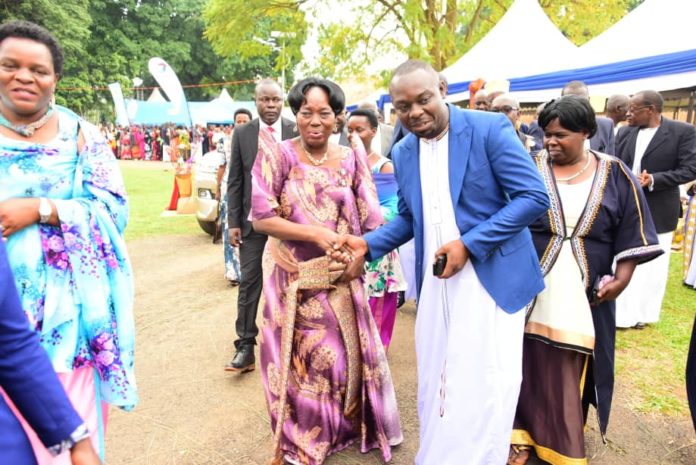
Speaker of Parliament, Rebecca Kadaga being welcomed at Karuziika palace in Hoima where Omukama of Bunyoro Kitara kingdom, Soloman Gafabusa Iguru marked 25th cornation anniversary.

The Speaker of Parliament, Rebecca Kadaga, has said the August House is determined to push through a Private Member’s Bill on local content despite the reluctance from government.

Kadaga said the bill is intended to boost and protect the livelihoods of local communities and companies that cannot compete with multinational corporations.

The Speaker remarked at the Silver Jubilee celebrations of the coronation of the Omukama of Bunyoro-Kitara Kingdom, Solomon Gafabusa Iguru I at his Karuziika Palace in Hoima District.

“We passed the oil law having included local content but the concerned companies ran to the President saying we passed a stringent law,” said Kadaga.

“The Minister of Finance, Matia Kasaijja, refused to grant the Bill a Certificate of Financial Implication but we shall battle with it,” she said.

Kadaga said it was improper for some of the oil companies to import beef from Argentina and eggs from South Africa for their consumption while they are in Uganda exploring the resource.

Buliisa County MP, Stephen Mukitale said that a law was passed to implement local content so that the locals from the area can benefit from the development that comes with oil exploration in the Albertine region.

“At the onset of oil exploration in the region, we expected to see the companies who are players in the industry employ locals and their services but it was to the contrary,” he said.

Mukitale said licensed companies have been bringing in their own people and construction equipment, adding that that local content is being failed by the fact that there are institutions of higher learning or vocational training to impart skills relevant to the oil field.

Kadaga however encouraged the Omukama to be firm and continue pushing for the demand for Bunyoro University.

In 2015, Parliament, the Speaker said, passed a resolution to avail funding for three regional universities in Bunyoro, Namasagali and Rwenzori. “These were supposed to start in 2016. I have written to the Ministry of Education and the President. MPs have also raised these issues but there are no answers,” she said.

Stories Continues after ad

UNBS celebrates its accreditation with the launch of new systems certification mark

Minister of Teade Amelia-Kyambadde

The Uganda National Bureau of Standards (UNBS) held a breakfast meeting with stakeholders to celebrate its accreditation by the South African National Accreditation System (SANAS) to offer International Organisation for Standardisation (ISO) Management Systems Certification.

The SANAS accreditation means that UNBS is now internationally recognised to provide certification services to organisations for Food Safety Management Systems (ISO 22000) and Quality Management Systems (ISO 9001). During the celebrations, UNBS also launched the new systems certification mark.

Speaking at the ceremony, the chief guest, the Minister of Trade Industry and Cooperatives, Amelia Kyambadde, said that the UNBS accreditation is important to Uganda because it will enable local companies to get certified to international standards which will allow them access to international markets. “One of the Policy Objectives in the National Standards and Quality Policy Implementation Plan is to support the Private Sector especially MSMEs to conform to set standards and to comply with technical regulations,” said Kyambadde.

According to ISO, a management system is “the way in which an organization manages the inter-related parts of its business in order to achieve its objectives including, among others, product or service quality, operational efficiency, environmental performance, health and safety in the workplace.”

UNBS joins acclaimed multinational service providers of ISO management systems certification that comply with international requirements.

The Chairperson, National Standards Council, Eng. Masitula Munyaami Male, said the accreditation will go a long way increasing the competitiveness of Ugandan products and services in international markets. She callled on the private sector use the accrediation as an opportunity to standardize their systems and processes to conform to ISO Standards, thereby giving customers confidence that you able to meet their expectations.

The UNBS Executive Director, Dr. Ben Manyindo said: “The accreditation means that UNBS has been accepted and recognised at international level to offer ISO management systems certification in a competent, consistent and impartial manner.”

Manyindo He said the accreditation will give Ugandan companies an opportunity to certify their organisational systems and processes at an affordable cost to demonstrate that their services meet international standards and therefore capable of meeting customer expectations.

“The certificates issued by UNBS are now recognised worldwide thereby facilitating international trade. It gives us a competitive advantage in a market dominated by large foreign multinationals. We intend to use this accreditation to expand our market share of ISO certification,” he said.

This accreditation adds to the UNBS chemistry and microbiology laboratories which are internationally accredited by SANAS.

SANAS is a signatory to the International Accreditation Forum (IAF) which gives it world-wide recognition as a competent body for carrying out independent evaluation of certification bodies against recognised standards. International accreditation agreements provide a mechanism that allows accredited certificates to be accepted around the world which reduces the risk of products and services being rejected in international markets.

Stories Continues after ad

Trump tariffs threaten world economy: US economy not immune from financial meltdown

US President Donald Trump

By Desmond Lachman

In the run-up to the 2018 mid-term Congressional election, US President Donald Trump made the crucial mistake of not making the strong US economy the central theme of that campaign. That cost him Republican-control of the House of Representatives.

Ahead of the 2020 ballot, he seems to be making the opposite mistake. He is putting the US economy at the forefront of his re-election campaign at a time when the world economy is beset by an unusual constellation of risks in systemically important economies. That could very well cost him his presidency if any of those risks were to materialise before November 2020.

Among the more immediate threats to the global economy is one of Trump’s making. His hardline stance on the China trade issue could lead to a slowing in the world’s second largest economy. This is especially the case as China tries to rebalance its economy and wean it off excessive credit growth.

Any marked slowing in the Chinese economy is bound to have spillover effects on economies with which the country has strong trade links. It also could contribute to global financial market instability.

In Europe, any stumbling of the German and UK economies could trigger another, more dangerous round of the European sovereign debt crisis. The Italian economy, which is 10 times the size of the Greek economy, is already in recession. It is struggling with high public debt and has a weak banking system. It hardly provides comfort to think that Italy now has a populist government that would have difficulty in dealing with a real economic crisis, or that Italy might be too large an economy to be bailed out by Europe.

The risks to the global economy are not limited to China and western Europe. The Argentine, Turkish, and Venezuelan economies are all in the grips of accelerating currency crises. The new Brazilian government is showing increasing signs of being unable or unwilling to address the country’s serious public finance problem. Also casting a dark cloud over the global economy are the rising geopolitical risks from countries like Iran and North Korea.

Seemingly oblivious to the lessons from the collapse of Lehman Brothers during the 2008 financial crisis, Trump appears to think that the US economy is insulated from the rest of the world economy and is immune from a global financial market meltdown. This indifference is all the more difficult to understand considering that years of ultra-unorthodox monetary policy by the world’s major central banks has created global asset price bubbles and led to the major mispricing of global credit risk.

James Carville famously said in reference to US elections, ‘It’s the economy, stupid.’ Before crafting their electoral campaigns for the 2020 election, the presidential candidates might want to reflect on how rapidly economic conditions changed for the worse ahead of the 2008 election. They also might want to consider that the months between now and the November 2020 election is a long time for any of major global economic risks to be triggered.

These considerations might give them pause about premising their election campaigns on the presumption that today’s strength in the US economy will persist into 2020.

Desmond Lachman is a Resident Fellow at the American Enterprise Institute. He was formerly a Deputy Director in the International Monetary Fund’s Policy Development and Review Department and the Chief Emerging Market Economic Strategist at Salomon Smith Barney.

Stories Continues after ad

Donors pledge $17 million to Africa Solidarity Trust Fund

Africa Solidarity Trust Fund

African and non-regional donors on Tuesday pledged US $17 million to replenish the Africa Solidarity Trust Fund (ASTF), an initiative which aims to provide food security and eliminate rural poverty on the continent.

The pledges were made at a high-level donor round table convened by the United Nations Food and Agriculture Organisation (FAO) and Equatorial Guinea President Obiang Nguema Mbasogo, on the sidelines of the African Development Bank’s 2019 Annual Meetings currently underway in Malabo, Equatorial Guinea.

Opening the conference at the Sipopo conference center Equatorial Guinea President Obiang Nguema Mbasogo said the Fund illustrated “a turning point in the fight against food insecurity” and said his tiny oil-rich nation had donated generously out of its oil revenues to show solidarity to African countries.

The Fund, an initiative of the United Nations Food and Agriculture Organisation, received its start-up contribution of US $30 million from Equatorial Guinea, the host nation of this year’s meetings and Angola, which gave US $10 million. Its projects have been lauded for providing innovative solutions for African agriculture and food systems.

Speaking on behalf of African Development Bank President Akinwumi Adesina, Bank Vice President Agriculture, Human and Social Development, Jennifer Blanke said Africa faced challenges in the area of agriculture and food production, relying heavily on food imports.

“It’s so important that ASTF is showing that African countries are contributing to Africa..that links very closely to what we are doing,” Blanke said, adding that the Bank’s commitment to providing farmers with technologies to help improve their yields.

The donor conference was attended by the presidents of Mauritania, Guinea Bissau, the prime minister of Eswatini and several high-ranking diplomats, ministers and development and banking institutions.

The theme of the Bank’s meetings this year is “Regional Integration for Africa’s Economic Prosperity.” The push for regional integration has gained momentum with the ratification of the agreement on the African Continental Free Trade Area ( AfCFTA) in March 2018, which is now at the threshold of its launch in July.

“You can count on us that we will be very involved,” she said.

Ms Maria Helena Semedo, Deputy Director-General of FAO who represented FAO head José Graziano da Silva, commended the Fund for its results. The Fund has led to the successful implantation of 18 projects that have benefitted 41 countries and hundreds and thousands of beneficiaries, including 160 vulnerable households in Niger who saw transformation and grants which enabled a rapid response to populations affected in the Ebola outbreak in West Africa in 2014.

“We celebrate the success of the ASTF …the excellent results of the fund over the last 5 years is living testimony,” Semedo said, describing it as a flagship initiative and one of the most successful funding initiatives in FAO. She said the generosity of the donors was unique evidence of strong solidarity between African countries.

The meeting raised a total of US$17 million – US$10 million from Angola, US$2.6 million, from China, Euros 2 million from France, US$2 million from Equatorial Guinea and US$100,000 from Zimbabwe.

Stories Continues after ad

Uganda Premier League Secretariat releases 2018/19 Statistical Report

KCCA FC

The Uganda Premier League Secretariat on Tuesday June 11 released a statistical report for the 2018/19 StarTimes league campaign, showing progress compared to the previous seasons.

The comprehensive well compiled report was made public at the secretariat’s seat at Mandela National stadium, Namboole by CEO Bernard Bainamani along with members of the secretariat Paul Kabaikaramu and Gordon Mundeyi among others.

A UPL summary of the 2018/19 season;

The 2018/19 season started on Friday, 28th September 2018 and ended on Saturday, 4th May 2019.

StarTimes signed in the league as the Title and Television Sponsor with a deal worth 7.24 Million USD for 10 years. There was a recorded increase in the number of matches that were televised live on Sanyuka TV.

Seventy-five (75) matches were televised live as compared to Sixty-three (63) matches were televised in 2017/18 and fifty-one (51) in the 2016/17 season.

All 239 matches were played as per the fixtures with only one that was washed out due to hefty rain but was completed the following day. (Ndejje University FC vs Onduparaka FC)

The league was more competitive and entertaining at both the Top and bottom of the table. In the 2017/18 season Vipers SC ended with 65 points compared to 2018/19 season where KCCA FC finished with 66 points. The relegation battle was decided on match-day 29.

The coming on board of Pilsner Man of the match and Coach/Player of the Month sponsorship was a positive to the league. These awards started in November 2018.

525 goals were scored in 240 games last season more than what was scored in the previous seasons – 446 (2017/18), 515 (2016/17) and 488 (2015/16).

There were 3 Hat tricks, 33 Braces, 51 goals Scored from the penalty spot and 8 Own goals.

Juma Balinya of Police FC emerged the Top scorer with 19 goals of which only three were penalties.

There were 693 yellow cards and 22 yellow cards in the 240 games played last season.

Ndejje received the most with 53 Yellow Cards and 3 Red cards.

Police, Tooro United and Nyamityobora were the only sides never to get a player sent off in the season.

KCCA had the most wins (19), Most Draws were 15 by URA FC while the most losses by a single club were 21 (Nyamityobora FC and Paidha Black Angels).

Stories Continues after ad

Central banks top $1trn in riskier reserve assets as public investments in equities and corporate bonds are set to grow further

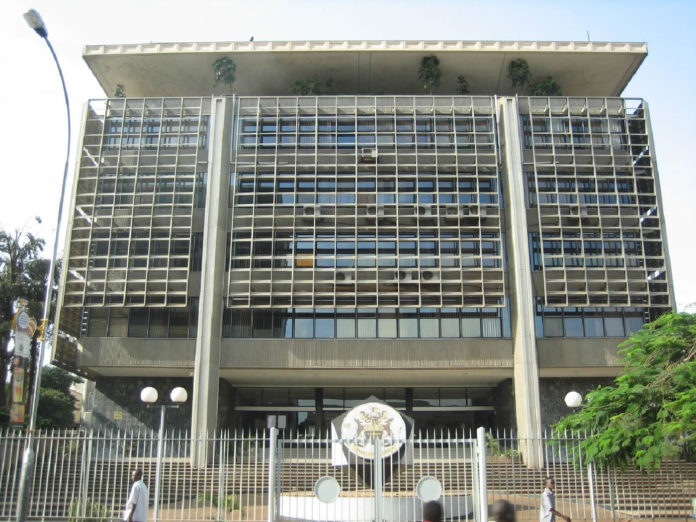
Bank of Uganda

By Our Reporter

Central banks increased reserve holdings of equities beyond US$1trillion last year as they joined return-hungry investors worldwide in accelerating purchases of higher-risk instruments to compensate for low yields on traditional sovereign investments.

Yield-enhancing central bank investments in equities, corporate bonds and emerging market currencies, maintained despite weaker stock markets last year, look set to continue, with more than a quarter of central banks declaring their intent to boost riskier investments in 2020-21.

Decisive changes in central banks’ investment behaviour, revealed in a study by monetary policy think tank The Official Monetary and Financial Institutions Forum (OMFIF), accompanied a US$1.4 trillion rise last year to US$37.8 trillion in total assets of Global Public Investors – 750 central banks, sovereign funds and public pension funds from 183 countries.

This is part of a wider trend, extended now over several years, under which GPIs are increasingly diversifying portfolios – including into illiquid ‘real economy’ assets such as real estate and infrastructure – to make up for low returns on traditional assets.

OMFIF’s latest annual report – Global Public Investor 2019, published on June 12, 2019 – is the largest and most comprehensive worldwide survey of public sector investment institutions owning or managing assets equivalent to 43 percent of global GDP. Asian GPIs, led by institutions such as the People’s Bank of China, Japan’s Government Pension Investment Fund, Bank of Japan, Hong Kong Monetary Authority and Singapore’s GIC retain top position with cumulative assets under management of US$14.3 trillion. The central banks with some of the largest publicised equity holdings include the Swiss National Bank, Bank of Korea and Bank of Israel.

The OMFIF report underlines the largely unforeseen reverberations of central banks’ post-crisis easing policies. Declining yields have damaged central banks’ reserves income and, in part, their independence, driving them towards higher returns on riskier investments, possibly exacerbating overheated markets.

Global Public Investor 2019 contains special reports on topics such as central banks and climate change, Islamic finance, central bank communications policies and the gold market. It includes OMFIF’s annual study of countries’ net international investment positions, with the imbalance between creditor and debtor nations widening in 2018 to a record US$33.8 trillion. The US is by far the world’s largest net debtor (US$9.6 trillion), and Japan the biggest net creditor (US$3.1 trillion). Germany (US$2.3 trillion), which has taken over from China (US$1.7 trillion) as the world’s No.2 net creditor, is the only non-Asian country in the world’s top five creditor nations.

Research for the 2019 edition, the sixth, was complemented by OMFIF’s largest survey to date, encompassing institutions collectively managing US$17.9tn of assets answering 87 detailed questions. The responses show that some public investors, concerned about a potential global downturn and its impact on their portfolios, are rebalancing their investments into more traditional assets. ‘We believe we are in a later stage of the business cycle. For that reason, we reduced our equity allocation,’ said one public pension fund.

But overall, the build-up in riskier assets looks set to gain fresh momentum. Of the GPIs surveyed, 24 percent intend to expand their equity investments, with the percentage share largest among the central banks especially from Europe, and 15 percent are likely to increase allocations to corporate bonds, infrastructure and real estate.

Among central banks 39 percent say they are taking more risk to pursue greater returns, while an additional 43 percent increased their risk budget and are moving into higher-yielding assets, and 22 percent of central banks have changed their risk frameworks.

Stories Continues after ad

Uganda confirms Ebola outbreak

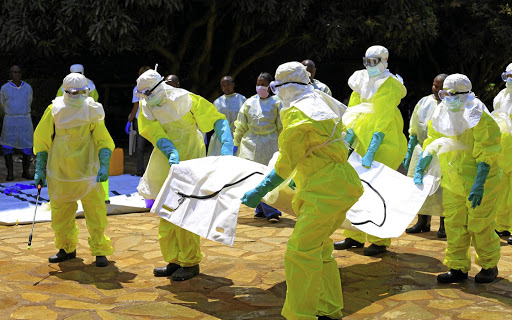
Congolese officials and the World Health Organization officials wear protective suits as they participate in a training against the Ebola virus near the town of Beni in North Kivu province of the Democratic Republic of Congo, August 11, 2018. REUTERS/Samuel Mambo

Ministry of Health and World Health Organisation has confirmed one case of Ebola outbreak in the East African country ten months after the case was reported in the Democratic Republic of Congo.

Health Minister, ruth Aceng confirmed the outbreak and said the ministry had sent health experts to the western district of Kasese neighbouring DRC.

“The confirmed case is a 5-year-old Congolese child who traveled from the DRC with his family on 9th June 2019. The child and his family entered the country through Bwera Border post and sought medical care,” Aceng said in a press conference at 9:00pm on Tuesday.

Aceng said the Ministry of health and World Health Organisation have sent a team to Kasese to trace cases and vaccinate those who may have come into contact with the patient.

Stories Continues after ad

Museveni reshuffles SFC

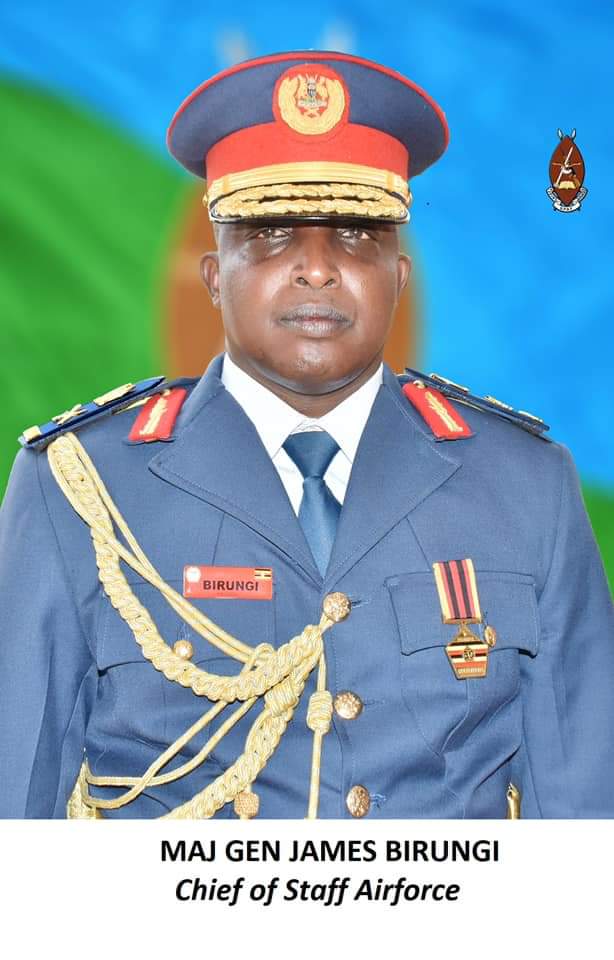
Maj Gen Don Nabaasa has been replaced by Maj. James Birungi. Maj Gen Don Nabaasa was sent for course in China.

Gen. Nabasa took over as the commandant of Special Forces Command in January 2017 from Lt.Gen Muhoozi Kaineruga who is now Senior Presidential Advisor on Special Operations.

He is remembered for storming parliament to over see the enactment of the  constitution to remove age limit cap that saw several members of parliament arrested and beaten

Stories Continues after ad

Police arrest armed robber in city operation as two guns are recover

Police have arrested armed robber

The Police at the Central Police Station in Kampala are holding one suspect in connection with the recent armed robberies in the city and its suburbs.

Stanley Mulunda was arrested after police raided his rented house at Masanafu near the Kampala northern bypass.

His partner, Richard Kasirye, fled during a fire exchange that left one of the policemen injured in the leg.

Kampala Metropolitan Police spokesman Patrick Onyango confirmed the incident.

A number plate (UAM 046J), 30 live ammunitions, two magazines, two SMG guns, court documents and a hammer were recovered from Mulunda’s house.

Onyango said a big reward awaits any member of the public with information leading to arrest of Kasirye.

Onyango said that the officer disabled during the operation is ‘out of danger’.

Stories Continues after ad

Former LoP mourns death of Rwenzururu Queen Mother, says kingdom still under threat

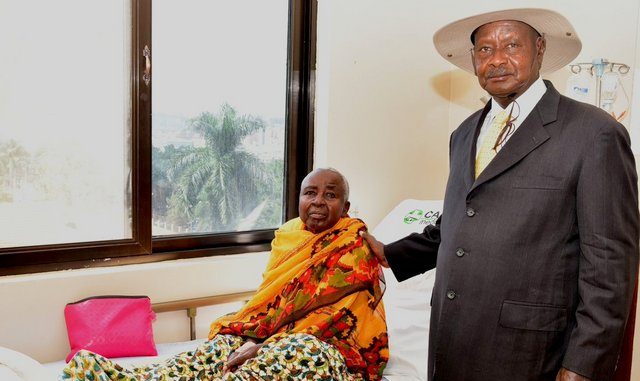
Ms. Christine Biira Mukirania seen here at Case Clinic with President Museveni. Mr. Museveni had paid a visit to her.

The former leader of opposition in Parliament who doubles as Kasese woman MP, Winnie Kiiza, has mourned the passing on of the Rwenzururu Queen Mother (Nyamukama), Her Royal Highness, Christine Biira Mukirania.

Mrs. Christine Biira Mukirania who died today morning was the mother of His Majesty, the Omusinga of Rwenzururu, Charles Wesley Mumbere and state minister of agriculture Godfrey Kibazaanga.

“It’s unfortunate that she has died at a time when our identity is still under threat, her counsel, efforts and motherly love for Rwenzori will surely be missed,” Ms Kiiza said, adding that the late’s legacy stands as a symbol of patience and persistence during the kingdom’s trying moments.

The Queen Mother died at Kilembe Hospital where she had been admitted. She was first admitted in the Intensive Care Unit of Case Hospital in Kampala where registered improvement and was discharged. She has been battling cancer since early this year.

“I send our deepest condolences to the Mukirania family and the Banyarwenzuru and Banyarwenzuru at this difficult time.” She said, “Biira has been instrumental in spearheading peace and reconciliation in the Rwenzori region since the 2016 clashes between the royal guards and the army,” the former LoP said.

Kiiza said that the kingdom celebrates the extraordinary life of the woman who devoted her life to guard, serve and jealously fight for the identity of the Bakonzo.

Kiiza was at the forefront when kingdom leaders and area MPs petitioned international criminal court calling for investigations and prosecution of army offices led by Maj Gen. Charles Elwelu who in 2016 commanded the force that attacked the King’s palace, leading to the death of over 100 people.

During the clashes, Rwenzururu king Charles Wesley Mumbere, his premier Thembo Kitsumbire and subjects were arrested and tried over allegations that they allied with the other forces from DR Congo, seeking for the creation of the Yiira Republic.

They were however released on bail and slummed with restrictions on not stepping in Kasese till their case is disposed of.

Stories Continues after ad