Stanbic Bank
Stanbic Bank
27.6 C
Kampala
Stanbic Bank
Stanbic Bank
Home Blog Page 1270

US Africa envoy to visit Sudan amid crisis to encourage talks

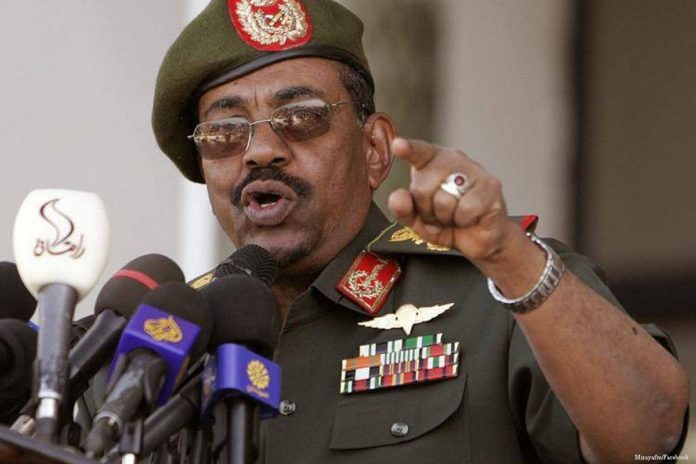
Former Sudan President Omar Al Bashir

The top US diplomat for Africa is going to Sudan this week amid the unrest there, the state department says.

Tibor Nagy, the US assistant secretary for Africa, will “call for a cessation of attacks against civilians”.

Workers have staged a national strike, which began on Sunday, to pressurise the ruling military government to make way for civilian rule.

Four people were killed on the first day of the strike after security forces fired tear gas and live ammunition.

The state department said Mr Nagy would “urge parties to work towards creating an enabling environment” for talks between the two sides to resume.

He will also discuss the situation with the Ethiopian Prime Minister, Abiy Ahmed, who has been trying to mediate between the military council and the opposition in Sudan, before later travelling to Mozambique and South Africa.

What happened during the strike?
Monday remained quiet in Khartoum, although some businesses started to reopen and a few buses were running.

Most shops, markets and banks in the capital, as well as in several other cities, remained closed on Monday as staff followed instructions from the Sudanese Professionals Association (SPA), the pro-democracy opposition, to not attend work.

Africa Live: Updates on this and other stories from the continent
Sudan’s violent political crisis explained
The warlord who may control Sudan’s future
The SPA called the strike after more than 100 peaceful protesters were killed by a paramilitary group, the Rapid Support Forces (RSF), on 3 June.

“The civil disobedience movement will begin Sunday and end only when a civilian government announces itself in power on state television,” the SPA said in a statement.

“Disobedience is a peaceful act capable of bringing to its knees the most powerful weapons arsenal in the world.”

Protesters have set up roadblocks across the capital. Social media users with access to a connection reported that the country’s internet was blocked by the ruling military government.

In another development, three rebel leaders were deported from the city to South Sudan.

One of the three, Yasir Arman, had only returned to Sudan last month after years in exile after he was sentenced to death in absentia.

The health ministry minder told us to follow him so that we could see the hospital’s ransacked laboratory: smashed sample tubes and more scattered files. The spokesman for the ministry, Hassan Abudulla, said this had all been the work of the protesters. They had broken in and destroyed equipment. He seemed to me to be speaking from a pre-prepared script. So I asked a question.

Q: Do you honestly believe that the violence and destruction was caused by protesters and not by men with guns?

A: I can’t be certain. The attack happened. I can’t be certain who has done it. I don’t know exactly who has done it… Everything here has been destroyed.

I wandered outside. As it happened there were some witnesses in the area. For their safety I am concealing their identities. The picture they painted was very different to the official narrative.

One man who had been there when the attack happened said that between 100 and 150 militia had descended on the building at around 05:00 on 3 June. This was as the assault was being launched on the protesters in front of military headquarters nearby. His account was confirmed by a second eyewitness.

“They swore at us and beat us… They broke into the safe and took all the money. They left nothing at all. Then they smashed everything up. They left nothing unbroken,” he told me. The witness had his watch and wallet stolen by the militia.

What happens next?

The military ousted long-time President Omar al-Bashir in April following months of protests against him. A military council promised a transition to civilian rule.

But pro-democracy campaigners say the military council cannot be trusted after Monday’s crackdown against a sit-in demonstration in Khartoum – and they have rejected an offer of talks.

However, according to Reuters news agency, opposition leaders have drawn up plans for a transitional government led by a prominent economist.

Quoting an anonymous source from the alliance of opposition and protest groups, the news agency said they will nominate Abdullah Hamdouk, a former executive secretary for the UN Economic Commission for Africa, to be prime minister.

They are also reportedly planning to nominate another eight people, including three women, to sit on a transitional council.

During a visit to Khartoum last week, Ethiopian Prime Minister Abiy Ahmed suggested something similar: a 15-person transitional council made up of eight civilians and seven army of

Stories Continues after ad

Money changers stuck with billions of Kenyan shillings as BoU declines to accept them

Central Bank of Kenya Governor Dr Patrick Njoroge holds new currencies notes that will replace the old notes on October 1, 2019.

Money changers in Uganda including commercial banks and forex bureaus and individuals are stuck with billions of Kenyan denominated shillings after the Bank of Uganda (BoU) announced it will not accept East Africa’s strongest currency at its counters.

BoU’s move follows a letter written by the Central Bank of Kenya (CBK) to its East African counterparts in Uganda and Tanzania explaining its move in issuing new series of Kenyan banknotes starting May 31, 2019 in a bid to fight illicit flows and counterfeits into Kenya.

BOU in a letter dated June 10, 2019 to commercial banks, says that changing Kenyan currency from old to new banknotes can only, for now, be done in Kenya. This means, anyone with old Kenyan notes in Uganda will have to carry them to Kenya to replace them for new ones subject to CBK’s guidelines.

CBK has also suspended currency conversion and repatriation of Kenyan currency.

“In light of the new developments the Bank of Uganda…will not accept Kenya shillings with immediate effect,” said Charles Malinga Akol, BoU’s Executive Director Operations.

Akol in a letter advised commercial banks to do an enhanced due-diligence on Kenyan currency given the recent changes it has undergone.

Bankers this website talked said they have billions of shillings of the Kenyan old currency but said they were talking to Kenyan authorities to see how to convert them into new ones. “We are working on that issue with the Kenyan authorities and soon we shall inform our clients,” said an executive of one of the leading commercial banks in Uganda.

Meanwhile, the Bank of Tanzania has also frozen exchange of Kenyan bank notes with immediate effect.

The announcement is a blow to perpetrators of illicit financial flows who have sneaked huge amount of Kenyan currency into Uganda and Kenya, hoping to launder it into local currencies.

It is also a big blow to Kenyan traders seeking to exchange money to trade in Tanzania and Uganda.

Kenya unveiled new bank notes to the public on June 1 and announced plans to phase out old generation Shs1000 notes by October 1.

Speaking to journalists in Nairobi on June 3, CBK Governor Patrick Njoroge said he will be reaching other regulators in the region to ensure a smooth transition from old to new bank notes.

‘’We are going to work closely with every stakeholder in the financial sector including our sister Central Banks in the region to ensure a smooth transaction and fight against illicit financial flows,’’ Njoroge said.

Stories Continues after ad

Rotary announces $100 million to eradicate polio

Rotary is giving US $100 million in grants to support the global effort to end polio, a vaccine-preventable disease that once paralysed hundreds of thousands of children each year.

The funding comes as Rotary and its partners in the Global Polio Eradication Initiative (GPEI) address the final—and most pressing—challenges to ending poliovirus transmission, and as Nigeria approaches three years without any reported cases of wild poliovirus, bringing the Africa region closer to polio-free status.

“Routine immunization in high-risk states is helping us prevent new cases of wild polio,” said Dr. Tunji Funsho, chair or Rotary’s Nigeria PolioPlus Committee. “Although the polio infrastructure has become stronger and allows us to also respond to other serious health concerns, we must remain committed to ensuring the political and financial support necessary to ending polio in Nigeria and around the globe for good.”

While there were only 33 cases of wild poliovirus reported in 2018, the last mile of eradication has proven to be the most difficult. Barriers to eradication–like weak health systems, insecurity, and mobile and remote populations–must be overcome. As long as a single child has polio, all children are at risk, which underscores the need for continued funding and commitment to eradication.

To support polio eradication efforts in endemic countries, Rotary is allocating half the funds it announced today to: Afghanistan ($16.3 million), Nigeria ($10.2 million), and Pakistan ($25.2million).

Additional funding will support efforts to keep vulnerable countries polio-free: Chad ($102,395), Democratic Republic of the Congo ($9.5 million), Ethiopia ($2.6 million), Iraq ($6 million), Kenya ($6.3 million), Mali ($1.2 million), Somalia ($1.4 million), South Sudan ($1.2 million), Syria ($1.7 million) and Yemen ($2.1 million)

The World Health Organization (WHO) will receive $1.3 million to conduct research, and will also receive support for surveillance activities in its Africa ($10.9 million) and Eastern Mediterranean ($4 million) Regions.

Rotary has committed to raising $50 million a year to be matched 2-to-1 by the Bill and Melinda Gates Foundation, amounting to $150 million for polio eradication annually. Rotary has contributed more than $1.9 billion to fight the disease, including matching funds from the Gates Foundation, and countless volunteer hours since launching its polio eradication program, PolioPlus, in 1985.

In 1988, Rotary became a spearheading partner in the Global Polio Eradication Initiative with the World Health Organization, UNICEF, and the U.S. Centers for Disease Control and Prevention. The Gates Foundation later joined. Since the initiative launched, the incidence of polio has plummeted by more than 99.9 percent, from about 350,000 cases in 1988 to 33 cases of wild poliovirus in 2018.

Stories Continues after ad

Police officer remanded to Luzira for defiling 16-year old girl

A police officer attached to Mawanda Road Police Station has been charged and remanded to Luzira government prison for defiling a defilement victim while in police custody.

Prosecution states that on the 25th of May 2019 at Mawanda Road Police Station in Kampala, 29-year-old police constable Samuel Okot performed a sexual act with a 16-year old girl who was a victim of defilement held under the police custody.

Stories Continues after ad

Heroes Day: Gov’t rewards UPDF officers who blocked Bamugemereire from accessing Mutungo land

Bamugemereire trying to argue with the UPDF soldiers in February

Government has rewarded Uganda people’s Defence Forces (UPDF) officers who in early February blocked the land probe team led by Justice Catherine Bamugemereire from accessing the disputed land in Mutungo. They were decorated with Rwenzori medals.

The officers include; Cpl Julius Katuriba who was the commandant on that day, Cpl Kanyikira Robert and Tumusiime Veneranda. They are attached to External Security Organisation (ESO).

Yesterday, President Yoweri Museveni awarded them for the exceptional, courage and professionalism with which these officers conducted themselves during a scuffle with the head of the Commission of Inquiry into land matters.

The soldiers are part of the 100 people in the various categories decorated during Heroes Day celebration at Kasanje town council in Wakiso District on Sunday.

According to government spokesperson, Ofwono Opondo, because of the meticulous way they conducted themselves, the President decided to confer on them meritorious awards. “They refused to be disarmed by people who are not their commanders. This clearly proved that the officers had a command,” he said.

“The Commander on duty that day was Sergeant Julius Katuriba, who was given the Rwenzori star, the third highest military decoration for distinguished or exemplary military service,” said Mr. Opondo

Opondo said government embraces the commission’s work however it has to seek protocol in line with the execution of its duties.

Justice Catherine Bamugemereire, and her team had gone to access a 639 acres of land in Mutungo zone I, II, III and IV. The land is on Block 237 Plot 67, 48, 29 and 59 where ESO intends to build its headquarters.

Media Centre boss, Ofwono Opondo unavailing the soldiers to the press.

The contested land was sold by Dr Muhammad Kasasa to ESO at Shs2.4b but he said he has never been paid and the money only exists on paper.

Prince Wasajja reported Dr Kasasa to the Commission accusing him of grabbing 639 acres of land from the estate of his late father King Edward Muteesa II. The land on Block 237 in Mutungo was registered in Kabaka Muteesa’s name on February 12, 1946.

The officers blocked the commission to access contested land saying they have to first call their bosses before letting them in and a move that was rejected by the commission chairperson.

This prompted Cpl Julius Katuriba, to cock his gun. He was surrounded by ant- terrorism police officers attached to the commission to snatch a loaded magazine (bullet pack) from his gun.

The Commissions of Inquiry was establishes in 2016 inquire into the effectiveness of law, policies and processes of land acquisition, land administration, land management and land registration in Uganda.

Stories Continues after ad

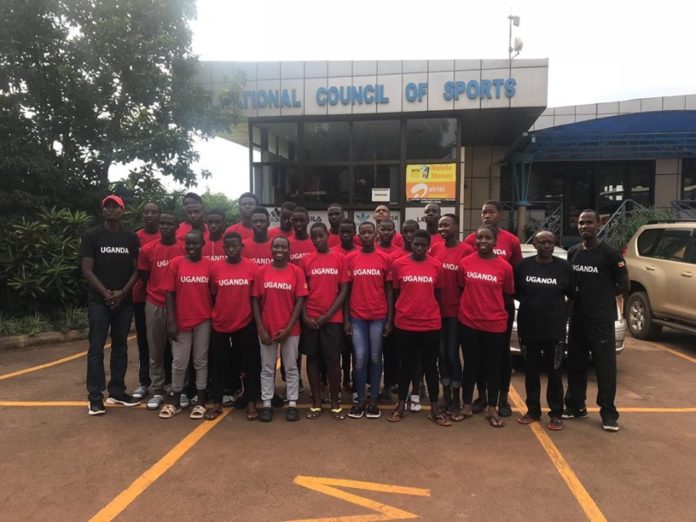
Uganda Basketball Junior teams in Rwanda for U16 Afrobasket Zone V Games

FUBA-Uganda team

The U16 Uganda Basketball National Teams (boys and girls) are in Kigali, Rwanda for the upcoming Afrobasket Zone 5 Games that double as the FIBA Africa U16 Nations Championships Qualifiers.

The tournament will take place from June 10-15, 2019.

The teams will face competition from participating nations in the Zone 5 category which include; Burundi, Egypt, Rwanda, Kenya, Tanzania, Somalia, South Sudan, Sudan, Eritrea and Ethiopia.

The boys underwent training at Gems Cambridge (non-residential) while a residential camp for the girls was at the African Bible University in Lubowa.

Both sides will need to finish among the top teams in the zone V championships to qualify for the FIBA Africa U16 Nations Championship 2019 edition in Cape Verde.

This is the first time that Uganda are competing in the U16 for both boys and girls. It is in the federation’s plan that majority of this group is kept together as a unit and competes in the U18 next year.

The Junior Silverbacks team consists of 18 players while the Junior Gazelles team has 15 players.

The teams:

Boys (Junior Silverbacks): Valentino Labeja, Musoke Muwanguzi Luswata Owor, Karugire Mugina Tibuhaburwa, Rwabwogo Mumutiine Rubanza, Alexi Twahili, Anguci Dralega, Mpungu Cyril Francis Akusambirekubo, Justine Evan Odoch, Moustapha Lalani, Micah Owiny Abraham Agoroachai, Joel Andinda, Sharma Suubi, Andrew Ssendawula, Roland Muwanguzi Waliggo, Frank Elvis Tumusiime, Adrian Nsokwa David, Adakun Elijah Obware, Harold Amara.

Coaches: Ronald Mutebi and Henry Malinga.

Girls (Junior Gazelles): Esther Kwagala, Mary Najjuma, Linda Aber, Shillah Lamunu, Patience Karungi, Gertrude Nyamutooro, Sylvia Nasagorworth, Sylvia Namuddu, Rwabogo Kendagano, Regina Ajuma, Penitah Nabakooza, Patience Nantume, Gift Naluyima Bisoboka, Mary Najuma, Alinda Mutabazi

Coaches: Roger Sserunyigo and Harriet Lubowa.

Stories Continues after ad

Bunyoro Kingdom readies for 25th coronation anniversary of Omukama Solomon Gafabusa Iguru

His Majesty Rukirabasaija Agutamba Solomon Gafabusa Iguru and the Queen.

Bunyoro Kitara Kingdom is in preparations for 25th coronation anniversary of His Royal Majesty Omukama Dr. Solomon Gafabusa Iguru I slated for tomorrow at the Karuziika Royal Palace in Hoima district.

The reigning King Dr. Solomon Gafabusa Iguru I, first performed this ritual on the June 11, 1994 thus it has been an annual remarkable day up to date. Empango is the first ritual the Omukama (King) performs as he is crowned.

According to Apollo Rwamparo, the kingdom’s second deputy prime minister, Empango celebrations is always punctuated by a series of activities which include among others ‘Omujaato event’ which entails bull roasting as various companies promote their brands throughout the night.

He other events include sounding of the Royal Drum by His Majesty at 3:00 am on the eve of the anniversary and the main event that will take place tomorrow and will be graced by cultural dances from the Omukama’s subjects and speeches from various government and international dignitaries and envoys.

“When all is done, this all climaxes into the Grand Empango Dance which is opened by His Majesty by re-sounding the Royal drum at Nyamyaro at exactly 3:00pm and this continues until dawn.” He said

Annually the Empango anniversary draws close to 2,000,000 people who grace the occasion from across Uganda, regionally Bunyoro receives huge entourages from Congo, Nigeria Tanzania, South Africa Kenya and across the world.

Other activities entail;

The Cultural Promotion week normally conducted at the Rukurato Hall Gardens in which various corporate companies, Non-Governmental Organizations, Schools and Colleges, Universities, Cultural Troupes and Groups exhibit. Clan heads bring totems to various clans live at the exhibition. This segment also entails the “Ekyoto” the African Ancient Fire Place where children would be taught about their culture and very many other activities

Coronation Prayers at Bunyoro Kitara Diocese St. Peters Cathedral Duhaga Hoima. Empango Marathon, Health Camp, Hoima town Clean up, Tree planting, Musaija Mukuru Hill climbing, Budongo Forest nature walks/hiking, The Kabalega Royal mile hiking and Bird watching, Murchison Falls Game drives, Chimpanzee trekking ,Kibiro hot springs and salt works among others.

Stories Continues after ad

Young Africans become second team to withdraw from 2019 Ceacafa Kagame Cup

Young Africans

Young Africans Sports Club of Tanzania have become the second team to pull out of the 2019 Cecafa Kagame Cup due in Rwanda.

In a statement posted on their Facebook page, Yanga, as popularly known, cited the reasons why it would be hard for them to honour the invitation days after their mainland rivals Simba SC withdrew from the competition.

“Yanga SC would like to inform you (Cecafa) that we will not be able to participate in the upcoming Cecafa Kagame Cup of 2019 due to the following reasons.” part of the letter reads.

“A number of our players have their contracts with the club ending soon and the players we have earmarked to sign are still engaged with their parent clubs. And that some of our players and the coach will be part of the national team (Taifa Stars) who are in Egypt for the Afcon finals.

“The rest of the players have been allowed to attend to their pre-season break and thus are not available for club duties. For the above-stated reasons, it will be hard for Yanga SC to participate in the upcoming Cecafa Kagame Cup.”

Zesco United of Zambia and AS Vita, and Motema Pembe from the Democratic Republic of Congo confirmed their participation in the tournament.

Ugandan Premier League (UPL) champions KCCA will be the country’s representatives and confirmed their participation. Rayon Sports, APR and Mukura will represent Rwanda, while the Gor Mahia and Bandari are expected to represent Kenya.

Azam of Tanzania are the defending champions after they beat Simba SC 2-1 in Dar es Salaam last year.

The winner of this year’s tournament will take home prize money worth USD 30,000. It will be played from July 7th to 21st.

Stories Continues after ad

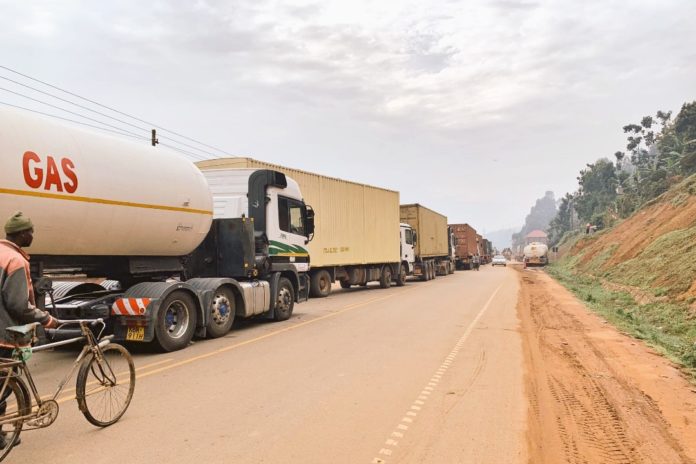
Rwanda temporarily re-opens its Gatuna border to heavy trucks

Trucks on-Uganda-Rwanda border

Rwanda has temporarily reopened its border at Gatuna for heavy trucks after it closed it in February this year due to road repairs that resulted in the diversion of heavy trucks to use other border points though Rwanda would later block entry of Ugandan goods on grounds that Kampala was supporting dissidents opposed to Kigali.

According to a statement released by the commissioner General of Rwanda Revenue Authority, Pascal Bizimana Ruganintwali, Rwanda Transport Development Agency (RTDA) petitioned revenue body to allow heavy trucks movement at Gatuna border from June 10-22, 201 to assess the operational of the constructed roads before reception by government.

“The management of Rwanda revenue authority is pleased to inform the general public that heavy trucks are allowed to provisionally cross Gatuna border point in order to facilitate this trial as requested by RTDA,” he said.

Analysts say Rwanda has run out of some items since it imports most of the products such as cement, still, food items and others which were blocked from entering within its borders.

The relationship between the two states is reportedly frosty following a series of events which officials from both countries said were aimed at undermining each other’s sovereignty.

Currently, there is raging border tensions between Uganda and Rwanda where Paul Kagame posed travel and blocking good from entering into the country, a move that contradicts the intentions that led to the formation of east African community (EAC), particularly the Common Market Protocol which allows free movement of goods and people across borders of EAC member countries.

Kagame’s government has always accused Museveni of facilitating the dissident group, Rwanda national congress (RNC) allegedly led by Gen Kayumba Nyamwasa who lives in South Africa.

“We have the information that Gen. Nyamwasa has for several times been travelling into the region including Uganda to meet some authorities and that is where our concern is,” he said Rwanda’s State Minister for East African Affairs, Olivier Nduhungirehe in march 2019 while in Zanzibar.

Recently Museveni and Kagame met in South Africa during the inauguration ceremony of President Cyril Ramaphosa.

Stories Continues after ad

How to tune business strategy for long-term success

Martin Zwilling

By Martin Zwilling

The biggest challenge these days doesn’t seem to be in starting a new business, but sustaining it against the onslaught of market changes and new competitors that emerge every day. Yet, as an angel investor, I still see too many new business owners who are convinced that their biggest challenge is to get money to start, and once launched with some initial success, they can relax.

In my other role of business advisor, I see examples often of startups that may have taken success for granted too early. A recent high-profile one, Theranos, the blood-testing company, had no trouble getting customers, but promised more than their technology could deliver, Another, Shyp, an early on-demand delivery platform, blamed their demise on premature scaling.

The keys to sustainable success require you to retain that sense of urgency, focus, and vigilance after the launch that you felt during the development and early funding stages. That starts with initially building a solid business strategy, including a strong support system for scalability, long-term leadership, and adaptability. In my view, this strategy must include the following elements:

Define and communicate a purpose and destination. Your constituents can’t plot a journey if they aren’t sure where they are going or why. For a successful launch and scalable growth, they need to establish many checkpoints, with metrics to assess their progress and alignment with the vision. Don’t let that communication fade post-launch.

Build and nurture a team culture of trust and leadership. You and your business won’t be able to sustain a position of leadership without everyone on the customer-facing team being willing and able to emulate your lead. That requires trust and respect from all, as well as constant coaching and development to keep them committed to following you.

Demand continuous innovation to keep up with change. Change is the only constant in a successful business, to keep up with new competitors and new customer demands. Innovation must be applied to your business model, your processes, as well as your product offering. Aim to obsolete your own products with new, before competitors do it.

Make sustainability a key design objective for every step. You may start with prototype products, but you need rock-solid processes for successful growth and agility. Seek out the best practices in the industry, and improve them for your business. Recognize that every successful journey is long and hard, so don’t cut corners now.

Hire the best people and continually upgrade your team. A big mistake often made in the rush to scale is to shortcut the hiring and training processes, to get out there fast, assuming that the team can learn on the job. Look for team players who can collaborate with others, and make sure everyone has the training and tools to do the job.

Seek out strategic partnerships and collaboration. When you finally get that funding for scaling, it may be tempting to do everything yourself, to keep control and do it faster. The problem is that you may not have the experience or connections to jump into new customer segments, manufacturing, and distribution. Capitalize on what already exists.

Focus on existing customer retention and repeat business. For sustainable growth, don’t forget that, according to data from the field, it is five times as expensive to gain a new customer than retain an existing one, and a returning customer purchases 30 percent more items and brings in three to seven times more revenue per transaction.

Build your brand equity and relationships with customers. As a startup, you have no brand recognition, but long-term sustainability requires a powerful brand. These days, brand equity means relationships with more customers, and a more memorable overall experience. Your brand-loyal customer advocates can be your exponential marketing.

Never stop hunting for new opportunities and new markets. Initial success breeds complacency. While a laser focus is necessary to get your startup off the ground, long-term success requires a broad and ever-changing product line, target audience, and geographic focus. Don’t be a “one-trick pony” that fades into oblivion as time passes.

Congratulations are definitely appropriate for a successful new business launch, but it’s not the time to relax or take your eye off the ball. A sustainable business, with long-term success, is a different and never-ending challenge, requiring additional strategies as outlined here. Don’t wait for a business crisis to get started. As many have found out, recoveries are not always possible.

The writer is a veteran startup mentor, executive, blogger, author, tech professional, professor, and investor. Published on Forbes, Entrepreneur, Inc, Huffington Post.

Stories Continues after ad