Stanbic Bank
Stanbic Bank
19 C
Kampala
Stanbic Bank
Stanbic Bank
Home Blog Page 1271

PAP calls for internal democracy in political parties

MIDRAND, SOUTH AFRICA: The Pan African Parliament (PAP) has called for internal democracy in political parties in order to build proper democracy at national level.

Debating a report on political parties building vibrant and inclusive democracies in Africa, PAP recommended that political parties should continue to be the champions of the rule of law and strong advocates of the resolution of existing electoral conflicts.

The report was presented by Aboubacar Sidiki Kone, the Chairperson of the Committee on Cooperation, International Relations and Conflict Resolution and considered during a sitting chaired by PAP President Roger Nkodo on Thursday, 16 May 2019.
The report was out of a workshop on elections and democracies held in Midrand, South Africa in March.

During the workshop, members observed that informal actors with an interest in the incumbency or regime change, influence of foreign interests, and an unequal ground between the opposition and ruling parties as some of the challenges faced in organising and holding elections in Africa.
In the debate, members said that although some progress has been made in democracy in Africa, a lot still has to be done to reduce the violence exhibited at election time.

James Kakooza said that there was need for politicians and political parties to be accommodative and not to view their opponents as enemies. He called for better civic education ahead of elections to provide the requisite information and knowledge about the process, candidates and parties.

“We need to emphasise this and have people stop viewing persons in other parties as their enemies but take it as a matter of principle and choice to belong to a different party,” he said.
Prof. Ogenga Latigo commended South Africa, the hosts of the PAP, for holding what turned out to be a hugely successful election last week. He appealed to other countries to copy the country’s example and also provide for voters to be able to vote from anywhere in the country.

Members blamed the high contestation and level of violence during elections in most African countries on the ‘winner takes all’ system, where losers are not considered in the new government.

Members urged political parties to develop policies aimed at fostering inclusivity especially in national resources, public services, job opportunities and public contracts when forming governments. They also recommended that parties develop internal affirmative action policies that will ensure that women and youth are adequately included in the political process.

It was also recommended that political parties develop and implement their own internal code of conduct that will, among others, penalise electoral offenders.

ENDS

Stories Continues after ad

Kansai Plascon, Kyetume to battle for remaining Uganda Premier League slot

FUFA big league

Kansai Plascon FC will take on Kyetume FC on Saturday 18th May 2019 at StarTimes Lugogo in the Fufa Big League promoitional play-off final.

The winner will join Wakiso Giants FC and Proline FC as the three promoted clubs for the 2019/20 StarTimes Uganda Premier League season.

Kyetume FC defeated Dove Football Club 3-2 in penalty shootouts after normal time ended in a two-all draw.

Ali Ngongo and an own goal from Wahab Lwanga gave Kyetume the advantage but Ronald Kyamunywa’s goal and goalkeeper Hussein Ndungwa’s penalty in added time for Dove FC forced the game into penalties.

In the other game played at the same venue, Kansai Plascon ejected the army side UPDF FC in the kicks from the penalty mark after a one all draw in the 90 minutes.

Both goals came in the second half after a goalless first half. Henry Kitegenyi of Kansai Plascon put the hosts ahead with a superb header in the 82nd but later leveled by Muwonge Amos who scored a memorable goal in the added minutes of the game.

Kansai Plascon converted five (5) out of six(6) while UPDF converted four(4) out of six of their kicks from the penalty mark.

Ndejje University FC, Nyamitobora FC and Paidha Black Angels SC are the three clubs that were relegated from the Uganda Premier League.

Saturday, 18 May 2019

Promotional play-off final

Kansai Plascon vs Kyetume FC – 2pm

Fufa Big League final

Wakiso Giants vs Proline – 4pm

Stories Continues after ad

Catholic Church set for Africa Bishop SECAM Golden Jubilee

Ruhinda South MP Thomas Tayebwa receives a portrait of Pope Francis from UEC Chairman Bishop Antony Zziwa as SECAM Vice President, Bishop Mathieu Madega, of Mouila, Gabon

KAMPALA – The Catholic Church in Uganda is ready to host the Golden Jubilee Celebrations of the African Bishops Assembly under SECAM, due in country July 19-29 this year, Bishop Joseph Antony Zziwa, and the Chairman of the Uganda Episcopal Conference has said.

Bishop Zziwa says the country expects over 400 international guests that have confirmed to attend the celebrations to mark the 50 years of The Symposium of Episcopal Conferences of Africa and Madagascar (SECAM), with delegates from Africa, Europe, the US, Asia, and others.

The delegates include Cardinals Archbishops and Bishops. Pope Francis had been invited to preside over the celebrations but earlier in the year, the Pontiff informed President Museveni that he was not able to make it.

It is understood that the Pope will be represented by a delegation from Vatican, which is likely to include the African Cardinals serving at the Holy See — Peter Turkson from Ghana, Robert Sarah Guinea, and Archbishop Protase Rugambwa of Tanzania, who works as the Secretary for the of the Congregation for the Evangelization of Peoples at the Vatican.

On May 10, Bishop Zziwa launched a fundraising drive at Sheraton Hotel, Kampala, intended to raise about UGX one billion that is needed as part of the local church’s support to organising of the celebrations and praised the role of the laity Christians in supporting the church. “The SECAM Golden Jubilee will require some funding and it is for that reason that we are gathered here to look for support of individual companies and other people of good will to assist us in raising about four billion (Shs4 billion), which is our budget. The funds will be used for accommodation, upkeep, food and transport of the delegates and organization,” Bishop Zziwa, who was flanked by SECAM Vice President, Bishop Mathieu Madega, of Mouila, Gabon and SECAM the Secretary-General, Fr. Joseph Komakoma said.

Eng. JB Kariisa, bought a portrait of President Museveni at Shs11 million.

The UEC Chairman said the Ugandan bishops are always happy and proud of the contribution of the laity to the growth of the Church, and for the support rendered to her projects.
Bishop Zziwa announced that a Core Organising & Planning Committee has since instituted at the begging of the year was at the forefront of the activities.

The SECAM Organising Committee is headed by Msgr. John B. Kauta, the Secretary General of the Uganda Episcopal Conference. Key Committee heads include the President of the Catholic Laity in the country Mr Gervase Ndyanabo for Protocol & Security, Fr. Dennis Lwegaba for Liturgy; Fr. Phillip Odii heads the Publicity and Communications, Ruhinda North MP Thomas Tayebwa for Finance and Fundraising, Dr. Emmanuel Kiiza Aliba for Construction and Sanination, Dr. Patrick Birungi for Transport and Ms Cissy Kagimu for Reception and Welfare.

Msgr. Kauta said the committee has been working very hard to prepare everything possible for a successful celebration. He reported that President Museveni had already donated the vestments to be used during the celebrations and had offered government’s support to pay the costs of hotel accommodation for the delegates to the celebrations.

“I want to thank the committee, and especially the Finance subcommittee under the leadership of Mr. Thomas Tayebwa, which is working very hard to make sure we organize the celebrations successfully,” he said.

The Chairman, Uganda Episcopal Conference Bishop Joseph Antony Zziwa of Kiyinda-Mityana Diocese, greets SECAM Finance Committee Chairman Ruhinda North MP, Thomas Tayebwa

During the fundraising launch, a total of Shs180 million was raised in cash and pledges. The Chief Fundraiser, King Caesar Mulenga donated Shs25 million. His financial pledge was announced by Dr. Francis Runumi, who represented him at the function.

Mr. Mulenga also bought a portrait of Pope Francis at Shs15 million. Other prominent donors included Bukedea District woman MP Anita Among (Shs20 million), Mogas Chairman Mr. Godfrey Rugazoora (Shs10 million), Centenary Bank (Shs10 million) and Eng. John Bosco Kariisa, who bought a portrait of President Museveni at Shs10 million, Gen. David Muhoozi, (Shs1 million), and Lt. Gen. Joseph Musanyufu (Shs1 million).

About SECAM:
The Symposium of Episcopal Conferences of Africa and Madagascar (SECAM) is a body that brings together all Catholic Bishops in Africa was born in Uganda at the time when St. Pope Paul VI visited the country in 1969.

It is the body that brings together all the Catholic Episcopal Conferences of Africa and the Islands to work in solidarity and collegiality at pan African level to promote the Catholic Church’s participation in education, spiritual, medical, social and economic development of the continent.

Msgr. John B. Kauta, Chairs the Catholic Church’ SECAM Core Planning Committee

It was founded in Uganda
The Bishops of Africa, during one of their recent plenaries, decided that they hold the organization’s golden jubilee celebrations here in Uganda, where it was also founded.

Stories Continues after ad

Premier League club funded by £3m loan from Osama bin Laden’s family, court hears

Osama Bin Laden

Newly promoted Premier League side Sheffield United has been funded by a £3 million loan from the family of Osama bin Laden, a court was told on Thursday, according to Daily Mail.

The Blades are in court as their club is embroiled in a power struggle between co-owners Kevin McCabe and Prince Abdullah Bin Mosaad Bin Abdulaziz Al Saud.

But on Thursday, the fourth day of the hearing, it was revealed that a £3m loan received by the club, named ‘Project Delta’, can be traced back to the family for of the former Al Qaeda figurehead.

Barrister Andreas Gledhill QC, who is leading Abdullah’s legal team, alleges that McCabe knew who the money came from.

The Sheffield Star report that Mr Gledhill said Mr McCabe ‘knew the money had come from another source, namely a member of the Bin Laden family’.

Emails from Jeremy Tutton, a colleague of Mr McCabe’s at a property business who was added to the Sheffield United board of directors in 2017, were disclosed in court, one of which said he feared the local newspaper would run a story with the headline: ‘Blades launder money for extremists’.

Mr McCabe quickly quashed the content of the email, claiming it to be ‘banter’, but Mr Gledhill contested that it confirms he knew the origin of the money.

Mr McCabe, 71, and Prince Abdullah, 54, each have a 50 per cent stake in the the Bramall Lane club, who secured promotion to the Premier League for next season.

The pair met in 2013 when Mr McCabe was seeking new investors and agreed to work together, on the proviso Prince Abdullah pumped £10m into the club, but reportedly fell out in 2017.

Mr McCabe’s company, Sheffield United Ltd, allege ‘conspiracy’ and ‘unfairly prejudicial conduct’ while Prince Abdullah’s company, UTB LLC, wants declarations in respect of its rights under an investment and shareholders’ agreement.

The trial will continue over the next few weeks.

Osama bin Laden was disowned by his family in 1994 and killed in Pakistan in 2011 by US Navy SEALs.

Sheffield United will be a Premier League team next season after earning promotion from Championship.

Stories Continues after ad
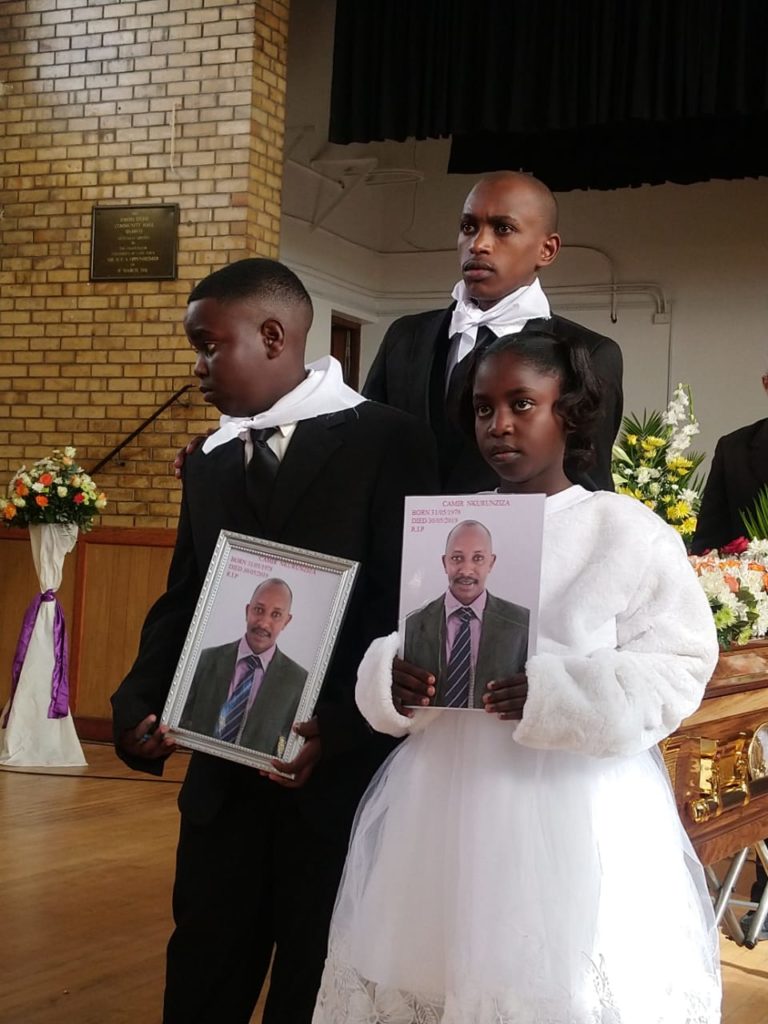
Joel Ssenyonyi is no virgin, politically speaking

Joel Ssenyonyi being unveiled

By Norbert Mao

Joel Ssenyonyi, newly appointed spokesperson for Robert Kyagulanyi and People Power, has joined the fray with a bang. He has jumped into the pool with a splash. And the noise and accompanying sprinkle is causing discomfort. In a veiled tweet (read threat) Don Wanyama declared his readiness to unleash whatever he can at Joel. In an acerbic tweet, Evelyn Anite reminded Joel of his failed attempt to become Youth MP in 2011. Others have accused him of having been a partisan political operative hiding behind the mask of media objectivity.

The truth is Joel Ssenyonyi is not being ignored. The government spin doctors, quacks and hacks have opined that Joel is part of the anti-Government sleeper cells hiding behind the veil of journalism. That argument is used to bolster the bogus and illegal attempt by the Uganda Communications Commission (UCC) to arm-twist some media houses into sacking certain journalists.

Needless to say, these arguments are bogus. Journalists like all citizens have the right to hold political views and opinions. They are only bound by the ethics of journalism as a profession. This expectation is that they are impartial. Not neutral. Impartiality is not neutrality.

But Joel Ssenyonyi is no novice. He is well read. His first degree is in Statistics from the famed Institute of Statistics and Applied Economics (ISAE). He also has over a decade of journalism experience under his belt. From his life story he also knows how to hustle. He has overcome many odds and therefore it is no surprise that he has found himself in the inner circles of the People Power honcho.

In 2017, in a widely publicized story, Ssenyonyi confessed that he was a virgin. Uganda Christian News, an in-line portal, attributed the following statement to Joel: “I’m a virgin, some people might think that maybe I do not have opportunities, or that my ‘things’ don’t function. Of opportunities, they are immense. In fact, I was about to report a police case. About the ‘things’ God blessed me with, they are working. However, just because they work, doesn’t mean I go all over putting them in every place.” This may not be a necessary qualification for his current assignment, but it speaks volumes about his self-discipline and his ability to sacrifice current pleasures for the sake of larger future goals. It also gives him an advantage since it is well known that state operatives deploy a bevy of women to tempt rising male politicians who can keep their zippers up. The reverse is also true. Some young and rising women leaders have been baited by weaponized hunks facilitated to lure them with worldly pleasures only to end up as fodder for the tabloids. Joel is thus bullet proof in this department – so far.

Another online news outlet quoted him saying “The leader in me has always been there. At one point I looked at things around me and said how can I be part of making things different? I said let me run for political office.” Rumor has it that he may run for parliament in the next elections. If that is true then his media celebrity as a news anchor and the high profile platform he has stepped on as the spokesman for Robert Kyagulanyi, has given him a head start.

Joel brings his celebrity brand to his new assignment. Expectations are high. He is expected to be knowledgeable in public affairs, public speaking and writing. A spokesperson must be a true believer. He has to be someone who shares the goals of the person or the organization he or she speaks for. A spokesperson should represent the organization’s position even when they are in conflict with his or her position.

It is hoped that Joel will be creative and bring gravitas to the job. It would be sad if there’s so much icing and no cake in his performance. He should be a spokesperson in the strict sense of the word. We don’t expect him to be a mere publicist.

Stories Continues after ad

NWSC to extend water to over 1 million people in Isingiro, Mbarara and Masaka

Eng. Silver Mugisha and Arnaud Durand from BRL Ingeniere.

The National Water and Sewerage Corporation has revealed plans to serve over 1 million people in Isingiro, Mbarara, Masaka and the surrounding areas with clean safe water, sanitation services and water for production and agriculture.

Speaking at the contract signing ceremony for 120 million Euros for South Western Cluster water and sanitation development project, NWSC Managing Director, Eng. Silver Mugisha said the project when complete will address the water supply challenges in Isingiro, Mbarara, Masaka and the surrounding areas.

“We have had a long standing water challenge in the mentioned towns. Working with the government of Uganda, Ministry of Water and Environment, Ministry of Finance and other development partners, we secured funding to implement the project. The detailed designs of the project are ongoing and work will start in August 2020 for a period of two years.” Eng. Mugisha said

Dr. Silver added that the corporation has secured more 70 million Euros for a distribution network to various parts of the districts

“The dual project, first of the kind will also provide water for production and agriculture using the same massive intake that will be installed along river Kagera on the Uganda-Tanzania border. I caution the contractors to empathize with the people suffering in this corridor and deliver the project on time.” he said

NWSC Corporation Secretary and Deputy Managing Director Board Affairs Ms Edith Kateete appreciated the support from the government, Ministry of Water and Environment and other stakeholders that have significantly contributed towards the success of the project.

Eng. Alex Gisagara the Director Engineering services at NWSC said the project is the first of the kind in water and sanitation infrastructure in Uganda.

“We are installing a massive intake along river Kagera to abstract over 680 million liters of water per day. This is the first size of abstraction the corporation has ever attempted to do. We shall then pump water 70 kilometers to Mbarara, provide water for agriculture, augment supply in Masaka among other benefits.” he said.

Project technical supervisors, Eng. Phillippe Vullien and the director Arnaud Durand from BRL Ingeniere vowed to deliver the project within stipulated time.

Picture: Silver Mugisha and Arnaud Durand from BRL Ingeniere

Stories Continues after ad

UTB, UHOA sensitize tourism stakeholders on standards

Gorillas are a major tourist attractions into Uganda.

Hotel owners and Managers have been encouraged to embrace standards if they are to improve the country’s competitiveness as a destination as well as attract more travelers.

This was one of the conclusions that were drawn up during a Uganda Tourism Board (UTB) and Uganda Hotel Owners Association (UHOA) training and sensitization workshop on registration, inspection and licensing of accommodation facilities held at the Imperial Royale Hotel in Kampala on May 15, 2019.

In his remarks, Bradford Ochieng, the Deputy Chief Executive Officer UTB said that classifying all tourist facilities in the country would enable Uganda not only enforce standards in the hospitality industry but also improve the country’s competitiveness and ability to attract visitors.

“Close to 90% of the experience of a traveler is down to an accommodation facility; be it airport shuttle service, in-land travel, conference facilities, among others. We thus view you as key partners in the tourism chain. However, we also have to remember that we are competing for the same travelers with our neighbours. Therefore, we have to critically look at our competitiveness, in terms of pricing, hygiene, standards. Potential travelers look at these and many other things before zeroing in on their preferred destination,” he said.

Adding, “That’s why as UTB, we are at the forefront of ensuring that standards are enforced in this industry. This can only be done when we know the people who are in this business and the available facilities; whether hotel, lodge, guest house, so as to plan better for the sector.”

Majority of the hotels in the central region of Uganda generally offer acceptable services to their clients while those in protected areas such as parks are perceived as good but expensive with less variety.

Suzan Muhwezi, the Chairlady of UHOA said that the process of registering, licensing and classifying accommodation facilities in the country is aimed at helping Uganda compete favorably with other hotels in the East African region and also internationally.

“As you might know, we are also positioning ourselves as the MICE (Meetings, Incentives, Conferences, and Exhibitions) destination of choice in East and Central Africa. We have therefore partnered with UTB to embark on a countrywide sensitization campaign so as to empower our members meet the expected standards by both the domestic and international market,” remarked Mrs. Muhwezi.

She also clarified that despite an earlier classification and grading exercise carried out by UTB, they were starting process afresh given that proprietors of the facilities had said they weren’t properly sensitized on what was needed of them at the time.

Muhwezi also revealed, “All tourism operators; hotels, guides, airlines, tour operators will now require a license from UTB to operate. A tourism license will be levied on everyone involved in the sector so as to have uniformity across. We shall thus sensitize all our members regarding this issue as well. We didn’t want UTB to start charging for this license before sensitizing members what it was about.”

Richard Kawere, CEO of the Uganda Tourism Association, while addressing the participants urged them to instead focus on upgrading rather than debating minimum standards.

“We should remember that, while we are still debating on the minimum standards, the world is not waiting for us. This is a very competitive industry and standards, are one of the benchmarks of measurement for people to come and visit us. Whereas we are in the same region, we are competing with neighbours for travelers, yet they already had these discussions and committed to the standards,” he said.

He however added that all hope was not lost noting that the minimum standards are coming on the backdrop of an industry that had been in existence without proper regulations or standards.

“Some people put up their properties without guidance. The question therefore is, how do they fit in? On the minimum standards, let us sure that going forward, any established that is being set up has these standards so that we no longer have to debate minimum standards but rather talk about upgrading.”

According to UTB, if a hotel establishment is given a star rating, it eases its marketing and guests will be given the right information about the establishment thereby reducing disappointments. As a result, the hotel industry will flourish because of delivering as expected, leading to guest satisfaction, repeat business, and customer loyalty among others.

The star grading system is used to rate the quality and standards of services of hotels and they vary from country to country. The hotels can be graded from one-star to five-stars based on a number of factors such as facilities, service level, location, and staff professionalism among others.

Registration and licensing of all tourist facilities by UTB is currently ongoing.

Known as the “Pearl of Africa,” Uganda is located in East Africa and offers some of the continent’s most diverse wildlife viewing, dramatic landscapes, and immersive cultural experiences and warm people and hospitality. Uganda is home to more than half the world’s population of endangered mountain gorillas, and trekking to observe these gentle giants in Bwindi Impenetrable Forest is one of the world’s top bucket list travel activities.

Safari opportunities abound in savanna, forest, and wetland settings throughout 10 national parks, where visitors can come face to face with “The Big Five” – lion, leopard, rhino, elephant, and buffalo – as well as giraffe, zebra, chimpanzee, hippopotamus, crocodile, and more than half of all bird species found in Africa. Among Uganda’s extraordinary natural attractions are the snow-capped Rwenzori Mountains; expansive Lake Victoria, which forms the source of the Nile River; and Murchison Falls National Park.

Stories Continues after ad

Adopting a healthy lifestyle helps reduce the risk of dementia

African women learn to ride bicycles

People can reduce their risk of dementia by getting regular exercise, not smoking, avoiding harmful use of alcohol, controlling their weight, eating a healthy diet, and maintaining healthy blood pressure, cholesterol and blood sugar levels, according to new guidelines issued Tuesday by the World Health Organization (WHO).

“In the next 30 years, the number of people with dementia is expected to triple,” said WHO Director-General Dr Tedros Adhanom Ghebreyesus. “We need to do everything we can to reduce our risk of dementia. The scientific evidence gathered for these Guidelines confirm what we have suspected for some time that what is good for our heart, is also good for our brain.”

The Guidelines provide the knowledge base for health-care providers to advise patients on what they can do to help prevent cognitive decline and dementia. They will also be useful for governments, policy-makers and planning authorities to guide them in developing policy and designing programmes that encourage healthy lifestyles.

The reduction of risk factors for dementia is one of several areas of action included in WHO’s Global action plan for the public health response to dementia. Other areas include: strengthening information systems for dementia; diagnosis, treatment and care; supporting carers of people with dementia; and research and innovation.

WHO’s Global Dementia Observatory, launched in December 2017, is a compilation of information about country activities and resources for dementia, such as national plans, dementia-friendly initiatives, awareness campaigns and facilities for care. Data from 21 countries, including Bangladesh, Chile, France, Japan, Jordan and Togo, have already been included, with a total of 80 countries now engaged in providing data.

Creating national policies and plans for dementia are among WHO’s key recommendations for countries in their efforts to manage this growing health challenge. During 2018, WHO provided support to countries such as Bosnia and Herzegovina, Croatia, Qatar, Slovenia and Sri Lanka to help them develop a comprehensive, multi-sectoral public health response to dementia.

An essential element of every national dementia plan is support for carers of people with dementia, said Dr Dévora Kestel, Director of the Department of Mental Health and Substance Abuse at WHO. “Dementia carers are very often family members who need to make considerable adjustments to their family and professional lives to care for their loved ones. This is why WHO created iSupport. iSupport is an online training programme providing carers of people with dementia with advice on overall management of care, dealing with behaviour changes and how to look after their own health.”

iSupport is currently being used in eight countries, with more expected to follow.

Dementia: a rapidly growing public health problem

Dementia is an illness characterized by a deterioration in cognitive function beyond what might be expected from normal ageing. It affects memory, thinking, orientation, comprehension, calculation, learning capacity, language and judgement. Dementia results from a variety of diseases and injuries that affect the brain, such as Alzheimer disease or stroke.

Dementia is a rapidly growing public health problem affecting around 50 million people globally. There are nearly 10 million new cases every year. Dementia is a major cause of disability and dependency among older people. Additionally, the disease inflicts a heavy economic burden on societies as a whole, with the costs of caring for people with dementia estimated to rise to US$2 trillion annually by 2030.

Stories Continues after ad

Western Region select team to face Cranes in Regional tour named

Western-Region-Select 2017

The Western region technical committee has summoned a provisional squad of 28 players that have begun preparations for the Regional Tour game against Uganda Cranes on Saturday 18th May 2019 at Bushenyi Ground.

None of the summoned players is from either the Big League or the Uganda Premier league clubs Kabale Sharp and Nyamityobora and Mbarara City teams respectively.

The squad of 28 players includes three goalkeepers, nine defenders, eight midfielders and eight strikers.

The team will be managed by Charles Livingstone Mbabazi, who also serves as the head coach at Uganda Premier League side Mbarara City FC

The team began residential training on Wednesday Morning with the training sessions taking place at Kakyeka Stadium. The final list of 20 players will be released before Friday.

Uganda Cranes (COSAFA bound team) on the other hand also begun preparations under the guidance of Police FC head coach Abdallah Mubiru.

The team entered residential camp at Sky Hotel on Tuesday and will travel to Bushenyi on Friday morning.

Western Region Squad

Goalkeepers: Turyasingura James (Ntoda FC), Kiyemba Mohamood (Terrazo & tiles), Namara Evaristo (Kyambura FC)

Defenders: Niyonzima Benon (Ntoda FC), Ssembatya Ibarahim (Rushere FC),Muhwezi Alex Kata (Six O’clock FC), Arinda Davis(Kigezi FC), Niyenzimana Michael (Gorilla highlands FC), Omony Denis (Mbarara City Junior Team), Babu Bashir (Mbarara FC), Twesigye Timothy (Bushenyi veterans FC ), Muhwezi Gideon (Sansio Bulldogs FC)

Midfielders: Bbaale Andrew (Terrazzo & tiles FC), Nsereko Farouk(Rushere FC), Nsubuga Sadat(Mbarara FC), Ashaba Marvin (Ibanda Municipality), Mbishinzimana Allan(Gorilla highlands FC)Atuhaire Abraham (Barrrack Ntoda FC), Kaija Sunny(Kigezi FC), Turyamusiima Ronald (Six O’clock FC)

Strikers: Ahimbisibwe Ivan (Terrazzo & Tiles FC), Sande William (Kyambura United), Amanyire Rembo (Bushenyi Veterans FC), Arigumaho Seiri (Six O’clock FC), Kwesiga Brian (Ntoda FC), Matovu Mohammed (Rushere FC), Kabuganda Pastori (Mitooma FC), Guloba Moses (Bushenyi Veterans FC)

Saturday: 18th May 2019

Match: Western Region Select vs Uganda Cranes

Venue: Bushenyi Main Ground

Time: 4pm

Stories Continues after ad

Countries must up their game to reduce low birth weights, warns UN-backed report

Reducing maternal mortality in Burundi

Around one-in-seven babies worldwide weighed less than 5.5 pounds, or 2.5 kilogrammes at birth, according to latest data from 2015.

The Lancet Global Health research paper was developed by experts from the World Health Organization (WHO), UN Children’s Fund (UNICEF) and the London School of Hygiene and Tropical Medicine, which not only reveals that more than 20 million babies that year were born with a low birthweight, but that 80 per cent of the world’s 2.5 million low weight newborns die every year, because they are either pre-term and/or small for gestational age.

“We have seen very little change over 15 years”, spelled out lead author Hannah Blencowe, from the London School of Hygiene and Tropical Medicine in the United Kingdom. “Despite clear commitments, our estimates indicate that national Governments are doing too little to reduce low birth weight”.

In 2012, WHO’s 195 member States committed to reduce its prevalence by 30 per cent, by 2025. However, estimates found only a 1.2 per cent decrease worldwide – from 22.9 million low birthweight livebirths in 2000 to 20.5 million in 2015 – indicating that if the rate did not pick up, the world would fall well short of the annual 2.7 per cent reduction required to meet the 2012 target.

Weighing in

Although every newborn must be weighed, co-author UNICEF Statistics and Monitoring Specialist, Julia Krasevec, said that “worldwide, we don’t have a record for the birth weight of nearly one-third of all newborns”.

“We cannot help babies born with low birth weight without improving the coverage and accuracy of the data we collect”, Ms. Krasevec added.

And low weight babies who survive are at greater risk of stunting, or being short for their ages in height, and suffering developmental and physical ill health later in life – including chronic conditions such as diabetes and cardiovascular disease.

The study’s authors have called for international action to ensure that all babies are weighed at birth, to improve clinical care and to promote public health inquiry into the causes of low birthweight, to reduce death and disability.

“With better weighing devices and stronger data systems, we can capture the true birth weight of every baby, including those born at home, and provide better quality of care to these newborns and their mothers” Ms. Krasevec affirmed.

Rich or poor, no region is immune

The publication illustrates that three-quarters of those affected were born in Southern Asia and sub-Saharan Africa.

However, the problem is also significant in high-income countries in Europe, North America, Australia and New Zealand, where there has been virtually no progress in reducing low birthweight rates since 2000.

In low-income countries, poor growth in the womb is a major cause, while the new analysis associates the issue in more developed regions with prematurity, or a baby which is born earlier than 37 weeks.

Because it is “a complex clinical entity”, WHO co-author Mercedes de Onis said that reduction “requires understanding of the underlying causes in a given country”, which “should be a priority” in high-burden countries.

Attachments area

Stories Continues after ad