Stanbic Bank
Stanbic Bank
28.3 C
Kampala
Stanbic Bank
Stanbic Bank
Home Blog Page 1278

Kenyan long-distance runner suspended for violation of anti-doping rules

Salome Jerono Biwott

The Athletics Integrity Unit has confirmed a provisional suspension against Kenyan long-distance runner Salome Jerono Biwott for violation of the IAAF Anti-Doping Rules.

The 36-year-old athlete has been tested positive to presence of a prohibited substance known as Norandrosterone.

Biwott was first hit with a two-year ban in 2013 when she failed a drugs test after winning the 2012 Standard Chartered Nairobi Marathon. This year, she came second at Sao Paulo International Marathon in 2 hours, 37 minutes and 33 seconds on April 7.

She is likely to get a four-year ban if found guilty, four years after completing the first doping ban.

Biwott becomes the fourth Kenyan to be suspended for doping within two months after World Half Marathon record holder Abraham Kiptum, 2017 World Champions 5,000m representative Cyrus Rutto and Felix Kirwa were sanctioned.

It now brings to 10 the number of Kenyan elite athletes that AIU has either suspended or banned for doping offenses.

A Provisional Suspension is when an Athlete or other Person is suspended temporarily from participating in any competition or activity in Athletics prior to a final decision at a hearing conducted under the IAAF Anti-Doping Rules or the Integrity Code of Conduct.

Stories Continues after ad

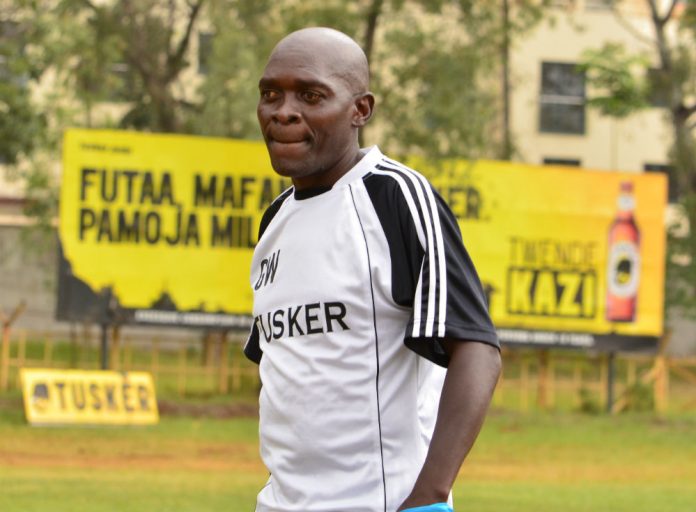
Kyetume FC appoint George ‘Best’ Nsimbe as new head coach

George 'Best' Nsimbe

By Simon Peter Atwine

Newly promoted Uganda Premier League side Kyetume Football Club have appointed George ‘Best’ Nsimbe as their new head coach on a two-year deal, the club have confirmed.

“TheSlaughters have confirmed the Signature of Nsimbe George William to take on the Club as the Manager for the two years replacing Jackson Mayanja.” Kyetume FC confirmed in a statement.

Jackson Mayanja together with Allan Kabonge guided the Mukono-based side to the top-flight league from the Fufa Big League.

Nsimbe comes in with immense experience in football management having previously coached at KCCA FC, Fire Masters, Vipers SC, Maroons, and Victors in Uganda.

He has also managed at Azam FC in Tanzania, and Tusker FC in Kenya.

Kyetume FC was promoted to the Uganda Premier League after hammering Kansai Plascon 4-1 in the FUFA Big League Promotional Playoff final at the StarTimes Stadium Lugogo.

Stories Continues after ad

New project to increase market access to regional products begins

groete, verpakking, tamaties, tomatoes, packaging

Regional countries are set to increase market access for their agricultural products following the commencement of a new capacity building project to mainstream sanitary and phytosanitary standards (SPS) priorities into national policies.

The project covers five countries that are members of the Common Market for Eastern and Southern Africa (COMESA); Kenya, Uganda, Rwanda, Ethiopia and Malawi. It is being implemented under the ‘Prioritizing SPS Investments for Market Access (P-IMA) framework, an initiative of the Standards and Trade Development Facility (STDF).

Kenya is the second country after Uganda, to start implementing the project with the inception meeting taking place on Monday in Nairobi. The inception meeting was conducted together with a high-level stakeholder dialogue that brought together private sector, relevant public sector departments and institutions of government to build consensus on the most critical SPS priorities and investments.

The project is titled: ‘Mainstreaming SPS capacity building into the Comprehensive Africa Agriculture Development Programme (CAADP) and other national policy frameworks to enhance market Access’ and has a budget is US$ 464,075 (about Shs1.7 billion) out of which US$ 390,075 (about Shs1.4 billion) is provided by the STDF.

The P-IMA framework offers an evidence-based approach to inform and improve SPS planning and decision-making processes. It helps to link SPS investments to public policy goals including export growth, agricultural productivity, and poverty reduction.

Principal Secretary in the Ministry of Trade Dr Chris Kiptoo, represented by the Assistant Director of External Trade Mrs. Helen Kenani, opened the meeting. In his statement, he said the variation of SPS capacity across COMESA countries and the continent undermine the region’s capacity to trade with itself.

“The diversity of strengths and weaknesses on the continent demands greater collaboration between countries that belong to the same Free Trade Area (FTA), particularly the ACFTA that just came into force,” Dr Kiptoo said.

He observed that compliance with SPS measures opens tremendous export opportunities for producers and exporters, both at the intra-regional trade level and at the international level.

Intra-COMESA Trade

Currently, intra COMESA trade remains low relative to other regions, at around 11% of total COMESA exports with the majority of traded products being with low added value.

COMESA Director of agriculture and industry, Mr. Thierry Kalonji attributed this to lack of industrial diversification, the existence of Non-Tariff Barriers such as health standards requirements, supply side constraints and cumbersome border measures.

He cited the following as some of the SPS challenges that countries faced, which the new project seeks to address; varied Technical Barriers to Trade (TBT) standards and regulatory frameworks across member States, absence of good regulatory practice and, low levels of compliance in the public and private sectors.

“Almost 70% of the reported NTBs in the region are constituted by TBTs and SPS measures,” he said. “If they are not addressed, our countries will find it difficult to take advantage of the mega trade agreements such as the tripartite and the continental free trade area.”

With the majority of the 21 COMESA Member States heavily depend on agriculture, fisheries, and livestock, Mr. Kalonji said the production and trade of agricultural and fisheries produce is of high priority, if only as a stepping stone to industrialization.

Ms. Roshan Khan of the STDF as well as representatives of Trade Mark East Africa and Kenya Association of Manufacturers addressed the meeting.

In the next three days, the stakeholders in Kenya will be trained on the implementation and integration of the PIMA tool into national planning and investment processes.

Stories Continues after ad

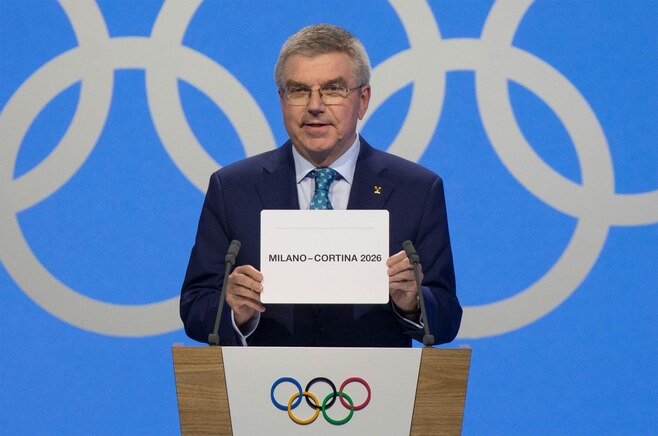
Italy awarded the 2026 Olympic Winter Games

Italy being awarded chance to host the games

Milan-Cortina, Italy, has been selected to host the Olympic Winter Games in 2026. The decision was taken during the 134th session of the International Olympic Committee (IOC) in Lausanne, Switzerland.

The other candidate in the ballot was Stockholm-Are, Sweden. Milan earned 47 votes from the International Olympic Committee membership, compared to Stockholm’s 34.

IOC President Thomas Bach said: “Congratulations to Milan-Cortina. We can look forward to outstanding and sustainable Olympic Winter Games in a traditional winter sports country. The passion and knowledge of Italian fans, together with experienced venue operators, will create the perfect atmosphere for the best athletes in the world.”

He added, “The Olympic Winter Games Milan-Cortina 2026 will feature iconic venues and beautiful settings, combining the attractions of a modern European metropolis with a classic Alpine environment.”

The IOC Session decision means Milan-Cortina will also host the Paralympic Winter Games 2026.

This will be the fourth Olympic Games hosted in Italy and the first Olympic Games hosted by Milan. It will mark the 20th anniversary of the 2006 Winter Olympics in Turin and the 70th anniversary of the 1956 Winter Olympics in Cortina d’Ampezzo.

Italy is a sport-loving nation, and winter sports are part of the tradition, culture and identity of Northern Italy. The region has world-class winter sports venues, ranging from the ice arenas of Milan to the well-established and iconic World Cup and World Championship destinations.

With regard to competition venues, Milan-Cortina 2026 prioritises sustainability and legacy, as 13 out of a total 14 facilities (93 percent) will be existing or temporary.

The project has the unified backing of the Italian sports movement, the private sector and national, regional and city governments – providing a solid foundation for its delivery.

It features a clear vision to use the Games as a catalyst to boost economic development across Northern Italy, including supporting the regions to achieve their specific tourism goals, and to stimulate economic activities between the metropolitan and mountain areas.

The games are scheduled to take place from 6 to 22 February 2026 in the Italian cities of Milan and Cortina d’Ampezzo.

The Winter Olympic Games is a major international multi-sport event held once every four years. Beijing, China will host the 2022 edition.

Stories Continues after ad

FDC urges Mutebile, Kasekende to resign over series of scandals at BoU

ON THE FIRING LINE: Governor Mutebile and former deputy Louis Kasekende.

The biggest opposition political party in Uganda, the Forum for Democratic Change (FDC), has as urged the Governor of Bank of Uganda (BoU), Emanuel Tumusiime- Mutebile and his deputy, Dr. Louis Kasekende to resign, following a series of scandals which include the alleged printing of excesses Shs90 billion as well as the controversial closure of seven commercial banks.

Days ago, five directors at BoU were arrested by State House Anti-Corruption Unit (ACU) after a Governor Emmanuel Tumusiime-Mutebile approached the unit after realising an anomaly in the consignment of the currency that was in April delivered through Entebbe International Airport on arrival from German printing company.

Speaking at party headquarter, FDC Spokesperson who doubles as the MP for Kira Municipality, Semujju Nganda, said Mutebile should have retired long time ago for failure to manage the central bank.

“Mutebile should have been retired in public interest long ago. We only lament about BoU, so wait another scandal, scandals will go after another and others will go unreported.” He said at Najjanankumbi

Semujju, said Mutebile has become a scandal himself. “He is a walking scandal. Have you ever seen him walking, he is aver sleeping only to wake up when scandals have happened. Since president Museveni is the appointing authority, he should lay him off for failure to put BoU in order,” he added.

Currently Uganda police is investigating BoU over currency consignment saga in which a chartered plane delivered five crates alongside 20 pallets of BoU consignment.

Last Friday, two BoU officials were charged at Anti-Corruption court sitting at Kololo Kampala, on allegations of inclusion of unauthorised cargo on BoU chartered plane. Francis Kakeeto, a branch manager at Mbale and Fred Wanyama were charged with abuse of office and in alternative corruption which they have both denied before magistrate Herbert Asiimwe.

Prosecution alleged that on April 26, 2019 between France, Belgium and Entebbe airport, the duo while on assignment by their employer to carry out a pre-shipment inspection of printed materials in France, in abuse of the authority to offices did an arbitrary act prejudicial to the interest of their employer and allowed the inclusion of unauthorised case on a cargo plane fully chartered by BoU.

And in the alternative, it’s alleged that they failed to refute and report the inclusion of unauthorised cargo on a plane fully chartered by BoU.

Investigators are also trying to establish how such big sums of money could be printed without the knowledge of the top leaders of the bank including both the Governor and his deputy. However, Eagle Online has learnt that by the time of the incident, Governor Mutebile had sought for leave as he was seeking medical treatment abroad. It is said his deputy Dr. Louis Kasekende was in-charge. Governor Mutebile is said to be undergoing treatment at his Kololo home as for the last one month, he hasn’t stepped in office.

COSASE PROBE over BoU over closure banks:

Parliament’s Committee on Commissions, State Authorities and State Enterprises (COSASE) probe of BoU between late October 2019 and late February 2019 over the closure of seven commercial banks, put the central Bank top officials in the spotlight to the extent that Tumusiime-Mutebile acknowledged that some steps in the closure of some backs were done behind his back, though he would later present documents signed by him on the same.

COSASE probe also established that BoU closed banks without following established guidelines and regulations as they closed banks like Crane Bank Limited, Global Trust Bank, Greenland Bank, International Credit Bank, Cooperative Bank, Teefe Trust Bank and National Bank of Commerce.

The spotlight of it was the sale of assets of Greenland Bank, International Credit Bank and Cooperative Bank at a discount of 93 percent to mysterious Nile River Acquisition Company, even though some of the assets were secured.

Another scandal is when Mutebile allowed BoU to sell CBL to its rival at Shs200 billion yet the central bank alleged it had injected Shs478 billion as liquidity support to CBL during the receivership. Matters were made worse when some BoU officials said CBL only needed Shs150 billion to operate before it was closed for undercapitalisation and allegedly to save depositors’ money.

Stories Continues after ad

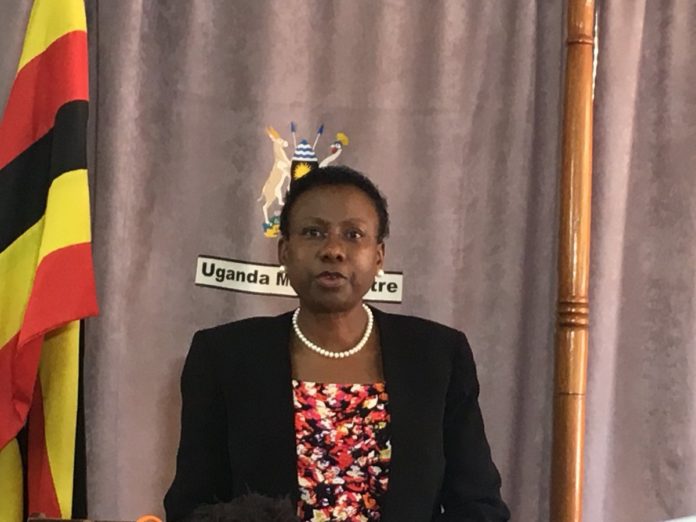
Cabinet okays National Health Insurance Scheme Bill 2019

Minister of Health Dr. Jane Ruth Aceng

Cabinet has approved the National Health Insurance Scheme (NHIS) Bill, 2019 aimed at facilitating the provision of accessible, affordable acceptable and quality healthcare services to citizens.

The bill seeks to maintain high standard of healthcare delivery services under the scheme, improve and harness private sector participation in the provision of healthcare services. It is also aimed at ensuring that residents have access to equitable and affordable healthcare services which.

According to Minister of Health, Dr. Jane Ruth Acheng, since 2002, discussions on the bill have been in the process, 17 years of drafting, discussions and negotiations and engagements.

“It’s a great step forward for the health sector. The bill can now be gazette and sent to Parliament for debate, amendments and approval for enactment into law. It is envisaged that the NHIS will reduce catastrophic expenditure on health that leads to impoverishment of many households that cannot afford health care,” minister Acheng said.

The minister said the bill will regulate the cost of healthcare services and ensure equitable distribution of costs among the different income groups. She said health insurance would be implemented as a complementary mechanism of healthcare financing.

Stories Continues after ad

Opposition parties want share of LoP budget

Leader of Opposition in Parliament, Betty Aol Ocan has asked Education Minister to resign.

Opposition members on the Inter-Party Organisation for Dialogue (IPOD) want the budget allocated to the Office of the Leader of the Opposition (LoP) in Parliament distributed among all opposition parties in the House.

In a meeting with the Speaker of Parliament, Rebecca Kadaga, the IPOD delegation requested her to cause the sharing of the opposition budget.

The IPOD Council Chairman, Dr Gerald Blacks Siranda, proposed that 40 per cent of LoP’s budget should be shared on an equal basis among all parties represented in the House and 60 percent quota divided on the basis of numerical strength.

“The funding allocated to the Office of the Leader of the Opposition be structured out to all parties represented in the House; instead of all the money being allocated to the LOP, 40 per cent should be shared on equal basis and 60 per cent on individual merit,” said Siranda who leads the platform that has the National Resistance Movement (NRM) as a member.

The Speaker used the opportunity to criticise the Shs3 million charged as fees for nomination of Ugandans aspiring to become Members of Parliament.

This, said Kadaga, is exorbitant and unacceptable, a position she announced earlier this year during the Commonwealth Youth Inclusion Conference hosted by the Parliament of Uganda.

“I still think the Shs3 million was exorbitant because it used to be about Shs 400,000 and it was hiked to Shs 3 million; this is prohibitive…I am not saying I cannot afford it, but it will stop the young people and others who cannot afford it,” said Kadaga.

In the run-up to the 2016 general elections, Parliament voted to hike the nomination fees, despite a call for caution by Speaker Kadaga.

It received rebuke from Parliamentary candidates across the political divide, who slammed it as a ploy by then incumbent MPs to ring fence the seats for themselves.

Kadaga said since Prime Minister Ruhakana Rugunda, also Leader of Government Business in Parliament, is a Member, he (Prime Minister) should hasten the move to present a Bill to reform the electoral system and include all the IPOD ideas for the Legislature’s consideration.

The Speaker has on several occasions asked government to present the electoral reforms right in time for Parliament’s consideration, but the calls are yet to attract government’s consideration.

IPOD has had a rocky journey, with main opposition Forum for Democratic Change (FDC) recently terming it a collusion between the ruling National Resistance Movement Party and ‘fringe’ political parties to get back at FDC.

The FDC Party spokesman, Ibrahim Semujju recently took to local media to dismiss the IPOD as inconsequential.

FDC’s sibling rivalry with the Democratic Party (DP) could escalate if Dr Siranda’s proposal is considered.

Stories Continues after ad

BoU currency scandal: official released on Shs40m cash bail

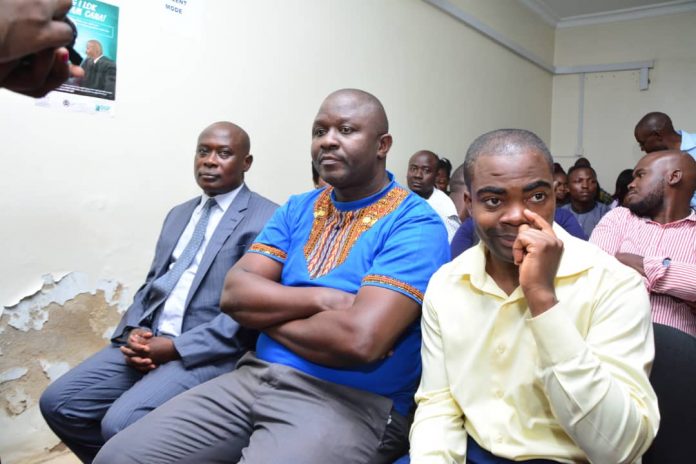
Mr. Malinga on the right with other colleagues who were charged last week.

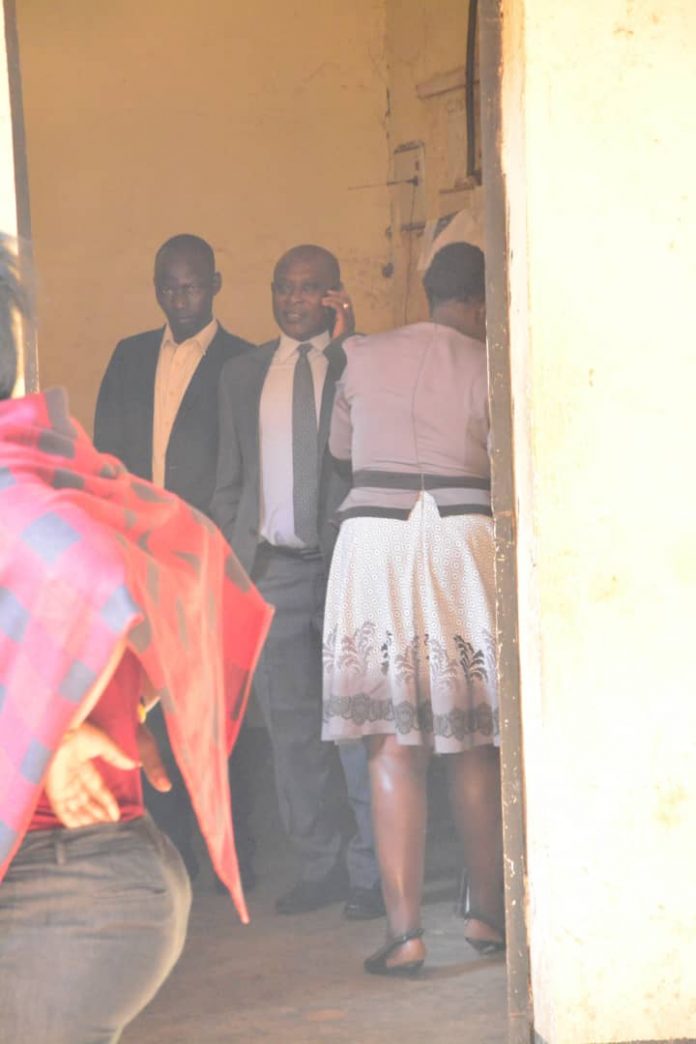
The Bank of Uganda (BoU)Executive Director Operations Dr. Charles Malinga Akol, has been released from the Anti-Corruption Court in Kololo on a cash bail of Shs40 million as intelligence officers continue to investigate BoU officers and others over the currency consignment scandal where a plane chartered by BoU delivered 25 pallets containing Ugandan currency but only 20 belonged to BoU.

It said Dr. Malinga was supposed to collect the consignment but didn’t go, instead he delegated his juniors to fly to German and bring the consignment that came with other items that did not belong to BoU.

Malinga before being aligned in Court was interrogated about his role in the whole scandal where it is said 5 pallets containing the Ugandan currency of about Shs90 billion disappeared upon reaching Entebbe International Airport.

Last Friday, two BoU officials were charged at Anti-Corruption court sitting at Kololo Kampala, on allegations of inclusion of unauthorised cargo on BoU chartered plane. Francis Kakeeto, a branch manager at Mbale and Fred Wanyama were charged with abuse of office and in alternative corruption which they have both denied before magistrate Herbert Asiimwe.

Prosecution alleged that on April 26, 2019 between France, Belgium and Entebbe airport, the duo while on assignment by their employer to carry out a pre-shipment inspection of printed materials in France, in abuse of the authority to offices did an arbitrary act prejudicial to the interest of their employer and allowed the inclusion of unauthorised case on a cargo plane fully chartered by BoU.

And in the alternative, it’s alleged that they failed to refute and report the inclusion of unauthorised cargo on a plane fully chartered by BoU.

Investigators are also trying to establish how such big sums of money could be printed without the knowledge of the top leaders of the bank including both the Governor and his deputy. However, Eagle Online has learnt that by the time of the incident, Governor Mutebile had sought for leave as he was seeking medical treatment abroad. It is said his deputy Dr. Louis Kasekende was in-charge. Governor Mutebile is said to be undergoing treatment at his Kololo home as for the last one month, he hasn’t stepped in office.

Stories Continues after ad

BoU’s director Malinga in court over money printing saga

The director of Currency department at Bank of Uganda, Charles Malinga has brought to Anti Corruption court in Kololo over the extra printing of money.

This is after sources at CID say the BoU Deputy Governor Dr Louis Kasekende had told them he wouldn’t appear before them for questioning on grounds that he was not involved in the saga and that he is above the level of the officials to be questioned as regards the matter.

Last Friday, two BoU officials were charged at Anti-Corruption court sitting at Kololo Kampala, on allegations of inclusion of unauthorised cargo on BoU chartered plane.

Francis Kakeeto, a branch manager at Mbale and Fred Wanyama were charged with abuse of office and in alternative corruption which they have both denied before magistrate Herbert Asiimwe.

Prosecution informed court that on April 26, 2019 between France, Belgium and Entebbe airport, the duo while on assignment by their employer to carry out a pre-shipment inspection of printed materials in France, in abuse of the authority to offices did an arbitrary act prejudicial to the interest of their employer and allowed the inclusion of unauthorized case on a cargo plane fully chartered by BoU.

And in the alternative, it’s alleged that they failed to refute and report the inclusion of unauthorized cargo on a plane fully chartered by BoU.

The development at BoU suggest there are factions within the central bank, one controlled by Kasekende and another controlled by Mutebile. However, Mutebile looks like he has lost direction and hold onto the mantle at BoU because the latest development indicates it is Kasekende in charge of operations of the central bank.

Stories Continues after ad

Winnie Byanyima shortlisted for UNAIDS top job

Oxfam Executive Director Dr Winnie Byanyima

Uganda’s Winnie Byanyima is among five candidates competing for the top job at the Joint United Nations Programme on HIV/AIDS to replace Michel Sidibé, who led the organization since 2009 and left in May this year amid controversy.
Ms Byanyima is a strong critic of the Kampala regime and is wife to opposition strongman Kizza Besigye who is a four time contender for the national presidency. The shortlist includes only one woman and four men.

The shortlist includes:

• Salim Abdool Karim, director of the Centre for the AIDS Program of Research in South Africa or CAPRISA.
• Sani Aliyu, director general of the Nigerian National Agency for the Control of AIDS or NACA.
• Chris Beyrer, professor at Johns Hopkins Bloomberg School of Public Health.
• Winnie Byanyima, executive director of Oxfam International.
• Bernard Haufiku, former minister of health and social services of Namibia.

Whomever emerges as the finalist from the shortlist will take over from Gunilla Carlsson, currently acting executive director of UNAIDS. Carlsson was appointed to the position in May, following the resignation of Sidibé, who had a controversial legacy at the organization. The new leader will also be tasked with fixing what was described by an independent panel as a “broken organisational culture” at UNAIDS.

In December 2018, the panel came out with a damning report describing how the aid agency was “in crisis,” with its leaders, as well as its organizational policies and processes, having failed to prevent or respond to allegations of sexual harassment, bullying, and abuse of power. Sidibé, according to the panel’s findings, had “created a patriarchal culture tolerating harassment and abuse of authority.”

For the organization to recover, the panel underscored the need for a new “trustworthy, energetic leader” who has the skillset and experience, including “emotional intelligence,” to foster and implement a “genuinely open culture” where harassment, bullying, and abuse of power no longer exists.

Following the publication of the report, Sidibé announced he would step down in June, but decided to leave earlier to take over as minister of health and social affairs of Mali.

Process confidentiality
In December, UNAIDS’ program coordinating board called for the “immediate initiation” of the selection process for the next executive director, and a search committee was formed to oversee the process. In a published letter, the chair of the committee highlighted the experience and competencies required for the position. The letter stated they were looking for a leader with strategic management skills, including the “ability to manage organizational change and innovation, including leading transformation and reform processes in work culture” and the “ability to effectively address all forms of harassment, discrimination, bullying and abuse of power.”

Get development’s most important headlines in your inbox every day.
Email
Subscribe
The committee encouraged female applicant and geographical diversity among the candidates. It also encouraged applications from people living with HIV, as well as those living with disabilities.
The committee added: “Candidates will be submitted to a rigorous, competitive and transparent selection process.”

Information on the succeeding meetings of the committee were published on UNAIDS’ website, but without publishing the names of candidates vying for the position. This had created numerous rumors about who might be in the running for the top job at UNAIDS.

In response to an inquiry from Devex, Michael Hollingdale, communications manager for UNAIDS, told Devex that the board had decided to follow a process similar to 2008, and that the process “seeks to protect confidentiality of the candidates to the maximum extent possible.”

“Board members have the possibility to express views on the different candidates. Subsequently the Committee of Cosponsoring Organisations, under the leadership of UNFPA’s Executive Director, Dr Natalia Kanem, will be providing its consensus recommendation to the UN Secretary-General who will appoint the Executive Director. There are still several steps left in the process, which reinforces the need to protect the confidentiality of the candidates,” he wrote in an email.

Next steps
Last week, the search committee, during its ninth meeting in Geneva, interviewed shortlisted candidates and has since submitted its report to the program coordinating board. According to the timelines published on the UNAIDS website, the board will meet on June 28 to discuss and consider the report. Afterwards, the search committee will send the list to the Committee of Cosponsoring Organizations — which includes 10 U.N. agencies, the World Bank, and the UNAIDS secretariat — along with any comments and recommendations from the board.

The CCO will conduct a round of interviews with the shortlisted candidates before sending its recommendation to the U.N. secretary general the first week of July.

Stories Continues after ad