Stanbic Bank
Stanbic Bank
28.3 C
Kampala
Stanbic Bank
Stanbic Bank
Home Blog Page 1281

Splendor as 2019 edition of Royal Ascot Goat Races is launched at Kabira Country Club

Rajiv Ruparelian addressing guests at the launch of Royal Ascot Races 2019 edition at Kabira Country Club.

There was splendor, feasting, entertainment and laughter as the 2019 edition of the famous Royal Ascot Goat Races was launched Thursday at the striking Kabira Country Club in Kampala, attracting Kampala’s fun lovers such as celebrities Judith Heard and Salvador who played the role of MC just like he did last year.

The organizers, who include Rajiv Ruparelia and his sister Sheena Ruparelia said the event expected to attract crowds will take place on October 12, 2019 at its traditional home at Speke Resort Munyonyo where the goat race track that overlooks the lake is the centre of attraction with food, seating areas and hospitality tents sprawled across the gardens.

The Royal Ascot Goat Races, held at the Speke Resort on the shores of Lake Victoria, have been an annual Kampala tradition since 1993. It’s arguably the biggest event on the Ugandan social calendar and many fans are expected to attend the affair that started in 2004 as an annual charity event.

Ascot Goat Races is always an amazing experience to attend the Royal Ascot Goat Races as it is big on fun – music, good food and beverages, networking and the goats racing. The organizers have managed to hold on the sponsors of the previous edition, according to the details on the launch invite.
Uganda Breweries Limited Tusker Malt return as the main sponsor with Robbialac, NTV, Goldstar Insurance, Sanyu FM and Speke Resort Munyonyo, Ruparelia Foundation being the other sponsors.

Speaking at the launch, Rajiv, the event coordinator, described the Goat Races as easily the most popular event on Uganda’s social calendar for all the time they were held. He said the event offers great networking environment where people can network for business as corporate companies use the event as platform to entertain and engage their customers whilst meeting new people but also that it is good for a family day out.
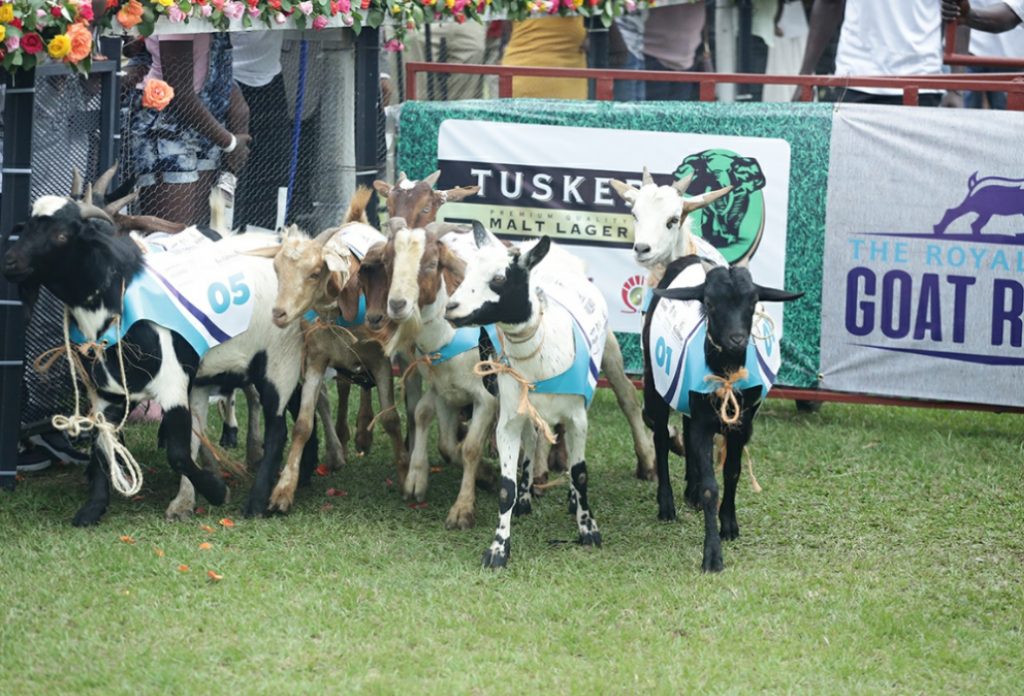
Some of the goats that took part in the races last year.

Different sponsors (corporate companies) said they were happy to be associated with the event that is aimed at giving back to the community.

The VIP tent at the event is reserved for race owners and goat buyers. It is known for its big set up, luxury feel and complementary F&B. A, safe enclosure with high network value. Some fans bought their goats at the launch on Thursday evening.

The event is an occasion for fans to be dressed up in the most fanciest of hats and outfits. There are top prizes for best dressed couple, female, male and kids.

Fans can bet on the goats and the first, second and third place winners receive cash from the eight races, each consisting of 10 goats.

A goat race sponsor entitles one to naming of the race, branding around the track and on event screens, prize giveaways, tickers to enter the owners tent and free entrance to the event. You can also buy a goat to participate in any one or all the races. Each goat prize is determined by the price of the race you can name your goat, and entitled to tickets to the owners tent. Freed entrance is guaranteed. Goat prices range between Shs500, 000 to Shs1 million. Race prices on the hand range between Shs5 million to Shs10 million, with races of Shs6 million, Shs7 million and Shs10 million already sold to EROFOLEX, Orient Bank and Gold Star Insurance respectively.


Tickets for the general public range from Shs25000 for kids aged 8-10 years, those who book early pay Shs30000 while Shs50000 is charged at the gate. VIP tickets goes for Shs350, 000 for those who book early while Shs400, 000 is charged at the gate.

The fans who want to beat the traffic on that weekend can book for accommodation at Speke Resort Munyonyo at special rates of US$149 and US$400 for Deluxe package and Executive suite respectively. The charges come with two free tickets to the goat race and two free tickets to the event and entrance to owners tent respectively.

The Royal Ascot Goat Races money is to be used to improve hygiene and sanitation at Good Samaritan Primary School in Kamwokya slum where toilets and other sanitation facilities will be provided. It is part of the social corporate responsibility of the Ruparelia Ground and Ruparelia Foundation. Last cash collections from the event funded Totos Tag Rugby and Outreach programme benefiting. Under the programme 250 children were supported to train at the Kyadondo Rugby Club.

Stories Continues after ad

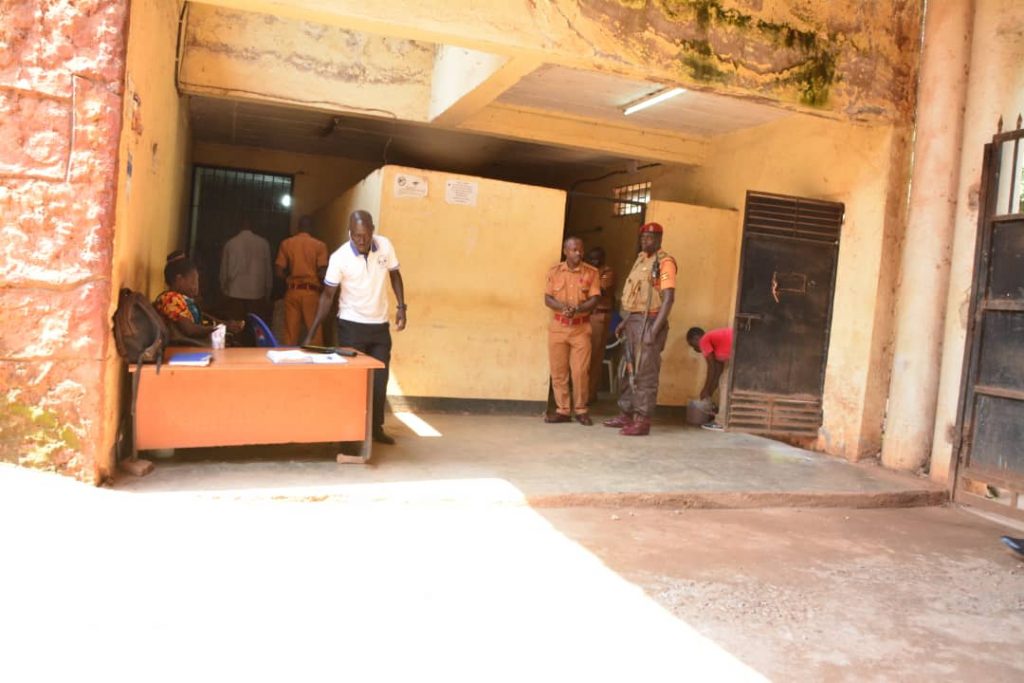
Two Bank of Uganda officials charged in court over money printing

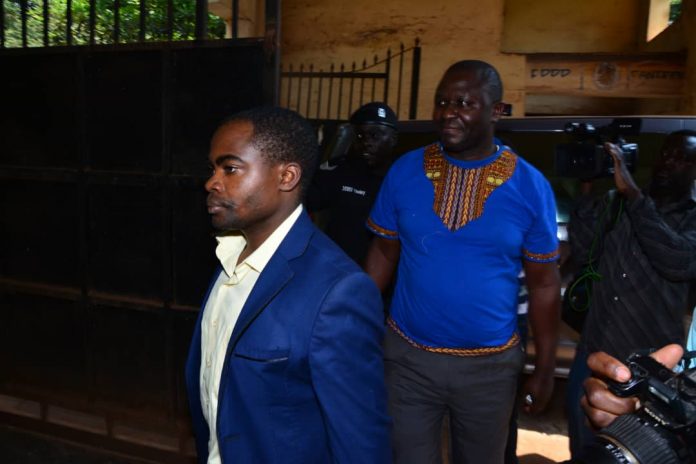
Two officials of Bank of Uganda have been charged with abuse of office and and corruption at Anti-Corruption Court

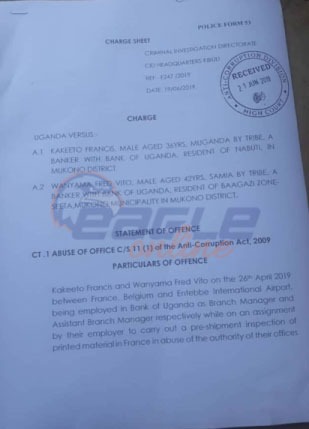
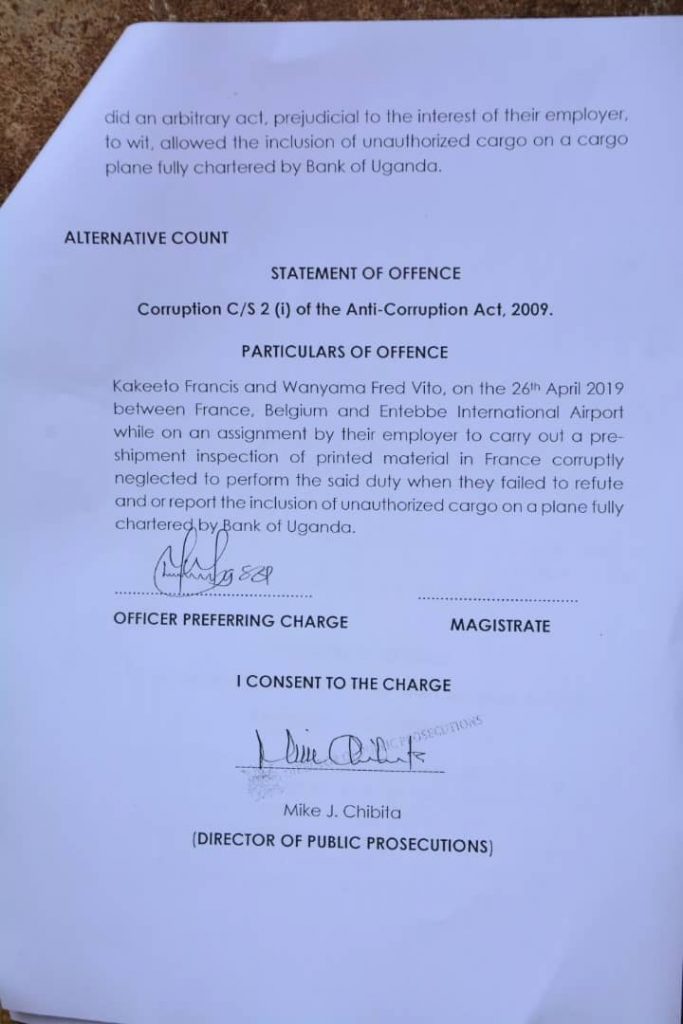
Those that were presented before the Anti-Corruption Court are Francis Kaketo and Fred Vito Wanyama who are facing charges of Abuse of office and corruption as an alternative count allegedly committed on April 26, 2019 between France , Belgium and Entebbe international Airport.

The two being Branch manager and Assistant branch manager respectively and while on assignment by their employer (BoU) to carry out a pre-shipment inspection of printed material in France ,allowed inclusion of unauthorized cargo on a chartered plane by BoU.

The duo in the alternative court are said to failed to refute and report inclusion of unauthorized cargo on a plane chartered by BoU. The charges have been sanctioned by Director of Public Prosecution himself Mike Chibita

Yesterday three more government officials were arrested by CID and other agencies investigating the alleged printing of Shs90 billion even though the governor of Bank of Uganda (BoU) insists no extra money was printed.

The latest arrests come as investigators led by the Uganda police detectives continue to hunt for individuals involved in causing the saga that saw private goods and parcels carried on a chartered plane used by BoU to deliver its consignment in April.

The chartered plane landed at Entebbe International Airport on April 27 and was cleared by Uganda Revenue Authority (URA) customs department in the presence of BoU officials, BoU security, aviation security, police and other security agencies. However, it was reported that instead of the expected 20 pallets, the consignment had 25 pallets.

On Wednesday, the investigators arrested three Bank of Uganda (BoU) officials for of abuse of office and neglect of duty. The officials are Caroline Nankabirwa, from procurement department, Simon Peter Zaribugire from currency department and Milton Opio, director security.

Investigators from the Uganda police say investigation into the Bank of Uganda continue and will soon issue a new statement on the latest developments concerning the currency consignment saga in which a chartered plane delivered five crates alongside 20 pallets of BoU consignment.

“Our officers in partnership with other agencies are still doing the investigations and I promise we will soon issue a statement to clear rumours in the media,” an officer who is part of the team said on condition of anonymity as he is not allowed to talk to the media.

The officer said the investigations spearheaded by CID Director Grace Akullo have expanded countrywide to BoU regional currency centres of Kabale, Mbale and Fort Portal, after leads brought those centres into picture.

The detective explained that heads of BoU currency centres in the three regions are being interrogated on whether they had prior knowledge on the five extra pallets that were transported on the chartered plane, which had on board, newly printed Uganda Shilling notes.
The source said the CID team is also probing how and why the directors were transferred to regional currency centres from the head office in Kampala, prior to the arrival of the BoU consignment.

Available information indicates that the Central Bank sent its officials to pick printed cash overseas and alerted Uganda Revenue Authority (URA) about a consignment that required fast clearance.

Sources indicated that the head of Mbale currency centre who was abruptly called to witness the offloading of BoU consignment became suspicious of the extra pallets and briefed BoU Governor Prof. Emmanuel Tumusiime-Mutebile.

But Tumusiime-Mutebile on Tuesday reiterated that there was no extra consignment containing printed money besides that which was officially sanctioned by the bank.

‘I simply said that it was an anomaly in the sense that the plane came along with 20 pallets and additionally five crates (that were not ours). The 20 pallets were consigned,” Mutebile said while reading the latest monetary policy statement, urging media to ignore rumours citing that there was extra money printed.

Mutebile’s comments come after government spokesperson Ofwono Opondo disowned an investigation by police in relation to the unfolding currency scandal at Bank of Uganda.

Police spokesperson Fred Enanga told journalists yesterday that investigators were investigating allegations that additional money was printed and smuggled into the country. The figure that has been thrown about is Shs 90 billion.

But government through Ofwono Opondo, the executive director of Uganda Media Centre said they were not aware of any investigation regarding this money.

“I disagree with Fred Enanga’s statement about investigations in relation to the extra cargo of Shs 90 billion,” said Ofwono.

Opondo said government now wants Enanga to put the record straight.

“We are asking police to correct the statement [that there is an investigation over Shs 90 billion].”

Ofwono said government is investigating the extra boxes on the plane that contained equipment for testing blood.

Today parliament’s Committee on Commissions, State Authorities and State Enterprises (COSASE) quizzed top officials of the Civil Aviation Authority on the saga, with officials saying they had no role to play in the delivery of the currency consignment to BoU.

Stories Continues after ad

Gov’t in search of new investor to recapitalise UTL

Minister Evelyn Anite is under pressure in the US.

Government is looking a new investor to recapitalise struggling Uganda Telecom Limited (UTL) after Teleology Company failed to raise money to pay the accrued debts.

State minister for privatisation, Evelyn Anite on Thursday told parliament that the ministry of finance had opened up fresh bids in search for a new investor to help government run crippling UTL two years after the telecom company became financially distressed, technically insolvent and was put under administration with Mr. Bemanya Twebaze of Uganda Registration Services Bureau (URSB) as the receiver-manager.

Anite was prompted to respond to the current operations of UTL after MPs demanded an audit on UTL following reports that it has failed to adhere to rules and regulations of Uganda communication commission.

“According to the terms, the investor-teleology was supposed to have paid the debts in the first 3 months, but they did not do so. So it was a white elephant; teleology did not have the money to invest in UTL. Now we have gone back to drawing board to invite new investors unfortunately we don’t know the status of this company-UTL,” Anite said.

Minister Anite added that the ministry has no records of accountability on the operations of UTL or even how much the company is making after UTL administrator [Bemanya] blocked ministry of finance from accessing its records for auditing through internal auditors. She said that the auditor general and attorney general have failed to offer guidance for auditing UTL on grounds that “it is a court led process.”

“We wrote to the auditor general to audit UTL administration, but he said he is unable to audit UTL. Since UTL is under finance ministry, we decided to get internal auditors to audit the company, but the administrator said he cannot allow any internal auditors to audit them and that they can only account to court. We wrote to the attorney general who asked for more time to study the law on if or not we can audit the company,” Anite said.

“Whereas the process to recapitalize UTL is ongoing, we cannot go to UTL to find out what is happening, we do not know how much money the company is making and indeed finance ministry is concerned and the country is right to be concerned.”

In May 2018, financial intelligence authority (FIA) recommended to finance ministry to consider Mauritius Telecom Company as the best option available to recapitalize UTL despite offering the lowest assets of $45m because the mentioned company was “a financially stable company with credible shareholders whose funding sources are clearly known.” 33.5% shares of Mauritius telecom belong to the government of Mauritius.

However, UTL administrator-Bemanya opposed the FIA report and duped cabinet to believe that Teleology Company was the best option because they offered the highest assets of $60.5m despite having no experience with a weak financial muscle.

Stories Continues after ad

MPs rally gov’t to avail Euros 350,000 for UBC TV to purchase rights to broadcast AFCON

Ugandans will watch the Africa Cup of Nations (AFCON) that kicks off on Friday, 21 June 2019 live from Egypt for free following a directive from Parliament.

Uganda cranes will play against DR Congo in their first game scheduled for Saturday, 22 June 2019.

Legislators, demanded that government provides Euros 350,000 to the Uganda Broadcasting Corporation (UBC) to purchase rights to broadcast the Africa Cup of Nations (AFCON).

“We understand that this was not in the budget of the national broadcaster; but that is surely a small price for the government of Uganda to pay,” said Jinja east MP Moses Balyeku.

He further noted that the games will only be aired on pay television which many Ugandans cannot afford.

Balyeku fronted the proposal noting that Ugandans have a right to watch the games free of charge because the national team, the Uganda Cranes, would be participating.

The Speaker of Parliament, Rebecca Kadaga, reiterated a letter from the national broadcaster requesting for funds to pay for the rights to air the games, saying that they were desperate to broadcast the games live due to their big viewership.

“We have been pushing our national team to perform well so that they can qualify for the AFCON games, something that is a big achievement. We should let the locals watch their children play,” she said.

In response, the State Finance Minister for Planning, David Bahati, said that the government will support UBC to broadcast live. However, he regretted that UBC had not approached his ministry on the need.

He added, “I encourage the Ministers of Sports and Information Communication Technology (ICT) to forward the request to us so that we can handle it expeditiously.”

The Minister of ICT was directed by Parliament to process a request to fund the games and update the House on the progress.

Stories Continues after ad

Gov’t to continue with mass screening of people in prisons and refugee camps for Hepatitis B and C

The Minister of Health, Dr Jane Ruth Aceng, has said government is committed to continuing with Viral Hepatitis B and C systematic mass screening policy focused on most at risk populations like the prisoners, commercial sex workers, refugee camps and communities hosting refugees in a bid to fight the virus.

Minister Aceng said during the first ever African Hepatitis Summit that is aimed at rallying partners and countries to eliminate Viral Hepatitis in Africa.

Under the theme for the summit is, ‘Eliminating Viral Hepatitis in Africa; Implementing the Viral Hepatitis Strategy’ brought together participants from over 25 countries, will provide an opportunity for countries to develop and work towards implementing action plans, sharing best practices and lessons learnt from each other in the fight against the epidemic.

Dr. Aceng, said government of Uganda adopted the World Health Assembly (WHA) resolutions of 2010 and 2014 on viral hepatitis that recognize the disease as a public health problem.

“Ministry of Health established a Hepatitis Technical Working Group, which developed a strategic action plan for the elimination of Hepatitis B, a Vaccination plan to vaccinate adolescents and adults and statutory instruments declaring Hepatitis B as a public health threat in Uganda. Another instrument in the plan makes vaccination of health workers against Hepatitis B mandatory,” she said.

In Uganda, according to the Uganda Population-based HIV Impact Assessment survey, (UPHIA, 2016), it is estimated that the prevalence of Viral Hepatitis B is at 4.1 per cent in the population aged 15-64 years. The disease prevalence, however, varies from region to region with the highest prevalence in the North at 4.6 per cent and the lowest in Southwest at 0.8 per cent.

While the actual prevalence of Viral Hepatitis C in Uganda is unknown, the data from the National Blood Bank indicates that the prevalence of Hepatitis C among blood donors in Uganda is approximately 1.5 per cent.

To mitigate Hepatitis B prevalence, Uganda has embarked on producing the first line drugs recommended for treating Hepatitis B. This makes it one of the first countries in Africa to produce the medicines. This is being done by Cipla Quality Chemical Industries Ltd, a WHO-approved pharmaceutical manufacturer.

In addition, the government will strengthen and sustain injection, blood and surgical safety and universal precaution among health care workers.

Awareness creation on viral hepatitis will also be hastened by working with community groups and Civil Society Organizations (CSO) to increase opportunities to educate the population about viral hepatitis.

In Africa, dying of viral hepatitis is becoming a bigger threat than dying of AIDS, Malaria or Tuberculosis. It is estimated that every year, 200,000 people die from the complications of viral hepatitis B and C mostly liver cancer in Africa.

This is against a background that, 60 million people in this region were living with chronic hepatitis B infection as early as the year 2015, of which, 4.8 million are children under five years old. In addition, an estimated 10 million people are infected with hepatitis C, almost certainly due to unsafe injection practices.

The World Health Organization (WHO) Country Representative in Uganda, Dr Yonas Tegegn Woldemariam said that the WHO Regional Office for Africa established the Framework for Action for the Prevention, Care and Treatment of Viral Hepatitis in the African Region (2016–2020). “This was designed to guide the Member States on the implementation of the Global Health Sector Strategy on Viral Hepatitis which calls for the elimination of hepatitis by 2030,” he said.

Dr Yonas further notified the delegates that WHO would provide measures against which to track the progress of the framework, “we designed a scorecard which will be presented at this summit. It provides vital information about the status of the regional hepatitis response while measuring progress against the WHO Framework for Action.

In order to reduce hepatitis Infections, the Government of Uganda also plans to screen all pregnant women for Viral Hepatitis B & C as well as introduce the Hepatitis B birth dose. This will help eliminate mother-to-child transmission of Hepatitis B and C infections.

Stories Continues after ad

FUFA and Uganda Tourism Board sign partnership pact

FUFA -UTB partnership

The Federation of Uganda Football Associations (FUFA) have signed a partnership deal with Uganda Tourism Board (UTB) to the tune of Shs200 million.

The year-long renewable partnership was officially unveiled to the public with the signing of the Memorandum of Understanding (MOU) between the two sided at the FUFA House on 20th June 2019 in Kampala.

FUFA was represented by the First Vice President Justus Mugisha, FUFA second Vice President Darius Mugoye, FUFA Marketing and Communications Committee chairman Rogers Byamukama, FUFA Deputy CEO Humphrey Mandu while UTB was led by their Chief Executive officer Lilly Ajarova and UTB Board member Eddie Kirya.

“This is a very important day in football. Once again, FUFA is unveiling a partner to the swelling of sponsors and partners. This is the confidence that football has built. On behalf of the federation, I am extremely happy about this partnership. This is not merely a partnership but a marriage that will last for eternity,” Rogers Byamukama said.

Uganda Cranes and the FUFA Drum (Inter-Provinces) tournament will be the main actors in this new partnership.

Lilly Ajarova, the CEO Uganda Tourism Board said, “Uganda Tourism Board (UTB) is excited is to here today. This has not been a one day process. There have been discussions before. In line with our recently launched strategic plan of sustainable increase for the volume of domestic and international tourism as well as building brand equity and value, UTB is glad to associate with FUFA.”

“This is business unusual and a double bottom-line opportunity. We want to create a positive opportunity for the youth in Uganda through football as we also develop sports tourism. Uganda Cranes’ back to back participation in the Africa Cup of Nations has also been a great development and a unique opportunity to develop Uganda’s international tourism,” she added.

UTB joins Airtel Uganda, Nile Breweries Limited, BIDCO Uganda Limited, Bet Lion, Uganda Breweries Limited, Stanbic Bank and StarTimes on the list of FUFA sponsors.

Stories Continues after ad

Three more officials arrested in BoU currency consignment saga

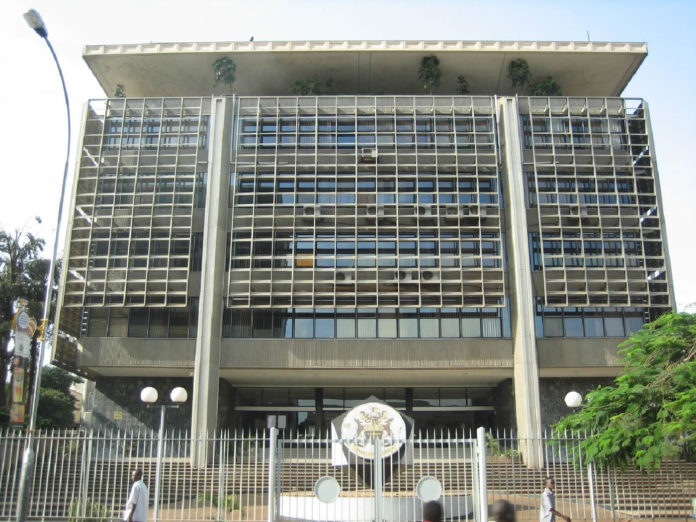
Bank of Uganda

Three more government officials have been arrested by CID and other agencies investigating the alleged printing of Shs90 billion even though the governor of Bank of Uganda (BoU) insists no extra money was printed.

The latest arrests come as investigators led by the Uganda police detectives continue to hunt for individuals involved in causing the saga that saw private goods and parcels carried on a chartered plane used by BoU to deliver its consignment in April.

The chartered plane landed at Entebbe International Airport on April 27 and was cleared by Uganda Revenue Authority (URA) customs department in the presence of BoU officials, BoU security, aviation security, police and other security agencies. However, it was reported that instead of the expected 20 pallets, the consignment had 25 pallets.

Yesterday the investigators arrested three Bank of Uganda (BoU) officials for of abuse of office and neglect of duty. The officials are Caroline Nankabirwa, from procurement department, Simon Peter Zaribugire from currency department and Milton Opio, director security.

Investigators from the Uganda police say investigation into the Bank of Uganda continue and will soon issue a new statement on the latest developments concerning the currency consignment saga in which a chartered plane delivered five crates alongside 20 pallets of BoU consignment.

“Our officers in partnership with other agencies are still doing the investigations and I promise we will soon issue a statement to clear rumours in the media,” an officer who is part of the team said on condition of anonymity as he is not allowed to talk to the media.

The officer said the investigations spearheaded by CID Director Grace Akullo have expanded countrywide to BoU regional currency centres of Kabale, Mbale and Fort Portal, after leads brought those centres into picture.

The detective explained that heads of BoU currency centres in the three regions are being interrogated on whether they had prior knowledge on the five extra pallets that were transported on the chartered plane, which had on board, newly printed Uganda Shilling notes.
The source said the CID team is also probing how and why the directors were transferred to regional currency centres from the head office in Kampala, prior to the arrival of the BoU consignment.

Available information indicates that the Central Bank sent its officials to pick printed cash overseas and alerted Uganda Revenue Authority (URA) about a consignment that required fast clearance.

Sources indicated that the head of Mbale currency centre who was abruptly called to witness the offloading of BoU consignment became suspicious of the extra pallets and briefed BoU Governor Prof. Emmanuel Tumusiime-Mutebile.

But Tumusiime-Mutebile on Tuesday reiterated that there was no extra consignment containing printed money besides that which was officially sanctioned by the bank.

‘I simply said that it was an anomaly in the sense that the plane came along with 20 pallets and additionally five crates (that were not ours). The 20 pallets were consigned,” Mutebile said while reading the latest monetary policy statement, urging media to ignore rumours citing that there was extra money printed.

Mutebile’s comments come after government spokesperson Ofwono Opondo disowned an investigation by police in relation to the unfolding currency scandal at Bank of Uganda.

Police spokesperson Fred Enanga told journalists yesterday that investigators were investigating allegations that additional money was printed and smuggled into the country. The figure that has been thrown about is Shs 90 billion.

But government through Ofwono Opondo, the executive director of Uganda Media Centre said they were not aware of any investigation regarding this money.

“I disagree with Fred Enanga’s statement about investigations in relation to the extra cargo of Shs 90 billion,” said Ofwono.

Opondo said government now wants Enanga to put the record straight.

“We are asking police to correct the statement [that there is an investigation over Shs 90 billion].”

Ofwono said government is investigating the extra boxes on the plane that contained equipment for testing blood.

Today parliament’s Committee on Commissions, State Authorities and State Enterprises (COSASE) quizzed top officials of the Civil Aviation Authority on the saga, with officials saying they had no role to play in the delivery of the currency consignment to BoU.

Stories Continues after ad

6000 stakeholders attend public hearing for environment social impact assessment of Kingfisher Dev’t Project

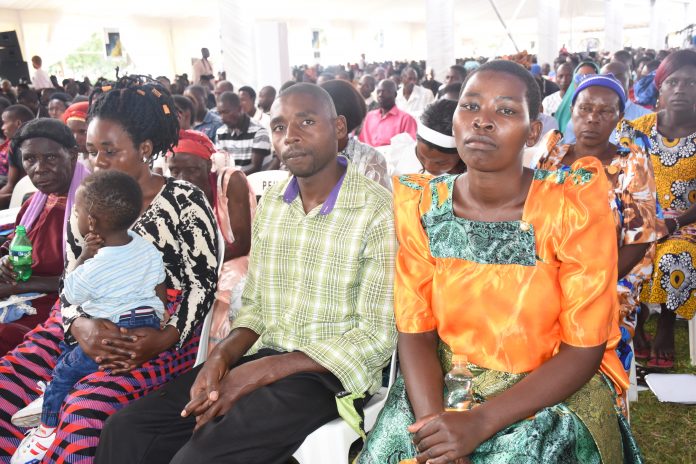
Residents attending the Public Hearing of Kingfisher Environmental report at Rwemisanga Rwemisanga Primary School on Wednesday.

About 6,000 stakeholders have on Wednesday thronged Rwemisanga Primary School, Rwemisanga Parish, and Kyangwali Subcounty in Kikuube District to participate in the first Environmental Social Impact Assessment (ESIA) public hearing for the Kingfisher Development (KFDA) Project operated by China National Offshore Oil Corporation (CNOOC) Uganda Ltd.

The Public hearing, a third of its kind to be organised by Petroleum Authority of Uganda (PAU) in partnership with National Environmental Management Authority (NEMA), was intended to give a platform in which all relevant stakeholders and developers are brought together to express opinions, and offer suggestions on the proposed Project to influence the decision-making process during review of the ESIA.

Speaking at the public hearing, Ms.Peninah Aheebwa, the Director Technical Support Services at the PAU who represented the Executive Director said the public hearing and the ESIA report are organised in accordance with the National Environment Act and Regulations.

“Our role is to ensure that International Oil Companies (IOCs) adhere to the country’s legal and regulatory framework and international best practice. This includes ensuring that all the Oil and Gas projects are implemented in a manner that does not degrade the Environment and cultural heritage of the people of Uganda, but improves their wellbeing. I therefore call upon all of you to express your opinions openly and objectively,” she said

Mr. Robert Kasande, the Permanent Secretary of the Ministry of Energy and Mineral Development who represented the Minister, said the Public Hearing for the Kingfisher Development Project ESIA Report was an important step towards first oil.

“This Public Hearing brings us closer to what everyone is waiting for. One of the precursors to the Final Investment Decision (FID) being taken, is proper documentation of both the positive and negative Environment and Social impacts of the projects, and the mitigation measures. FID will usher in the Engineering, Procurement and Construction phase where many benefits for the country will be realized,” said Kasande.

The KFDA ESIA was conducted by Golder Associates from UK and Eco and Partner consult from Uganda on behalf of CNOOC Uganda Limited that was awarded a production license by the Government of Uganda in 2012. The ESIA presents a description of the project facilities and the potential positive and negative impacts and mitigation measures during the construction, operation and decommissioning phases.

Mr. Cui Yujun, the Vice President of CNOOC Uganda Ltd presented the ESIA Report on behalf of the company that is the lead developer of the Kingfisher Development Project. A copy of the ESIA and its summary can be accessed on the websites of the PAU and NEMA.

Speaking at the same event, the Executive Director of NEMA, Dr.Tom Okurut said the resolutions from the public hearing will affect the final decision on the award of the Environmental Impact Assessment certificate for the Kingfisher development project, which is necessary before oil production commences.

“Your views will determine whether CNOOC is awarded the certificate or not. Our role is to ensure that this oil is produced in a manner that uplifts the Environment and does not become hazardous to our lives but instead makes it better,” he said.

Mr. Andrew Byakutaga, the Prime Minister of Bunyoro Kitara Kingdom asked CNOOC to respect the norms, cultures and wellbeing of the natives as they implement the project and do it in a way that uplifts the dignity and cultural heritage of the people in the area.

“Our cultural heritage like the tombs, historical sites, tourism spots, birds, animals must be protected. These have defined as the people of Bunyoro for hundreds of years. As much as we want this oil, we also want to preserve our Environment and culture,” he said.

Other stakeholders implored the project developers to ensure fair and adequate compensation for their land and to ensure that the host communities benefit from the jobs and opportunities to provide goods and services.

The Kingfisher Project components that will be located in Kikuube and Hoima Districts include: The development of 4 Well pads: holding 31 wells (20 production wells and 11 water injection wells, aCentral Processing Facility (CPF), flowlines to transport well fluids from production wells to the Central Processing Facility, a 46 km Feeder Pipeline to transport crude oil from CPF at KFDA to the delivery point in Kabaale, Hoima District and associated Supporting Infrastructure: camps, materials laydown yard, jetty, airstrip, and infield access roads among others.

The project developers are CNOOC Uganda Limited (operator), Total E&P Uganda and Tullow Uganda Operations Pty Limited.

The public hearing was presided over by Professor Grace Bantebya Kyomuhendo from the School of Gender Studies at Makerere University. Members of Parliament on the Natural Resources Committee led by MP Keefa Kiwanuka were also present.

The next public hearing will be held on Friday June 21, 2019 in Kaabale Parish, Buseruka sub-county, Hoima district to give the same opportunity in the area to discuss the report.

Stories Continues after ad

Over 5000 female entrepreneurs to benefit from rising women initiative

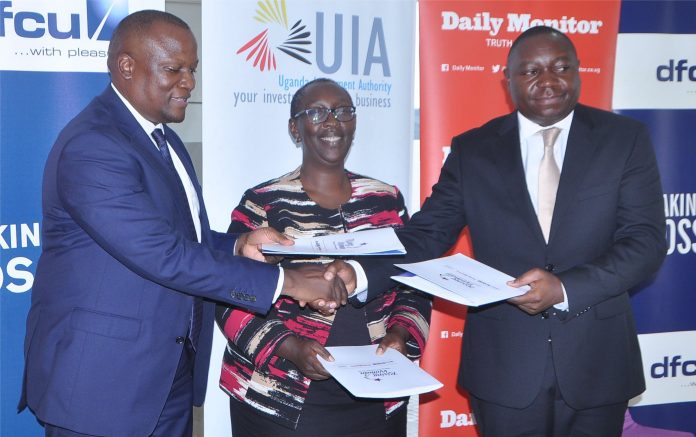
Officials at the launch of the second edition of the initiative

Over 5000 female entrepreneurs in Uganda will benefit from the second edition of Rising Women Initiative organised by Monitor publications limited, DFCU Bank and Uganda investment authority (UIA).

The initiative started last year under the theme ‘taking your business a head’ is meant to recognise, celebrate and promote a culture of mentorship among women in business in Uganda.

It targets Ugandan business women, small scale investors, and entrepreneurs, members of Uganda entrepreneurs association limited, Uganda small scale industries association and Uganda manufacturers association.

Speaking at launch, the chief executive officer Mathias Katamba regarded the initiative as a fundamental step on the path to creating a financial enabling environment for female entrepreneurs.

“As a financial institution that believes in building thriving communities, DFCU embarked on a journey to creating an enabling environment for small and medium women owned enterprises started in 2007, with the introduction of the women in business program. Our primary motivation is the fact that despite women making up to over 52 per cent of the population of Uganda, it is not reflected in the ratio of women who have access to financial services.”

He announced the call for business proposals through the bank’s website which will begin the contention for the to 10 business idea. “Like we did last year, we will reward the top three business submission with monetary funding and an all-expense paid learning tour to Nairobi.”

Johnson Omolo, the general manager of NTV Uganda said as a media house, they have a critical role to play in society by providing a platform through which ideas that are geared to improving he lives of people in different spheres.

“It is our responsibility to pass on information to those who need it be it our customers or not. We call upon all women to look out for the inspirational and impactful stories of fellow successful women entrepreneurs in the full women magazine,” he said.

The acting director of Uganda investment authority (UIA), Lawrence Byensi said the body’s alliance with DFCU Bank and Nation Media Group will widen efforts as an agency devoted to driving national economic growth and development in partnership with the private sector.

He encouraged them to write proposals from which the top three winners will walk away with Shs15 million, Shs10 million and Shs5 million respectively.

Stories Continues after ad

Experts urge Comesa partner states to establish Road Funds and Road Development Agencies

Uganda Road Fund finances construction of national roads in Uganda

Fifteen out of 21 countries in the Common market for Eastern and Southern Africa (COMESA) have established dedicated Road Funds and Road Development Agencies to undertake maintenance, and development of roads for both the regional and national road networks.

These are: Burundi, Djibouti, Egypt, Eritrea, Ethiopia, Kenya, Libya, Madagascar, Malawi, Rwanda, Sudan, Swaziland, Uganda, Zambia and Zimbabwe.

For most of these countries, funding for road maintenance has been derived from fuel levy while funding for new construction and rehabilitation has been through borrowing from development banks and support from cooperating partners.

Experts attending the ongoing 11th COMESA Joint Technical Committee meeting on infrastructure, in Nairobi, Kenya, which brought together experts in transport, ICT and energy, have now called on the remaining countries to establish such funds.

The experts meeting was attended by permanent secretaries, directors and other technical staff from Member States governments and specialized agencies.

The meeting observed that roads command a bigger market share for surface transport. Hence, COMESA countries have undertaken road sector management reforms to address financing of routine maintenance, rehabilitation and construction of new roads by establishing road funds administration.

The expert’s report and recommendations will be tabled before the joint meeting of ministers of infrastructure responsible for transport, ICT and energy on Thursday 20 June 2019 in Nairobi.

Meanwhile, COMESA Secretariat has so far conducted awareness workshops on the Tripartite Transport and Transit Facilitation (TTTF) Programme in six Member States. This is part of a 710,000 Euros provided by the European Union to support the awareness activities.

As a result, the countries have started submitting requests for technical support to start implementing the TTTF programme. The programme was designed to assist Member States domesticate and implement the agreed harmonized regional road transport regulations, standards and systems in a coordinated and synchronized manner.

The overall strategic objective is to facilitate the development of a more competitive, integrated and liberalized regional road transport market in the Eastern and Southern African region.

A sub-programme for COMESA specific activities was formulated which focused on operationalization the COMESA Carrier License, support enhancement of the One Stop Border Posts and its performance, supporting establishment of Corridor Management Institutions and road safety Management among others.

Stories Continues after ad