Stanbic Bank
Stanbic Bank
21 C
Kampala
Stanbic Bank
Stanbic Bank
Home Blog Page 1293

UTB, UHOA sensitize tourism stakeholders on standards

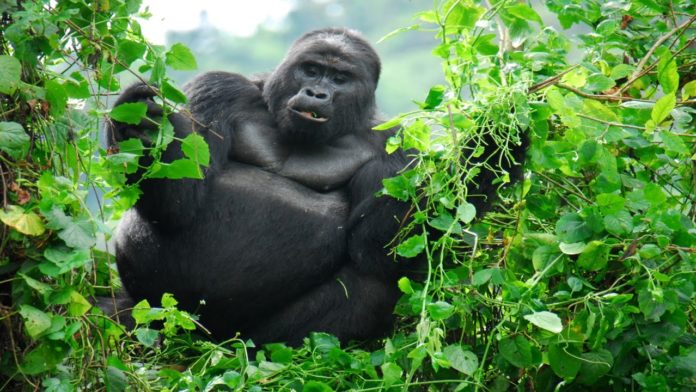
Gorillas are a major tourist attractions into Uganda.

Hotel owners and Managers have been encouraged to embrace standards if they are to improve the country’s competitiveness as a destination as well as attract more travelers.

This was one of the conclusions that were drawn up during a Uganda Tourism Board (UTB) and Uganda Hotel Owners Association (UHOA) training and sensitization workshop on registration, inspection and licensing of accommodation facilities held at the Imperial Royale Hotel in Kampala on May 15, 2019.

In his remarks, Bradford Ochieng, the Deputy Chief Executive Officer UTB said that classifying all tourist facilities in the country would enable Uganda not only enforce standards in the hospitality industry but also improve the country’s competitiveness and ability to attract visitors.

“Close to 90% of the experience of a traveler is down to an accommodation facility; be it airport shuttle service, in-land travel, conference facilities, among others. We thus view you as key partners in the tourism chain. However, we also have to remember that we are competing for the same travelers with our neighbours. Therefore, we have to critically look at our competitiveness, in terms of pricing, hygiene, standards. Potential travelers look at these and many other things before zeroing in on their preferred destination,” he said.

Adding, “That’s why as UTB, we are at the forefront of ensuring that standards are enforced in this industry. This can only be done when we know the people who are in this business and the available facilities; whether hotel, lodge, guest house, so as to plan better for the sector.”

Majority of the hotels in the central region of Uganda generally offer acceptable services to their clients while those in protected areas such as parks are perceived as good but expensive with less variety.

Suzan Muhwezi, the Chairlady of UHOA said that the process of registering, licensing and classifying accommodation facilities in the country is aimed at helping Uganda compete favorably with other hotels in the East African region and also internationally.

“As you might know, we are also positioning ourselves as the MICE (Meetings, Incentives, Conferences, and Exhibitions) destination of choice in East and Central Africa. We have therefore partnered with UTB to embark on a countrywide sensitization campaign so as to empower our members meet the expected standards by both the domestic and international market,” remarked Mrs. Muhwezi.

She also clarified that despite an earlier classification and grading exercise carried out by UTB, they were starting process afresh given that proprietors of the facilities had said they weren’t properly sensitized on what was needed of them at the time.

Muhwezi also revealed, “All tourism operators; hotels, guides, airlines, tour operators will now require a license from UTB to operate. A tourism license will be levied on everyone involved in the sector so as to have uniformity across. We shall thus sensitize all our members regarding this issue as well. We didn’t want UTB to start charging for this license before sensitizing members what it was about.”

Richard Kawere, CEO of the Uganda Tourism Association, while addressing the participants urged them to instead focus on upgrading rather than debating minimum standards.

“We should remember that, while we are still debating on the minimum standards, the world is not waiting for us. This is a very competitive industry and standards, are one of the benchmarks of measurement for people to come and visit us. Whereas we are in the same region, we are competing with neighbours for travelers, yet they already had these discussions and committed to the standards,” he said.

He however added that all hope was not lost noting that the minimum standards are coming on the backdrop of an industry that had been in existence without proper regulations or standards.

“Some people put up their properties without guidance. The question therefore is, how do they fit in? On the minimum standards, let us sure that going forward, any established that is being set up has these standards so that we no longer have to debate minimum standards but rather talk about upgrading.”

According to UTB, if a hotel establishment is given a star rating, it eases its marketing and guests will be given the right information about the establishment thereby reducing disappointments. As a result, the hotel industry will flourish because of delivering as expected, leading to guest satisfaction, repeat business, and customer loyalty among others.

The star grading system is used to rate the quality and standards of services of hotels and they vary from country to country. The hotels can be graded from one-star to five-stars based on a number of factors such as facilities, service level, location, and staff professionalism among others.

Registration and licensing of all tourist facilities by UTB is currently ongoing.

Known as the “Pearl of Africa,” Uganda is located in East Africa and offers some of the continent’s most diverse wildlife viewing, dramatic landscapes, and immersive cultural experiences and warm people and hospitality. Uganda is home to more than half the world’s population of endangered mountain gorillas, and trekking to observe these gentle giants in Bwindi Impenetrable Forest is one of the world’s top bucket list travel activities.

Safari opportunities abound in savanna, forest, and wetland settings throughout 10 national parks, where visitors can come face to face with “The Big Five” – lion, leopard, rhino, elephant, and buffalo – as well as giraffe, zebra, chimpanzee, hippopotamus, crocodile, and more than half of all bird species found in Africa. Among Uganda’s extraordinary natural attractions are the snow-capped Rwenzori Mountains; expansive Lake Victoria, which forms the source of the Nile River; and Murchison Falls National Park.

Stories Continues after ad

Adopting a healthy lifestyle helps reduce the risk of dementia

African women learn to ride bicycles

People can reduce their risk of dementia by getting regular exercise, not smoking, avoiding harmful use of alcohol, controlling their weight, eating a healthy diet, and maintaining healthy blood pressure, cholesterol and blood sugar levels, according to new guidelines issued Tuesday by the World Health Organization (WHO).

“In the next 30 years, the number of people with dementia is expected to triple,” said WHO Director-General Dr Tedros Adhanom Ghebreyesus. “We need to do everything we can to reduce our risk of dementia. The scientific evidence gathered for these Guidelines confirm what we have suspected for some time that what is good for our heart, is also good for our brain.”

The Guidelines provide the knowledge base for health-care providers to advise patients on what they can do to help prevent cognitive decline and dementia. They will also be useful for governments, policy-makers and planning authorities to guide them in developing policy and designing programmes that encourage healthy lifestyles.

The reduction of risk factors for dementia is one of several areas of action included in WHO’s Global action plan for the public health response to dementia. Other areas include: strengthening information systems for dementia; diagnosis, treatment and care; supporting carers of people with dementia; and research and innovation.

WHO’s Global Dementia Observatory, launched in December 2017, is a compilation of information about country activities and resources for dementia, such as national plans, dementia-friendly initiatives, awareness campaigns and facilities for care. Data from 21 countries, including Bangladesh, Chile, France, Japan, Jordan and Togo, have already been included, with a total of 80 countries now engaged in providing data.

Creating national policies and plans for dementia are among WHO’s key recommendations for countries in their efforts to manage this growing health challenge. During 2018, WHO provided support to countries such as Bosnia and Herzegovina, Croatia, Qatar, Slovenia and Sri Lanka to help them develop a comprehensive, multi-sectoral public health response to dementia.

An essential element of every national dementia plan is support for carers of people with dementia, said Dr Dévora Kestel, Director of the Department of Mental Health and Substance Abuse at WHO. “Dementia carers are very often family members who need to make considerable adjustments to their family and professional lives to care for their loved ones. This is why WHO created iSupport. iSupport is an online training programme providing carers of people with dementia with advice on overall management of care, dealing with behaviour changes and how to look after their own health.”

iSupport is currently being used in eight countries, with more expected to follow.

Dementia: a rapidly growing public health problem

Dementia is an illness characterized by a deterioration in cognitive function beyond what might be expected from normal ageing. It affects memory, thinking, orientation, comprehension, calculation, learning capacity, language and judgement. Dementia results from a variety of diseases and injuries that affect the brain, such as Alzheimer disease or stroke.

Dementia is a rapidly growing public health problem affecting around 50 million people globally. There are nearly 10 million new cases every year. Dementia is a major cause of disability and dependency among older people. Additionally, the disease inflicts a heavy economic burden on societies as a whole, with the costs of caring for people with dementia estimated to rise to US$2 trillion annually by 2030.

Stories Continues after ad

Western Region select team to face Cranes in Regional tour named

Western-Region-Select 2017

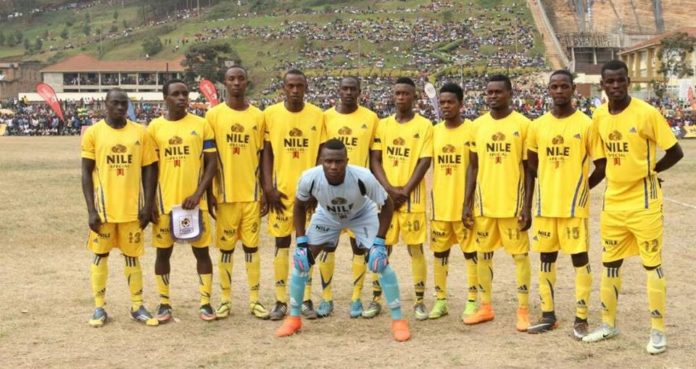
The Western region technical committee has summoned a provisional squad of 28 players that have begun preparations for the Regional Tour game against Uganda Cranes on Saturday 18th May 2019 at Bushenyi Ground.

None of the summoned players is from either the Big League or the Uganda Premier league clubs Kabale Sharp and Nyamityobora and Mbarara City teams respectively.

The squad of 28 players includes three goalkeepers, nine defenders, eight midfielders and eight strikers.

The team will be managed by Charles Livingstone Mbabazi, who also serves as the head coach at Uganda Premier League side Mbarara City FC

The team began residential training on Wednesday Morning with the training sessions taking place at Kakyeka Stadium. The final list of 20 players will be released before Friday.

Uganda Cranes (COSAFA bound team) on the other hand also begun preparations under the guidance of Police FC head coach Abdallah Mubiru.

The team entered residential camp at Sky Hotel on Tuesday and will travel to Bushenyi on Friday morning.

Western Region Squad

Goalkeepers: Turyasingura James (Ntoda FC), Kiyemba Mohamood (Terrazo & tiles), Namara Evaristo (Kyambura FC)

Defenders: Niyonzima Benon (Ntoda FC), Ssembatya Ibarahim (Rushere FC),Muhwezi Alex Kata (Six O’clock FC), Arinda Davis(Kigezi FC), Niyenzimana Michael (Gorilla highlands FC), Omony Denis (Mbarara City Junior Team), Babu Bashir (Mbarara FC), Twesigye Timothy (Bushenyi veterans FC ), Muhwezi Gideon (Sansio Bulldogs FC)

Midfielders: Bbaale Andrew (Terrazzo & tiles FC), Nsereko Farouk(Rushere FC), Nsubuga Sadat(Mbarara FC), Ashaba Marvin (Ibanda Municipality), Mbishinzimana Allan(Gorilla highlands FC)Atuhaire Abraham (Barrrack Ntoda FC), Kaija Sunny(Kigezi FC), Turyamusiima Ronald (Six O’clock FC)

Strikers: Ahimbisibwe Ivan (Terrazzo & Tiles FC), Sande William (Kyambura United), Amanyire Rembo (Bushenyi Veterans FC), Arigumaho Seiri (Six O’clock FC), Kwesiga Brian (Ntoda FC), Matovu Mohammed (Rushere FC), Kabuganda Pastori (Mitooma FC), Guloba Moses (Bushenyi Veterans FC)

Saturday: 18th May 2019

Match: Western Region Select vs Uganda Cranes

Venue: Bushenyi Main Ground

Time: 4pm

Stories Continues after ad

Countries must up their game to reduce low birth weights, warns UN-backed report

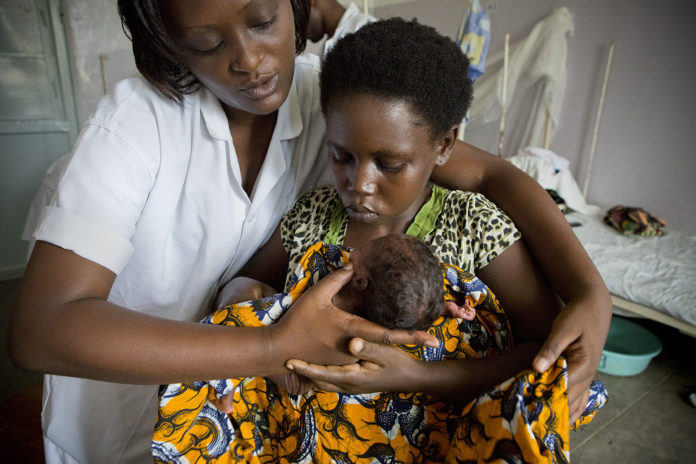
Reducing maternal mortality in Burundi

Around one-in-seven babies worldwide weighed less than 5.5 pounds, or 2.5 kilogrammes at birth, according to latest data from 2015.

The Lancet Global Health research paper was developed by experts from the World Health Organization (WHO), UN Children’s Fund (UNICEF) and the London School of Hygiene and Tropical Medicine, which not only reveals that more than 20 million babies that year were born with a low birthweight, but that 80 per cent of the world’s 2.5 million low weight newborns die every year, because they are either pre-term and/or small for gestational age.

“We have seen very little change over 15 years”, spelled out lead author Hannah Blencowe, from the London School of Hygiene and Tropical Medicine in the United Kingdom. “Despite clear commitments, our estimates indicate that national Governments are doing too little to reduce low birth weight”.

In 2012, WHO’s 195 member States committed to reduce its prevalence by 30 per cent, by 2025. However, estimates found only a 1.2 per cent decrease worldwide – from 22.9 million low birthweight livebirths in 2000 to 20.5 million in 2015 – indicating that if the rate did not pick up, the world would fall well short of the annual 2.7 per cent reduction required to meet the 2012 target.

Weighing in

Although every newborn must be weighed, co-author UNICEF Statistics and Monitoring Specialist, Julia Krasevec, said that “worldwide, we don’t have a record for the birth weight of nearly one-third of all newborns”.

“We cannot help babies born with low birth weight without improving the coverage and accuracy of the data we collect”, Ms. Krasevec added.

And low weight babies who survive are at greater risk of stunting, or being short for their ages in height, and suffering developmental and physical ill health later in life – including chronic conditions such as diabetes and cardiovascular disease.

The study’s authors have called for international action to ensure that all babies are weighed at birth, to improve clinical care and to promote public health inquiry into the causes of low birthweight, to reduce death and disability.

“With better weighing devices and stronger data systems, we can capture the true birth weight of every baby, including those born at home, and provide better quality of care to these newborns and their mothers” Ms. Krasevec affirmed.

Rich or poor, no region is immune

The publication illustrates that three-quarters of those affected were born in Southern Asia and sub-Saharan Africa.

However, the problem is also significant in high-income countries in Europe, North America, Australia and New Zealand, where there has been virtually no progress in reducing low birthweight rates since 2000.

In low-income countries, poor growth in the womb is a major cause, while the new analysis associates the issue in more developed regions with prematurity, or a baby which is born earlier than 37 weeks.

Because it is “a complex clinical entity”, WHO co-author Mercedes de Onis said that reduction “requires understanding of the underlying causes in a given country”, which “should be a priority” in high-burden countries.

Attachments area

Stories Continues after ad

Court permits pregnant woman to give birth before she is hanged

Meriam Yehya Ibrahim, 27, who was born to a Muslim father but brought up a Christian by her mother.

An Islamic court in the Sudanese capital has said that a pregnant woman sentenced to hang for apostasy after she married a Christian man will be allowed to give birth before she is executed.

Meriam Yehya Ibrahim, 27, who was born to a Muslim father but brought up a Christian by her mother, was convicted on Sunday in Khartoum and given three days to recant her faith or face a possible death sentence.

“We gave you three days to recant but you insist on not returning to Islam. I sentence you to be hanged,” Judge Abbas Mohammed Al-Khalifa told Mrs Ibrahim, addressing her by her father’s name, Adraf Al-Hadi Mohammed Abdullah.

Mrs Ibrahim also faces a sentence of flogging for adultery on the grounds that her marriage to a Christian man from South Sudan is considered void under Islamic law. She will be given 100 lashes. Because her father was Muslim, she was considered by the court to be the same.

Mrs Ibrahim told the judge: “I am a Christian and I never committed apostasy.”

Her lawyer said that she intended to appeal against the decision.

Amnesty International said Mrs Ibrahim was eight months pregnant and in detention with her 20-month-old son. A spokesman said: “The fact that a woman could be sentenced to death for her religious choice and to flogging for being married to a man of an allegedly different religion is abhorrent and should never be even considered.”

The sentence has been condemned by the international community. In a joint statement, the embassies of Britain, the United States, Canada and the Netherlands expressed “deep concern” over her case.

“We call upon the government of Sudan to respect the right to freedom of religion, including one’s right to change one’s faith or beliefs,” they said.

Stories Continues after ad

Bank of Uganda gives Dfcu 24 extra months to cling to Meera Investment properties

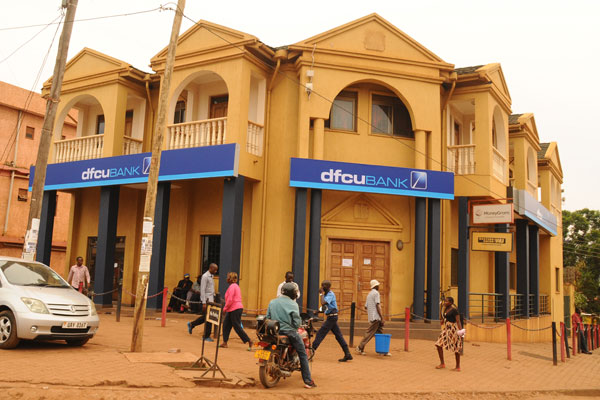
The Former Crane Bank Ntinda branch, which DFCU took over and illegally rebranded in its name, was ordered by the court to vacate and compensate Meera Investments because the property belongs to Meera.

Despite a related case in court, the Bank of Uganda has decided to hand Dfcu bank extra 24 months to occupy freehold properties of Meera Investments after the initial 34 months ended.

Sources say the deal to give Dfcu bank extra time was signed by BoU Governor Emmanuel Tumusiime-Mutebile, Deputy Governor Dr Louis Kasekende as well as Head of Legal Margaret Kasule on one side while Dfcu top bosses appended signatures on behalf of the commercial bank.

In October 2016, BoU took over Crane Bank Limited on grounds of undercapitalization, placed it under receivership before transferring it to Dfcu bank in January, 2017. Dfcu bank which received some of the assets and liabilities of CBL would be allowed to operate in different CBL branches whose ownership belonged to Meera Investments, one of companies under Ruparelia Group.

The Chairman of Ruparelia Group Sudhir Ruparelia and Meera Investments in a recent in the application want the recovery, transfer and return of freehold property from CBL in receivership. “…I have been advised by lawyers, Kampala Associated Advocates, which advice I verily believe to be true, that under the Constitution and the Land Act, the Respondent cannot own and hold freehold property and is therefore, not capable of holding the suit property in its names,” the application continues.

Between 2012 and 2016, Meera Investments leased the 46 properties to now defunct CBL on different terms with the leases being duly registered as encumbrances on Meera’s freehold and mailo interest.

The lease titles were subsequently processed and issued to CBL which agreed to pay US$6,000 as ground rent for each of the properties effective on or before the January 1, of every year to the property owners (Meera Investments).

However, when BoU handed over CBL to Dfcu bank, which was the new tenant, it moved to take over the 46 properties, without the consent of the owners Meera Investments.

Through a subsequent search at the relevant land registries, Meera Investments discovered that; without it’s prior written consent, Dfcu bank in addition to taking possession of the suit properties, caused the leasehold interest to be transferred into its names and had been registered thereon as the proprietor of the leasehold interest.

They add that at the execution of the transfers in favour of Dfcu and at the time of causing the transfer of the leasehold interest into the names of Dfcu, the registration of Meera as the proprietor of the freehold and mailo was and is still intact.

Meera says Dfcu was aware of this fact or could have ascertained by way of a simple search.

Stories Continues after ad

French ‘serial killer doctor’ accused of poisoning over 50 patients to revive them and impress colleagues

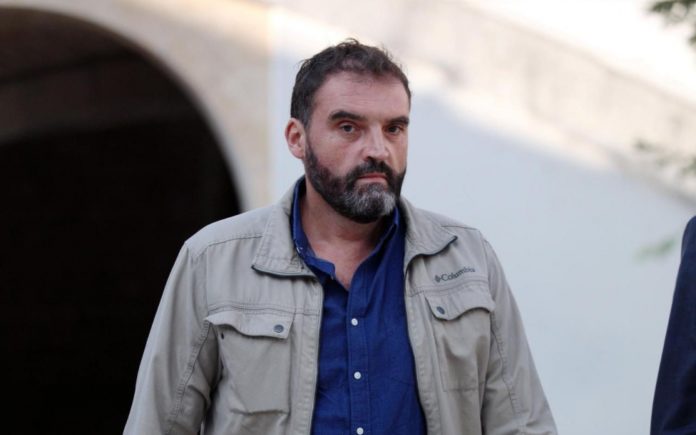
Dr. Frederic Pechier

A French doctor has been arrested on suspicion of poisoning over 50 patients in order to impress his colleagues by stepping in at the last moment to “save” them, according to prosecutors who likened him to a “pyromaniac fireman.”

Anesthesiologist Frederic Pechier has been taken into custody regarding 42 “serious adverse events,” including 20 deaths, which happened on his watch during the 17 years he worked at clinics and hospitals in Besançon, in eastern France.

Pechier interfered with the anesthesia pouches used by colleagues in order to swoop in at the last minute and rescue the distressed patients, prosecutors claim, gaining him the respect of his fellow doctors and the admiration of his victims. And his alleged scheme appears to have worked – his peers reportedly considered him a “brilliant” anesthesiologist.

“If these cases of poisoning are proven, he would be one of the biggest serial killers in the history of France,” said Me Berna, lawyer for several of the victims.

Pechier is already under “judicial supervision,” having been charged in May 2017 with poisoning seven other patients, two of whom died, between 2008 and 2017. All of the victims were otherwise healthy before they mysteriously suffered cardiac arrest, and investigators later found potassium levels five times the lethal dose in their blood.

The scope of the investigation was expanded after the bodies of four more patients who died under suspicious circumstances during operations at a clinic where Pechier worked were exhumed in December to be tested for traces of potassium.

Despite his insistence he be allowed to continue practicing medicine as long as he stayed outside the operating theatre, he was banned from working pending trial.

Pechier maintains his innocence, and his lawyers have complained that the judge’s ban on practicing has placed him in a “complicated” financial situation.

Attachments area

Stories Continues after ad

Africa needs inclusive trade agreement: Continental free trade agreement gaining momentum

Continental-Free-Trade-Area-Infographic

By Jamie Macleod and David Luke

The African continental free trade area (AfCFTA) is among the most momentous of developments in trade. Signed by 52 African states, it is by number of participating countries the largest trade agreement since the formation of the World Trade Organisation. It occurs not just in an international climate of aversion to free trade, notably with stalemate at the WTO and bellicose US trade policy, but also in a climate in which trade agreements just don’t seem possible. Many negotiations have been drawn out and time consuming, often languishing without ever entering into force. These include – but are not limited to – the Regional Comprehensive Economic Partnership, Free Trade Area of the Americas, Transatlantic Trade and Investment Partnership, the European Union’s economic partnership agreements, and the tripartite free trade area.

The AfCFTA is different. Despite capacity constraints and the diversity of their countries, African negotiators have worked industriously and effectively. This is an important moment for Africa. The AfCFTA consolidates progressively 55 fragmented African countries into a market of 1.3 billion people with a combined GDP of $2.3 trillion, roughly the size of the India. Research at the United Nations Economic Commission for Africa forecasts it to have the potential to boost intra-African trade by between 50 per cent-100 per cent, depending on the extent to which non-tariff barriers are also reduced. It has been driven by firm political commitment. The threshold number of country ratifications required for the agreement was reached within one year, a pace of ratifications that is unprecedented in African Union history.

Yet it is not enough for the AfCFTA to be negotiated, concluded and ratified. It must change lives, reduce poverty, and contribute to economic development. It is increasingly recognised in the international trade discourse that trade must become more inclusive. There are a number of measures African policy-makers can take to ensure this, such as adopting simplified trading regimes and addressing the non-tariff barriers that prove most burdensome to small businesses.

In doing so, the policy-makers behind the AfCFTA can learn from integration efforts elsewhere in the world. In the past, the EU was the model most usually held up as exemplary. Yet, for Africa, the Association of Southeast Asian Nations may be more appropriate. Like Africa, it comprises a diverse range of countries, politically, socially and economically, and continues to face challenges with both between- and within-country inequality. As it has integrated, Asean, like Africa, has had to consider how to strategically align its partnerships with outside countries and determine how to share equitably the benefits of integration among its members. Many of the technical challenges to integration in Asean have African analogies; implementation of regional initiatives can be uneven, services trade liberalisation can lag and non-tariff barriers often persist. As Africa launches the AfCFTA, much can be learned by looking east.

Failure, too, is a famously great teacher. Africa can draw lessons from the failed FTAA initiative, which in trying to consolidate a mega-regional trade agreement over 34 countries at very different levels of development, ended ignominiously without agreement in 2005 after a decade of negotiations. There, it was recognised that the more advanced partners, such as the US, should take leadership roles. Yet, if they are perceived as seeking to concentrate most of the benefits on themselves, they can lose their legitimacy and unravel integration.

Inclusive Trade in Africa: The African Continental Free Trade Area in Comparative Perspective is the first book-length piece of analysis on the AfCFTA phenomenon. The breadth of expertise brought together by the contributing authors affords scope over an interesting range of perspectives, from East Asia to Latin America. It provides expanded analysis upon the above topics in considering how the remarkable AfCFTA momentum can be used to produce inclusive trade in Africa.

Jamie Macleod is a Trade Policy Expert and David Luke is Coordinator of the African Trade Policy Centre at the United Nations Economic Commission for Africa.

Attachments area

Stories Continues after ad

All is set as 34 corporate teams prepare to participate in Standard Chartered “SC Cup – Road to Anfield 2019” Tournament

Standard-Chartered-Bank-Uganda-CEO-Alber-Saltson

34 corporate teams in Uganda are ready to participate in the Standard Chartered Cup – Road to Anfield 2019 football tournament organised by Standards Chartered Bank. The draw for the competing teams was held yesterday at Kampala Sheraton Kampala Hotel.

The tournament is a one-day sports activity scheduled to take place on Saturday at the Mandela National Stadium named after South Africa’s first black president Nelson Mandela. It is a 10 minute, five-a-side football competition with two substitutes.

The teams have been divided into eight groups. Each group will therefore be made up of 4 teams with the exception of the first and eighth groups that will accommodate five teams each.

The tournament is designed in a Round Robin structure which is divided into (Group Stages, Round of 16, Quarter finals, Semi Finals and the Finals).

Dan Mubiru, the Edgars Youth Programme Lead technical support personnel while addressing the participants said;

“We have assembled a diligent, competent and dedicated technical team that will oversee the running of the tournament and ensure that set standards are perfectly met. The likes of Peter Makanga, Ali Kalyango and Saidi Segirinya along with other dedicated team members of Edgars Youth Programme will ensure the successful progression of the tournament.”

John Mwesigye the Chairman Organizing committee for the SC Cup said;

“This year the stakes are higher, we guarantee a better organized tournament which is flawless and fair. Team verification commenced ahead of the tournament with companies completing the registration process by sharing the supporting documents which included; List of players, Letter from the company’s Human resource confirming that the participants are employed by the company indicating NSSF numbers against respective participant’s name, Staff IDs, Group Photo of the Participants, Passport size photograph for each participant and Signed registration forms accepting the T&Cs. We anticipate a seamless competition.

The field layout will have 4 mini pitches of 40 x 30 metres and these shall be named after the current Liverpool Players: Pitch 1. Mohammed Salah, Pitch 2. Alisson Baker, Pitch 3. Virgil van Dijk, Pitch 4. Sadio Mane

The Kick off time is scheduled for exactly 8:05am and expected to end at 4:30pm from which the winner will obtain a trophy and proceed to travel to UK – Anfield.

The teams

Group A: Uganda Baati Ltd., Baylor College of Medicine, Sanlam Insurance, Bukedde and Ntake Bakery.

Group B: Toyota Uganda (B), Uganda Batteries Ltd., Sheraton Kampala Hotel and NTV Uganda.

Group C: Malaria Consortium, NWSC, Roofing Rolling Mills Ltd. and Civil Aviation Authority Team A.

Group D: Harris International, Royalway Media, Seroma Limited and National Social Security Fund (NSSF).

Group E: Sports Outreach Ministry Uganda, Hardware World Ltd., Monitor Publications and Airtel Uganda.

Group F: Mengo Hospital, Toyota Uganda Team A, MTN Uganda and Roofings Limited.

Group G: Jessa Dairy Farm, Century Bottling Company Team B, Jubilee Insurance and Uganda Breweries Ltd.

Group H: New Vision, Letshego Uganda Limited, City Oil Uganda Limited, Century Bottling Company (A) and Civil Aviation Authority Team B.

Stories Continues after ad

Ugandan legislators urged to streamline e-passport use

The head of Uganda’s Mission in South Africa, Hon. Barbara Nekesa, with Ugandan MPs in Pretoria.

The head of Uganda’s Mission in South Africa, Hon. Barbara Nekesa, has appealed to Ugandan MPs to push government to streamline the move towards the use of electronic passports in order for the Mission to remain relevant to Ugandans living in the country.

Nekesa said that following the decision to introduce the e-passports, the Ministry of Internal Affairs wrote and instructed the missions to stop issuing and return the old passports to Kampala.

“Now we cannot issue any passports because we do not have passports; we refer people, who want new passports back home,” she said.

The High Commissioner was meeting a delegation of visiting parliamentarians from the committees of Legal and Parliamentary Affairs and Government Assurances, who paid a courtesy call on her at the High Commission in Pretoria, on Wednesday 15 May 2019.
The meeting was attended by the Deputy Head of Mission, Mr. Kintu Nyago and the Minister Counsel, Mr. Julius Kibula.

The MPs are in South Africa on a benchmarking visit to the Pan African Parliament in Midrand.
Nekesa said that there was need for an urgent meeting to be called by the Ministry of Internal Affairs and the missions permitted to issue passports to agree on how to roll out the issuance of the e-passports by those missions. She also said that the consular officer, who issues passports, would also require training before embarking on the process.

“We need the Ministry of Internal Affairs to come to our rescue such that we are helpful to our people. We have several Ugandans working here, and need to renew their passports,” she said.
Nekesa also said that they had contacted the Ministry of Internal Affairs advising to reduce the time taken to respond to online visa applicants and to make provision for online group visa applications to ease the application process.

She appealed for more funding, which she said has not increased despite the mission having been upgraded to a higher status with more staff.

MPs raised concern that Ugandans intending to travel to South Africa were finding it difficult to secure visas to the country and appealed to the Uganda Mission in South Africa to resolve the issue. They quoted recent media reports that showed that Ugandans, who wanted to take part in Africa’s Travel Indaba held in Durban, failed to obtain required visas in time.

“Ugandans are delayed when they apply for South African visas; can you raise it with the government here. It’s becoming increasingly difficult to secure visas to this country,” said Hon. Alex Byarugaba.

Stories Continues after ad