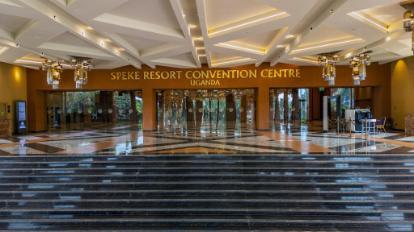
The 11th Annual Oil and Gas Convention 2026 will take place later this month, bringing together key government officials, industry players and investors as Uganda advances toward commercial oil production with the meeting scheduled to be held at Speke Resort Munyonyo.
The convention comes at a time when the country is on the brink of commercial oil production, marking a shift from years of infrastructure development to a long-term operational phase expected to span decades. Organized by the Uganda Chamber of Energy and Minerals, the Ministry of Energy and Mineral Development, and the Uganda National Oil Company, the event will run under the theme “First Oil: Fulfil the Promise, Forging the Future.”

The convention is expected to serve as a commercial launchpad for Uganda’s broader value creation strategy, positioning the country as a key energy and industrial hub in East and Central Africa.
Uganda’s oil and gas sector has made significant strides, particularly in the Albertine Graben, where recoverable reserves are estimated at 1.4 billion barrels. Once production begins at full scale, output is projected to reach up to 230,000 barrels per day.
Key upstream projects continue to advance steadily. The Tilenga project, operated by TotalEnergies, has drilled 152 wells as of late 2025, including all 145 wells required for first oil. Meanwhile, the Kingfisher development, overseen by CNOOC, has reached about 70 percent completion, with nine production wells already finalized.

The East African Crude Oil Pipeline, stretching 1,443 kilometres from Hoima to the Tanzanian port of Tanga, has surpassed 71 percent completion, while the near-complete Kabalega International Airport, now at 96 percent, is expected to play a critical role in handling heavy cargo for the oil sector.
Officials say the sector’s focus is now shifting toward operational efficiency and asset integrity management, as the country prepares for sustained production over the next 20 to 30 years.
Beyond upstream activities, attention is also turning to value addition. The planned $4 billion refinery project, with a capacity of 60,000 barrels per day, is progressing toward a Final Investment Decision expected in July 2026 following an implementation agreement signed with UAE-based Alpha MBM Investments. Construction of the Kabalega Industrial Park is also set to begin in 2026, with dozens of investors already identified in petrochemicals, fertilizers and logistics.
The government is also preparing to launch a third petroleum exploration licensing round in the 2025/2026 financial year, targeting new blocks in the Albertine Graben and northern basins, while additional seismic surveys are underway in the Kasurubani block to expand the country’s resource base.
Uganda’s energy ambitions extend beyond oil and gas. The country currently has an installed electricity generation capacity of about 1,400 megawatts, largely driven by hydropower projects such as the Karuma Hydropower Plant, Isimba Hydropower Plant, and the Nalubaale-Kiira complex. However, demand remains relatively low, with per capita consumption estimated at 215 kilowatt-hours per year and national access standing at about 57 percent.
Authorities are working to expand the grid, reduce transmission losses, and stimulate industrial demand, while also increasing electricity exports to regional markets including Kenya, Rwanda, Tanzania, South Sudan, and the Democratic Republic of Congo through initiatives such as the East African Power Pool.
Renewable energy is also gaining momentum. Solar capacity has grown to about 450 megawatts, supported by more than 1.5 million solar home systems, particularly in rural areas where grid access remains limited. Government policies, including tax incentives and feed-in tariffs, are aimed at increasing renewable energy’s share in the national mix to at least 30 percent by 2030.
Uganda is also exploring geothermal potential estimated at 1,500 megawatts in the Albertine Rift region, although no operational plants have been established to date. Wind energy development remains limited, with projects such as the Masaka Wind Farm contributing modestly to the national grid.
As the country prepares for its first oil, officials emphasize that the sector is expected to significantly boost GDP, attract foreign direct investment, and create jobs, while revenues are earmarked to support infrastructure and social services. At the same time, balancing environmental conservation with development, particularly in ecologically sensitive areas, remains a key priority.