Stanbic Bank
Stanbic Bank
24.1 C
Kampala
Stanbic Bank
Stanbic Bank
Home Blog Page 1298

St. Mary’s SS Kitente and Uganda Martyrs Namugongo dominate government sponsorship

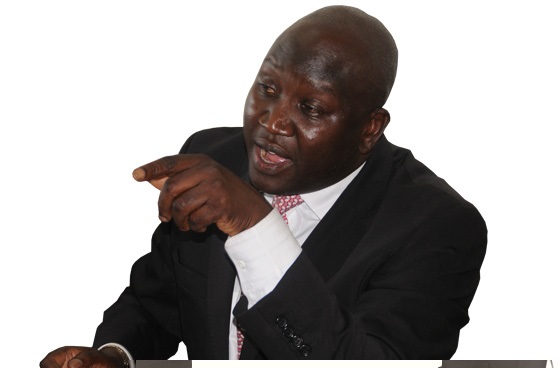
Kitende boss, Lawrence Mulindwa.

A list of students who successfully passed Uganda Advanced Certificate of Education (UACE) examinations last year and are to be sponsored in universities by government for academic year 2019/2020, shows St. Marys’ SS Kitente and Uganda Martyrs Namugongo dominating the sponsorship.

According to the analysis of the list, St. Marys’ SS Kitente and Uganda Martyrs Namugongo who had 498 students and 363 students sit for A level last year, have been awarded 184 and 111 scholarships respectively, by government.

Mengo SS, Gombe SS and King’s College Budo follow with 71, 63 and 62 sponsored students respectively.

No school outside of the central region (Buganda) is in top 10 secondary schools that government awarded sponsorship for students going to universities for academic year 2019/2020.

According to the list, over 120 secondary schools will each have one student being sponsored by government, following the poor performance of the schools during last years A ā€˜level examinations.

Eastern and Northern Uganda are the worst performing regions, with Iganga Secondary Schools only managing to get 18 sponsorships from government. Mbale Secondary School and Jinja Progressive Secondary School Annex would each manage to get 14 sponsorship from government to be in the top 46. Pope John Paul II College, Gulu could only manage to receive two sponsorships to top hat district. Mentor SS in Lira also got 2 sponsorships to top its peers in that district. In West Nile region, Muni Girls SS and St. Josephs College, Ombac all in Arua each managed to get one student to be sponsored by government.

The Eastern and Northern regions have consistently performed poorly in national examinations in the recent years.

Stories Continues after ad

Tough times as need to repay missing Shs320b forces BoU to ask MPs for more cash

ON THE FIRING LINE: Governor Mutebile and former deputy Louis Kasekende.

The Bank of Uganda (BoU) is badly in need of Shs484 billion which it also wants to use to repay Shs320 billion the Auditor General John Muwanga said could not be accounted for despite claims by BoU top officials that they spent it on liquidity support for Crane Bank Limited (CBL) while under receivership between October 20, 2016 and January 25, 2017 when Dfcu Bank controversially took over CBL’s assets.

Mr Muwanga established that Shs320 billion couldn’t be accounted for by BoU top officials after MPs who were on parliament’s Committee of Commissions, Statutory Authorities and State Enterprises (COSASE) led by the then Chairperson Abdul Katuntu ordered him in December last year to audit Shs478 billion BoU officials claimed was spent on CBL as liquidity support and other intervention costs.

The MPs were then probing BoU over its controversial closure of seven banks such as Teefe Trust Bank, Greenland Bank, International Credit Bank, Cooperative Bank, National Bank of Commerce, Global Trust Bank and CBL.

The Shs320 billion which was meant to support CBL so that it keeps afloat was diverted by some of the top officials of BoU for their own selfish interests. COSASE in its report has recommended that officials responsible for the loss must be held accountable. They include former BoU Executive Director of Bank Supervision Justine Bagyenda and Ben Sekabira, the BoU Director Financial Markets Development Coordination.

Days ago Eagle Online reported that BoU through the Ministry of Finance was requesting for Shs484 billion for capitalisation, which is not clear. Sources say BoU officials want to use that money to repay Shs320 billion missing. The other plan is to hoodwink MPs that Shs484b they want is just for securities (assets) not cash, which is not true,ā€ a source who preferred to remain anonymous said. ā€œThey desperately need the money…They are meeting individual MPs on Finance Committee,ā€ the source said.

Like Eagle Online reported days ago, the latest need for money to capitalise BoU confirms the idiom, ā€œthrowing good money after badā€, which refers to spending more money on something problematic that one has already spent money on, in the presumably futile hopes of fixing it or recouping one’s original investment.

Analysts say that whereas recapitalising BoU is a strategic and urgent business for parliament, it should also be equally urgent and strategic to quickly implement the recommendations of COSASE which among others call for the restructuring both the board and management and regulatory regime at the central bank.

ā€œThe people who are behind the mistakes that led to the need for recapitalisation, cannot be the same people to manage the recapitalised central bank. That would be the equivalent of throwing good money at bad money,ā€ an analyst said.

ā€œInsanity is doing the same thing over and over again and expecting different results. BoU potentially faces up to Shs1 trillion in lawsuits as a result of the findings and recommendations of COSASE. Parliament should not put the proverbial cart before the horse; BoU needs overhauling first before anything else. You can’t just take a request to parliament to give you Shs484.2 billion before you account for Shs478 billion stolen in the name of Crane Bank Limited’s capitalisation,ā€ another one adds.

Government wants to pressure MPs to approve a total of Shs620.7 billion for the planned recapitalisation of BoU and other five banks like; Uganda Development Bank (Shs103 billion ), Housing Finance Bank (Shs30 billion ), Post Bank (Shs4.7 billion ), Trade and Development Bank (Shs2.5 billion ) and African Development Bank (Shs1 billion )

Without shame in their faces, Ministry of Finance officials told MPs on Finance Committee yesterday that Shs484.2b was urgently needed to cover for deficits and losses accumulated since 2013.

Lawrence Ssemakula, the Accountant General in the Finance Ministry said while presenting a ministerial policy statement for the financial year 2018/19 to legislators.

Mr Ssemakula told the committee that the Central Bank had indicated to the Ministry that it had suffered deficits since June 2013 and that the money was needed to avert an impending crisis.

ā€œThey have indicated that they have been impaired from June 2013. So as per the BoU Act, we have no option but to allocate the money in our budget since their operations are in deficits,ā€ he said.
When MPs asked whether the ministry had done due diligence on the request by the Central Bank managers, Mr Ssemakula said the deficits are captured in the Auditor General’s reports.

Shs484.2b capitalisation fund for BoU is expected to increase the budgetary allocation towards payment of domestic debt from Shs2.3 trillion in 2018/19 financial year to Shs3.2 trillion in financial year 2019/20.

The Shs3.2 trillion domestic debt budget includes Shs62b for Contingency Fund, Shs140b for court awards arrears, Shs510 billion for treasury bills interest, Shs2.04 trillion for treasury bonds costs, Shs1.2 billion for listing fees and Shs750 million for bank charges.
The latest BoU request for capitalisation first came to the attention of Parliament in May last year with a request for Shs474 billion.

PS Keith Muhakanizi had previously written to the Clerk of Parliament, explaining that BoU had registered a deficit of Shs17b and talked of operating losses of Shs457 billion on account of ā€œmonetary policyā€ and ā€œcurrency costsā€.
ā€œThis projected deficit in the core capital position, together with the required core capital position of Shs30b, puts the additional recapitalisation securities to the tune of Shs504 billion,ā€ read Muhakanizi’s letter in part.

However, MPs rejected the request because it had come at the tail end of the budgeting process and members needed time to scrutinise the request.

The MPs last year accused the Finance ministry of undermining as legislators insisted that the losses at BoU were not fully explained, and that the request recapitalisation came at the end of the budgeting process.

Some committee members, however, called for an investigation into the cause of losses and deficits at BoU before injecting the taxpayer’s money in the bank.

Stories Continues after ad

Loss as court orders Dfcu Bank to repay Shs1b inherited loan

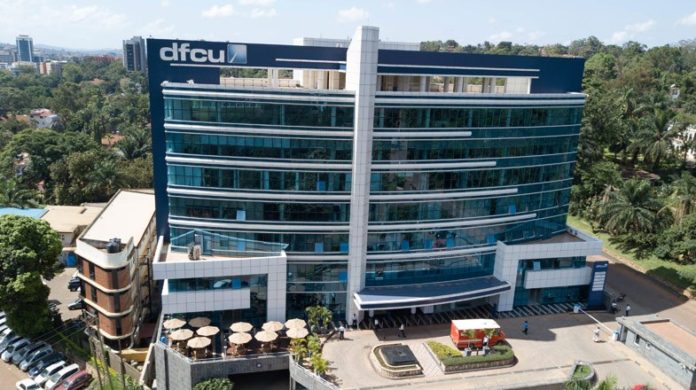
Dfcu Bank headquarters in Kampala.

The High Court’s Commercial Division in Kampala has ordered Dfcu Bank to pay consulting firm, Real Marketing, about Sh994.3 billion (US $266,000) for breach of contract. The matter arose from a loan and its collateral from the defunct Global Trust Bank, whose assets and liabilities DfcuBank inherited after the closure of the latter bank by the Bank of Uganda in 2014.

The court presided over by Justice David Wangutusi gave the bank 30 days until April 19 from March 19, to pay the cash. The award arose from an initial $139,201 (about Shs520, 3 million) price of land, but accumulated interest fixed at 30 percent now raises the costs further.

The court’s orders follow a trial involving the two companies after the bank declined to hand over land titles to Real Marketing. The said land was meant for resale and other development purposes. ā€œDenying the plaintiff title for five years was to create a painful economic upset,ā€ reads Justice Wangutusi’s judgment. ā€œIn conclusion, judgment is entered in favour of the plaintiff … the defendant delivers the certificate of title for the suit land together with the transfer instrument within 30 days. In default of which they will refund Shs523, 550,000 (US$140,000).ā€

The court also awarded interest on that money at 30 percent, which reflects the commercial value of money since 2013 when the transaction was initiated. At the time, Real Marketing bought 10 acres of land that forms part of 43 acres from Global Trust Bank. The title of the land was held by the bank as a mortgage from defunct real estate dealer, Hossana. Global Trust Bank had powers under the mortgage to sell the property without recourse to court if the money Hossana owed it was not paid. Hossana defaulted and the bank moved to sell the land. Real Marketing paid partly by cash and partly borrowed the loan from the same bank to pay.

The agreement between Global Trust Bank and Real Marketing stipulated that upon completion of loan repayment, the bank would pass over vacant possession of the 10 acres. At the time Global Trust Bank was placed under receivership, Real Marketing had not completed repayment. When Dfcu bank took over the closed bank’s liabilities and assets, it became responsible for the transaction involving Real Marketing. Even though Real Marketing completed repayment of the loan balance through new Dfcu’s ownership, and was duly issued with a certificate, the bank did not hand over the land despite several remainders, leading to the suit against the troubled lender.

Stories Continues after ad

Christians petition police to take care of orphans of slain Ssebulime’s Children

Ronald Ssebulime

Over 100 concerned members of a national Christian organization have petitioned the Uganda Police Force (UPF) to take care of the orphans of the late Ronald Ssebulime who was shot dead by police officers on March 24, 2019 for allegedly trailing the vehicle of Ms. Erios Idah Nantaba, Minister of State for ICT and National Guidance. In a press release, dated March 27, 2019, Police spokesperson Fred Enanga admitted that he was innocent.

The petition, addressed to the Inspector General of Police (IGP), was signed by 101 members of Fellowship of Christian Unions (FOCUS) Uganda.

They appealed to the Police to commit to taking care of the late Ssebulime’s four children until they complete formal education by providing school fees, food, clothing, housing and health care.

Ronald Sebulime was a single parent, his wife having died in 2013. His four children ā€œface an uncertain future, are at risk of dropping out of school and being without basic needs such as housing, food, and health care,ā€ stated the petition.

The petitioners further appealed to the IGP to ensure that justice is done, and seen to be done, in the matter of the murder of Ssebulime.

FOCUS Uganda is a community of Christian Union students in universities and colleges, and graduates committed to engaging local, national and global issues as followers of Jesus Christ.

FOCUS Uganda was founded in 1972 and is active on 220 university and college campuses in Uganda. It has offices in Kampala, Mbarara, Masaka, Kabale, Fort Portal, Mbale, Jinja, Arua, Lira and Gulu.

Members of FOCUS Uganda have so far collected approximately Shs2 million to be given to the family of the late Ssebulime as a contribution towards the children’s welfare.

Stories Continues after ad

Ebola outbreak in DRC could spread to neighbouring countries-WHO

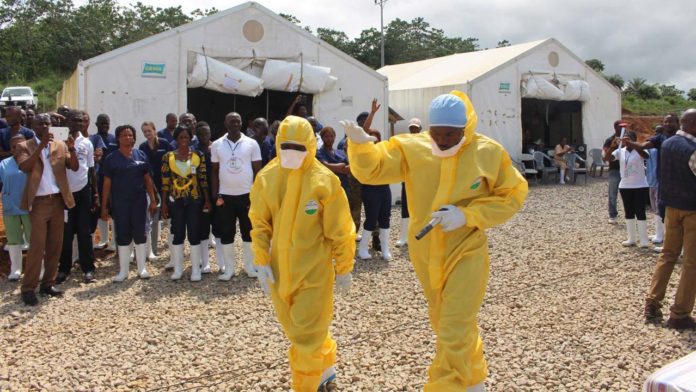
WHO ebola treatment centre in Congo.

Friday’s meeting of the Emergency Committee convened by the WHO Director-General in Geneva, Switzerland under the International Health Regulations (IHR) (2005) regarding Ebola virus disease (EVD) in the Democratic Republic of the Congo (DRC) warned that the deadly disease could spread into neighbouring countries. Uganda borders DRC on the western frontline.

ā€œThe Committee wished to express their deep concern about the recent increase in transmission in specific areas, and therefore the potential risk of spread to neighbouring countries,ā€ the latest WHO statement says.

ā€œBecause there is a very high risk of regional spread, neighbouring countries should continue to accelerate current preparedness and surveillance efforts, including vaccination of health care workers and front-line workers in surrounding countries,ā€ the statement said Friday.

It added that cross-border collaboration should continue to be strengthened, including timely sharing of data and alerts, cross-border community engagement and awareness raising. In addition, work should be done to better map population movements and understand social networks bridging national boundaries.

The committee however noted that the on-going Ebola outbreak in DRC’s North Kivu and Ituri provinces does not constitute a Public Health Emergency of International Concern (PHEIC).

The Committee in the statement commended the efforts of responders from the government of the Democratic Republic of Congo, the World Health Organization and partners to contain the outbreak in a complex and difficult setting.

Additionally, the Committee has provided the following public health advice: Redouble efforts to detect cases as early as possible, identify and follow up all contacts, ensure the highest level of coverage vaccination of all contacts and contacts of contacts. And that sustained efforts must be made to prevent nosocomial transmission and to shorten time between onset of disease and access to high standards of care and therapeutics at Ebola treatment units.

The committee also has said special emphasis should be placed on addressing the rise in case numbers in the remaining epicentres, notably Butembo, Katwa, Vuhovi, and Mandima.

ā€œThe Committee advises WHO and all partners to identify, target, and scale up community dialogue and participation, engagement of traditional healers, and other community engagement tactics to strengthen and broaden community acceptance,ā€ according to the WHO statement.

The committee further called for the safety of responders to be prioritized, while avoiding the securitization of the response.

ā€œThe Committee maintains its previous advice that it is particularly important that no international travel or trade restrictions should be applied. Exit screening, including at airports, ports, and land crossings, is of great importance; however, entry screening, particularly in distant airports, is not considered to be of any public health or cost-benefit value,ā€ the statement said, adding that the committee strongly emphasized the critical need to strengthen currents efforts in both preparedness and response. This will require substantial, immediate and sustained additional financial support.

ā€œWhile there is no added benefit to declaring a PHEIC at this stage, there was concern about current levels of transmission requiring close attention to the evolving situation. The committee advised the WHO Director General to continue to monitor the situation closely and reconvene the Emergency Committee as needed,ā€ the statement said.

Stories Continues after ad

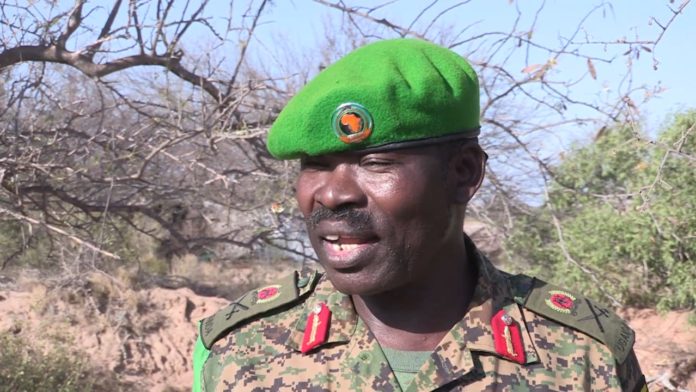
Gen. Lakara roots for more women in peacekeeping operations

Lt. Gen. Nakibus Lakara

The African Union Mission in Somalia (AMISOM) is advocating for the deployment of more women in peacekeeping operations on the continent, saying their role has been critical in stabilising Somalia.

ā€œThe participation of women in peacekeeping operations is not simply desirable but critical and very important for the success of peacekeeping operations,ā€ said AMISOM Deputy Force Commander in charge of Operations and Plans, Lt. Gen. Nakibus Lakara, at a three-day gender awareness training for military officers held in the Somali capital, Mogadishu.

Lt. Gen. Lakara noted that women are endowed with unique abilities that make their role critical to the success of peacekeeping operations.

ā€œWomen peacekeepers have a way of establishing ties with their fellow womenfolk in a culturally sensitive society such as the Somali society,ā€ he observed, adding that apart from fostering cordial relations with host communities, women peacekeepers have vital skills in information gathering, critical for the effective functioning of the military.

The training, which ended yesterday, brought together 27 gender focal points, who act as resource persons on gender issues in AMISOM sectors.

The focal points were taken through various topics, among them, conflict-related sexual violence; international, regional and national frameworks on human rights; gender equality and parity; sexual exploitation and abuse and roles of gender focal points persons.

Lt. Gen. Lakara urged African communities to abandon traditional practices and prejudices that impede women from joining the military to enable them effectively contribute to global peace and stability.

ā€œIn some African communities it was a taboo for women to join the military but this is a stigma that we need to get rid of so that the women can play an appropriate role in peace support operations,ā€ he stated.

According to the United Nations, female peacekeepers act as role models in the local environment, inspiring women and girls in often male-dominated societies to push for their own rights and for participation in peace processes.

Despite their importance, the number of women in peacekeeping operations is still low due to gender imbalance in disciplined forces. As a result, both the African Union and the United Nations are now encouraging troop-contributing countries to deploy more women to uniformed functions to increase their participation in peacekeeping operations.

Lt. Gen. Lakara challenged the officers to put into good use the knowledge acquired from the training to help the AU Mission achieve its mandate of securing Somalia.

Participants, who spoke at the end of the training, said the course expanded their knowledge and understanding of gender issues.

ā€œI have learned a lot about gender and I am going to share the knowledge acquired with my colleagues back in the sectors,ā€ Lt. Mwanaisha Mahu, of the Kenya Defence Forces stated.

Lt. Mahu’s sentiments were echoed by her colleague from the Uganda People’s Defence Force, Lt. Dickson Mbizukire, who said the training will help in mainstreaming gender issues in the sectors.

Stories Continues after ad

Five startup cost realities most founders underestimate

Martin Zwilling

By Martin Zwilling

Starting a new venture still costs real money, even though the entry price has come down dramatically in last few decades. For example, I come from a software background, and back in the early PC days, it could easily cost half a million dollars for a team of professionals to produce a commercial product. Now, with powerful high-level tools and open source software, winning smartphone apps can be built by a good hacker for a few thousand dollars.

Unfortunately, even today, building a good product doesn’t guarantee you a business. Most entrepreneurs realize and budget for the additional costs of incorporating a business, marketing, equipment costs, and manufacturing. Yet, in my experience as a small business advisor, they consistently tend to under-estimate or overlook a wealth of other costs that every business faces:

Taxes and insurance payments. Even in your early days, before you break even and have to pay taxes on profits, various governmental organizations will be after you for payroll taxes, sales taxes, unemployment, and a host of fees, licenses, and permits.

Then there is the need for liability insurance, workmen’s compensation, as well as life and health insurance for your key team members. These always seem to come when you are in your tightest cash-flow squeeze, if you haven’t budgeted adequately ahead of time.

Ramp-up facilities and utilities required. It’s amazing how fast your startup will outgrow your garage or home office. You find that you need to be near major customers, or employee transportation hubs, where rents are higher than you ever anticipated.

Depending on the size and location of your business, you could easily also end up paying thousands of dollars a month in internet costs and other utility expenses, including electricity, phone service, water, janitorial services and beak-room supplies. Your frugal role model of bringing your own lunch won’t be convincing to most employees.

Staffing and people-management costs. Every smart entrepreneur I know thinks he can do everything personally, perhaps with a few interns or family members to help. As you scale up the business, you realize how many people you really need, including full-timers, managers, and hourly workers.

Salary costs go up rapidly, as people require training, bonuses, expense reimbursals, and an office with a requisite support team and supplies. Just the process of hiring and interviewing takes critical time, recruiting fees, and expenses you never remembered.

Subscription software and computer hardware. You find out that all your free software tools have paid professional versions that are required to manage a business that is rapidly growing, and all your employees need a copy, as well as a computer to run them on. Then you need an expensive server and network for sharing and remote access.

These days, computer hardware also extends to smartphone subscriptions, iPads, and laptops as your employees and customers expect mobile operation. Then there is the need for more substantial business accounting, database, and social media monitoring.

Unanticipated pivots, quality write-offs, and shrinkage. Every startup I know, in this changing world, has incurred delays and strategy pivots before they zero-in on the best customer solution and business model. New manufacturers and new technology are hard to get right the first time, so you will have unusable inventory and emergency repairs.

These are just a few of the expenses that will sneak up on you as an entrepreneur. No matter how well you plan your financials, there’s no way for you to account for all the unknowns. Obviously, the more detailed your business plan, the better. It helps to also have your plan reviewed and critiqued by an experienced advisor in the same industry.

Also to prepare for unanticipated business realities, I recommend that you buffer your budget calculations and funding expectations by 25 to 50 percent. This will give you some recovery room for unpredictable expenses and general emergencies. Remember the old saying that it takes money to make money. Don’t get caught short.

The writer is a veteran startup mentor, executive, blogger, author, tech professional, professor, and investor. Published on Forbes, Entrepreneur, Inc, Huffington Post.

Stories Continues after ad

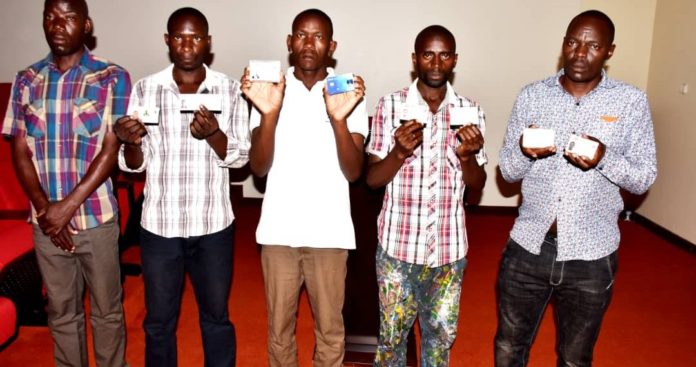
CMI charges five imposters

The five imposters.

The Chief of Military Intelligence (CMI) Disciplinary Committee unit has charged five civilians for posing as officers from the Special Forces Command and other UPDF units.

The five people charged include Brian Akora, Robert Bwiire, Gerald Naama, Godfrey Juuko Wasswa and Yahaya Ssewanyana.

Stories Continues after ad

MP Catherine Lamwaka narrates her ordeal with horny KIU student James Omara

Catherine Lamwaka

Omoro District Woman Member of Parliament, Catherine Lamwaka has narrated her ordeal with Kampala International University (KIU) student, James Omara, who was days ago arrested and remanded to Luzira Prison over offensive communication.

Omara, a third year student pursuing a Bachelor’s degree in Computer Science was last Thursday arrested by the Parliamentary Police, after the female legislator lodged in her complaint, referring to Omara’s love messages as irritating, especially that the defendant knows she is happily married.

Omara was Friday produced before Buganda Road magistrate and leveled with charges of offensive communication, pledged guilty to the charges and remanded to Luzira Prison until Wednesday next week.

ā€˜Happy Valentines My MP’, ā€˜Why you are so desperate to talk to me now, continue driving’ are two of the many discrediting and obscene messages according to charge sheet, that the MP averred to have received from the suspect.

In an interview with this reporter, the MP said the 23 year old student is a young boy. ā€œI call him a son by the fact that I am married woman and a mother. His messages were not impressive rather offensive in nature.ā€

ā€œOmara was arrested and admitted sending me such uncomfortable messages and said his intention was at the end to befriend me according to police statement. But when he noticed I was getting tough, he adjusted to an approach of sending irritating messages as a strategy of blackmailing me,ā€ she told this reporter.

ā€œPolice said Omara has the habit of hitting at women who are fairly well. ā€œHis phone revealed it when opened by police detectives,ā€ she said.

ā€œHis first message was on February 1 this year, he kept on sending them till March. A week before he was arrested, the first time he called me, he talked like he knows me quite well and referring to me as ā€˜my MP’, I just thought he’s one of my voters. I thought he knew me and he kept very consistent on remembering to send his messages,ā€ she said.

The MP said Omara later resorted to messages when she asked him to reveal his name. When he declined to disclose his particulars, the MP said she stopped taking it lightly and reported of an unknown person sending her messages. ā€œI availed all messages to Police, analyzed it and confirmed they were offensive and disturbing my privacy and peace,ā€ she said.

ā€œI met the parents together with the MP of Kitgum they told me more about the boy. I counseled his mother and I forgave the boy. I asked police to release him yesterday morning. I had no bad intentions, I wanted to know who that person is in this current world of wrong characters and criminals perusing peopleā€ she told this reporter.

I am a married woman and I have children of my own and many whom am sponsoring in various schools including 23 girls and six boys. I feel I have a responsibility as a parent and a leader, when I come across a young person getting to do wrong things,ā€ she said.

This is not the first student to be dragged to court over offensive communication towards an MP. Months ago YWCA student Brian Isiko was sent to jail for continuously stalking Kabarole District Woman MP Sylvia Rwabwogo. He was convicted and sentenced to two years in prison.

Through his lawyer Ramadhan Waiswa, Isiko appealed against Buganda road Magistrate Gladys Kamasanyu’s decision on among others that the legislator once appeared in the press saying she was single and searching. He was subsequently released by high court judge Jane Francis Abodo who also ordered for his retrial in the lower court.

Stories Continues after ad
FDC supporters praise Besigye’s driver as he disappears from police

Dr. Kizza Besigye.

Chaos ensued this morning as Jinja Resident District Commissioner (RDC), Erick Joseph Sakwa ordered for the switching off of 88.6 Kiira FM that was hosting former Presidential candidate, Dr. Kizza Besigye.

A few minutes to the commencement of Akwatulira Program that runs every Saturday from 10:00am to midday, the station manager, Ivan Munyirwa received unanimous phone calls threatening him not to allow Besigye into the studios.

“But I could not stop Besigye from appearing on the show because he was not breaking any law and of course the show host, Trevor Solomon Baleke is a state agent working with the ruling party,” Munyirwa was heard saying to the press moments after the switching off of the radio.

The show was cut short only after 52 minutes of discussion in which Besigye was sensitizing Ugandan on what entail transition.

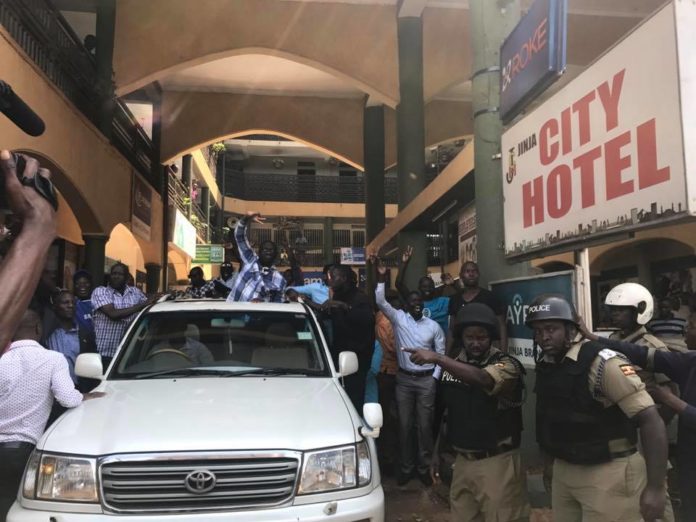
As Besigye was responding to a rain of questions from the NRM administrator who also doubles as the Akwatulira host, police stormed the station. They cordoned off the entire City Hotel where Kiira FM is housed and enter d into the studios to arrest Besigye and his entire team.

The former presidential candidate had been accompanied by the FDC president, Patrick Oboi Amuriat, former Jinja West MP candidate, Paul Kawanguzi, Jinja East MP hopeful, Emmanuel Wansalala and Josephine Nambooze a renowned FDC mobiliser.

Police had earlier put a roadblock at the new Nile bridge with intentions of intercepting Besigye from crossing to Jinja. They were only shocked to hear Besigye on Radio.

On arrival at the radio station, police hurled teargas in the studios and City Hotel where the radio station is based to disperse angry FDC supporters.

But as police pulled out Besigye, the group of his supporters grew and over powers the officers whose teargas couldn’t stop them from saving their ‘president’.

The supporters who were putting on black T-shirts with inscriptions of “The People’s Government” confronted the armed police and grabbed Besigye from them, led him to his car and made a human shield around it in his protection.

After like thirty minutes of a scene of tear gas and scare bullets, the Besigye car was then attached to the Tow truck and attempted to take it to Jinja CPS.

However, along the way, Dr. Besigye’s driver, Fred Kato took one direction and the Tow truck (break down) another leading to the breaking of the chain.

Besigye and FDC President Patrick Amuriat disappeared from Police and went to party offices in Kirinya Garage, where police was reportedly spectating them by press time.

Business along Kirinya road was at standstill as all spare parts shops and garages were closed to accord Besigye respect.

The fracas occurred a day after Amuriat had just been released from Tororo central police station. He and Dr. Besigye were scheduled to address a rally at Tororo youth Center.

This is not the first radio station to be closed over Besigye, last week Security personnel switched off Hope Radio in Kabale municipality over hosting FDC party leaders.

In July 2015, Jinja Municipality West MP who also doubles as NRM chairman for the district, Moses Balyeku ordered staff at his Baba FM to switch off the radio station which had started to transmit a live talk show where Besigye had gone to feature as a guest.

In November 2009, Besigye was blocked from appearing on Nenah FM in Karamoja to address the public. In May 2007, the Kitgum-based Kitti FM was switched off air 30 minutes after Besigye had started speaking on the radio’s talk-show. The radio’s generator was switched off, reportedly on the orders of the then area RDC.

Stories Continues after ad