Stanbic Bank
Stanbic Bank
20 C
Kampala
Stanbic Bank
Stanbic Bank
Home Blog Page 1300

Digital transformation: Govt, donors and global leaders to hold discussions in Kampala

Government and private donors from US, Germany, Belgium, UK and Switzerland and global leaders from Microsoft Philanthropies, Salesforce.org, and John Deere will from April 30-May 2, 2019 convene at the 11th Information Communications Technology for Development (ICT4D) Conference in Kampala to strategize and give insights on how digital innovation can improve efficiencies within development activities, according to the latest press release.

With a tradition of transforming development through innovation, the United States Agency for International Development (USAID) will address its upcoming Digital Strategy, during its session ā€œWhat to Expect and How to Engageā€, led by Director of the U.S. Global Development Lab’s Center for Digital Development, Christopher Burns.

Big questions will be tackled during the donor panel, including; how donors perceive the role of digital technologies in the investment ecosystem, new means and methods to track and asses project impacts and the importance of secondary and unstructured data to identify deeper insights and quantify impacts. International experts who will join this debate include leaders from Deutsche Gesellschaft für Internationale Zusammenarbeit (GIZ), Fondation Botnar, UK Department for International Development (DFID), Enabel and the Bill and Melinda Gates Foundation.

The potential of incorporating digital innovation into development that these organisations offer is particularly pertinent in Uganda; with its progressive refugee policy and 1.35 million refugees, where 78 percent of its population are under 30 years of age and where agriculture provides 70 percent of the country’s employment opportunities and contributes more than half of all exports.

The focus and structure of the ICT4D Conference adapts each year based on current challenges. Leading development and technology organizations, including Catholic Relief Services (CRS), The Norwegian Refugee Council, Esri, Digital Impact Alliance (DIAL), Dimagi, Dharma Platform, RTI International, Tetra Tech, Fondation Botnar, QED Group, SkyVision, Fenix International, and Ecobank join to bring expertise within trends such as artificial intelligence and machine learning, digital financial inclusion, responsible data, and ICT for smallholder farmers.

Now in its 11th edition and with over 1000 attendees, the conference is scheduled for April 30 to May 3, 2019 at Speke Resort Munyonyo in Uganda. It has cemented itself as the global digital development conference that explores innovative solutions to development challenges around the world. ā€œAt the ICT4D Conference you’ll hear from IT companies and development professionals how they adopt, adapt, or completely reengineer to integrate ICT into demand-driven solutions for local and global challenges alike,ā€ said Niek de Goeij, Country Representative at CRS Uganda.

ICT4D Conference

Led by CRS, the Conference is co-organized by international and regional partners, including NetHope, Norwegian Refugee Council, Chemonics, DAI Global, ICRISAT, International Rescue Committee, Mercy Corps, NUDIPU, Plan International, SOS Children’s Villages, UNCDF, and World Vision, and supported by sponsors including: John Deere, Salesforce, Microsoft, DIAL, Dimagi, Dharma Platform, RTI International, Tetra Tech, Fondation Botnar, QED Group, SkyVision, Fenix International, Ecobank.

CRS

Catholic Relief Services (CRS) is the international humanitarian agency of the Catholic community in the United States. Founded in 1943 by the United States Conference of Catholic Bishops, the agency provides assistance to 130 million people in more than 90 countries and territories in Africa, Asia, Latin America, the Middle East and Eastern Europe.

Stories Continues after ad

Uganda and Vietnam sign MoU to boost coffee production

Farmer picks coffee

Uganda and the Socialist Republic of Vietnam have signed a Memorandum of Understanding (MoU) to boost coffee production, following President Museveni’s signing of the coffee roadmap in Aril 2017 with a national target of reaching 20 million bags of coffee exported per year by 2025.

The MoU was signed recently in Vietnam by Uganda’s State Minister for Agriculture Christopher Kibanzanga and Mr. Le Quoc Doanh, the Vietnamese Deputy Minister of Agriculture and Rural Development.

The Ministry has been seeking official collaboration with Vietnam which is known to have experienced an increase in coffee exports from less than 2 million bags in 1991 to the current 27.5 million bags per year, making the coffee subsector in that country worth US$3.2 billion.

According to the Minister of Agriculture, Animal Industry and Fisheries (MAAIF) Vincent Bamulangaki Ssempijja, prioritisation by government has contributed to growth in both quantity and quality of coffee exported from the country, thereby creating more jobs and creating more wealth for our people.

Ssempijja says by 2014, coffee generated over US $410.1 million which is 31.7 per cent of the agricultural export revenues and maintained its position as the biggest agricultural export from Uganda with fish and fish products in second position, having generated over US $134.8 million which is 10.4 per cent of the total.

ā€œDue this continued support and prioritisation of the sub-sector by Government through the Ministry and agencies led by the Uganda Coffee Development Authority, Coffee fetched over US $492 million in the last Financial Year alone. This represents a 19.9 per cent increase in value of exports between 2014 and now,ā€ says the minister.

He says his ministry remains committed to the promotion of production of coffee in the country and forging strategic partnerships with nations that have exhibited exemplary progress in exporting coffee.

The signed MoU coverts covers 14 main areas in the categories of coffee production, animal health and Plant protection; exchange of technicians and researchers; study and elaboration of projects of technical assistance; exchange of scientific and technical information in the field of agricultural research conducted in the two countries; training involving courses, seminars, study tours and other necessary professional training; utilization of laboratory facilities involving the participation of private institutions in the area of livestock and plant protection; exchange of programs for the improvement of animal and plant production and soil fertility, storage and processing and market development and the promotion of international trade relations.

Other areas include; exchange of technicians and researchers, study and elaboration of projects of technical assistance, exchange of scientific and technical information in the field of agricultural research conducted in the two countries; training involving courses, seminars, study tours and other necessary professional training, utilization of laboratory facilities involving the participation of private institutions in the area of livestock and plant protection, exchange of programs for the improvement of animal and plant production and soil fertility, storage and processing and market development and the promotion of international trade relations.

Minister Ssempijja says the ministry is stepping up efforts towards promoting increased availability and access to water for agricultural production. ā€œThis is being undertaken through the newly-instituted Department of Agricultural Infrastructure, Mechanisation and Water for Agricultural Production. This Department is nearing completion of new irrigation models for coffee and the work done through the same Department will be supported by Senior Agricultural Engineers who are currently being recruited in every District,ā€ he says.

The Ministry, he says, will also reinforce promotion of appropriate use of fertilisers to increase productivity of Coffee. From experience in economies that are performing better, application of fertilisers can double the productivity per tree of Coffee. ā€œFertiliser use in Uganda is currently estimated at about four kilograms per hectare, while in Vietnam it was reported to be about 1,200 kilograms per hectare,ā€ he says.

More, he says, the ministry is stepping up sensitisation of farmers through the Agricultural Extension System that now covers more subcounties across the country. As earlier communicated. ā€œThe ministry has so far recruited 3,811 out of the initial target of 5000 extension workers across the country. The current extension worker to farming household ratio is about 1:1800. This is an improvement from the initial ratio of 1:5000 in the 2014/15 at the time of reform. The internationally accepted ratio is 1:500,ā€ he says

Further, he says, the ministry has stepped up training and agricultural education through institutions like Bukalasa Agricultural College, the National Farmers Leadership Centre (NFLC) and District Agricultural Training and Information Centres.

The minister said encouraged farmers to work closely with the agricultural extension officers and to join registered farmer groups so as to benefit from bulk marketing, bulk selling and enhanced access to government services and projects. ā€œThis campaign for increasing coffee exports will continue through the above steps and more programmes being rolled out in partnership with the media and development partners,ā€ he says.

Stories Continues after ad

Diego Costa given eight-game ban for making crude remarks about referee’s mother

Diego Costa

Atletico Madrid striker Diego Costa will miss the rest of the season after being handed an eight-match suspension by the Spanish Football Federation (RFEF) on Thursday.

Costa was sent off in the first half of Atletico’s 2-0 defeat to Barcelona on Saturday for directing a crude insult towards referee Gil Manzano. Manzano also reported that Costa had ā€œgrabbedā€ him by the arms during the incident.

The lengthy ban means Costa will not play again this season as Atletico have seven games left in La Liga, having been knocked out of the Champions League and Copa del Rey.

According to the match report submitted by Manzano, Costa insulted his mother in a foul-mouthed outburst before ā€œgrabbing me by the arms to prevent me showing cards to numbers 24 and 2 respectivelyā€.

The RFEF ruled Costa should therefore be suspended for four matches for ā€œclear insults and offensive expressions made by the player towards the refereeā€ and another four, after ā€œmeeting the referee with mild violence, without aggressive spirit, but in a manner that is reflected in the act of grabbingā€.

The statement added: ā€œConsequently, it is appropriate to sanction the player with a four-game suspension referring to article 94 (insults, verbal offenses and insulting attitudes) and four more referring to article 96 (light violence towards the officials), both from the Federation’s Disciplinary Code.ā€

Costa’s dismissal in the 28th minute at Camp Nou meant Atletico had to play for more than an hour with 10 men in a match coach Diego Simeone had said they had to win to keep their title hopes alive.

Instead, defeat leaves them 11 points adrift of Barca at the top of the table.

Costa has endured a difficult season, having scored only five goals in all competitions and missed almost two months at the start of the year due to a foot injury.

Atletico signed Alvaro Morata on loan from Chelsea in January and the 26-year-old is now likely to be given an extended run in the starting line-up.

Costa is no stranger to controversy. He moved to Atletico after falling out with Chelsea coach Antonio Conte in 2017, a dispute that saw the forward relocate to Brazil and refuse to play for his club.

He was also twice handed three-match suspensions by the Football Association in England, for stamping on Liverpool’s Emre Can in January 2015 and kicking Arsenal defender Gabriel Paulista nine months later.

Stories Continues after ad

Five Ugandan Athletes qualify for the 2019 IAAF World Championships in Doha

Uganda's Joshua Kiprui Cheptegei reacts after his second placed finish in the men's 10,000 meters final during the World Athletics Championships in London Friday, Aug. 4, 2017. (AP Photo/Martin Meissner)

The seventeenth edition of the IAAF World Championships is scheduled to be held between 27 September and 6 October 2019 in Doha, Qatar at the renovated multi-purpose Khalifa International Stadium.

Uganda registered five qualifiers for the 2019 IAAF World Championships in Athletics as qualification period enters yet another month of intensive campaign to raise more numbers.

The athletes for that purpose and intent brace for the 4th UAF National Track and Field competition slated for this weekend April 13, 2019 at Mandela National Stadium, Namboole.

The competition also targets qualifiers for the All Africa Games due in Morocco on August 20th, 2019.

However, the recent concluded IAAF World Cross Country Championships came along with more good tidings with five of the Ugandan runners in the senior men and women category who specialize at distance running (10,000m) earned IAAF automatic qualification to the IAAF World Championships.

The International Association of Athletics Federations (IAAF) approved in December 2018 that the top 15 finishers at the 2019 IAAF World Cross Country Championships are considered to have achieved the entry standard in the 10,000 meters for the IAAF World Championships.

Consequently, the five Ugandan runners led by Golden boy Joshua Cheptegei who finished among the top 15 in Aarhus World Cross Country in Denmark two weeks ago are covered by the qualification system.

The others on list include distance running women; Rachael Zena Chebet who finished 4th and Juliet Chekwel 13th while the distance running men include; Jacob Kiplimo 2nd, and Thomas Ayeko who finished 7th.

Others who made the mark but do not specialize at the 10,000m event include; Peruth Chemutai (3000m SC NR holder) who finished 5th. This was confirmed through the athleticsuganda.org website.

The qualifying window for the IAAF World Championships in Doha runs from March 7th, 2018, to September 6th, 2019, for the 10,000m, marathon and relay (4x100m and 4x400m) events. Whereas all other events on track, the window goes from September 7th, 2018, to September 6th, 2019.

The 2019 Uganda Athletics season is also geared towards building up to the Tokyo Olympics Games in 2020.

Stories Continues after ad

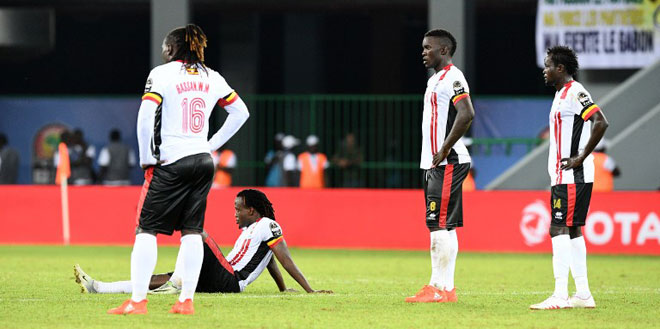
Cranes face tough 2019 Afcon draw

Cranes-AFCON

Uganda Cranes may find themselves in a tough group of four for the 2019 Africa Cup of Nations when the draw for the group stages is conducted by the Caf on Friday evening.

FUFA 3rd Vice President Hon. Florence Nakiwala Kiyingi, FUFA National teams’ manager Patrick Ntege, along with Fufa President Eng. Moses Magogo and Head Coach Sebastien Desabre are in Egypt to represent the country ahead of the draws.

While the format for the draw is yet to be made public, Caf is expected to use a mixture of the March 2019 FIFA world rankings released last week and recent performances in the Nations Cup to sort the teams.

Uganda’s current FIFA world ranking is at 79th, which translates into a 16th ranking on the continent, plus a poor record at previous continental tournaments inclusive of CHAN, the Cranes are certain to find themselves in a tough opening round group.

Cranes may be pooled seeded in pot 3, and this means it is certain to end up in the same group of two of the top 12-ranked sides in the tournament.

Uganda will face one of these teams; host nation Egypt (8th in Africa), Senegal (1st in Africa), Ghana, Cameroon, Tunisia and Ivory Coast.

And then will also face one of these; Morocco, Democratic Republic of the Congo, Mali, Nigeria, Guinea and Algeria.

The fourth team in Uganda’s likely group will be a nation ranked lower than them, but all in all, it may seem to be a tough group considering the other two who are highly ranked and considerably better than the Cranes.

The 24 qualified nations are divided into four potsā€š each containing six teamsā€š which will be drawn into the six first round groups of four.

The top two sides in each pool along with the four best third-placed teams will advance to the second round. From there, the winners will progress to the quarter-finals, semi-finals and eventually the final.

Cranes will be making their second consecutive Afcon appearance and will be looking forward to progress from the group stages of the continental showpiece.

At the previous AFCON appearance in 2017, Uganda were pooled with Ghana, Egypt and Mali and managed just a single point and one goal from the three games.

It will be the 32nd edition of the international men’s football championship of Africa and will be hosted from 21st June with the final to be played on 19th July 2019.

The draw will take place on Friday, 12th April 2019 on a historic place facing the Sphinx and the Pyramids, near Cairo, Egypt.

Stories Continues after ad

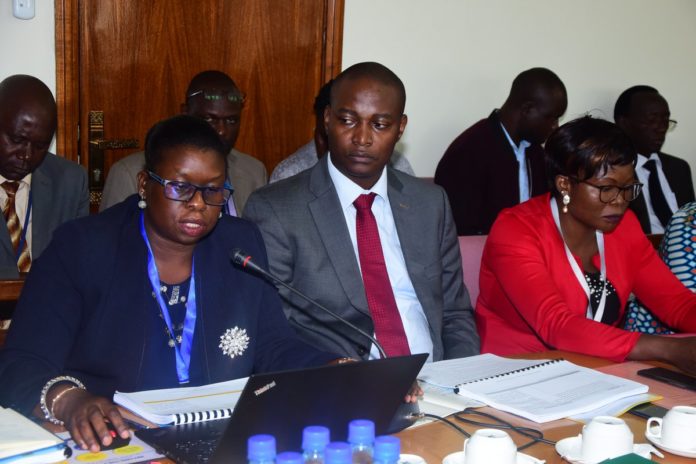
MPs query URA officials over payment of tax arrears

URA team facing COSASE committee.

Members of Parliament have tasked officials from the Uganda Revenue Authority (URA) to provide adequate accountability accruing from taxation by the Authority on business entities in the country.

While reviewing the Auditor General’s report on the performance of URA for the financial year 2013/2014, MPs on the Committee on Commissions, Statutory Authorities and State Enterprises (COSASE) tasked URA officials to explain payment of tax arrears amounting to over shs4.5 billion in bounced cheques by Multiplex among other companies and institutions.

ā€œIn all responses URA has given, they mention attached documents but they have not been availed to us. There is a whistle-blower report that there are companies that do not remit taxes, and we want to review the documents presented to that effect,ā€ said COSASE deputy chairperson Ibrahim Kasozi.

Kasozi also said that there was over Shs14 billion that had no accountability responses, which prompted the committee to give URA up to April 23, 2019 to present the documents.

ā€œThis could mean that URA is either unserious or is covering up something. A response cannot be given to the committee yet supporting documents have not been attached,ā€ said Kasozi.

The team of URA officials led by Commissioner General Doris Akol presented a schedule of taxpayers and a sample of five memoranda of understanding with different taxpayers which the committee said it will study.

On the bounced cheques, the Commissioner of Legal Services at URA, Patience Tumusiime, said that several enforcement methods had been instituted.

ā€œWe have used methods like a warrant of distress to recover money from defaulting tax payers and we have been able to collect Shs1.8 billionā€ said Tumusiime.

Akol also told MPs that gaps in revenue collection were partly attributed to digital migration in services by URA where many companies did not renew their tax identification numbers (TIN) ā€˜thus the authority was unable to follow up tax collection from such companies’.

ā€œA shame-list was created and these tax defaulters were put on that list which was published in major newspapers, though many of the listed companies have since never responded,ā€ Akol said.

The Commissioner Domestic Taxes, Henry Saka, told COSASE that the shame-list was a key enforcement measure by the authority meant to catch defaulters, adding that, ā€œcompanies that are put on this list have prior to, been engaged to pay their taxes and have failed to respondā€.

The Committee also tasked the URA officials to explain tax waivers of over Shs100 million to some companies despite commitments that had been made to pay off the arrears.

ā€œIn the figures URA presented to us on payment of these tax arrears, there is still a balance of Shs1.22 billion. We asked them where this money is and they requested to revisit their records and bring us better facts,ā€ Kasozi said after the meeting.

URA officials will appear again before COSASE on 16 April 2019 for further scrutiny of the Auditor’s General’s report into its performance in the different financial years.

Stories Continues after ad

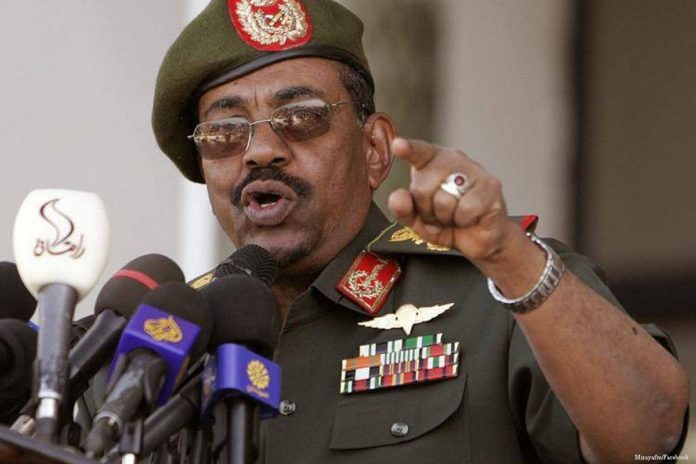
Bashir steps down, under house arrest

Former Sudan President Omar Al Bashir

President AL Bashir of Sudan has stepped down from the presidency but reports indicate he is under house arrest as thousands of protesters call for his departure from State House.

Sporadic deadly protests broke out across Sudan since the government tripled the price of bread on Dec. 19, with demonstrators accusing the government of mismanaging the nation’s economy and calling on the veteran leader to step down.

President El-Bashir encountered the demonstration with a nationwide state of emergency and dissolved the government in an effort to quell weeks of demonstrations that have rocked his iron-fisted rule.

El-Bashir has remained defiant in the face of demonstrations, dismissing protesters’ calls for him to step down after three decades in power.

Demonstrations first erupted in the farming town of Atbara, but the rallies swiftly mushroomed into a major challenge to El-Bashir’s rule.

The country’s feared National Intelligence and Security Service (NISS) has launched a sweeping crackdown to quell the protests, jailing hundreds of protesters, opposition leaders, activists and journalists.

El-Bashir, 75, swept to power in an Islamist-backed coup in 1989 that overthrew the elected government of Prime Minister Sadiq al-Mahdi.

It is not the first time El-Bashir has imposed a nationwide emergency. He did so in December 1999, when a political crisis erupted after he broke away from Islamist mentor Hassan al-Turabi.

He said he had asked to postpone meetings of a parliamentary panel that was set up to look into amending the country’s constitution to allow a third presidential term. He did not elaborate.

El-Bashir is considering running for a third term after he was chosen as a candidate by his ruling National Congress Party for the election due next year.

Soaring inflation along with acute foreign currency shortages have battered the economy, especially after the independence of South Sudan in 2011 took away the bulk of oil earnings.

Stories Continues after ad

Shock as BoU seeks Shs484b for recapitalization despite corruption scandals

ON THE FIRING LINE: Governor Mutebile and former deputy Louis Kasekende.

Government is putting pressure on the Members of Parliament (MPs) to approve Shs484.2 billion for the capitalisation of the Bank of Uganda (BoU) which has failed to account for Shs478 billion it claims it spent on Crane Bank Limited while under statutory management between October 20, 2016 and January 25, 2017.

According to the Auditor General John Muwanga, out of Shs478 billion, Shs320 remains unaccounted for by BoU. This issue came up as MPs probed BoU on the irregular closure seven banks between the years 1993 and October 2016.

The latest suggest to capitalise BoU matches the idiom, “throwing good money after bad”, which refers to spending more money on something problematic that one has already spent money on, in the presumably futile hopes of fixing it or recouping one’s original investment.

Analysts say that whereas recapitalising BoU is a strategic and urgent business for parliament, it should also be equally urgent and strategic to quickly implement the recommendations of parliament’s Committee on Commissions, State Authorities and State Enterprises (COSASE) which among others call for the restructuring both the management and regulatory regime at the central bank.

ā€œThe people who are behind the mistakes that led to the need for recapitalisation, cannot be the same people to manage the recapitalised central bank. That would be the equivalent of throwing good money at bad money,ā€ an analyst said.

ā€œInsanity is doing the same thing over and over again and expecting different results. BoU potentially faces up to Shs1 trillion in lawsuits as a result of the findings and recommendations of COSASE. Parliament should not put the proverbial cart before the horse; BoU needs overhauling first before anything else. You can’t just take a request to parliament to give you Shs484.2 billion before you account for Shs478 billion stolen in the name of Crane Bank Limited’s capitalisation,ā€ another one adds.

Government wants to pressure MPs to approve a total of Shs620.7 billion for the planned recapitalisation of BoU and other five banks like; Uganda Development Bank (Shs103 billion ), Housing Finance Bank (Shs30 billion ), Post Bank (Shs4.7 billion ), Trade and Development Bank (Shs2.5 billion ) and African Development Bank (Shs1 billion )

Without shame in their faces, Ministry of Finance officials told MPs on Finance Committee yesterday that Shs484.2b was urgently needed to cover for deficits and losses accumulated since 2013.

Lawrence Ssemakula, the Accountant General in the Finance Ministry said while presenting a ministerial policy statement for the financial year 2018/19 to legislators.

Mr Ssemakula told the committee that the Central Bank had indicated to the Ministry that it had suffered deficits since June 2013 and that the money was needed to avert an impending crisis.

ā€œThey have indicated that they have been impaired from June 2013. So as per the BoU Act, we have no option but to allocate the money in our budget since their operations are in deficits,ā€ he said.
When MPs asked whether the ministry had done due diligence on the request by the Central Bank managers, Mr Ssemakula said the deficits are captured in the Auditor General’s reports.

Shs484.2b capitalisation fund for BoU is expected to increase the budgetary allocation towards payment of domestic debt from Shs2.3 trillion in 2018/19 financial year to Shs3.2 trillion in financial year 2019/20.

The Shs3.2 trillion domestic debt budget includes Shs62b for Contingency Fund, Shs140b for court awards arrears, Shs510 billion for treasury bills interest, Shs2.04 trillion for treasury bonds costs, Shs1.2 billion for listing fees and Shs750 million for bank charges.
The latest BoU request for capitalisation first came to the attention of Parliament in May last year with a request for Shs474 billion.

PS Keith Muhakanizi had previously written to the Clerk of Parliament, explaining that BoU had registered a deficit of Shs17b and talked of operating losses of Shs457 billion on account of ā€œmonetary policyā€ and ā€œcurrency costsā€.
ā€œThis projected deficit in the core capital position, together with the required core capital position of Shs30b, puts the additional recapitalisation securities to the tune of Shs504b,ā€ read Muhakanizi’s letter in part.

However, MPs rejected the request because it had come at the tail end of the budgeting process and members needed time to scrutinise the request.

The MPs last year accused the Finance ministry of undermining as legislators insisted that the losses at BoU were not fully explained, and that the request recapitalisation came at the end of the budgeting process.

Some committee members, however, called for an investigation into the cause of losses and deficits at BoU before injecting the taxpayer’s money in the bank.

Stories Continues after ad

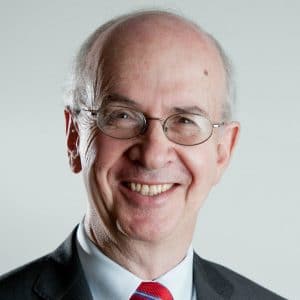
Currency weakness and poor political stewardship are weakening major emerging economies

Desmond Lachman

By Desmond Lachman

Renewed currency weakness in Argentina and Turkey underlines the risks that emerging markets, or rather ‘submerging markets’, could pose to the global economic recovery in the year ahead. Equally alarming is how highly indebted, particularly in dollar-denominated terms, the emerging market corporate sector has become.

The largest International Monetary Fund financial programme on record and the Federal Reserve’s pivot to an easier monetary policy stance have not spared Argentina’s currency from renewed downward pressure. Since the start of the year, the peso has lost another 16% in value, taking its total loss over the past year to around 50%.

The plunging currency has contributed to an increase in Argentine inflation to around 50% and to a sharp decline in output and employment. With presidential elections scheduled for October and the global economy weakening, it is difficult to see how Argentina could devise a near-term turnaround.

Turkey has fallen into recession as the lira has lost 30% of its value over the last year. All indications are that the country’s credit bubble has burst and that President Recep Tayyip Erdogan’s political position has weakened substantially following defeats in local elections in Ankara and Istanbul. Analysts doubt Turkey’s corporate sector will be able to service the $275bn it has borrowed in dollar-denominated terms.

Given their relatively small size, the Argentine and Turkish economies, however troubled they might be, cannot by themselves constitute a significant threat to the global economic recovery. The same might not be said of Brazil and Mexico, which after China are the world’s two largest emerging economies. Both these countries appear vulnerable to crisis in the light of the seemingly shaky economic stewardship of their respective new presidents.

Jair Bolsonaro’s ascendancy to the Brazilian presidency at the beginning of this year, coupled with his appointment of a market-friendly finance minister, held out the hope that Brazil would finally address its chronic pension system deficit problem. That would have enabled Brazil to reduce its bloated budget deficit (around 7.5% of GDP) and to put its high public debt level on a sustainable path.

Bolsonaro’s initial months in office suggest he lacks the temperament to build the necessary coalition in Brazil’s highly fractured Congress to secure passage of much-needed economic reform. This makes Brazil especially vulnerable to a further slowing in the global economy, as well as to any deepening of Argentina’s economic troubles.

While the Mexican economy starts with much sounder economic fundamentals than does Brazil’s, its long-term trajectory has been clouded by the election of AndrĆ©s Manuel López Obrador to the presidency.

In his first 100 days in office, López Obrador’s market-unfriendly and populist approach to economic policy has undermined foreign investor confidence in the country. Recent ill-advised Mexican policy decisions include the controversial cancelation of an international airport project, the postponement of oil and gas auctions, which has raised questions about the maintenance of an open energy market, and the reduction of public salaries that threatens to incite a flight of talent from the public sector.

Until recently, emerging markets were a principal source of the world’s economic growth. If these countries continue to slow and their currencies to depreciate, it will become increasingly difficult for their corporations to service their debt mountains. According to estimates from the Bank for International Settlements, emerging market corporates hold dollar-denominated debt greater than US$3trillion.

Policy-makers have correctly identified Britain’s exit from the European Union, China’s troubles and the European economic slowdown as possible risks to the global economy. They would be well advised to add the emerging markets to their list of worries and keep a close eye on their economic policy direction.

Desmond Lachman is a Resident Fellow at the American Enterprise Institute. He was formerly a Deputy Director in the International Monetary Fund’s Policy Development and Review Department and the Chief Emerging Market Economic Strategist at Salomon Smith Barney.

Stories Continues after ad

AfDB approves $4.8m grant to accelerate African free trade

Trade

By Our Reporter

The African Development Bank (AfDB) has approved a support grant of US$4.8 million to the African Union (AU) to accelerate the momentum of the African Continental Free Trade Area Agreement (AfCFTA), which received its 22nd ratification on April 2, bringing the agreement into force.

The AfCFTA is a major force for continental integration. It will expand intra-African trade by up to US$35 billion per year and usher in freedom of movement for goods, services and people across the continent’s internal borders, with a regime of reduced tariffs and non-tariff barriers to cut the cost of doing business on the continent. It will also boost agriculture and industrial exports by up to US$66 billion per year.

The Bank’s grant is targeted at laying the institutional foundations for the AfCFTA implementation secretariat and the roll out of the implementation programmes.

ā€œThe momentum is now in full swingā€, said Andoh Mensah, Manager, Trade and Investment Climate Division at the African Development Bank, ā€œIt is now crucial to establish a robust, efficient, purpose-driven secretariat, capable of addressing improved stakeholder engagement, inclusiveness and ownership in the AfCFTA implementationā€.

The grant will also assist efforts towards full ratification of the agreement by all AU member states including the application of tariff reductions and related commitments, while generating stakeholder support for the AfCFTA to ensure inclusiveness and common ownership. This is a decisive response to the call by African political leaders for the Bank and other partners to support the AU Commission and work assiduously towards the realisation of AfCFTA objectives.

Stories Continues after ad