Stanbic Bank
Stanbic Bank
21 C
Kampala
Stanbic Bank
Stanbic Bank
Home Blog Page 1311

EAC partner states urged to invest in digital health

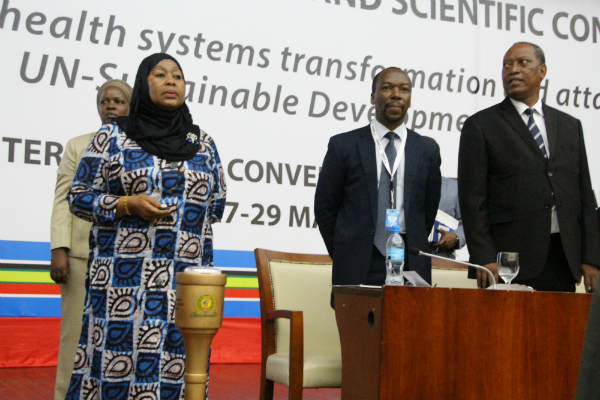
TZ VP Samia Hassan Suluhu (L) with other officials

The Vice-President of the United Republic of Tanzania, Samia Hassan Suluhu, has called on East African Community Partner States to invest in Digital Health Technology if the region is to fully implement the Sustainable Development Goals and address all aspects of poverty.

“Investing in Health Sector and relevant digital technologies is key for our development that we need to pursue more aggressively as a region,” said Suluhu.

The Vice-President was speaking during the official opening ceremony of the 7th East African Health and Scientific Conference (EAHSC), which is taking place at the Julius Nyerere International Convention Centre in Dar es Salaam, Tanzania.

She said Science and technology is an important and vital tool in addressing fundamental gaps in the health sector.

“I wish to commend the organizers for the timely and relevant selection of the theme. Technology for health systems transformation and attainment of the UN-Sustainable Development Goals. This theme comes at an opportune moment as the world is in its fourth industrial revolution where science and technology is taking the lead in all aspects,” she said.

She said the conference that the approval of the Digital Regional East African Community Health (Digital REACH) 10 years strategic plan by the Sectoral Council of Ministers of Health held in Kigali on October 26, 2018 was an important step towards achieving transformation in the sector.

“I expect that Digital REACH will support the development and implementation of regional health programmes, within existing EAC Regional policies and legal frameworks as provided by the Treaty for the Establishment of the East African Community and as desired by each of the EAC Partner States,” she said.

She told the participants at the conference that Digital health has been proven as one of the enablers of Sustainable Development Goals in developed countries and a lot of pilot projects all over the world are confirming the same to be the case in low- and middle-income country settings.

‘’I therefore encourage Partner States to support the new development in EAC Partner States and call upon the region to work together through Digital Health Technology and reiterate the commitment of the United Republic of Tanzania to take advantage of Digital Health technology to improve implementation of health sector interventions, with the aim of accelerating attainment of the Universal Health Coverage and SDGs.’’

On his part, the Chairperson of the Sectoral Council on Health and Ministers of State of Public Health and Primary Health Care, Dr. Patrick Ndimubanzi, said the digital age was transforming the entire health sector and how healthcare was delivered.

“In fact Digital Health solutions can increase access to health services, deliver training for health professionals, provide better diagnostics and health information,” said Dr. Ndimubanzi, who is also Rwanda’s Minister of State in charge of Public Health and Primary Healthcare.

Dr. Ndimubanzi told the conference that ICT and digital health solutions offered the prospect of bringing into reach universal health coverage and the prospect of making health and well-being for all a reality by 2030.

“I am glad to note that the 19th Ordinary Summit of Heads of EAC Partner States held in Kampala in February 2018, committed to invest in Digital Health Technology, as one of the health sector investment priorities for the region for the next 10 years; for better research for health, health services delivery and health outcome,” said Dr. Ndibumanzi.

The Chair the Sectoral Council call upon the region to put in place strategic policies and practical interventions that can help the EAC Region to boost the uptake of digital health technology.

Representing the EAC Secretary General, Amb Liberat Mfumukeko, the EAC Deputy Secretary General in charge of Planning and Infrastructure, Eng. Steven Mlote, said Conference contributes towards strengthening regional cooperation in health in line with Article 118 of the Treaty that established the EAC as well as relevant provisions of the EAC Common Market Protocol which provides a platform or knowledge sharing among health professional in the EAC region.

He urged the EAC Partner States to align their Digital Health strategies and activities with Digital REACH Initiative and to support initiative that complements the national initiatives.

Eng. Mlote said that the conference is expected to come up with the relevant and realistic recommendations for the improvement of health care and delivery through application of technologies for the improvement of the health and the wellbeing of citizens of the Community will be made.

During the official opening, the Vice-President also launched the Digital REACH initiative Strategic Plan 2019-2018, East African Web Portal for Health Information and Young East African Research Scientists (YEARS) forum.

The East African Health and Scientific Conference is biennial and organized on rotational basis within the EAC Partner States. EAC Technical Working Group Meeting on Pilot Testing of Harmonized Pesticides Guidelines from Efficacy Trials

Stories Continues after ad

UYAHF trains journalists on evidence based reporting

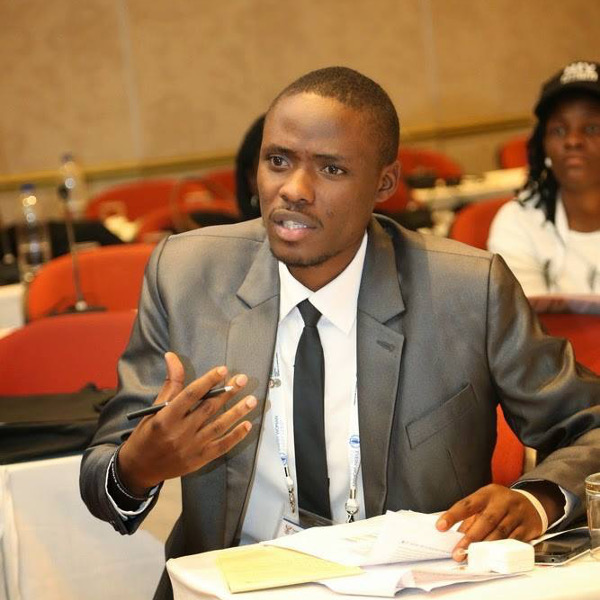
Patrick is the founder and team leader at the Uganda youth and Adolescents Health Forum.

Uganda Youth and Adolescent Health Forum (UYAHF) on Thursday organised a training workshop for journalists who report on health and reproductive issues that affect Ugandan vulnerable adolescents, especially females who are a major target of the organisation.

The workshop was held and Fairway Hotel in Kampala, attracting journalists, Ministry of Health representatives, officials from the National Population Council (NPC) World Health Organisation (WHO) and a number of civil society organisations.

Addressing participants at the half-day workshop, UYAHF Founder and Team Leader Patrick Mwesigye said the workshop was meant to engage journalists who report on health on how best they can report on such issues of adolescents using available data and information available.

Mwesigye said one of the objectives UYAHF is to advocate for and engage government at national and sub national level on policies and programmes that affect adolescents in the country such as HIV/AIDS and other sexually transmitted disease (STI) and reproductive health among others.

“The media is very important in informing adolescents on issues of health and wellbeing but they need information, knowledge and skills to report better,” he said, adding that some of the issues that adolescents face include; nutrition, HIV/AIDS, mental health, physical health, drugs and alcohol among others that need public attention.

The President of Uganda Health Journalists Association (UHJA) Esther Nakazzi urged journalists to do research, seek information from credible sources, be objective, fair and present balanced articles for publication. Ms Nakazzi further urged journalists who report on health to do their work with passion, saying that passion for work make them succeed in their profession.

Dr. Betty Kyadondo, director of Family Health at the National Population Council lauded journalists for having interest in reporting about health issues that affect adolescents and the youth of Uganda.

Dr. Kyadondo sensitised journalists on Uganda’s Demographic Dividend Roadmap which was launched last December, with emphasis on how government can intervene in different areas so as young people who make up 50 percent of the population can contribute to the economic growth of the country and realise Vision 2040.

She said it was important that journalists understood such a document and others that address adolescent and youth issues. She said there is need for sensitisation of adolescents on contraceptives especially in rural areas if Uganda is to cut the total fertility rate currently stands at 5.6 children per woman in 2016.

Presenting the state of sexual reproductive health and rights of adolescents and youth in Uganda, Dr. Placid Mihayo from the Ministry of Health urged journalists to be ethical and professional while doing their work. He urged the newsmen to respect the privacy of the individuals they report about.

He said some experts and other individuals fear to talk to journalists because sometimes journalists misrepresent the information given them. He urged journalists to be mindful of their ethics while reporting.

Esther Dsafa from Centre for Health and Human Rights Development (CEHURD) urged journalists to employ human rights based approach while reporting on health issues, saying it is wrong for journalists to violate rights and privacy of others.

Also addressing participants, Dr. Ibrahim Kirunda, from the World Health Organisation (WHO) said there was need for priority areas of intervention, standards and guidelines for quality adolescent health services.

Stories Continues after ad

Harness the true value of PPPs to meet the needs of the ordinary citizen

Peninnah Mbabazi

By Peninnah Mbabazi,

Public Private Partnerships can be defined as a long-term contract between a private party and a government entity, for providing a public asset or service, in which the private party bears substantial risk and management responsibility, and remuneration is linked to performance. Crucially, in the provision of the public service, the private party specifically undertakes the primary responsibility to deliver the design, feasibility, construction and implementation, and operations and maintenance of the project.

Increased Debt Burden caused by PPPs

While there have been successful PPPs in developing countries such as Chile, of which some have been properly designed, procured, and managed. However, the same PPPs model is also contributing to mounting debt burdens and activities which shrouds fiscal impact. The evaluation of success is complicated by the difficulty of establishing a strong counterfactual which entails a picture of costs, benefits, and outcomes had another financing structure been used for major infrastructure projects.

Case of Lubowa Hospital

The readiness of Government to engage in PPPs, such as the Lubowa Hospital project. A project that will guarantee a loan for a private investor. Considering the nature of which this agreement was made between Government and FINASI. Placing in mind the rush process to seek approval from Parliament, no public open bidding for the project. These actions would demystify a shadowy PPP processes, most of which hide behind confidential negotiations to protect commercial secrecy. There are no public consultations, lots of false promises, and incredibly complex contracts, all designed to protect corporate profits.

Way forward

Considering the Uganda health sector still needs to be revived fully, a number of plans made in the sector from upscaling health centers to renovation of regional referral hospitals. It is only fair to consider and guarantee Ugandans to be able to have full access to health care. As well as guarantee employment of skilled Ugandan doctors, young trainees will be catered to through this project.

Government should be able to emphasize payments are contingent on the private partner delivering according to performance standards agreed in the contract. If the performance falls below a minimum standard, payments can get reduced or withheld. If poor performance persists, the Government has the right to terminate the contract, and the project company and its investors and lenders may lose some or all of their investment. This is intended to be a major motivation for the private partner to perform as agreed.

Recommendations

PPPs once structured well can be an important engine of growth throughout the economy and a means by which poverty can be dramatically reduced, or, ideally eliminated, around the world by 2030. While this can be attained, there is need for Government to have a good deal of confidence in the potential impact and value for money of well-selected and well-structured PPPs, in the right conditions, to deliver the basic infrastructure and services required to improve lives of the citizens putting their needs first. Even though a country may want to attract the private sector to accelerate and improve its infrastructure development, there can be a range of obstacles in its way

The awarding of these concessions should be transparent, balanced and efficient. In involving the citizen to be able to also have ownership towards these projects is key. Heavy tariffs or fees will be imposed on the tax payers to be able to ensure guaranteed payment to the lender. As countries have varying degrees of institutional development, governance, or capacity in place, private sector engagement must be tailored to each country’s specific context. Foremost by meeting the needs first of the pro poor and marginalized citizens to accessible service delivery.

The writer is Uganda Debt Network’s analyst on policy and governance

Stories Continues after ad

I killed Ssebulime to save you- Policeman tells Minister Nantaba in a phone conversation

Minister Nantaba and her guards

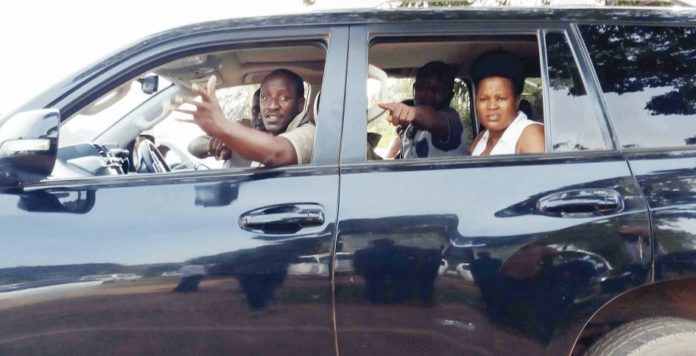
A police officer attached to Naggalama police station, David Ssali, has admitted that he gunned down the handcuffed suspect, Ronald Ssebulime, saying he did so in order to save State Minister of Information and Communication Technology (ICT), Aida Nantaba’s life.

In a recorded voice call discussion between Ssali and Nantaba which Eagle Online has obtained, Ssali says he was deployed by district police commander (DPC) of Naggalama police station after Nantaba had just registered a complaint of assassins who were purported to be trailing her.

Ssali says they were later given police patrol 999 and the diver under the commander known as Afande Bamuzibire and set off for a deadly mission in Nagojje off Kampala- Kayunga high way.

Police last evening through its mouthpiece Fred Enanga acknowledged Ssebulime was illegally killed after days of denying. Enanga yesterday apologized for the earlier denials and said that police patrol in the area had told their superior lies.
Mr Sebulime laid to rest in Mityana district.

According Police Act 1994 (Part IX), any person who gives false information to police is liable to imprisonment not exceeding 1 year.

Below are the call details.

Ssali I am the police officer who commanded the operation but I don’t know when I will get to see you mummy (Nantaba).

Nantaba You will get to see me if God wishes, the minister replied

Ssali We got a phone from suspect who was riding the motorcycle but I handed it over to the Naggalama police and see if they can get a print out and see who they were talking to.

Nantaba Did you get the guns?

Ssali No we didn’t get them, we searched them everywhere but we failed. The gun man went through and got a boda-boda and fled the area. We were informed that the man who had a pistol saw us and bent down pretending to be taking water and we suddenly bypassed him.
No doubt, the people I chased had guns, and the passenger tried shooting at us and that is the truth and Iam ready to defend it.

Nantaba Can you call me when you get to CPS so that I avail you journalists for that story because the public is convicting you over the death of this man?

Ssali I cannot because I may be faulted for sharing such information.

Nantaba Don’t you think that your bosses will stop you from giving the truth? You would record the statement after giving this information to journalists.

Ssali If anyone argues, tell them that I will call for a police officer who commanded the operation.

Nantaba Don’t you think police officers will turn against you if there was a big name involved into this criminality?

Ssali Let me give you my boss’s number of group ‘Tight One’ he is called Bamuzibire and ask for permission to speak to me. Tell him that I want to speak to the police officer who was commanding the operation.

Nantaba Fine, since police has summoned you, go and make a statement.

Ssali First call that police officer, because he knows what happened on the ground, I called him and he drove from Kampala moments after killing that man. This is open, how many have been killed in this government? And whom have they ever arrested? They would have just lauded us for the work well done. We killed one of the two assassins who were going to take your life.
I will do what it takes so longer as they allow me to testify. Let me first record the statement if he allows, I will speak to journalists.

Nantaba I am asking you to speak to journalists because they may need that story. I have my good journalists whom you will speak to and take that testimony. You are under threat; first speak to journalists and that is how I think.

Ssali I will record my statement and photo copy it before handing it to Jinja police station. I will call you to show you a copy.

Stories Continues after ad

2019 CAF Super Cup to be played in Qatar

CAF super cup

Qatari capital Doha will be the place where 2018 Total CAF Champions League winners Esperance of Tunisia will take on the 2018 Total CAF Confederation Cup champions Raja Casablanca of Morocco in the 2019 Total CAF Super Cup.

This is the 27th edition of the annual one match Super Cup of the Confédération Africaine de Football, since its inception in 1992.

It will be the first time that African teams are going to play a competitive fixture outside the continent. The match will be played on Friday, March 29, 2019.

In 19 of the last 20 CAF Super Cup editions, the CAF Champions League winners emerged victorious, with the only exception being Morocco’s Maghreb de Fez winning the 2012 CAF Super Cup on penalties on the expense of Esperance.

Esperance, champions of 6 CAF titles are making their fourth CAF Super Cup appearance. They won the trophy in 1995, but failed to replicate the feat in 1999 and 2012. On the other hand Raja who also have 6 CAF titles to their name are making their third CAF Super Cup appearance, with also one victory in 2000 after they ended on the losing side in 1998.

Esperance will enter the game backing on the form of their striker Anice Badri, who finished last season’s Champions League as top scorer with eight goals.

Raja themselves have their attacking force in the form of Mahmoud Benhalib, who scored 12 goals in last season’s CAF Confederation Cup to finish as top scorer.

Moine Chaabani, former Esperance player is looking for his second trophy as coach to his boyhood club. Ironically his counterpart in Raja is Frenchman Patrice Carteron, the coach he defeated last November to win the Champions League. Carteron, then Ahly coach took charge of Raja last month, succeeding the CAF Confederation Cup winner Juan Carlos Garrido of Spain.

The 2019 CAF Super Cup match between Esperance and Raja Casablanca will be the third meeting between Tunisian and Moroccan sides in this competition. Each country one once, with Tunisian Etoile du Sahel beating Raja on penalties in 1998, while Morocco’s Maghreb de Fez defeated Esperance the same way in 2012.

Stories Continues after ad

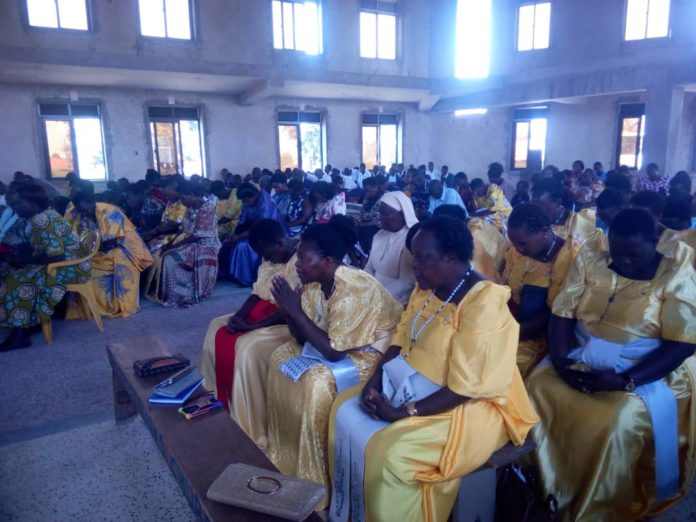
Kamuli district substitutes women’s celebrations with prayers for Kadaga

Women in Kamuli attending prayers for Kadaga.

Kamuli district has this Thursday gone down on knees, praying and fasting, to ask God extend His healing hand to the ailing Speaker of Parliament and area woman MP, Rebecca Kadaga.

The district had earlier planned to hold the women’s day celebrations today. “But we made these plans not knowing that our role model would be hospitalized,” said Chairperson of the district women’s Council, Masitula Namatovu.

Kadaga had last month confirmed that she would be the chief guest at the today’s belated celebrations.

The district National Resistance Movement (NRM) Administrative Secretary, Trevor Solomon Baleke told the press in Kamuli that they had to change the program because “in our culture, we don’t merry make when a mother is sick.”

Kadaga is also the district chairperson of the NRM women’s league and the second national vice chair of the ruling party.

“We have therefore agreed with the district leadership to direct all our energies and resources towards prayers for our great woman,” said Baleke.

By 10:00am this morning, St Mark Church of Uganda in Kamuli Municipality where prayers are being held had been filled to capacity.

The service which was still going on by press time is being attended by religious leaders from different denominations, members of Kamuli Rotary Club, the media, the mother’s Union, female heads of school, government institutions, the business community and local leaders among others.

“And we are holding another mega gathering at Namasagali C/U primary school grounds where we had planned to have the women’s day celebrations. For those who have not managed to be at St Mark are already in Namasagali for prayers too,” Baleke explained.

While representing Hajji Ddumba Moses – the Resident District Commissioner, the NRM admin (Baleke) appealed to the people who couldn’t make it to the venues to at least pray from their homes and workplaces.

“If you can’t join us at St Mark and at Namasagali, please pray from wherever you are. We believe that the Lord shall hear us,” he said.

Muslims in Kamuli municipality will also hold special dduwa (prayers) for the speaker at the different mosques starting 1:45pm today.

Kadaga was at the weekend airlifted to Nairobi’s Aga khan hospital for further treatment.

Speakers’ admission to the Nairobi health facility was confirmed by parliament’s press secretary, Sam Obbo who said the decision was made basing on doctors’ advice.

Mr. Obbo said the speaker is stable and is steadily recovering and soon she will resume with her work.

Kadaga was last Thursday night admitted to Nakasero hospital over fatigue related illness attained from hectic working tour in morocco and USA.

“Due to hectic work schedule, fatigue and jet lag, she had to admitted, we hope her privacy will be respected during this period,” reads in part of the statement released by parliament’s press secretary.

Stories Continues after ad

Confirmed: Manchester United announce Ole Gunnar Solskjaer as full-time manager

Ole Gunnar

Manchester United announces that current caretaker manager and former striker, Ole Gunnar Solskjær, has been appointed as the club’s full-time manager on a three-year contract.

Solskjær scored 126 goals in 366 appearances for United between 1996 and 2007 and also managed the club’s reserve team until the end of 2010. He was appointed caretaker manager on 19 December 2018 and won his first eight games in charge on the way to an overall record of 14 victories and two draws in 19 games, amassing more Premier League points than any other club during that time.

“From the first day I arrived, I felt at home at this special club,” said Solskjær. “It was an honour to be a Manchester United player, and then to start my coaching career here. The last few months have been a fantastic experience and I want to thank all of the coaches, players and staff for the work we’ve done so far. This is the job that I always dreamed of doing and I’m beyond excited to have the chance to lead the club long-term and hopefully deliver the continued success that our amazing fans deserve.”

Ed Woodward, Executive Vice Chairman, comments:

“Since coming in as caretaker manager in December, the results Ole has delivered speak for themselves.

“More than just performances and results, Ole brings a wealth of experience, both as a player and as a coach, coupled with a desire to give young players their chance and a deep understanding of the culture of the club. This all means that he is the right person to take Manchester United forward.

“I want to thank Ole and the coaching team for everything they have done so far and congratulate him on this richly deserved appointment. The fans and everyone at the club are behind him as he looks to take us where we need to be and build the next stage of our history.” – via Man United website

Stories Continues after ad

Uganda drawn in Pool A for 2019 FIBA 3×3 World Cup Qualifiers

2018 FIBA Uganda 3x3 team

Eight men’s teams and eight women’s teams will compete for the last 3 tickets – in each category – for the FIBA 3×3 World Cup 2019 at the FIBA 3×3 World Cup Qualifier

The Uganda Ladies 3×3 National basketball team have been drawn in group A of the World Cup qualifiers alongside host Puerto Rico, Estonia and Australia.

The Gazelles has played at the FIBA 3×3 World Cup two times, in 2014 and 2018.

In the previous edition, Uganda was eliminated at the Group stage having finished third in pool C which featured USA, Russia, Iran and Andorra.

The qualifiers will take place in San Juan, Puerto Rico from 4th to 5th May 2019.

The winners of the semifinals will qualify automatically to the FIBA 3×3 World Cup 2019, while the losers of the semifinals will play a final game for the final qualifying spot.

The 3 medalists will also qualify for the Olympic Qualifying Tournament.

The 2019 FIBA 3×3 World Cup will take place in Amsterdam, Netherlands on from 18th-23rd August.

The FIBA 3×3 World Cup is the primary tournament for 3×3 basketball organized by FIBA. The debut of the tournament then named as the FIBA 3×3 World Championship was held in August 2012 in Athens, Greece. The current champions are Serbia in the men’s division and Italy in the women’s division.

2019 FIBA 3X3 World Cup Qualifiers

Women

Pool A: Puerto Rico, Uganda, Estonia, Australia

Pool B: Brazil, Spain, New Zealand, Mali

Men

Pool A: France, Germany, Italy, Nigeria

Pool B: Romania, Puerto Rico, Australia, Czech Republic

Stories Continues after ad

Museveni to travel by train from Mombasa to Nairobi

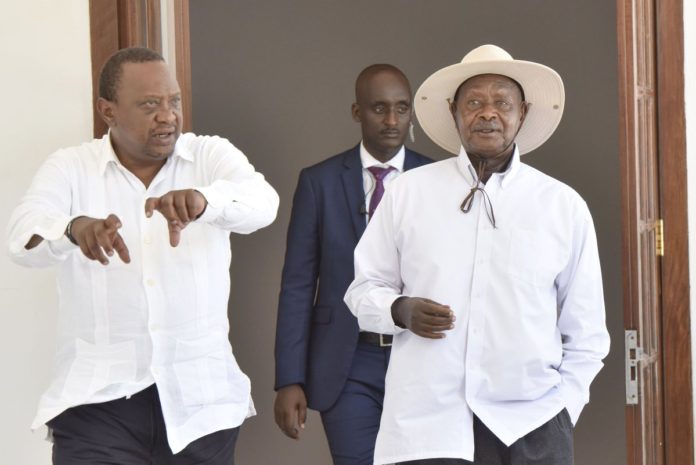
President Museveni and his Kenyan counterpart Uhuru.

Ugandan President Yoweri Museveni’s plan to take a train journey of about 480km (298 miles) from Kenya’s coastal city of Mombasa to the capital, Nairobi, is of huge significance.

It is seen as a major endorsement in the push for Kenya and Uganda to build a seamless Standard Gauge Railway (SGR) through Kenya’s western border to Uganda’s capital, Kampala.

Financing for the Uganda segment of the SGR hinges on Kenya completing its line to Malaba, a western town on the border with Uganda.

In the past Kenya has indicated that it preferred building a line further south of this route to its inland port city of Kisumu to transport goods through Lake Victoria to ports in Mwanza in Tanzania, and Entebbe, Port Bell and Jinja in Uganda.

Uganda’s first phase of SGR, the eastern line running from Malaba to Kampala, is about 273km and is expected to cost about $2.3 billion (£1.75 billion).

Kenya is already extending the line from Nairobi to a designated inland dry port in Naivasha with $1.5 billion in financing from China.

The first phase of the SGR project from Mombasa to Nairobi cost $3.2bn and repayment of this cash is the top priority for the Kenya government, and it also wants to focus on the construction of the most financially viable route into Uganda.
Museveni is in Kenya for three day visit on the invitation of his counterpart.

Stories Continues after ad

Ugandan signs MoU with Kenya to ease trade and cement political ties

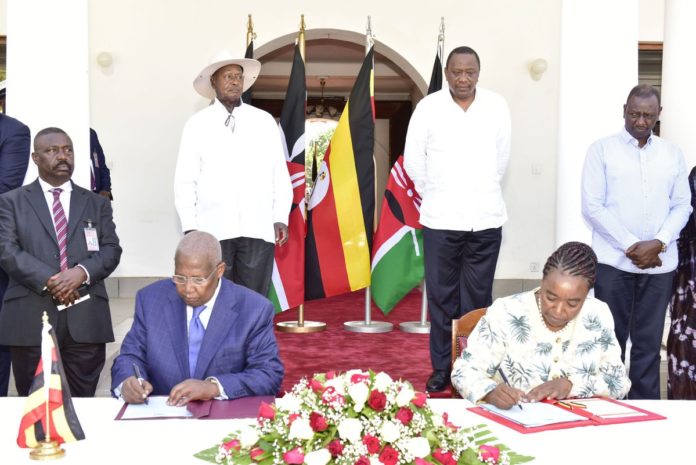
The two leaders witness their ministers pend signatures on the agreements.

Ugandan has signed a raft of agreements with Kenya aimed at easing trade, cement political ties and improve their social and cultural connections between the two East African countries.

The signing ceremony was conducted at the Kenyan coastal city of Mombasa, witnessed by President Yoweri Museveni and his host, Uhuru Kenyatta. Museveni is in Kenya for three days visit on invitation of President Kenyatta.

The agreements, clustered into three major categories of defence, trade and social affairs, focusing on not only easing means of doing business between the two countries but also resolve some of the sticking issues that have hampered trade.

The pacts direct Kenya to consider increase of its sugar quota imported from Uganda to 90,000 metric tonnes from the current 36,000 tonnes and Uganda has been tasked to formally lodge a request to this effect that would create market for at least 54,000 metric tonnes of its surplus 90,000 metric tonnes it produces annually.

Kenya agreed to lift the ban on poultry products from Uganda within a week, dependent on Ugandan authorities furnishing then with necessary information making a case for the decision. It also agreed to do away with a host on non-tariff barriers that were affecting their exports.

it is not rosy news for those packaging alcohol in plastic sachets after both countries directed to ban this packaging develop modalities on fighting alcohol use and drug trafficking.

Being security issues, both countries among others agreed to ease the process of getting work permits for their nationals, harmonize methods of verifying temporary travel documents and formally communicate cases of repatriation.

The countries have also agreed to develop formal guidelines within three months to help check human trafficking, with a call to arrest perpetrators.

On the social and cultural front, the key highlight was a request that Kenya ensures a harmonization of fees charged on Ugandan students at its public universities.

Stories Continues after ad