Stanbic Bank
Stanbic Bank
18.4 C
Kampala
Stanbic Bank
Stanbic Bank
Home Blog Page 1318

Amanya Mushega hits at Besigye, tells him to tolerate views of other FDC members

Mr Mushega

Aging politician and member of the Forum for Democratic Change (FDC) Amanya Mushega has warned Dr Kizza Besigye for telling lies about him and advised him to listen to the views of other members of the party even as he doesn’t agree to them.

Eagle Online reproduces Mushega’s letter below:

In your interview with one of the local English papers, you insinuated that in my earlier interview with the same paper, l was trying to speak on behalf of President Mugisha Muntu, yet I am not his spokesperson, and that Muntu is competent to speak for himself.
I’m writing this letter to you directly to let you know that l gave my views in my personal capacity. I hold no position in FDC but l have views based on experience in leadership on a fairly long period of reading, observing and in some cases practices.

You stated that in 1999, you approached some of us to leave the Movement and when we failed; you decided to start the work of ‘heavy lifting’ to remove the dictatorship and that you left the Movement for that purpose.
For how long will this ‘heavy lifting be a personal obligation and mission? The fact is that you did not leave the Movement; you just run for the office of the President under the Movement system. There were some members who moved a motion that Mr President be declared a sole candidate in 2000. Some of those movers are now victims of that thinking, some of us openly opposed this move and argued that you were free to stand. We even advised against the efforts to have you arrested and victimised. Your ‘entasiima’.

By the way, to refresh your memory, just 10 years earlier in 1989, you led a team to draft a resolution for a constitutional amendment to extend NRM rule and hence the leadership of President Museveni for an extra five years which was passed.
Then you were the most trusted confidant of the NRM leadership. Only a sole voice, Omulongo Waswa Ziritwawula opposed this move and resigned his seat in Parliament in protest. If you had joined him to fight the nascent ‘dictatorship’, perhaps the course of history of this country would have been different.

We may recall that when the Constitution was being amended to remove term limits, there were many clear voices in and outside Parliament who opposed it and some paid and are still paying a price. Not everyone succumbed to money offers. This was before FDC was formed. And FDC was not founded by a single individual or group. It was a culmination of efforts by several groups and tendencies, to forge a common home for a common effort and purpose.
You may recall my long discussion with you in South Africa in 2004. Many others did visit you. Learn to appreciate that there were other strugglers before you then and there are many others now.
The issues that concern you that I raised in that interview and which l still hold were;
1. You had turned on your word as recorded live on NTV and many other forms of media.
2. That you had not supported your successor Gen. Mugisha Muntu
3. That you had set up parallel structures and centres of power.
I can now add that you don’t easily tolerate different points of view and you don’t genuinely welcome and accommodate those who hold a different point of view. Case in a point, during the Namboole delegates conference in 2010 that elected you for the second term as president, Hon. Wandera Martin was publically announced that he had been appointed unopposed as secretary for labour.

Later on at the first NEC meeting at party headquarters, a meeting you chaired, it was raised that actually there were other people who had been nominated but papers not presented. To cut the long story short, Wandera was dropped and replaced by another person. The real reason, he had supported Muntu. Wandera is alive.
My brother Besigye, you are free to change your mind and you are entitled to run again, but if you do so, say so and why, rather than attacking people who raise that issue as you did in the interview referred to above. You actually state in the same interview that you stood because of the trust voters have in you that is not transferable to another candidate of the same party.

You also pointed that there was a deficit in that trust in your absence and that there was insufficient resolve by leaders in your absence to fight for reforms. Did you really think through this? If you did and it’s true, then your style and content of leadership raises concern. Please learn to respect and appreciate the contribution of others however small or insufficient from your point of view.

If it’s personal to you as if new voters have not come on board and some in the old voters register passed on, then this is in itself failed leadership. When you stepped down, I told some leaders at that time that you had stepped down tacticfully in order to come back with a bang as flag bearer. So your coming back was not a surprise to me, what surprised was the spurious reasons you advanced.

You started a parallel sect dubbed ‘activists’ from the top to the districts level. I will not delve into its activities. My view is that a leader’s role is to reconcile and harmonise different points of view in order to advance a common goal and purpose. Styles of struggle will always be there in any organised society. We should also learn to tolerate different points of view and respond to them without insinuations.
Finally, let me make it clear to all concerned that whoever gets elected and in spite of the attacks and labels put against me by some of your ardent supporters and campaign handlers, we shall support the party and its leadership at all levels.— Nuwe Amanya Mushega

Stories Continues after ad

IGAD ministers to empower refugees, returnees and host communities

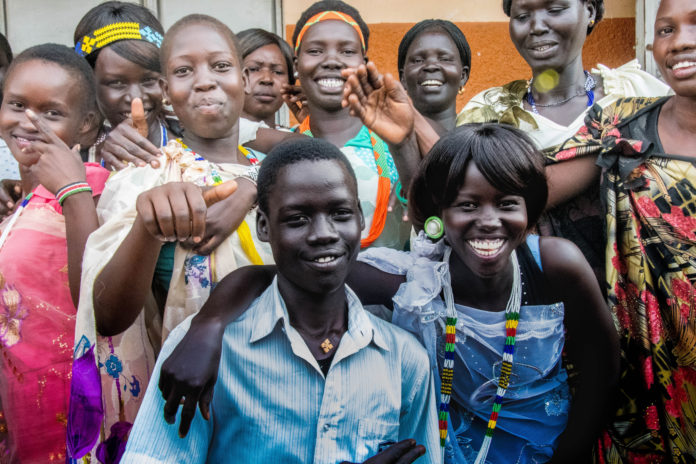
Some refugees have found new homes in Uganda

The Intergovernmental Authority on Development (IGAD) in collaboration with the Government of Uganda is to hold a “Regional Thematic Meeting on Livelihoods and Self-reliance for Refugees, Returnees and Host Communities” at the Commonwealth Speke Resort Munyonyo in Kampala, 25-28 from March 25-28, 2019.

According to a press release by IGAD Secretariat, The first three days will have experts meet to pave the way for a ministerial level meeting due to take place on March 28.

The regional thematic meeting will bringing together IGAD Member States, development and humanitarian partners, as well as the private sector and the civil society groups from the humanitarian and development spheres to support these commitments.

Participants will come from IGAD Member States’ line ministries, including lead agencies that handle refugee matters; ministries of finance (treasury); ministries of planning and those responsible for local government (devolution, federalism or decentralization), as well as ministries of agriculture, livestock development and those responsible for labour.

“Representatives of refugee and host communities, international finance institutions, partners engaged in securing durable solutions and the IGAD core group of partners to the Nairobi Plan of Action are expected. Others include the private sector, civil society and the Diaspora who are champions for refugees,” reads the press release in part.

The meeting will look at a range of issues connected to the access of refugees and host communities to livelihood and economic opportunities including challenges accessing supporting services and functions such as financial, information, training, infrastructure, business development services among others; as well as barriers in the regulatory and policy environment preventing refugees and host communities to fully take advantage of available opportunities.

The press release adds the objectives of the meeting are to: Identify existing opportunities and the associated constraints towards sustainable livelihoods and job creation for refugees, returnees and host communities in the Horn of Africa and learn from Uganda’s refugee management model; identify opportunities for policy provisions and areas of strategic reform and programmatic interventions that would enhance/increase opportunities for sustainable livelihoods and job creation for refugees, returnees and host communities in the region.

Others are to; Share existing experience and good practices on enhancing self-reliance and economic resilience for refugees, returnees and host communities, identify practical steps and milestones for delivering commitments on self-reliance and livelihoods as set out in the Nairobi Action Plan and galvanize resource mobilization from IGAD Member States and partners to support these steps.

Central to the principles of the Nairobi Declaration and Action Plan of March 2017 is the promotion of self-reliance and economic resilience for refugees, returnees and host communities. IGAD Member States have committed themselves to; enhance, with the support of the international community, education, training and skills development for refugees to reduce their dependence on humanitarian assistance, and prepare them for gainful employment in host communities and upon return.

Stories Continues after ad

Parliament calls for Kadaga’s privacy after falling sick

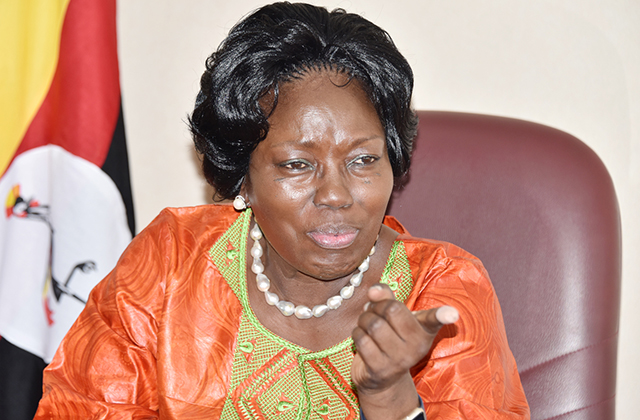
Speaker Rebecca Kadaga

Parliament has asked for privacy for its ailing Speaker who doubles as Kamuli Woman MP Rebecca Kadaga who is currently under medical attention at Nakasero Hospital.

According to parliament’s press secretary Sam Obbo, Kadaga was last night admitted to the fancy health facility over fatigue related illness attained from hectic working tour in morocco and USA.

Earlier president, Yoweri Museveni visited her at the health facility after he had received information that she was receiving intensive care at the private hospital.

Museveni reportedly rushed into the facility where got access to speaker’s VIP room.

“Due to hectic work schedule, fatigue and jetlag, she had to admitted, we hope her privacy will be respected during this period,” reads in part of the statement released by parliament’s press secretary Sam Obbo.

Stories Continues after ad

2019 Afcon: All the qualification permutations as only ten slots remain at stake

Afcon 2019

The final round of 2019 Africa Cup of Nations qualifiers takes place from March 22nd to 24th with only ten places up for grabs.

Fourteen countries have already confirmed their places at the 2019 tournament and they are; Kenya, Ghana, Senegal, Madagascar, Morocco, Mali, Algeria, Tunisia, Nigeria, Egypt, Uganda, Mauritania, Guinea and Ivory Coast.

The 2019 AFCON tournament will be the first to host 24 teams from 16. The competition will be held from 21st June to 19th July in Egypt.

The group stage draw will be held on 12th April in Cairo, Egypt.

The permutations in each of the qualification pools are assessed below by SuperSport.com

GROUP A

Senegal and Madagascar have already sealed their qualification ahead of their meeting in the final round of matches in Dakar on March 23.

Madagascar can finish top of the pool with a win, or a score draw that includes six goals or more.

It is a first ever qualification for Madagascar for the continental finals.

Sudan and Equatorial Guinea are the other teams in the pool and meet in their last game in Omdurman.

GROUP B

Morocco have already qualified as they travel to already eliminated Malawi in their last game, needing a draw to seal top spot.

Cameroon need just a draw at home to Comoros to seal their passage, but a surprise defeat would see them eliminated on the head-to-head rule.

GROUP C

Mali have already sealed their qualification and take on South Sudan at home, with the minnow side yet to pick up a point in the qualifiers.

Burundi host Gabon needing just a draw to seal their passage, but a win for Gabon would see them advance. The teams played to a 1-1 draw in Libreville earlier in the competition.

GROUP D

Algeria have already sealed their qualification but it is all to play for among the other three teams. And it is pretty complicated.

Gambia make the journey to North Africa knowing a win could see them advance, but may still not be enough, while a point is not good enough.

If Gambia win and Togo beat Benin in Cotonou in the other fixture, then Togo will advance on the head-to-head rule.

If Gambia win and Togo and Benin draw, then Gambia will advance past Benin on the head-to-head rule.

If Benin win they will join Algeria at the final come what may.

If Benin and Togo draw, and Gambia fail to beat Algeria, then Benin will advance.

GROUP E

Nigeria have already qualified ahead of their hosting of minnows Seychelles on Friday.

South Africa must avoid defeat to Libya in neutral Sfax, Tunisia in order to advance to the finals.

GROUP F

Both Kenya and Ghana have already qualified for the finals from a pool that was reduced to three teams after Sierra Leone were suspended by Fifa.

The two sides will meet for top spot in the pool in Accra, with Kenya needing just a draw to hold on.

GROUP G

All four teams can still qualify from the pool in a winner-takes-all scenario.

Zimbabwe need just a point at home to Congo on Sunday to secure their place.

If Congo win they will qualify, jumping above Zimbabwe on the head-to-head rule.

If Liberia get a point in the DR Congo, they will qualify, through one of two scenarios. Either Congo have not beaten Zimbabwe, or, if Congo do win, it will create a mini-group of three teams (Zimbabwe, Congo, Liberia) all on eight points. It will then come down to head-to-head between the three teams and Liberia and Congo will advance.

DR Congo must beat Liberia to make the finals in Egypt.

GROUP H

Guinea and the Ivory Coast have already qualified for the finals.

Ivory Coast host Rwanda on Saturday, while Guinea travel to the Central African Republic.

GROUP I

Mauritania have already sealed an historic first qualification, while the only side eliminated in the pool is Botswana.

Angola need a win in Botswana to make sure of their passage.

If Angola draw, they must hope that Burkina Faso don’t beat Mauritania at home. If they do, it will leave both sides on 10 points and the Burkinabe will advance on the better head-to-head record.

Burkina Faso must win to stand a chance of progressing.

GROUP J

Tunisia and hosts Egypt have already sealed their qualification. Egypt had booked their passage to the tournament before they were named as hosts, replacing Cameroon.

Niger and eSwatini are the other two teams in the pool. Niger host Egypt and eSwatini travel to Tunisia.

GROUP K

The 2012 Nations Cup winners Zambia are the only side eliminated from this pool so far.

A win or a draw for Guinea-Bissau at home to Mozambique will see them advance to the finals.

A win for Mozambique will ensure their passage, while a draw will not be enough, even if Zambia beat Namibia to leave them level on eight points with the Brave Warriors. Namibia have the better head-to-head record over the Mozambicans.

If Mozambique and Zambia win, then Guinea-Bissau will edge Namibia for second spot in the pool on the head-to-head rule.

GROUP L

Uganda have already sealed their passage to the finals, but it is all to play for between Lesotho, Tanzania and Cape Verde Islands.

A win for Lesotho in the Cape Verde will see them advance to the finals, even if Tanzania also beat Uganda as the Likuena have the better head-to-head record between the two.

Essentially, Tanzania, who host Uganda, must better the result of Lesotho to seal a place in Egypt.

Cape Verde must beat Lesotho and then hope Uganda get at least a point in Tanzania to book their passage.

If both games end in a draw then Uganda and Lesotho will advance.

Stories Continues after ad

Five keys to boosting the performance of a business team

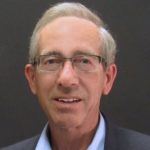
Martin Zwilling

By Martin Zwilling

It takes an effective team to attract and serve a community in business these days. With real-time online reviews and feedback via the Internet, and instant relationships via social media, a voice from the top that is inconsistent with what is heard from the firing line defines a dysfunctional and noncompetitive company for today’s customer. Thus team makeup is the critical success factor.

A few companies seem to be leading the way in building and maintaining ultra-effective teams, sometimes called extreme teams. These include companies across multiple industry spectrums, notably NetFlix in entertainment, AirBnB in hospitality, and Whole Foods for groceries. I see the commonalities detailed well in the classic book, “Extreme Teams,” by Robert Bruce Shaw.

Shaw is a consultant specializing in team performance, and he brings real experience building and working with extreme teams in companies like the ones mentioned above. In my many years of experience in business, and recent work as a mentor to entrepreneurs, I have seen the business world change, and can relate well to his five success practices paraphrased here:

Build the team from people with a shared obsession. The most effective teams are built from people with a strong sense of values and commitment, starting at the top of the company. Team members need to view their work as a calling, much more than a job, and embrace a higher purpose that shapes their collective thinking and behavior.

When selecting members, value fit over experience. Companies with the best teams seek out candidates with the right mix of personal motives, values, and temperament to be a true team player. Cultural fit matters more than job history or functional skills. Those that have these traits are incented to join, and those who don’t are often paid to leave.

Incent them to focus and always look to the future. Extreme teams are tightly aligned around the company’s top few priorities, while remaining open to new ideas. For team members, the ongoing challenge is figuring out what not to do. These teams are motivated to develop approaches to creatively explore new opportunities for growth.

Let them deal with people performance, as well as results. Teams today need a culture of being simultaneously tough in driving for measurable results, and direct in support of individuals who best create an environment of collaboration, trust, and loyalty. Teams must openly deal with their own weaknesses and take action on underperformers.

Embrace healthy conflict to avoid the comfort of stagnation. Members push themselves and each other to speak up, question the status quo, take bold risks, and confront hard truths. They recognize the value of being uncomfortable as a way to push thinking outside the box, and as a wakeup call when something is not working.

I recognize this is a revolution in the way most companies and employees work today, viewing work as a set of tasks with no passion, new members selected primarily on past experience and functional skills, and viewing conflict as something to be avoided or a sign of failure. They value harmony among members, and measure success as a function of the number of priorities concurrently managed.

Building and managing teams along the new lines outlined is not easy, and that’s why it’s a real competitive advantage when you do it. It takes a new kind of management team with a strong belief that a company can thrive with a larger purpose, total customer experience is critical to success, and the new generation of workers needs a new culture of passion and relationships.

As hard as it is to build extreme teams from the beginning, it’s much more difficult to turn around a failing or stagnant team. In fact, many would say that it’s impossible, without first replacing the top leaders and key team members in an existing organization. Thus, if you are a business leader who intends to survive and thrive in the long-term, it’s time to start today by checking the culture of your teams. Your career and your company’s future depend on it.

The writer is a veteran startup mentor, executive, blogger, author, tech professional, professor, and investor. Published on Forbes, Entrepreneur, Inc, Huffington Post.

Stories Continues after ad

Rwandans in shock as Kagame orders world’s first nationwide DNA database

Rwanda President Paul Kagame.Photo credit/reuters

Rwanda has proposed the world’s first country-wide DNA database, a project that will involve collecting samples from all of the country’s 12 million citizens in an effort to crack down on crime.

The scheme has prompted concerns from human rights campaigners who believe the database could be misused by the government and violate international human rights laws.
Plans for the database were announced by Rwanda’s Minister for Justice and Attorney General, Johnston Busingye.

Speaking in the country’s capital, Kigali, he said the project would help to fight crimes like rape and murder.
He said: “We think we have the technical basis now to launch into the development of a DNA database. That said, it is first of all a legal process.
“We will examine global best practice on the issue, propose appropriate law and implement accordingly.”

He added: “I want to assure you that the ultimate goal is to have all the necessary equipment and technical know-how to provide accurate information about who is responsible for crime”.
Officials still need to secure a budget for the project and push legislation through parliament to permit the creation of the database, according to the Rwandan daily The New Times.
Human rights organisations are wary of the new scheme as they believe that the government could potentially misuse DNA data, which can reveal a broad range of intimate medical and genetic details.

Alexandrine Pirlot de Corbion, global programme lead at the charity Privacy International, said: “There is an inherent risk that this kind of database could be misused in the future.”
“Around the world we have seen instances where large sets of data have been misused for repression – allowing authorities to identify and profile groups in society that a government might want to locate.”

The retention of this data is also problematic from a legal point of view and, depending on its implementation, could violate legislation set out in the International Bill of Human Rights, according to the UK-based law reform group Justice.

Rwanda is still suffering from tensions in the wake of the 1994 genocide when 800,000 Rwandans were killed in just a hundred days, after the country’s Hutu political elite directed the mass murder of the country’s Tutsi population.

It is estimated that 70 per cent of the country’s Tutsi population were killed in the genocide.
Though officials want Rwanda to be the first country to have a comprehensive DNA database that documents all of the country’s citizens – several other nations have already started to implement large-scale DNA databases.

Elsewhere there are concerns that the Chinese government is using DNA testing to oppress the country’s predominantly Muslim Uighur minority.
Researchers believe more than a million Uighurs are being systematically detained in what China calls “re-education” camps.

China’s Xinjiang government has denied that it used its medical programme to make a DNA database and also denies that Uighurs are being detained without due process.
In 2015 Kuwait passed the world’s first law that required all citizens and visitors to submit samples of their DNA, but it was revoked before it came into force.

It was introduced with the aim of identifying terrorists but, in 2017, the country’s Constitutional Court ruled that the law violated Kuwait’s constitutional guarantee of personal liberty.

Human rights groups say that that China has built up a vast DNA database of Uighurs living in Xinjiang province, collecting samples without consent from nearly 36 million people as part of a free medical check-ups programme.
In 2014 Chinese researchers published a paper describing how to distinguish Uighurs from other ethnic groups

Stories Continues after ad

Govt embarks on construction of Nyagak mini-hydro power dam

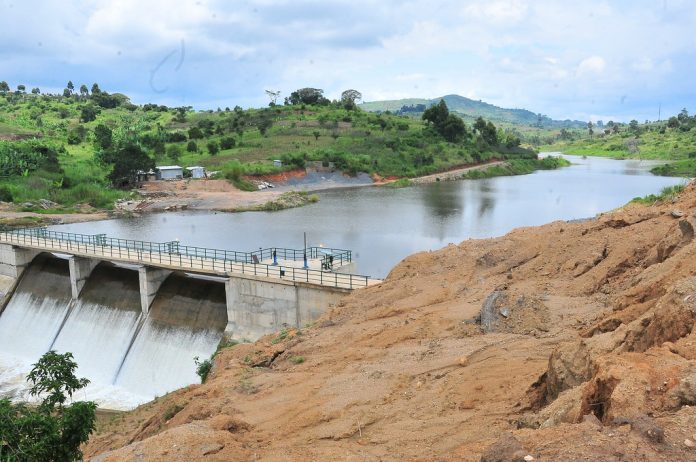
Nyagak area where dam is to be constructed

After President Museveni yesterday commissioned the US$567.7million 183.2 MW Isimba Hydropower Dam in Kayunga District, The Uganda Electricity Generation Company Limited (UEGCL) has now been tasked to speed up preparation activities to pave way for the construction works of the Nyagak Mini-hydro Power Dam in West Nile.

“This project is key to us and the government is ready to avail funds for construction works to begin” said State Minister for Energy Simon D’Ujanga while officiating the revival of the project plans.

Nyagak power project was initially set to begin in 2018 but suffered a major setback when financier KFW, German state owned development bank pulled out of the course. KFW had committed US$8 million towards the project.

The Minister said that the government will pick the project at 30 percent equity since the project is being developed through a Public- Private Partnership model which will see the remaining 70 percent debt mobilised by the new private investor, Genmax.

Genmax comprises of Tata Consulting Engineers as the project designer, Dott Services as the contractor and Hydomax Limited. Hydromax’s executive director Mr Reddy Maheswara said that construction works begin in May.

The entire project is estimated to cost about US$19.4m. Maheswara said that they are hosting a team from TDB Bank (formerly PTA) to access the project before approving funding for the same.

“We are having a team from TDB Bank coming into the country to do due diligence, on providing funding,” said Mr Maheswara.

Genmax, the project developer will operate the dam for 20 years before handing it back to the government while German-based GOPA International Energy Consultants will supervise it. UEGCL’s chief executive officer Harrison Mutikanga said the project construction timeline is 33 months.

The project construction timelines, according to Harrison Mutikanga is 33 months. Upon completion, it will produce an estimated power capacity of 6.6MW.

Stories Continues after ad

Poverty, corruption cited as biggest challenges in Uganda today

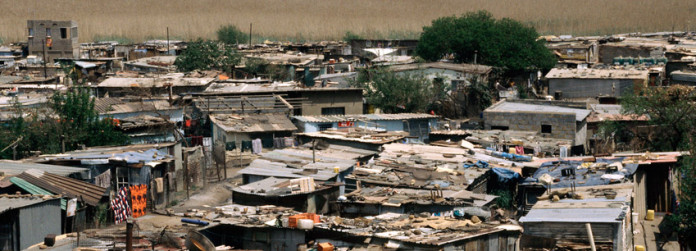
Globalization, market and poverty in South Africa

Ugandan citizens have pointed out poverty and corruption as the most serious problems facing the country today, according to a brief report released in Kampala on Thursday by the civil society organisation Taweza.

Titled ‘More food, less money: Ugandans’ experiences and opinions on poverty and livelihoods’, the brief is based on data from Sauti za Wananchi, Africa’s first nationally representative high-frequency mobile phone survey. The data was collected from 1,905 respondents across Uganda in November 2018.

According to the findings, nationally, the proportion of citizens naming poverty as the most serious issue has doubled from 14 percent in 2017 to 29 percent in 2018. Similarly, corruption is the second named problem with 13 per cent in 2018 compared to nine per cent in 2017.

Lack of employment comes third named by twice as many people in 2018 (12 per cent)] as in 2017 (6 percent).

Addressing journalists of the research findings, Ms Marie Nanyanzi, a programme officer at Sauti za Wananchi at Twaweza said in general fewer citizens are concerned about public services, like health, education and water and at household level, half of Ugandans are concerned about the gap between the rich and poor.

“Almost three out of four citizens are unhappy with the country’s economic direction (72 per cent). Many are also unhappy about employment (67 percent) as well as the state of corruption [70 per cent],” she said.

“The data in this brief tell the story of economic hardship for an expanding majority of Ugandan citizens. Although they are slightly more satisfied with the country’s economic direction as compared to 2017, many households still do not have enough income to meet their daily expenses. Poverty in their most serious challenge and in some households it has cost lives. These voices are an important alarm bell for the government to heed, so as to minimize further suffering.”

The report recognises notable decline in food stress at the household level in 2018;citizens are less likely to report not eating for a whole day (37 per cent compared to 49 percent in 2017) and running out of food because of lack of money (69 per cent compared to 53 per cent in 2017).

However, more rural and poor Ugandans suffer from food stress than their wealthier and urban compatriots. Even so, one out of four wealthier Ugandans (25 percent)went without eating for a day in the past three months.

Mr Ramathan Ggobi, a policy analyst and political economist said poverty in Uganda has been on a rise overtime and on a national level it increased from 19.7 per cent in the financial year 2012/13 to 21.4 per cent in 2016/17.

He said if government is to overcome the biting poverty among its people, it should invest in agriculture heavily since 69 per cent of the population depends on it.

“Agriculture is a priority in words not action yet majority of Ugandans depend on it,” said Ggobi.

On the other hand, Mr Mondo Kyateka, Ag Commissioner Youth and Child Affairs at the Ministry of Gender expressed disappointment over the rising poverty levels in the country despite government’s unending intervention to save the situation.

“Am a bit annoyed by the findings, we have put in place a number of multi poverty elimination programmes like Youth Livelihood Programme (YLP), Uganda Women Entrepreneurship Programme (UWEP)but the insolvency just continues to shoot up,” he said.

He added: “We must abandon the entitlement syndrome that it should be government to elevate people from poverty. As Ugandans we should have our priorities right, we should priorities education, farming, financial literacy among others with that we shall yield good results.”

Stories Continues after ad

Museveni switches on Isimba Hydro Power project

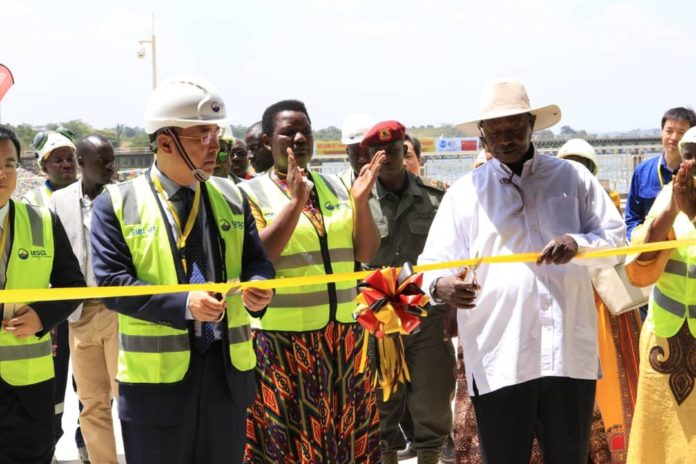
President Museveni has commissioned Isimba Hydro Power project that is expected to fuel the industrialization sector in Ugandan central district and lowering power tariff rates.

The construction of the 183 megawatts project was launched in 2013, with the construction works beginning in 2015. The project was contracted by a Chinese company, the China Water and Electrical Company Limited that built the dam and installing electricity generating equipment within a period of four years.

The Isimba Hydro Power project has cost US $567 million with 85 percent funding from the Chinese government and 15 percent from Government of Uganda. The 47 months project period ends on 31 March 2019 and it will be inter-connected to the Bujagali power dam 42km away in Jinja.

Speaking at the commissioning of the project, Museveni said Isimba power project is increasing Uganda’s total generation capacity from 951 to 1,734 megawatts of power.

Museveni vowed to bring more projects in Kayunga and cautioned them on government projects saying they belong to every Ugandan.

“I will maintain the old train and build a new one to make transport cheaper and easier for the community,” he said imploring them to fight house hold poverty for transformation of the country to middle status income.

He lauded China for collaboration with the government of Uganda in the construction of a landmark project that will boost industrialization in Uganda.

Stories Continues after ad

Kagame in Angola on campaign to close Rujugiro’s businesses

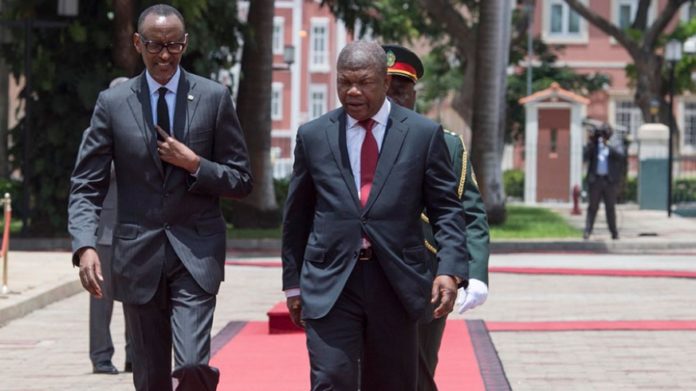
Rwandan strongman and President João Lourenço of Angola.

Rwanda’s president Paul Kagame is in Angola on a two-day state visit where the two leaders are expected announce strengthened partnerships in air transport, security and justice, migration, ICT and governance.

However, sources say Kagame is Angola to convince his Angolan counterpart to close down businesses run by Tribert Rujugiro Ayabatwa, who Kagame accuses of funding parties opposed to his regime in Kigali and wants Uganda to hand him over to Rwanda, which would be the
violation of the international law.

Rujugiro owns the Pan African Tobacco Group (PTG) which also produces cement in Angola even though the company does businesses in other countries. Sources say it is unlikely that both Angola and South Africa will close Rujugiro’s business. He recently visited South Africa.

Kagame’s visit to Angola comes as tensions between Rwanda and Uganda continue, and political observers believe he might also be seeking alternative markets for Rwandan goods after banning the importation of Ugandan goods into his natural resource-scarce country.

PTG is Africa’s largest indigenous producer of cigarettes and other tobacco products, having begun about forty years ago. Rujugiro founded the company in 1978 when he began manufacturing cigarettes in Burundi in 1978 after a successful stint as a commodity trader across Africa.

He subsequently established a manufacturing plant in Zaire, now the Democratic Republic of Congo (DRC) in 1984, and later expanded into the South African market in 1991. Between 1996 and 2011, PTG commenced manufacturing in Angola, Uganda, Tanzania, the United Arab Emirates,
Nigeria and South Sudan.

The company’s latest addition is the processing plant in Arua,Northern Uganda, established in 2013. Today, the company records more than US$200 million in annual revenues and employs more than 7,000 people across Africa.

Last week, Uganda accused Rwanda of implementing a trade embargo on bilateral trade, saying exporters had been unsuccessful in securing permits to export goods to Uganda.

Before visiting Angola, Rwanda’s Kagame has also visited Tanzania and South Africa.
Kagame also hosted Kenya’s president, Uhuru Kenyatta, who told delegates at a national leadership conference that ‘‘while challenges exist, with goodwill and good intentions’, they can be resolved’.

While Rwanda depends for much of its imports on a trade route through Uganda to Kenya’s Indian Ocean port of Mombasa, its foreign minister, Richard Sezibera said they are exploring the use of alternative trade routes and corridors such as Central Corridor via Tanzania.

Since the diplomatic conflict climaxed last month, Uganda’s president Yoweri Museveni has also met with Kenya’s president Kenyatta and Deputy President, William Ruto.

Uganda’s foreign minister, Sam Kutesa also delivered a ‘special message’ to Tanzania president John Pombe Magufuli last week.

Stories Continues after ad