A fire has broken out at Kakira Sugar works (KSWL), damaging part of the sugar cane and injuring several people.
According to an eye-witness the fire broke out at about 10 am, after a boiler exploded, spilling hot water in the process.
The number of injured has not been confirmed but eye witness alleged one of the employees lost his leg after the explosion. It was not possible to get a comment from the management of the factory by press time today but the witness said Police fire brigade managed to contain the fire and that the injured have been rushed to Jinja Main Hospital for treatment.
Earlier this year, a fire broke out at the premises of Eurofoam mattress company at Ntinda in Kampala, killing six people and injuring several.
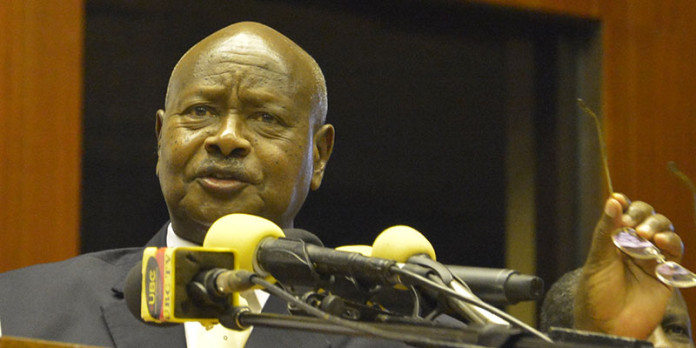
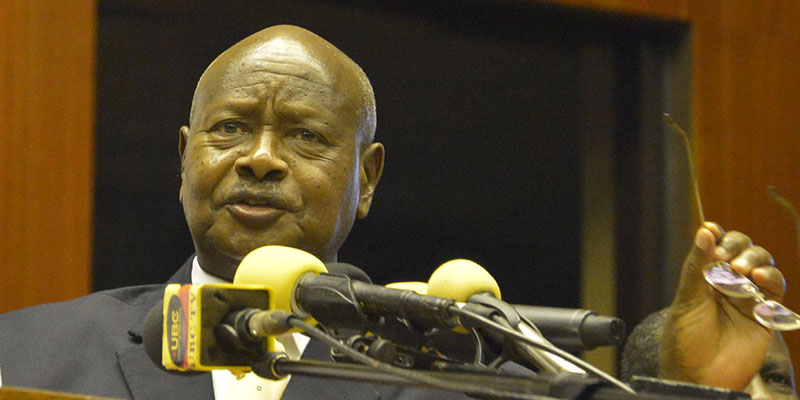
The president and MPs during the 2016 budget reading
The president and MPs during the 2016 budget reading
KAMPALA-Uganda’s Shs24 trillion budget for financial year 2015/16 is heavily clouded with new measures to generate more money through taxation, public debt repayment and recurrent expenditure in government ministries departments and agencies.
In his budget for financial year 2015/16 this afternoon, the minister of Finance, Planning and Economic Development Matia Kasaija said the main thrust of tax policy is to progressively enhance revenue mobilization to fully finance the budget.
“This is to be accomplished while ensuring that taxation is not a hindrance to private sector investment, savings, production and social welfare,” he said.
Uganda government has opened a new front of increasing domestic revenue by 0.5 percent annually through taxation over the next four years.
Mr Kasaija explained: “In pursuit of this goal, our efforts are geared towards increasing the tax to GDP ratio by at least 0.5 percentage points of GDP every Financial Year and to attain a target of 16 percent by 2018.”
In totality, domestic revenues are expected to increase to Shs11.333 trillion up from Shs9.799 trillion in the financial tear 2015/16.
Mr Kasaija said this will be achieved through a number of changes to the structure and coverage of taxes, and efficiency improvements in tax collection and compliance.
Though government is determined increase tax ratio to the GDP over the next four years, on the other hand, Mr Kasaija expressed worries that some of the challenges that inhibit the pace of revenue growth include among others; a large informal sector that constitutes 49 percent of GDP, a poor taxpaying culture among many Ugandans and lack of collaboration among Government Ministries, Departments, Agencies and Local Governments.
The total approved budget for financial year 2015/16 is Shs23.972 trillion. Out of this, Shs17.329 trillion is allocated for spending by Ministries, Departments and Agencies (MDA’s), which includes statutory expenditures amounting to Shs1.148 trillion.
Shs6.643 trillion is debt repayments plus interest on total debt. The total debt repayment includes Shs4.787 trillion which is meant to pay maturing domestic debt; Shs200 billion for recapitalization of the Bank of Uganda; Shs1.370 trillion and Shs285.7 billion for domestic and external debt interest payments respectively.
The minister said new domestic debt to be raised through Treasury Bills and Bonds next year is expected to amount to Shs1.384 trillion, which he says these funds will help to finance Government’s contribution to infrastructure investment projects.
Uganda’s public debt has been growing both external and domestic debt; the stock of outstanding public debt is projected to reach $ 7.6 billion by end of this financial year 2014/15, compared to $ 7.2 billion last year 2013/14
Statistics shows that 60 percent of Uganda’s debt stock is external and 40 percent is domestic. The increase in public debt reflects the increased borrowing to finance infrastructure investment.
Uganda’s budget is partly funded by the development partners, Mr Kasaija said: “Next year we expect to receive external financing equivalent to Shs5.649 billion in grants and loans, of which Shs1.095 billion is grants, Shs1.326 billion is concessional loans, and Shs3.228 billion is non-concessional loans. I thank our development partners for this good gesture.”
Uganda’s export is still low compared to what it imports, total export revenue for the period April 2014 to March 2015 are estimated at $ 2.701.6 billion, compared to imports of $ 5.048 billion over the same period.
Consequently, the current account deficit for this year is projected to widen to 8.5 percent of GDP compared to 7.2 percent in the financial year 2013/14. During the 12-month period ending March 2015, preliminary estimates indicate that the overall balance of payments position was a deficit of $475 million, compared to the surplus of $ 287.4 million that was recorded in the previous 12-month period ending March 2014.
The current account deficit has been partially financed by transfers in the form of external grants to Government amounting to $299 million, workers’ remittances amounting to US$ 915 million, and foreign direct investments inflows of $ 1.200 billion.
However, government officials admit that this was not enough to close the deficit, resulting into a reduction in external reserves amounting to $ 266.5 million.
Mr Kasaija said: “Despite the reduction, our reserves remain healthy at $2.972 billion, equivalent to 4.0 months of future imports of goods and services.”
Government projects that Uganda’s economic growth rate will rebound to 6.5 over the medium term, while inflation is expected to be around 5 per cent.
Charges: 20,000/- (Ordinary), 50,000/-(VIP) and 120,000/- (VVIP)
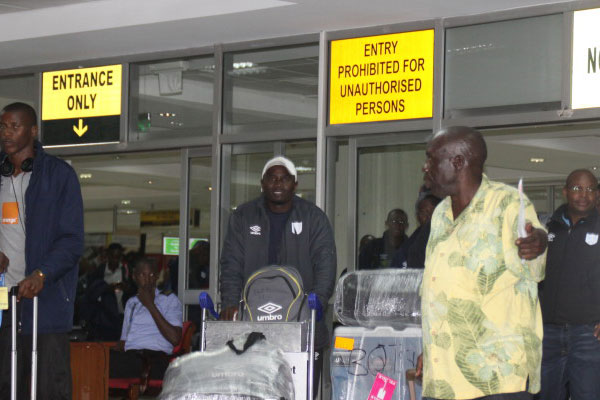
Bostwana “Zebras” defensive midfielder Ofentse Nato says the mood in their camp is sky-high ahead of their crucial 2017AFCON qualifier against Uganda Cranes at Namboole stadium afternoon.
Speaking after Zebras’ training session at Lugogo stadium, Ofentse revealed they are confident of putting in a good showing at a ground where Uganda has lost once (0-1 against Togo) in the last 11-years.
“The players have been longer together, we are also banking on the fact that our opponents don’t know us and hope we can pull a surprise,” Ofentse said.
A contingent of 28 Botswana players and officials arrived at Entebbe International Airport on Wednesday evening.
Zebras defensive midfielder Ofentse Nato
They traveled with South African Airways. Head coach, Peter Butler will reach on Thursday.
FUFA Protocol committee official, Boniface Oryema and FUFA security committee member, Emma Ssekago together with EX-international, Edward Kalungi warmly welcomed the team at Entebbe.
The team is accommodated at Hotel Africana, Botswana Contingent:
The president and MPs during the 2016 budget reading
H.E. Yoweri Kaguta Museveni endorsing the budget
Kampala 11th June, 2015
H.E. the Vice President,
Rt. Hon. Speaker,
His Lordship, the Chief Justice,
Rt. Hon. Prime Minister,
The Hon. Alhaji Kigongo,
Ladies and gentlemen,
You have all heard the speech of the Minister of Finance. The NRM, over the last 29 years, has laid a basis for the metamorphosis of the economy and society of Uganda from a Third World one to a First World one in the coming years, the various obstacles notwithstanding. Some of the obstacles are conceptual ─ failure to prioritize, for instance. Other obstacles are moral ─ corruption of actors such as public servants or political leaders failing to supervise and discipline the civil servants. Other obstacles were historical ─ e.g. low levels of education, under-developed infrastructure, a narrow internal market occasioned by the colonial fragmentation of Africa. The NRM has, patiently, worked on all these bottlenecks.
Working with our brothers in Africa, we have revived the East African Community (EAC) and created the Common Market for Eastern and Southern Africa (COMESA). This solves the problem of the market to some extent and enables us to negotiate more credibly for access to the foreign markets. Apart from the security challenges in the region that keep popping up (Eastern Congo, South Sudan, Somalia, CAR, etc.), the producers in Uganda and the region are now assured of the markets ─ regional and international.
The NRM has addressed the issue of the human resource development ─ education and health. The literacy rate was 43% in 1986. It has now gone up to 75% today. The mortality rate for infants in 1986 was 156 per 1,000 babies born alive. It is now 54 per 1,000 babies born alive. The average life expectancy was 43 years in 1986. It is now 58 years, today. The percentage of the people living below the poverty line was 56.4% in 1992/1993. This reduced to 19.7% in 2012/2013 (Statistics from the Uganda Bureau of Statistics). We could have achieved more if we were to fight corruption and my efforts in prioritizing expenditure were to get more support.
I want to salute the NRM Caucus and other positive leaders for supporting some of my prioritization measures since 2006 ─ the Conference we had in Statistics House. Since that time, as I pointed out in my State of the Nation Address, we have spent and we are planning to spend quite abit of our money on electricity generation, electricity transmission, the roads and scientific innovation in addition to all the other expenditures on the other sectors. This has had a marked impact on these sectors ─ electricity and roads ─ that form the base of the economy. When Ugandans are able to travel on a tarmac road from Oraba-Karuma-Kampala-Mbarara-Kabale to Kyanika/ Bunagana, a distance of 1,057 kms; then, from Oraba-Karuma-Kampala-Mbarara to Murongo bridge, a distance of 906 kms, respectively and from Malaba-Kampala-Fort-Portal-Lamia River a distance of 630 kms; Malaba-Kampala -Fort Portal to Mpondwe, a distance of 517kms respectively, I feel very pleased. Soon, Ugandans will be able to drive on a tarmac road from Nimule up to Kampala and from Moroto up to Kampala.
Concerning the electricity, as I pointed out in my State of the Nation Address the other day, with the completion of Karuma and Isimba, as well as the dozens of the mini-hydros, the geo-thermal, the planned thermal and co-generation efforts, our generation capacity will go from the present 840mgws to 1,974mgws by 2020. In the medium term, with the addition of Ayago, Kiba, Uhuru, etc. power stations, our generation will stand at 4,356mgws by 2035. That is still not enough for a modern economy but we will have moved a long way from our starting point of 60 mgws in 1986.
You all know of our plans with the railway. We have signed appropriate Memoranda of Understanding (MOUs) with the Chinese Company, CHEC, to design and build a Standard Gauge Railway from Malaba to Kampala, from Tororo to Nimule-Pakwach and from Kampala to Mpondwe and Mirama Hill on the Congo and Rwanda borders. Some of the roads are done with external support e.g. Arua-Oraba and Gulu-Atiak-Nimule. I salute the Partners who thus, assist us. These include the World Bank, the EU, the African Development Bank (ADB), the British Trade Mark, the Islamic Development Bank, etc., etc.
The economy of Uganda has, in the past 29 years grown at the rate of 6.6% per annum in spite of the electricity, road, rail, ICT backbone bottlenecks. After these bottlenecks are solved, the way we are solving them, the economy will grow at the rate of 7-10% per annum. This higher rate of growth will start in the year 2020. This takes into account efficiency improvements in infrastructure spending and coming on stream of oil production. However, even at the present rate of growth, Uganda will become a lower middle-income country by 2020 ─ i.e. in the next four years. That is when, Uganda will attain a GDP per capita of US$1,039. We are, at present, at US$788 per capita (2013/14) up from US$ 665 (2009/10) an increase of 18.5%. We could have achieved more if, for instance, we had spent less on wages and spent more on infrastructure. Out of our total Budget of Ug. Shs. 23,972 trillions, 2,894 (12%) trillions is spent on the Government Wage Bill. From our own Domestic Revenue of Ug. Shs. 11,333 trillion, wages would account for 26%. By even saving a quarter of this we would be able to build one and half tarmac roads of the Kampala-Masaka type per annum, where we spent Shs. 440 billion, in addition to whatever we are doing now.
Anyway, our Baganda people say: “Ekitatta Muhima, tekimumalako e’nte” ─ “As long as a Muhima has life, he will always have cattle even if some of those cattle died in big numbers; this is on account of his dedication”. Therefore, some disorientation, notwithstanding, the NRM is set to achieve its strategic goal of modernizing Uganda.
One area we are going to address, as I pointed out in my State of the Nation Address recently, is the area of value addition and manufacturing so that we earn more forex earnings.
As you heard the Minister of Finance saying, our GDP is now Ug. Shs. 75 trillions. If the exchange rate was at Shs. 2000, our GDP size in dollars would be USD38 billion. However, on account of a weakening shilling, the size of GDP in dollars, as you heard the Minister reading, is US$ 25 billion. By adding value to our raw-materials, our GDP in dollars will rapidly grow. If we use the other method of calculating GDP, the Purchasing Power Parity (PPP) method, the GDP of Uganda today is US$ 54 billion. Industrialization and value addition are, therefore, a must. Some people misunderstand the chain of production. When we say that we are spending about Shs. 500 billion on agriculture, some people think that this is not enough. However, when we spend Ug. Shs. 3,000 billion on the roads, that money assists agriculture first and foremost. How about Defence and Security? Can you have agriculture without peace? Therefore, please, take a wholistic view of the budget and not a fragmented view.
The roads sector has for the fourth year running topped the priority areas of government spending which will amount to Shs 23,972 billion in the next financial year, half of which will go to ministries, Departments and Government Agencies.
Reading the budgetary estimates for the year 2015/16 under the theme ‘Maintaining Infrastructure Investment and Promoting Excellence in Public Service Delivery’, finance Minister Matia Kasaijja said roads had been apportioned 3.328.79 billion, representing a budgetary allocation of 18.2 per cent, for construction and rehabilitation.
The Minister disclosed that over the last five years, paved roads in the country had increased by 889 kilometres, while the kilometer coverage of reconstructed paved roads stood at 882.
He also said that out of the annual target of 250 km, a total of 167 kilometres of roads had been upgraded from gravel to tarmac, and announced the creation of a Road Reserve Protection Unit comprised of officers from the Uganda National Roads Authority (UNRA) and the police.
Following the Public Finance Management Act 2015, this is the first time the budget has been approved by Parliament before the financial year begins, and Kasaijja said this move will enhance financial discipline, ensure accountability and enhance reporting for public resources.
He announced that the Ugandan economy is currently valued at 75.183 trillion, about 25 billion dollars, 17 per cent bigger than it was previously estimated, and that the economy was expected to grow by 5.3% in the financial year 2015/16.
“The budget seeks to attain a better future for Uganda and is anchored on the Second National Development Plan (NDPII), launched earlier today. Allocations have been made to fund strategic choices that will drive the socio-economic transformation of the country into a middle income country” the 53-page budget release indicates in part.
Kasaijja, who was made finance minister in this year, also has good news for the men and women in uniform and other security agencies, apportioning a defence budget of over one trillion shillings (shs1.632.89bn) to cater for recruitment and training; acquisition of modern equipment; peacekeeping, defence diplomacy and conflict resolution; and improvement of welfare including accommodation, medical facilities and access to credit.
In order to achieve the fiscal goals, Kasaijja also announced that domestic revenues are expected to increase to Shs. 11,333 billion up from Shs. 9,799 billion, through interventions like increased passport fees and levies.
According to the Minister, passport fees have increased from 120.000 to Shs150.000, and increase of Shs30.000, while any person who wants to get a passport within 24 hours will part with Shs300.000.
Similarly, in respect to increasing the tax base, Mr Kasaijja announced a temporary increase of the ‘environmental levy’ on used motor vehicles from 20 to 35 per cent for vehicles of between 5-10 years (as at date of manufacture), while those vehicles above 10 years will attract a levy of 50 per cent. This levy excludes commercial vehicles.
On energy the minister said that electricity production had risen from 595MW in to 851MW in 2014, and that the government would address the pitfalls including high costs and unreliable power (outages), to enhance production.
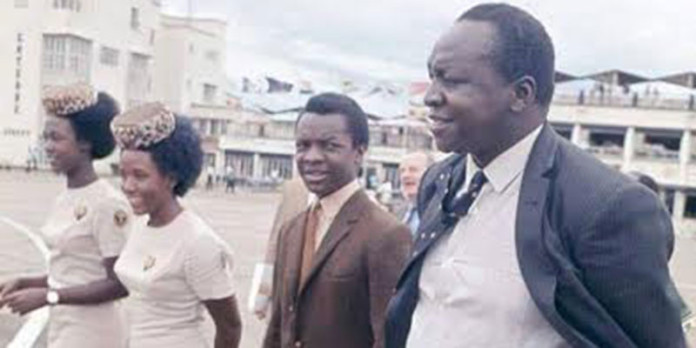
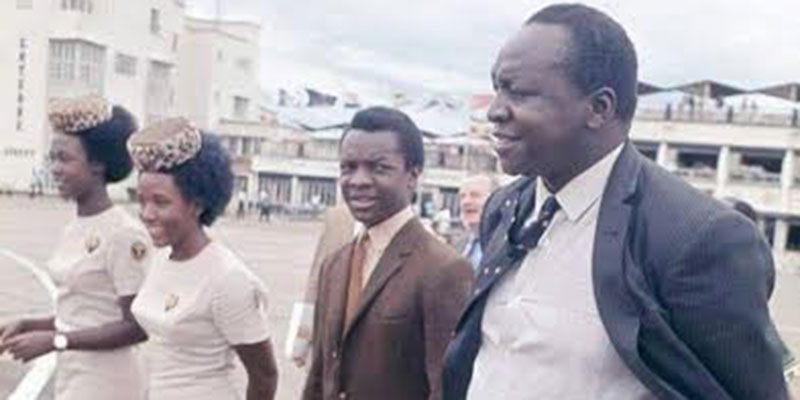
Kampala-Sarah Kyolaba Amin, a wife to former president Idi Amin has passed away in London. She died today at Royal Free Hospital after battling with breast cancer for a long time. Kyolaba who went to exile has been running a restaurant.
Her husband Idi Amin also died in exile in Saudi Arabia in 2003 and was buried there.
Kampala-President Yoweri Museveni has made changes in security, dropping the long serving Director General of External Security Organisation (ESO) Robert Masolo.
Masolo has been seconded to the Ministry of Foreign Affairs where he will be deployed in the Foreign Service. Replacing Masolo is an Ambassador based in United Kingdom whom Eagle Online couldn’t readily establish. Masolo replaced Maku-Igga as DG-ESO.
Security Minister Mary Karooro Okurut confirmed the changes but she remained tight lipped on who else is affected. However, Eagle Online has reliably learnt that more changes are to be effected at the sister spy agency, the Internal Security Organisation (ISO).
“I am waiting for the letter (official communication) from the President. But he has performed his duties well and we wish well,” Minister Karooro said on phone.
An elusive and cagey spy, Masolo who has worked at the ESO for 8 years as Director General, joined the intelligence services in 1987, just fresh from Makerere University and interestingly, despite serving in top intelligence positions for over 25 years, no media house has his photo.
While appointing Masolo ESO DG in 2007, Museveni also confirmed Dr. Amos Mukumbi as the Director General of the sister spy agency, the Internal Security Organisation (ISO), deputized by the current Director General Brig Ronnie Balya. Mukumbi has since been appointed Senior Presidential Advisor on Security.
What role does ESO play?
ESO is charged with gathering foreign intelligence and monitoring Uganda citizens abroad who pose a security threat to the country. The agency is also mandated to monitor all foreigners coming to Uganda and foreign investments and advise government accordingly.
Rapper Keko has lost her lucrative deal with leading global music promoters Sony. Sony Music Entertainment Africa in South Africa had signed Keko in 2012 to the first local music industry’s biggest contracts, guaranteeing her an undisclosed amount of dollars.
But after disappointing sales of her first album, Sony Music Entertainment Africa decided to review the contract with rapper Keko in order to cut its losses.
“I don’t want another Sony Album. Save that for those that deserve it,” Keko posted on her tweet.
Other young female African artistes signed up by Sony Music Entertainment Africa recently include South Africa’s Toya Delazy and Kenyan Xtatic.
The cancellation is the latest setback for Keko, the 20-plus award winning rapper who has battled highly publicized emotional and career problems in the past years, with claims that many of her competitors wanted to bring her down.
As climate change continues to pose a big threat to industrialised countries, there are several on-going interventions to ensure that the challenge is overcome.
So, as part of the remedial action, in 2014 Germany, France, the United Kingdom and the European Union initiated the Climate Diplomacy Day, to draw attention to the negative impacts of global warming on food security, the availability of drinking water, public health and geopolitical insecurity.
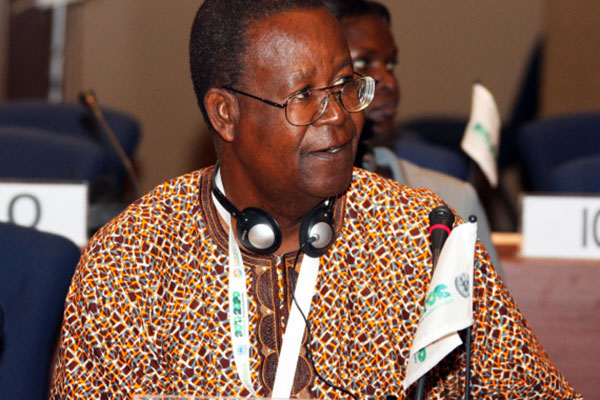
Not to be left out, on Wednesday, June 17 Uganda will join the commemoration by holding a ‘discussion’ featuring prominent personalities including the Minister of Water and Environment Professor Ephraim Kamuntu,.
Other panellists at the function at Protea Hotel in Kampala’s leafy Kololo suburb include the Director of Budget in the Ministry of Finance Patrick Ocailap, Jennifer Musisi, the Executive Director Kampala Capital City Authority (KCCA); Martin Owor, the Commissioner Disaster Preparedness in the Office of the Prime Minister; David Duli, the Country Director World Wide Fund (WWF) and Kenneth Katungisa from the Uganda National Farmers Federation (UNFF).
The other activity is an exhibition to be held at the National Theatre Gardens, featuring musical performances by Bebe Cool and Navio.
According to a release, this year’s activities specially focus on informed debates, ‘in view of securing a fair, ambitious and legally binding international agreement under the United Nations Framework Convention on Climate Change (UNFCC) at the 2015 Conference of Parties in Paris (COP21)’.
Meanwhile, as Uganda joins in the commemoration, some efforts have been geared up to stem the ravaging climate change effects, with the National Environment Authority, (NEMA) recently banning the use of polythene bags (kaveera) of less than 30 microns.
However, the destruction of wetlands in and around Kampala has remained a huge challenge, with real estate developers devastating the ecosystem through erratic environment-degrading activities.
Many countries in Africa depend on agriculture as the main economic activity, with over 80 per cent of the rural populations tilling the land for a living.
However, the sector is poorly financed across several countries, rendering most of the rural masses incapable of having even two meals a day. Twelve years ago, at the second Ordinary Assembly of the African Union in Maputo, Mozambique, the session of Heads of State and Government in 2003 adopted the ‘Maputo Declaration on Agriculture’, with a commitment to allocate 10 per cent of the individual states ‘national budgetary resources to agriculture development and rural development policy implementation’.
But unfortunately, to date there is no indicator the sector has received or benefitted from the necessary boost, because the continent is still the biggest recipient of food aid, even as it has the most virgin soils that are capable of producing adequate quantities of food.
There are several challenges the people in the rural areas encounter, including having little or no food, making forays into the agriculture production sector non-conducive for the rural folk and this has led some youthful and energetic people to resort to rural-to-urban migration, to fend for an ‘easier living’. However, since we are a developing continent, this is a development governments in Africa must find a way of reversing before the situation determines otherwise.
In Uganda in particular, there are reports that young men are selling off land in the rural areas to come to Kampala and engage in the commercial motorcycle business, commonly referred to as boda boda riding. This is unacceptable, as in most cases such ventures have proven less sustainable in comparison to agriculture. Further afield in agriculture, there is also need for scrutiny and increased financing of the fish and livestock industries, to pave the way for production for individual countries’ export potentiality and improved household dietary conditions of the citizenry. It is the energy derived from these interventions that will in turn lead to increased agricultural production and individual household and national incomes.
‘A healthy nation is a wealthy nation’, so the adage goes.