Stanbic Bank
Stanbic Bank
18.3 C
Kampala
Stanbic Bank
Stanbic Bank
Home Blog Page 1319

NWSC MD elected chairperson Federation of Uganda Employers

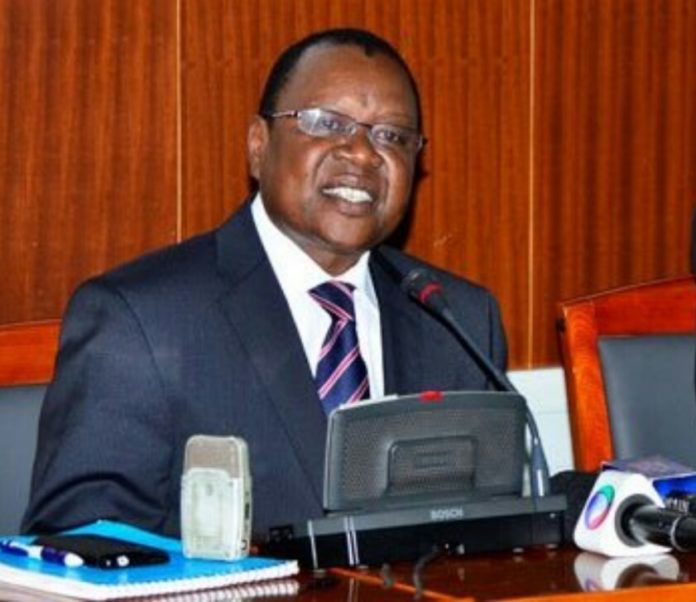
Eng. Silver Mugisha, NWSC Managing Director who is credited with the latest innovations.

The Federation of Uganda Employers at its 40th Annual General Meeting has elected the Managing Director of National Water and Sewerage Corporation (NWSC), Dr. Eng. Silver Mugisha as its chairperson.

The Federation was registered on August 18, 1960 under the names of Society of Employers and it was changed to Federation of Uganda Employers on August 17, 1961 under the Trustees Incorporation Act 1939. Today, FUE is the Voice of Employers on social and economic issues. It is recognized both locally and internationally.

Dr. Eng. Mugisha thanked the association members for the vote of confidence in his leadership skills. He appreciated the good work done by the previous leadership noting that having an association home was not a simple task.

He urged members to collaborate with government, workers, employers and other stakeholders to build industrial relations. “By doing so, we shall spend less money compensating staff on issues we can amicably resolve,” he said.

He emphasized the need for value proposition to the members and financial stability of the association. “Without members, an association is nothing. The association must however add value to its members,” he said.

Eng Silver Mugisha has over 20 years’ experience in water utility operations, international policy, research and advisory services.

He is the first African Vice President of the International water Association, Vice President (East Africa) of the Executive Board of African Water Association (AfWA); President of the Scientific and Technical Council of AfWA (2010-2014); Chairman of the WOP-Africa Programme Committee (2010-2014); member of IWA Programme Committee (2010-2012); a fellow of International Water Association (IWA); and a fellow of Netherlands SENSE Research School.

He will be deputized by Annet Nakawunde, the Managing Director and Chief Executive Officer of Finance Trust Bank.

FUE Executive Director Mr Douglas Opio said that a number of high quality services were offered to employers including tailor made trainings, leadership development female future program, employment relations and legal service, lobbying and advocacy for a conducive business environment, market research including salary surveys, consultancies and a wide range of productivity enhancement interventions.

Mr. Peter Werikhe the secretary General National Organisation of Trade Unions (NOTU) requested the Minister of Labour to fast track the amendment of the NSSF Act and the Pension Act to conform to the regulatory framework that has been provided by the Uganda Retirements Benefits Regulatory Act.

Mr Chibebe Wellington, Director the ILO Area Director congratulated the secretariat for organizing the Annual General Meeting, association achievements and recognized the role FUE has played in mobilizing the employers of Uganda especially towards promoting the decent work agenda to benefit thousands of employees at work places in Uganda which is essential for ILO to deliver its objectives

Other governing members elected:
• Uganda Revenue Authority •Q-Sourcing Uganda
•Uganda Printing Publishing Co-operation
•Partners for children worldwide
•WWF (Wild Wide Fund for Nature)

Stories Continues after ad

LoP seeks Ghanaian counsel on electoral reforms

The Leader of the Opposition in Parliament, Betty Aol Ocan, has sought the advice of her Ghanaian counterpart on how to push for electoral reforms in time for the 2021 general elections.

In the company of Opposition Chief Whip, Ibrahim Ssemujju Nganda, Shadow Ministers Bamukwatsa Betty and Emmanuel Ongiertho, Aol Ocan said the biggest obstacle the Opposition faces is an unleveled electoral field.

“As long as our Electoral Commission is not independent, we have no chance; I want you to tell us how you managed to push for electoral reforms,” said Aol Ocan.

Ghana’s Minority Leader, Haruna Idrissu said the Opposition should not relent in their push for electoral reforms, including proposing amendments to the Constitution if needed.

“What you should be doing is to ask for electoral reforms, including a change to the Constitution which you need to untiringly advocate for,” said Idrissu.

He spoke against a divided Opposition, which he said is the usual let down when it comes to team building.

“The first thing is to be loyal to your leader regardless of whether or not you like him, you need to put your egos aside and ensure you work for your wider interests,” said Idrissu.

Aol Ocan and her team are holding back-to-back meetings with their counterparts in Ghana, and are fronting opposition unity and electoral reforms as the bare minimums needed for meaningful participation in the upcoming elections.

Last week, Aol Ocan led her Shadow Ministers to a retreat which coincided with that of the ruling National Resistance Movement MPs in Kyankwanzi.

The question of electoral reforms is generating debate as the 2021 general elections approach, with Speaker Rebecca Kadaga instructing Justice and Constitutional Affairs Minister, Maj. Gen. Kahinda Otafiire to bring the reforms for Parliament’s consideration as a matter of urgency.

In a recent plenary sitting, Otafiire said the electoral reforms will have to await the constitution of the Constitution Review Commission, which he said will collect Ugandans’ views on general reforms to the laws.

Opposition MPs are seeing this as a ploy to frustrate the introduction of the reforms in good time, with Shadow Attorney General, Wilfred Niwagaba threatening to table a Private Member’s Bill seeking to introduce the reforms.

Aol Ocan and team are attending a workshop on opposition cohesion at the invitation of the African Centre for Parliamentary Affairs (ACEPA), an Accra based policy think-tank.

Stories Continues after ad

US$27m earmarked for Kikagati hydropower project

Illustration photo

Kikagati hydropower project in western Uganda has received US US$27million funding from the Emerging Africa Infrastructure Fund (EAIF), according to the developer, Kikagati Power Company Limited (KPCL) which runs the ongoing 16MW run-of-the-river hydro electricity generating station project.

The hydro power project consist of an 8.5m-high dam of 300m in length, creating a 4,000 square meters (0.99 acres) reservoir lake. The plant will also have three turbines of 5.5MW each and associated earthworks, control plant rooms and allied infrastructure connecting the plant to switch yards in Uganda and Tanzania.

Initially, the Chinese company China Shan Sheng, was issued the construction license for the project in 2008. At that time, construction costs of the entire project were estimated at US $25m. In 2013 the Chinese opted out of the deal and development rights were taken up by TronderEnergi, a Norwegian power company, with a Ugandan Subsidiary

In July 2013, TronderEnergi advertised for suitable firms to bid on the construction of Kikagati Power Station and SBI International AG turned out as the best bidder and was awarded the construction contract with a new cost of US $50m. The contractor started work on the site in February 2018, with commissioning date planned for the first half of 2021.

100 per cent of the energy generated will be bought by the Uganda Electricity Transmission Company Limited (UETCL). A 33kV transmission line that will connect the power from the station to the Uganda national electricity grid has already been constructed. Under arrangements made through the East African Community UETCL will sell half the energy on to Tanzania.

”The Kikagati hydro power station will strengthen the economic development foundations of Uganda and Tanzania and provide good jobs in construction and operation. Approximately 250 people are involved in construction work and around 10 permanent staff will run the plant once operational,” said Emilio Cattaneo, EAIF Executive Director.

Stories Continues after ad

New WHO recommendations to accelerate progress on TB

Clinical lead Doctor Al Story points to an x-ray showing a pair of lungs infected with TB (tuberculosis) during an interview with Reuters on board the mobile X-ray unit screening for TB in Ladbroke Grove in London January 27, 2014. The only mobile unit testing for TB in the country works with the most vulnerable to the disease including the homeless, drug and alcohol dependent. REUTERS/Luke MacGregor (BRITAIN - Tags: HEALTH SOCIETY)

WHO has issued new guidance to improve treatment of multidrug resistant TB (MDR-TB). WHO is recommending shifting to fully oral regimens to treat people with MDR-TB. This new treatment course is more effective and is less likely to provoke adverse side effects.

WHO recommends backing up treatment with active monitoring of drug safety and providing counselling support to help patients complete their course of treatment.

The recommendations are part of a larger package of actions designed to help countries increase the pace of progress to end tuberculosis (TB) and released in advance of World TB Day.

“The theme of this year’s World TB Day is: It’s time to end TB,” said Dr Tedros Adhanom Ghebreyesus, WHO Director-General. “We’re highlighting the urgent need to translate commitments made at the 2018 UN High Level Meeting on TB into actions that ensure everyone who needs TB care can get it.”

Since 2000, 54 million lives have been saved, and TB deaths fell by one-third. But 10 million people still fall ill with TB each year, with too many missing out on vital care.

The WHO package is designed to help countries close gaps in care ensuring no one is left behind. Key elements include:

An accountability framework to coordinate actions across sectors and to monitor and review progress

A dashboard to help countries know more about their own epidemics through real-time monitoring – by moving to electronic TB surveillance systems.

A guide for effective prioritization of planning and implementation of impactful TB interventions based on analyses of patient pathways in accessing care.

New WHO guidelines on infection control and preventive treatment for latent TB infection

A civil society task force to ensure effective and meaningful civil society engagement

“This is a set of pragmatic actions that countries can use to accelerate progress and act on the high-level commitments made in the first-ever UN High Level Meeting on TB last September,” said Dr Tereza Kasaeva, Director WHO’s Global TB Programme.

Tomorrow, key partners will come together at a World TB Day symposium at WHO in Geneva to develop a collaborative multi-stakeholder and multisectoral platform to accelerate actions to end TB. WHO will present the new package at the meeting.

TB is the world’s top infectious disease killer, claiming 4 500 lives each day. The heaviest burden is carried by communities facing socio-economic challenges, those working and living in high-risk settings, the poorest and marginalized.

More

Meanwhile Health Minister Dr. Ruth Jane Aceng has urged Ugandan men to test for TB. “I would also like to appeal to the men to go for treatment. Please, Please start and adhere to treatment for TB when you find out you have the disease. TB is curable,” said yesterday.

“The treatment success rate for patients started on TB treatment is 75 per cent, yet we have to increase this beyond 85 per cent. We need to encourage TB patients to adhere to their treatment to prevent them from developing MDR-TB,” she said.

The minister made the call while launching Tuberculosis Symposium and the National TB patient catastrophic cost survey in Uganda. According to a survey done in 2018, 53 per cent of Ugandan TB patients spend at least 20 percent of their household expenditure on accessing TB treatment.

Stories Continues after ad

URA and TMEA sign deal to support Ugandan women traders

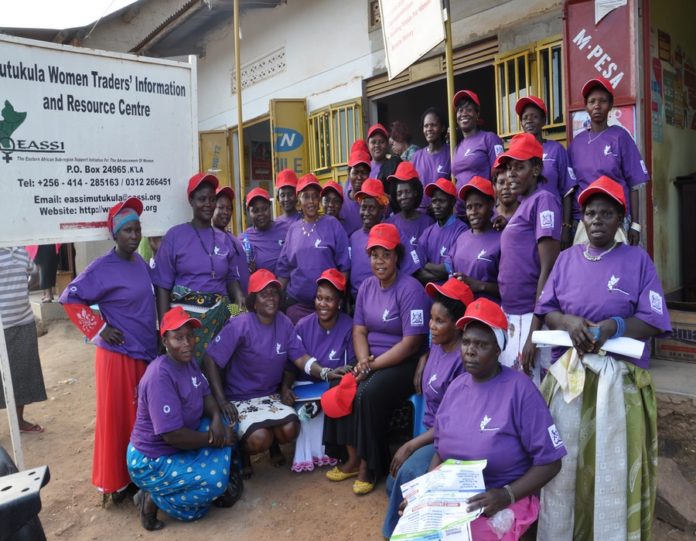
Women traders

Vibrant sustainable economies require the full inclusion and participation of all citizens and especially women, the latest joint statement by Uganda Revenue Authority (URA) and TradeMark East Africa (TMEA) says.

This, it says, should be anchored on creating opportunities for decent work driven by innovation and infrastructure development. Revenue authorities, due to their strategic role in trade within countries, are best positioned to initiate and marshal women participation in trade.

URA and TMEA made the statement while signing an MOU that stipulates the two institutions commitment to scale ongoing initiatives already undertaken by the revenue authority under the banner Women Traders Trade Facilitation Framework.

Building the capacity of women in trade and simplifying customs clearance processes and procedures will be core of the initiatives supported.

Further the two institutions will advocate for gender responsiveness among partners and stakeholders, improve access to trade information and build platforms that will enhance communication between URA and women traders.

TradeMark East Africa (TMEA) CEO Frank Matsaert stated that ensuring women participation at all levels of trade and supporting pragmatic interventions that resolve women unique challenges can only be done if the private and public sector build partnerships. This, he said is pivotal to East Africa’s economic transformation.

“It is crucial to ensure that all its citizens, especially women, are involved in trade and other economic activities” said Matsaert, adding that he hopes the MOU will lead to implementation of transformative projects in Uganda which can be scaled up to other countries. Mr. Matsaert emphasised TMEA’s commitment to ensuring that women integrate more fully into productive, high-paid sectors of the economy.

URA Commissioner of Customs Dickson Kateshumbwa on his part said: “We have partnered with TradeMark East Africa (TMEA) in implementing various interventions like the automation of key customs processes and Regional Electronic Cargo Tracking System; and to great success. To mention that this new partnership is probably one of the most important we have cultivated to date, because it is about deliberately building the economic capacity of half of Uganda’s population. URA takes women cross border traders in Uganda seriously. Already, we are simplifying the regional trade policies and agreements as well as building working relationships with women traders to foster a better environment.”

Research has shown that if women’s paid employment were raised to the same level as men’s, the per capita income of 15 major economies would rise by 14 per cent by 2020. TMEA’s work across East Africa is driven by this fact, and the realization that trade has no gender.

Establishing linkages between trade opportunities and women’s economic empowerment will result to better livelihoods for families and reduced poverty levels.

The signing of the MOU has marked the beginning of vibrant public and private sector partnership specific to empowering women traders.

Stories Continues after ad

Study calls for free movement of labour in EAC

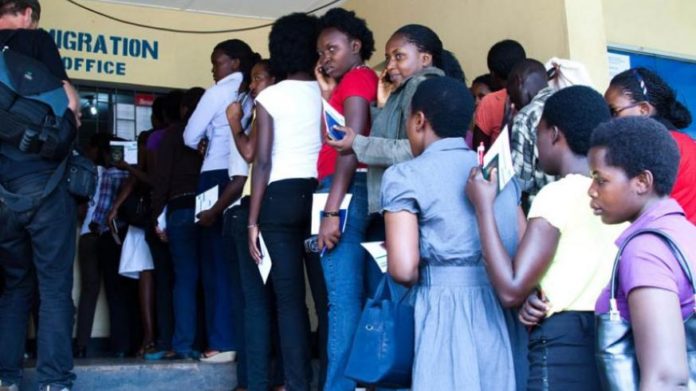
Travellers wait to becleared at Rusumo border recently.

A new study has urged East African Community (EAC) partner states to adopt labour migration policies based on international best practices, improve data management and boost the operationalization of One Stop Border Posts. The comparative study assesses migration patterns and policy issues in Burundi, Kenya, Rwanda and Tanzania – four of the six EAC countries.

In 2010, the International Labour Organization (ILO) estimated that there were about 19.3 million migrants in Africa, of which 8.4 million were classified as migrant workers. In 2015, the estimated population of the EAC, which also includes South Sudan and Uganda, was over 145.5 million people, with a gross domestic product of about USD 147.5 billion. As the region intensifies efforts to achieve its integration milestones, specifically within the context of the EAC Common Market Protocol, cross-border labour movements have made labour migration a pertinent issue for the partner states.

The East African Common Market Protocol provides for the movement of persons, travel documents and the free movement of workers in particular. It focuses on three migration issues: national policy frameworks, data management and migrant worker practices.

The presentation of the results will assist the four EAC Member States in improving their management of migration flows, in particular those related to labour,” said IOM Tanzania Chief of Mission Dr. Qasim Sufi.

“As people throughout the world are becoming more and more mobile, labour migration is undoubtedly a key issue for all governments and populations,” said Tatiana Hadjiemmanuel, Senior Regional Thematic Specialist on Labour Migration and Human Development at the IOM Regional Office for East and Horn of Africa. “We are very satisfied to see good willingness from EAC countries to work together in improving the protection of migrant workers.”

The comparative study was commissioned within the framework of a regional project Supporting Labour Mobility in the East African Community: Operationalizing the Common Market Protocol Provisions on Free Movement of Persons

Stories Continues after ad

Can the Presidential Tripartite Committee report be used against Mutebile, Kasekende?

ON THE FIRING LINE: Governor Mutebile and former deputy Louis Kasekende.

President Yoweri Museveni set up the Presidential Tripartite Committee to investigate Bank of Uganda (BoU) after the Governor , Professor Emmanuel Tumusiime-Mutebile issued an internal memo that affected several staff leading to a standoff with the Inspector General of Government (IGG) Justice Irene Mulyagonja.

On February 7, 2018, the Governor issued an internal memo in which he communicated a number of staff transfers and appointments. By way of the said memo, he communicated appointments of five staff from outside the bank to various juicy positions in the bank of Uganda.

After the Governor made these reshuffles a number of complaints were filed with the Inspector General of Government and the parliamentary Committee on Commissions, Statutory Authorities and State Enterprises (COSASE).

The Allegations that were picked by the Presidential Tripartite Committee were eight in number and they are below:

The complainants wondered how six new staff were appointed from outside the bank without interviews. They include Dr. Twinemanzi Tumubweine, Executive Director Supervision, Valentine Ojangole as Director Banking, Edward Mugerwa as Director IT Operations Department, Ms Kande Sabiiti as Procurement Assurance Manager (Director), Dr. Natamba Bazinzi as Assistant Director Currency Administration in currency Department.

The newly appointed staff were granted permanent and pensionable terms contrary to probationary policy.

Two new externally recruited staff lacked the minimum academic requirements for entering bank of Uganda, they are Twinemanzi Tumubweine and Kande Sabiiti.

Governor Emmanuel Tumusiime- Mutebile created five new positions that did not exist on approved structure of Bank of Uganda and some lacked job descriptions.

The governor promoted nine staff members to assistant director level without conducting interviews.

Two new Directors have been appointed to departments with substantive directors creating confusion as to what happens to existing directors.

One deputy director was demoted to assistant director without justification, Ms Angela Kasirye.

The appointment of Dr. Tumubweine was premised on nepotism, influence peddling and conflict of interest.

After the complainants were filed the Inspector General of Government wrote on February 23, 2018 to the Governor and requested him to respond.

On March 6, 2018, governor Mutebile responded to the IGG’s letter saying he followed the law.

“The appointment of new staff from outside Bank of Uganda was done in accordance with the Bank of Uganda Act and internal recruitment policies of the bank. The staff in question were recruited through headhunting subject to headhunting policy of the Bank as approved by the Human resource and remuneration committee of the board of Directors on May 11, 2016”, Mutebile wrote.

Mutebile quoted section 28(4) of the Bank of Uganda Act and also in line with the authority granted to him by the board of directors on May 30, 2012.

“The authority granted by the board permits me to take decisions on behalf of the board in the absence of a fully constituted board whose term had expired on the November 12, 2017”.

Mutebile further defended the creation of new staff positions in the Bank of Uganda structure as being consistent with section 4.2.2 of the human resource policy of the bank. He explained that he approved the creation of five new positions to improve efficiency and enhance internal controls in the bank.

He said the promotion of nine staff without subjecting them to interviews on the grounds that a previous promotions process had been faulted by internal audit.

“There was no need for the positions to be filled as quickly as possible to allow bank operations to proceed efficiently”, Mutebile wrote.

The Governor denied accusations of nepotism and influence peddling says Tumubweine and Kande Sabiiti were appointed on ground that they possessed specialized skills which under exceptional circumstances can be approved by the Governor or the board. He said they were sourced from specialized institutions.

The IGG was not convinced with the Governor’s explanations, on March 12, 2018, the inspectorate wanted additional information to support his decision. Lady Justice further directed that the decision of the Governor taken on February 7, 2018 should not be ratified by the board of Directors pending conclusion of investigations.

The Governor wrote bank asserting the independence of Bank of Uganda and the IGG also asserted the as not being applicable to the situation in question. The media was blamed for escalating the fight that had a potential to hurt the economy.

Due to the increasing press coverage of the Bank of Uganda, President Museveni deemed it necessary to establish a tripartite committee that would bring together the Parliament of Uganda, the Inspector General of Government and Bank of Uganda to study the allegations and report back to him.

The President appointed Hon Abdu Katuntu(MP) Chairperson , Hon Anita Among (Hon) member, Hon Micheal Tumusiime(MP) member, Hon Elijah Okupa (MP) Member , Lady Justice Irene Mulyagonja Kakooza (IGG) Member, David Makumbi(IG Staff) member, Justus Kareebi(IG Staff) member, Sarah Birungi(IG Staff) Committee Secretary , Judy Obitre-Gama (BOU Board) member and Keith Muhakanizi(BOU Board) member.

Stories Continues after ad

Next financial crisis may eclipse 2008

By Desmond Lachman

It is difficult to forecast when the next global economic recession will happen. It is much easier to predict its severity.

This is particularly the case in the light of excessively high global debt levels, asset price bubbles and the generalised mispricing of credit market risk. Those considerations, coupled with the lack of adequate policy instruments to respond to the next global slowdown, point to a much more severe crisis than the average post-war recession.

Among the more disturbing vulnerabilities of the global economy is the large amount of debt spawned by years of ultra-unorthodox monetary policy by the world’s major central banks. According to the International Monetary Fund, the global debt to GDP level is 250% – around 30 percentage points higher than it was on the eve of the 2008 financial crisis.

Handling a high debt level in the midst of a recession will be a major challenge for policy-makers. It may lead to a wave of defaults that could cause financial market distress, which in turn would risk deepening the recession. That challenge would be compounded substantially if that debt proved to be owed by borrowers of dubious creditworthiness.

There are many reasons to fear that years of unorthodox monetary policy and low interest rates have led to a marked deterioration in lending standards. As former US Federal Reserve Chair Janet Yellen cautioned recently, the size of the risky US leveraged loan market has doubled to more than $1.2tn from around $600bn on the eve of the 2008 recession.

At the same time, there has been a large increase in lending to corporations of questionable creditworthiness in emerging markets. Particularly troubling is the fact that more than $3tn of that debt is dollar-denominated, which will be difficult for those companies to repay if the world economy were to weaken and the dollar to strengthen.

An important reason to be more concerned about high debt levels today than we might have been in 2008 is that the mispricing of global debt in the current economic cycle has become much more pervasive. In 2008, that mispricing was largely limited to US mortgage lending. Today it appears to be across the board and around the world. This could lead to considerable financial market dislocation, if there is a serious repricing of risk to more normal levels and the asset price bubbles in the global equity and housing markets burst.

Examples of credit risk mispricing include the US high-yield debt market and the emerging economy corporate debt market. Borrowing rates in both markets have reached levels that do not nearly compensate the lenders for default risk. Mispricing was also evident in the sovereign debt markets of highly indebted countries like Italy, where until recently the government could borrow long-term at interest rates close to those in the US.

The US is less well-equipped now than it was in 2008 to fight the next recession. With interest rates still low and with considerable political resistance to another round of quantitative easing, the Fed has little room for manoeuvre. Similarly, with the US budget deficit already bloated by large tax cuts at a time of cyclical strength, there is little room for another fiscal stimulus package when the next economic downturn occurs.

The 2008 crisis caught global policy-makers flat-footed. A coordinated global policy response was required to get the world economy out of that recession. Hopefully this time policy-makers will be better prepared. When the next recession comes around, one must hope that President Donald Trump’s administration will take a more constructive stance with respect to the need for global economic policy coordination. However, judging by its ‘America first’ policy to date, this seems unlikely to happen.

The writer is a Resident Fellow at the American Enterprise Institute. He was formerly a Deputy Director in the International Monetary Fund’s Policy Development and Review Department and the Chief Emerging Market Economic Strategist at Salomon Smith Barney.

Stories Continues after ad

Bugisu’s Mashate sues Kabushenga for defamation, demands Shs1b

Mr. Mashate

Former Uganda Bureau of Statistics Executive Director, Francis Mashate has dragged Vision Group CEO Robert Kabushenga and one of the company’s titles to court and is now seeking Shs1 billion in damages over alleged defamation.

According to court papers seen by Eagle Online, Mashate who also serves as Bamasaba Cultural Institution’s Prime Minister, alleges through his lawyers of KSMO Advocates, that The Saturday Vision, on December 22, 2018, published reports that were defamatory, malicious and injured his good reputation.

“The plaintiff’s action against the defendants, jointly, and/or severally, is for recovery of general and exemplary damages for libel, a declaratory order that by publishing the impugned materials about the Plaintiff, the Defendants are practicing irresponsible and unprofessional journalism at the expense of the Plaintiff’s reputation and good name; a permanent injunction restraining the defendants from further publication of similar defamatory statements against the Plaintiff, interest on all pecuniary awards and the costs of this suit,” particulars of the case filed last month in the High Court, Kampala, reads in part.

The suit adds, “The defendants published the article with malice and an intention to tarnish the name of the plaintiff. The defamatory publication depicted and portrayed the plaintiff as a thief, cheat criminal, racketeer, corrupt person, Mafioso, unpatriotic, unworthy leader, money launderer, gangster leader, international crook, heisted, thug, dubious person and all such unsavory descriptions of a dishonest and criminally minded person.”

In the publication that is set to cause the industrial area based media house problems, the paper alleged that Mashate and others are under probe by the Internal Security Organisation (ISO) over alleged money laundering.

DETAILS
The story titled, “ISO PROBES Shs250 billion money laundering ,” alleged that Mashate together with Paul Bambata Musinguzi, Abigail Hanan aka Ahmed Hana, were involved in a syndicate of government officials that would receive money from abroad after it disappeared from government coffers.
“The source noted that unscrupulous high profile government officials were siphoning billions of shillings, which they wire to accounts of shell companies out of the country, before the money returns to Uganda,” the story claimed.

The story further claimed that Mashate heads the group while Hanan helps in the transfer of an IT specialist and that the three had been arrested.
The publication goes on to give details of the banks where the monies were wired from in the United States and in Uganda, the installment banked, the companies involved, the beneficiaries, the arrests made, persons involved based abroad, the countries where money is wired to and from, and the responses of officials from government and private entities who all dismissed the story as fake, untrue or could not confirm its veracity.

In his suit, Mashate contends that Vision Group went ahead with publication of the said story despite advice from the Financial Intelligence Authority (FIA) which had informed them that the documents they had against him and other officials were fake. He adds that Vision Group abandoned all standard professional rules that govern journalism in publishing the said story.
“The defendants were unprofessional in not conferring with the plaintiff before publishing the unresearched and baseless content. The plaintiff further avers that by defendants’ wide coverage, and reference to the publication by other media, the plaintiff was contacted by many people who know him; his family, friends, the wider community and business associates about the truthfulness of the article and some were worried about his life and freedom since the article depicts him as a criminal,” the suit adds.

Mashate now wants Vision Group to pay him a cool shs1 billion in damages to his name and reputation. He is also asking court to place a permanent injunction against Kabushenga and the whole New Vision restraining them from further publication of similar defamatory statements against him.

In January, KSMO Advocates, served Vision Group with a notice of intention to sue but this it appears, fell on deaf ears.
“Our instructions are firstly, to demand that you cause to publish an apology retracting wholly the defamatory article on Page 1 of your newspaper the content of which has to be approves by our client before publication, and further, that you pay Shs1 billion (Uganda Shillings One Billion Only) as punitive and general damages to atone for the defamation and the legal expenses to be mutually negotiated. Should the above not be met by you in the next ten days, our client shall proceed to file a civil suit against you, jointly and/or severally for defamation,” the notice received by New Vision legal department on the 7th of January reads.

It’s not clear when the case will come to court for mention, however, what’s clear is that the industrial based media house will have to answer why they abandoned professional journalism standards to ‘defame’ Mashate, according to his suit.

Stories Continues after ad

NBA and Youtube partner to launch live games on league’s first channel dedicated to fans in Sub-Saharan Africa

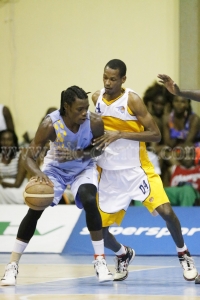
Blick of Tiger Head Power of Uganda (L) contests against Ndikumana of Urunani from burundi during their 2014 Zone 5 Basketball Club

The National Basketball Association (NBA) and YouTube have announced the launch of the NBA’s first YouTube channel dedicated to fans in sub-Saharan Africa. In addition to featuring two live games per week in primetime for the rest of the 2018-19 season, including the Playoffs, Conference Finals and The Finals, the NBA Africa YouTube channel will celebrate the impact of African players in the NBA.

The channel will also showcase the league’s long history of growing basketball at all levels across the continent and using the game as a platform to inspire and empower African youth.

The first two live game broadcasts on the new NBA Africa YouTube channel will take place on Sunday, March 24 and will feature the Charlotte Hornets hosting the Boston Celtics at 12:00am (CAT) followed by the L.A. Clippers visiting the New York Knicks at 6:00pm (CAT).

The channel will feature original and archived programming, including a collaboration with Africa-based YouTube creators on original content, a customized weekly magazine show and NBA documentaries featuring current and former African players and legends.

“The NBA Africa YouTube channel is yet another important milestone for the NBA in Africa and will allow more fans to access our games, live and on demand, across the continent,” said NBA Vice President and Managing Director for Africa, Amadou Gallo Fall. “As we enter the home stretch of the NBA season and teams fight for playoff positioning, we look forward to bringing the excitement of the NBA to more fans in sub-Saharan Africa while celebrating the NBA’s rich history and bright future in Africa.”

“From inception, YouTube has been a hub for fans to catch up on moments and coverage from their favorite sports,” said Manager of YouTube Partnerships in Africa, Dayo Olopade. “We are delighted to be partnering with the NBA to bring the action and inspiration of basketball to our audience in Africa. We hope NBA fans on the continent enjoy watching the live games and commentaries on YouTube.”

The NBA’s partnership with YouTube goes back more than a decade when it became the first professional sports league to partner with YouTube and launch its own channel in 2005, and the first to join YouTube’s “Claim Your Content” program in 2007. Last year, YouTube TV became the first presenting partner of NBA Finals and WNBA Finals. To date, the NBA YouTube channel has generated more than 5.4 billion views.

The NBA has a long history in Africa and opened its African headquarters in Johannesburg, South Africa in 2010. Opening-night rosters for the 2018-19 NBA season featured 13 African-born players, and there are more than 80 current and former NBA players from Africa or with direct family ties to the continent, including Naismith Memorial Basketball Hall of Famers Hakeem Olajuwon (Nigeria) and Dikembe Mutombo (Democratic Republic of Congo).

Last month, the NBA and FIBA announced their plan to launch the Basketball Africa League (BAL) , a new professional league featuring 12 club teams from across Africa. The BAL will build on the NBA’s existing grassroots and elite basketball development initiatives on the continent, including the Jr. NBA, Basketball Without Borders (BWB) Africa and The NBA Academy Africa.

Since The NBA Academy Africa opened in May 2017 25 elite male prospects ages 14-20 have received scholarships and training after scouting programs conducted with local federations across the continent. Three NBA Academy Africa graduates have gone on to commit to NCAA Division 1 schools.

The NBA has held three sold-out Africa Games, in Johannesburg in 2015 and 2017 and in Pretoria in 2018, in support of charities including UNICEF, the Nelson Mandela Foundation and SOS Children’s Villages South Africa (SOSCVSA). Through NBA Cares, the NBA has created 87 places for children and families to live, learn and play in seven African countries.

Stories Continues after ad