Stanbic Bank
Stanbic Bank
17.7 C
Kampala
Stanbic Bank
Stanbic Bank
Home Blog Page 1322

Museveni writes to Kagame: “Uganda can’t support anti-Rwanda elements”

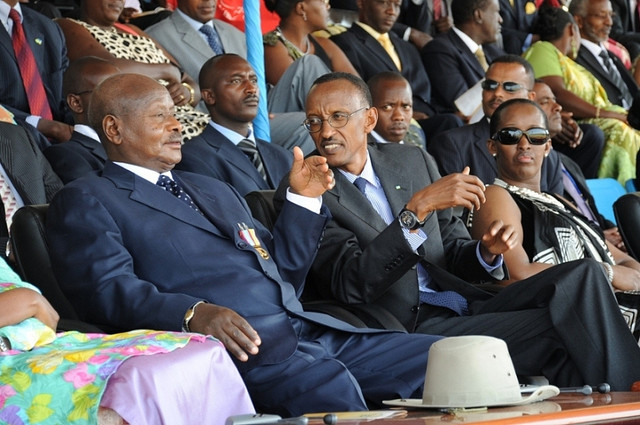
(L-R) Presidents Museveni and Kagame in discussion

After weeks of silence, President Museveni has finally opened up on the bad relations with Rwanda, through a letter to his counterpart President Paul Kagame, denying claims that Uganda helps rebels opposed to Rwanda.

According to the letter, Museveni said he only recently came into contact with a lady Charlotte Mukankusi, who admitted to being a member of the Rwanda National Congress (RNC), an organisation that Kagame has said is hostile to Rwanda.

He says: “Mukankusi told me that he husband Rutagarama had been killed by the agents of the Rwanda state…that she had been told by those very people [who killed her husband]. I then asked her what she wanted me to do about it because it was an internal matter. She told me she wanted me to know bad things that were happening in Rwanda. She told me she had joined RNC to resist Your Excellency’s government. She wanted us to support them.”

But Museveni told her he could not support her because the African Union is against countries interfering in the affairs of other countries.

“She was disappointed with my reply and I told her that I will inform you in writing,” he writes.

In the letter, Museveni also speaks about the Rwanda businessman Tribert Rujugiro, whom Kagame accuses of financially supporting rebels. Rwanda had demanded that the businessman be repatriated to Kigali for trial.

“Mr Rujugiro..seems to be resisting the idea of selling his businesses which he had accepted to do before. He countered the idea of giving money to Kayumba [Nyamwasa] by saying that even if he sells the factories in Uganda, he still has more lucrative factories in Angola, Dr Congo..a total of eight of them. He can send money from those,” Museveni writes.

He said if Rujugiro is still a problem to Rwanda, Uganda can use courts of law to try him on charges of terrorism and then his assets can be frozen.

Stories Continues after ad

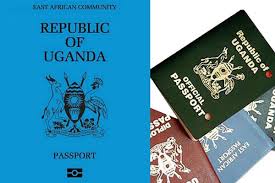
Danish authorities finally validate EAC Uganda passport

Passport

The Royal Danish authorities have finalised the process of entering the new East African Community (EAC) passport for Uganda into their immigration system and the Danish Embassy in Uganda is now considering the documents for visa application, according to the Ministry of Foreign Affairs.

“The public is hereby informed that the visa applications for persons intending to travel to Denmark using the EAC Uganda passport can now be submitted to the Danish Visa Application Centre in Kampala,” reads part of the latest press statement from the ministry.

The latest statement is in reference to the press release that was earlier issued by the ministry on February 1, 2019 in which the ministry refuted claims that the Royal Danish Embassy in Nairobi had rejected the use of the EAC Ugandan passports as valid travel documents.

Stories Continues after ad

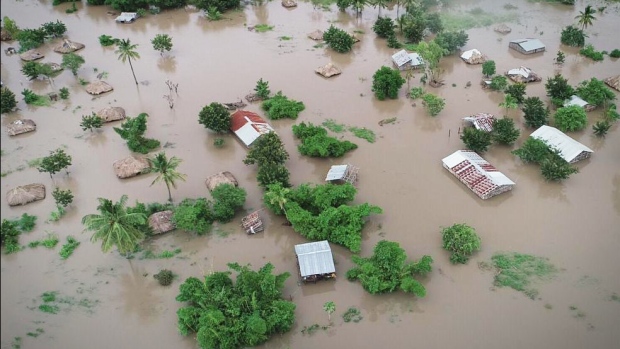
Cyclone Idai: Mozambique President says 1,000 may have died

Floods

The death toll in Mozambique from Cyclone Idai could be as high as 1,000, President Filipe Nyusi has said.

Mr Nyusi flew over some of the worst-hit areas on Monday. He described seeing bodies floating in the rivers.

The storm made landfall near the port city of Beira on Thursday with winds of up to 177 km/h (106 mph), but aid teams only reached the city on Sunday.

A UN aid worker told the BBC that every building in Beira – home to half a million people – had been damaged.

Gerald Bourke, from the UN’s World Food Programme, said: “No building is untouched. There is no power. There is no telecommunications. The streets are littered with fallen electricity lines.

“The roofs on so many houses have fallen in, likewise the walls. A lot of people in the city have lost their homes.”

The official death toll in Mozambique stands at 84 following flooding and high winds. The cyclone has killed at least 180 people across southern Africa.

The International Federation of Red Cross and Red Crescent Society (IFRC) described the damage as “massive and horrifying”.

People have had to be rescued from trees, Jamie LeSeur, the head of the IFRC assessment team, told the BBC.

In Zimbabwe, at least 98 people have died and 217 people are missing in the east and south, the government said.

The death told included two pupils from the St Charles Lwanga boarding school in the district of Chimanimani, who died after their dormitory was hit when rocks swept down a mountain.

Most of those known to have died so far were killed around Beira, the country’s fourth largest city with a population of about 500,000, authorities there said.

More than 1,500 people were injured by falling trees and debris from buildings including zinc roofing, officials in the capital Maputo told the BBC.

“Almost everything has been affected by the calamity,” Alberto Mondlane, the governor of Sofala province, which includes Beira, said on Sunday. “We have people currently suffering, some on top of trees and are badly in need of help.”

Stories Continues after ad

South Africa, Rwanda in bitter fallout

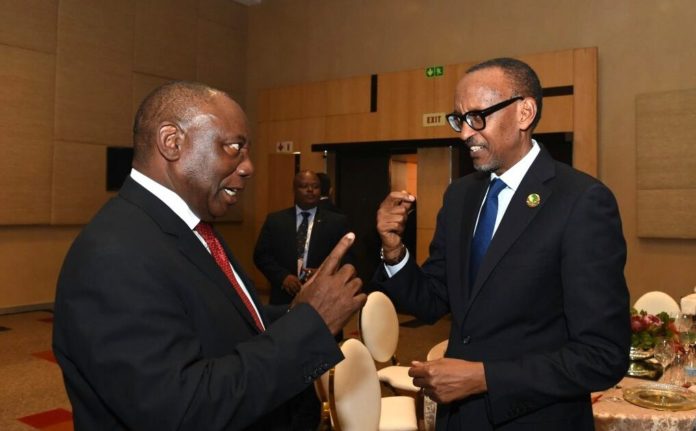
Presidents Kagame and Ramaphosa.

Rwandan President Paul Kagame has thrown down the gauntlet on South Africa and warned that if Pretoria does not rein in its top officials to mend relations between the two counties, there is a risk of a further fallout that could also cause political instability in the Great Lakes region.

At the centre of the dirty diplomatic tussle are several issues: South Africa giving refuge to former Rwandan army chief General Kayumba Nyamwasa and other “dissidents”; the 2013 murder of former intelligence boss Colonel Patrick Karegeya in Sandton; the expulsion of diplomats from both countries in a tit-for-tat standoff; and a South African judiciary inquest into the murder of Karegeya.

The countries also recently traded verbal blows after Rwandan Minister Olivier Nduhungirehe was accused by Pretoria of calling International Relations Minister Lindiwe Sisulu a “prostitute”, a claim strongly dismissed by Kigali as a smear.

Rwanda blames South Africa for the instability in Central and East Africa, where rebel activities are linked to Kagame’s political foes exiled in Pretoria, who were believed to come to the Great Lakes region via Uganda to recruits rebels, allegedly with the support of President Yoweri Museveni’s government.

So tense are relations between the two East African neighbours that there was even talk of war and closing borders, which would cause further instability in the region.

But Kigali is adamant the genesis of the problem is in South Africa, recently voted into the UN Security Council as a non-permanent member and the only African country there.

Speaking in an exclusive interview with The Star in Kigali, a frustrated Kagame said although he seemed to enjoy cordial relations with President Cyril Ramaphosa, it appeared that top South African officials were using their control and influence in government systems to block efforts to fix the broken relations between the two countries.

The two leaders have met on the sidelines of events such as the AU summit in Addis Ababa, Ethiopia, and the BRICS gathering in South Africa last year, where Kagame represented the AU as its then chairperson. They agreed to work together to fix the worsening relations.

The two also met in Cape Town two weeks ago, where Kagame was a guest at the Young Presidents Organisation’s event for young global chief executives, thought leaders and opinion makers.

But almost a year after they first agreed to address the fallout over South Africa’s 2010 decision to stop issuing visas to Rwandans on ordinary passports, nothing has been done, confirming Kagame’s fears that the South African system was frustrating the heads of state’s efforts to better relations between the countries, which both turn 25 next month.

“We don’t deny South Africans visas to travel to our country, but the reverse to South Africa is not the same,” Kagame told The Star. “These matters have come up and the president (Ramaphosa) was very open about it; it was public, he gave instructions. (But) nothing happened in the opposite direction somebody somewhere blocks it and doesn’t want it to happen.”

Kigali strongly believed the visa issue was used to punish Rwanda for its desire to see suspected dissidents brought home to face trial for alleged terrorist activities.

Kagame said South Africa chose his exiled opponents over a better relationship with Rwanda. “Those individuals who live in South Africa, if you trace back how they came there, there is something wrong with what they were involved in. Under normal circumstances they wouldn’t be welcome in South Africa, let alone be preferred in terms of relationship,” said Kagame.

“So here there’s a bizarre situation. Someone in the government of South Africa would rather associate with those bad groups living in South Africa who have a bad history and have done terrible things which they should be held accountable for.

“They prefer that, and use their authority to even go further to try to create problems for us.”

What has angered Kigali in the latest diplomatic skirmish was a press conference where Sisulu was asked a question by a journalist on whether the “dissidents” were willing to come home and negotiate with Kagame.

“You saw authorities of government saying they have met with those groups and that they are inclined to negotiate; they want to talk to us, coming out of nowhere. That was absolutely bizarre. If anyone finds that normal, I would be surprised,” said Kagame.

He added that South Africa had not spoken to Rwanda about meeting them and the alleged bid to negotiate with Kigali until they saw it at the media briefing.

“When we saw it, we were taken aback. And of course, at the same time, these individuals were busy in the media, making all sorts of statements.

“It is as if they are energised by statements made by officials of the South African government. They are really hyped up.

“And so I don’t know where that leads us. But we are patient enough. We have been trained by our history and our problems to be very patient, almost inexhaustibly patient, so that we don’t get diverted from doing what we want to do for ourselves and our country, and move on.”

But Kagame felt that South Africa had not shown a keen interest in patching things up and that the attitude towards Kigali, especially coming from another liberation movement and with both countries sharing a history of a painful past, showed contempt for Rwanda.

“We remain steadfast and calm and appreciative of what a good relationship should entail, and embrace it. The door is open when South Africa finds it more appealing to deal with us than with those groups.”

Stories Continues after ad

Police hold five suspects in connection to gruesome murder of five juveniles in Kyenjojo

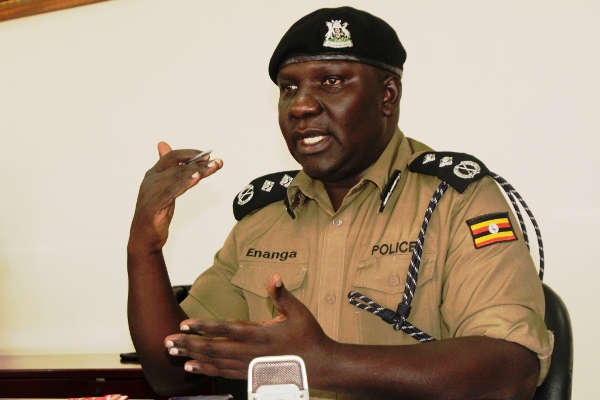
Fred Enanga, police Spokesperson.

A Joint Task Team of homicide, flying squad and Kyenjojo police, is holding five suspects in connection to gruesome murder of five young children whose ages range from one month to seven years .This occurred in the wee hours of Wednesday last week.

The murder occurred at Kahompo village Bufunjo sub county Kyenjojo district, where attackers broke the door and gained access to the house. They traced for Tumwebaze Joseph, their father, but found when he was not around and instead hacked the childeren to death.

They further attacked, seriously assaulted Tumwebaze’s wife and dumped her body into Kahompo River, thinking she was dead. She was however rescued the following morning and rushed to hospital where she is undergoing treatment.

According to police spokesperson Fred Enanga, the team nabbed four suspects who include; Balyeija Justus, his wife Akampasa Keli, Muhereza Lauben and his wife Alinda Sylvia. The team further tracked down and arrested Allan Turyahikayo, from Ntinda and transferred him to Kyenjojo.

‘The preliminary information indicates that the suspects hatched a plot in their home to carry a revenge attack on the family of Joseph Tumwebaze, after he facilitated the release of his brother Ndyanabo Godfrey, who was imprisoned for the murder of their brother, Bright, in 2012,” he said in a press briefing.

Enanga said, two of his brothers Allan Turyahikaya and Balyeija Justus were not convinced with the out-of-court settlement between the two families and repeatedly threatened to revenge the life of their brother.

He said suspects confessed to the murder and also led the task team to the recovery of a blood stained shirt to one of the child victims and pangs used in the gruesome murder.

‘We have also established the identity of the other two suspects on the run as Byaruhanga Fred and Kagurane Emmanuel in who perpetrated the murder, and track them down for arrest. We continue to appeal to anyone with information surrounding their whereabouts to contact us or share it in confidence,” he said

“The police strongly condemns the revenge attacks and killing of civilians including children, as there is no justification for such extra ordinary degree of violence. The suspects are to be leveled with five counts of murder and one count of attempted murder,” he said.

Stories Continues after ad

FDC members harass journalists at Najjanankumbi

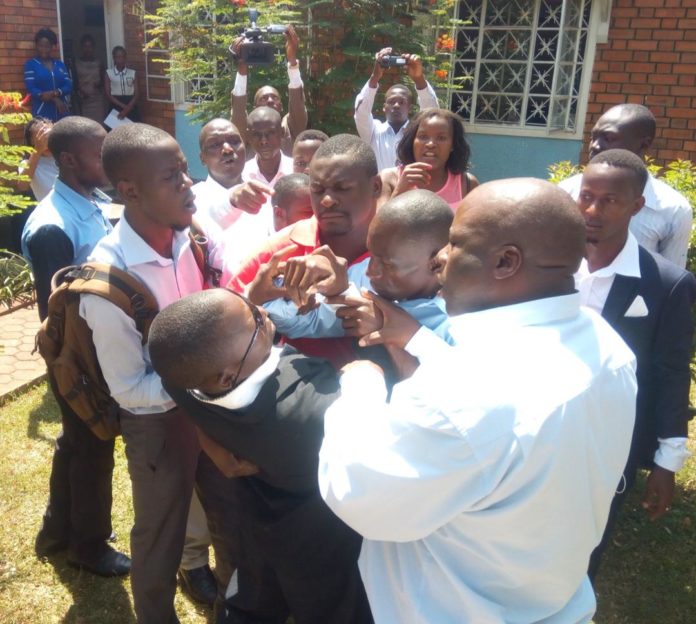
Reporters being roughed up at FDC head office.

Journalists who had gone to the weekly Forum for Democratic Change (FDC) press briefing were on Monday mistreated as they protested the suspension of the event.

The journalist were harassed by the FDC) errant members.

The incident at the party headquarters in Najjanankumbi started when journalist complained about the late cancellation of press conference after they had spent hours waiting for party officials begin addressing them on the latest developments in the party.

At about 11:00am, the officials apologized to journalists and informed them that press briefing would not take place on the account that the party spokesperson who doubles as Kira Municipality MP, Ibrahim Semujju Nganda was held up in a meeting and therefore would not be in position to address them.

Journalist therefore became furious castigating the party’s practice of wasting their time and making them sit for hours.

Members of the fourth estate insisted not to get out of the conference room without seeing or talking to concerned party members. This prompted FDC members Henry Katumba and another person identified as George to lock them into the conference room.

The fracas led to assault of a number of journalists. Our effort to speak to FDC spokesperson Mr. Semujju Nganda was futile since he could not pick our calls.

Journalist body, Uganda journalists association (UJA) condemned the incident and called for boycotting of FDC weekly press briefing.

Stories Continues after ad

Rwanda accuses Gen. Saleh of doing business with its rebels

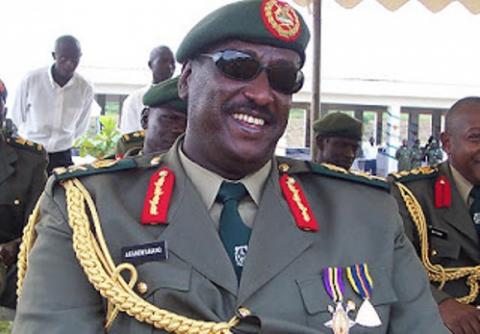
Gen. Salim Saleh

Rwanda continues to be desperate as Uganda continues to keep businessman Tribert Rujugiro Ayabatwa in the country as he does his business.

The government through the RPF owned paper The New Times online version claims the businessman is a fugitive even though it presents no evidence to that claim.

The regime in Kigali says Rujugiro Ayabatwa is involved with ‘a group’ that has declared war on Rwanda’s legitimate government and to tarnish the leadership of Rwanda in a string of unchallenged claims and allegations.

The regime seem not to be happy with Sunday Vision of March 17, for running the businessman’s interview. “In a question and answer newspaper interview, normally the journalist interjects with probing, insightful, researched questions as a check against a subject using a newspaper – or magazine, or other news medium – as a platform to air their misinformation,” says Grace Kamugisha who wrote what seems to be a paid-up article and yet claims Sunday Vision’s article was paid for and planted by Ugandan state actors.

“The man merely says everything that serves him (and his partners in the highest levels of the Ugandan government) to misinform the public about the true nature of his; and by extension his Kampala partners’, problems with Kigali. We shall come to that. A good interview strives to show there are two sides to a story. In this one the Sunday Vision has thrown balance completely out the window,” he cries.

The writer who seem to be writing on behalf of the Rwandan government seem to have other reasons why Rujugiro left Rwanda other than on principle and mistreatment where government took over his commercial properties and the like.

“The facts are that Rujugiro left Rwanda because his business practices – the ones that have made him successful in a number of African countries including Uganda where he has a tobacco processing plant in Arua – were completely incompatible with Kigali’s anti-corruption and graft-intolerant ethic in running its state affairs,” he says.

The record shows that wherever Rujugiro has worked and his businesses succeeded, those countries are characterized by high levels of graft. It is the kind of countries that regularly score poorly on Transparency International indices, he alleges.

He alleges Rujugiro left Rwanda in 2010 after repeated issues with the administration because of his ‘shady business practices’. “He did not like to pay taxes. He expected that because he had contributed to the liberation struggle he would be exempted from paying taxes. When that did not happen he became very unhappy,” he says.

The website says he would constantly offer kickbacks to policy makers to exempt him from the rules of doing business that applied to all other businessmen and women. “He found out that graft like that had no place in Rwanda,” he says.

“Rujugiro’s methods had worked well in Burundi – where he cut his teeth in the business world – and other places like Uganda where stories of monstrous scams have dogged Museveni’s rule from day one,” he alleges.

He alleges that as a smuggler of cigarettes in Bujumbura, and then rose during the administration of Jean Baptiste Bagaza from the mid-1970s to late 80s. Rujugiro corrupted a number of officials to, among other things, avoid taxes and kill competition. “When Pierre Buyoya took power, he locked the Rwandan up for three years in Bujumbura central jail for the offences,” he says.

He says another country where Rujugiro’s corrupt practices landed him into big trouble was South Africa. In November 2006 South African Revenue Services (SARS) officials barricaded his cigarette manufacturing company in Wilsonia, Eastern Cape amid a 57 million Rand fraud case against Tribert Rujugiro Ayabatwa and his senior employees, he says.

News reports said agents of SARS swooped on the premises of the company, Mastermind Tobacco Company, sealing all its entrances.

Rujugiro, knowing SARS was on his case for his fraudulent activities had already fled SA, and couldn’t go back there. He was in Rwanda at the time. Reports are that President Kagame repeatedly advised him to clear his issues with South Africa and “to not tarnish Rwanda’s good name like that”.

He alleges that on October 13, 2008 London Police (Scotland Yard) arrested the Rwandan businessman at Heathrow Airport. “They acted on an Interpol red notice following an international arrest warrant put out by South Africa,” he alleges.

Scotland Yard would release Rujugiro – with a leg bracelet to monitor his movements – after he agreed to pay the South African taxman US$ 7.I million in arrears.

“But journalism was not the aim of the paper’s interview. The politics of Kampala’s antagonism against Rwanda was the aim,” he cries.

He alleges Rujugiro left Rwanda in 2010 with a vengeful heart, to fund dissidents fighting Rwanda including Kayumba Nyamwasa, boss of RNC – the rebel group that’s facilitated by President Museveni in plots to bring war back to Rwanda.

He alleges part of Rujugiro’s anti-Rwanda efforts is to finance RNC misinformation, such as paying one David Himbara, the rebel group’s chief propagandist that’s based in Canada. It is a matter of record that in September 2017 for instance, Rujugiro through Himbara paid the Washington DC lobby firm Podesta Inc US$ 440,000.

According to the writer, the aim was to buy access to the US Congress, for Himbara to level allegations of a nature to smear and tarnish Rwanda. In the interview, Rujugiro claims, “if he funded rebels against Rwanda, it would fall in six months. But his payments to Himbara, and to US lobbyist firms show he indeed is funding RNC.

The writer alleges Rujugiro, “channels through Himbara ample sums of money to go into RNC operations. “This renders his claim – that if he funded RNC the government of Rwanda would fall in six months,” he says adding that that was an idle boast.

He alleges Rujugiro’s tobacco company in Arua is not benefitting Ugandans. “A Kigali-based observer, speaking anonymously, comments that he would advise Ugandan lawmakers to immediately investigate that company, Meridian Tobacco Company, to ascertain whether it really is paying its tax obligations to Ugandans,” he alleges

Enter Gen. Saleh

The writer accuses Gen. Salim Saleh, President Museveni’s brother, as being a shareholder, with a fifteen percent stake in Rujugiro’s company. “Meridian Tobacco’s documents at the Uganda registry of companies show that. “The fact Saleh is involved already is a glaring red flag that this is a fraudulent company!” the analyst commented,” he alleges.

He alleges that Saleh has been involved in “hundreds of crooked activities he has perpetrated, or participated in down the decades his brother has been in power. It should also be noted that in all Saleh’s crooked activities, he has done everything on behalf of Museveni. “The hand of Museveni is never absent in Saleh’s activities,” he alleges.

“Rujugiro’s interview is peppered throughout with personal attacks on President Kagame. It however is a new kind of low for the Ugandan paper to allow Rujugiro drag the President’s family into a polemic they have nothing to do with,” he said.

“All that cannot obscure the fact Rujugiro is in partnership with the Ugandan authorities in the mutual goal to destabilize Rwanda. It also cannot take away the fact a renowned fraudster – that happens to be the chief financier of one of the main terrorist groups against Rwanda – is running a firm that only is a front for that group, with the partnership of Ugandan government officials,” he alleges.
Eagle Online couldn’t a comment from Gen. Saleh on the above allegations as he didn’t answer his mobile phone.

Uganda has denied accusations that it is hosting elements that want to destabilize Rwanda.

Stories Continues after ad

Isimba Hydro Power project ready for commissioning on Thursday

Isimba dam

Minister of Energy and Mineral Development, Eng. Irene Muloni, is on Thursday expected to commission Isimba Hydro Power project.

The construction of the 183 megawatts project was launched in 2013, with the construction works beginning in 2015. The contractors, China Water and Electrical Company Limited are finalizing the construction process with the dam built and the generating equipment installed.

The Isimba Hydro Power project cost US$567 million with 85 percent funding from the Chinese government and 15 percent from Government of Uganda. The 47 months project period ends on 31 March 2019 and it will be inter-connected to the Bujagali power dam 42 km away in Jinja.

According to a statement released by the Chairperson of the Steering Committee of Isimba Hydro Power, Eng. Badru Kiggundu, the operational handover will take place at Uganda Electricity Generational Company Limited and there will be a defect liability period of two years within which if anything develops, it will be the responsibility of the contractor to rectify.

“During the defect liability period of two years, the contractor, China Water and Electrical Company Limited will construction a bridge across the river linking Kayunga to Kamuli Districts,” said Kiggundu

He said that the bridge will be in two spans; one from Kayunga to Kuva Island and the other from Kuva Island to Kamuli side. These are realistic developments and as a country, this is one of the flagship projects followed by the bigger brother Karuma.

“The project has been realized due to the good bilateral relations between Ugandan and Chinese presidents and said Ugandans should be proud of the project. Let us take advantage of the power that will be poured on the grid not just to light our homes but to establish factories; they don’t have to be very big so that we can realize some revenue out of this added power,” he said.

Stories Continues after ad
Uganda Cranes arrive in Egypt for training camp

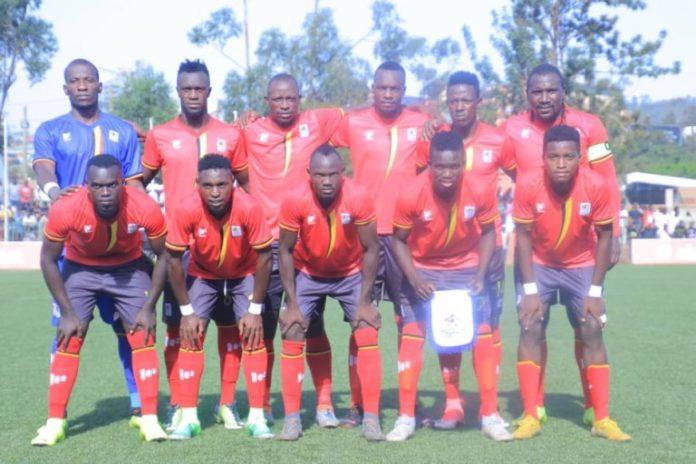
Uganda Cranes

The Uganda Cranes team have arrived in Cairo, Egypt for their training camp in preparation for the last 2019 Afcon qualifier game against Tanzania on Sunday, 24th March 2019 in Dar es Salam.

This was after a successful week long non-residential training at KCCA stadium in Lugogo that climaxed with a trial game against Kampala Region Select a game The Uganda Cranes comfortably won 4-0.

The team will train throughout the week up to Friday and thereafter, switch to Tanzania on Saturday ahead of AFCON Qualifiers game on Sunday.

Joseph Ochaya, Emmanuel Okwi and Juuko Murushid all joined the team a stopover in Addis Ababa, Ethiopia while other missing players will join the rest in the course of the week.

The team will have a test match against a league one Egyptian club on Wednesday.

The team will be accommodated at Tolip Salfotsan Hotel in Cairo City, Egypt and Spa Ismaila Forsan Island.

Uganda is among the fourteen nations to have already secured a place at the 2019 Afcon in Egypt while Tanzania will need to win and hope Lesotho falter against Cape Verde in the other Group L stage match.

Meanwhile, Uganda Cranes tactician Sebastian Desabre has tasked players to make use of this camp and finish the qualifiers on a higher note.

Players in camp so far;

Murushid Jjuuko (Simba, Tanzania), Timothy Awany (KCCA, Uganda), Halid Lwaliwa (Vipers, Uganda), Geofrey Walusimbi (Free Agent), Joseph Ochaya (TP Mazembe, DR Congo), Nico Wakiro Wadada (Azam, Tanzania), Hassan Wasswa Mawanda (Free Agent), Tadeo Lwanga (Vipers, Uganda), Ibrahim Sadam Juma (KCCA, Uganda), Moses Waiswa (Vipers, Uganda), Emmanuel Arnold Okwi (Simba, Tanzania), Allan Kyambadde (KCCA, Uganda), Allan Okello (KCCA,Uganda), Henry Patrick Kaddu (KCCA, Uganda)

Stories Continues after ad

NMG’s Tony Glencross suffers Bells’ palsy due to work stress

NMG Managing Director Tony Glencross

Tony Glencross, the managing director Nation Media Group-Uganda developed Bell’s palsy, a sudden, temporary weakness in the facial muscles that makes half of the face appear to droop. He attributed the uncovered to a stressful work environment.

“As I gave a speech at a party, I noticed my speech was slurry yet I had not taken alcohol. This worried me,” he says of the situation he says he experienced last December.

Bell’s palsy affects both men and women equally but is more common in those aged between 15 and 60 years. It is often mistaken for a stroke but according to neuro physicians. The condition causes a temporary partial paralysis of the muscles in the face only.

Bell’s palsy symptoms can develop a few weeks after you experience a stressful situation, trauma, viral infection, or eye infection. They are usually abrupt but noticeable when you try to eat or drink or when you look at yourself in the mirror.

Others are uncontrollable drooling, difficulty chewing and drinking, inability to make facial expressions such as smiling or frowning, facial weakness and muscle twitches in the face.

Stories Continues after ad