Stanbic Bank
Stanbic Bank
17.7 C
Kampala
Stanbic Bank
Stanbic Bank
Home Blog Page 1323

Doctors body to petition parliament over Lubowa hospital

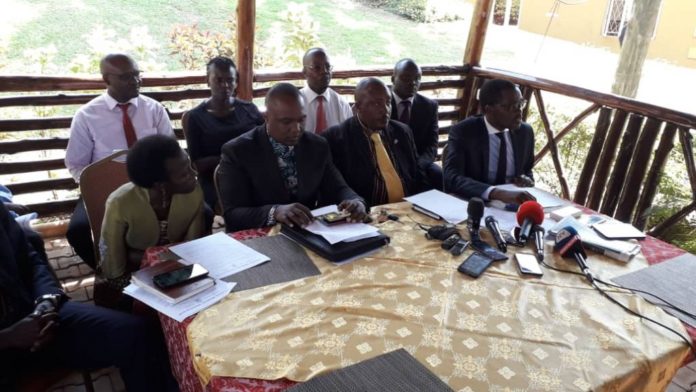
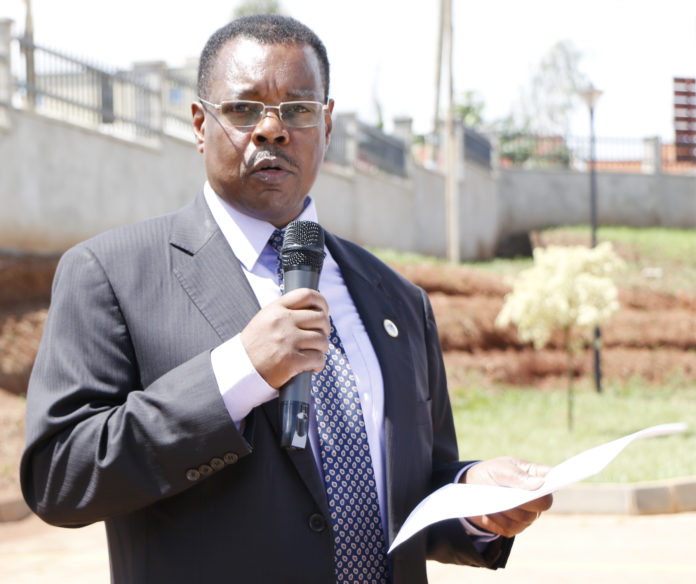
Members of Uganda Medical Association addressing the press

Medical practitioners under the umbrella of the Uganda Medical Association (UMA) are to petition President Yoweri Museveni and Parliament over the Shs1.4 trillion specialised hospital in Lubowa, saying the money should instead be given to Mulago National Referral Hospital.

Speaking to journalists from Mulago Guest House, the association president Dr Obuku Ekwaru said that priority should be given to local needs including refurbishing Mulago and the Uganda Heart Institute.

Dr. Obuku wondered why long term investors who have been operating in the country have not been aided in the past to better their investments.

In the petition they also want the government to come with a strategy of retaining and training specialists to deal with the issue of brain drain that continues to affect health service delivery.

The association members said that the facility will be owned by government, local specialists should be involved in the planning and set up of the facility that they say has had its price exaggerated.

Parliament last week approved a promissory loan worth Shs1.3 trillion to an Italian investor FINASI to build a specialised government hospital at Lubowa amidst stiff resistance from opposition legislators.

Government will facilitate the investor with the loan and upon completion, FINASI will own the facility for six years before giving it back to government.

Stories Continues after ad

Ugandan players who qualified for the quarter-finals of Caf inter-club competitions

Okwi helped Simba qualify for quarters of Caf CL

The 2018/19 Caf Champions League and Confederations Cup quarter-finalists were confirmed over the weekend after completion of the group stages.

Emmanuel Okwi and defender Murushid Jjuuko helped Tanzania’s Simba come from a goal down to beat AS Vita of DR Congo to reach the Caf Champions League quarterfinals thanks to a late Cletus Chama in stoppage time.

Okwi featured for 58 minutes before being substituted with Harouna Niyonzimana at Taifa Stadium in Dar es salaam.

Denis Onyango helped Mamelodi Sundowns qualify for the Caf Champions League quarter-finals despite a 1-0 defeat to Wydad Casablanca in Morocco.

Gor Mahia will play the quarter finals of the CAF Confederations Cup for the first time in their history after holding on for a nervy 1-0 win over Petro de Luanda at the Kasarani Stadium in Nairobi despite finishing the game with only nine men.

Erisa Ssekisambu was brought on in the 85th minute in the place of Nicholas Kipkirui while Shafik Batambuze started the match and was shown a red card in the 74th minute. Jacques Tuyisenge’s penalty 12 minutes into the second half proved enough to send Gor through.

Goalkeeper Salim Jamal Magoola played 90 minutes as his side Al Hilal defeated Zambia’s Nkana FC 4-1 in Omdurman Sudan to seal progression to the quarter-finals of the Caf Confederations Cup.

The quarter-finalists for Caf Champions League: Mamelodi Sundowns (SA), Simba (Tanzania), CS Constantine (Algeria), Al Ahly (Egypt), Wydad Casablanca (Morocco), TP Mazembe (DR Congo), AC Horoya (Guinea) and Esperance (Tunisia).

Qualified teams for Confederations cup quarter-finals: RS Berkane (Morocco), Hassania Agadir (Morocco), Gor Mahia (Kenya), AL Hilal (Sudan), Zamalek SC (Egypt), ES Sfaxien (Tunisia), Etoile du Sahel (Tunisia) and Nkana FC (Zambia).

The final will be held on 19th and 26th May 2019.

The first legs and second legs of the quarter-finals will be played on 5th and 12th April respectively.

The winners of the 2018–19 CAF Confederation Cup earn the right to play against the winners of the 2018–19 CAF Champions League in the 2019 CAF Super Cup. Raja Casablanca are the defending champions.

The final eight draw is scheduled to take place at CAF’s headquarters on Wednesday 20 March 2019.

Stories Continues after ad

Digital tax stamps the answer to unfair competition

Mr. Ssempogo

By Herbert Ssempogo

Arguably, one of the biggest nightmares traders contend with is unfair competition.

Often, the unethical acts, which gradually edge counterparts out of business, are linked to flouting of regulations.

For example, a trader could be a smuggler, skirting tax and, therefore, gaining undue advantage over others and denying the Government of Uganda revenue.

In the 2016/2017 financial year, the Enforcement Division of Uganda Revenue Authority (URA) made 7,257 recoveries from smugglers. From these, sh51.3bn was collected. A total of sh60.6bn was collected from 8,918 recoveries in 2017/2018.

Were the items not recovered, the challenge would have been double edged-unfair completion and revenue loss to traders and the Government respectively.

Other than smuggling, a trader could be selling counterfeit (look alike) or fake products. The effect of such unscrupulousness would be higher sales in part as a result of low prices.

And yet, the ordinary, uninformed person would rather buy a low priced item regardless of its quality or a trader’s compliance record.

The aforementioned unfairness is what has up until now happened to many a trader and the attendant undesirable impact. But soon, it will be a thing of the past.

In what is set to further help level traders’ playing field, authorities among them Uganda Revenue Authority, Uganda National Bureau of Standard and Ministry of Trade are soon introducing Digital Tax Stamps (DTS).

Not a new tax as some people have argued, the impending DTS involves the physical stamping of a product. The stamping is done at a production line where a stamp is affixed on a product or in a gazetted area for the case of imported excisable products.

At affixation, all details about a product are captured real time. This data will be accessible by revenue administrators, policy makers and consumers through mechanisms that will facilitate access to the information.

For example, using a smart phone to read the stamp, consumers will know an item’s details-name, importer/manufacturer and expiry date in real-time. This is the information captured at stamp affixation.

And that’s how unscrupulous traders will not survive since consumers will be empowered to only buy genuine products. Slowly, crafty traders, who have hitherto denied others business, will suffer the same fate.

Curbing unfair competition is merely one of DTS’ pluses. Others are reducing informality and enabling the Government make informed decisions based on captured data.

DTS will officially kick off with all cigarettes by the end of April 1st 2019. Beers will follow in May, 2019 while sodas, bottled water, spirits and wines will follow in June, 2019. The full roll-out is scheduled for July, 2019.

There will be two types of stamps namely paper for wines, spirits and cigarettes and direct marking for beer, water and sodas.

After the roll-out, enforcement teams will use specialised gadgets to determine the validity and authenticity of stamped products. Manufacturers, whose products do not comply, will be offered a grace period and an opportunity to comply.

Before the stamping starts, stakeholders will be sensitised. Amid these interactions, participants will familiarise with the stamps. Already, several sensitisation meetings involving manufacturers, URA and the Ministry of Finance, Planning and Economic Development have occurred.

The key argument in these interactions including several with Uganda Manufacturers Association members, is that the development is meant to reduce informality. Informality affects players as much as it affects Government’s activities for example revenue collection.

It will bring on board manufacturers and others, who have for a long time remained unknown, a state that facilitates non-compliance. Regulations among them tax.

Already, DTS are being used for similar reasons in neighboring Kenya.

Herbert Ssempogo works in URA – Media Unit, Public & Corporate Affairs

Stories Continues after ad

Joint AU-UN team examines the implementation of the Somalia Transition Plan

A delegation from the United Nations Headquarters and the African Union Peace Operations Support Division at the AMISOM mission headquarters in a meeting with AMISOM Sector 5 commanders in Jowhar, Somalia on 12 March 2019. AMISOM Photo

A visiting African Union and United Nations (AU-UN) delegation completed up its weeklong assessment tour of Somalia this weekend, after evaluating progress made by the African Union Mission in Somalia (AMISOM), in the implementation of specified tasks, stipulated in the Somalia Transition Plan.

The AU-UN delegation travelled to the port city of Kismayo in Jubbaland State; and Jowhar, the administrative capital of HirShabelle State this week, to assess the reconfiguration of AU troops, in line with the Transition Plan.

The troops have played a significant role in cushioning the Federal Member States from Al-Shabaab insurgency, since setting up base in the regions.

“The objective of our visit is to discuss with AMISOM military, police and civilian components, the progress made in the past year, assess the implementation of the Transition Plan; and the recent UN Security Council Resolution on Somalia,” Vincent Pasquini, the Team Leader of the visiting delegation said.

Mr. Pasquini, who is from the UN Department of Political and Peacebuilding Affairs (DPPA) and the Department of Peace Operations (DPO), noted that the delegation made an assessment of the transition activities being undertaken by military contingents from Troop Contributing Countries to AMISOM, and their interface with the Somali National Security Forces. The countries include Uganda and Burundi among others.

While in Jowhar, the delegation held closed-door consultations with senior Burundi military officials, to understand the magnitude of the challenges facing their troops. Captain Melance Nkengurutse, the Spokesperson for the Burundian troops said discussions with the delegation was centred on operational issues and joint operations between the AU troops and the Somali National Army.

Before their departure from Somalia, the visiting delegation is expected to hold consultative talks with the Federal Government of Somalia, AMISOM leadership, the UN and international partners, on various issues; among them the implementation of the recommendations contained in the AMISOM Operational Readiness Assessment (ORA) report; and the political and security situation in the country, ahead of the one-person, one-vote elections, due in 2020/2021.

Stories Continues after ad

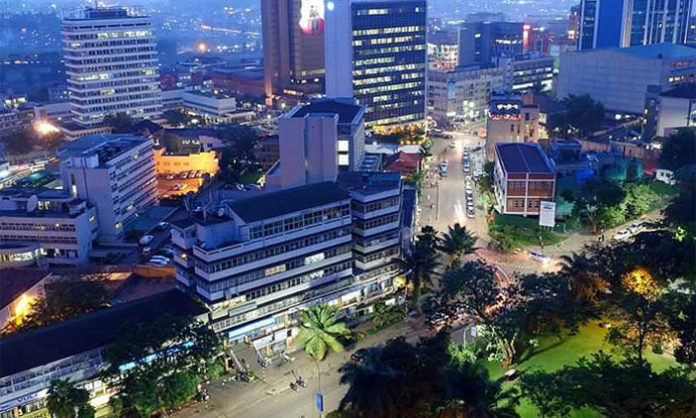
Study ranks Kampala third in East Africa for highest FDI inflows

Kampala has been ranked third behind Nairobi and Dar es Salaam in East Africa to receive huge foreign direct investment (FDI) inflows.

Kampala, which ranked 26th in Africa and 335th in the world with FDI amounted US$2.3 billion, a growth of eight per cent when compared with the previous report followed by Kigali, which is ranked 27th in Africa and 349th in the world after receiving FDIs amounting US$2.3 billion.

This was reported in the recent study titled The States of African Cities 2003-2018 jointly published by the UN-Habitat, African Development Bank, Wits School of Economic and Business sciences and UK Aid.

The report, which covers the period of 15 years has also revealed that Dar es Salaam was ranked 224th among 1,325th cities in the world, to record huge investments.

Nairobi was leading after being ranked eighth in Africa by recording FDI valued US$5.9 billion, a growth of 25.1 per cent compared with the previous report of 2008.

During the reviewed period, Dar es Salaam city received FDIs amounting $3.4 billion, a decrease of 4.75 per cent recorded during the previous ranking held in 2008.

Manufacturing and services sectors attracted more investments to African cities, not only Dar es Salaam, but also other cities featured, the report has said.

The resources sector is the second-largest recipient of FDI, accounting for 34 per cent of total FDI. “The resources sector in Africa is extractive in nature and mainly associated with the export of raw material rather than local value addition,” says the 322-pages report.

Other leading sectors to receive FDI were construction, geological exploration and development, Import and export trade as well as wholesale and retail trade.

The report has said that domestic market size, well-developed norms of trustworthiness, low level of corruption, rule of law have strong positive impacts on attracting FDI into Africa.

“FDI will locate in countries with large and expanding markets with greater purchasing power and where firms are likely to obtain a higher return on capital and investment profit,” says a report.

Further, the report shows that availability of domestic credit, financial market development and Presidential systems of government were highly significant and positive to attracting FDI.

The report has ranked Mombasa as the fifth city to attract more FDIs in East Africa with a portfolio of $1.3 billion, a growth of 4.9 per cent. It was also ranked 34th in Africa and 435 out of 1,325 cities in the world.

The main FDI sources according to the report were Paris, Tokyo, London, New York, Singapore, Seoul, Hong Kong, Chicago and Dubai.

Generally, the report has shown that Cairo holds the first place in Africa in terms of volume of FDI attracted, followed in 2nd place by Johannesburg, then Tangiers (3rd), Lagos (4th), Casablanca (5th), Algiers (6th), Cape Town (7th), Nairobi (8th), Abidjan (9th) and Dakar (10th). The case study of Cairo reveals that, apart from the proximity to Europe and Arab States, Cairo is a vibrant city with well-developed infrastructure and road networks, an availability of skilled workers, a conducive foreign investment environment and ease of doing business which makes it a desirable location for investment.

“It is noteworthy that 40 per cent of the top 10 are in Northern Africa, but also that many of these are currently experiencing negative FDI growth, arguably reflecting political and social tensions in the wake of the ‘Arab Spring’,” reads the report.

“It is further noteworthy that many newly emerging urban economies like Abidjan,

Accra and Kigali have high positive growth rate.”

UN-Habitat Executive Director Ms Maimunah Mohd Sharif commented in the report that with a population of over 1.2 billion and a combined GDP of US$3.4 trillion, Africa is an attractive destination for foreign direct investment (FDI), which amounted to US$56.5 billion in 2016.

The report shows that although Africa receives a modest share of global FDI, it has the second highest investment growth rate, when compared to other world regions.

Moreover, she said Africa’s rapidly growing population is increasingly living in cities with the continent’s urban population expected to reach 50 per cent by 2030, up from 36 per cent in 2016. “Benefiting from economies of scale and agglomeration, African cities are becoming the drivers of economic growth and productivity,” she said. “The report also shows that African governments need to connect FDI attraction to sustainable urbanisation by underpinning it with robust national urban policies, urban planning, and financial and legal systems.”

The report critically considers the benefits of FDI into job-rich and higher productivity sectors (e.g. IT and manufacturing) compared to capital intensive sectors with limited value addition (e.g. resources).

It was argued that African countries should find the best trajectories for their development, taking into account their country and city-specific locational advantages in attracting public and private investment.

The study noted that FDI into Africa has neither lifted African populations out of poverty nor has it addressed the growing gap between the more innovative and technologically lagging countries.

The city with the highest amount of FDI inflows is Johannesburg with US$944 million, followed by Lagos, Cape Town and Nairobi, which attracted FDI inflows of US$658 million, US$460 million and US$427 million respectively.

Pierre Guislain, the Vice-President, Private Sector, Infrastructure & Industrialisation, African Development Bank commented that “an interesting finding is that in contrast to conventional FDI theory, Chinese investment in Africa tends to focus on countries with lower political stability”.

so as to explore underinvested states, as well as to avoid competition with investors from advanced economies.

The research shows that Chinese firms have made contributions to African development, particularly in the energy and infrastructure sectors, with the incentive of creating more attractive investment environments and to stake a claim in the economic development of the continent.

Stories Continues after ad

Fifa Club World Cup: Top European clubs say they will boycott revised tournament

Real Madrid beat Al Ain to win the 2018 Club World Cup

Fifa has approved a revised 24-team Club World Cup starting in 2021 despite top European clubs saying they would boycott the tournament.

The new competition is expected to include eight teams from Europe.

It will run every four years and take place from June to July in the slot currently used for the World Cup warm-up event, the Confederations Cup.

Fifa president Gianni Infantino said he was “extremely happy” after the Fifa Council backed his plan on Friday.

“Now the world will see a real Club World Cup where fans will see the best teams in the world compete to be crowned the real world champions,” he said.

The Club World Cup is currently held every December and features seven teams from six confederations, but the competition is largely ignored by European fans.

As well as eight European clubs, the new tournament would see six teams from South America, three each from Africa, Asia and North and Central America and one from Oceania.

It has been suggested each club could earn £50m from taking part.

Stories Continues after ad
African C-sections 50 times more deadly, study says

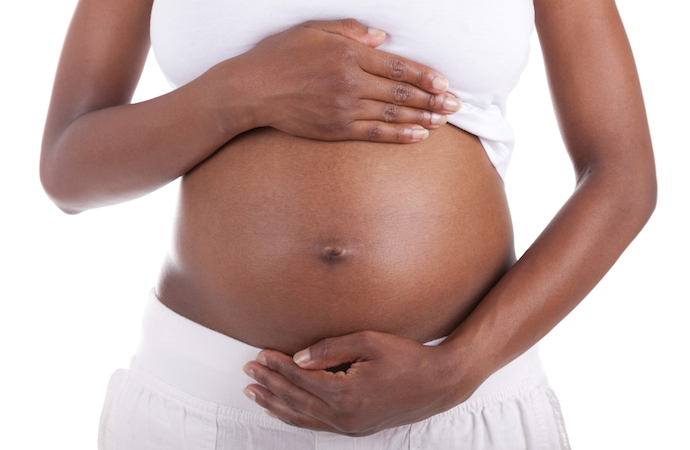
Young pregnant black woman touching her belly - African people

The number of mothers who die after a Caesarean-section in African countries is as much as 50 times higher than in developed countries, according to a study in the medical journal The Lancet.

Their sample indicated that one in 200 women dies during or soon after a C-section. By comparison, maternal mortality is about one woman per 10,000 operations in the UK. Death rates related to C-sections are roughly the same across most developed countries.

And almost 20 per cent of the African women experienced complications during surgery. That figure is nearly three times higher than in the US.

Experts said some of the reasons for preventable C-section deaths included a ruptured uterus in mothers who had pre-existing placental complications, bleeding before birth or during surgery, and problems related to anaesthesia.

However, the report’s authors are not calling for fewer C-sections. Bruce Biccard, professor at the University of Cape Town, actually thinks there should be more across Africa.

“Improving access to surgery might allow patients to present earlier and prevent complications and deaths but it is vital that this improvement occurs in parallel with programmes aimed at improving patient safety during caesarean delivery,” Mr Biccard is quoted as saying in The Telegraph newspaper.

Almost 3,800 women were included in the study across 22 countries, making it the largest to track maternal complications in Africa.

Stories Continues after ad
UNBS Closes Halal Foods & Beverages Factory

Dr. Ben Manyindo

Uganda National Bureau of Standards (UNBS) has closed down Halal, Twayibah Foods & Beverages Factory in Old Kampala over failure to comply with set standards for production of beverages thus putting the health of consumers at a great risk, it says in a statement.

The factory was closed after UNBS Surveillance team together with KCCA officials conducted inspection of the factory.

According to the statement, the factory was found in production of pre-packaged drinking water of Halal brand in an unhygienic environment. The workers were found handling water with bare hands and with no safety gear which is a contravention of the Uganda Standard US 28 EAS 39:2002 – Code of practice for hygiene in the Food & Drinks Manufacturing Industry.

“Some bottles of the packaged drinking water were found with the UNBS Distinctive mark yet the company is not certified. This is in contravention of section 20 (1) of the UNBS Act; Cap 327 and the UNBS Administrative Directives on Implementation of water Standards Requirements – May 2013 which prohibits the sale of uncertified packaged drinking water,” the statement says.

“UNBS would therefore like to inform the public that the premises of Halal & Twayibah Foods & Beverages factory shall remain closed until investigations are completed, it says

Stories Continues after ad

2022 Fifa World Cup could be expanded to 48 teams

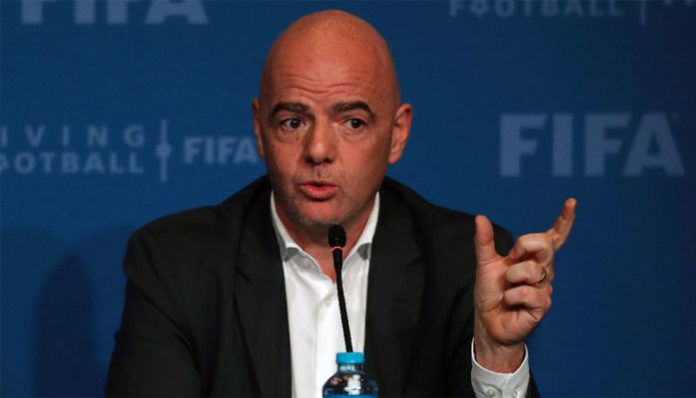
FIFA President Infantino

FIFA’s ruling council has not ruled out expanding the 2022 World Cup in Qatar to 48 teams but a final decision will probably be pushed back until June, a source close to world football’s governing body told Reuters on Thursday.

FIFA’s feasibility study on the tournament envisages some additional games in an expanded World Cup possibly being held in other countries, with Kuwait and Oman mentioned as options.

A deep political and economic rift in the Gulf complicates the prospects of sharing the tournament.

The United Arab Emirates, Saudi Arabia, Bahrain and non-Gulf state Egypt cut political, trade, and transport ties with Qatar in June, 2017. The countries accuse Qatar of supporting terrorism, which it denies.

While Qatari organisers are working with FIFA on further studies of the options, they retain a veto over any change to the tournament, which is schedule for November 2022.

The source said that the council meeting is likely to conclude on Friday with an expression of support for continued investigation of the possibility of adding an extra 16 teams to the tournament.

The council will meet again shortly before the June 5 congress in Paris and they are then expected to put their recommendation to the full membership, who have traditionally backed the preferences of the leadership.

FIFA’s other major decision on a new expanded Club World Cup, possibly with 24 teams to start in 2021, is also expected to be held back until June.

It is also reported that Africa “will definitely support” expanding the 2022 World Cup in Qatar to 48 teams, says the Confederation of African Football (Caf) vice-president.

“Caf will definitely support the vision of (Fifa president) Gianni Infantino if he wants this,” he told BBC Sport.

“Why wait until 2026 if we can achieve it now? If you do it now, there will be more money and more participating teams.

“In Africa we are going to have another 4.5 (places), which makes more sense to us – rather than just going with five nations. That’s why Africa will always support Infantino.”

Because of its small geographical size, Qatar would need the support of regional co-hosts to stage a 48-team finals.

Earlier this week, the Associated Press reported that a leaked Fifa feasibility study into the prospect of expanding the 2022 World Cup could work if at least one of Qatar’s neighbours was used as an additional host.

Stadiums in Bahrain, Kuwait, Oman, Saudi Arabia and the United Arab Emirates have been identified as suitable yet only two of these countries would appear feasible at present – Kuwait and Oman.

A final decision on the possible expansion – which would come ahead of a pre-existing decision to have 48 teams in the 2026 World Cup in Canada, Mexico and the United States – is expected to be taken at the Fifa Congress in June.

However, Europe is expected to challenge the prospect of 16 more teams and an extra 16 games – given the 2022 finals are already forcing the continent’s leagues to rearrange their competitions.

This is because the tournament will take place in the middle of the European season, having been moved to November-December from its traditional June-July slot.

This would mean 80 matches being played in the same 28-day window between 21 November and 18 December.

Stories Continues after ad

EU tables Shs12b to benefit Congolese refugees in Uganda

Some of Congolese refugees.

A European Union (EU)-funded humanitarian project to last one year has been launched in Uganda to help cover the basic needs of about 300,000 refugees from the Democratic Republic of Congo (DRC) in the southwest of the country.

Funded through the European Union’s Civil Protection and Humanitarian Aid Operations department (DG ECHO), the project is receiving support worth EUR 3 million (about Shs 12 billion).

‘‘Our goal is to ensure that the most vulnerable refugees are safe and that their basic needs are covered. This means providing them with shelter, food, water, protection and helping them on the path to self-reliance,” said Isabelle D’Haudt, Head of EU Civil Protection and Humanitarian Aid Operations in Uganda.

The project is a consortium led by the Danish Refugee Council in Uganda in partnership with the Lutheran World Federation (LWF) and Action Against Hunger (ACF). The three organisations bring the experience, technical expertise and operational strength needed for the successful implementation of the planned actions.

In addition, the project also aims at protecting the environment in refugee-hosting areas.

‘‘For the first time, we have a project where the household is at the centre of our operations. It is an integral and critical part of the protection and solutions strategy,’’ said Severine Moisy, Head of Programmes at the Danish Refugee Council. ‘‘We designed assistance around the refugee household; partners are bringing together their efforts into one coordinated and standardised approach across the board to be used for selected households having specific needs.’’

The project is expected to benefit 3 500 vulnerable households comprising 18 000 individuals in the two settlements of Kyaka II and Kyangwali, located in the Kyegegwa and Kikuube districts respectively, in southwestern Uganda. These settlements were chosen as areas for intervention because of their urgent humanitarian needs and the presence of very vulnerable refugees in them. Furthermore, these two settlements continue to receive new arrivals of people fleeing violence in the Democratic Republic of Congo.

Between May 2017 and December 2018, the Danish Refugee Council led another EU-funded consortium which provided aid to 350 000 South Sudanese refugees and their host communities in northern Uganda by giving them sustainable access to water and sanitation, shelter, livelihoods and protection services.

Similarly, in a pilot project that ran between April and November 2018, the EU supported a cash programme implemented by the Danish Refugee Council in Kyaka II which provided aid to 3 000 households. The beneficiaries, vulnerable new arrivals from the Democratic Republic of Congo, received cash grants to meet their basic needs.

According to the most recent verification of refugee numbers, carried out by the Government of Uganda and the United Nations High Commissioner for Refugees (UNHCR), Uganda is host to about 1.2 million refugees.

Stories Continues after ad