Stanbic Bank
Stanbic Bank
19.2 C
Kampala
Stanbic Bank
Stanbic Bank
Home Blog Page 1328

Zidane set to return as Real Madrid manager

zidane

Zinedine Zidane is set to be reappointed as the next Real Madrid manager.

The Frenchman, who left Madrid ten months ago after leading the club to three straight Champions League titles, will replace Santiago Solari, who has been in charge for less than five months.

According to sources in Spain, Real’s board of directors will meet with Solari to dismiss the Argentine and rehire Zidane.

Real Mdrid saw their season fall apart in the space of a week with back-to-back defeats in the Copa del Rey and La Liga, leaving them 12 points behind rivals Barcelona.

A surprise 4-1 home loss to Ajax in the Champions League followed, leading to Real fans staging a protest outside the Bernabeu in which they called for Solari to be sacked and for Jose Mourinho to replace him.

Zidane first took charge of Real Madrid in January 2016 after a spell in charge of the B team, and he became the first coach to win the Champions League in three straight seasons.

He was already the only coach to have claimed back-to-back Champions League titles, but despite his European success he came under pressure for winning only one La Liga title during his two and a half years in charge.

Zidane will take his first training session on Tuesday and looks set to manage his first game back when Real Madrid take on Celta Vigo at the Bernabeu on Saturday.

Stories Continues after ad

Gen. Muhoozi Kainerugaba’s friends throw party to celebrate his promotion

Gen. Muhoozi Kainerugaba

Friends of Senior Presidential Advisor on Special Operations, Lt. Gen. Muhoozi Kainerugaba will March 24 throw a victory party for the former commander of Special Forces Group to celebrate his elevation to new rank of Lieutenant General.

The venue of the party remains unknown for security reasons but Gen. Muhoozi is known to have many friends and former old boys of his from St. Mary’s College-Kisubi and Kings College-Buddo.
According to sources, Gen. Muhoozi has given a green light to the said party and therefore, confirmed his attendance.

Gen. Muhoozi was month elevated to the rank of Lieutenant General from Major General.

He a Sandhurst trained who is credited with the growth of SFG from the Presidential Protection Unit. He joined PPU as a second lieutenant in 200.

He later rose to the rank of major and a brigade commander in the then Presidential Guard Brigade that had transformed from PPU. In 2008, he graduated from Fort Leavenworth and upon return; he was promoted to lieutenant Colonel and thereafter, appointed commandant of SFG.

Stories Continues after ad

Sudan’s parliament cuts state of emergency to six months

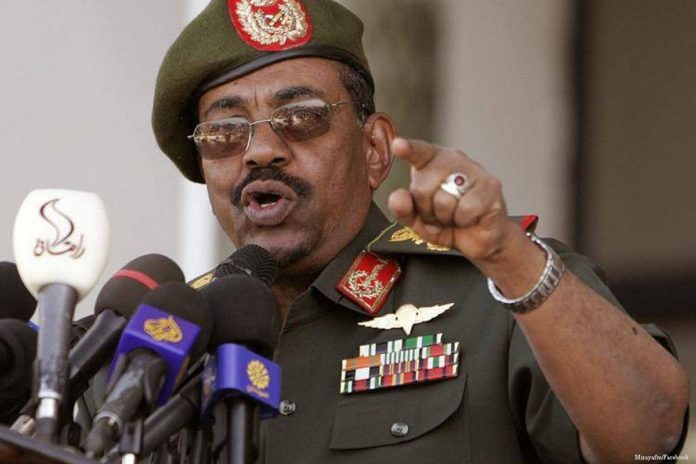
Former Sudan President Omar Al Bashir

Sudan’s parliament voted on Monday to shorten from one year to six months a state of emergency declared by President Omar al-Bashir last month in response to widespread protests.

Parliament can, however, renew the measure.

Bashir declared the nationwide state of emergency, the first since 1999, on Feb. 22 to try to quell demonstrations that have posed the most serious challenge to his three-decade rule.

Parliament’s deputy speaker Ahmed Attijani said some lawmakers objected to the state of emergency because of its implications for freedoms, particularly given Sudan is due to hold a presidential election next year.

The state of emergency gives security services expanded powers to search buildings, restrict movement of people and public transport, arrest suspects and seize assets or property during investigations.

In the days after its imposition, Bashir announced a raft of other measures, including setting up emergency courts and prosecutors across the country. Activists say more than 800 people have been tried in the courts.

“We reject the (state of) emergency completely and these measures will not stop the popular mobilization,” said Omar al-Degair, head of the opposition Sudanese Congress Party.

Near-daily demonstrations set off by a worsening economic crisis have shaken Sudan since Dec. 19.

Protesters have called for Bashir to go, blaming him for the country’s problems. He has pointed a finger at “infiltrators” and foreign “agents”.

Stories Continues after ad

Why is Uganda allowing her citizen entry into Rwanda while Rwanda is blocking hers?

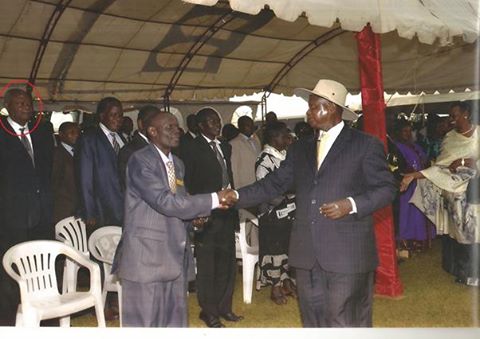
HULLO: President Yoweri Museveni greets the author Mr Nabende Wamoto.

Why is Uganda still allowing her citizens entry into neighbors’ (Rwanda territory) yet the latter is disallowing her own nationals from leaving their country to Uganda?. Isn’t this tactical that when Rwanda is ready and about to attack Uganda, she will hold Ugandans as War shields in case of our counter – attacks?.

Are these neighbors not responding in a manner referred to as IMMEDIATE ACTION DRILLS after the Commandant of Special Forces Command then Brigadier, now Major General Don Nabaasa`s tactical alert to the country and in particular the Ugandan youth of appending foreign enemy aggression.
In the first quarter of last year 2018, I wrote in these pages emphasizing the importance of Intelligence gathering (knowledge or fore knowledge) and the necessity of spy agencies to be everywhere including Churches (remember the Kampala Archbishop Cyprian Kizito Lwanga had complained of spy infiltration), Mosques etc.

Ugandans must appreciate the timely and usefulness of the intelligence that led to General Nabaasa`s statement and going by that caution, EXTERNAL SECURITY ORGANISATION (ESO) is without doubt the basis upon which Uganda established and now Rwanda herself through President Gen. Paul Kagame and his foreign minister Amb. Sezibera confirmed that they must have been at the extreme tail end of planning a mission, execution, general outline, task and grouping, coordination of instructions, timing, Orders of match i.e. Assemble area, F. Up (formation up), start line, Fire plan, Obstacle plan, administration logistics (service supplies), command and signal of her armed forces.

Uganda and all her citizens including but not limited to the military, religious leaders i.e. priests, Imams, cultural leaders must not take anything for granted for I witnessed such a deadly scenario at the Uganda-Kenya boarder at Busia in the mid -90s. Therefore our security forces must prepare accordingly in all aspects:- battle preparations, locating enemy positions, reaction to enemy effective fire, Assault and winning the fire fight. The country must ready herself, accelerate her spy networks to counter this current hostility. Skills or methods of inter agency gathering must be inculcated in all citizens so that they are able to communicate with sources of information without regard to who they are and without being detected by enemy or opposition intelligence services.

The public must be trained (polished) to know that the Army goes to the war front in order for us to remain as peaceful as usual but everyone must make personal contribution to the same peace as the Latin say “Ad Bellan Pacis Causa’’ meaning “it is for the cause of peace that I go to war’’.

Sum Tzu, a Chinese military General in his book Art of War emphasizes the importance of good intelligence and goes on to say that the essence of spying is what would be in a common man`s language prophesy.

The profession of fore telling the future and foreseeing what is hidden behind the curtains in this case hidden in the enemies courts which we must all uncover, uproot and cast away.
Rwandas action of boarder closure is extra serious and America classifies is as DEF.POL 3 which is almost declaration of war.

Nabendeh Wamoto S.P (0776-658433)
Email: simonwamoto@yahoo.co.ug
wamotonabendeh@gmail.com

Stories Continues after ad

Minister says statistics critical to development of Uganda’s education sector

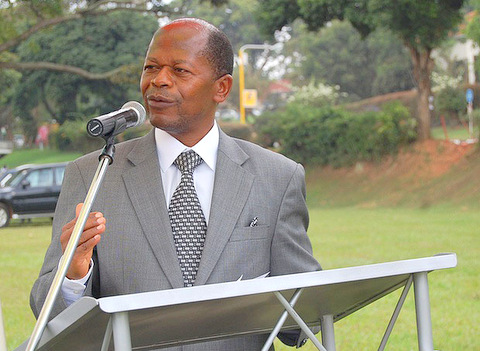
Dr. Chrysostom Muyingo.

State Minister for Higher Education Dr Chrysostom Muyingo has said lack of statistics on schools countrywide is the major cause to stagnation in the development of the Education Sector.

Muyingo said education is key in building critical human capital, urging stakeholders to invest heavily in the sector if Uganda is to realize Vision 2040, Sustainable Development Goals (SDGs) and the African Agenda 2063 among others.

He was making a keynote address on Monday, during the flagging off of a team of 300 personnel from the Uganda Bureau of Statistics (UBOS) to carry out a master list of education institutions countrywide. The officials will visit both public and government institutions.

“Human capital is regarded as one of the consumption sectors. Inadequacy of human capital and resource is a big challenge because information data on education is still critical”, he said at the Statistics House in Kampala.

The minister cautioned UBOS field staff, who will be collecting the education Institutions’ data to desist from providing false data, as this will jeopardise the development of education in the country.

“You should not allow heads of schools to influence the outcome of data collection”, he said.

The British High Commissioner to Uganda, Peter West, said his country, through department for International Development (DfID) would continue to support Uganda’s Education Sector in terms of financial and technical assistance.

“The British government has earmarked Shs3.2 billion towards development of education sector in the country”, he said.

He said; data collection for education institutions should be a continuous process, to guarantee accuracy of Statistics information on the state of education in the country.

UBOS acting executive director Vitus M. Kato said the data collection surveys, which start from 11th March to 30th April 2019, is the first of its kind.

“Over the years, the exercise of updating the list of education Institutions has not been done due to logistical constraints. Going forward, this exercise will be undertaken annually, subject to availability of funds”, he said.

He said UBOS is undertaking the exercise in order to collect and provide credible data, to assess the performance of the education sector and ensure better planning and service delivery.

Stories Continues after ad

IAAF upholds ban on Russian athletes until further notice over doping

Russian female athletes

Russian athletes will remain banned from international competitions until further notice, says International Association of Athletics Federations, the World’s athletics’ governing body.

IAAF said on Monday it had decided not to lift a ban on Russia’s athletics federation over doping, saying it was still waiting to receive data collected from Moscow and financial compensation for its investigations.

Russia’s athletics federation (RUSAF) has been suspended since 2015 following a World Anti-Doping Agency (WADA) report that found evidence of widespread doping in the sport.

The IAAF’s governing council discussed the possibility of lifting the ban at a meeting in Doha on Sunday and Monday. But Rune Andersen, chair of the IAAF’s Russia Taskforce, said Moscow had yet to meet two conditions.

“Logistical” issues had held up financial compensation, including for the taskforce’s costs and legal costs in cases Russia had brought to the courts, he said. And the IAAF had not yet not received analytical data and samples from a Moscow lab, which are now still being assessed by WADA.

“Those (issues) need to be resolved. As soon as we have everything we need… we will seriously reconsider and recommend to the IAAF council for reinstatement (of Russia),” he said.

Russian authorities have denied their doping program was “state-sponsored” but have accepted that senior officials were involved in providing banned substances to athletes, interfering with anti-doping procedures or covering up positive tests.

Russia’s reinstatement has been rejected on numerous occasions by the IAAF over the past three years. Should it fail to meet conditions in the coming months, it could risk missing out on sending a team to September’s world athletics championships in Doha, Qatar.

Since 2015, some individual Russian athletes have been allowed to compete internationally as neutrals provided they met certain criteria that showed they had operated in a dope-free environment.

Stories Continues after ad

Mbale man escapes from court over land grabbing

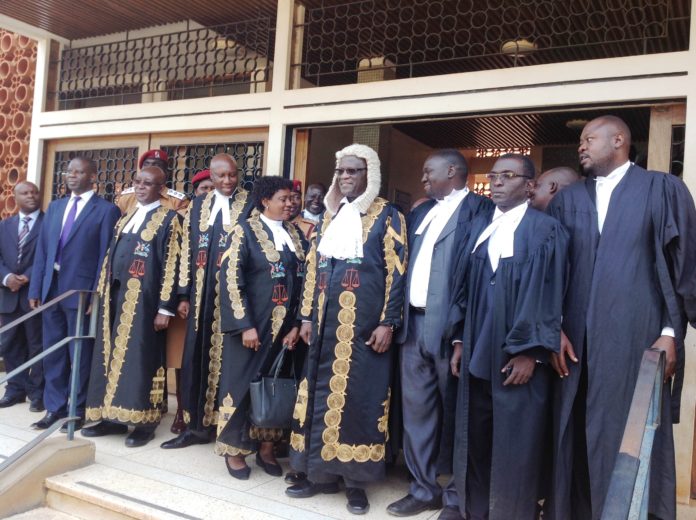
Judicial officials at Mbale High Court in the recent past.

Moses Wanda of Nashikhaso Village on Monday ran away from inside Mbale High Court upon hearing of mention of his name in land matter that he dubiously sold belonging to one Suzan Namusisi of same village and also elder sister of Beatrice Anywar.

Wanda claims to have been awarded two pieces of land belonging to Suzan located in Luyekhe Village, Bungokho sub-county for costs of digging pit latrine for Suzan at her residence in Nashikhaso Village, Bungokho sub-county by Busoba court.

The dubious court arrangement was orchestrated by Highland Auctioneers and Bailiffs located along Naboa Road headed by one WEDAIRA Nelson. It is believed around 2007, they forged court proceedings, ruling, auction of said land against uninformed owner Suzan who stays in Switzerland.

The current tenants testified in court that while they were buying, they were warned of such dubious auction but trusted that since it was court arrangement, they were safe. Wanda has been hiding in name of area Member of Parliament also Minister of State for Trade Michael K. Werikhe who authorities discovered was oblivious of the crime Wanda had committed.

However, the minister does not support such dubious arrangement as he supports local investors like Ms Namusisi who is among Ugandans in diaspora.

Land conflicts have become rampant in Bungokho area orchestrated by some leaders who want to benefit from them in monetary terms.

Stories Continues after ad

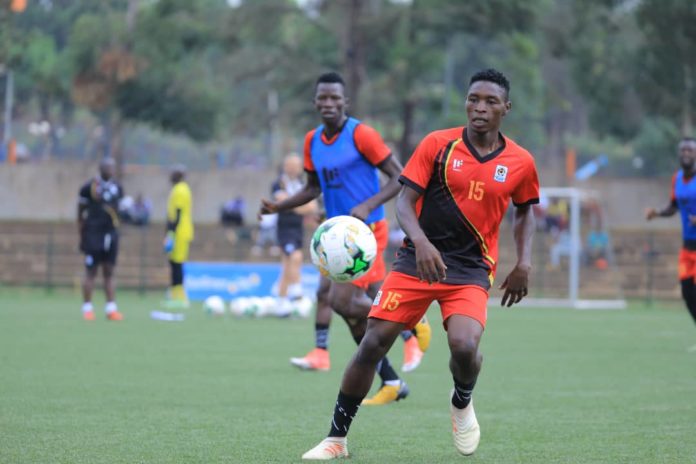
Cranes start preparations for Afcon qualifier against Tanzania

Cranes train at Startimes stadium

A group of 24 players have kick started non-residential training drills for the last Total Afcon 2019 qualifier match away to Tanzania.

The players, many of whom locally based from the Star Times Uganda Premier League clubs trained for two hours at the Star Times Stadium, Lugogo in Kampala.

With the exception of Vipers, Proline and Express players, who still have to play Uganda Cup quarter-finals, the rest of the summoned players turned up with one addition – Solomon Walusimbi of Maroons Football Club.

The team will have a regional tour match against Kampala Regional Select team on 16th March from which nine players will be selected to join the 15 foreign based players in a camp in Cairo, Egypt from 18th to 22nd March.

Uganda is among the fourteen nations to have already secured a place at the 2019 Afcon in Egypt while Tanzania will need to win and hope Lesotho falter against Cape Verde in the other Group L stage match.

Training will resume on Tuesday morning starting by 9am, at the Star Times Stadium, Lugogo.

24 players who trained on Monday morning:

Nicholas Sebwato (Onduparaka Fc), Saidi Keni (Sc Villa), James Alitho (URA FC), Charles Lukwago (KCCA FC), Obenchan Filbert (KCCA FC), Willa Paul (Police FC), Samson Mutyaba (Maroons FC), Kizza Mustafa (KCCA FC), Majwega Brian (Maroons FC), Godfrey Walusimbi (Unattached), Timothy Awanyi (KCCA FC), Mbowa Paul Baker (URA FC), Hassan Wasswa Mawanda (Unattached), Ibrahim Sadam Juma (KCCA FC), Eyam Ivan (Mbarara City FC), Taddeo Lwanga (Vipers SC), Okello Allan (KCCA FC), Owori David (Sc Villa), Allan Kyambadde (KCCA FC), Poloto Julius (KCCA C), Balinya Juma (Police FC), Kaddu Henry (KCCA FC), Madondo Joel (K-Jinja SS), Bashir Mutanda (Sc Villa), Solomon Walusimbi (Maroons).

Stories Continues after ad

After El Niño rain: cassava growers of Eastern Uganda

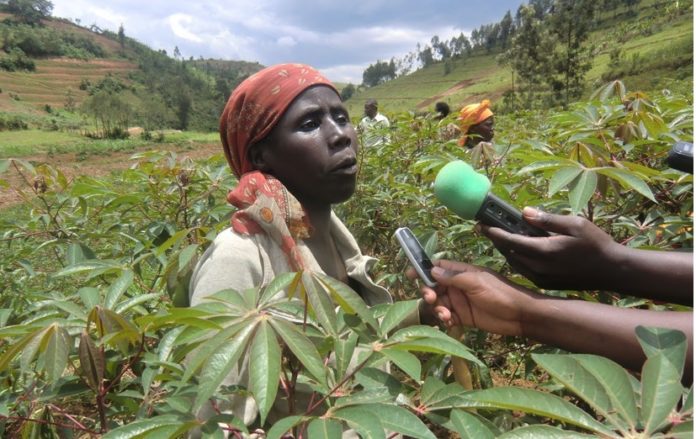
Lovingo in cassava garden

By Boaz Opio

Dressed in a traditional attire popularly known as Gomesi, Lovingo Awino walks on a narrow pathway leading to her cassava garden, two hundred metres away from her homestead. The more she drew closer, the more she hears noises of harvesters. It is not an ordinary harvesting day here, but a more labourious one: a mass untimely harvesting with fear, loss and a bit of discontent.

With lamentations of panic, she looks up in the sky for more nimbus starting to gather at the daybreak.
The ‘raped’ garden itself is innocently flourishing—because of excessive rainfall. But this is just what is recouping loses to Lovingo’s five acre of cassava.

It is the aftermath of a week of torrential rains. The women helping in the garden friskily pull out cassava stems, one by one, uprooting them with exaggerated ease, something that would normally be done by a hand hoe or stick.

To make hay when it still shines, other helpers cut the uprooted stems to use them for propagating the crop later on in their own fields, while some freely eat the raw tubers as it is believed it’s healthy for breastfeeding mothers. They welcome Lovingo in a chorus to the field but the owner doesn’t seem happy at all.
Without wasting time, Lovingo joins the taskforce, walking across the water-logged garden, pulling up the plants. The dirt of the stems clearly marked the level at which floods have raised to, conspicuously above the knee-level.

Lovingo is one of the thousands of the affected farmers. When such climatic disasters happen, the entire fields have to be harvested prematurely lest the tubers to rot in the wet ground.
El Niño like this leaves a lot of devastation, including: disruption in imports as trailers remained stranded with Ugandan border points, bridges collapsed, River Nile burst its banks, city roads flooded and reported dysentery and Cholera outbreaks. However, none of all these effects is worse than the disruption on the cassava production as Uganda’s staple food.

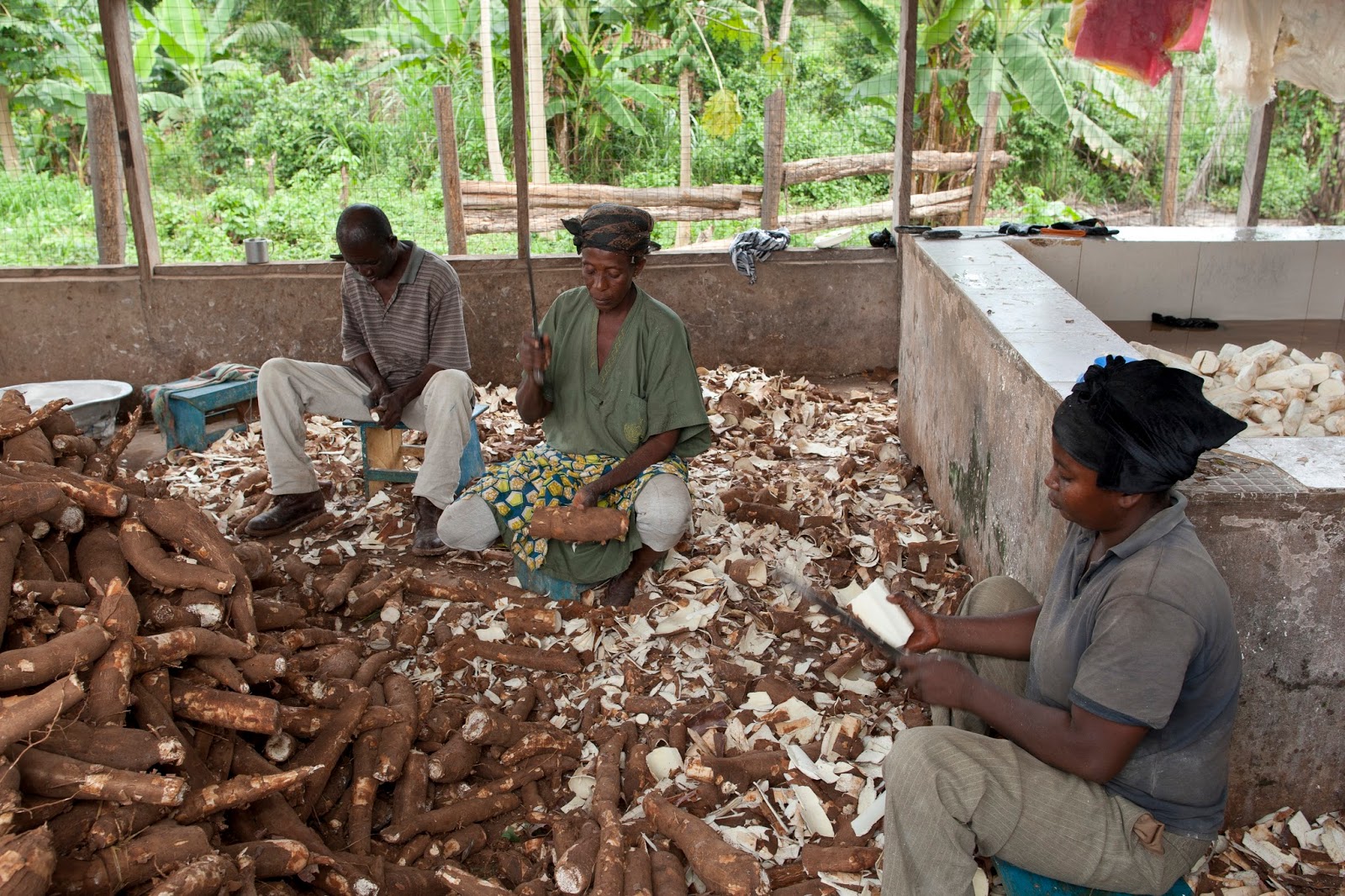
Peeling and Washing Cassava on Josma Agro Ind. Ltd. Mampong, Ghana. “We plant our own cassava and also buy from other people”.

When the spring rains returned (wet season in Uganda), Lovingo’s cassava garden was almost drowned. In just two days, the leaves started to become yellowish, the sign of too much rainfall. Growing cassava is the major source of livelihood to Lovingo and her five children. In good yields, sells cassava flour to pay their school fees too.
“Now I have to dry all of them and sell them later for my children’s school fees,” she says with a sigh “this method also allows us to have food throughout the year.”

Typically, most peasant farmers employ a different approach to cassava harvesting. Harvesting is done only periodically in small bits, in times of need. However, with the changing climate and weather patterns, this habit has to be disrupted.
Generally cassava reaches maturity in 9-24 months or up to 36 months depending on the variety, climate and soil conditions. Some quick growing cultivars can be harvested in 6-7 months, but good yields are normally obtained after 9-12 months. It can be grown on a wide range of soil but best on deep, free draining with average yields of 10 – 30 tonnes per acre.

After uprooting about 3 bags of 200 kilograms each, she hires a boda-boda who makes 3 rounds at shillings 3000 (US $0.85) per round to take them to her home. The tubers cannot be stored fresh for a long time therefore sliced and dried in the sun is the best way and it can be kept for long periods of time in a dry bag in a place such as granary or other food stores.
The dry cassava may also be pounded into flour which can be stored for a long period of time in a dry place.

According to Patrick Okaware, the senior district agricultural officer for Tororo, eastern region, “since the crop is tolerant in drought prone areas, farmers in Tororo district who are frustrated by floods can still go ahead to grow the plant. They have to make sure they carry out mass-harvesting in case of floods.”

In a recent interview with the District Senior Agricultural Officer who doubles as a farmer about how cassava planters can cope with the changing climate, he noted that most people in the district feed on cassava as their staple food but the flour is imported from other cassava growing regions such as Arua and other northern Uganda districts. “This makes cassava flour expensive as the traders have to include their transportation costs,” he adds.

Farmers who are affected by the climate impact can use preservation method such as that used by Lovingo to ensure their own food security. According to the ministry of agriculture, food insecurity and famine in Uganda often results from El Niño floods that causes cassava to rot.

Cassava is currently one of the most important staple food crops in the country. Other big producing countries include Nigeria, Cameroon and Central African Republic. Apart from being a the major source of carbohydrates and starch to subsistence farmers, it is also industrially valuable as it is used as a raw material in bakeries, breweries and other food processing firms. Climatic changes that threatens its productivity thus needs rigorous adaptative response such as those practiced by the farmers of Eastern Uganda.

Stories Continues after ad

National Gaming Board ups standards as gov’t makes changes in local industry

Edgar Agaba CEO-National Gaming Board who credited for the growth of the industry.

Gaming operations have been in existence in Uganda for over 50 years with lottery being the main gaming activity carried in the 1960s when the first gaming laws were drafted.

The gaming industry was regulated by the National Lotteries Act of 1967, the Gaming and Pool Betting (Control and Taxation) Act of 1968, and an addendum of statutory guidelines introduced in 2012/13.

However, due to the expansion of the gaming industry, with new games being introduced over time, and in light of technological advancements, many facets of the law relating to lottery and gaming became outdated.

Since 2000, the gaming industry in Uganda has experienced a rapid increase in activity, with various new modes and facilities being introduced. The growth of gaming has seen the industry diversity from the early forms of gaming like; lotteries, casinos, slot machines, bingo, sports betting and pool betting.

The government of Uganda, through the National Gaming Board (NGB), under section 4 of the Lotteries and Gaming Act, 2016 is mandated to issue licenses for Lotteries, Casinos, Gaming and Betting in Uganda. The mandate includes Licensing, Supervision, Enforcement and dispute resolution.

The board has worked together with the gaming companies all over the country to ensure the proper management of the industry.

Sports betting is the most popular where applicants express their interest. Among the 27… the board has licensed so far, only 18 operators run betting retail/physical outlets while the other 9 are online operators.

The Sports betting and slot machine operators are; Kings Sports Betting with 295 branches, ForteBet with 262 branches, Premier bet has 90 branches, Sports betting Africa 95, Best holdings 10, Champion bet 61 while both Bunga Bet and Ultimate Bet have 27 branches each.

The sports betting operators only are; Fair Sports Betting with 25 branches, both Paragon Bet and WordStar Sports Betting with 6 each, Good Bet has 15 branches, Gals Sports Betting with 67, Sahara Gaming 2 and TopBet with the highest at 213.

Slot Machine operators only include; Sastoss Amusements with 26 branches, Club Win with 16 branches, Gemex Uganda 15 and Big win slots with 54 branches.

In general, a total of 1442 premises were approved and licensed by the board. 655 are located upcountry, accounting for 45 percent and 787 in the Kampala Metropolitan Area (Kampala, Mukono and Wakiso districts for 2019) accounting for 55 per cent.

In Kampala Metropolitan area, Kawempe Division has got the most number of branches with 150, Nakawa with 80 branches, Makindye with 135, Central Division having 132, Rubaga Division 105, Mukono District with 30 branches while Wakiso district has got 155 branches.

The industry has grown at unprecedented rate, with tax collections growing from Shs240 million in 2002/3, Shs11.1 billion in 2013/14 and Shs45 billion in 2017/18. Currently a projection for the financial year 2018/19 is Shs50 billion.

In accordance with Section 48 (1) of the Lotteries and Gaming Act 2016 all gaming operators are meant to remit 20 percent pf the total amount of money staked less pay outs for the period of filing returns. Section 188c of the Income Tax Act as amended 2018 a person who makes payment for winnings of betting or gaming shall withhold tax on gross amount of payment at the standard rate of 15 percent.

The sector employs 8959 (professionals and non-professionals) in various capacities like cashiers, branch managers, accountants, marketing agents/sales agents, security guards, chefs for casinos, cleaners and administration.

In the Kampala Metropolitan Area, ForteBet employs the most number of people (1282), followed by Kings sports betting employing 1100, Top bet employs 806, Goal sports betting employs 298, SBA bet 312 while others including casinos, bingo and small scale operators employ 2200.

For upcountry, Kings Sports Betting tops with 809 employees, ForteBet employs 585, Top bet 351, Goal Sports Betting 175, SBA Bet 170 while the rest including casinos, bingo and small scale operators employ 871.

Various gaming operators are sponsoring different football clubs worth billions of shillings. For example Betway, an online gaming company sponsors Express FC to a tune of Shs400 million per year, and TopBet sponsors Mbarara City to a tune of Shs200 million.

It is also a requirement that operators carry out Corporate Social Responsibility (CSR) among the communities they operate in. At the end of last financial year, a total of 800 million shillings of CSR was executed by operators ranging from medical support, school fees donations and charity drives among others.

The sector also supports other subsectors through payment of utilities like water, electricity, cable TV (DSTV), internet providers and telecom companies thus creating a positive ripple effect to the economy.

Interventions

The National Gaming Board has developed several interventions in an effort to streamline the sector and remedy emerging issues such as; Limited Ugandan involvement in the gaming sector, high nuisance value of premises and rampant advertising and signage.

Stories Continues after ad