Stanbic Bank
Stanbic Bank
23 C
Kampala
Stanbic Bank
Stanbic Bank
Home Blog Page 1330

Ethiopian Airlines: ‘No survivors’ on crashed Boeing 737

All passengers on board an Ethiopian Airlines jet that crashed shortly after take-off on Sunday have died, the airline says.

It said 149 passengers and eight crew members were believed to be on flight ET302 from Addis Ababa to Nairobi in Kenya.

The airline added that there were 33 different nationalities on board.

The crash happened at 08.44 local time, six minutes after the flight took-off from the Ethiopian capital.

It is not yet clear what caused the accident.

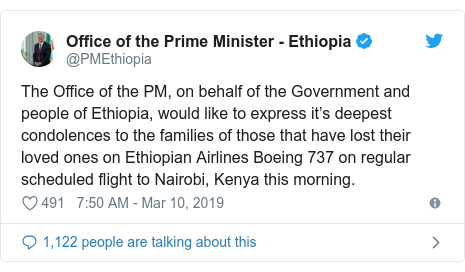
First word of the crash came when Prime Minister Abiy Ahmed expressed his “deepest condolences” on Twitter.


In an earlier statement, the airline said that search and rescue operations were under way near the crash site around the town of Bishoftu, which is 60km (37 miles) south-east of the capital.

“Ethiopian Airlines staff will be sent to the accident scene and will do everything possible to assist the emergency services,” the statement added.

Boeing, the company that built the aeroplane, said in a tweet that it was “closely monitoring the situation”.

Its 737 Max-8 aircraft is relatively new to the skies, having been launched in 2016. It was added to the Ethiopian Airlines fleet in July last year.

Another plane of the same model was involved in a crash five months ago, when a Lion Air flight crashed into the sea near Indonesia with nearly 190 people on board.

What do we know about the airline’s safety record?
Ethiopian Airlines flies to many destinations in Africa, making it a popular carrier in a continent where many airlines fly only from their home country to destinations outside Africa.

It has a good reputation for safety, although in 2010 one of the company’s aeroplanes crashed in the Mediterranean Sea shortly after leaving Beirut.

The incident killed 90 people on board.

The airline’s highest fatalities prior to this came in a November 1996 crash during a hijacking on a flight from Addis Ababa to Nairobi.

One of the aeroplane’s engines stopped when the fuel ran out and although pilots attempted an emergency water landing, they hit a coral reef in the Indian Ocean and 123 of the 175 people on board were killed.

Stories Continues after ad

Kabaziguruka involved in road accident again

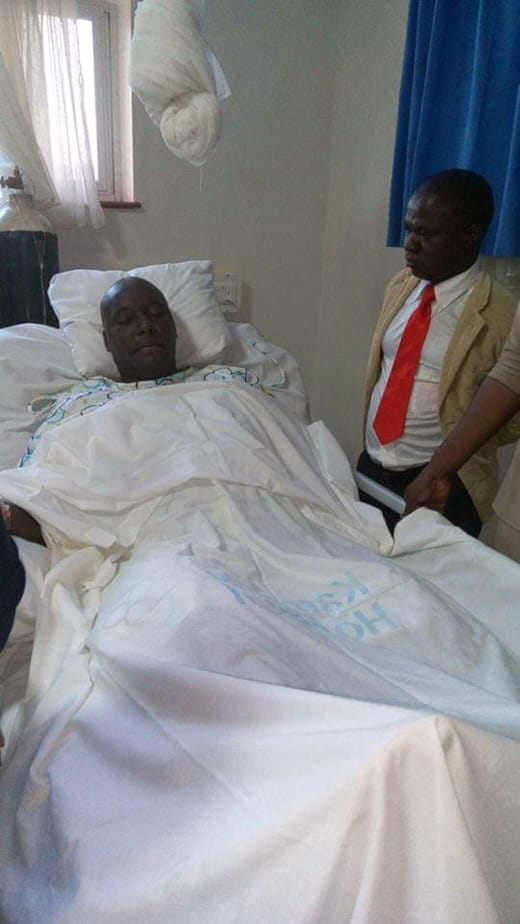
Nakawa Member of Parliament, Michael Kabaziguruka has this Sunday, March 10, 2019 been involved in a second nasty accident in less than a year.

The opposition Forum Democratic Change (FDC) legislator is currently receiving treatment at a health centre in Matugga after his car was involved in a head-on-collision along Bombo Road in Kampala.

Reports quote the MP to have said that he is now out of danger after the medics managed to control the bleeding.

“I have a head-on collision with a car belonging to a colleague (fellow) Member of parliament,” Kabaziguruka is to reported to have said from the clinic without disclosing the particulars of the colleague.

However, he is complaining of chest pain and is unable to move.

Deputy Police spokesperson, Patrick Onyango told reporters that he had not been briefed about the incident.

This comes when the MP was recovering from a previous road accident which left him with multiple fractures.

In July last year, Kabazigurika was involved in a semi fatal accident at Lugogo, while he was driving in an Ambulance to pick up patients.

The ambulance van he was driving collided with a truck near UMA show grounds, Kampala. The condition restricted him to a wheelchair for a lengthy period.

Nine months down the road, he said, his condition continued to deteriorate and doctors recommended that he flies to China for more specialized treatment, but he was unable to raise the money.

Stories Continues after ad

Kagame insists Uganda is destabilizing Rwanda, warns of war as Museveni hits back you can’t survive

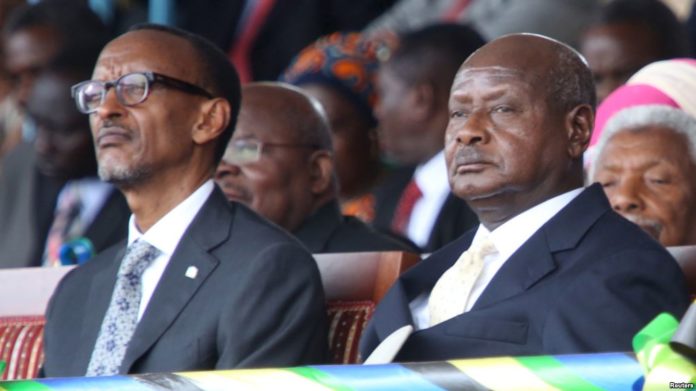
Museveni and Kagame at a previous event.

Rwandan President Paul Kagame has insisted that Uganda is destabilizing his country even though he did not go into details how this was being done.

However, his Ugandan counterpart Yoweri Museveni has hit back warning those who plan to destabilize Uganda of the consequences.
“Those who want to destabilize our country do not know our capacity. it is a very big. Once we mobilize, you can’t survive.” Mr Museveni said today while in Mukono district during the commissioning of five factories as he assured investors of security.

Kagame made the statement on Saturday while speaking at the 16th edition of the annual National Leadership Retreat, which got underway at Rwanda Defence Force Combat Training Centre in Gabiro, Gatsibo District.

“We have been provoked, people have crossed our borders, killed our people and we have not responded. We were able to see someone wanted to drag us into this mess. When they have dragged you into this sort of problem, then you start looking the same,” he said.

“What remains to discuss with our brothers and sisters is the movement of people. We have Rwandans who go to Uganda who have been in prison, in their dozens, some of them are in military prison, others nobody knows where they are.”

He said the standoff between Rwanda and Uganda will be costly.

“All that comes costly, diverts resources, attention, we should be prepared for that. That is the price of stability and continued wellbeing. It means you have to keep doing the best you can, make progress and defend the progress you are making.”

“When I hear somebody say no one can destabilise their country, I agree. No one should actually be destabilising that country but that country should also not be destabilising others, I think it is a fair deal.”

Kagame was referring to President Yoweri Museveni’s speech yesterday where he said he won’t allow anyone to distaibilise Uganda. Museveni was Chief Guest as the country joined the rest of the country to mark International Women’s Day in Bunyangabu District.

Kagame said almost every week, there are people who are brought and dumped across the border, and when you asked some of them, they say they have been in prison for 2 years.

He said whenever he has asked Uganda about the prisoners, authorities here would say they were illegal immigrants.

“But they were in prison for two years, with no charges, until they pack them in a truck and take them across the border.”

Kagame said he had learnt lessons of the country’s struggles, of the hardships. “One of them is I am not in control of what somebody else thinks about me or plans to do against me. But I must be in control of something, and that is what happens here,” he said.

Uganda denied charges that it was collaborating with rebels and other groups to destabilise Rwanda.

Uganda also denied claims of torture and harassment of Rwandans saying whoever is arrested is handled according to the due process of the law.

President Museveni last week stopped government officials from responding to Rwanda’s claims in the media.

Stories Continues after ad

Joint AU-UN team arrives in Somalia to review AMISOM’s mandate

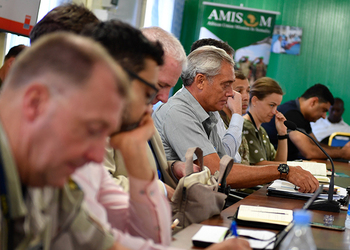
Team meeting on strategies

A joint delegation from the African Union and the United Nations is in Somalia to assess progress made in implementing the Somalia Transition Plan whose key objective is the transfer of security responsibility from the African Union Mission in Somalia (AMISOM) to Somali National Security Forces.

The delegation, which arrived in the Somali capital, on Wednesday, will evaluate steps taken by the AU Mission in implementing tasks under the transition plan as mandated by the UN Security Council Resolution 2431 (2018) and the African Union Peace and Security Council Communique 782 (2018).

“There were some mandates issued by the two councils (UN and AU) to be undertaken by this Mission. The joint review will definitely be looking at those mandates and also focus on the Somalia Transition Plan,” said Maj. Gen. Francis Okello, the Chief, Plans and Operations Unit in the AU’s Peace Operations Support Division.

UN Resolution 2431 (2018), authorized the reduction of uniformed AMISOM personnel, by 1000, by the end of February, this year. The resolution also mandated AMISOM to maintain a minimum of 1040 police personnel including five formed police units.

The Communique, on the hand, called for an assessment to be carried out on the state and effectiveness of AMISOM reconfiguration and its support to the transition process. It also sanctioned the development of a new Concept of Operations (CONOPS) aligned with the implementation of the transition plan.

Maj. Gen. Okello, who is leading the AU delegation, said the outcome of the review would inform the decisions to be made by the UN Security Council and the African Union Peace and Security Council (AUPSC) on the renewal of AMISOM’s mandate.

His remarks were echoed by the Team Leader of the UN delegates, Vincent Pasquini, who said the review would look into issues of transition planning, electoral preparations and the operating environment in Somalia.

“The objective of this meeting is really to hear the views of our partners as we set off in this review and to have as many inputs as possible,” said Mr. Pasquini, the Team Leader to Somalia in the UN Department of Political and Peacebuilding Affairs (DPPA) and the Department of Peace Operations (DPO).

The visiting delegation will also seek, among other issues, to establish challenges the AU Mission faces, the status of the implementation of the recommendations of the AMISOM Operational Readiness Assessment (ORA) and preliminary impact of the reduction of AMISOM troops.

During the week-long visit, the delegation will meet with the AMISOM senior leadership, officials from the Federal Government of Somalia, the United Nations, representatives of international partners, diplomats from AMISOM Troop Contributing Countries and the European Union.

The delegation will also hold discussions and analyze Somalia’s political and security situation as the country prepares for one-person, one-vote elections in the 2020-2021 period.

The Special Representative of the Chairperson of the African Union Commission (SRCC) for Somalia, Ambassador Francisco Madeira, welcomed the delegation to the Mission Headquarters in Mogadishu, adding that the visit demonstrates the importance of AMISOM.

“This is an important opportunity for us to share with you issues on Somalia and also listen to you and get to know your views and your concerns and most importantly your views should guide us on the way forward in our joint effort to help Somalia achieve peace and stability.”

During the joint review meeting held in May, last year, the Federal Government of Somalia reiterated its commitment to assume security responsibility as stipulated in the transition plan.

It urged the review team not to judge the country by its past but by achievements so far made in stabilizing the country.

Stories Continues after ad

NWSC promotes safe water use, hygiene and sanitation in Bunyangabo District

NWSC promotes safe water use, hygiene and sanitation in Bunyangabo District.

The National Water and Sewerage Corporation (NWSC) has launched the school water and sanitation clubs at St. John’s Yerya Primary School in Kibiito Town Council-Bunyangabo District through school water and sanitation clubs (SWAS) which is a Social Corporate Responsibility (SCR) initiative by NWSC aimed at inculcating values of safe water use, hygiene, sanitation and environmental protection among the school going children of the nation.

The club with over 20,000 members in more than 400 schools across the country has an aim of grooming a generation that will be responsible for our water resources and the environment in the country.

Handing over a 10,000 litres capacity water reservoir to the new school club, NWSC vice board chairperson Ruth Kanyaruju, said that the SWAS clubs are an initiative of the Board and management of NWSC.
“We want to use young people to become our ambassadors on issues of water, hygiene, sanitation and protection of the environment,” she said.

Kanyaruju said that the young people will help to spread the gospel of safe water use, sanitation, report leakages, water theft, plant trees, preach against swamp reclamation and other concerns. “The young people will be our brand ambassadors in future,” she said.

NWSC Board member Hajati Faridah Mayanja Mpiima urged the students to be responsible citizens in future

Sensitising the pupils at the school, NWSC Deputy Managing Director Board Affairs and Management services Miss Edith Kateete urged the students to protect the environment and use the water connections at the school to improve their personal hygiene and health.

Kateete said that NWSC will continue to support the education sector through the SWAS clubs.
“The government of Uganda working with the NWSC Board and management have adjusted the tariff of water to boost the education sector in the country. We have adjusted the tariff for UPE schools. This is to enable them continue educate the children who little or no school fees per term,” she said.

Kibito town Mayor Jibb Tugwezire thanked NWSC for the all-round development efforts in the country.

“NWSC is extending water, sewage services, promoting hygiene, sanitation, health and now supporting the education sector. This is commendable work by a government institution.” he said

The mayor said that the members in the club will help promote good values in their homes, at school and in the entire Bunyangabo District.

LC.1 Yerya appreciated NWSC for extending services in Kabarole district.
“We are seeing pipes in every corner of the country. Within no time, we are sure that you will achieve safe clean water for all,” he said.

The headteacher of St. John’s Yerya Primary school, Jane Kabagenyi, thanked NWSC for giving back to the education sector and its customers.

“Thank you for the SWAS clubs initiative. Through the club activities, we shall build a responsible generation that will protect our resources. With the support of NWSC, the club will provide a platform for the children to learn water and sanitation issues,” she said

Stories Continues after ad

Kadaga urges gov’t officials to support BUBU policy

The BUBU Logo

The Speaker of Parliament, Rebecca Kadaga has urged managers in government to stop fighting the BUBU Policy but rather put the interests of Ugandans first before thinking of the neighbours.

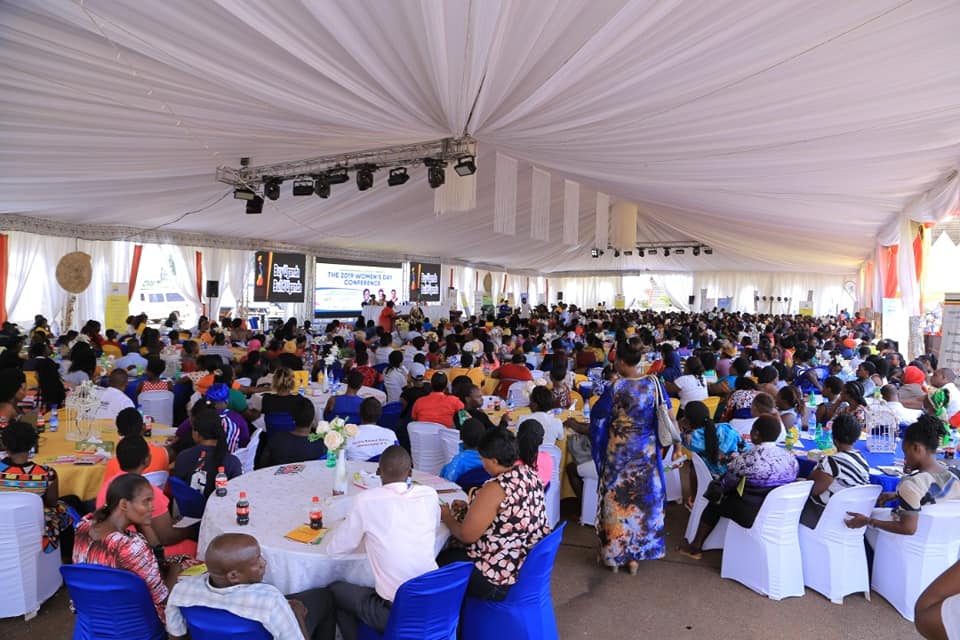
Kadaga was today opening the BUBU Expo Women in Business conference taking place at Kololo Independence Grounds. Kadaga pledged her support towards the BUBU campaign

Over 1500 women are gathered at Kololo Independence Grounds for the BUBU Expo Women in Business Conference. Kadaga, trade minister Amelia Kyambadde and Musician Mariam Ndagire are some of the Women that have been recognized for their efforts in fighting for women rights and business opportunities.

“Women need to change their attitude towards business and government need to extend more support especially in rural areas,” Kadaga said while addressing the women.

Meanwhile, an official logo for all products made in Uganda has was unveiled. The BUBU Logo was unveiled by President Yoweri Museveni during the official opening of the ongoing three-day Buy Uganda Build Uganda Expo that closes Saturday at Kololo Independence Grounds

Stories Continues after ad

Stanbic bank launches 4th Edition of National Schools Championship

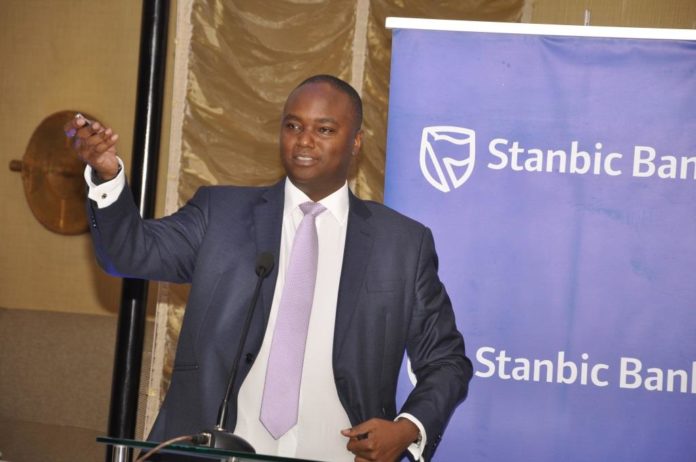
Stanbic Bank Chief Executive Patrick Mweheire

Stanbic bank has launched the 4th edition of its National Schools Championship. The annual competition seeks to equip students with business and enterprise skills in a bid to nurture entrepreneurship, creativity and long term business thinking. It targets students at the secondary schools.

The competition launched at Hotel Africana in Kampala will be held under the theme: “Empowering the job creators of tomorrow”.

Addressing guests at the Stanbic Bank Board Chairman Japheth Katto said youth unemployment was a serious problem that continues to plague many African countries including Uganda which he said has the second youngest population in the world.

“It is therefore imperative that we ensure this young population is participating productively for the good of our country’s economy. The Stanbic Bank National Schools Championship has become a powerful platform empowering students and teachers to start their own businesses and become job creators,” he said

The bank’s Head of Corporate Social Investment (CSI) Barbara Kasekende, while addressing the audience at the launch of the event urged stakeholders to pay attention to education, saying it was a critical sector for national development.

“Uganda’s Ministry of Education, in line with the National Development Plan 2020, expects at least 20 million children and young adults between the age of 3 and 24 to pass through the education system. This is informed by the fact that 80 percent of the country’s population is under the age of 30. The reality on the ground however is that school enrolment numbers continue to decline as students advance through the different education levels,” she explained.

Ms Kasekende cited the 2017 Education Monograph report released by Uganda Bureau of Statistics in partnership with UNFPA and UKAID, which said that about 11 million children went through Primary school, representing 54.7 per cent of the number of children expected to go through the education system.

About 26 per cent (5.2 million) of this same number went through secondary school while 19.2 per cent were enrolled into tertiary institutions.

She said the statistics show a clear picture of why education should be a key focus area for both the public and private sectors. “There is need to empower young people to be able to participate in the economy despite their level of education,” she said, adding that as ss a bank: We use the National Schools Championship as a platform to impart financial literacy and life skills to these students so they can become job creators rather than job seekers. We equip them with the skills that will enable them to start their own businesses.”

Through the program students and their teachers have been able to come up with business ideas and execute them into full-fledged small enterprises, she said.

Stories Continues after ad

Godfrey Walusimbi linked with a move back to South Africa

Godfrey Walusimbi of Kaizer Chiefs during the Absa Premiership 2018/19 match between Free State Stars and Kaizer Chief at Goble Park Stadium, Bethlehemon 18 September 2018 ©Samuel Shivambu/BackpagePix

Uganda Cranes left-back defender Godfrey Walusimbi returned home to Uganda after his short stint at Kaizer Chiefs, but could return to South Africa next season.

Walusimbi was released after termination of his contract by the Amakhosi in January after spending less than six months in the Premier Soccer League on his one-and-a-half year contract.

According to a source close to Walusimbi, the player could return to South Africa next season with one PSL team having shown interest.

“He is back in the country [Uganda] and club-less at the moment,” the source told South Africa’s KickOff.com.

“There was interest from Black Leopards before he returned home but the club promised to consider signing him for next season.”

Black Leopards is coached by Dylan Kerr, who managed Walusimbi during his time at Gor Mahia.

Despite being unattached, Uganda national team coach Sebastien Desabre named the former Gor Mahia defender in the provisional squad ahead of the Africa Cup of Nations qualifier against Tanzania on 24th March.

The 29-year-old featured for SC Villa Jogoo and Kenyan giants Gor Mahia before moving to Kaizer Chiefs.

Stories Continues after ad

Five alternatives to shutting down a struggling startup

Martin Zwilling

By Martin Zwilling

If you are just plain tired of working so hard, or your startup is not getting the traction you expected, should you shut down cleanly, or just file for bankruptcy and walk away? For those who think that bankruptcy is the easy way out, think again. Bankruptcy should always be the absolutely last resort.

The “advantage” of filing for bankruptcy, of course, is that it gets creditors permanently off your back, with no continuing lawsuits, based on funds derived from selling all assets. You can hand the stressful job of liquidating assets and negotiating with creditors over to the court.

The disadvantages are many and long lasting. Your credit rating will be lost for six to ten years, and your business image will likely be permanently damaged. Once declared bankrupt, you as the business owner will likely always face problems opening new business accounts.

To add insult to injury, for a Chapter 7 filing, most courts charge a $245 case filing fee, a $75 miscellaneous administrative fee, and a $15 trustee surcharge, payable in advance (does anyone see the irony in charging for bankruptcy?).

There are many other negative implications to bankruptcy. These include the fact that some loans may not be forgiven, your bankruptcy records are open to public review, and any irregularities spotted later can lead to criminal charges.

The best alternative is always to get the business back on track, and sell it at a reasonable value, or do a normal closedown with full payout to vendors and investors. The next best alternative to avoid the stigma of bankruptcy (and the cost) is to privately negotiate partial business settlements with your creditors.

Making the business healthy may be easier than you think. Usually the top problem is pressing debt or cash flow, so here are five approaches to these problems you should try before giving up on the business and damaging your ability to start future ventures:

Get a short-term loan. Visit some banks for the best rate and repayment plan that will help your business weather the financial storm. Do not rush out and sign for the first loan that is offered to you, or give up after the first bank declines.

Sell assets to raise cash. Now is the time for a thorough inventory of all assets in your business. Chances are that you will find some items you can sell, or property to mortgage, to help alleviate your short-term cash flow problems.

Trim expenses down to the minimum. If you have employees on your payroll, enlist their help. Be honest with them — let them know you might be able to save their jobs, at a reduced salary, if they can help you trim expenses down to the bare minimum.

Find a friend or family-member investor. If they believe in you, there is always someone who will invest additional cash into your business to help you get back on your feet. You just have to find the right one. At this stage, honesty is the best policy.

Merge with another startup or small business. Every startup brings something unique to the table, so look for another business than can benefit from your contribution. Even if you can’t get the value now that you deserve, the combined ideas and assets could pay big dividends later, and save you the emotional and financial stigmas of failure.

As a rule of thumb, only after you have exhausted all these options, and you still calculate that it will take more than seven years to repay your debt, then you should consider bankruptcy. The question is which of the many U.S. bankruptcy filing types you should choose.

For business bankruptcy, there is really only one choice – Chapter 7 liquidation, with partial payments to creditors. Chapter 11 is for large businesses seeking to restructure their debt and continue operation, and Chapter 13 bankruptcy is only for individuals.

But the worst thing about bankruptcy is the emotional impact. It will hit you over the head like a death in the family, a major illness, or a natural disaster. For your own well-being, as well as your business image, I recommend you hand off a running business. It may look like more work, but you will keep your sanity, your integrity, and your will to come back strong.

The writer is a veteran startup mentor, executive, blogger, author, tech professional, professor, and investor. Published on Forbes, Entrepreneur, Inc, Huffington Post.

Stories Continues after ad

Fufa to inspect and monitor coaches in Uganda

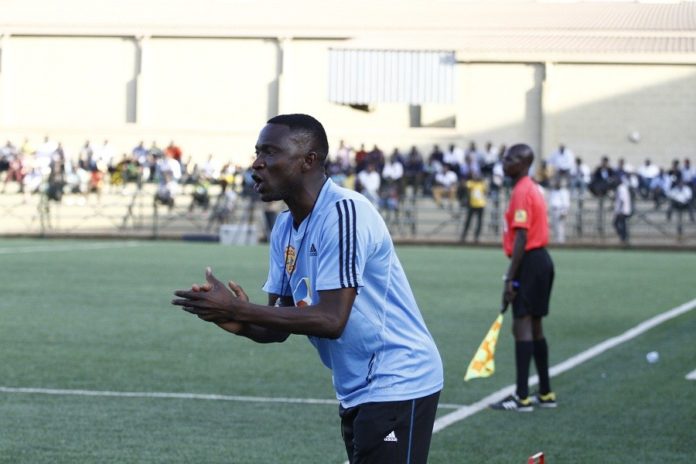
KCCA Asst. coach Morley_Byekwaso

The Federation of Uganda Football Associations (FUFA) has announced that they will start inspecting and monitoring all FUFA certified coaches.

The decision was taken during the 19th FUFA Executive committee which sat on the 14th February 2019.

“Over the past four years, FUFA has intensified technical education programs to ensure that coaches are empowered with modern methodologies in their area of operation.

“However, the FUFA Football Development Department observed that some of the coaches are not implementing the right coaching principles hence resulting in slow signs of gradual development of football on the field of play.

“The 19th FUFA Executive committee which sat on the 14th February 2019 passed the proposal from the FUFA Football Development Committee to conduct a coach inspection and monitoring exercise of all FUFA registered coaches during competition seasons.

“FUFA Coaches’ inspectors will reach out to clubs during training sessions and match days to implement this policy either on notice or without prior notice.” A statement from Fufa reads.

The FUFA Human Resource and Capacity Building Manager Jackson Nyiima said he is happy with the development.

“We shall coordinate with the coaches at the 16 Clubs in the StarTimes Uganda Premier League to get their specific days of training sessions so that we make the visits. We are hopeful this will make a change in our football” Nyiima told the fufa media.

The FUFA coaches’ inspectors are issued with FUFA identifications and will provide reports to the FUFA Football Development Department about coaches’ performance about the training sessions and matches played.

The four coaches’ instructors are; Mujib Kasule, Asuman Lubowa, Jackson Nyiima and Livingstone Kyambadde all the Level of CAF.

Uganda currently has 3509 coaches certified by FUFA from beginners to CAF A License.

Coaches Certified by FUFA/CAF

CAF A – 40 Coaches

CAF B – 64

CAF C – 46

FUFA Level One – 859

FUFA Beginners – 2500

Stories Continues after ad