Stanbic Bank
Stanbic Bank
24.9 C
Kampala
Stanbic Bank
Stanbic Bank
Home Blog Page 1332

Sudhir vs Lule & Sebalu conflict of interest, ruling fixed for April 24

Mr Rajiv Ruparelia, the Managing Director of Crane Management Services and his attorneys at Commercial Court.

Commercial Court has fixed April 24, 2019 as the day court will give its ruling on the case involving city tycoon Sudhir Ruparelia and attorneys from Lule and Sebalu advocates.

Sudhir in a suit filed December 2017 argues that Sebalu and Lule Advocates should not be representing BoU and Dfcu bank as this amount to conflict of interest as the law firm already represented Crane Management Services which is part of the Ruparelia Group the holding company of former Crane Bank Limited.

Crane Management Services sued Dfcu bank demanding rental arrears amounting to Shs2.9 billion and US $385,728.54 in respect of tenancies of suit properties that were formally owned by Crane Bank Limited (CBL).

Ruparelia also wants the court to issue a permanent injunction, restraining Sebalu & Lule Advocates from appearing as defence counsel for dfcu bank in the other court case that the two principals are battling out.

In December 2017, the Commercial disqualified Masembe and Mpanga from the Sh397 billion Sudhir Ruparelia’s case against Bank of Uganda (BoU), citing conflict of interest.

In his ruling delivered on December 21, 2017, Wangutusi stated that David Mpanga of A.F. Mpanga Advocates and Timothy Masembe of MMAKS Advocates acted in violation of the Advocates regulations.

Section 4 of the regulation says that an advocate shall not accept instructions from any person in respect of a contentious or non-contentious matter if the matter involves a former client and the advocate as a result of acting for the former client is aware of any facts which may be prejudicial to the client in that matter.

Court documents indicate that when Dfcu Bank took over the assets and liabilities of Crane Bank, it also took over occupation and use of the said rented properties from which the real estate company wants to recover accumulated rent arrears from Dfcu bank.

Some of the properties cited include; Crane Bank branches at plot 9 on Market Street, plot 1-13, Jinja Road, plot 47, Republic Road-Mbale, Speke Hotel (1996), Pot 19 Cooper Road (Crane Plaza), plot 20, Kampala Road –Crane Bank ATM.

Stories Continues after ad

Uganda Premier League: KCCA host Vipers in a title decider

KCCA vs Vipper

All eyes will be in StarTime stadium, Lugogo on Thursday afternoon when KCCA FC host defending champions Vipers SC in a highly-billed Uganda Premier League encounter.

Currently, KCCA lead the table with 52 points, four ahead of The Venoms. A win for the Kasasiro boys will stretch the gap to 7 points while a win for Vipers will put them one point behind the table leaders.

This happens to be the only chance for a silverware for both clubs this season following their exit from the 2019 Stanbic Uganda cup.

The Key stats; Vipers and KCCA will be meeting for the 28th time in the league with the Venoms slightly superior with a victory more than their opponents having 11 wins, 6 draws and 10 losses out of the previous 27 encounters, a total of 34 goals against 37 have been registered in the process making it a -3 goal difference.

The first round encounter at St Marys stadium ended in a 1-1 draw with Vipers scoring through Dan Mzee Serunkuuma before Filbert Obenchan equalised for KCCA and they could have clinched all the three points had Saddam Juma not missed a second half penalty.

KCCA shifted to the Startimes Stadium at Lugogo during the 2012/2013 football season and out of the 6 league fixtures hosted at the venue since then, Vipers counts 2 wins, 1 draw and 3 losses with a total of 6 goals against 7.

Vipers sports club boosts two KCCA old boys in its ranks namely Tom Masiko together with Tito Okello while the garbage collectors have four former Venoms within their squad in Saddam Juma, Allan Kyambadde, Sulaiman Mutyaba and Musa Esenu.

The corresponding fixture last season at Lugogo ended 3-1 in KCCA’s favour when Shaban Muhammed netted a double on his debut in between Yayo Lutimba’s thunderous penalty before a late howler from James Alitho allowed Derrick Nsibambi to score a third as Vipers desperately searched for the equaliser.

Previous 5 league matches at Lugogo:

2013/14: KCCA 2-1 Vipers

2014/15: KCCA 0-2 Vipers

2015/16: KCCA 0-0 Vipers

2016/17: KCCA 1-2 Vipers

2017/18: KCCA 3-1 Vipers

Uganda Premier League

Thursday, April 4th 2019

KCCA FC vs Vipers SC – StarTimes stadium, Lugogo (4pm)

Stories Continues after ad

Why change at the top might not be enough in Algeria

Abdelaziz Bouteflika

Bowing to almost two months of mass protests, Algeria’s ailing, octogenarian President Abdelaziz Bouteflika resigned. The announcement may not be enough to quell the unrest that’s being watched closely in Europe and elsewhere and that’s invoked comparisons to the Arab Spring of 2011. Algeria is not only one of Africa’s largest energy producers but has been a bulwark against Islamist militancy and undocumented migration from other parts of the continent.

1. What else do the protesters want?
They’ve called for the departure of not just the president but also of possible successors who have helped prop up his 20-year rule. Prime Minister Ahmed Ouyahia resigned on March 12, for instance, but was replaced by another member of the old guard, Interior Minister Noureddine Bedoui (who is leading a transitional government). Oil and finance ministers were then replaced in a cabinet reshuffle that kept the powerful army chief of staff, Ahmed Gaid Salah, as deputy defense minister. “The regime is attempting to placate protesters,” says Riccardo Fabiani, an analyst with research consultants Energy Aspects Ltd. “They will need to see concrete reforms.”

2. Why did Bouteflika fall from favor?
He’s the only ruler a significant portion of the country’s young population has ever known. But for many Algerians, the 82-year-old president — addled by a stroke in 2013 and rarely seen in public — is a front for shadowy coalition of military, intelligence and business leaders who effectively run the country. The group dominates the National Liberation Front, known by its French acronym FLN, which has ruled Algeria since the country won independence from France in 1962.

3. Who can replace Bouteflika?
It’s not yet clear who might emerge to lead Algeria until an election is scheduled. With Bouteflika’s resignation, the military, political and business leaders running the country need to agree on a consensus candidate soon, even though they haven’t managed to do so during recent relative peaceful years. Algerians who remember the decade-long civil war that ravaged their country after the military overrode an Islamist electoral victory in 1991 respect Bouteflika’s role in ending the conflict and credit him with restoring calm. But the younger generation is rejecting another Bouteflika-like figure as their next president.

4. Has an opposition candidate emerged?
The opposition is weak and fragmented and hasn’t yet been able to unify around a presidential candidate.

5. What prompted the protests?
They erupted in the capital Algiers after Bouteflika announced he would runfor a fifth term. Demonstrators say they are fed up with corruption and high unemployment. The protests have grown to include strikes by workers, teachers and students, as well as the closure of some shops and suspension of train services. (So far, demonstrators and the police have gone to great lengths to keep the gatherings peaceful.) In 2014, Bouteflika used a mix of water cannons, food subsidies and wage increases to contain smaller protests against his re-election. That increased state spending by 16 percent, which was a manageable challenge when oil traded over $100 a barrel.

6. Can’t the government do that again?
Handouts would be more difficult this time around because Algeria’s economy is still struggling to cope after four years of lower crude prices. Inflation is rising, and the country’s foreign reserves are projected to plummet to $67 billion this year from $177 billion in 2014, according to the International Monetary Fund. Algeria’s budget deficit peaked at 16 percent of GDP in 2015 but has since narrowed.

7. What does unrest mean for oil and gas?
Except for a few protests at energy facilities, demonstrations have largely been held far from oil and gas facilities, which are located in remote areas. The state-owned oil company Sonatrach said production hasn’t been affected. Investors are still concerned that strikes may spread to Algeria’s energy industry. There’s also the risk that changes to oil and gas officials could affect deals with international companies. Sonatrach has been at the heart of multiple corruption probes and has had six chief executives since 2010. Algeria just named its sixth energy minister over the same period, replacing Mustapha Guitouni with Mohamed Arkab, the former chief executive of the state power and gas utility Sonelgaz.

8. How important is Algeria to world energy supply?
Algeria is a member of OPEC but one of its smaller producers, pumping about a million barrels of crude a day. Still, it supplies more than 10 percent of Europe’s natural gas (making it the third-largest supplier after Russia and Norway), which it exports by ship and pipelines under the Mediterranean to Italy and Spain. The country has ambitious plans to develop its onshore and offshore gas fields, start a trading business, revamp and build refineries and boost output of petrochemicals. The expansion hinges on stable political leadership and new laws that would attract foreign investors.

Stories Continues after ad

Edgar Watson, Ali Mwebe assigned duties at U-17 Afcon

Edgar Watson and Ali Mwebe

African football governing body, CAF has appointed two Ugandan officials in different roles for the upcoming U-17 Africa Cup of Nations.

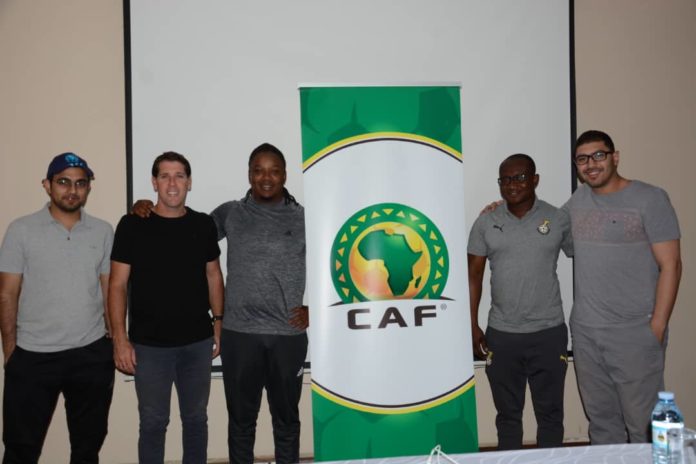
FUFA CEO Edgar Watson and Football Development Director Ali Mwebe have been as officials for the Total AFCON U17 Finals in Tanzania to be played from 14th to 28th April.

Edgar Watson has been appointed on the Technical study group for the 2-week tournament while Mwebe will be a General Coordinator during the tournament.

Meanwhile, Uganda are in group A with the hosts Tanzania, Nigeria and Angola.

The Cubs will open its campaign against Angola on 14th April, then Tanzania on 17th and end with Nigeria on the 20th April in the group stages.

Group B has Guinea, Cameroon, Senegal and Morocco.

The top two teams in each of the two groups in the tournament will qualify automatically for the 2019 U-17 FIFA World Cup that will be held in Brazil.

Stories Continues after ad

First Lady hands over new Uganda Cranes bus to Fufa

The Minister of Education and Sports Janet Museveni has handed-over the new luxurious and executive Uganda Cranes bus pledged by the President Yoweri Museveni when he hosted the team at his country home in Rwakitura in January 2018.

during the hand over, she applauded the government led by Gen. Museveni for the efforts it has invested in sports and the kind of motivation that has seen individuals and teams excel at different events.

“I hope that the team (Uganda Cranes) will be excited about this bus. I am excited handing over this bus because it surely shows the government’s commitment towards the development of sports in this country. I want to thank the government and specifically the President for the immense support that has been extended to sports” remarked the First Lady according to the fufa website.

The brief function held at State House Nakasero was also attended by officials from the Ministry of Education and sports led by Minister of State for sports Hon. Charles Bakkabulindi, officials from the National council of sports with their chairman Bosco Onyik and acting General Secretary Dr. Patrick Bernard Ogwel.

The FUFA delegation was led by 1st Vice President Justus Mugisha who received the keys for the 49 seater bus from the First Lady.

The second vice President Darius Mugoye, third vice president who also doubles as state minister for youth and Children Affairs Hon. Nakiwala Kiyingi, Ex Com member Hamid Juma, Deputy C.E.O Humphrey Mandu and Finace Director Decolas Kiiza witnessed the ceremony.

Uganda Cranes vice Captain Hassan Wasswa represented the players. Assistant Uganda Cranes coach Matia Lule also attended.

In his acceptance speech Justus Mugisha thanked the Minister on behalf of government for the consistent support to sports in the country that has resulted into enormous achievements.

“We are here to thank you and the government for the consistent support you have given to sports in Uganda. Thank you also for offering to host us in Rwakitura at the start of last year for that visit has changed sports in unimaginable ways.”

“Your support has enabled us achieve so much. We also want to thank NCS and the ministry for the support. However we have one other request, now that we have qualified let the funds be released on time such that the preparations start right away otherwise we promise you we are going to continue making you proud.” Mugisha said.

Stories Continues after ad

Minister Kiyingi bows to pressure, allows Fresh Kid to continue with his music

Fresh Kid and Minister Nakiwala.

Minister of State for Youth and Children Affairs, Nakiwala Kiyingi, has bowed to pressure and given green light to the popular and youngest rapper ,Ssenyonjo Patrick a.k.a. Fresh Kid to continue with his music career.

Last week, Nakiwala ordered Fresh Kid to stop his performances in night clubs and bars and return to school, a directive that sparked off outrage on social media calling on the minister to first cater for street children who spend the whole day begging at various traffic junctions in Kampala.

The seven year old child however, called for a meeting with the minister to dialogue on the issues of promoting his talent, saying that music is the source of income where he gets school fees and injecting more money in his mother’s business.

Yesterday, legislators led by National Female Youth MP Anna Adeke, Western Youth MP Mwine Mpaka and Kasambya county MP, Gaffa Mbwatekamwa criticized minister’s move tasking her to initiate the drafting of laws that will protect young and talented children.

In a meeting held with Fresh Kid and his managers, Nakiwala apologizes to his management and offered Shs5 million to shoot a video of his new song titled “Bambi”. She Promises to pay for his school fees from the current class primary two up to primary seven.

The minister advised him to handle his music in a diplomatic way as he battles with studies for a brighter future.

Just as South Africa promoted its youngest DJ Arch Jnr, real name Oratile Hlongwane from the age three years in 2015 among other countries around the globe, Uganda too has to promote young and fresh talents.

Stories Continues after ad

How the 24 team Afcon will work

Afcon 2019

For the first time ever in history, the Total Africa Cup of Nations will have 24 countries rather than the usual 16.

It will be the 32nd edition of the international men’s football championship of Africa and will be hosted in Egypt from 21st June to 19th July 2019.

The draw will take place on 12 April 2019, on a historic place facing the Sphinx and the Pyramids, near Cairo, Egypt.

The 24 qualified teams were seeded into four pots based on CAF rankings and the host nation, as always, Egypt will be seeded in Group A.

Pot 1: Egypt, Cameroon, Ghana, Ivory Coast, Tunisia, Senegal.

Pot 2: Morocco, Nigeria, Algeria, Guinea, Mali, DR Congo.

Pot 3: Uganda, South Africa, Guinea-Bissau, Zimbabwe, Angola, Burundi.

Pot 4: Mauritania, Namibia, Benin, Kenya, Madagascar, Tanzania.

The teams will be drawn into six groups of four teams.

The top two teams in each group, along with the best four third-placed teams will advance to the knockout phase; the round of 16.

In the knockout phase, extra-time and penalties will be required to decide a winner if necessary.


16 teams will contest the round of 16 and the winners will advance to the quarter-finals.

8 teams will contest the quarter-finals and the winners will advance to the semi-final.

4 teams will contest the semi-finals and the winners will advance to the final on 19th July with the losers set to battle it out for third place a day before the final.

Stories Continues after ad

African Development bank advances gender equality in African procurement

AfDb President Akinwumi Ayodeji Adesina

African Development Bank (ADB) has moved on to spearhead action plans towards implementing targets for the achievement of gender equality in Africa’s procurement sector and in the delivery of vital goods and services.

This was revealed during a technical workshop in Johannesburg, South Africa, that aimed at bringing senior policy makers together with business and civil society representatives to set the course for gender mainstreaming in public procurement in Africa and to share good practice and lessons learned from the experience of affirmative procurement measures.

The global procurement market is highly lucrative, and public procurement accounts for 10-15% of gross domestic product in developed countries and 30 per cent in developing countries. With such significant amounts disbursed in the sector, public procurement is now considered a powerful means of achieving socio-economic objectives.

However, women-owned businesses face disproportionately more challenges and have less access to funds in public procurement.

The Bank’s workshop addressed the disproportionate representation of women and the challenges women face in the African procurement sector and some of the solutions already proposed by some governments to fill the gap.

“In 2013, the Kenyan Government helped women’s enterprises and other disadvantaged groups by implementing a legal requirement that 30 per cent of Government procurement spend should be set aside specifically for enterprises owned by women, youth and the disabled. This has provided women with more opportunities to do business with public entities at the national and country levels of government” said Mr. Maurice Juma, Director General of the Public Procurement Regulatory Authority of Kenya.

Multilateral development banks (MDBs), like governments, spend large sums of money on procurement and have realized in the last few years that procurement not only has a fiduciary but also a strategic function, which can be used to promote gender equality in public procurement in their member countries.

As part of their role in gender mainstreaming in the procurement sector, MDBs have various tools at their disposal, such as project procurement, which entails incorporating conditions within the financing agreements and capacity building by supporting member countries to implement affirmative procurement frameworks, and support training for government agencies and women entrepreneurs.

“The Bank financed Chinsali-Nakonde Road Rehabilitation Project in Zambia, included an intervention to train women contractors for possible participation in routine road maintenance. Preparing women through capacity building ensured their participation in road construction programmes such as the Zambia Link 8000, L-400 and Pave Zambia 2000, proving the value of the Bank’s support” said a Bank representative.

The organisation of the workshop as well as the action plan developed during the workshop sessions form part of the Bank’s contribution to the efforts of the Multilateral Development Bank Working Group on Gender for the inclusion of more women in the procurement sector.

Stories Continues after ad

Gov’t avails policy to streamline teachers for productivity and discipline

Mr. Ofwono Opondo.

Cabinet has approved the National Teachers Policy (NTP) that seeks to streamline teacher’s management for better productivity, discipline, retention and motivation.

Since 2013, the government of Uganda through the Ministry of Education and Sports (MoES), with technical support from the UNESCO International Institute for Capacity Building in Africa (IICBA) embarked on the process of reviewing, consolidating and updating various teacher policies for effective teacher management and delivery of education services.

Five years later, a comprehensive National Teacher Policy (NTP) was developed and approved by the Education Sector Consultative Commission (ESCC) at its 101st meeting on Thursday September 28, 2017.

Government has a comprehensive and ambitious set of education policies which include the 1992 Government White Paper on Education which recommended the professionalization of the teaching profession.

In a communique made by government Spokesperson Ofwono Opondo, the policy will strengthen pre-service and in-service teacher training so as to enhance competence to effectively deliver quality learning outcomes and leadership at all levels of the education cycle.

In cabinet meeting that convened at Office of the President on Sir Apollo Kaggwa Road, Okayed the move for a comprehensive policy since the existing policies are scattered in numerous documents, outdated, which makes coordinating their implementation difficult.

“The policy will professionalize the teaching profession to levels comparable with other professions like medical, engineering, legal, and accounting among others, standardize teacher development, qualifications and practice across all levels of education,” said Mr. Opondo.

He said according to frame work, the policy will streamline the integration of cross cutting issues into all aspects of teacher training, management and practice at all levels.

Stories Continues after ad

UPL: SC Villa vs Mbarara City to be played at night

SC villa hosted Kirinya at night.

The 2018/19 StarTimes Uganda Premier League season enters match day 25 with SC Villa Jogoo set to host their second game of the season under the floodlights at night.

This was confirmed by the Uganda Premier League secretariat and the game will be played at Mandela National Stadium, Namboole at 7:30pm.

Mbarara City FC are a much improved side this season, as they currently sit 4th on the 16-team table log with 41 points from 24 matches while the Jogoos are 13th with 23 points from the same number of matches, 3 points above the relegation zone.

The first game to be played at night this season was played on Wednesday, 6th March where Kirinya Jinja SSS edged the Jogoos 2-1.

The change in timing of the fixture is aimed at promoting the league further by encouraging more fans to attend games, especially those that work during daytime. This is expected to happen more next season.

The last time night games in the topflight league were played was in 2012 when Super Sport was still the official broadcaster.

With six games till the end of the season, KCCA still lead the table with 52 points, four ahead of second-placed defending champions Vipers SC.

Ndejje University, Nyamityobora and Paidha Black Angels are the bottom three with 20, 16 and 12 points respectively.

Matchday 25 full fixtures:

Tuesday 2nd April 2019

Express Vs Paidha Black Angels – Muteesa II Stadium -Wankulukuku (4:00 pm)

Kirinya Jinja SSS Vs Bright Stars – The Mighty Arena-Jinja SSS (4:30pm)

Wednesday 3rd April 2019

SC Villa Vs Mbarara City – Mandela National Stadium-Namboole (7:30pm)

Maroons Vs Police – Luzira Prisons Ground (4:30pm)

Thursday 4th April 2019

KCCA Vs Vipers – Star Times Stadium-Lugogo (4:00pm)

Friday 5th April 2019

Onduparaka Vs Tooro United – Green Light Stadium –Arua (4:30pm)

Nyamityobora Vs URA – Kakyeka Stadium-Mbarara(4:30pm)

Ndejje University Vs BUL – Arena of Visions-Ndejje University, Bombo (4:30pm)

Stories Continues after ad