Stanbic Bank
Stanbic Bank
18.8 C
Kampala
Stanbic Bank
Stanbic Bank
Home Blog Page 1334

Citizen threatens to sue MMKAS Advocates over Crane Bank sale

PONDERING ON THE NEXT STEP: lawyer Masembe and his co-partner at MMAKS Advocate Apollo Makubuya.

A Ugandan citizen, Steven Masanso has threatened to sue MMKAS Advocates on allegations that the firm fraudulently received money from Bank of Uganda (BoU) on pretext of drawing the Purchase and Assumption of liabilities agreement that saw Dfcu Bank acquire Crane Bank Limited (CBL) on January 25, 2017 at Shs200 billion paid in installments.

CBL had been under receivership of BoU from October 20, 2016 on account of being undercapitalised.

“As you are aware, it is on record that as part of the resolution of various banks facts of which are well within knowledge you continually received various monies in collusion with individual Bank of Uganda officials which sums were charged on the received banks,” Mr Masanso says in his notice of intention to sue dated February 28, 2019.

“In the case of Crane Bank Limited’s resolution you acted without the proper authority of Bank of Uganda or…its legal department. Your activities were construed in bad faith, self-interest and usurped the constitutional mandate/purpose of the regulator,” he argues.

He says MMKAS Advocates also routinely billed way beyond the permissible scale and in instances for now work done. “A case in point is with respect on the monies taken out as legal fees for purported drawing of the Crane Bank Sale agreement even when it clearly shows having been drawn by the Legal Department of Bank of Uganda,” he argues.

He accuses MMKAs Advocates of performing a ‘regulatory coup’ variously significantly advising BoU while at the same time sitting on different boards of the regulated banks or acting for them.

Masanso wants the law firm to publish a public apology in the nation’s media but also refund all the money that he says was illegally levied on BoU and received banks. He says he will launch criminal and civil proceedings against the lawyers and their accomplices if they don’t act as asked within a week.

According to the Auditor General’s special audit report of BoU on defunct banks, MMKAS Advocates charged BoU Shs4.2 billion as they acted as transaction advisors in the sale of CBL. That amount was part of Shs12 billion that the central bank says it spent as intervention costs on CBL’s receivership and sale.

Stories Continues after ad

Uganda refutes claims of hosting Rwandan rebels, says will defend border

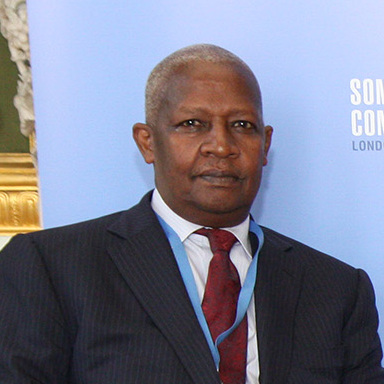
Uganda's_Foreign_Affairs Minister,_Sam_Kutesa.

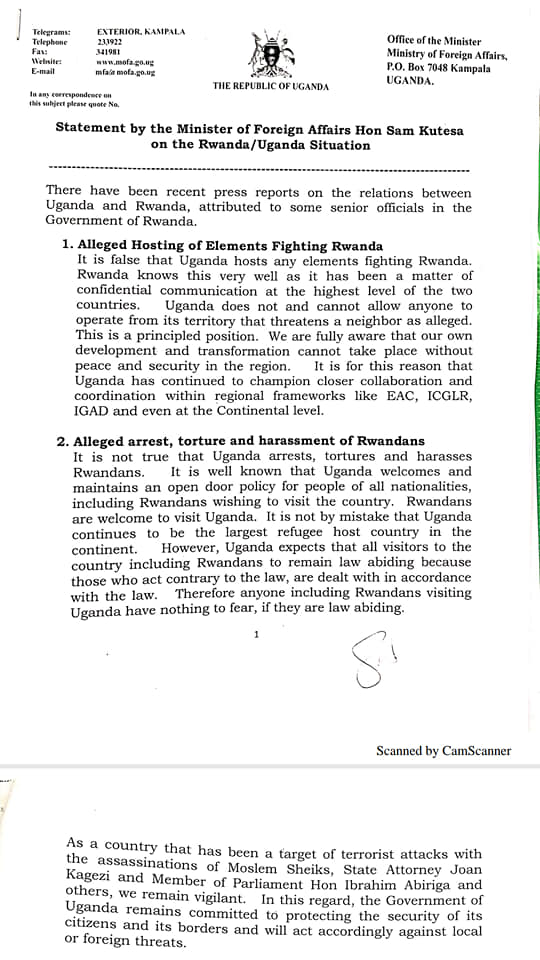
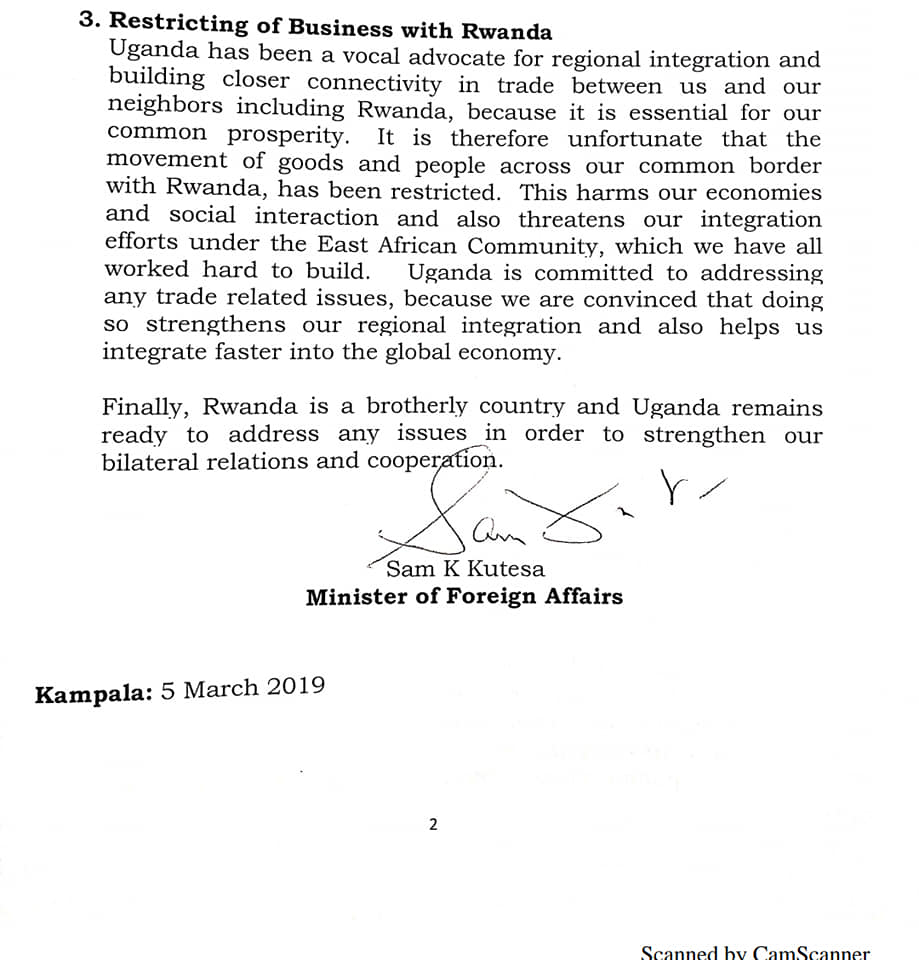
Uganda has refuted allegations by Rwanda that it is keeping elements that pose a security threat to its Southwestern neighbour, with the Ministry of Foreign Affairs warning that government remains committed to defend its citizens and borders.

“It is false that Uganda hosts elements fighting Rwanda. Rwanda knows this very well as it has been a matter of confidential communication at the highest level of the two countries,” Sam Kahamba Kutesa said on Tuesday in a press release.

Days ago, Kutesa’s Rwandan counterpart, Richard Sezibera accused Uganda of hosting Rwandan dissidents fighting the country, an accusation that made Rwanda close its borders with Uganda, a situation that has stopped traffic flow between the two countries for days now.

Kutesa in the latest statement said Uganda does not and cannot allow anyone to operate within its territory to destabilise its neighbours.

“We are fully aware that our own development and transformation cannot take place without peace and security in the region,” the minister said, adding that it the reason why Uganda has continued to collaborate with others through regional frameworks like the EAC, IGAD and ICGLR.

On the alleged arrest, torture and harassment of Rwandans living in Uganda, the minister said it is not true. “It is well known that Uganda welcomes and maintains an open door policy for people of all nationalities, including Rwandans wishing to visit the country, “Kutesa said.

However, the minister said Ugandan expects all visitors to be law abiding. Those who act to the contrary, the minister said, are dealt with according to the law. “Therefore, anyone including Rwandans visiting Uganda have nothing to fear, if they are law abiding,” he said.

The minister further said the government of Uganda was committed to protecting the security of its citizens and its borders and that it will act accordingly against local or foreign threats.

On restricting of business between Uganda and Rwanda, Kutesa said it has affected movement of goods and people which he said has further harmed the two economies and social interaction, especially under the East African Community framework whereby regional integration is emphasised.

Stories Continues after ad

Ugandan security agencies facilitating Gen. Kayumba Nyamwasa- Rwandan Minister Olivier Nduhungirehe

Olivier Nduhungirehe

Rwanda’s State Minister for East African Affairs, Olivier Nduhungirehe has accused some key elements in Ugandan security agencies of helping South African-based dissident Lt. Gen. Kayumba Nyamwasa whose aim is to destabilize his mother land.

In the past five days, there has been raging border tensions between Uganda and Rwanda. Rwanda posed travel restrictions stopping its nationals from traveling to Uganda and blocking good from entering into the country.

Nduhungirehe who was speaking at the East African Legislative Assembly said, Uganda is harboring dissidents’ with intent on destabilizing the their country.

“We have been telling our colleagues in Uganda to stop facilitating dissidents. We have the information that Gen. Nyamwasa has for several times been travelling into the region including Uganda to meet some authorities and that is where our concern is,” he said in Zanzibar.

Mr. Nduhungirehe said they have been advising Rwandans to stop travelling to Uganda because over 40 ordinary nationals were arrested, tortured and detained without trial.

Efforts by Eagle Online to get the Ugandan side of this allegations didn’t yield fruits as both Foreign Affairs Minister, Sam Kutesa and Gen. Elly Tumwine of Security didn’t answer their mobile phones.

“We actually have a list of over 40 people incarcerated in Uganda with the recent case of Kabanda Rogers Don who was returned back at Rwandan border by Ugandan authorities,” he said.

However, Rwandan Foreign Minister, Richard Sezibera said there is an ongoing discussions with Uganda on key issues which include allegations of Uganda facilitating armed forces whose intentions is to overthrow Kagame’s government and illegal detention of Rwandan nationals.

Stories Continues after ad

Second man appears to be free of the AIDS virus after a stem cell transplant

A London man appears to be free of the AIDS virus after a stem cell transplant, the second success including the “Berlin patient,” doctors reported.

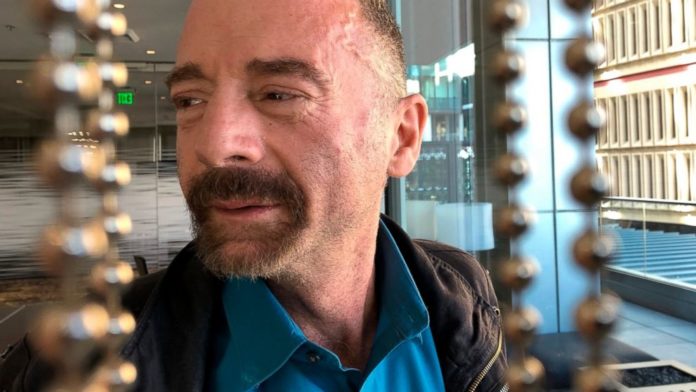
The therapy had an early success with Timothy Ray Brown, a U.S. man treated in Germany who is 12 years post-transplant and still free of HIV. Until now, Brown is the only person thought to have been cured of infection with HIV, the virus that causes AIDS.

Such transplants are dangerous and have failed in other patients. They’re also impractical to try to cure the millions already infected.

The latest case “shows the cure of Timothy Brown was not a fluke and can be recreated,” said Dr. Keith Jerome of Fred Hutchinson Cancer Research Center in Seattle who had no role. He added that it could lead to a simpler approach that could be used more widely.

The case was published online Monday by the journal Nature and will be presented at an HIV conference in Seattle.

The patient has not been identified. He was diagnosed with HIV in 2003 and started taking drugs to control the infection in 2012. It’s unclear why he waited that long. He developed Hodgkin lymphoma that year and agreed to a stem cell transplant to treat the cancer in 2016.

With the right kind of donor, his doctors figured, the London patient might get a bonus beyond treating his cancer: a possible HIV cure.

Doctors found a donor with a gene mutation that confers natural resistance to HIV. About 1 percent of people descended from northern Europeans have inherited the mutation from both parents and are immune to most HIV. The donor had this double copy of the mutation.

That was “an improbable event,” said lead researcher Ravindra Gupta of University College London. “That’s why this has not been observed more frequently.”

The transplant changed the London patient’s immune system, giving him the donor’s mutation and HIV resistance.

The patient voluntarily stopped taking HIV drugs to see if the virus would come back.

Usually, HIV patients expect to stay on daily pills for life to suppress the virus. When drugs are stopped, the virus roars back, usually in two to three weeks.

That didn’t happen with the London patient. There is still no trace of the virus after 18 months off the drugs.

Brown said he would like to meet the London patient and would encourage him to go public because “it’s been very useful for science and for giving hope to HIV-positive people, to people living with HIV,” he told The Associated Press Monday.

Stem cell transplants typically are harsh procedures which start with radiation or chemotherapy to damage the body’s existing immune system and make room for a new one. There are complications too. Brown had to have a second stem cell transplant when his leukemia returned.

Compared to Brown, the London patient had a less punishing form of chemotherapy to get ready for the transplant, didn’t have radiation and had only a mild reaction to the transplant.

Dr. Gero Hutter, the German doctor who treated Brown, called the new case “great news” and “one piece in the HIV cure puzzle.”

Stories Continues after ad

CHAN 2020 qualifiers: Dates for Uganda vs South Sudan confirmed

Uganda to play South Sudan.

The Confederation of African Football (Caf) has confirmed dates for the first and second round of the qualifiers of the 2020 Total African Nations Championship (CHAN).

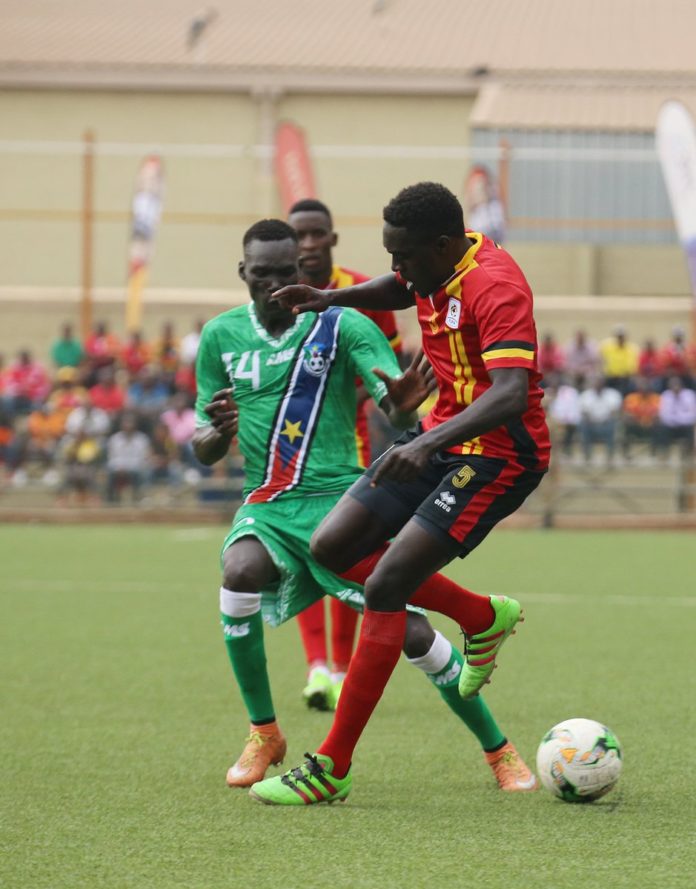
Uganda who were drawn against South Sudan in the first round of the qualifiers, will play the first leg between July 26th, and 28th in Juba with the second leg to be played between August 2nd, and 4th in Kampala.

The aggregate victor over the two legs will have to face the winner between Rwanda and Somalia in the second round of the qualifiers to book a place in the Chan 2020 group stages.

The first leg of the second round will be played between September 20th to 22nd, and the second leg between October 18th and 20th, 2019.

Uganda Cranes are seeking for their fourth straight appearance at the 16-team tournament.

Forty-seven (47) teams are engaged in the battle for 15 places to join host Ethiopia for the final tournament of the sixth edition of the tournament designed exclusively for footballers playing in their domestic leagues.

Unlike the African Cup of Nations, the competing national teams must be composed of only players playing in their domestic league. That is, a Ugandan player is only eligible to play for the Uganda Cranes if he is playing for a Ugandan club.

Democratic Republic of Congo (DRC) have won it twice, holding it the most times while Morocco are the defending champions.

The competition will be hosted between January and February 2020 in Ethiopia. It is held after every two years.

Stories Continues after ad

Judge agrees to expedite refinery case hearing and may visit Hoima

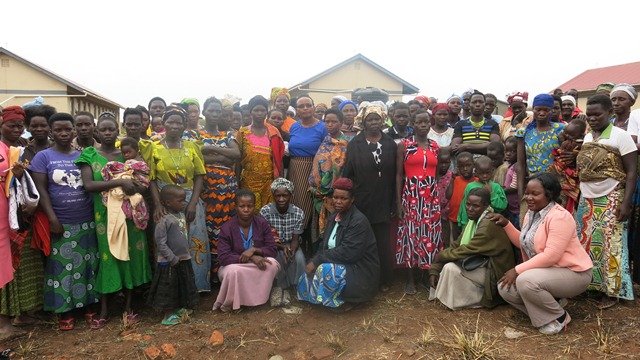
Some of the refinery-affected people.

Lady Justice Cornelia Sabiiti who is hearing the case involving the refinery-affected people could visit their settlement in Kyakaboga in Hoima, following submission of evidence by all the refinery-affected people.

The judge’s decision came after John Bosco Wandera, who is one of the plaintiffs in the case in which the refinery-affected people accuse government of under-compensating and delaying to compensate them, submitted his evidence.

During the case hearing that took place yesterday March 4, 2019 at the Kampala High Court, Wandera told the judge that he had two pieces of land in the refinery area in Kabaale-Buseruka, Hoima prior to government’s land acquisition. Government acquired over 29 sq. km of land for Uganda’s proposed refinery beginning in 2012.

Wandera opted for physical relocation for one of his pieces of land and asked for cash compensation for the other. Subsequently, Ministry of Energy bought 533 acres of land in Kyakaboga, Hoima for the 73 refinery-affected households. The ministry also constructed houses for Wandera and 45 other refinery-affected people though 73 refinery-affected families were relocated by government in 2017.

Wandera told the judge that he was displeased with government’s decision to construct for the refinery-affected people houses in a camp-like settlement. “I was a member of the resettlement committee and in 2014, Ministry of Energy took us to Kyakaboga to see the land it said it wanted to buy. The land was rejected by both the committee and the refinery-affected people because families wanted to be bought for land on a case-by-case basis as committed to by Ministry of Energy in the Resettlement Action Plan (RAP) report of 2012.

The committee and the refinery-affected people told Ministry of Energy that the camp-settlement in Kyakaboga would not allow people to engage in farming. It would also breed poor sanitation and result in tension with neighbours,” Wandera said. 2 He informed the judge that Ministry of Energy said that it had two other pieces of land that it would show the refinery-affected people. However, the ministry did not show them the land and bought the land at Kyakaboga instead.

Abandonment of Kyakaboga House

“Kyakaboga smells because 46 pit latrines, houses and kitchens are built in the squeezed settlement. The latrines are very close to the kitchen and the houses making the settlement unhygienic. I abandoned my house because of the situation in Kyakaboga,” Wandera told the judge. He also told court that his children had fallen sick because Kyakaboga is unhygienic. Wandera asked the judge to visit Kyakaboga and assess its situation.

The judge said she could visit after hearing all the evidence. During the case hearing, Wandera also informed the judge that because of the cut-off date of June 2, 2012, he was unable to re-build his house in Kabaale-Buseruka when it fell in 2014. This is because the cut-off date stopped him and other refinery-affected families from undertaking developments on the affected land.

Wandera was compensated on July 20, 2016. He only accepted the low compensation, which he had rejected, because he was suffering with his children failing to go to school. He made a choice between life and death. His house had collapsed and his children had dropped out of school. His crops were also being eaten by cows from neighboring villages and wild animals.

The judge fixed the next hearings in June 2019. She hopes to conclude the case then. The judge made the decision to expedite the hearing because the refinery-affected people travel from Hoima, Kiryndongo and other districts to Kampala for every hearing of the case, which is expensive, time consuming and cumbersome especially on women and the poor.

Stories Continues after ad

Five major changes added to the rules of football

The International Football Association Board (IFAB) has confirmed five new rules that will affect the world football, starting June 1st, 2019.

The new five major rules are to affect key areas of the game and these are;

There will be no rebounds from penalties;

Play will stop for a restart if a penalty is saved or hits the post, meaning there will be no chance to follow up and score from rebounds.

Players will also no longer need to line up on the edge of the area.

If the ball hits the post or the goalkeeper saves and it comes back out to the forward, the game will be stopped, there’ll be no second chance

Accidental handball goal won’t be allowed;

From June 1, goals scored that have hit a player’s hand – deliberately or not – they will not be allowed.

Substituted players can leave the field anywhere;

When a player is withdrawn they will no longer have to leave the field at the halfway line and will instead be permitted to leave the pitch at the nearest point.

This will help to reduce on time-wasting especially on late substitutions when teams are with a narrow lead.

No attacking players in the free-kick wall;

This rule prohibits attacking players standing in the wall when a free-kick is being taken, a tactic increasingly employed in recent years.

Attackers will be made to stand at least one metre from the wall, and is aimed at stopping defenders being moved out of the way.

A team taking a free-kick shouldn’t have its own players in the wall trying to disrupt the opponents.

Coaches will receive cards;

It has been done in the past, but discipline of coaches changed to simple reprimands or sending off.

Coaches have currently been only receiving verbal warnings for misconduct. Now they are able to receive yellow and red cards like the players.

Stories Continues after ad

DHL renews partnership with Africa’s largest e-commerce event

DHL Express in Sub-Saharan Africa (SSA) has announced that the company has once again signed on as lead sponsor for the 2019 DHL eCommerce Africa Conference and Exhibition, which will be held at the Cape Town International Convention Center on March 19-20, 2019.

The eCommerce Africa Conference and Exhibition, delivered by DHL, is hosted by South African conferencing company, Kinetic, and is one of Africa’s biggest opportunities to bring stakeholders in the ecommerce sector together. Later in the year, Kinetic will also bring the conference to Kenya, with the eCommerce East Africa Edition, also delivered by DHL, set to take place in Nairobi on the 12thand 13th of June 2019.

This year’s event offers participants an opportunity to learn from world-class thought leaders, both from Africa and the rest of the globe, on the innovative strategies that will unlock e-commerce opportunities over the years to come. Delegates from some of the continent’s biggest tech, retail, banking and legal firms will be in attendance to share their experience and engage with attendees to exchange knowledge.

According to the McKinsey Global Institute’s report, Lions Go Digital, e-commerce and fintech represent two of Africa’s biggest growth opportunities, with the growth of the mobile technology market driving both of these sectors. “More than half of urban African consumers already have Internet-capable devices and this number is increasing. Online shopping in Africa could account for up to $75 billion in retail sales by 2025.”

Steve Burd, Vice President Sales for DHL Express Sub-Saharan Africa, explains that the ongoing partnership between DHL and eCommerce Africa is a good fit. “As the market leaders in express logistics in Africa, we have extensive first-hand experience of the positive impact that ecommerce has on the continent. The massive growth in cross-border and international ecommerce in Africa sees DHL working with thousands more customers across the continent each year, helping them to expand their brand across borders.”

He adds that the development of ecommerce in Africa continues to unlock major opportunities for growth. “E-commerce allows entrepreneurs and SMEs to connect with a large customer base and scale up rapidly, which accelerates the need for support services. E-commerce growth therefore has a ripple-effect on many other industries on the continent.”

“DHL’s partnership with eCommerce Africa provides us with an additional platform to connect with organisations and help them to understand key logistics considerations, and learn how to plan for and overcome any logistical challenges,” adds Burd.

Terry Southam, Kinetic Managing Director, says that the collection of thought leaders and the topics under discussion this year are aimed at creating an immediate impact for African ecommerce companies.

“From marketing to fulfilment, the world’s best will be on stage sharing best practice and innovative hacks to drive online growth. It is quite remarkable to have all of these industry leaders on the same stage – not only willing to share but actively working to grow the industry and ensure African customers receive a world-class online shopping experience. This year’s theme for the conference is ‘Conquering Scale’ and we couldn’t be happier to have a market leader like DHL on board, to help us deliver 2 key e-commerce events on the continent this year,” he concludes.

Stories Continues after ad

It is time to resist General’s Kagame’s aggression-former Rwanda envoy to US

Theogene Rudasingwa

By Theogene Rudasingwa

Despite denials, Rwanda has now closed the border with Uganda and restricted the movement of Rwandans, signaling an escalation that could easily be sparked into a full border conflict. For those who pay only superficial attention to Rwanda-Uganda relations, it may come as a surprise little inconvenience. For General Yoweri Museveni and General Paul Kagame, and the African nations they rule with iron fists, the stakes are much higher and grievances much deeper.

In thinking aloud, I have pondered on three anecdotes that cast some light on the clash of outlooks, personalities and interests between the two generals.

In 2000, General Kagame sought to remove then President of Rwanda, Pasteur Bizimungu, and formally occupy the presidency that he had hitherto controlled from behind. He sent me as an envoy to explain the impending action to General Museveni. When I conveyed the message to General Museveni in the presence of the late James Wapakhabulo and Kale Kayihura, he was opposed to the idea. He asked me, “if not Pasteur Bizimungu which other Hutu do you have to replace him, for you still need them?”

Being the loyal cadre of RPF I was at the time, I argued that General Kagame had enough credentials to become the President of Rwanda. When I reported back, General Kagame and the exclusively Tutsi military officers and RPF angrily charged that President Museveni wanted to control Rwanda.

During the Kisangani clashes (1999-2000) in the Democratic Republic of Congo between Rwanda Defence Forces (RDF) and Uganda Peoples Defence Forces (UPDF), President Mkapa of Tanzania tried to mediate between the two generals to find an amicable solution to the conflict. In one encounter, General Museveni explained to President Mkapa that enzigo lies at the heart of the conflict. President Mkapa lightly commented in Kiswahili that whatever it is, “iyi mambo ya enzigo” is serious. I have no space to explain to non-Runyakole, non-Kinyarwanda speakers the deep meaning of enzigo or inzigo. Paraphrased, the term simply means that if you kill one of my own, there will be pay-back time.

In a few encounters I had as General Kagame’s envoy to General Museveni during and after the Kisangani crisis, I soon realized that neither had the patience to listen to each other points of view, and both reacted angrily when I (the messenger) delivered the message from the other side.

The three anecdotes by themselves may not mean much. In the context of convoluted life histories of both generals, a patient and engaged observer will note some striking differences and similarities.

Both generals are descended from humble beginnings among minority ethnic groups; came to power by force of arms; have overstayed in power by coercive means and manipulating constitutions and electoral processes; court Western allies (notably United States and United Kingdom) by offering the services of their militaries in the regional war on terror and peacekeeping; have overextended their reach beyond their national boundaries; and above all, they both possess big egos, and predominantly rely on military means to solve political problems.

General Kagame is very different from General Museveni in fundamental ways. There was a time in his early years before, during, and after capture of state power when General Museveni was the intellectual who inspired his followers. Rwandans like the late General Fred Rwigyema, General Paul Kagame, and many others who now dominate state structures in Uganda and Rwanda then found in him the revolutionary and visionary.

General Kagame despises ideology. Once in a while he may make Pan Africanist and nationalist pronouncements, but at every opportunity he has betrayed Rwanda’s and African interests. His maxim is “the end justifies the means, and I define the ends”. He is the efficient operational man who hardly inspires, and executes his ambitions through fear and naked brutality. A high school drop-out, not because of lack of intellect but due to indiscipline, he has since channeled his coarse instincts into state control by violent and often criminal means. General Kagame has deep insecurity that he compensates through aggressive behavior and taking big and highly risky bets.

General Kagame came to power by killing the Presidents of Rwanda and Burundi, Juvenal Habyarimana and Cyprian Ntaryamira respectively, thus triggering the genocide that engulfed Tutsi, Hutu , and incalculable human suffering in the Democratic Republic of Congo. He has fought armies of former Zaire and toppled dictator Mobutu; he installed President Laurent Kabila in DRC and later had him assassinated; he has fought armies of Angola, Zimbabwe, and Namibia; he has fought Uganda’s UPDF in DRC; he has quarreled with Tanzania, Burundi, and South Africa; he has thrown temper tantrums at France, and even to his benefactors USA and United Kingdom when they shyly question his assassination of opponents, and absolute closure of political space. General Kagame and the all-Tutsi cast of military officers are proud of this record, and have cultivated an aura of invincibility, extreme arrogance, and a propensity to take ever-increasing and bigger risks.

General Kagame rules through the notorious Directorate of Military Intelligence (DMI) that he personally supervises and which sits at the apex of the entire security establishment and Rwandan society. It is an enterprise that has grown regional, continental and global through a seamless web of businesses, media outlets, financial networks, criminal webs, Diaspora citizen groups, prominent personalities like former President Bill Clinton, former UK Prime Minister Tony Blair, evangelicals like Pastor Rick Warren, shadowy consultants from an array of retired military and intelligence officers from across the world.

DMI is constantly in a state of flux, deploying formally and informally, absorbing and rejecting operatives, co-opting and killing many in its ranks. The whole of Rwandan society stands in awe and fear of DMI because DMI is General Kagame who has been its only constant since 1990.

Uganda is yet to fully grasp the full extent of DMI’s infiltration of Ugandan society. Until and unless it does, its interests will always be in harm’s way.

This is the machinery that General Kagame has deployed in Uganda for a long time, leading to the Kale Kayihura-MTN-border closure saga. From the much I know about General Kagame and Rwanda’s secrets, the closure of the Rwanda-Uganda border is a deliberate escalation to find pretext to execute a plan that exists in Kigali. The plan includes a surprise quick pre-emptive strike, capture of territory deep in Uganda to avoid fighting in Rwanda which lacks depth, creating and linking up with anti-Museveni forces, creating chaos in Uganda, and familiar extreme measures like assassinating prominent political leaders, including General Museveni himself.

The border-closure is also vintage General Kagame, trying to attract attention from his benefactors, to extract some concessions from regional and international stakeholders, and masking internal contradictions within Rwanda.

General Kagame’s allegation that he is fighting General Nyamwasa’s Rwanda National Congress (RNC) and its so-called P5 supported by Uganda, and FDLR (both allegedly supported by Burundi) is an absurdity, like flogging dead horses.

I co-created and led RNC from 2010, and later the P5, until I abandoned them in 2016 due to irreconcilable ideological differences General Kagame knows that RNC, P5, and FDLR do not pose any serious threat to his rule; they all are a lose amalgam of extremist individuals or groups full of militaristic wishful thinking, lacking ideological depth and coherence, with no operational capability even to remove him from power and replace him with another brutal dictatorship like his. General Kagame needs FDLR, RNC, and P5 as scapegoats to justify his aggression as he continues to keep Rwandan citizens as hostages under fear.

What is to be done?

Everything must be done to de-escalate the build-up of tension between the two countries. A war between the two countries, even one of limited objectives, will have unintended consequences of far reaching social, political, economic and military implications. The first victims of such a war may be the generals themselves.

Uganda should prepare but ignore General Kagame’s provocations, and deny him any pretext of starting a conflict that neither country will be able to stop.

Uganda and Rwanda should stop relying on the relationship between General Museveni and General Kagame as the defining element of the relationship between the Ugandan and Rwandan peoples. These nations and their peoples have always been there long before the generals were born, and will be there long after they are gone.

The East African Community is sailing in perilous waters, doomed to failure or useless existence when it is led by people like General Kagame, who serves neither interests of Rwandan citizens nor those of East Africans. The free movement of peoples, goods, and capital must be allowed without hindrance. Perhaps President Magufuli of Tanzania, and President Kenyatta of Kenya should take initiative to bring to the attention of the East African Community the matter of closing the Rwanda-Uganda border. The East African Community may seek the wisdom of elder statesmen like former Presidents Moi, Kibaki, Mwinyi, Mkapa, and Kikwete in de-escalating the Rwanda-Burundi, and Rwanda-Uganda tensions.

General Kagame’s aggressive external behavior is conditioned by his domestic dictatorial policies that deny basic freedoms to the Rwandan people, Ultimately, East Africa should only hope to have sustained peace and prosperity if it supports peaceful and democratic change in Rwanda. That will entail confronting General Kagame’s regional belligerence head-on as an indispensable component.

General Kagame, presiding over landlocked Rwanda, is endangering the lives of Rwandans and East Africans by projecting hostility towards all his East African neighbors of Burundi, Uganda, DRC, and Tanzania.

It is suicidal, foolishness, despair, and dangerous adventurism to cultivate your own encirclement. It is time for Rwandans, Ugandans, and East Africans to unite to prevent another catastrophic war in the Great Lakes region.

It is time to resist General’s Kagame’s aggression, violent schemes, and war-mongering in the interest of peace, security and prosperity for all East Africans.

Stories Continues after ad

Bobi Wine is emerging leader of opposition – Abed Bwanika

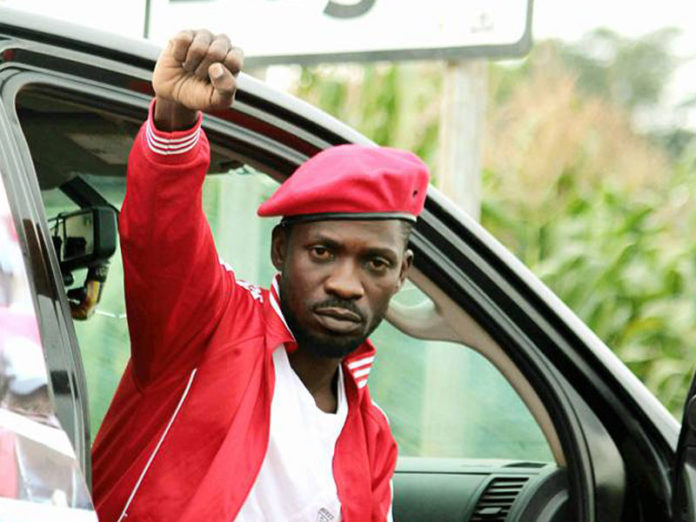
Bobi Wine

The president of People’s Development Party (PDP), Dr Abedi Bwanika, has said Kyandondo East Member of Parliament Robert Kyagulanyi a.k.a is the emerging leader of the opposition in Uganda and that Dr Kizza Besigye should vacate give way for the young legislator.

Bwanika while appearing on NBS Morning Breeze programme on Tuesday said Dr Besigye has the problem of wanting to be a leader all the time.

He said for all the years Besigye has been leading the opposition he has failed to remove President Yoweri Museveni from power. “What you have not done, you have not delivered victory to the people of Uganda,” he said of Besigye. He has not delivered the desire of the people of Uganda. That is victory,” he said.

Bwanika said Besigye has been serving as a defacto leader of the opposition in Uganda and that time has come to leave space for others to take over.

Bwanika said he can never work with Besigye because of the latter’s political activities such as leading political demonstrations.

Appearing alongside Bwanika on the same programme, Betty Nambosze, the Mukono Municipality Member of Parliament called for respect between those who support Bobi Wine’s People Power movement and those who support Besigye’s People’s Government.

Responding to Bwanika’s demand that Besigye leaves the political stage, Nambooze said Besigye is still relevant to Uganda’s politics since he still has a considerable number of supporters.

The legislator who subscribes to the Democratic Party (DP), dismissed Bwanika’s negative attitude towards Besigye’s opposition defacto leadership, saying that if Besigye was irrelevant Bwanika wouldn’t be wanting him to leave political leadership.

Meanwhile former Museveni’s press secretary Tamale Mirundi while on NBS Tuesday morning said it was wrong for hooligans to attempt to attack Besigye last weekend. “If Besigye has lost support, why do you beat him,” he said.

Tamale said government must intervene and bring to book those who wanted to beat Besigye on that day as he leaving CBS radio after radio talk show programme.

Stories Continues after ad