Stanbic Bank
Stanbic Bank
18.2 C
Kampala
Stanbic Bank
Stanbic Bank
Home Blog Page 1341

Business: Standard Chartered introduces more digitally-led retail banks in Africa

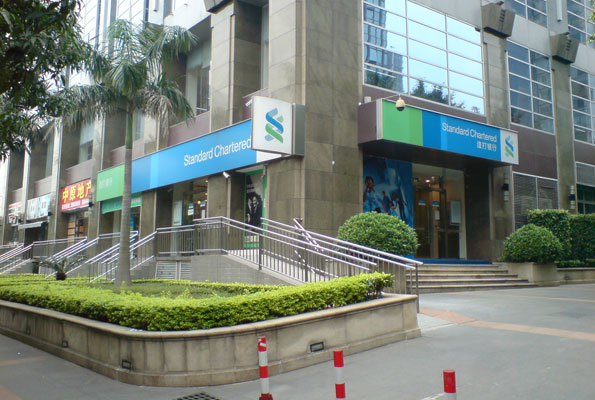
Standard Chartered Bank headquarters in Kampala

Standard Chartered announced on Sunday it had completed a simultaneous multi-market launch of its digitally-led retail banks in Tanzania and Ghana, with Kenya’s roll out scheduled to occur shortly. This follows the launches of the Bank’s digital offering in Uganda in January this year and Côte d’Ivoire in 2018. The expansion is part of the Bank’s overarching digital transformation strategy for the African continent.

The most recent roll-outs provide Tanzania and Ghana with access to the mobile-led digital bank platform, which has added benefits such as instant account opening (available in local and US currencies), zero fee on bill payment, zero monthly ledger, no minimum balance, and free initial ATM cards.

Customers will also benefit from over 70 client services, as well as a client onboarding experience in under 15 minutes. Additionally, the roll-out will offer customers exclusive retail, travel and dining experiences through the Bank’s strategic local alliances.

Commenting on the launch, Sunil Kaushal, Regional CEO, Africa and Middle East said:“Digitising Africa continues to be an integral component of our strategic transformation, and we have been steadily expanding our footprint across the continent. We are constantly looking for ways to push the boundaries, by providing our customers innovative solutions and technologies. Ultimately, it is about listening to what our clients want and meeting their banking needs by offering a digital platform to do their banking anytime and anywhere, through the channel they prefer.”

Standard Chartered’s digital bank roll-outs are aimed at increasing digital adoption amongst customers, with a focus on young digital natives. To support this, the Bank is running a marketing campaign which will remind consumers that banking should not stop them from doing what they love to do, and when they want to do them. The campaign, called ‘//BEUNSTOPPABLE’, will run across traditional and social media in the markets.

As part of the activation launch in Tanzania, Standard Chartered has also partnered with local Tanzania recording star Vanessa Mdee, who will lend her image and voice to the //BEUNSTOPPABLE campaign. In Ghana, the Bank has collaborated with leading influencer, TV host and actress, Joselyn Dumas to support with the campaign roll out. Both Vanessa and Joselyn will participate in activations which will take place throughout the year.

Stories Continues after ad

Bulamu health care international saves 11 year old Maria Nanyanzi’s life

Maria Nanyanzi and her mother after undergoing operation.

The story of 11 year old girl, Maria Nanyanzi whose hope to live has been restored after Bulamu health care international initiated surgical operation on her right thigh and footed her medical bills at CORSU hospital, Entebbe.

Formed in 2016, Bulamu Healthcare provides free primary healthcare to rural Ugandans, with Medical professionals, Bulamu provide exams, diagnoses, triage, surgical procedures, immunizations, cancer screenings, spiritual counseling, and more.

Born in Mulago hospital and from Masaka district, just like other babies, the ailing Nanyanzi was born through a normal delivery however, she had no visible private part instead had a small hole left where she would discharge urine.

At six months old, Nanyanzi was abandoned at her grandmother’s home by her mother, Resty Nanyanzi in search for money to look after her. The mother got employed at one of the restaurants in Kawempe before started sending money for the welfare of her child.

Rest told this Eagle Online that with the aid of herbal medicine, her private parts became visible. At five years, Nanyanzi’s right thigh developed complications and started swelling and discharging of fluids as she moaned day and night.

She said on visiting local health unit for treatment and checkup, they referred to Mulago referral hospital, Kampala and subjected to various tests including cancer before prescription of medicine.

Narrating the ordeal, the mother said Nanyanzi was put on a daily medication of Shs13,000 however, the family could not afford it and the patient was left at God’s mercy and attending payers at various churches in Kampala.

“At nine years, my daughter’s leg crippled and she could not walk by herself, her life started deteriorating. We were left with nothing since my husband is bedridden. We tried everything but we got nothing out of them. We lost hope,” She said

As February went down, Resty Nanyanzi’s hope for her child to get back onto her feet was restored when she was introduced to Bulamu health care international that was holding its February health camp at Nankandulo village, Kamuli district situated in the eastern Uganda.

She said, despite giving all sorts of medical services including surgery, Maria was registered under Angle programme that handles complicated and special cases in medical camps. “We were told that our case will be handled at CORSU hospital, in Entebbe and were we offered an ambulance back home,” she said

According to Joseph Bisaso, the field operations manager, Bulamu health care international entered into a memorandum of understanding with CORSU hospital Entebbe for rehabilitation and plastic surgery and Care hospital Mbale for Hydrocephalus cases. “We have worked on over 20,000 patients in various districts including Wakiso, Kumi Gulu, Kamuli, and Rukiga among other.”

On February 12, 2019, Maria was admitted to CORSU hospital however on their way to the medical facility, the encountered protests in town in which they lost their medical documents obtained from Kamuli referral hospital in collaboration with Bulamu health care international.

On the February 13, 2019, Maria was operated. According to the management of the hospital, the rotten part of the bone was removed making the right hand leg shorter than the left adding that the since the Maria is still young the bone will grow stretching to original position.

Resty applauded Bulamu for good and merciful heart of helping the needy and availing medical services to her daughter.

Speaking to this website, Maria, a primary three pupil who wants to become a doctor after school said she feels better and has hope that within few weeks she will be walking back to class to pursue and fulfil her dream.

She lauded Bulamu for footing her bills that will see her going back to school.

Despite working on over 8,000 patients per camp, Mr. Bisaso said they have always faced a challenge of complicated cases and none functional theatres at the various hospitals collaborated with to offer medical services.

He appealed to government to always come out and work with Bulamu health care international and other organisations as their implementing partners for improvement in medical service delivery in this Country.

Stories Continues after ad

Minister Kiwanda, awarded honorary doctorate from Yesbud University

Minister Kiwanda at the award.

State Minister of Tourism, Godfrey Kiwanda, has been awarded with an honorary doctorate in tourism from Yesbud University in Zambia.

Yesbud University the school of excellence aimed at democratizing education through the offering of world-class higher education opportunities that are accessible, flexible, and economical.

Speaking to him on phone, Kiwanda said, five months ago, he was contacted by the management of the University to ago and be honored over his contribution to the tourism sector of Uganda.

“Am extremely happy for the award, I picked it yesterday. People follow and appreciate what we do,” he said.

Kiwanda was recently criticized over the launching of Miss Curvy Uganda beauty pageant contests asserting that the tourism marketing strategy undermines the dignity of women.

The minister however clarified that Miss Curvy Uganda beauty pageant has been misinterpreted. He said it is like Miss Uganda pageant that recognizes slender and slim women and Ugandans have always been happy and voting for their favorite participants.

“Tourism starts with people. Uganda is beyond just animals, its people are the biggest tourism product. That’s why we have been voted several times as happiest people in the world and most hospitable,” Minister Kiwanda said when contacted by this website.

2

Stories Continues after ad

Police arrests NIRA impersonators in Kawempe

Luke Owoyesigire

Police in Kawempe Division are holding two people for impersonating officials of National Identification and Registration Authority (NIRA).

Akim Kitiyo, 31, and Wilken Ahabwe were arrested yesterday in an operation that followed complaints of extortion, obtaining money under false pretense and impersonation filed against them at Kanyanya Police Station.

Deputy Kampala Metropolitan Police spokesperson Luke Owoyesigyire confirmed arrest of Kitiyo and Ahabwe.

He said the suspects were disguising as officials of NIRA before asking for money to speed up ID registration process and selling registration forms respectively.

Upon arrest, Kitiyo had Shs65, 000 on him, part of the money believed he solicited from the public.

They are being held on charges of impersonation and obtaining money under false pretense.

“We have the suspects in our custody. Further inquiries are ongoing and as soon as that is done, we will arraign them before the courts of law,” Owoyesigyire said.

Stories Continues after ad

Police Force Air wing show tactics on how to carry out emergency rescue

Uganda Police Force Air wing has displayed its capabilities on how to carry out emergency rescue services and fighting crime in the country.

The display was done in the presence of the Deputy Inspector General of Police, Directors and Senior Police Officers at Kajjansi Airfield where their headquarters are based.

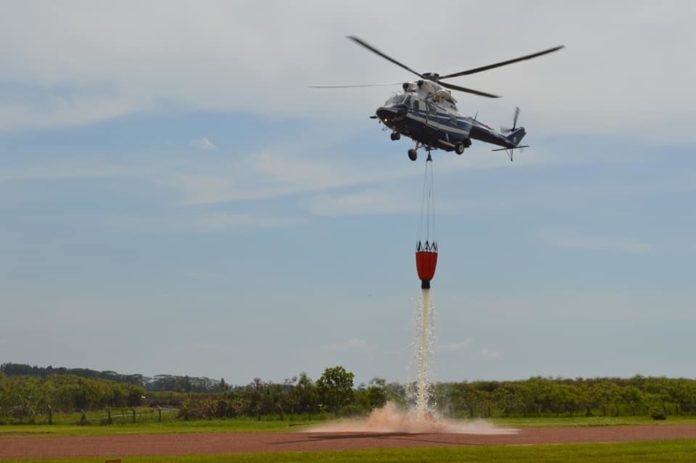
Among the capabilities displayed are; fighting wide fires and on high buildings by helicopter, in fighting fires a bucket is fitted in the helicopter and water equivalent to two tones is used to fighting fire.

Another capability is that of cargo hook, this can help in the delivering relief items to areas where vehicles cannot reach. Relief items can be airlifted and dropped to the affected areas.

They also displayed the capability of medical rescue, air assault and speed chase in case of robbers using a vehicle that is more powerful than the police car. They can intercept the vehicle and calls for a backup from troops on ground.

The Deputy Inspector General of Police, Maj. Gen. Sabiiti Muzeeyi commended the Air wing for having such capabilities and asked them to even think of other ways to develop the wing.

Maj. Gen. Sabiiti urged the Officers of the wing to be disciplined and to handle the assets of the department as if it’s their own.

He commended President for the support he extended to the Air wing including demanding for better pay for the Pilots.

He said that the wing will soon acquire a fix wing air craft that will boost their capability. The fix wing to be acquired is a P 180 Evo.

The Commandant of the Airway, Col. Ham Kaija, said that Police can now be able to respond to any incidents that needs air services, troop movement in a matter of seconds, and surveillance.

Stories Continues after ad

Sudan’s Omar El-Bashir declares state of emergency

Former Sudan President Omar Al Bashir

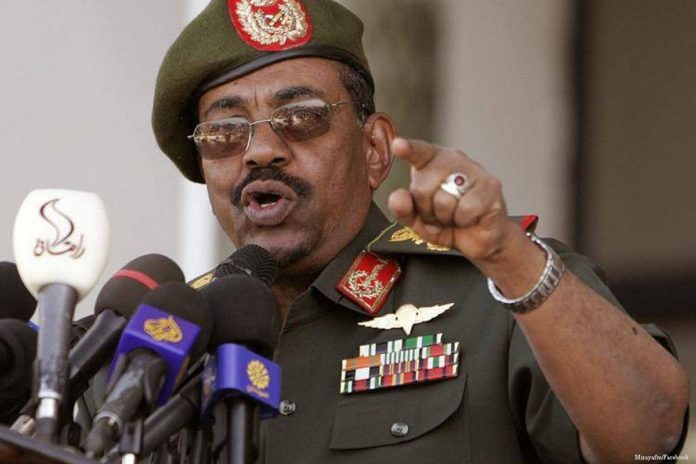
Sudanese President Omar El-Bashir has declared a nationwide state of emergency and dissolved the government in an effort to quell weeks of demonstrations that have rocked his iron-fisted rule.

Sporadic deadly protests have broken out across Sudan since the government tripled the price of bread on Dec. 19, with demonstrators accusing the government of mismanaging the nation’s economy and calling on the veteran leader to step down.

“I announce imposing a state of emergency across the country for one year,” El-Bashir said in a televised address to the nation from the presidential palace in Khartoum. “I announce dissolving the government at the federal level and at the provincial levels.”

Protest organizers vowed to press on with their demonstrations until El-Bashir steps down.

“We are calling on our people to continue with demonstrations until the main aim of this uprising, which is the stepping down of the regime chief, is achieved,” said the Sudanese Professionals Association which is spearheading the campaign.

Late on Friday, crowds of protesters took to the streets in Omdurman, the twin city of Khartoum, but were quickly confronted with tear gas by riot police, witnesses said.

Hours after he made his announcements, El-Bashir issued two presidential decrees appointing 16 army officers and two security officers as new governors for the country’s 18 provinces.

He also announced that five members of the outgoing Cabinet, including ministers for foreign affairs, defense and justice, would retain their portfolios.

El-Bashir has remained defiant in the face of demonstrations, dismissing protesters’ calls for him to step down after three decades in power.

Demonstrations first erupted in the farming town of Atbara, but the rallies swiftly mushroomed into a major challenge to El-Bashir’s rule.

Officials say 31 people have died in the violence; Human Rights Watch says at least 51 people have been killed including medics and children.

The country’s feared National Intelligence and Security Service (NISS) has launched a sweeping crackdown to quell the protests, jailing hundreds of protesters, opposition leaders, activists and journalists.

El-Bashir, 75, swept to power in an Islamist-backed coup in 1989 that overthrew the elected government of Prime Minister Sadiq al-Mahdi.

It is not the first time El-Bashir has imposed a nationwide emergency. He did so in December 1999, when a political crisis erupted after he broke away from Islamist mentor Hassan al-Turabi.

He said he had asked to postpone meetings of a parliamentary panel that was set up to look into amending the country’s constitution to allow a third presidential term. He did not elaborate.

El-Bashir is considering running for a third term after he was chosen as a candidate by his ruling National Congress Party for the election due next year.

Soaring inflation along with acute foreign currency shortages have battered the economy, especially after the independence of South Sudan in 2011 took away the bulk of oil earnings.

“Our country is suffering from a difficult and complicated situation, the most difficult in its history,” said El-Bashir, dressed in a turban and traditional Sudanese robe, in front of a group of advisers and outgoing ministers.

“The economic issue needs to be tackled by qualified people and for this I will form a government made of people of quality,” he said.

Stories Continues after ad

Bank of Uganda should not have monopoly over regulation of banks

Mr Fred Muwema

By Fred Muwema

The passing of the Financial Institutions Act by Parliament in 2004, brought with it a new regime of what became unassailable discretionary powers enjoyed by the central bank in the regulation of banks.

In the wisdom of Parliament at the time, it was believed to be necessary to concentrate this discretionary power in a single financial regulator to determine things like the issuance or revocation of a banking license, minimum capital requirements or even to determine the shareholding in a Bank.

This power was to be enjoyed by the Central Bank in an environment which is remarkably insulated from democratic oversight under the notion that the Central Bank must be independent and free from political interference.

But after 20 years of experiencing what ravaging discretionary power of a Central Bank can do to seven indigenous commercial banks which were abruptly shut between 1993 and 2016, Central Bank officials appear to have become touchable and accountable.

The report of the Committee on Commissions, Statutory Authorities and State Enterprises (COSASE) citing irregularities and illegalities by BOU in the closure and sale of the 7 Banks is generally well received though it is underwhelming in some respects.

It is underwhelming because BOU doesn’t pay the ultimate price for the insidious failure to carry out its statutory and regulatory duty which would ordinarily have called for harsh sanctions similar to those suffered by the closed banks.

Whichever way you look at the report, one thing is clear the Parliament of Uganda no longer trusts the opinion of the central bank as regards the regulation of the banking sector.

This is a very serious perception to be coming from the legislative arm of government, especially in respect of the regulation of an important sector like the Banking sector.

Following the COSASE Probe, Parliament fell short of recommending and demanding that the Central Bank monopoly on Bank regulation in Uganda should be broken even though by its damning report, it demonstrated that it has little or no faith in the financial regulator.

COSASE made a total of 46 recommendations in its report, the bulk of which were calling upon BOU to adhere to the Financial Institutions Act in carrying out its mandate.

There is one or two recommendations asking for an amendment to the law to give specific timelines for winding up of Banks and to stop the Governor from heading the Management and Board of the Bank at the same time.

Apart from that, business appears to be set to remain as usual at BOU despite the anticipated changes which the Parliamentary probe was supposed to bring.

In my view, it was light work for the Probe to recommend that BOU officials should simply behave next time around when the same regulatory structure which empowers the same institution to license, supervise, close and liquidate the Commercial Banks is still in place.

In fact such a mild recommendation is breeding ground for the same mistakes to be repeated so that once again, we shall have another special Audit and report which will be followed by another Parliamentary Probe in the next decade or so.

During the probe, it became clear that BOU officials had already taken a stand to fault the 7 Banks in their supervision reports, and yet the same officials proceeded to investigate and rule on the Banks compliance just before closing and liquidating the Banks.

In such a situation, it was foolhardy to reasonably expect the BOU officials to act judiciously, impartially and beyond reproach in the case of actual, potential or perceived abuse of office and conflict of interest, which is why COSASE found that the officials made questionable decisions and flouted the law with impunity.

Bank of Uganda officials interfacing with MPs on COSASE

I am convinced that it is the current single model legal structure of regulation of the Banking Sector which made it easy for BOU officials to mishandle the closure and sale of the defunct Banks without detection for a long time.

We should not expect any different from BOU if it is going to remain the Accuser, investigator, prosecutor, judge and executioner of regulated Banks.

I think it would have been in order for COSASE to recommend for example that the previous practice of outsourcing the liquidation of closed Banks to reputable Audit Firms be reverted to, like it has been done in the past.

Now that the probe is over, Parliament should instead push for deeper reforms of the legal Regulatory regime of the Banking Sector by providing for other semi-autonomous or independent entities to separately license, supervise and handle the liquidation of Banks.

The practicality of it may raise concerns relating to a multiplication of controls or regulatory arbitrage but it may still help to foster the economies of specialisation of the respective regulatory units and do away with the unwanted ineptitude and abuse which we have just witnessed from the single financial regulator.

Moreover, it is doubted that the kind of loss and damage occasioned by the excesses of a single regulator can thrive easily under a regime of shared Bank regulation.

We should not lose sight of the fact that for most Countries in the world, the single Regulator model for their Banking Sector works fairly well.

It has obvious advantages like the economies of scale, the unified approach to regulation which eases and reduces the cost of decision making in addition to reducing the costs to the regulated institutions.

However, this model perse doesn’t prevent Banks from failing in any economy. Ghana has a single regulator model but this did not prevent the Central Bank there from closing 5 Banks in one year.

The only difference is that the Central Bank in Ghana did not mismanage the liquidation of the failed Banks in such a brazen manner like the Ugandan Central Bank did.

That is why for the case of Uganda, we may need for now, to adopt a Regulation by activity model which should sit with different entities for some key aspects of Regulation.

This multi-layer legal regulatory framework might be the solution or part of the solution to our unending propensity for indiscipline in the management of our public financial sector.

A multi-layer legal regulatory framework has worked in some Countries like South Africa where the Central Bank also known as the South African Reserve Bank is the principal Regulatory Authority for the Banks but it is supported by the Financial Intelligence Centre, Financial Services Board and the National Credit Regulator who independently ensure that banks are compliant in various aspects of the law.

In the same way, the Central Bank of Nigeria has power to supervise and regulate banks but another entity called the Nigerian Deposit Insurance Corporation is responsible for ensuring all deposit liabilities of licensed banks and it also acts as the liquidator of failed banks.

My logic is that there is a chance that if different people have to license, supervise, close and liquidate Banks then there will be less risk of abuse of the process and the law which has led to unfair Bank closures.

The kind of bias and prejudice that the 7 closed Banks suffered and complained of during the COSASE probe could possibly not have arisen if we were dealing with 3 different regulatory layers.

It is never too late, Parliament can still finish the job and clean up the regulation of the banking sector by ensuring a complete overhaul of the law in this area.

The author is Managing Partner at Muwema & Co. Advocates

Stories Continues after ad

Increasing number of people face severe food shortages in South Sudan

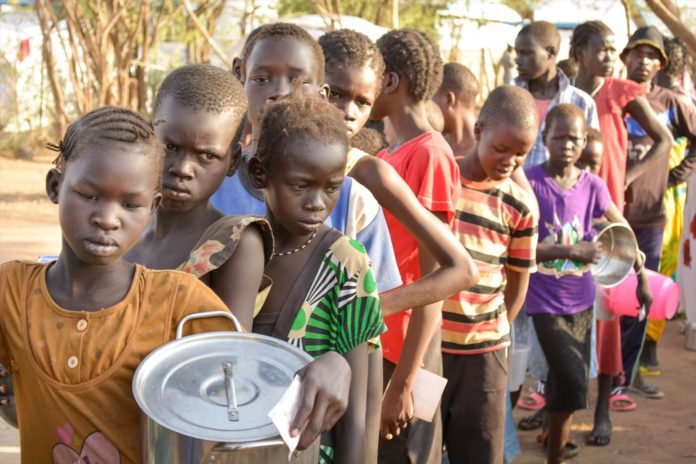
Children line up for food

Nearly seven million people in South Sudan could face acute food insecurity at the height of this lean season (May-July), three United Nations agencies warned today, urging for scaled-up humanitarian assistance and better access to humanitarian relief.

The Integrated Food Security Phase Classification (IPC) report released today in Juba by the Government of South Sudan in collaboration with the Food and Agriculture Organization of the United Nations (FAO), the United Nations Children’s Fund (UNICEF) and the World Food Programme (WFP) shows that the number of people who are acutely food insecure has already increased by 13 per cent since January last year.

This includes some 30,000 people who are already experiencing extreme food insecurity (in catastrophe phase or IPC5, the highest level of food insecurity) in Jonglei and Lakes states, in eastern and central South Sudan.

The report shows that food insecurity continues to be driven by the cumulative effects of conflict, insufficient food production and associated population displacement. Local cereal production in 2019 will only supply 52 percent of the country’s cereal needs, compared to 61 per cent in 2018.

Conflict continues to disrupt food production, deplete livestock and constrain people’s access to alternative food sources. Prolonged dry spells, flooding, crop disease and pest infestation have severely impacted agricultural production which is largely rain-dependent. Poor people have been particularly vulnerable to high food prices and the limited availability of food in markets.

There is an urgent need for more funds to scale up humanitarian assistance to save lives and protect livelihoods. At the current level of assistance, the report indicates, some 50,000 people will be facing catastrophe (extreme food insecurity) between May and July. Without any assistance, this number could rise to 260,000.

“The projections are alarming and food security continues to worsen. Together with the people of South Sudan, we need to act urgently to reverse this trend. Our priority is to support families to maintain and increase their production, and help agro-pastoral communities preserve their livelihoods. Last year, FAO’s distribution of seeds and agricultural tools had a positive impact on the country’s food security, but this is not enough,” said Pierre Vauthier, the FAO Representative a.i. in South Sudan. “If the peace agreement signed last September is fully sustained, FAO can further support returnees to rebuild their livelihoods and contribute to the recovery of the nation,” he added.

There is a real risk of famine in those areas which are already very food insecure, should the overall situation in the country deteriorate and should there be a prolonged absence of humanitarian assistance. Parts of the country that are particularly at risk are Unity, Jonglei, Upper Nile and Lakes.

“Food insecurity is increasing in 2019,” said Simon Cammelbeeck, WFP’s Acting Country Director in South Sudan “Unless we scale up humanitarian and recovery activities soon, more and more people will be at risk. This is especially worrying as those most in need of assistance are malnourished women and children. We are gearing up to respond to this large rise in food needs.”

Malnutrition levels remain critical in many areas, with some 860,000 children under the age of five severely malnourished. However, there is likely to be an increased incidence of acute malnutrition during the coming lean season in most parts of the country.

“As access to those in need improves due to the peace process, we have been making significant progress in treating severe malnutrition in children, with a recovery rate above 80 per cent,” said Andrea Suley, UNICEF Representative, ai, in South Sudan. “Yet, our nutrition programme has a funding gap of 88 per cent or US$55.4 million. If funding is not timely secured, the children we know how to save may not make it.”

Humanitarian support

“Sustained humanitarian support is required to address the immediate food assistance needs. It is also critical to support resilience activities to improve livelihoods and to increase families’ ability to cope,” said Humanitarian Coordinator in South Sudan, Alain Noudehou. “Full and timely implementation of the peace agreement is therefore essential to allow displaced people – the majority of whom are women and children – to return home and to resume their lives.”

The three UN agencies, along with other humanitarian organizations, have conducted massive relief operations since conflict erupted in late 2013. The Integrated Rapid Response Mechanism – mobile teams travelling usually by helicopter to reach people in isolated areas – is part of an inter-agency effort to provide immediate, life-saving support.

In 2019, FAO aims to provide 800,000 farming, fishing and agro-pastoral households in severely food insecure areas with vegetable and crop seeds, agricultural hand tools and fishing equipment. One crop kit enables a family to grow enough cereals to last more than six months – which can go a long way to alleviating hunger. In support of agro-pastoralist communities that tend to be heavily dependent on livestock, FAO is carrying out vaccinations and other animal health services to prevent large-scale animal mortality.

To meet the increased needs, WFP will provide the most vulnerable people with a variety of support including life-saving food and cash distributions in areas with working markets; food in return for work on the construction and rehabilitation of community assets; food for school meals; and special products for the prevention and treatment of malnutrition among children, and pregnant or nursing women.

WFP is currently delivering assistance to meet immediate needs and to bolster people’s resilience. WFP plans to pre-position 175,000 metric tons of food in more than 60 warehouses before the onset of the rainy season. Pre-positioning will not only help saves lives but will reduce delivery costs, making costly airdrops unnecessary when many areas are unreachable by road during the rainy season.

In 2019, UNICEF is targeting more than two million children and their mothers to provide quality nutrition services. UNICEF will provide micronutrient supplements, health and WASH services and counselling on appropriate infant feeding and hygiene practices to prevent acute malnutrition. Early detection of children in need of nutrition services will be ramped up and ready-to-use therapeutic food (RUTF) will be provided to treat severely acute malnourished children. For UNICEF to reach the women and children targeted, additional funding is needed, as the current funds only cover the programme to end April 2019

Stories Continues after ad
Buganda kingdom drops Mpanga, as Attorney General

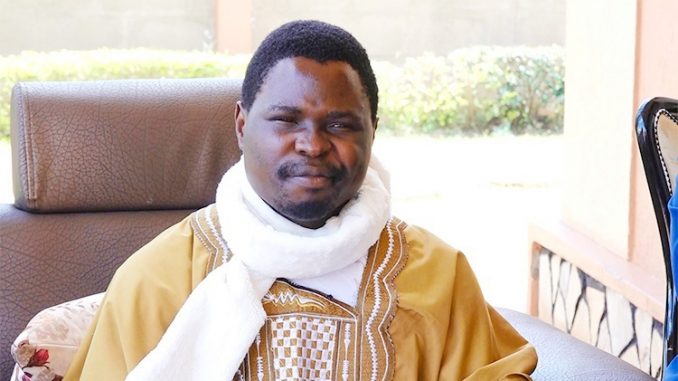
David Mpanga

David FK. Mpanga has been dropped as Attorney general of Buganda Kingdom in the recent changes made by the Kabaka Ronald Muwenda Mutebi II.

The reason for his dropping wasn’t given but recently, his has featured a lot scandals involving Bank of Uganda and the sale of crane bank to Dfcu bank.

In document released by Peter Mpanga, the private secretary of Kabaka, maintained the Charles Peter Mayiga as the Katikiro of the kingdom deputized by Twaha Kigongo Kaawasa and Robert Wagwa Nsibirwa.

Counsel David. FK. Mpanga who was formerly the attorney of the kingdom, has been appointed the Minister for special assignments in Kabaka’s office. Mr. Apollo Makubuya deputy Katikkiro has been dropped and appointed special advisor in Lubiri. Makubuya works with MMAKS Advocates law firm that has also been in the storm over same saga.

Names Positions

1. Charles peter Mayiga Katikkiro (Prime Minister).

2. Twaha Kigongo Kaawasa First Deputy Prime Minister

3. Robert Wagwa Nsibirwa Second Deputy Prime Minister.

4. Patrick Mugumbule Speaker of parliament (Lukiiko).

5. Ahmed Lwasa Deputy speaker.

6. Christopher Bwanika Secretary for local government.

7. David. FK. Mpanga Minister for special assignments.

8. Noah Kiyimba Spokesperson of the kingdom.

9. Prosperous Nankindu Kavuma Minister for development (Nnabagereka’s office).

10. Mariam Mayanja Nkalubo Minister of land agriculture and co-operatives.

11. David Kyewalabye Male Minister of culture.

12. Henry Sekabembe Kiberu Minister of Youth and sports.

State Ministers

13. Joseph Kawuki State minister of local gov’t and Kabaka’s tourism.

14. Amis Kakomo State minister agriculture, trade and co-operatives.

Permanent Secretary

15. Josephine Nantege Semanda Permanent secretary in Katikkiro’s office.

Senior Advisors

16. Emmanuel Sendawula Chairperson.

17. William Matovu

18. Muhamood Thobani

19. William Naggaga

20. Apollo Makubuya Lubiri.

21. David Walusimbi Sengendo special advisor on cultural matters.

Stories Continues after ad

MP Zaake remanded for three weeks

Francis-Butebi-Zaake

Mityana Municipality MP, Francis Zaake, has been remanded to Gulu main prison after being leveled with charges of treason.

Zaake was last night picked at Clock Tower in Kampala and detained at central Police station (CPS) before being taken to Arua over chaotic scenes that proceeded the conclusion of municipality by- election campaigns.

MP Zaake was arrested on Augusts 13, hours after holding their conclusive rallies head of the Arua by-election that was won by Kassiano Wadri. He was nabbed along with Robert Kyagulanyi, Ntungamo Municipality MP Gerald Karuhanga, Jinja East MP Paul Mwiru, Kassiano Wadri, former MP Michael Mabikke, and 28 others grappling with charges of treason and malicious damage of president’s vehicle.

The MP is among the group of the 34 suspects who were detained in Gulu police cells and was reportedly dumped at Rubaga hospital by unknown security officers following the deterioration of his health condition. President Museveni reportedly said he had escaped.

Appearing before Justice Lubowa Daniel, Zaake was charged with escaping from lawful custody however through his layers led by Counsel Tony Kitara, he applied for bail.

His application was however objected and released on Shs 50million non cash bail as his sureties were bound to pay shs50million noncash.

Conversely he was re-arrested and driven to Gulu magistrates’ Court where he has been leveled with charges of treason and malicious damage of president’s vehicle.

Magistrate Isaac Kintu, said Zaake has no chance of taking plea since Court has no jurisdictions to handle criminal cases and adjourned the matter to march 14, 2019.

Zaake who was averred to have been tortured during and after his arrest, was denied exit at Entebbe International Airport for medical treatment in India due to lack of clearance from government medical board, a body that is responsible for assessing health conditions of patients who are scheduled to receive treatment at the expense of tax payers’ money and CID the head by Grace AKulo.

Since his arrest, he was occasionally blocked from fleeing for further treatment not until he was charged and released on police bond. He was treated in one of the fancy healthy facilities in India.

Stories Continues after ad