Stanbic Bank
Stanbic Bank
23.9 C
Kampala
Stanbic Bank
Stanbic Bank
Home Blog Page 1355

Technology avail opportunities to address challenges of water and sanitation- NWSC boss

NWSC MD, Dr. Silver Mugisha .

The Managing Director of National Water and Sewerage Corporation (NWSC), Dr. Silver Mugisha, has said technology is availing great opportunities to address the diverse challenges of water and sanitation in the sewer sector.

Dr Mugisha was speaking at the WEX Global Conference that was held in Porto Portugal under the theme ‘Applying Intelligence in The Circular Economy’, attended by water, energy and waste experts from more than 45 different countries.

On the panel of Regional Forum for Africa that, he reflected on the fact that the building of water and sewage networks in the developed world was entirely dependent on public finance adding that the same solutions do not appear prominent in policy debates on the development of infrastructure in Africa.

Dr. Mugisha said, technological advancements need to be implemented in context of the challenges, organisation and the country. ­“NWSC is among the highly ranked utilities in the world. The NWSC success stories attract scores of conference participants across the globe,” he said.

According to Dr. Mugisha, the NWSC case of building an efficient, accountable and trusted utility provides good lessons for similar utilities in the developing world. Most importantly he said government’s will continue to play a key role in financing the development of water and sanitation infrastructure and environmental protection is a joint responsibility.

He also shared NWSC experience in mobilizing financing from different sources including commercial financing from the commercial banks saying one of the key lessons from NWSC was the need to have a well performing and accountable institution that instils confidence in Government, development partners and all financiers.

Stories Continues after ad

Greatest UEFA Champions League comebacks

Barca beat PSG 6-1, overturning a 4-0 deficit

Manchester United’s comeback at Paris took them into the pantheon of great second-leg recoveries.

Manchester United achieved a UEFA Champions League first on Wednesday, becoming the first team in the competition’s history to win a knockout round tie following a two-goal first-leg defeat at home.

United had lost 2-0 at Old Trafford three weeks ago but pulled off a 3-1 win in Paris to reach the quarter-finals on away goals. It is not the first time the Ligue 1 side have been on the receiving end of a remarkable comeback – including the most sensational of all.

Four-goal deficit

Paris Saint-Germain 4-0 Barcelona

Barcelona 6-1 Paris Saint-Germain

2016/17 round of 16

In 2016/17, Barcelona became the first team to fight back from four goals down to win a UEFA Champions League tie – only the fourth time it’s been done in any UEFA club competition tie.

If Paris’s demolition of Luis Enrique’s men in France had been a shock, the Barça recovery was simply out of this world, Sergi Roberto striking in added time to decide the tie. “I told him: ‘Get into the box! You’re going to score!'” Neymar recalled. Sergi Roberto added: “I didn’t know if I was dreaming – I have never known a noise like that.”

Three-goal deficits

Barcelona 4-1 Roma

Roma 3-0 Barcelona

2017/18 quarter-finals

Edin Džeko struggled to communicate the magnitude of Roma’s feat after his sixth-minute finish sparked this extraordinary revival of fortunes, saying: “You cannot imagine, I mean it was incredible, crazy – I don’t know how to describe it. We did it when definitely nobody believed in us.”

Certainly, there looked to be no way back after a 4-1 loss at Camp Nou, but Džeko’s goal and a Daniele De Rossi penalty set the scene for Kostas Manolas’s 82nd-minute headed winner.

AC Milan 4-1 Deportivo La Coruña

Deportivo La Coruña 4-0 AC Milan

2003/04 quarter-finals

“Miracles often happen, things you might not rationally expect,” said Depor coach Javier Irureta, holding on to faint hope ahead of the return leg, the Spanish team having been well beaten despite scoring first at San Siro.

Astonishingly, his troops were ahead on aggregate by half-time in the return, Walter Pandiani, Juan Carlos Valerón and Alberto Luque making it 3-0 – before substitute Fran González added a fourth. Having prayed for success, Irureta later honoured a promise by taking the pilgrim trail to Santiago de Compostela.

Two-goal deficits

Manchester United 0-2 Paris Saint-Germain

Paris Saint-Germain 1-3 Manchester United (3-3, United through on away goals)

2018/19 round of 16

Barcelona’s dream return against Chelsea

Chelsea 3-1 Barcelona

Barcelona 5-1 Chelsea (aet)

1999/2000 quarter-finals

Real Madrid 4-2 Monaco

Monaco 3-1 Real Madrid

2003/04 quarter-finals

Napoli 3-1 Chelsea

Chelsea 4-1 Napoli (aet)

2011/12 round of 16

AC Milan 2-0 Barcelona

Barcelona 4-0 AC Milan

2012/13 round of 16

Olympiacos 2-0 Manchester United

Manchester United 3-0 Olympiacos

2013/14 round of 16

Paris Saint-Germain 3-1 Chelsea

Chelsea 2-0 Paris Saint-Germain

2013/14 quarter-finals

Porto 3-1 Bayern München

Bayern München 6-1 Porto

2014/15 quarter-finals

Wolfsburg 2-0 Real Madrid

Real Madrid 3-0 Wolfsburg

2015/16 quarter-finals

Stories Continues after ad

EAC partner states warned on increased risk for disease outbreaks

People jump onto boda bodas to cross water after the rain. This was between Police Children’s School in Kibuli and police training grounds Kibuli a Kampala suburb where water blocked the way. PHOTO BY ABUBAKER LUBOWA.

Above normal rainfall is expected in the East African region over the next few months, a scenario that could expose the region to increased risks of disease outbreaks.

This forecast is based on the regional climate outlook for the March to May 2019 long rainfall season provided by the Greater Horn of Africa Climate Outlook Forum held in Entebbe, Uganda.

James Kivuva, the Senior Meteorologist, who represented the East African Community (EAC) Secretariat at Forum warned that the higher than normal rainfall would increase the risk for outbreaks of infectious diseases. Kivuva urged EAC Partner States to be on the alert, inform the public, and put preparedness and mitigation measures in place while closely monitoring the rainfalls.

Between October and December 2018 parts of the region experienced a late start and early end of rains. However, above to near normal rainfalls were experienced in parts of Tanzania and in the Western parts of the region. Burundi, Rwanda and Uganda even reported flooding with landslides that impacted on some communities in the Eastern region where some lives were lost.

For March to May the climate predictions indicate an increased likelihood of above to near normal rainfalls over much of the equatorial sector. “Most parts of the region are likely to have an earlier seasonal rain onset, but the rains will also end earlier than usual,” said Kivuva.

“There is an increased chance for flash and riverine flooding mainly in the flood prone areas of the EAC Partner States, which might trigger landslides, mudslides and enhance the risk for outbreaks of infectious diseases with consequences for sectors such as health and agriculture including livestock,” he added.

The officer warned that flooding was likely to cause mass mosquito breeding that can transmit Malaria in humans and Rift Valley Fever (RFV) in animals and humans. “Already, the first cases of RVF in animals and humans have been reported from Kenya. Flooding increases the risk for diarrheal diseases, like cholera, especially in low laying areas,” said Kivuva.

On a positive note, the rain falls are good for the crop, if they are not excessive, and also for the pastoralist’s prospects. There is also a likelihood of a reduction in fall army worm infestation, as high rains are unfavorable for their multiplication.

“This would increase food security. The expected enhanced rains would also bring some relief, especially in areas that suffered from low rain falls and even droughts in the past season.”

In an effort to prevent and mitigate disease outbreaks in the region, Kivuva urged Partner States to undertake with the following precautionary measures:

The animal and human health disease surveillance units should actively monitor the disease trends in the affected areas;

Citizens should protect themselves and especially children against mosquito bites. Adequate measures are the use of impregnated mosquito nets, personal insect repellents, if available light coloured clothing (long-sleeved shirts and trousers) and avoiding outdoor activities at peak biting times of mosquitos.

Livestock farmers should contact the veterinary services for early information on vaccinating their animals against RVF.

People in contact with ruminants should practice hand hygiene, wear gloves and other appropriate individual protective equipment when handling sick animals or their tissues or when slaughtering animals;

In case of an RVF outbreak, people should avoid consuming fresh blood, raw milk or animal tissue and products without thoroughly roasting them;

The Ministries of Health should intensify social mobilisation and health promotion efforts with preventive messages that enable the public to manage the risks at hand.

The Meteorology departments should continue to monitor and analyse the weather patterns and share information with other departments to plan and prepare for outbreaks of infectious diseases of public health concern.

The Climate Outlook Forum meets on a quarterly basis to formulate mitigation strategies for key socioeconomic sectors in this region, such as agriculture, health and infrastructure. The meetings provide a regional platform for decision makers, climate scientists, research scientists as well as users of climate information.

Stories Continues after ad

KCB Group Plc grows 2018 net profit 22%

KCB Uganda Managing Director Joram Kiarie

Sustained revenue growth and prudent cost management helped raise KCB Group PLC full year 2018 net profit by 22 percent to a record KShs24 billion, the bank says in its latest financial statement.

In the results announced on Wednesday, the Group profit after tax for the 12 months ending December 2018 rose from KShs19.7 billion reported a year earlier. This was on the back of solid operating income of KShs71.8 billion—largely from interest income, fees and commissions— and lower costs which reduced 1 percent to KShs34.7 billion during the period, said the KCB Group Chief Executive Officer and Managing Director, Mr. Joshua Oigara.

“Our focus on customers, as well as our diversified business model and strong risk discipline helped us to produce another solid year of financial performance in 2018, even as we navigated the pressures of interest rates cap in Kenya and economic volatility in some of our subsidiaries,” said Mr Oigara.

“The Group’s performance is a reflection and outcome of our growth strategy, maximizing on our strengths, agility into emerging opportunities and the inherent potential to drive value creation for the shareholders and the communities in the markets we operate in,” he said.

The KCB Group Board has proposed a final dividend of KShs2.50 per share to be presented to shareholders in the Annual General Meeting. If approved, this will bring the total dividend to KShs3.50 per share, an increase of 16.7 percent over prior year dividend per share.

Stories Continues after ad
FUFA reduces bans for match officials and players

Referee Kirangwa Ronald who was in charge of the game.

Uganda football governing body FUFA, through its Appeals Committee has reduced on the bans it had given to the different match officials and players.

FUFA had banned the match officials following controversy around Tito Okello’s equalizer in the 1-1 draw between Vipers SC and Express FC at Wankulukuku in November 2018.

The FUFA Appeals Committee reduced referee Ronald Kirangwa’s ban from 3 years to 6 months. The new period includes the time he has been serving the ban.

The Committee also reduced assistant referee Samuel Kakembo’s ban from 5 years to 1 year but; the new period includes the time he has been serving the ban and will be demoted from top flight refereeing for one year after serving the new ban period.

Vincent Kasoki’s 365 days ban has been cut to 4 months. The Bumatte FC player was handed the initial ban and fined Shs300,000 by the FUFA Disciplinary Competitions Panel for unsporting behavior towards a match official in his team’s game against Kitara FC.

Twaha Ayiman’s 365 days ban has been reduced to five months. The Nkumba University Beach Soccer player was handed the initial ban by the FUFA Disciplinary Competitions Panel for unsporting behavior towards a match official in his team’s game against Talented BSC.

Stories Continues after ad

CocaCola and Pepsi top list of world’s 100 mega brands in 2017

UNITED STATES - APRIL 15: Cans of Pepsi and Coke are set up for a photograph in New York on April 15, 2004. PepsiCo Chief Executive Steve Reinemund introduced Gatorade X-Factor flavors and added Tropicana juice drinks, moving faster than rival Coca-Cola Co. to cater to health-conscious consumers. (Photo by Daniel Acker/Bloomberg via Getty Images)

CocaCola and Pepsi are first and second on the list of the world’s 100 mega brands, according to Euromonitor International’s megabrands report that ranks the top 100 most successful fast-moving consumer goods (fmcg) brands worldwide.

In the report launched Tuesday, fmcg encompasses packaged food, soft drinks, beauty and personal care, consumer health, tissue and hygiene, home care, hot drinks and pet care. Each of the brands making it into the top 100 qualifies based on their retail sales value for the year 2017.

While several major brands have maintained their ranking for some time, the report says the balance across the list is shifting. “People’s attitudes to health and premiumisation are evolving and brands that cannot meet new realities have lost out. Changes in how people research and shop online are having a profound impact. Also, the importance of different regions of the world has changed for many of these megabrands, raising the question of where companies should focus their resources most effectively,” it says.

In 2017 megabrands made up 14 per cent of all fmcg sales worldwide. According to the report, it was primarily driven by sales of packaged food, beauty and personal care, and soft drinks brands.

There are 41 packaged food brands in the top 100, more than any other category. Beauty and personal care brands take second position, with 25 brands in the top 100. Soft drinks brands are third, with 18 in the ranking. Beyond these three categories, 16 brands make the top 100, with five tissue and hygiene brands amongst them.

Asia Pacific accounts for the single biggest percentage of fmcg sales by region, with almost US $3 of every US $10 spent. North America and Western Europe each account for just over one-fifth of the total spent. They are followed by Western Europe (21.1 per cent) Latin America (12.1 per cent) and Middle East and Africa (7.7 per cent) of the total sales.

According to the report, in 2017, Coca Cola and Pepsi have had a brand value of US$35-45 billion and US$10-15 billion respectively.

Brands like Red Bull, Nivea, Colgate, Sprite, Gillette and Fanta which are also common in Uganda were ranked sixth, nineth, 11th, 13th and 20th respectively.

The report says since the 2014 data, retail sales of Coca-Cola and, Coca-Cola owned, Sprite have fallen in Latin America and Asia Pacific, but risen in North America, as the drinks giant pursues a strategy based on achieving higher value sales from each consumption occasion.

Meanwhile, Pepsi has seen retail sales fall in all three regions. However, increased sales in the Middle East and Africa helped solidify its global rank. Red Bull’s retail sales have risen strongly in China and the US since 2014 — these two countries by far its most important markets. Its rival Monster generates the vast majority of sales value from the US.

Nescafé, Pampers, Tide / Ariel and Huggies are all amongst the top 10 fmcg brands worldwide that do not belong to packaged food, beauty and personal care or soft drinks industries. The 10th ranked brand here, Always, resides at number 62 in the wider table. Mars’ leading position in the pet care category is clear, as it owns two of the three pet care brands to make it into the top 100 — Pedigree and Whiskas (31 and 68 in the overall ranking). However, the future may not be quite so assured for these two brands. Firmly mid-market for a number of years, they have been slowly losing share of global dog and cat food value sales as premium brands gain against them.

According to the report, Nivea is the most important brand owned by German company Beiersdorf, making up 86 per cent of its beauty and personal care sales in 2017. The brand is the global leader in skin care and sun care and is also present in deodorants, bath and shower products.

Stories Continues after ad

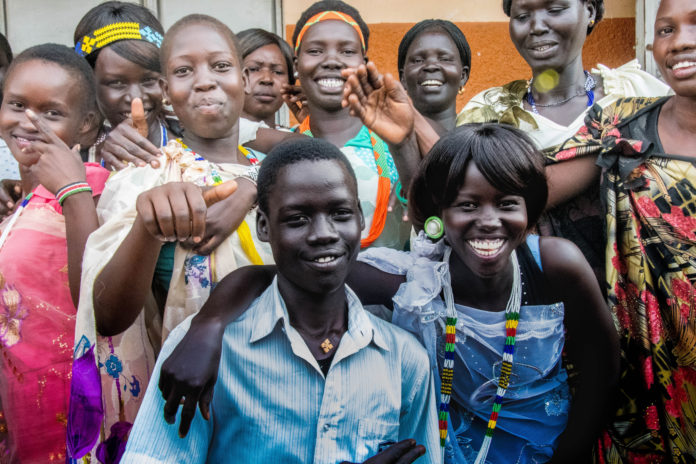
Empower girls to access and share information about sexual and reproductive health- Belgian envoy

Youth matching on the street.

Belgium Ambassador to Uganda,Hugo Verbist has called for empowerment of girls through availing platforms to access and share information about sexual and reproductive health services.

The envoy was said this during the She Decides Festival Uganda celebrated on March 2, at Kira Road Police grounds, Kamwokya in commemoration of the global She Decides Day.

She Decides is a Global Movement that envisions a world where every girl and woman can decide what to do with her body, with her life and with her future. The movement is united is a fundamental right of every girl and every woman to make right the decision.

He revealed that one in four girls between ages of 15-19 years is already pregnant or with their first child and sadly, figures are shooting up.

According to Uganda Demographic Health Survey (UDHS-2016), annually, more than 300,000 teenagers get pregnant accounting for the bulk of unwanted pregnancies which result into unwanted births or unsafe abortions (estimated at 24 per cent). This has however increasing the risk of maternal mortality and morbidity among adolescent girls.

“For many of these girls, pregnancies has little to do with informed choices. Often times, it is a consequence of discrimination, rights violations including; child marriage, rape, and defilement,” he said.

Mr. Jackson Okweku the Executive Director of Reproductive Health Uganda called on government to ensure priority is given youth-friendly services in all health units in the country.

“With a population that is 70 per cent youth, why should services be packaged only for the older people? Empower the young people, understand who they are, and serve them with a smile”.

Dr. Charles Olara , the Director of Clinical Services in Ministry of health, while speaking on behalf of State Minister Sarah Opendi the State Minister for General Duties in the Ministry of Health, appreciated She Decides movement and partners for advocating for the rights of women and girls.

Demonstrations on the use of pads and other SRHR necessities was part of the event

He appreciated the She Decides Movement for the key role it’s playing in creating a platform where girls and women can be empowered to take on bold and life/career impacting decisions through giving right information, education and life skills to make informed and powerful decision that are key in supporting them to realize their full potential.

This includes having access to modern contraception, to sexual and relationship literacy, maternal and child health services and safe abortion among other SRHR services, Dr. Olara Explained.

He also noted that there is need to remember that more than 3 in 10 people in Uganda are young people of age 10-24 years, making Uganda one of youngest countries in the world hence the need to ensure that the right investments are made for the empowerment of these young people to enable them explore possibilities and full fill their potential.

Dr Victoria Namugala from the school of Women Gender studies Makerere University called on to women to make use of the justice system as the first channel, through which women rights can be achieved. She said, for women to confidently stand to their rights, they need the affirmation that justice system is there to serve them.

“Let’s make it easier for girls to access justice. For many victims of violence, justice has remained a nightmare due to prolonged processes, judgement and costs involved. For instance, asking the victim to prove that she was defiled and did not consent is tricky and victims will forever shy away”.

The Commissioner of Police in Charge of Community Policing Department, Hadijja Namutebi implored police officers to serve diligently and emphasized Uganda Police Force’s commitment to working together with communities in addressing Sexual and Gender based Violence and child trafficking that largely affects young girls

Stories Continues after ad

Munyagwa given last chance to appear before Anti-Corruption Court

COSASE chairperson, Mubaraka Munyagwa.

Kawempe South Member of Parliament who doubles as the chairperson of parliamentary Committee on Commissions, Statutory Authorities and State Enterprises (COSASE), Mubarak Munyagwa has been given up to April 5, 2019 appear before the Anti-Corruption Court over Corruption charges.

The MP is leveled with charges of soliciting a bribe of Shs100 million from a one Francis Kakumba in order to unduly influence Kawempe Division Urban Council to nominate his son as a member of the Kampala City Land Board representing Kawempe Division.

Appearing before the Chief Magistrate of Anti-Corruption Court, Pamela Lamunu, prosecution led by Alice Komuhangi Khaukha averred that the controversial MP received money in two installments of $20,000 and Shs 4million.

Komuhangi told court the office of the directorate of public prosecution (DPP) the case of corruption was brought up against the MP in January 2019 however efforts to secure his appearance have been unfruitful to date.

Munyagwa’s legal representative from Lukwago and Co Advocates undertook responsibility to produce his client in Court on the of April 5.

Stories Continues after ad

Uganda to face Ethiopia in 2020 Caf Women’s Olympic qualifying tournament

The Crested Cranes

The Uganda Women’s national football team, also known as Crested Cranes, have been drawn against Ethiopia in the first round of the African qualifiers for Women’s Olympics football in Tokyo 2020.

The first leg will be played in Addis Ababa with the second leg to be played in Kampala. Both legs will be played between 1st and 9th April 2019.

The winner over the two legs will have to face Cameroon in the second round of the qualifiers. The first leg and second leg will be played between 26th August and 3rd September 2019.

The countries that were given a bye into the second round are; Nigeria, Cameroon, Equatorial Guinea, Ghana, Kenya, South Africa and Zimbabwe.

Due to the current suspension of the Sierra Leone Football Association by FIFA, Sierra Leone is disqualified from the qualifiers of the Tokyo 2020 Olympic Games (Women’s). Following the decision, Cote d’Ivoire progresses to the next round.

Meanwhile, Angola has withdrawn from the qualifiers, earning Zambia, their opponents at the First Round passage to the Second Round.

Africa has 1.5 slots for the final tournament next year in Tokyo, Japan, meaning one team will go through automatically from the qualifiers, and second-placed team engaging their counterparts from CONMEBOL (South America) in a playoff.

First round fixtures:

Uganda vs Ethiopia

Mali vs Morocco

Chad vs Algeria

Congo DR vs Tanzania

Gabon vs Congo Brazzaville

Malawi vs Mozambique

Angola vs Zambia

Botswana vs Namibia

Stories Continues after ad

Six keys to the best social media platform for business

Martin Zwilling

By Martin Zwilling

An all-too-common question I get from startups and small businesses is “Which is the right social media platform for my business?” Is it Facebook, Twitter, LinkedIn, or one of the other 200 active platforms vying for attention these days? The right answer is that not all of these are worth your attention, but it’s probably more than one.

The “Tyranny of the OR” is a concept from the classic business best-seller “Built to Last,” by James C. Collins (Stanford Business School). Too many executives believe that things must be either A or B, and can’t be both. The reality is that most businesses need to embrace the “Genius of the AND,” meaning they should use and monitor more than one of the available platforms, based on objectives.

If you are in the 30 per cent of all small businesses who still ignore social media, you need to read the book by Dave Carroll, “United Breaks Guitars.” It highlights the story of how United Airlines paid no attention to social media while Dave’s story of his crushed guitar and poor customer service went viral around the world. United Airlines spent a long time recovering from that debacle.

Thus your objectives for social media should at least include monitoring your online reputation on the three top platforms, and hopefully taking the minimum actions to turn any negatives into positives for the rest of us. Of course, the right approach is to be proactive along all the following fronts:

Reputation management. You can’t ignore the fact that Facebook now has over 2.32 billion monthly active users who may be talking about you, and there are 25 others, per Wikipedia, that have over 100 million users. You need to protect and grow your brand, so the first step is to know what’s going on, and the best defense is a good offense.

Build your brand and expert visibility. Engaging in social media and blogging on a regular basis is a low-cost way to achieve visibility, and become the “go-to” person for that topic and the voice that people trust in your industry. That’s how you brand yourself as an expert in your niche and make your company the one that others seek out and turn to. Customers today trust those they know and those they see others trusting.

Increase customer leads and conversion. With over 77 per cent of the U.S. population now using social media, at least 30 per cent look at profiles on Facebook, Twitter and LinkedIn before buying any product or service. Of those, approximate 70 per cent said they wouldn’t deal with a new company if it didn’t have a social media presence. You need to be there.

Maximize customer retention. It’s a well-known axiom of business that efforts to retain existing customers have tremendous payback, compared to the costs of attracting new customers. Courting them with ongoing updates and special offers through their social networks is a natural way to keep their loyalty.

Proactive customer service. Without social media, companies must rely on incoming calls and letters to address customer problems and concerns with products and services. Why not ask them for feedback before there is a problem, and watch what they are telling their friends, both good and bad?

Keep up with the competition. Last year, Facebook’s revenue from advertising was over $55 billion, which was a 50 per cent year-over-year increase. Almost 40 per cent of small businesses that sell on Facebook say it is their sole sales channel. Ignoring what your competition does is sure to limit your business longevity.

So what are the best social media platforms for small business, according to these industry leaders? It never hurts to look at where the big boys are. According to data from Inc. 500 companies, major hitters are LinkedIn (98 per cent), Twitter (91 per cent), and Facebook (89 per cent). I recommend that these be the point of entry for every business.

For the new platforms and all the rest, that’s where tracking and testing comes in. Set some objectives, pick a likely platform, set some measurements, and do a 30-day trial. If you don’t get results, it might be a mismatch for your target market. If you see progress, double down and add even more content or focus to continue the positive momentum.

So there is no one magic social media platform for any business, just like there has never been just one marketing channel for any business. The best marketing programs today for small businesses are the “genius of the AND,” including traditional print and video advertising, complemented by proactive efforts in a selection of the new social media domains. Don’t put all your marketing eggs in one basket.

The writer is a veteran startup mentor, executive, blogger, author, tech professional, professor, and investor. Published on Forbes, Entrepreneur, Inc, Huffington Post.

Stories Continues after ad