Stanbic Bank
Stanbic Bank
18.8 C
Kampala
Stanbic Bank
Stanbic Bank
Home Blog Page 1359

Court sets new date for Sudhir, conflicted lawyers’ case

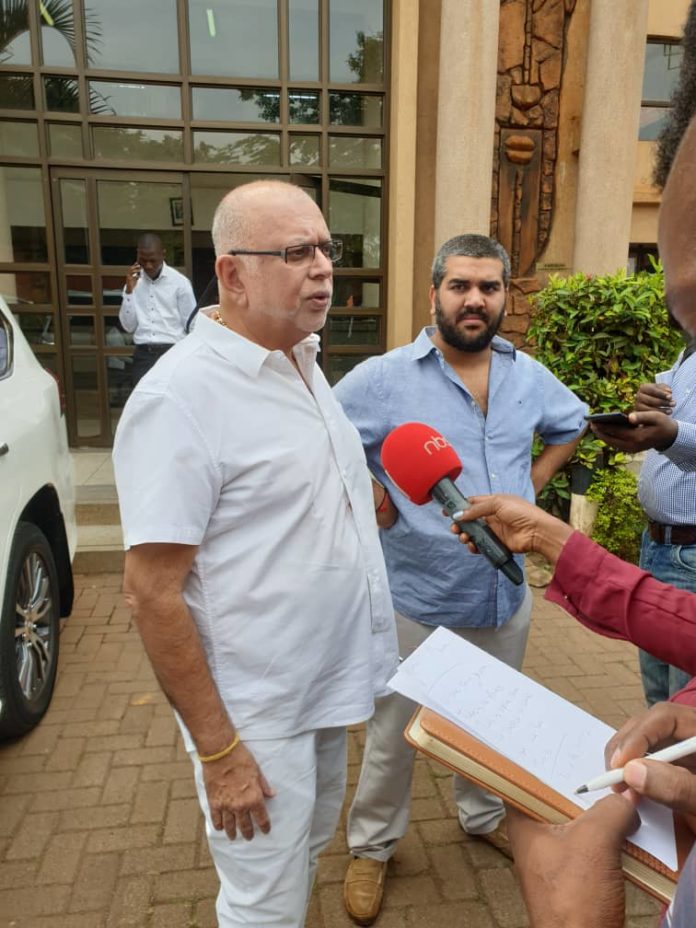
Chairman of Ruparelia group of companies Sudhir Ruparelia and his son who is the Managing Director of Crane Management Services, Rajiv Ruparelia take questions from the press at Commercial Court.

Court has set April 3, 2019 as the date for hearing of the case in which businessman Sudhir Ruparelia sued city law firm Sebalu & Lule Advocates, seeking to stop them from representing dfcu Bank for alleged conflict of interest, having worked for some of his companies some time back.

Justice Paul Gadenya of Commercial Court declined to commence the hearing of the case on Wednesday and instead decided to give another date after two judges opted out.

“I had asked this case to be mentioned because it is my first time dealing with it. However all I want now is to have the hearing plan for this application,” Justice Gadenya said.

The case was first handled by Justice Elizabeth Jane Alividza who stepped aside, handing the responsibility to Justice David Wangutusi who also pushed it back to her before finally landing to Justice Gadenya.

The case was fixed for hearing on the new date after all parties agreed that they had no witnesses they intended to call in court for cross examination.

However, Peter Walubiri the lawyer representing Sebalu and Lule Advocates asked court to allow him to file an affidavit in reply to Mr Ruparelia’s affidavit citing there were new issues brought up which do not pertain in the case. Court has granted him leave to file on March 21 before the hearing starts.

Also read: https://eagle.co.ug/2018/12/18/court-orders-sebalu-lule-advocates-off-crane-management-services-case.html

Ruparelia, in his lawsuit filed in December last year, pointed out that Sebalu and Lule Advocates should not be representing Bank of Uganda and dfcu Bank since it has already represented Crane Management Services that owned Crane Bank which was controversially sold to dfcu Bank in January 2017.

Crane Management Services sued dfcu bank demanding rental arrears amounting to Shs2.9b and $385,728.54 in respect of tenancies of suit properties that were formally owned by Crane Bank.

“In view of the advocate-client relationship between the applicant (Crane Management Services Ltd) and the 1st respondent (Sebalu & Lule advocates), the latter’s continued participation as defence counsel for the 2nd respondent (Dfcu bank) herein, which is the defendant in High Court Civil Suit (HCCS) No. 109/2018 against the applicant/plaintiff, is prejudicial to the applicant’s head suit,” reads the petition in part.

Ruparelia also wants the court to issue a permanent injunction, restraining Sebalu & Lule Advocates from appearing as defence counsel for dfcu bank in the other court case that the two principals are battling out.

Stories Continues after ad

NEMA suspends operations of Bukona Agro Processers in Nwoya

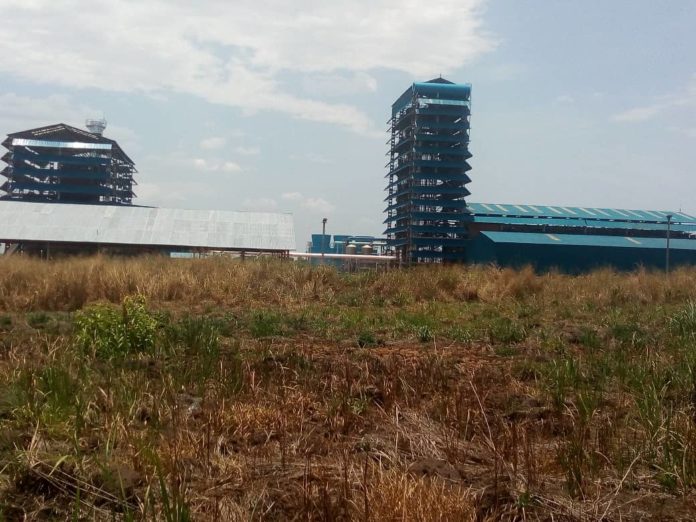
Bukona Agro Processers in Nwoya

The National Environment Management Authority (NEMA) has suspended the operations of Bukona Agro Processers in Nwoya district, following complaints by residents about pollution of River Ayago.

Lira regional team leader Michael Ikanut who led the inspection disclosed that the water at the spot that was inspected had a pungent smell, a dark colour and the communities were not able to use the water anymore.

The operations of the facility have been suspended until the factory puts in place an effluent treatment plant approved by NEMA and secures a discharge permit from the Directorate of Water Resources Management.

Stories Continues after ad

Gov’t, dispatches poisoned food samples to Kenya and South Africa for testing

Health Minister, Dr. Jane Ruth Acheng.

The government and World Food Program (WFP) have dispatched samples of super cereal, a fortified blended food to Intertek Kenya LTD, a laboratory based in Mombasa and Intertek testing Services S.A. LTD in Johannesburg South Africa for analysis, according to Health Minister Dr Ruth Jane Aceng.

This follows reported deaths arising out of the consumption of the suspected poisoned food that was being supplied by WFP.

The food was distributed early this months through 44 government health centres in Karamoja sub region with the aims of improving nutrition among pregnant or breastfeeding women, and children aged between six and 59 months in order to prevent stunting.

Minister Acheng said her ministry received an alert through its surveillance teams on the ground in Karamoja about suspected food poisoning prior to distribution by WFP.

A total of 262 people have been affected since 12th March with symptoms of mental confusion, vomiting, headache, high fever and abdominal pain, this prompted WFP to suspend the distribution process of food.

The minister said two lives have been lost in Lorengechora, Lookit village, Napak district and another female in Amuna village in Karita Sub County, Amudat district.

DR Acheng said, samples of super cereal stocks and water were taken from the affected areas including blood, vomitus and urine from patients and are currently being analyzed at the Directorate of Government Analytical Laboratory and the Central Public Health Laboratory.

“Preliminary results of the Government investigation are expected in the next 24 hours. Results from Kenya and South Africa are expected within the next five to seven days. Tests are aimed at establishing whether there is a connection between recent illnesses reported in two districts of Napak and Amudat,” she said at media centre.

Acheng said, Investigating teams from the Ministry of Health and WFP food technologists remain on the ground carrying out surveillance and epidemiological mapping to establish the associated factors and possible causes of this recent illness.

“WFP has distributed Super Cereal in Uganda for the past 10 years. Super Cereal is also distributed in many countries and has a robust record of fighting malnutrition and protecting pregnant or nursing women against malnutrition during the first 1,000 days of their child’s life,” she said.

Stories Continues after ad

South Africa among nine possible countries to host Women’s World Cup

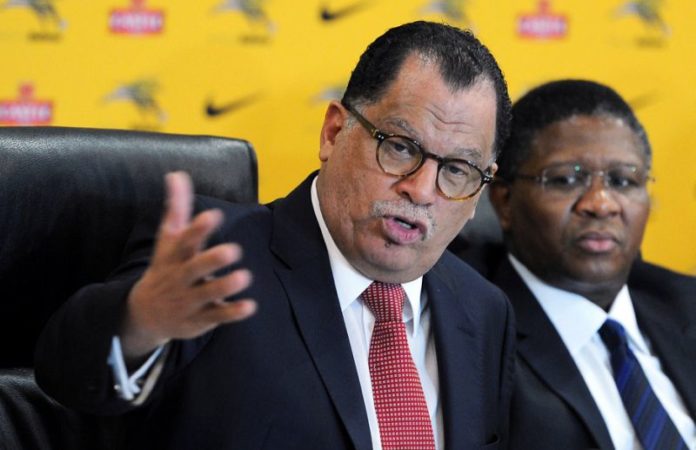
South African Football Association President Danny Jordaan

Following invitations to all member associations (MAs) to express their interest in submitting a bid to host the final competition of the FIFA Women’s World Cup in 2023, FIFA has received a total of nine expressions.

South Africa Football Association is amongst those that have expressed their interest in hosting the 2023 Women’s World Cup.

Fifa said in a statement; “This is the largest-ever list of MAs to have submitted formal expressions of interest to FIFA with a view to hosting the FIFA Women’s World Cup, the first edition of which was held in 1991.

All interested MAs have been sent the respective overview and bidding registration documents, and will have until 16 April 2019 to submit their bidding registration to FIFA.

In line with the principles outlined in the overview document available on FIFA.com and with the bidding for the FIFA World Cup 2026, FIFA will implement a fair and transparent process, which will include a clear evaluation model as well as a concrete commitment to sustainability and human rights. All bid books will be published in full on FIFA.com in October 2019.

Based on the FIFA Statutes, the FIFA Council will appoint the host(s) of the FIFA Women’s World Cup 2023. As communicated in the overview document and confirmed by the FIFA Council at its recent meeting in Miami, the result of each ballot and the related votes by the members of the FIFA Council will be open and made public.”

The interested Member Associations:

Argentinian Football Association

Football Federation Australia

Bolivian Football Association

Brazilian Football Association

Colombian Football Association

Japan Football Association

Korea Football Association (expressing interest in a joint bid with DPR Korea Football Association)

New Zealand Football

South African Football Association

Stories Continues after ad

Tokyo 2020 Olympics Women’s Qualifiers: Dates, Match officials for Uganda vs Ethiopia confirmed

The Crested Cranes

The Uganda Women’s national football team, also known as The Crested Cranes, were drawn against Ethiopia in the first round of the African qualifiers for Women’s Olympics football in Tokyo 2020, and the dates have been confirmed.

The first leg will be played in Addis Ababa on 3rd April 2019 with the second leg to be played in Kampala on 6th April 2019.

The winner over the two legs will have to face Cameroon in the second round of the qualifiers. The first leg and second leg will be played between 26th August and 3rd September 2019.

Saad Ali Shahend from Egypt will be the centre referee in the first leg and will be assisted by fellow Egyptians Hassan Hanady and Ahmed Shibl as the first and second assistants respectively.

In the return leg in Kampala, Umutoni Aline from Rwanda will be the center referee, Murangwa Sandrine and Umutesi Alice will be the first and second assistants respectively.

This will be the first time the Crested Cranes take part in the Olympics qualifiers in the history of Uganda Women Football.

Africa has 1.5 slots for the final tournament next year in Tokyo, Japan, meaning one team will go through automatically from the qualifiers, and second-placed team engaging their counterparts from CONMEBOL (South America) in a playoff.

Tokyo 2020 Olympics Qualifier

First Leg 3rd April, 2019

Ethiopia vs Uganda, National Stadium Addis Ababa

Second Leg 6th April, 2019

Uganda vs Ethiopia, StarTimes Stadium

Stories Continues after ad

Museveni writes to Kagame: “Uganda can’t support anti-Rwanda elements”

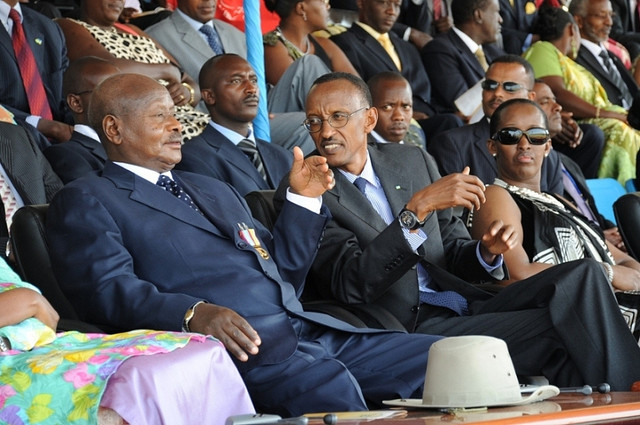
(L-R) Presidents Museveni and Kagame in discussion

After weeks of silence, President Museveni has finally opened up on the bad relations with Rwanda, through a letter to his counterpart President Paul Kagame, denying claims that Uganda helps rebels opposed to Rwanda.

According to the letter, Museveni said he only recently came into contact with a lady Charlotte Mukankusi, who admitted to being a member of the Rwanda National Congress (RNC), an organisation that Kagame has said is hostile to Rwanda.

He says: “Mukankusi told me that he husband Rutagarama had been killed by the agents of the Rwanda state…that she had been told by those very people [who killed her husband]. I then asked her what she wanted me to do about it because it was an internal matter. She told me she wanted me to know bad things that were happening in Rwanda. She told me she had joined RNC to resist Your Excellency’s government. She wanted us to support them.”

But Museveni told her he could not support her because the African Union is against countries interfering in the affairs of other countries.

“She was disappointed with my reply and I told her that I will inform you in writing,” he writes.

In the letter, Museveni also speaks about the Rwanda businessman Tribert Rujugiro, whom Kagame accuses of financially supporting rebels. Rwanda had demanded that the businessman be repatriated to Kigali for trial.

“Mr Rujugiro..seems to be resisting the idea of selling his businesses which he had accepted to do before. He countered the idea of giving money to Kayumba [Nyamwasa] by saying that even if he sells the factories in Uganda, he still has more lucrative factories in Angola, Dr Congo..a total of eight of them. He can send money from those,” Museveni writes.

He said if Rujugiro is still a problem to Rwanda, Uganda can use courts of law to try him on charges of terrorism and then his assets can be frozen.

Stories Continues after ad

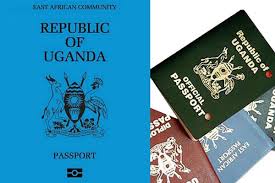
Danish authorities finally validate EAC Uganda passport

Passport

The Royal Danish authorities have finalised the process of entering the new East African Community (EAC) passport for Uganda into their immigration system and the Danish Embassy in Uganda is now considering the documents for visa application, according to the Ministry of Foreign Affairs.

“The public is hereby informed that the visa applications for persons intending to travel to Denmark using the EAC Uganda passport can now be submitted to the Danish Visa Application Centre in Kampala,” reads part of the latest press statement from the ministry.

The latest statement is in reference to the press release that was earlier issued by the ministry on February 1, 2019 in which the ministry refuted claims that the Royal Danish Embassy in Nairobi had rejected the use of the EAC Ugandan passports as valid travel documents.

Stories Continues after ad

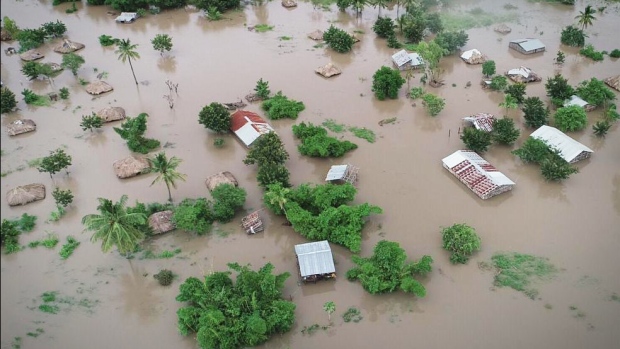
Cyclone Idai: Mozambique President says 1,000 may have died

Floods

The death toll in Mozambique from Cyclone Idai could be as high as 1,000, President Filipe Nyusi has said.

Mr Nyusi flew over some of the worst-hit areas on Monday. He described seeing bodies floating in the rivers.

The storm made landfall near the port city of Beira on Thursday with winds of up to 177 km/h (106 mph), but aid teams only reached the city on Sunday.

A UN aid worker told the BBC that every building in Beira – home to half a million people – had been damaged.

Gerald Bourke, from the UN’s World Food Programme, said: “No building is untouched. There is no power. There is no telecommunications. The streets are littered with fallen electricity lines.

“The roofs on so many houses have fallen in, likewise the walls. A lot of people in the city have lost their homes.”

The official death toll in Mozambique stands at 84 following flooding and high winds. The cyclone has killed at least 180 people across southern Africa.

The International Federation of Red Cross and Red Crescent Society (IFRC) described the damage as “massive and horrifying”.

People have had to be rescued from trees, Jamie LeSeur, the head of the IFRC assessment team, told the BBC.

In Zimbabwe, at least 98 people have died and 217 people are missing in the east and south, the government said.

The death told included two pupils from the St Charles Lwanga boarding school in the district of Chimanimani, who died after their dormitory was hit when rocks swept down a mountain.

Most of those known to have died so far were killed around Beira, the country’s fourth largest city with a population of about 500,000, authorities there said.

More than 1,500 people were injured by falling trees and debris from buildings including zinc roofing, officials in the capital Maputo told the BBC.

“Almost everything has been affected by the calamity,” Alberto Mondlane, the governor of Sofala province, which includes Beira, said on Sunday. “We have people currently suffering, some on top of trees and are badly in need of help.”

Stories Continues after ad

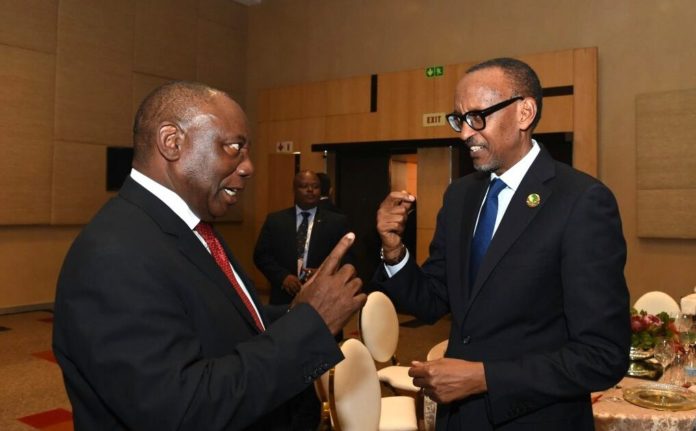
South Africa, Rwanda in bitter fallout

Presidents Kagame and Ramaphosa.

Rwandan President Paul Kagame has thrown down the gauntlet on South Africa and warned that if Pretoria does not rein in its top officials to mend relations between the two counties, there is a risk of a further fallout that could also cause political instability in the Great Lakes region.

At the centre of the dirty diplomatic tussle are several issues: South Africa giving refuge to former Rwandan army chief General Kayumba Nyamwasa and other “dissidents”; the 2013 murder of former intelligence boss Colonel Patrick Karegeya in Sandton; the expulsion of diplomats from both countries in a tit-for-tat standoff; and a South African judiciary inquest into the murder of Karegeya.

The countries also recently traded verbal blows after Rwandan Minister Olivier Nduhungirehe was accused by Pretoria of calling International Relations Minister Lindiwe Sisulu a “prostitute”, a claim strongly dismissed by Kigali as a smear.

Rwanda blames South Africa for the instability in Central and East Africa, where rebel activities are linked to Kagame’s political foes exiled in Pretoria, who were believed to come to the Great Lakes region via Uganda to recruits rebels, allegedly with the support of President Yoweri Museveni’s government.

So tense are relations between the two East African neighbours that there was even talk of war and closing borders, which would cause further instability in the region.

But Kigali is adamant the genesis of the problem is in South Africa, recently voted into the UN Security Council as a non-permanent member and the only African country there.

Speaking in an exclusive interview with The Star in Kigali, a frustrated Kagame said although he seemed to enjoy cordial relations with President Cyril Ramaphosa, it appeared that top South African officials were using their control and influence in government systems to block efforts to fix the broken relations between the two countries.

The two leaders have met on the sidelines of events such as the AU summit in Addis Ababa, Ethiopia, and the BRICS gathering in South Africa last year, where Kagame represented the AU as its then chairperson. They agreed to work together to fix the worsening relations.

The two also met in Cape Town two weeks ago, where Kagame was a guest at the Young Presidents Organisation’s event for young global chief executives, thought leaders and opinion makers.

But almost a year after they first agreed to address the fallout over South Africa’s 2010 decision to stop issuing visas to Rwandans on ordinary passports, nothing has been done, confirming Kagame’s fears that the South African system was frustrating the heads of state’s efforts to better relations between the countries, which both turn 25 next month.

“We don’t deny South Africans visas to travel to our country, but the reverse to South Africa is not the same,” Kagame told The Star. “These matters have come up and the president (Ramaphosa) was very open about it; it was public, he gave instructions. (But) nothing happened in the opposite direction somebody somewhere blocks it and doesn’t want it to happen.”

Kigali strongly believed the visa issue was used to punish Rwanda for its desire to see suspected dissidents brought home to face trial for alleged terrorist activities.

Kagame said South Africa chose his exiled opponents over a better relationship with Rwanda. “Those individuals who live in South Africa, if you trace back how they came there, there is something wrong with what they were involved in. Under normal circumstances they wouldn’t be welcome in South Africa, let alone be preferred in terms of relationship,” said Kagame.

“So here there’s a bizarre situation. Someone in the government of South Africa would rather associate with those bad groups living in South Africa who have a bad history and have done terrible things which they should be held accountable for.

“They prefer that, and use their authority to even go further to try to create problems for us.”

What has angered Kigali in the latest diplomatic skirmish was a press conference where Sisulu was asked a question by a journalist on whether the “dissidents” were willing to come home and negotiate with Kagame.

“You saw authorities of government saying they have met with those groups and that they are inclined to negotiate; they want to talk to us, coming out of nowhere. That was absolutely bizarre. If anyone finds that normal, I would be surprised,” said Kagame.

He added that South Africa had not spoken to Rwanda about meeting them and the alleged bid to negotiate with Kigali until they saw it at the media briefing.

“When we saw it, we were taken aback. And of course, at the same time, these individuals were busy in the media, making all sorts of statements.

“It is as if they are energised by statements made by officials of the South African government. They are really hyped up.

“And so I don’t know where that leads us. But we are patient enough. We have been trained by our history and our problems to be very patient, almost inexhaustibly patient, so that we don’t get diverted from doing what we want to do for ourselves and our country, and move on.”

But Kagame felt that South Africa had not shown a keen interest in patching things up and that the attitude towards Kigali, especially coming from another liberation movement and with both countries sharing a history of a painful past, showed contempt for Rwanda.

“We remain steadfast and calm and appreciative of what a good relationship should entail, and embrace it. The door is open when South Africa finds it more appealing to deal with us than with those groups.”

Stories Continues after ad

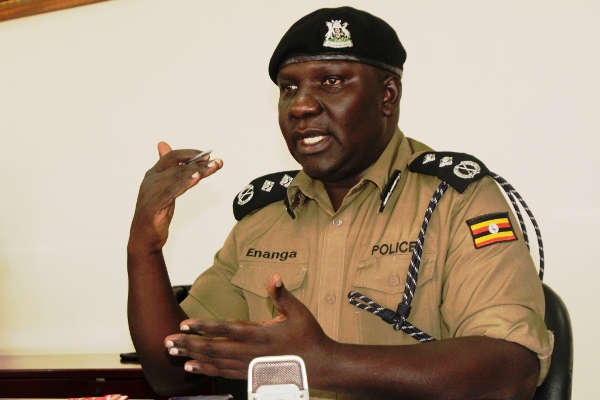
Police hold five suspects in connection to gruesome murder of five juveniles in Kyenjojo

Fred Enanga, police Spokesperson.

A Joint Task Team of homicide, flying squad and Kyenjojo police, is holding five suspects in connection to gruesome murder of five young children whose ages range from one month to seven years .This occurred in the wee hours of Wednesday last week.

The murder occurred at Kahompo village Bufunjo sub county Kyenjojo district, where attackers broke the door and gained access to the house. They traced for Tumwebaze Joseph, their father, but found when he was not around and instead hacked the childeren to death.

They further attacked, seriously assaulted Tumwebaze’s wife and dumped her body into Kahompo River, thinking she was dead. She was however rescued the following morning and rushed to hospital where she is undergoing treatment.

According to police spokesperson Fred Enanga, the team nabbed four suspects who include; Balyeija Justus, his wife Akampasa Keli, Muhereza Lauben and his wife Alinda Sylvia. The team further tracked down and arrested Allan Turyahikayo, from Ntinda and transferred him to Kyenjojo.

‘The preliminary information indicates that the suspects hatched a plot in their home to carry a revenge attack on the family of Joseph Tumwebaze, after he facilitated the release of his brother Ndyanabo Godfrey, who was imprisoned for the murder of their brother, Bright, in 2012,” he said in a press briefing.

Enanga said, two of his brothers Allan Turyahikaya and Balyeija Justus were not convinced with the out-of-court settlement between the two families and repeatedly threatened to revenge the life of their brother.

He said suspects confessed to the murder and also led the task team to the recovery of a blood stained shirt to one of the child victims and pangs used in the gruesome murder.

‘We have also established the identity of the other two suspects on the run as Byaruhanga Fred and Kagurane Emmanuel in who perpetrated the murder, and track them down for arrest. We continue to appeal to anyone with information surrounding their whereabouts to contact us or share it in confidence,” he said

“The police strongly condemns the revenge attacks and killing of civilians including children, as there is no justification for such extra ordinary degree of violence. The suspects are to be leveled with five counts of murder and one count of attempted murder,” he said.

Stories Continues after ad