Stanbic Bank
Stanbic Bank
19.8 C
Kampala
Stanbic Bank
Stanbic Bank
Home Blog Page 1361

African C-sections 50 times more deadly, study says

Young pregnant black woman touching her belly - African people

The number of mothers who die after a Caesarean-section in African countries is as much as 50 times higher than in developed countries, according to a study in the medical journal The Lancet.

Their sample indicated that one in 200 women dies during or soon after a C-section. By comparison, maternal mortality is about one woman per 10,000 operations in the UK. Death rates related to C-sections are roughly the same across most developed countries.

And almost 20 per cent of the African women experienced complications during surgery. That figure is nearly three times higher than in the US.

Experts said some of the reasons for preventable C-section deaths included a ruptured uterus in mothers who had pre-existing placental complications, bleeding before birth or during surgery, and problems related to anaesthesia.

However, the report’s authors are not calling for fewer C-sections. Bruce Biccard, professor at the University of Cape Town, actually thinks there should be more across Africa.

“Improving access to surgery might allow patients to present earlier and prevent complications and deaths but it is vital that this improvement occurs in parallel with programmes aimed at improving patient safety during caesarean delivery,” Mr Biccard is quoted as saying in The Telegraph newspaper.

Almost 3,800 women were included in the study across 22 countries, making it the largest to track maternal complications in Africa.

Stories Continues after ad

UNBS Closes Halal Foods & Beverages Factory

Dr. Ben Manyindo

Uganda National Bureau of Standards (UNBS) has closed down Halal, Twayibah Foods & Beverages Factory in Old Kampala over failure to comply with set standards for production of beverages thus putting the health of consumers at a great risk, it says in a statement.

The factory was closed after UNBS Surveillance team together with KCCA officials conducted inspection of the factory.

According to the statement, the factory was found in production of pre-packaged drinking water of Halal brand in an unhygienic environment. The workers were found handling water with bare hands and with no safety gear which is a contravention of the Uganda Standard US 28 EAS 39:2002 – Code of practice for hygiene in the Food & Drinks Manufacturing Industry.

“Some bottles of the packaged drinking water were found with the UNBS Distinctive mark yet the company is not certified. This is in contravention of section 20 (1) of the UNBS Act; Cap 327 and the UNBS Administrative Directives on Implementation of water Standards Requirements – May 2013 which prohibits the sale of uncertified packaged drinking water,” the statement says.

“UNBS would therefore like to inform the public that the premises of Halal & Twayibah Foods & Beverages factory shall remain closed until investigations are completed, it says

Stories Continues after ad

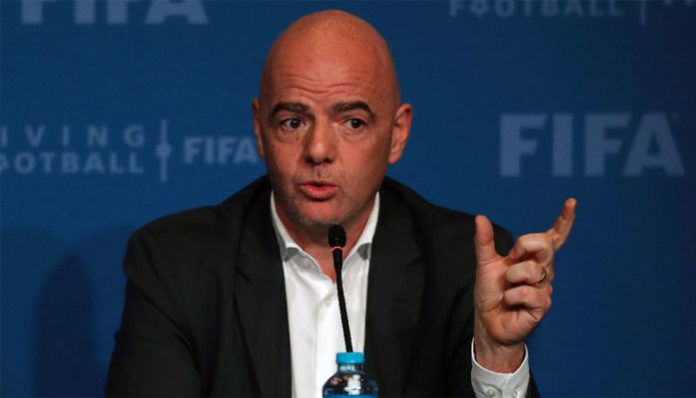
2022 Fifa World Cup could be expanded to 48 teams

FIFA President Infantino

FIFA’s ruling council has not ruled out expanding the 2022 World Cup in Qatar to 48 teams but a final decision will probably be pushed back until June, a source close to world football’s governing body told Reuters on Thursday.

FIFA’s feasibility study on the tournament envisages some additional games in an expanded World Cup possibly being held in other countries, with Kuwait and Oman mentioned as options.

A deep political and economic rift in the Gulf complicates the prospects of sharing the tournament.

The United Arab Emirates, Saudi Arabia, Bahrain and non-Gulf state Egypt cut political, trade, and transport ties with Qatar in June, 2017. The countries accuse Qatar of supporting terrorism, which it denies.

While Qatari organisers are working with FIFA on further studies of the options, they retain a veto over any change to the tournament, which is schedule for November 2022.

The source said that the council meeting is likely to conclude on Friday with an expression of support for continued investigation of the possibility of adding an extra 16 teams to the tournament.

The council will meet again shortly before the June 5 congress in Paris and they are then expected to put their recommendation to the full membership, who have traditionally backed the preferences of the leadership.

FIFA’s other major decision on a new expanded Club World Cup, possibly with 24 teams to start in 2021, is also expected to be held back until June.

It is also reported that Africa “will definitely support” expanding the 2022 World Cup in Qatar to 48 teams, says the Confederation of African Football (Caf) vice-president.

“Caf will definitely support the vision of (Fifa president) Gianni Infantino if he wants this,” he told BBC Sport.

“Why wait until 2026 if we can achieve it now? If you do it now, there will be more money and more participating teams.

“In Africa we are going to have another 4.5 (places), which makes more sense to us – rather than just going with five nations. That’s why Africa will always support Infantino.”

Because of its small geographical size, Qatar would need the support of regional co-hosts to stage a 48-team finals.

Earlier this week, the Associated Press reported that a leaked Fifa feasibility study into the prospect of expanding the 2022 World Cup could work if at least one of Qatar’s neighbours was used as an additional host.

Stadiums in Bahrain, Kuwait, Oman, Saudi Arabia and the United Arab Emirates have been identified as suitable yet only two of these countries would appear feasible at present – Kuwait and Oman.

A final decision on the possible expansion – which would come ahead of a pre-existing decision to have 48 teams in the 2026 World Cup in Canada, Mexico and the United States – is expected to be taken at the Fifa Congress in June.

However, Europe is expected to challenge the prospect of 16 more teams and an extra 16 games – given the 2022 finals are already forcing the continent’s leagues to rearrange their competitions.

This is because the tournament will take place in the middle of the European season, having been moved to November-December from its traditional June-July slot.

This would mean 80 matches being played in the same 28-day window between 21 November and 18 December.

Stories Continues after ad

EU tables Shs12b to benefit Congolese refugees in Uganda

Some of Congolese refugees.

A European Union (EU)-funded humanitarian project to last one year has been launched in Uganda to help cover the basic needs of about 300,000 refugees from the Democratic Republic of Congo (DRC) in the southwest of the country.

Funded through the European Union’s Civil Protection and Humanitarian Aid Operations department (DG ECHO), the project is receiving support worth EUR 3 million (about Shs 12 billion).

‘‘Our goal is to ensure that the most vulnerable refugees are safe and that their basic needs are covered. This means providing them with shelter, food, water, protection and helping them on the path to self-reliance,” said Isabelle D’Haudt, Head of EU Civil Protection and Humanitarian Aid Operations in Uganda.

The project is a consortium led by the Danish Refugee Council in Uganda in partnership with the Lutheran World Federation (LWF) and Action Against Hunger (ACF). The three organisations bring the experience, technical expertise and operational strength needed for the successful implementation of the planned actions.

In addition, the project also aims at protecting the environment in refugee-hosting areas.

‘‘For the first time, we have a project where the household is at the centre of our operations. It is an integral and critical part of the protection and solutions strategy,’’ said Severine Moisy, Head of Programmes at the Danish Refugee Council. ‘‘We designed assistance around the refugee household; partners are bringing together their efforts into one coordinated and standardised approach across the board to be used for selected households having specific needs.’’

The project is expected to benefit 3 500 vulnerable households comprising 18 000 individuals in the two settlements of Kyaka II and Kyangwali, located in the Kyegegwa and Kikuube districts respectively, in southwestern Uganda. These settlements were chosen as areas for intervention because of their urgent humanitarian needs and the presence of very vulnerable refugees in them. Furthermore, these two settlements continue to receive new arrivals of people fleeing violence in the Democratic Republic of Congo.

Between May 2017 and December 2018, the Danish Refugee Council led another EU-funded consortium which provided aid to 350 000 South Sudanese refugees and their host communities in northern Uganda by giving them sustainable access to water and sanitation, shelter, livelihoods and protection services.

Similarly, in a pilot project that ran between April and November 2018, the EU supported a cash programme implemented by the Danish Refugee Council in Kyaka II which provided aid to 3 000 households. The beneficiaries, vulnerable new arrivals from the Democratic Republic of Congo, received cash grants to meet their basic needs.

According to the most recent verification of refugee numbers, carried out by the Government of Uganda and the United Nations High Commissioner for Refugees (UNHCR), Uganda is host to about 1.2 million refugees.

Stories Continues after ad

10 business plan tips too many entrepreneurs forget

Martin Zwilling

By Martin Zwilling

If you want people to invest in your idea, then my best advice is first write a business plan, and keep it simple. Don’t confuse your business plan with a doctoral thesis or the back of a napkin. Keep the wording and formatting straightforward, and keep the plan short. For minimum content, see my original article “These 10 Key Elements Make a Business Plan Fundable.”

The overriding principle is that your business plan must be easy to read. This means writing at the level of an average newspaper story (about eighth-grade level). Understand that people will skim your plan, and even try to read it while talking on the phone or going through their e-mail.

But don’t confuse simple wording and formats with simple thinking. You’re keeping it simple so you can get your point across quickly and effectively to team members and investors. With that in mind, here are some specifics that bear repeating, updated from a classic article on simple plans by Tim Berry:

Keep the plan short. You can cover everything you need to convey in 20 pages of text. If necessary, create a separate white paper for other details and reports. The one-page Oprah plan is a good executive summary, but it’s not enough to get the investment.

Polish the overall look and feel. Aside from the wording, you also want the physical look of your text to be inviting. Stick to two fonts in a standard text editor, like Microsoft Word. The fonts you use should be common sans-serif fonts, such as Arial, Tahoma or Verdana, 10 to 12 points.

Don’t use long complicated sentences. Short sentences are the best, because they read faster, and reader comprehension is higher in all audiences.

Avoid buzzwords, jargon and acronyms. You may know that NIH means “not invented here” and KISS stands for “keep it simple, stupid,” but don’t assume anybody else does.

Simple straightforward language. Stick with the simpler words and phrases, like “use” instead of “utilize” and “then” instead of “at that point in time.”

Bullet points are good. They help organize and prioritize multiple elements of a concept or plan. But avoid cryptic bullet points. Flesh them out with brief explanations where explanations are needed. Unexplained bullet points usually result in questions.

Don’t overwhelm the plan with too many graphics and flashy colors. Pictures and diagrams can effectively illustrate a point, but too many come across as clutter.

Use page breaks to separate sections. Also to separate charts from text and to highlight tables. When in doubt, go to the next page. Nobody worries about having to turn to the next page.

Use white space liberally, spell-checker, and proofread. Include one-inch margins all around. Always use your spell-checker. Then proofread your text carefully to be sure you’re not using a properly spelled incorrect word.

Include table of contents. No investor likes searching every page for key data, like executive credentials, or exit strategy. Most word processors these days can automatically generate a table of contents from your section headings. Use it.

Investors hear from too many entrepreneurs that envision a great business opportunity, but don’t have any written business plan at all. They think they can talk their way to a deal. It won’t work. On the other end of this spectrum are entrepreneurs who present long product specifications with a few financials at the end. This is a failing strategy as well.

If you’re not the type who can connect with people based on a simple message, told succinctly, then hire someone who can. In fact, simplicity and readability is one of the most effective strategies for selling even the most complex proposal. A business plan that is easily understood and looks professional is already half sold. Simple is not stupid.

The writer is a veteran startup mentor, executive, blogger, author, tech professional, professor, and investor. Published on Forbes, Entrepreneur, Inc, Huffington Post.

Stories Continues after ad

Champions League: Man United draw Barcelona in last eight

United - Barcelona

The UEFA Champions League quarter-final and semi-final draws took place at the House of European Football in Nyon, Switzerland, on Friday 15 March.

Ole Gunnar Solskjaer is heading back to the Camp Nou – the scene of the most celebrated moment of his career. Manchester United will host Barcelona in their first leg clash at Old Trafford before heading to Spain.

The winner between Man United and Barcelona will have to face either Liverpool or Porto in the semifinals.

The last time United got through to the quarter final of the competition was in 2013-14 when they lost to Bayern Munich.

Serie A giants Juventus will face Ajax following the Dutch side’s incredible victory over Real Madrid while last year’s beaten finalists Liverpool was arguably handed a favorable draw against Porto.

Tottenham take on fellow English opposition in European competition for the first time since the 1972/73 season in bookies’ favourite Manchester City.

Spurs will face back-to-back trips in April to the Etihad Stadium with their second leg clash taking place on April 16 and their Premier League clash following on April 20.

The winner between the all-English tie will face the winner between Juventus and Ajax in the semifinals.

A reminder that Man City & Manchester United are not able to play at home on the same night, nor on consecutive nights, following a decision made by the relevant local authorities. The first leg of Manchester United v Barcelona will therefore be at Old Trafford.

The first legs of the quarter-finals will be played on 9/10 April with the return legs on 16/17 April.

The semifinals first leg will be on 30 April/1 May, and the second legs on 7/8 May.

The final will be played on Saturday 1st June at the Estadio Metropolitano, Atletico Madrid’s home ground.

Full Draw:

Manchester United v Barcelona

Tottenham Hotspur v Manchester City

Liverpool v Porto

Ajax v Juventus

Stories Continues after ad

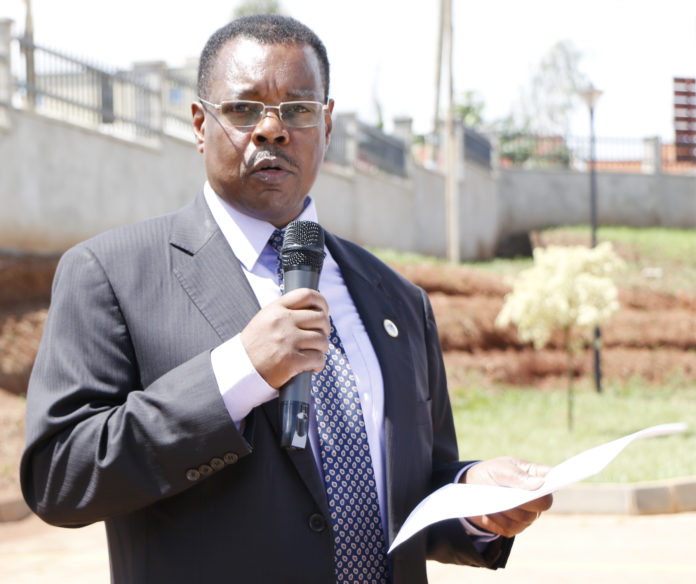
Ministry bans schools from buying exams from commercial bureaus

Education PS, Alex Kakooza

The Ministry of Education and Sports (MoE & S) has banned schools from buying exams from Commercial Examination Bureaus noting that act is not only unprofessional but also detrimental to the children’s future.

In a directive to the Chief Administrative Officers, Town Clerks and Director KCCA, the ministry revealed that examination bureaus are not licensed to operate in schools and do not have any mandate from the ministry to assess its learners.

According to Permanent Secretary in Ministry of Education and Sports, Alex Kakooza, many schools have taken the advantage of examination bureaus to exploit parents by charging them fees for daily tests, daily homework, mid-term tests, beginning of term tests, weekly tests, holiday packages and end of term tests.

“This practice gives teachers no freedom to assess the learner’s capacity, following a syllabus. This act is not only unprofessional but also detrimental to the children’s future,” said Mr. Kakooza reads

He called on teachers to revert to, professional way of following the curriculum, writing schemes of work, and derive lesson plans from there for conducting effective lessons, that will help learners acquire knowledge and skills for personal and national development.

“District and municipal education officers, inspectors of schools, coordinating centre tutors and others have been instructed to ensure that no private examination bureaus operate in schools,” reads in part of the statement.

Despite running the private examination bureaus, Kakooza called on the head teachers and teachers to immediately stop the practice.

Stories Continues after ad

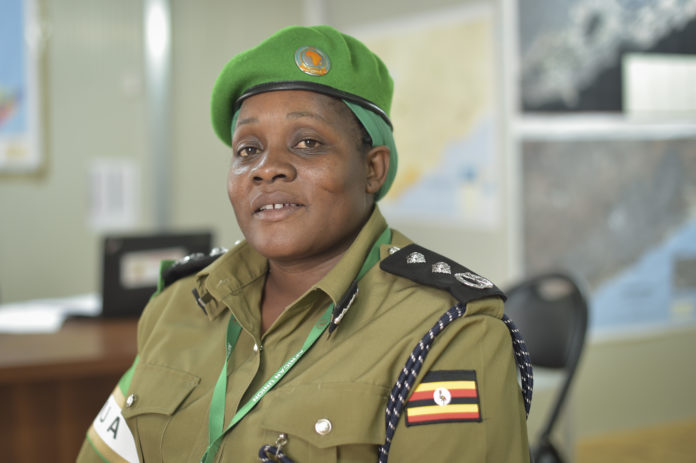
AMISOM announces three days of mourning APC Christine Alalo

The late Christine Alalo.

The African Union Mission in Somalia (AMISOM) has announced three days of mourning in honor of the late Acting Police Commissioner Christine Alalo, who perished in the ill-fated Ethiopian Airlines flight on Sunday, March 10.

AMISOM staff and their counterparts from the UN and other partners gathered at the Mission Headquarters in Mogadishu, to sign a condolence book in her honor, where the AU Special Representative for Somalia and Head of AMISOM, Francisco Caetano Madeira declared three days of mourning in her memory.

All African Union flags will also fly at half-mast as the world mourns Commissioner Alalo and other victims of the crash.

Ambassador Madeira described the late Commissioner of Police as an open and meticulous officer, in her method of work, and meetings with AMISOM partners, which he added is essential in ensuring continuity of the mission’s work.

“She was like a soldier who knew that any time (she) could fall, because the endeavor was dangerous. So she ensured that everybody knew the important things that have to be done,” Ambassador Madeira said in his remarks to the staff.

AMISOM will today, Friday March 15, hold a night-long vigil in recognition of Commissioner Alalo’s contribution to the AU Mission and her outstanding leadership at the helm of the AU Police.

On Saturday, March 16, the mission will hold an inter-denominational funeral service in her honor.

Alalo joined AMISOM in June 2015 as Deputy Police Commissioner, a position she held until November 2017, when she took over the leadership of AMISOM Police in an acting capacity.

She was instrumental in providing guidance and leadership in the transformation of the Somali Police Force into a reliable and professional outfit, while preparing the force for the eventual takeover of policing responsibility from AMISOM.

Commissioner Alalo died while en-route from Italy, where she had attended a conference.

Stories Continues after ad
Commercial Bank of Africa shareholders agree merger with NIC Group

Commercial Bank of Africa

Kenya’s Commercial Bank of Africa (CBA) said on Friday its shareholders had consented to a swap with NIC Group, following announcement months back.

In January, the two banks announced a planned merger in which current NIC Group shareholders would own 47 percent of the merged entity and CBA shareholders 53 percent.

“As a result of the share exchange transaction, it is proposed that NIC Group will acquire sole control of CBA and its subsidiaries,” CBA said in a statement published in Kenyan media.

NIC is a leading bank in asset financing and has a strong base of mid-sized corporate clients. CBA has a strong retail client base, including digital-only customers on its M-Shwari mobile platform.

The banks said in January that once merged, the group will have more than 100 branches, spanning Kenya, Tanzania, Uganda, Rwanda and Ivory Coast.

It will also have a presence on mobile platforms in Tanzania, Uganda and Rwanda and Ivory Coast, in collaboration with telecoms firms in the four countries.

Stories Continues after ad

MTN Group to boost Uganda shareholding to 20%

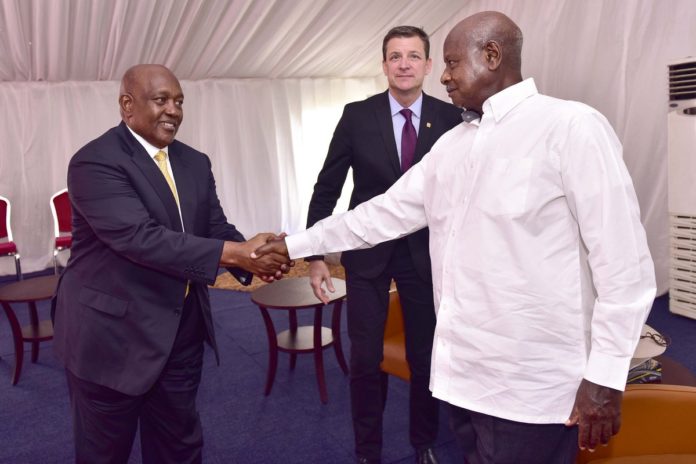
President Museveni meeting former MTN Group CEO and MTN-Uganda Board Chairman, Charles Mbire.

MTN Group’s Uganda affiliate is looking to increase local shareholding to 20 percent from 4 percent this year, according to Chief Executive Robert Shuter.

The decision to expand local ownership is in line with President Yoweri Museveni’s call who has said he would like MTN Ugandan to list on the Uganda Securities Exchange (USE) so that some of the revenue stays in the country as opposed to all moving out.

Shuter said the company planned to hold discussions with government over how to structure the extra stake sell-off.

“We would like to broaden it (local ownership) in the course of 2019…we would like to target to move it from 4 percent to 20 percent,” Shuter said.

MTN is already in talks with state-owned pension fund NSSF for a potential purchase of the extra stake, said Shuter.

NSSF has assets of more than 7.9 trillion Ugandan shillings ($2.13 billion).

“We’ve been in discussions with the NSSF, this is a potential investor in MTN Uganda…this is a way to get broad-based participation without necessarily having to go through all the complexity of the listing,” Shuter said.

Uganda recently deported four MTN Uganda executives including the firm’s top official, Wim Vanhelleputte, accusing them of compromising national security. The firm has also been accused of under-declaring its revenues and causing public revenue losses.

MTN has denied all the accusations.

Stories Continues after ad