Stanbic Bank
Stanbic Bank
18.3 C
Kampala
Stanbic Bank
Stanbic Bank
Home Blog Page 1372

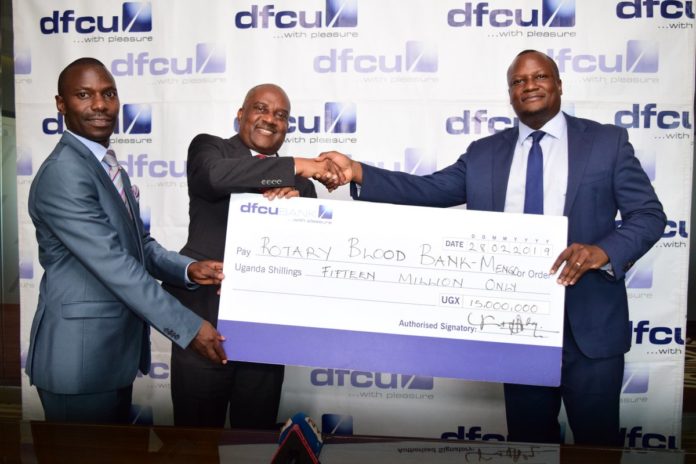
Dfcu gives Shs15m for Mengo Hospital blood bank

Picture: Dr. Emmanuel Katongole, Chairperson Rotary Blood Bank project and Mathias Katamba

DFCU bank has announced Shs15 million as contribution towards the fundraising efforts to equip Mengo Hospital with a fully-fledged Blood Bank that will test, process and pack safe blood before being distributed to other health centres.

The US $856,000 facility was in early 2017 commissioned by President Rotary international, John F. Germ and the Prime Minister of Uganda Dr. Ruhakana Rugunda.

According to Rotary, the total cost of the project was US $1,103,000 however, it is decreasing because they handle it in phases after contributions and donation for a particular cause.

The announcement was made by Chief Executive Officer of DFCU, Mathias Katamba reiterating their commitment to community empowerment and support which will be boosted with more Cooperate social responsibilities.

“Our support towards this cause is directly in line with our brand promise of Making More Possible for the diverse communities in which we operate,” he said at DFCU headquarters.

“People are at the heart of our Corporate Social Investment (CSI) agenda and the need for accessible safe blood is universal, so we are more than glad to make our contribution to this cause. We will be unveiling more community investment initiatives this year as DFCU celebrates 55 years of existence,” he noted.

The initiative intends to raise $500,000 in order to equip Mengo Hospital. Rotary fundraising efforts will be climaxed with the Transformational Leadership Forum and the Kirk Wallum Jazz concert slated for 7th March 2019.

Stories Continues after ad

WHO publishes new estimates on congenital Syphilis

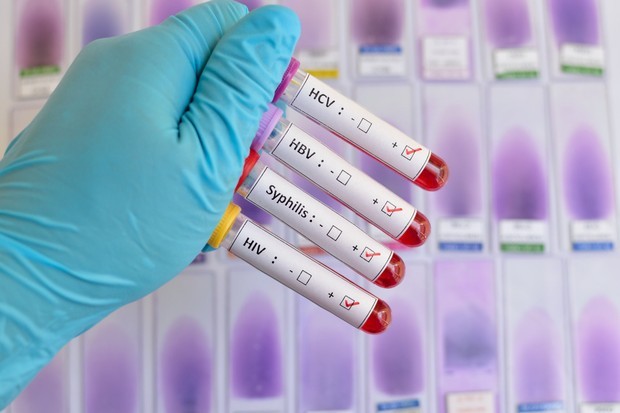
Syphilis

New estimates published Wednesday show that there were more than half a million (around 661,000) total cases of congenital syphilis in 2016, resulting in over 200,000 stillbirths and neonatal deaths. Syphilis is one of the most common sexually transmitted infections globally, with approximately 6 million new cases each year.

If a pregnant woman who is infected does not receive early and effective treatment, she can then transmit the infection to her unborn infant. This is known as ‘congenital syphilis’, which is often fatal. It can also cause low birth weight, prematurity, and other congenital deformities.

Congenital syphilis is the second leading cause of preventable stillbirth globally, preceded only by malaria.

Preventable and treatable
Congenital syphilis is easily preventable and treatable – as long as testing and treatment are provided to pregnant women early during antenatal care. The risk of adverse outcomes to the fetus is minimal if a pregnant woman, infected with syphilis, receives testing and adequate treatment with benzathine penicillin, early in pregnancy – ideally before the second trimester.

Co-authored by WHO and HRP with partners, and published in the scientific journal PLOS ONE, the new estimates show that out of the 661,000 total cases of congenital syphilis, there were 355,000 adverse birth outcomes – which represents a significant proportion of newborn death and disease.

The estimates showed that the overall global burden of congenital syphilis decreased over the 2012 to 2016 research period, although non-significantly, from around 750,000 to 660,000 cases. The research also found some improvements in screening, treatment, and surveillance of maternal syphilis. Estimated adverse birth outcomes due to congenital syphilis decreased slightly from 397,000 to 355,000.

Despite the decrease between 2012 and 2016, the numbers of affected women and infants remains unacceptably high. It is crucial that all women are provided with early syphilis screening and treatment as part of high-quality antenatal care for a positive experience of pregnancy.

In addition, health systems and programmes need to ensure that all women diagnosed with syphilis, as well as their infants, are effectively treated – and that their sexual partners are reached for testing and treatment. Countries can also work to reduce syphilis prevalence across populations, by ensuring that testing, treatment and partner referral for the infection are put into action, beyond that of antenatal care.

The importance of syphilis surveillance towards the goal of congenital syphilis elimination
WHO is working towards the goal of eliminating mother-to-child transmission of syphilis, and success has already been made in several parts of the world. In recent years 12 countries have been validated by WHO as having eliminated mother-to-child transmission of syphilis or HIV.

Monitoring the scale up of screening and treatment of pregnant women remains paramount to measure progress towards this goal. Measuring how many adults and infants are affected by syphilis with regional and national-level estimation is crucial to guide health systems’ capacity to strengthen the prevention, detection and treatment of syphilis.

Stories Continues after ad

Nigeria’s Dangote Tops a Very Short List of African Billionaires

Aliko Dangote

Aliko’s US$17 billion net worth makes the Nigerian the richest person in Africa and the only member of the Bloomberg Billionaires Index from one of the 60 poorest countries.

About half of Nigeria’s 190.9 million citizens subside on less than $1.90 a day, giving it a Gini coefficient (a measure of wealth distribution) of 48.8, compared with 41.5 for the U.S. and 29.2 for Sweden.

Dangote, 61, is among just a few Nigerian billionaires, most of whom accrued their wealth by coming into possession of lucrative oil blocks or, in the case of telecom magnate Mike Adenuga , providing services to a fast-growing population. Adenuga, the nation’s second-richest person, owns mobile phone network Globacom Limited., with 45 million subscribers. He’s worth US$2.8 billion, according to the Bloomberg wealth index.

South Africa is the only other country in the sub-Saharan part of the continent with any representatives on the Bloomberg wealth ranking. Its three wealthiest citizens — De Beers heir Nicky Oppenheimer, luxury tycoon Johann Rupert and property and wholesaling mogul Natie Kirsh — are worth about $20 billion combined. All three have extensive holdings outside Africa.

There are just six Africans on the ranking of the world’s 500 richest people, including Egyptian brothers Nassef and Naguib Sawiris. By comparison, China, with a population that rivals Africa’s, has 44.

And though Dangote’s US$17 billion fortune is a startling figure in such a poor country, his wealth in proportion to the size of Nigeria’s economy is on par with or even lower than the richest citizens of more developed countries.

Stories Continues after ad

African lawyers train in negotiating deals in key economic sectors

Stephen Karangizi ALSF CEO.

The African Legal Support Facility (ALSF) has completed a two-day workshop for African lawyers and government negotiators, aimed at strengthening their capacity to negotiate complex deals involving investments in key economic sectors.

The workshop, co-organized with the African Business Law Firms Association (ABFLA) under ALSF, was held in Accra, Ghana, from February 14-15, 2019. Forty government negotiators and 30 lawyers in private practice representing public and private organizations across Africa, attended the workshop.

In his opening remarks, Stephen Karangizi, Director and Chief Executive Officer of ALSF said the topics covered were “carefully chosen to fill identified knowledge gaps between lawyers’ academic training and legal practice.”

“Participants benefited from a wide array of rich legal contributions and content on the techniques needed to successfully negotiate sustainable and equitable investment agreements for projects in the energy, mining, oil and gas sectors,” officials say.

Further, the negotiation and legal intricacies of infrastructure projects and public-private partnerships were also covered. Participants and government officials attending the workshop commended the initiative, stating that the skills acquired were relevant and vital for the effective and efficient discharge of their professional duties and official responsibilities.

Karangizi said the academy’s curriculum was co-developed by ALSF, national and regional bar associations, including the Southern African Development Community Lawyers Association (SADCLA), the East African Law Society (EALS) and the International Training Centre in Africa for Francophone Lawyers (CIFAF) based in Cotonou, Benin. The academy’s capacity building initiative is also accessible virtually via a portal with learning tools and documentation sourced from the ALSF library.

The Accra workshop was also an opportunity for the ALSF to call on Regional Member Countries to contribute to the financial resources of the ALSF – all in a bid to strengthen its capacity to support African countries with their creditor litigation and negotiations for complex commercial transactions.

Similar ALSF Academy sessions were held in Kigali, Rwanda, and Cotonou, Benin, in October and November 2018.

Stories Continues after ad

2019 Afcon Qualifiers: Match officials for Tanzania vs Uganda named

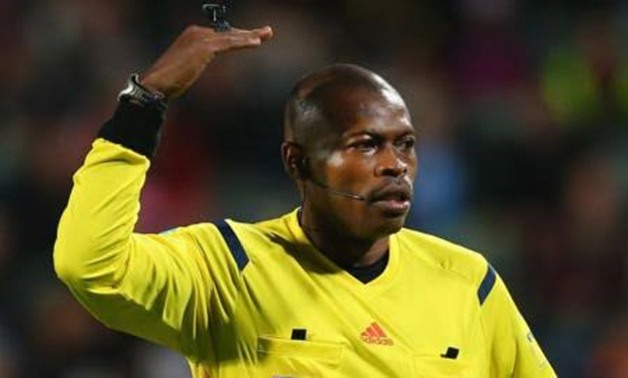
Eric Otogo Castane - Gabonese referee

Africa Soccer governing body CAF has appointed match officials for the 2019 AFCON qualifier between Tanzania Taifa Stars and Uganda Cranes on the 24th of March 2019.

Eric Otogo Castane from Gabon will be the centre referee and be assisted by fellow countrymen Moussounda Montel and Marlaise Ditsoga as his first and second assistants respectively.

Isidore Nze, also from Gabon, will be the game’s fourth official.

Mamoun Bushara from Sudan will be the Match commissioner while the Referees Assessor will be Jason Damoo from Seychelles.

The Security Officer will be David Van Vuuren from South Africa.

The match will be played on Sunday, 24 March at the Benjamin Mkapa National stadium. The reverse fixture in Kampala ended in a goalless draw.

Uganda is among the fourteen nations to have already secured a place at the 2019 Afcon while Tanzania will need to win and hope Lesotho falter against Cape Verde in the other Group L stage match.

The 24-team Africa Cup of Nations will take place in Egypt from June 21st with the final to be played on July 19th.

Stories Continues after ad

Uganda to mark International Women’s Day – Minister Jannat Mukwaya

Gender, Labour and Social Development Minister Janat Mukwaya

Minister of Gender, Labour and Social Development (MGLSD) Janat Mukwaya has said Uganda is set to mark International Women’s Day in recognition for their role and contribution to the development process of their country.

Celebrations will be held under the global theme ‘Think Equal, Build Smart, and Innovate for Change’, peddled at creating a paradigm shift for transforming mind sets to the goal of gender equality as well as identifying new ways of advancing the women’s agenda at all levels.

In a statement released by minister, the day provides an opportunity to enhance advocacy for inclusion of women’s concerns in the development agenda at all levels by calling on United Nations Member States to design and implement interventions aimed at attaining gender equality and empowerment of women.

She said National Celebrations will take place in Rwimi Primary School Playground in Bunyangabu District under the theme ‘Empowering Women through Innovative Approaches to Social Protection; a Pre-requisite for Inclusive and Sustainable Development’.

“This theme recognizes the importance of providing social protection to women with the aim of minimizing their vulnerability, building their potential through innovative approaches so that they contribute to and benefit from the development process,” she said in a statement.

Mrs. Mukwaya said gender mainstreaming in social protection is critical in the programme design, implementation and evaluation because it lays a foundation for fair distribution of outcomes and impacts on all the categories of beneficiaries.

She vowed that the ministry will continue to address gender inequalities and equity in delivering social protection services, build capacity of duty bearers to effectively implement gender responsive and equitable social protection interventions, developing and institutionalize system for delivering gender responsive and equitable social protection interventions.

She said Social Assistance Grants for Empowerment (SAGE), Uganda Women Entrepreneurship Programme (UWEP), Private Sector and Civil Society Led Initiatives have been place for empowerment and improving women’s welfare.

Stories Continues after ad

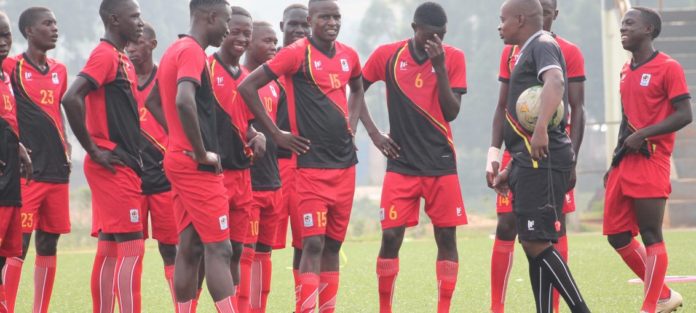
Uganda U-17 squad to Turkey named

The Uganda U-17 National football team, known as ‘The Cubs’ finalised with their intensive residential training ahead of the invitational tournament in Antalya Turkey.

Throughout the ten-day camp at the FUFA Technical Centre, Njeru the team played two friendly matches to help the coaches assess players’ fitness levels.

They won 3-1 and 2-1 against Jinja SS school team and Football for Good respectively.

Cubs are among the 12 teams that will participate in the tournament and are in group 2 alongside Cameroon, Morocco and Belarus.

Uganda will open their campaign on Monday 4, March against Cameroon.

The invitational tournament is part of preparations for the upcoming 2019 U-17 Africa Cup of Nations to be hosted in Tanzania in April.

The top four teams of the U17 Afcon tournament will qualify for the 2019 FIFA U-17 World Cup in Peru in October 2019 as the CAF representatives.

The team flies out Friday morning (4am) aboard Egypt Air.

Groups

Group 1: Tanzania, Guinea, Australia, Turkey

Group 2: Cameroon, Uganda, Morocco and Belarus

Group 3: Senegal, Nigeria, Angola, Montenegro

Fixtures (Uganda Cubs)

Monday 4, March 2019 – Cameroon Vs Uganda

Wednesday 6, March 2019 – Uganda Vs Morocco

Friday 8, March 2019 – Uganda Vs Belarus

The squad of 23 players traveling to Turkey

Goalkeepers: Jack Komakech (Ndejje University FC), Oyo Delton (Kirinya Jinja SS FC), Ssemwogerere Daniel (Bright Stars FC)

Outfield players: Asaba Ivan (Vipers SC), Ekellot Ibrahim (KCCA FC), Ibrahim Juma (KCCA FC), Jarieko James (Paidha Black Angels FC), John Kokas Alou (URA FC), John Rogers (Onduparaka FC), Kakaire Thomas (Bright Stars FC), Kakande Shafic (Bright Stars FC), Kasozi Samson (Bright Stars FC), Kevin Ssekimbegga (Express FC), Kiddawalime Soul (Super Cubs), Kizito Mugweri Gavin (Vipers SC), Mugisha Rogers (Mbarara City FC), Mugulusi Isma (Kirinya Jinja SS FC), Mwaka Polycarp (Kirinya Jinja SS FC), Opaala Edwine Mukisa (Kirinya Jinja SS FC), Ssekajja Davis (Bright Stars FC), Wasswanga Shafik (Ndejje University FC), Yasin Abdu Owane (Vipers SC), Ziraba Ronnie (Express FC).

Stories Continues after ad

Victoria University to partner with Mpigi district to set up smart model village

Victoria University

The modern time challenge of education is finding its useful place in complementing Government efforts to build society.

Universities especially in the south should find new and effective ways of developing, transmitting and applying knowledge for the public good; ways that may not always look anything like received western forms of teaching or research but rather contextualized relevant teaching and learning.

Measuring a university’s success here does not mean comparing it to the failures of neighboring institutions; rather it is often precisely through active collaboration with other stakeholders such that key widespread improvements can be effected. This is not charity work; it is what universities should be for in modern time

Inspired by a common interest to work together towards the improvement of the welfare of the people they serve. Victoria University sought a partnership with Mpigi District Local Government to set up a world class smart model village that will be globally identified as success story of a sustainable rural community.

A formal letter from Victoria University was written to the District, dispatched and received in November 2018. The district then invited the University team to share this concept with a select committee of the Technical team on 20/2/2019.

The University was represented by the Dean of Humanities and Social Sciences Mr. Fred Kasirye – Head of Delegation, Dean Business and Management Prof. Omotayo Adebujyi, Dean Science and Technology Mr. Fred Lwanga, Head of Department Humanities Mr. Mark Namayo, and Mr. Amos Turyatemba (Head of Department-Social Sciences).

They were welcomed by the District CAO Ms. Lucy Frances Amulen, the Deputy CAO – Mr. Jack Byaruhanga, and the District Community Development Officer, Mr. Mwanje Anthony. The University team made a presentation to a select committee of the District Technical Planning Committee about the model village which was well received.

Through this initiative the University shall work with the district and development partners to promote home grown development paradigms, relevant community research, effective district leadership capacity building and policy guidance.

The partnership shall see the birth of a model village with unique potential and abilities to manage its health, business, technology and societal aspects as mirrored by the four faculties of the University.

For instance students undertaking the Degree in Public Administration will make vital community level initiatives towards Good Governance, Corporate Governance and Public accountability, on the other hand their counterparts in Business shall support SMEs with strategies to grow while also supporting the District to identify additional revenue streams.

In the Health Sciences area of study aspects of public health and nutrition at both family and community levels will be a regular life testimony that students will learn, unlearn and relearn.

Students reading IT will predominantly support the demystification of IT at the grassroots to improve livelihoods through for instance simple IT enabled banking operations, communication and business management. While research will be done throughout the district the pretest, test and model interventions will be done in the selected project villages.

Under this arrangement both the University and the District will spare resources to invest in this initiative over a spread period of time, closely monitor and draw agenda that will enable each party to realize its ideals with regards to service delivery on one side and relevant higher education on the other side.

The initiative is a brain child of the University management which thought it wise to offer additional value to University students’ education by enabling students interact regularly with the real situation on the ground in modern day life while providing relevant solutions through a scholarly approach.

The discussions are still ongoing and the initiative is expected to be launched by mid this year. The University offers Diplomas, Bachelors and Masters Programs in specialized fields.

Stories Continues after ad

Fufa confirms dates for Uganda Cup quarter-final matches

Uganda Cup Trophy

FUFA has confirmed the dates and venues for the 2018/19 Stanbic Uganda Cup quarter-final matches.

The games will be played for four days, from Saturday 9th to Tuesday 12th of March 2019.

One match will be played per day with Bright Stars starting on 9th with a trip to Nebbi and Proline against Vipers will be the last tie on Tuesday 12th.

All matches will be played at 4pm and the winners at this stage will get to the semi-finals.

The winning club of the Uganda Cup will walk away with Shs40 million, runners up Shs20 million, semi-finalists Shs10 million while the quarter finalists Shs5 million.

Buganda region will host the Uganda Cup final this year but the ground will be communicated in due course.

The winner of the competition represents Uganda in the CAF Confederation Cup as per the rules of the competition. KCCA FC are the defending champions.

Express FC and KCCA FC are the teams that have won the Uganda Cup most, ten times each.

Quarterfinals;

Sat 9th March: Nebbi Central FC vs Bright Stars FC – Luo Stadium, Nebbi.

Sun 10th March: Kyetume FC vs Wakiso Giants FC – Nakisunga.

Mon 11th March: Express FC vs BUL FC – Mutessa II stadium, Wankulukuku.

Tue 12th March: Proline FC vs Vipers SC – StarTimes stadium, Lugogo.

Attachments area
Noted with thanks.

Stories Continues after ad
Exam malpractice decreases as female candidates beat their male counterparts in 2018 UACE results

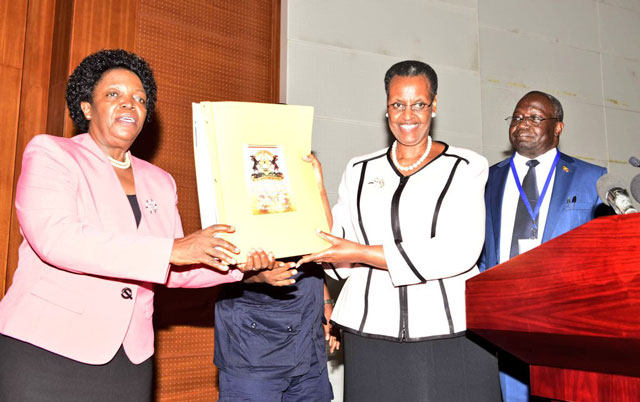
Education Minister Janet Museveni releasing the 2018 PLE exams.

The executive Secretary of UNEB, Dan Odongo, has said examination malpractices has gone down as Female candidates outperformed their male counterparts in the 2018 Uganda advanced certificate of education (UACE) examination results that has just released at presidents offices adjacent to Parliament.

Last year, UNEB registered a total of 99,576 candidates for UACE exams from 2,094 centres compared to 101,269 candidates from 1918 centres in 2017, a decrease of 1,693 candidates. 1,052 however didn’t show up for exams.

“UNEB has only withheld results of 91 candidates from 21 centres. The most common forms of examination breaches have been external assistance,” revealed Mr. Odong adding that malpractice has greatly decreased.

Speaking at the releasing of exams, Odongo, said Centre number U2804 allocated to Seesa High School, Kakungube is being withdrawn for gross violation of examination regulations both at UCE and UACE.

Mr. Odongo said, female candidates performed better than male counterparts at the principal level pass in Arts, Physics and Agriculture however Male candidates were better in Mathematics, Chemistry, Biology and General paper.

“The failure rate among female candidates is also lower at 0.8 per cent than for all the male at 1.8 per cent, this scenario is similar to that of 2017,” he said.

He said, Good performance were exhibited by candidates from mainly the traditional government schools and some of the better established private schools. These candidates demonstrated adequate knowledge of the subject matter.

Minister for higher education John Chrysostom Muyingo who received examination results of behave of the minister of education who doubles as the first lady Janet Museveni, said incidences of examination malpractices has gone down and pledged that Government will support UNEB in all forms to eliminate this vice.

“The Country should know that the war against examination malpractices is like that against corruption. It’s a war that must be fought by all of us,” he said.­­

Stories Continues after ad