Stanbic Bank
Stanbic Bank
25.3 C
Kampala
Stanbic Bank
Stanbic Bank
Home Blog Page 1375

I am firmly behind Makerere University administrations’ efforts to restore discipline- Museveni

President Museveni and Nawangwe an the past event.

President Yoweri Museveni has revealed that he is firmly behind the Makerere University administrations’ efforts to restore discipline at Uganda’s Highest and greatest institution of learning.

Museveni’s revelation come at a time when the Vice Chancellor of Makerere University Prof. Barnabas Nawangwe has just suspended Chairperson of Makerere University Academic Staff Association (MUASA), Dr. Deus Kamunyu Muhwezi for allegedly taking part in actions that disrupt and injure the reputation of the Institution. He also bent the HR rules to sack 40 other senior staff.

His suspension has since resulted into industrial action at the mighty institution of learning calling for withdraw of Kamunyu’s suspension. Despite various engagements, lecturers vowed not to step into class till Dr. Kamunyu is back at the university.

During Presidential Investors Roundtable, Museveni lauded Prof Nawangwe for work done sating he is an Engineer, a professor of Technology and wants to restore discipline to this institution.

“People want to continue with indiscipline. Imagine a doctor who stripes naked and is cheered on. Makerere is a centre of study not stupidity. I am firmly behind him,” the President said.
Museveni said in reference to Dr. Stella Nyanzi who is currently locked up in Luzira prisons.

The President was responding to questions about the conflict between Makerere University administration and academic staff from journalists who ‘ambushed’ him shortly after he launched the six phase of the Presidential Investors Roundtable at State House.

Museveni’s statement was intended for Dr Stella Nyanzi who recently put off her clothes expressing her grievance under the leadership of Prof Dumba Sentamu.

During the 69th graduation ceremony of Makerere University, Yoweri Museveni lauded Makerere University administrators for expelling and suspending lecturers over indiscipline and participation in unlawful activities.

He said, there is no reason why lecturer averred of raping a student, should continue teaching in the top institution. On the same day the administration terminated 32 lecturers’ contracts including Dr Stella Nyanzi and ordered them to refund their salaries.

Stories Continues after ad

Energy Minister assures Ugandans of jobs in oil and gas sector

Energy Minister Eng. Irene Mulon

The Minister of Energy and Mineral Development, Eng. Irene Muloni has assured Ugandans that they will take up some of the jobs in the oil and gas sector as supplies, saying foreigners will only be offer services and products that Ugandans cannot provide.

The minister made the pledge during the first National Content Conference for suppliers in the Oil and Gas Sector in Uganda organised by the Petroleum Authority of Uganda (PAU) at the Speke Resort and Conference Center Munyonyo, Kampala.

Eng. Muloni re-echoed government’s approach to National content, which, she said has been articulated in the existing Policy, Legal and Regulatory frameworks, including the Local Content Policy, 2018, which was passed by Cabinet in June 2018.

The conference brought together all companies that have expressed interest in supplying the Oil and Gas Sector during the year 2019.

Ernest Rubondo, the CEO of PAU said the conference was arranged to update the suppliers on the latest development in the oil and gas sector but also help them network in bid to cooperate in the provision of services and products.

The major objective of the conference is to take stock of the journey that the successful Ugandan companies have gone through, in providing goods and services to the oil and gas sector.

Uganda is currently described by the World Bank as the hottest inland exploration frontier in the world and the country to watch in the oil and gas space, due to the commercial discovery of an estimated 6.5 billion barrels of oil, 2.2 billion of which are recoverable. First oil is expected in 2022-23.

The country alongside partners intends to construct a crude oil pipeline from the oil wells in Hoima to Tanga Port in Tanzania. The construction budget for the 1,445 kilometres pipeline is to consume US$3.5 billion, part the Ugandan side will consume about US$700 million, according to planners. The pipeline is planned to have a capacity of 216,000 barrels of crude oil per day. It will be 24 inches (61 cm) in diameter.

Uganda also signed an agreement with a consortium, including a subsidiary of America’s General Electric, to build and operate an oil refinery in western Uganda that will cost US$3 billion-US$4 billion.

Kabaale International Airport in Hoima district is under construction. It is part of the infrastructure under construction as the country prepares to develop its nascent petroleum industry. When completed, the new airport will facilitate mobilization of equipment for construction of the oil refinery and assist in the development of agriculture and tourism in the area.

Stories Continues after ad

Solomon Sserwanja, wife and BBC Journalists temporary released on bond

Mr. Serwanja

NBS TV’s investigative reporter, Solomon Sserwanja plus his wife’s Vivian Sserwanja who works at the Ministry of Health and three other Journalists have been freed on police bond.

The three journalists Godfrey Badebye, Shafiq Kisame, Rashid Kisame, and Vivian Nakaliika were nabbed for illegally acquiring government drugs allegedly recovered from Sserwanja home situated in Mukono.

Solomon Sserwanja has too appeared at CPS Kampala and recorded a statement and was thereafter, released on police bond. Sserwanja and the three journalist have reportedly been investigating corruption and sell of government drugs in various private health facilities.

According to Ministry of Health, Serwanjja earlier informed them about the investigations however, they denounced any involvement in the journalists work.

Speaking at central police station (CPS) Police Spokesperson Fred Enanga said the force is aware of the important role the media plays in investigative reporting, debates, discussion, background and analysis, as well as new stories, not withstanding their journalistic duty to obey the ordinary criminal law in the course of their duties, and we highly commend them for their tireless efforts in fighting corruption.

“We would like to further acknowledge that Next Media in partnership with local correspondents from the BBC, while working on a tip, independently planned and carried out their operations surrounding the illegal sell of government drugs in selected government hospitals in Arua, Gulu and Kirudu,” he said

He said, it is clear that their motive was to show how easy it was to buy government drugs and its conduit and encouraged them to continue with their documentary programme and achieve their intended objective of exposing their targets, to help prevent such occurrences in future.

“The police has created a task team which is building further on the available facts on file, to establish the culprits behind the alleged theft and sale of government drugs, in these government hospitals and will ensure all suspects that are criminally liable are brought to book,” He said.

CP Enanga said they are closely working with the office of the Directorate of Public Prosecution for legal guidance on as to whether the journalists mentioned above, in their quest for a story of essential importance to society could have breached any rules on the acquisition of government drugs and its safety considerations or not.

Speaking at his temporary release, Serwanjja said this has been his the longest week of his entire life. “I have been scared and worried since the arrest of my colleagues. That night, my wife told me they had surrounded the house. I told her not to open until our lawyers came in the morning,”.

“I feel bad my wife was dragged into this. It is not fair. It is also very dangerous for her especially since she is the Ministry of Health spokesperson. I am worried about her job and safety,” he said CPS.

Stories Continues after ad

Thinking Methods That Foster Business Innovation

Martin Zwilling

By Martin Zwilling

Innovation is the key to long-term business success, both in startups as well as established organizations. Yet every business and every entrepreneur I know struggles with this challenge, focused on hiring the right people and implementing the right process. Yet, in my experience the key seems to be more a discipline of innovative thinking from everyone, driven from the top.

I was happy to see my own view reinforced in the classic book, “Innovation Thinking Methods for the Modern Entrepreneur,” by long-time entrepreneur and innovation expert Osama A. Hashmi. He provides dozens of ideas and examples to illustrate how this discipline can work, and the power it brings to any organization. Here are ten key lessons from his book that we can all learn from:

Utilize first principles thinking. The idea is to seek fundamental truths that will always remain true, after you remove all the things that don’t necessarily have to remain true. Then, when you are unable to remove more layers, you can build up to the fastest and most efficient way of getting that base thing done. Elon Musk recommends this approach.

Practice the one-sentence method. Distilling a field of work down to a single sentence describing the core elements helps to innovate and keep ahead of the curve. If you keep fixated on that core essence, and figure out the rest along the way, you have a better chance of innovating and trying out new things. That’s how an industry reinvents itself.

The future history assessment approach. Start the product design process by thinking about what a historian in the future would look back on as the one big thing that changed everything. This idea helps to distill down the most important things to make or sell in a product. Amazon uses this technique internally for all new product design efforts.

Challenge the fundamental assumption. Ferret out the fundamental assumptions that everyone keeps making whenever they make a product of this type. Brainstorm with the intent of changing these assumptions, and radical innovation will follow. An example is the evolution of computer control to screen touches and gestures, versus keys and mice.

Outsource services back to the customer. Pervasive access to the Internet and social media have allowed customers to take an active role in helping other customers, with customer support, requirements definition, and open source development. This has facilitated innovation in responsiveness, as well as profitability. The trend has only begun.

Re-analyze the context of the last change. We tend to view present and future solutions in today’s context, rather than the context of the last change. Market dynamics change rapidly, so thinking back to why things changed in a previous time can generate new and innovative approaches, based on the new market context and technologies.

Force original intent thinking. When people live in a certain status quo long enough, they start to forget what they originally set out to do. “It has always been this way” becomes the way of thinking and stalls innovation. When you provide a solution that gets customers closer to their original intent, they’ll be quick to drop current lessor solutions.

Force the innovator’s dilemma on competitors. This is the concept that successful competitors have a hard time investing in new products that will cannibalize their existing core business. Focus thinking on what you can innovate, and how you can position it in the market to make it impossible for incumbents to follow without killing themselves.

Explore the negative space of possibility. For innovation-thinking, what people are doing today or even wanting today may not be an interesting-enough question. What’s more interesting is what people are not doing today, or what they should be using to make their lives drastically better. Don’t just chase the space that already exists.

Pick an impossible target and get mad about it. The obsession of solving a problem once and for all frames a certain type of thinking – one where you start to feel that no other product or company in that market gets it, and no one else has been able to crack it because all the solutions are awful. Now you have the right mindset to break barriers.

There are many more existing innovation-thinking methods, and more to be discovered, but this selection should be adequate to get you started. As an entrepreneur, it’s your responsibility and your challenge to be the leader and role model in fostering and rewarding innovation-thinking in your business. Your long-term survival and satisfaction depend on it.

The writer is a veteran startup mentor, executive, blogger, author, tech professional, professor, and investor. Published on Forbes, Entrepreneur, Inc, Huffington Post.

Stories Continues after ad

Museveni promotes son to Lieutenant General as Koreta and Mugume elevated to Generals

Gen. Muhoozi

President Yoweri Museveni, also the Commander In Chief of the Uganda People’s Forces (UPDF), has promoted 2,031 officers including promoting his son Maj.Gen. Kainerugaba Muhoozi to Lt. General and elevating Lt.Gen. Ivan Koreta and Lt. Gen. Joram Mugume to the rank of General, according to the latest press statement from the Ministry of Defence.

Other 10 senior officers at the rank of Maj. General were promoted to the rank of Lt. General. They include Maj.Gen. Pescos Kuteesa and Maj. Gen. Prossy Nalweyiso.

According to the statement signed by the UPDF Spokesperson Brig. Richard Karemire, some of the promoted officers are due for retirement. They include Koreta and Mugume among others.

Below is a partial list made of senior promotions.

1. Promoted to align with establishment appointments – 100.

2. Promoted due for retirement – 97.

3. Promoted for long reckonable record of service – 130.

4. Promoted after successfully completing Grade II staff course – 49.

5. Promoted on recommendation by formations/units – 1,082.

6. Promoted after passing promotional examinations – 375.

7. Promoted upon completion of probation – 27.

8. Promoted from Other ranks to officer level – 171.

Among the General and Senior Officers are the following:

1. LT Gen Ivan Koreta – Gen

2. Lt Gen Joram Mugume – Gen

3. Maj Gen Pecos Kuteesa – Lt Gen

4. Maj Gen John Mugume – Lt Gen

5. Maj Gen Prossy Nalweyiso – Lt Gen

6. Maj Gen Charles Awany Otema – Lt Gen

7. Maj Gen James Nakibus Lakara – Lt Gen

8. Maj Gen Peter Elwelu – Lt Gen

9. Maj Gen James Mugira – Lt Gen

10. Maj Gen Joseph B Musanyufu – Lt Gen

11. Maj Gen Charles Lutaaya – Lt Gen

12. Maj Gen Muhoozi Kainerugaba – Lt Gen

13. Brig Joram Kakari Tumwine – Maj Gen

14. Brig Elly Kayanja – Maj Gen

15. Brig Eric Mukasa – Maj Gen

16. Brig Burundi K Nyamunywanisa – Maj Gen

17. Brig Sam Kiwanuka – Maj Gen

18. Brig Dr Ambrose K Musinguzi – Maj Gen

19. Brig Samuel Kawagga – Maj Gen

20. Brig Joseph Arocha – Maj Gen

21. Brig John Lorot – Maj Gen

22. Brig Apollo Kasiita Gowa – Maj Gen

23. Brig Leopold Eric Kyanda – Maj Gen

24. Brig Birungi James Mugabe – Maj Gen

25. Brig Don William Nabasa – Maj Gen

26. Brig Stephen Muzeyi Sabiiti – Maj Gen

27. Brig Samuel Wasswa – Maj Gen

28. Brig Jim Willis Byarugaba – Maj Gen

29. Brig Timothy Sabiiti – Maj Gen

30. Col Moses S Lukyamuzi – Brig Gen

31. Col John M Kaganda – Brig Gen

32. Col Charles R Tusiime – Brig Gen

33. Col Fenekansi Mugyenyi – Brig Gen

34. Col Adolf Serwada – Brig Gen

35. Col John C Anywar – Brig Gen

36. Col Jackson Bell – Brig Gen

37. Col Dr Kenneth Ocen Obwot – Brig Gen

38. Col Sam Omara – Brig Gen

39. Col Emmy Mulindwa – Brig Gen

40. Col Stephen Mugerwa – Brig Gen

41. Col Johnson Muma – Brig Gen

42. Col Frank Kyambadde – Brig Gen

43. Col Moses Kwikiriza – Brig Gen

44. Col Ceaser Innocent Bahwezi – Brig Gen

45. Col William Beinomugisha – Brig Gen

46. Col James Kaija – Brig Gen

47. Col Godwin Karugaba – Brig Gen

48. Col Fred M Karara – Brig Gen

49. Col Fred Rugadya Akiiki – Brig Gen

50. Col Bonny Bamwiseki – Brig Gen

51. Col Ronald S Bigirwa – Brig Gen

52. Col Joseph Balikudembe – Brig Gen

53. Col Felix Kulaigye – Brig Gen

54. Col Wilson Muhabuzi – Brig Gen

55. Col Dr James Kiyengo – Brig Gen

56. Col Dr Stephen Kusasira – Brig Gen

57. Col Bob Paciesky Ogiki – Brig Gen

58. Col Peter Gaitan Omola – Brig Gen

59. Col Julius Biryabarema – Brig Gen

60. Col Flavia Byekwaso – Brig Gen

61. Col Dr Shilling E Tibayungwa – Brig Gen

62. Col Johnson Namanya – Brig Gen

63. Col Dr Patrick Ogwok Ogen – Brig Gen

64. Col Daniel Mugumya Kakono – Brig Gen

65. Col Godfrey Mujuni – Brig Gen

Stories Continues after ad

UDB still undercapitalised-parliamentary report

CEO of Uganda Development Bank, Patricia Ojangole.

Uganda Development Bank (UDB) remains undercapitalised and is in dire need of financial capital to help it carry out its core business of giving out loans to the local private sector, a report of parliament’s Committee on National Economy says.

The undercapitalization is persistent at the time when the authorized share capital of UDB stands at Shs500 billion as close of last year. UDB has a total paid up capital of about Shs200 billion, made up of government injection of Shs166.5 billion and capitalisation using the Kuwait Fund of Shs33.7 billion.

The arrest the situation of undercapitalization the Ministry of Finance Planning and Economic Development (MFPED) now wants government to guarantee lines of credit of US $5 million from the Export-Import Bank of India and US $15 million from the African Development Bank (AfDB).

The report notes that low paid up capital for UDB limits chances of accessing funds from lenders and capitalization through foreign sources. An outstanding balance of about Shs300 billion is badly needed, according to the report.

The report says UDBL has a pipeline of about Shs306 billion of Small and Medium Enterprises (SMEs) that are in need of long-term dollar and shillings-based financing. “These SMEs are involved in businesses in sectors financed by the Bank mentioned above, with credit requirements between US $100,000 to US $5, 000, 000,” the report says.

The required money, the report says, will be used largely to increase capacity of the SMEs in the various sectors. “Over 47 SMEs have applied to UDBL for financing and, it is estimated that about 30 – 47 SME’s would benefit from the proposed lines of financing,” the report adds.

The bank currently finances projects in various sectors of the economy that include; Agriculture (Production and Agro-Processing, Manufacturing, Education, Health, Tourism, Infrastructure and housing development.

The bank’s lending portfolio is mainly funded by government of Uganda capital contributions, lines of credit from the Kuwait Fund (Loan of US $10.4 million and grant of US $7 million), the Arab Bank for Economic Development in Africa (BADEA) US $4.5 million), Private Sector long term loan of US $6 million and the trade finance short term loan of US$ 10 million and the Islamic Development Bank Asset finance loan of US $10 million.

The BADEA and Kuwait Fund loans have been fully utilized by the bank. In addition, the bank is also a beneficiary of the Government’s Agricultural Credit Facility at the Central Bank totaling Shs39 billion

Stories Continues after ad

MPs quiz BoU officials over Shs478b spent on Crane Bank as Minister Kasaija says he has never received any report on closed banks

Minister Kasaija and top BoU officials at the COSASE probe.

Parliament’s Committee on Commission, Statutory Authorities and State Enterprises (COSASE) on Friday quizzed top officials of Bank of Uganda (BoU) over the controversial expenditure of Shs478 billion on Crane Bank Limited during its receivership.

During the probe, BoU deputy governor Dr Louise Kasekende said when they put CBL in receivership, they acted as lender on side and borrower on the other side, something the Committee Chairman Abdu Katuntu said created controversy in terms of accountability and transparency.

The MPs argued that BoU officials should have used a private or official receiver to manage CBL instead of doing it themselves. Interestingly BoU wants CBL shareholders to refund the Shs478 billion yet they did not enter into any contract with CBL’s shareholders.

CBL shareholders led by Sudhir Ruparelia said they would not pay that money since they don’t where it came from, who received and how it was used. BoU officials have no documentation about the use of the money. CBL needed Shs157 billion to stay afloat even as BoU spent Shs478 billion on its liquidation.

BoU on the other handed has not presented any accountability of the money it says it spent as liquidity support to CBL as well as other service costs related to its liquidation.

MP Katuntu maintained that BoU played the role of a statutory manager which it was not supposed to play since the institution is a regulator. MP Medard Segoona said such arrangement can lead to the mismanagement of the money which belongs to the taxpayers.

The Minister of Finance Matia Kasaija said he has never received any report from BoU on the closure of the seven commercial banks. The minister who said was a shareholder in the Cooperative Bank, said it is a big weakness and he will write to BoU requesting for the reports.

Kasaija suggested that parliament should appropriate some money in the budget which it would approve for BoU to use in case of any bank failure. The minister said he was not happy with the closure of CBL.

Kasekende while responding to MP Segoona’s concerns about the conflict interest in the role of BoU statutory manager, recognised that weakness but said the law provides the Depositors’ Protection Fund to act as a receiver.

This week former owners of the banks closed all cried foul play by some of the Bank of Uganda staff who closed their banks even as they had raised most of the required capital. Most banks were closed due to undercapitalisation. For instance the National Bank of Commerce (NBC) was closed on allegations of failing to raise Shs300 million when the same bank had US $2.5 million on its foreign reserves.

The probe of BoU by the MPs is a result of the Auditor General John Muwanga’s report on commercial banks which faulted BoU for the closure of banks without following proper guidelines. Some of the other banks closed include; Teefe Trust Bank, Global Trust Bank Uganda, International Credit Bank, Cooperative Bank and Greenland Bank.

COSASE will have the last meeting next Monday.

Stories Continues after ad

Defense asks Judges to dismiss 41 counts against Ongwen

former rebel, Dominic Ongwen at ICC.

The defense team for Dominic Ongwen has asked judges at the International Criminal Court (ICC) to dismiss 41 out of the 70 counts of war crimes and crimes against humanity Ongwen has been charged with.

In a motion filed on Friday, February 1, Krispus Ayena Odongo asked Trial Chamber IX to dismiss more than half of the charges against Ongwen because the document that is the basis of those charges is defective. Odongo argued the defects mean Ongwen was not given notice of all the charges against him, which negatively affected how he prepared his defense and ultimately, his fair trial rights.

The defense phase of Ongwen’s trial started in September last year. To date, the defense has presented 15 witnesses. The prosecution concluded its case in April last year after presenting 69 witnesses. Lawyers for victims called seven witnesses who testified in May last year.

Ongwen is on trial for crimes he is alleged to have had a role in as a commander of the Lord’s Resistance Army (LRA). The crimes are alleged to have taken place between July 1, 2002 and December 31, 2005.

The motion that Odongo filed last Friday is not a single document. He filed it in four parts because he said he wanted to stay within the 20-page limit set in ICC regulations, and he did not want to ask for permission to file a lengthier single document that would be unwieldy. Odongo has given the motion the title of the “Defect Series” and divided it into part I, Part II Part III and Part IV

He said Pre-Trial Chamber II’s decision confirming the charges did not specify Ongwen’s role in relation to some of the charges. Odongo said the decision also did not define Ongwen’s intent when allegedly committing those crimes he has been charged with. In the language of the Rome Statute, the ICC’s founding law, these are the modes of liability.

Odongo said there are counts Ongwen has been charged with that are broad and have many elements to them, but the decision confirming the charges does not specify which of those elements apply to him. He also said the count of forced marriage does not exist in the Rome Statute.

“In plain language, does the CoC [Confirmation of Charges] Decision articulate or ‘make out’ the elements of the crimes and modes of liability charged against Mr Ongwen and support each element with factual allegation?

“Especially in this case of 70 charges and eight modes of liability against one defendant, Mr Ongwen, it should be obvious that detailed notice, as mandated by the Article 67(1)(a) of the [Rome] Statute, is required to conduct the trial in a fair manner. However, the CoC Decision falls far short of this,” Odongo said in the motion.

Pre-Trial Chamber II issued its decision confirming the charges against Ongwen on March 23, 2016. Six days later, the defense filed a request leave to appeal the confirmation of charges decision. That request was rejected Odongo said the motion filed last Friday is different from the request made on March 29, 2016.

He said, “The arguments of defects in the pleading of charges and modes of liability have not been previously litigated. In the appeal of the CoC Decision, the Defence raised an issue of the sufficiency of the reasoning of the CoC Decision.”

Odongo acknowledged the motion could be seen as late because almost three years have passed since the decision confirming the charges against Ongwen was issued. He said he filed the motion because Trial Chamber IX declined to allow the defense to file a no case to answer motion. He also said that Ongwen’s fair trial rights supersede any questions about procedure or timeliness. Odongo quoted a decision and the practice of the International Criminal Tribunal for Rwanda (ICTR) to back up his argument on the last point.

In the motion, Odongo asked Trial Chamber IX to only dismiss 14 counts Ongwen has been charged with. He does not explicitly ask the chamber to dismiss 41 counts. However, adding up the different defects detailed in the motion for dismissal, Odongo in essence asks the chamber to dismiss 41 counts of war crimes and crimes against humanity.

He may not list all the counts he is asking to be dismissed, but Odongo does offer another reason why he wants the chamber to dismiss some of them.

“Especially in light of the Trial Chamber’s denial of the Defence’s request to file a no-case-to-answer motion, there is a need – which should be obvious – to streamline the plethora of charges and modes of liability against a single accused in this case. Dismissal of defective charges and modes of liability based on notice and jurisdiction provides an avenue to pare down the ‘charge sheet’,” Odongo said in the introduction to Part IV of the Defects Series.

The 14 counts of crimes against humanity and a war crime Odongo has asked Trial Chamber IX to dismiss are persecution, forced marriage, enslavement, and conscription of child soldiers. This is in Part IV of the motion.

Odongo said charges like that of persecution are broad. Odongo has described persecution as a “catch all” crime because it has several underlying elements such as attacks on civilians and torture. He said other charges, such as forced marriage, does not exist in the Rome Statute, so Ongwen cannot be charged for such a crime.

Part II and Part III of the motion focuses on the role Ongwen is alleged to have played in the crimes he has been charged with, that is his mode of liability. Odongo has said in his motion that five modes of liability that Ongwen has been charged with are defective and should be dismissed.

The defects that Odongo has identified in relation to these modes of liability relate to the charges for attacks on the former camps for internally displaced people of Abok, Lukodi, Odek, and Pajule.

The modes of liability that Odongo has identified as defective also apply to the sexual and gender-based crimes that Ongwen has been charged with, but Odongo does not argue whether those defects apply to those specific crimes. The only defects he has identified in relation to sexual and gender-based crimes are the counts of forced marriage and enslavement.

In effect, Odongo is asking Trial Chamber IX to dismiss 27 other counts of war crimes and crimes against humanity in relation to the attacks of the former IDP camps of Abok, Lukodi, Odek, and Pajule.

This leaves 29 counts of war crimes and crimes against humanity Ongwen has been charged that Odongo is not contesting. He is not contesting these counts either because he has not found the charges themselves defective or because he has not found defective the modes of liability Ongwen has been charged with under those counts.

These are eight counts of war crimes and crimes against humanity in relation to the attack on Pajule; and two counts of attempted murder as a war crime or as a crime against humanity in relation to the attacks on Abok, Lukodi, and Odek. Also, Odongo has not identified defects in 15 counts of sexual and gender-based crimes.

The Single Judge of Trial Chamber IX, Bertram Schmitt, on Wednesday granted the prosecution’s request that they be allowed a 65-page limit to file a response to the defense motion. Judge Schmitt said the same limit applied to the lawyers for victims and gave February 25 as the deadline to file responses to the defense motion.

Judge Schmitt observed the defense did contravene an ICC regulation on page limits even if the motion was filed in four parts, but he noted this was “for the well-intentioned purpose of improving readability.” He declined to grant the prosecution request that the motion be dismissed because it exceeded the page limit provided in ICC regulation.

Stories Continues after ad

The COSASE probe of BoU: How events unfolded and what way forward?

The ground can no longer hold for BoU officials.

Parliament’s Committee on Commissions, Statutory Authorities and State Enterprises (COSASE) started investigating Bank of Uganda (BoU) after the Auditor General John Muwanga on August 27, 2018, presented to the Speaker of Parliament Rebecca Kadaga a special auditor report on seven defunct banks.

The report had faulted BoU on legal, ethical as well as professional grounds, somehow confirming what the former owners of the closed banks were saying. Those grounds formed the basis for MPs to investigate BoU, the process which is still on going as the committee plans an exit meeting with BoU senior staff on Friday this week.

The MPs also considered the complaints of some of the BoU employees who in March, 2018 petitioned the House, accusing the Central Bank’s senior managers of misconduct, tribalism, favouritism and fraud. This after BoU, Governor Emmanuel Tumusiime-Mutebile, carried major changes in the senior staff whereby he dropped former executive director of bank supervision Justine Bagyenda who later report her boss to IGG, Irene Mulyagonja, whose intervention resulted into a public spat between her and Tumusiime-Mutebile and was only cooled by President Yoweri Museveni.

Also in 2017, businessman Amos Nzeyi, one of the shareholders of the National Bank of Commerce (NBC) dragged BoU to Commercial Court for wrongfully closing his bank (NBC) in 2012. Nzeyi alleged that NBC’s financial health had stabilised by the time BoU closed it and wanted court to hold BoU for alleged failure of supervising the banking sector.

At the same time BoU was involved in a dispute with Sudhir Ruparelia, the majority shareholder of Crane Bank Limited after the central bank closed it on October 20, 2016. Before its closure, for a number of years BoU had lauded CBL as one of the best performing banks in the country. Its closure surprised many including President Museveni who argued against its closure but BoU officials could not listen.

All the above situations presented an opportunity for a probe that would find the dirt in BoU which was claiming independence as well as wanting to take advantage of subjudice rule to avert the probe by the Auditor General. Muwanga’s probe of BoU started mid May 2018, after being given a green light by the Speaker of Parliament, Rebecca Kadaga. Kadaga on May 10 wrote to Muwanga, informing him to proceed with the investigations saying that BoU being a public institution could not dodge an investigation.

In that My 10, 2018 letter to the AG, Ms Kadaga quashed the protests by BOU officials led by deputy governor Dr. Louis Kasekende who had resisted the investigation and was backed by legal opinions from an official of the office of the Solicitor General who had asked BoU officials not to cooperate with Muwanga and his team of auditors.

“Therefore in response to your request for guidance, you should proceed with the audit as directed and submit your report to my office as it is required by the law,” the Speaker wrote.

In a letter dated November 28 2077, COSASE; had requested the Auditor General to undertake a special audit on the closure of commercial banks by Bank of Uganda. The committee specifically requested the Auditor General to provide assurance on; the status of the banks at closure, cost of liquidation, status of assets and liabilities of the aforementioned banks from closure to date, non-performing assets, non-recoverable assets and liquidators.

One of the findings in Mr. Muwanga’s report was the absence of documented guidelines for identification of purchasers of banks. “I observed that there were no documented guidelines/regulation or policies in place for the identification of the purchasers of the 3 defunct banks- Global Trust Bank Uganda (GTBU), National Bank of Commerce (NBC) and Crane Bank Limited (CBL) closed using the purchase and assumption arrangement. There were also no guidelines to determine the procedures to be adopted by the Central Bank in the sale/transfer of assets and liabilities of the defunct banks to the identified purchaser. In the absence of guidelines, I could not establish the basis used to select the purchaser and determining the values of assets and liabilities transferred by BOU to the purchaser,” he said. The Auditor General also accused BoU of failing to provide him with crucial documents related to the sale of banks, including quarterly liquidation reports, inventory reports and minutes of meetings.

The MPs have been pinning BoU senior officials on various as presented findings in the report. However, during the inquiry to much dirt has been unearthed.

Some of the highlights of COSASE probe

Katuntu sends away Tumusiime-Mutebile and Kasekende

On November 1, 2018 COSASE Chairman Abdu Katuntu sent back Tumusiime-Mutebile and Kasekende because they did not carry critical documents about the closure of seven commercial banks under inquiry.
The MPs on the Committee on Commissions, Statutory Authorities and State Enterprises (Cosase) wanted BoU to provide inventory reports, loan schedules, customer deposit schedules, statement of affairs and reports on assets and liabilities. The documents explain why the commercial banks were closed and have other details about the status of the banks before the closure.

Bagyenda flees out of country

On November 23, MPs on COSASE went wild when committee chairman showed them a letter indicating Bagyenda had flown out the country in the middle of the probe where she was a key witness. Katuntu, told members that he received a letter that morning informing him Bagyenda had flown abroad to attend to some engagements, which she confirmed long before the probe started. Bagyenda was supposed to clarify whether or not quarterly progressive reports on the liquidation of assets of closed banks were filed and their whereabouts as raised in the 2017 forensic audit report in which the Auditor General pointed out irregularities in the sale of commercial banks since 1993. Katuntu would warn her on his intentions to issue a warrant of arrest which forced her to return days later.

BoU security officers put on oath

On November 28, 2018 Four BoU security officers were put on oath by Cosase which is probing the central bank’s top officials and others over the irregular closure of seven commercial banks in the country. The four officials including a bodyguard of Ms Justine Bagyenda, the former executive director of supervision at BoU, gave more details of how Bagyenda was able to move documents out of the Bank without being checked as captured by CCTV Cameras. However, Bagyenda’s aide Juliet caused drama in parliament, saying standing orders of the police do not permit her to appear before a committee or any other related organ. She was over ruled by Committee Chairman Abdu Katuntu who said standing orders of the police force are subject to the Constitution of the Republic of Uganda. She would later take the oath.

BoU security officers arrested

COSASE also in November arrested and later in early December remanded BoU security officer-Charles Omoro and Beatrice Kyambadde, who were on duty when Bagyenda moved out documents. The duo were charged with negligence of duty and were said to have lied when taking oath about the movements of the items in question.

Bagyenda sold Global Trust Bank over phone

COSASE probe established that Bagyenda sold National Bank of Commerce (NBC) and Global Trust Bank Uganda (GTB U) on phone. According to Ben Sekabira, the director financial markets development coordination at BoU, NBC was facing a shortage of capital and battling a shareholder dispute which made it a risk. Sekabira, however, added that the potential buyer of the bank was identified via phone calls between the former executive director Justine Bagyenda, legal counsel Margaret Kaggwa, lawyers from Max Advocates and former Crane bank managing director A. R. Kalani. Sekabira said GTBU was also sold in the same way, which surprised Mps.

Shock as banks’ owners fault BoU for fast sales

The former owners of International Credit Bank faulted while appearing before COSASE faulted BoU for selling their bank within six hours after its closure. Former owners of Global Trust Bank Uganda revealed their bank was sold in one day in the process spearheaded by Bagyenda. The same happened with NBC whose buyers said they were forced by Bagyenda to buy it.

Mutebile disowns Bagyenda in sale of GTBU

In December, BoU Governor, Emmanuel Tumusiime-Mutebile denied ever delegating his powers to Bagyenda to enter into an agreement with DFCU Bank for the sale of Global Trust Bank. Asked by COSASE Chairman MP Katuntu if he delegated his constitutional powers to allow Bagyenda to commit the Central Bank into a Non-Disclosure Agreement with Dfcu, the Governor denied doing so. However, Mutebile letter present documents he signed for sale of GTB, something that the MPs castigated, saying he had at first lied to them about the GTBU sale saga.

BoU spends Shs478b on Crane Bank which needed 157b to remain afloat

Bank of Uganda officials surprised when it came to light that it spent sh478 billion for running CBL a couple of months during the takeover before selling it to DFCU whereas Crane bank needed Sh157billion capitalization to remain afloat, as revealed by Ben Sekabira. BoU sold CBL to DFCU Bank at Shs200 billion interest-free but has failed to account for Shs478 billion.

Compensations

Former owners of all the banks that were closed that were closed now want BoU to compensate them for loss of business. For instance Nigerian owners of GTBU want over Shs310 billion, Greenland (Shs295 billion. Former owners of NBC say they are in discussion to establish the amount of money to be compensated by BoU. CBL owners also want an independent audit at the cost of BoU. All these demands mean a Ugandan taxpayer stands to lose hundreds of billions shillings due to bad practices of BoU senior officials implicated in the sale of the banks. This is not withstanding the fact that already the taxpayers have lost about Shs478.8 billion not accounted for by BoU yet it claims it spent it as liquidity support and other costs to CBL takeover. So based on the above, what is the way forward for BoU? What will happen after the probe? will BoU compensate the owners of these banks or it will be another what elephant.

Stories Continues after ad
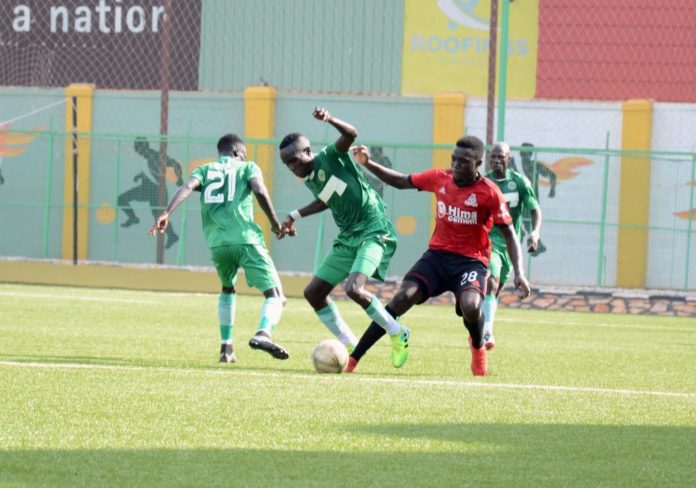
Express’ Michael Birungi given four-match ban

Michael-Birungi

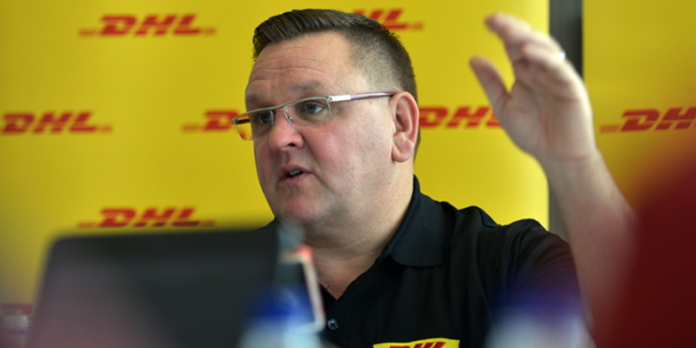
Express FC captain Michael Birungi has been handed a four-match ban for his unsporting conduct towards the match officials in their 1-0 loss away to Tooro United in Buhinga.

Birungi is believed to have attacked referee Alex Muhabi after the match because he awarded a penalty to Tooro during the final moments of the game on 29th January 2019.

The FUFA competitions disciplinary panel released a statement on Friday morning through a press release.

The statement reads;

“On February 5th 2019, the Competitions Disciplinary Panel of the Federation of Ugandan Football Association held a meeting at FUFA House in Mengo to decide the case below:

“Case No 0011/UPL/2019, Express FC Captain No. 11 Birungi Michael attacked the match officials at the center of the field of play immediately after the match, Tooro United vs Express FC on 29/01/2019 at Buhinga Stadium, Fort portal. Actions of Express FC Captain tantamount to a breach of FUFA competition rules.

“The Following decisions were taken by the Panel;

“Express FC Captain Birungi Michael is suspended for four (4) official FUFA competitions match for unsporting conduct towards the Match officials.

“He (Birungi) is further seriously warned against repeating the same on Match officials. If Reapeated, serious sanctions will be preferred against him.”

The suspension begins with immediate effect meaning he will miss the games against BUL FC, Nyamityobora FC and Maroons in the Uganda Premier League as well as the encounter against Police FC in the Uganda Cup round of 16.

Stories Continues after ad