Stanbic Bank
Stanbic Bank
18.8 C
Kampala
Stanbic Bank
Stanbic Bank
Home Blog Page 1378

Uganda in 71st position in overall World Beach Soccer rankings

Sand-Cranes-team

The Uganda National Beach soccer team, known as The Sand Cranes has been ranked 71st in the overall Beach Soccer Worldwide (BSWW) rankings with 76 points, and are placed 12th in Africa.

The ranking was established taking into consideration the performances of teams in all competitions from February 2015 to January 2019.

The competitions considered in the rankings during the stipulated period include FIFA Beach Soccer World Cup, Continental Qualifiers for the Beach Soccer World Cup, Intercontinental Beach Soccer Cup, Continental Beach Soccer League, Cups and Games, Beach Soccer Worldwide Tours (Category 1 & 2) and Friendly matches.

Only the total points earned from the above events over the last four years (counting back from the current month) go towards the team’s ranking; points older than four years expire and do not count.

Brazil tops the list with 3785 points, Iran next on 2543 points, Portugal (2450), Russia (2017) and Italy (1978) completing the top five.

Egypt (12th), Nigeria (16th), Morocco (19th), Madagascar (35th) and Cote d’Ivoire (39th) are the African teams in the top 50.

The other ranked African teams: Libya (56th), Tanzania (58th), Mozambique (61st), Ghana (66th), Cape Verde (69th), Uganda (71st), Kenya (82nd), South Africa (85th), Seychelles (87th), Mauritius (91st), Djibouti (92nd), Tunisia (94th), Algeria (96th) and Zanzibar (99th).

According to BSWW, the rankings will be released at the end of each month.

Uganda was selected by CAF to host the 4th edition of the AFCON Beach Soccer finals in 2020.

Stories Continues after ad

Minister Lokodo condemns Kiwanda’s buttocks campaign

Kiwanda at the launch of the campaign.

Ethic and Integrity State Minister, Fr. Simon Lokodo has condemned a campaign by his cabinet colleague, Godffery Suubi Kiwanda of using curvy women to promote tourism.

Minister Kiwanda under his slogan Tulambule-Uganda launched the campaign targeting both local and foreign tourists to visit Uganda and among others view the curvy and bummy women.

Kiwanda Unveiled the project yesterday in Kampala were he said a beauty pageant dubbed ‘Miss Curvy Uganda’ has been launched to select sexy curvaceous women and the finalists will be selected in June.

“We have naturally endowed nice looking women that are amazing to look at. Why don’t we use these people as a strategy to promote our tourism industry?” Mr Kiwanda wondered, pointing at “a sample” of beautiful women at the press conference held at Mestil Hotel yesterday.

However, his counterpart in charge of Ethics and Integrity says the campaign is bogus and shouldn’t have been a cabinet minister promoting such a project.

“That is the scandal of the highest order and I condemn it in the strongest terms” Fr. Lokodo told Eagle Online in a telephone interview.

Stories Continues after ad

2019 Stanbic Uganda Cup round of 16 draw held

Uganda cup trophy

Federation of Uganda Football Associations (FUFA) through the Competitions Department today held draws for the 45th edition of the Uganda Cup for the round of 16 stage.

There are seven Uganda Premier League sides still in the competition. They are; Vipers, Express, Uganda Revenue Authority (URA), Bright Stars, Police, Tooro United and BUL.

The FUFA Big League clubs are Wakiso Giants, Kyetume, Kiboga Young, Proline, Bukedea Town Council, Nebbi Central and Kitara. There is only one regional club, Nkambi Coffee Football Club from Masaka.

Last year’s losing finalists Vipers SC, were drawn against Kiboga Young, Proline will travel to Onduparaka while URA will be up against fellow UPL side Bright Stars. Nkambi Coffee, who eliminated SC Villa in the biggest shock of the tournament so far, will be entertained by Nebbi Central.

The games will be played from 14th to 19th of February 2019. The winners at this stage qualify for the quarter-finals.

The winning club of the competition will smile home with Shs40 million, runners up Shs20 million, semi-finalists Shs10 million, quarter finalists Shs5 million and Shs2.5 million for each of the clubs that finish at this round of 16 stage.

The host region and ground for the final will be communicated in due course.

The winner of the competition represents Uganda in the CAF Confederation Cup as per the rules of the competition. KCCA FC are the defending champions.

Full draw:

Express FC Vs Police FC

Nebbi Central FC Vs Nkambi Coffee FC

Proline FC Vs Onduparaka FC

URA FC Vs Bright Stars FC

Vipers SC Vs Kiboga Young FC

Kitara FC Vs Kyetume FC

Wakiso Giants Vs Tooro United

BUL FC Vs Bukedea Town Council

Stories Continues after ad

Express appoint Semwogerere as head coach to replace Kefa Kisala

Ssemwogerere unveiled by club chairman Kiryowa Kiwanuka

Uganda Premier League club Express FC announced on Tuesday that former defender and Captain George Semwogerere was appointed as the team head coach, replacing Kefa Kisala who left the club on mutual consent.

Semwogerere, who holds a CAF A coaching license, played for the Uganda Cranes for many years while he is also a legend of Express FC where he played most of his league football and captained us for 13 years.

The 52-year-old will start his official duties on Wednesday at Muteesa II stadium in Wankulukuku.

The former defender was Express head coach in 2006 while he also had coaching stints at Kiira Young, Rwandese side Musanze FC and Tanzania’s Mutibwa Sugar FC before being appointed Somalia national head coach from 2014 through 2015.

He will be assisted by former Express goalkeeper James Magala and former striker Hassan Mubiru as trainer. Hassan played under Sim in 2006 at Express.

The appointment comes hours after the club chairman denied reports of sacking coach Kefa Kisala.

“Express announces that head coach Kefa Kisala and his coaching staff and team doctor have left the club with immediate effect. The club would like to thank them for their work during their time at Express and wish them well in the future.” Express FC posted on their website.

The Red Eagle’s next game is a trip away to Jinja against BUL FC on Sunday 10th February at FUFA Technical Centre in Njeru. They are tenth on the 16-table log with 21 points from 17 games played.

Stories Continues after ad

Broadcast, telecom apparatus to undergo radiation testing

Radar antenna

The Atomic Energy Council of Uganda has begun a process of inspecting broadcast apparatus and telecommunications base stations, high voltage transmission lines and other equipment to establish whether they comply with radiation standards.

Natharius Nimbashabira, the acting Chief Executive Officer of the council, said they have already procured machines to detect the levels of radiation in the facilities.

Inspections will be carried out at premises to check that equipment is of sound construction and established limits are not exceeded.

Nimbashabira said other facilities that will also be inspected include ultrasound scanners, radio detection and radar machines, welding torches, microwaves and TV remote controls.

The tests are meant to establish the level of non-ionising radiation emitted by the machines.

Non-ionizing radiation is relatively low-energy radiation that doesn’t have enough energy to ionize atoms or molecules.

It’s located at the low end of the electromagnetic spectrum.

Non-ionizing radiation sources include power lines, microwaves, radio waves, infrared radiation, visible light and lasers.

Although considered less dangerous than ionizing radiation, overexposure to non-ionizing radiation can cause health issues.

Joshua Birungi, a radiation protection officer at the Atomic Energy Council, said though Non-Ionizing Radiation is a crucial part of human life, beyond-safe operating limits it is dangerous.

He said the non-ionizing radiations are capable of causing considerable health risks to workers, public, the environment at high intensities and long term exposures.

“There needs to be checks to ensure we are not living within fields that are beyond limit and ensure that we create a safe environment for all of us,” he said.

Nimbashabira said there has been a lot of public outcry over construction base stations within populated areas and as a body charged with the responsibility of ensuring safety from radiation sources, they will carry out the inspections to ascertain the truth.

“We are first going to carry out inspections and compare it with internationally accepted limits and standards. Then from there we shall move to the regulation if we find they are not meeting the standards. We have already procured them equipment which will soon arrive in the country. Right now we shall focus on telecom masts, satellite stations, magnetic imaging equipment used in health facilities,” he said.

Consultations are already going on between the council and other regulatory agencies on the issues of regulation. Nimbashabira said the inspection report will guide them on how to draft a new regulation for control such emissions.

Stories Continues after ad

Access to quality education remains low for poor families in Uganda- WBG study

Pupils in class

Uganda has made considerable progress in increasing primary school enrollment, but access to quality basic education remains low especially for poor families and those living in remote rural areas.

According to “Facing Forward: Schooling for Learning in Africa,” a World Bank (WBG) study that assessed the quality of education in Africa, learning levels in Uganda remain low like elsewhere in Africa, in spite of a boost in enrollment from the introduction of free universal basic primary education in 1997.

The country’s high population growth rate of 3.5 percent, high tuition fees, and unfriendly and violent environment prevent many girls and boys from getting to school and remaining in classrooms to learn. Less than half of Primary one students reach P7. Many schools are overcrowded, especially in refugee hosting areas, and teachers lack basic pedagogical skills and subject-related knowledge.

The study highlights the need to increase government’s spending on education to meet regional standards. Uganda currently spends just 11 percent of its budget on education – that is 2.3 percent of Gross Domestic Product, compared to Tanzania which spends 3.5 percent, Ethiopia at 4.5 percent, and Rwanda at 5 percent.

According to the study, the current focus on infrastructure development alone without raising efficiency of the spending and addressing quality and equity issues could undermine learning outcomes. The First Lady, and Minister for Education and Sports, Janet Museveni, who officiated at the launch of the study in Kampala yesterday, welcomed the report and said the findings would inform the new sector strategic plan and policy recommendations.

Prior to her speech, a panel of distinguished experts moderated by Dr Ed Barnett, Co-chair, Education Partners Group and HD Team Leader, DFID, discussed the relevance of the findings and offered views on what government needs to consider as a priority, notably, focus on teacher training to address capacity gaps, teach children in their local languages which improves learning, improve planning and coordination, and negotiate for a bigger share of the national budget devoted to public education and spend it more efficiently.

The panel included: Ms. Rose K. Izizinga, a member of the Uganda Education Service Commission; Dr. Kedrace Turyagyenda, Director of Education Standards at the ministry of education; Dr. Gorretti Nakabugo, Country Coordinator, Uwezo Uganda; Prof. Joseph Oonyu, Associate Professor, School of Education, Makerere University; and Mr Laban Mbulamuko, Commissioner for Infrastructure and Social Services in the Ministry of Finance, Planning and Economic Development.

The launch aimed to inform policy debate and was specifically targeted at stakeholders from the education sector, including government officials, civil society, academia, teacher unions and the media. Sajitha Bashir, the Practice Manager, Education Global Practice presented the report, while Tony Thompson, country manager, World Bank, delivered the opening remarks.

Stories Continues after ad

Former owners of International Credit Bank blame BoU, want licence reinstated

Former COSASE chairman, Abdu Katuntu.

The former owners of International Credit Bank (ICB), have blamed the Bank of Uganda (BoU) for shutting down their bank in September 1998 and now want its licence reinstated by the responsible authorities.

The shareholders led by former Managing Director Thomas Kato were on Tuesday appearing before parliament’s Committee on Commissions, Statutory Authorities and State Enterprises (COSASE) which has been probing BoU over the controversial closure of seven commercial banks.

Kato who was giving, ICB’s side of the story, said BoU acted without giving managers time to reconcile books of accounts. When by MPs about the closure process, Kato said they were just asked to move out of the bank by BoU officials who were in the company of policemen.

Kato said the closure of ICB resulted into losses in terms of money and lives. Without mentioning names, Kato said ICB lost three managers and its Chairman as a result of its closure. He said former owners of the bank would soon ask for financial compensation, saying they were still working on the figure to be presented for compensation.

According to the Auditor General John Muwanga’s special audit report of BoU on defunct banks, BoU closed ICB on September 18, 1998 on account of poor liquidity and insolvency which it said had put depositors’ money at risk. It appointed audit firm KPMG as the liquidation agent from September 1999-2001.

After takeover the liquidation of ICB IN 2002, BoU combined loan assets of the bank with those of Greenland Bank and Cooperative and sold them as one unit, something that ICB owners told MPs was illegal and fraudulent as it violated the Financial Institutions Act, 2004.

In the case of ICB, Greenland Bank and Cooperative Bank the total loan portfolio sold of Shs135bn included Secured loans of Shs34.5 billion which had valid, legal or equitable mortgage on the real property and were supported with legal documentation but were sold to Nile River Acquisition Company at a 93 percent discount as the company paid only Shs8.89 billion. ICB had secured loans of Shs1.1 billion.

Kato said former ICB owners the categorization of their loans such as ‘unknown loans’, ‘poorly secured’ and ‘not secured’ was suspect as such cannot apply in banking. They said BoU should give more details, saying it was wrong for BoU to lump all the loans.

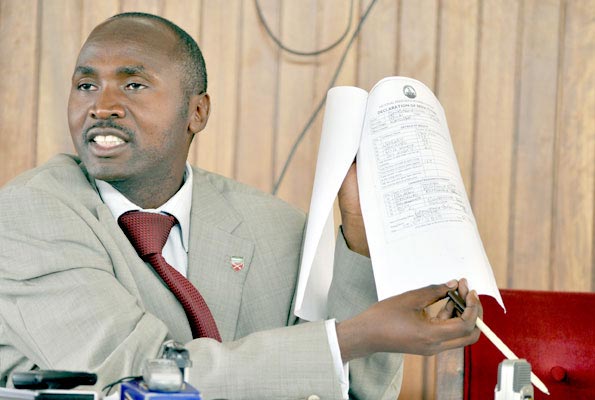
COSASE Chairman Abdu Katuntu said with such confusing terms, an element of fraud could not be ruled in the commercial the bank. There is no way you can have unknown loan. Money is expended on accounts which have names of account holders,” he said.

The bank’s former owners could not also agree with BoU on liquidation costs, value of assets. BoU is officials are expected to respond to the queries raised on Friday when they will interface with the MPs. That will be the last day that BOU appears before the MPs as far as the probe is concerned.

Stories Continues after ad

No replays of incidents under review by VAR on big screens in Champions League – UEFA

Video-Assistant-Referee

Uefa will not allow stadium screens to show replays of incidents under review by the video assistant referee (VAR) when the system is used for the first time in the Champions League next week.

The potential security implications of replaying controversial incidents means that graphics will appear instead informing supporters in the stadium what type of incident is being reviewed. A Uefa official will be in the VAR control room at each match to communicate with broadcasters so that TV viewers can be told what is happening.

UEFA has met the clubs involved to explain the video assistant referee (VAR) system that will be used from the Round of 16, which starts next Tuesday.

UEFA invited representatives of the 16 clubs remaining in this season’s competition – coaches, coaching staff and club delegates – to a meeting in Frankfurt to brief them on the system, which is designed to help referees in their decision-making process.

In each stadium where matches are played, a mobile unit will provide coverage in the absence of a VAR centre and a referee, along with two video operators, will be located at each stadium to support the match official.

UEFA’s Chief Refereeing officer Roberto Rosetti explained that the VAR team will constantly check for clear and obvious errors related to the following four match-changing situations: Goals, penalty decisions, direct red card incidents and mistaken identity. The Italian expressed UEFA’s confidence that VAR will represent a crucial tool for referees in the future.

“We are convinced that VAR will be beneficial,” Rosetti continued, “as it will provide match officials with valuable help, allowing them to reduce clearly incorrect decisions – which is ultimately good for the clubs, the players, the coaches, the fans, the referees and the competition.”

VAR will also be used in the UEFA Europa League final, the Nations League final and the final of the Under-21 European Championship which will be held next June.

Round of 16 ties:

Schalke v Manchester City

Atlético Madrid v Juventus

Manchester United v Paris Saint-Germain

Tottenham Hotspur v Borussia Dortmund

Lyon v Barcelona

Roma v Porto

Ajax v Real Madrid

Liverpool v Bayern Munich

Stories Continues after ad

Opposition MPs welcomes the passing of the East African Monetary Institute Bill 2017

Odongo-George

The Opposition legislators have welcomed the passing of the East African Monetary Institute Bill 2017, peddled at pave way for a single currency in East Africa.

The East African Monetary Institute Bill sought to set up the agency to perform the role of a regional central bank and establish a single currency.

The Monetary Union, which involves a common currency and with common fiscal and monetary policies, is one of the stages of the integration of the six East Africa countries of Kenya, Tanzania, Rwanda, Burundi, South Sudan and Uganda.

During a meeting with members of the East African Legislative Assembly, Uganda Chapter, the Leader of the Opposition, Betty Aol Ocan, said Opposition MPs welcomes the idea of the regional monetary framework and currency.

“You have our support on the law and we hope to see the currency come to life in 2024,” she said adding that Opposition Cabinet has always recommended that the Uganda contributes diligently to the EAC.

The members led by Stephen George Odnongo are visiting Uganda as part of their sensitization drive to update the country on the progress of regional integration and on the critical legislations passed by the EALA.

Odongo said the passing of the Bill prepares the East Africa Community (EAC) for a single currency to foster trade in the region.

“By 2024 we shall have one monetary currency that will harmonize the exchange rates in the region and fiscal policies,” he said adding that the bill will contribute to foster regional integration.

He also said that EALA had passed the EAC Statistics Bill, which is expected to help project the region’s Gross Domestic Product and help plan and assist the transition to monetary union.

The EA Statistics Bureau Bill is expected to create a regional body similar to European Union’s Eurostat, responsible for gathering data to guide decision making within the EAC Monetary Union.

Paul Musamali, Uganda’s other representative to Arusha, raised concern over some of the funding challenges faced by the regional assembly.

“Each country contributes US $8.8 million which is 50 per cent of the budget of EALA and it is not even done on time; this leaves us in a precarious situation to scavenge for funds,” he said.

He added that, “If we are to shield ourselves against neo-colonialism we need to fund the assembly well”.

Stories Continues after ad

Post Gadafi governance problems in Libya can be solved through the building of a national army- Museveni

President Museveni

President Yoweri Museveni has said the effects of post Gadafi governance problems in Libya can be solved through the building of a national army asserting that by doing so, a lasting solution to the Libyan conflict can be found.

The President, who is the patron of the Afro-Arab Youth Council, made the comments when he received the delegation led by Mr. Abdulhadi Elhwig at State House, Nakasero.

“The African Union is more important than the tribal conflicts prevailing in Libya today. The problems in Libya can be solved through the building of a national army where they incorporate both the old and new members of the forces. I also propose that they hold elections where all the Libyans will participate fairly,” he said.

The delegation’s main purpose of meeting the Museveni was to consult him ahead of preparations for the 3rd General Assembly of the Afro-Arab Youth Council Summit that is slated to take place in Kampala in August this year. The 2nd General Assembly of the organization last took place in Kampala in 2008.

The leader of the Afro-Arab Youth, Abdulhadi Elhwig, on his part, saluted Museveni for the immense support to the group during the 2008 Summit in Kampala that was also attended by the late President Muammar Gaddafi of Libya. He observed that the event, attended by 5,000 delegates, was a big success.

He further thanked the President for accepting to host the Summit in Kampala in August this year. The event will coincide with the International Day of the Youth at which over 50 countries would be represented.

Stories Continues after ad