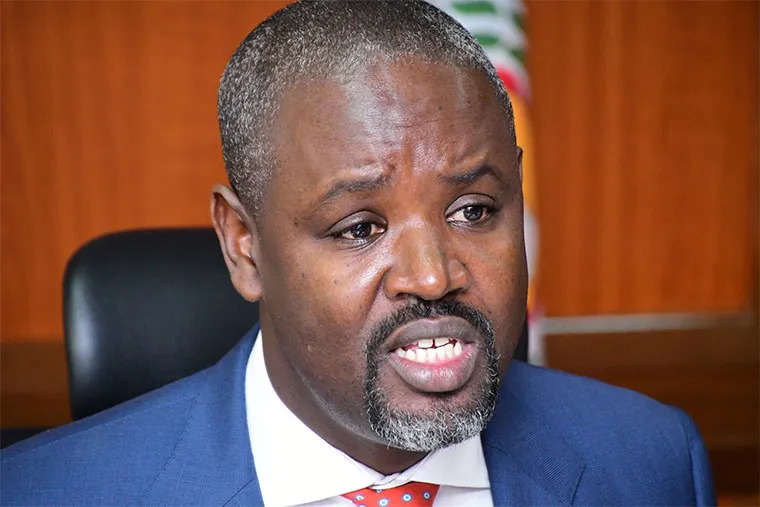
Questions about where Deputy Speaker Thomas Tayebwa, Clerk to Parliament Adolf Mwesige, Parliamentary Commissioners, and other top officials are in the ongoing corruption and money laundering investigations at Parliament, as Speaker Anita Among continues to face investigations over financial irregularities linked to the institution.
The growing controversy has now shifted attention beyond the Speaker’s office, with questions emerging over whether the ongoing investigations are targeting one individual while leaving out the wider network of officials who supervise, approve, process, and account for Parliament’s expenditure.

Under Parliament’s administrative structure, the Clerk to Parliament serves as the accounting officer responsible for authorising and accounting for expenditure, while the Parliamentary Commission oversees Parliament’s administration, procurement, welfare and financial decisions.
The Parliamentary Commission is chaired by the Speaker and includes the Deputy Speaker, Prime Minister, Minister of Finance, Leader of Opposition, and elected commissioners, placing some of the country’s most senior political and administrative leaders at the centre of Parliament’s financial operations.
The latest debate has revived public anger over the controversial 2022 procurement of luxury Mercedes Benz S500 AMG Line vehicles for Speaker Anita Among and Deputy Speaker Thomas Tayebwa.


The two luxury vehicles reportedly cost taxpayers between Shs2.4 billion and Shs2.9 billion after Parliament reviewed quotations from different suppliers before the procurement was approved.
At the time, the expenditure sparked outrage across the country as Ugandans questioned why billions of shillings were being spent on high-end vehicles amid rising commodity prices, economic hardship, unemployment, and pressure on health and education services.
The procurement became one of the most controversial spending decisions associated with the current leadership of Parliament, particularly because the vehicles were purchased at a time when ordinary Ugandans were struggling with the rising cost of living.
Parliament later defended the purchase, insisting the vehicles were official ceremonial cars replacing an ageing fleet that had become mechanically unreliable after years of service.
However, the procurement process required approvals, financial clearances and processing through Parliament’s administrative structures, placing the Parliamentary Commission and the Clerk to Parliament at the centre of the transaction.
The renewed scrutiny has also reopened questions about several other controversial expenditures and financial decisions made within Parliament in recent years.
Among the most contentious was the reported sharing of about Shs1.7 billion among Parliamentary Commissioners in what were described as service awards.
The payments triggered widespread public criticism and deep divisions within Parliament, with some legislators attempting to censure the beneficiaries over what critics described as irregular and excessive payments.
The controversy drew national attention after reports emerged that several commissioners benefited from the funds, further intensifying concerns over how internal financial decisions at Parliament are approved and managed.
The debate over the service awards became even more politically sensitive because the approvals reportedly happened within the same Parliamentary Commission now facing growing public scrutiny over accountability and expenditure.
Parliament had earlier faced criticism after each Member of Parliament reportedly received Shs200 million to purchase vehicles, while commissioners and top parliamentary leaders benefited from separate official transport arrangements and administrative privileges.
Questions are now being raised about whether all officials who participated in approving such expenditures will eventually be required to explain the decisions and account for the utilisation of public funds.
The spotlight is also increasingly turning toward the role of accounting officers and senior parliamentary managers who oversee procurement processes, release of funds and implementation of expenditure decisions.
The widening public debate has further fuelled concerns that focusing investigations on only one office bearer could create perceptions of selective justice within the broader fight against corruption.
The emerging questions have become more politically charged because Parliament’s major financial decisions are rarely made by a single individual acting alone.
Large expenditures involving procurement, allowances, welfare packages and administrative allocations typically pass through multiple layers of approval involving technical officers, accounting authorities and members of the Parliamentary Commission.
The controversy has also reignited public debate about Parliament’s spending culture, with critics questioning whether the institution tasked with oversight of public accountability has itself become associated with unchecked expenditure and controversial financial decisions.
Attention is now increasingly shifting toward whether investigators will widen the scope of the probe to include officials who sat at the centre of Parliament’s financial management structures during some of the institution’s most controversial expenditures.
The growing questions surrounding Deputy Speaker Thomas Tayebwa, the Clerk to Parliament, and Parliamentary Commissioners are expected to intensify pressure on authorities to clarify the full scope of the investigations and identify all officials who handled, approved, or benefited from disputed expenditures.
With billions of shillings having passed through Parliament’s administrative structures over the years, the corruption debate is no longer focusing solely on the Speaker’s office but on the wider leadership, financial management, and accountability systems within the institution. Tayebwa, like Among, is also alleged to have acquired properties on Yusuf Lule Road, which doubles as a private office and centre for his private business transactions, built a huge building in one of the suburbs of Mbarara City, plus a host of other properties, including a factory for body lotion in Matugga. So, as the purge for corruption intensifies, there is a need to widen the net and catch more fish, and short of that, it will look like it was a target for Among.