Stanbic Bank
Stanbic Bank
23.4 C
Kampala
Stanbic Bank
Stanbic Bank
Home Blog Page 1380

Over 40 African countries sign continental free trade agreement

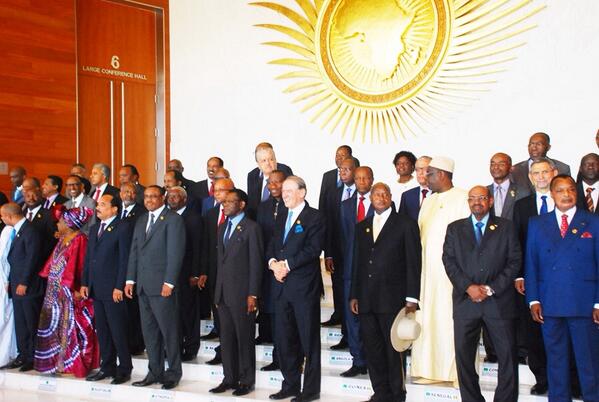
Latest figures indicate that 49 out of the 55 African Union (AU) member states have signed a Continental Free Trade Area (AfCFTA) agreement.

AfCFTA is designed to create a single continental market for goods and services, with free movement of business persons and investments and acceleration of the establishment of the Customs Union.

The agreement presented in Kigali for signature in March last year is expected to expand intra-African trade through better harmonisation and coordination of trade liberalisation, facilitate instruments across the regional economic communities and across Africa, enhance industrial competitiveness and utilise opportunities for scale production, continental market access and better resource reallocation.

However, only 12 countries have ratified the agreement such as; Ghana, Kenya, Rwanda, Niger, Chad, Guinea, eSwatini, Uganda, Ivory Coast and most recently, South Africa, Mauritania and Republic of Congo – and an additional six countries have received parliamentary approval for ratification – namely Sierra Leone, Mali, Namibia, Senegal, Togo and Djibouti. We have given

All ratifications approved and deposited now stand at 18. 22 of the signatory states are needed for it to come into force.

Once into force, it will be the largest in the world in terms of participating countries since the formation of the World Trade Organisation (WTO).

It is poised to boost intra-African trade by 52.3 per cent by eliminating import duties and doubling trade if non-tariff barriers are also reduced.

If all AU member states ratify AfCFTA, they will certainly broaden their national economic horizons and strengthen their regional groupings.

African leaders have also approved an action plan on boosting intra-Africa trade (BIAT), with seven priority action clusters: trade policy, trade facilitation, productive capacity, trade related infrastructure, trade finance, trade information and factor market integration.

Stories Continues after ad

businessman asks Museveni to sack Mutebile, Kasekende and Minister Kasaija

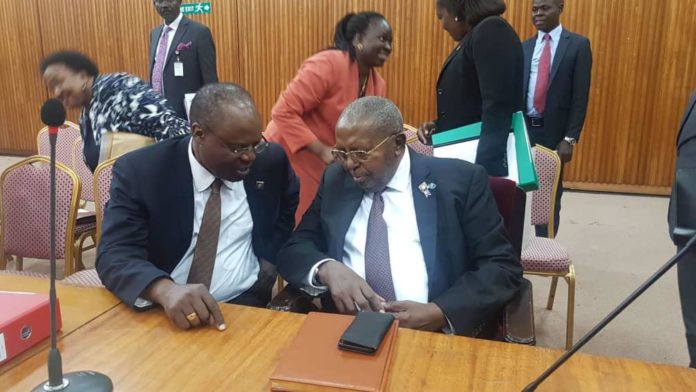
Hot seats, Kasekende consults Mutebile in the COSASE committee.

By Our Reporter

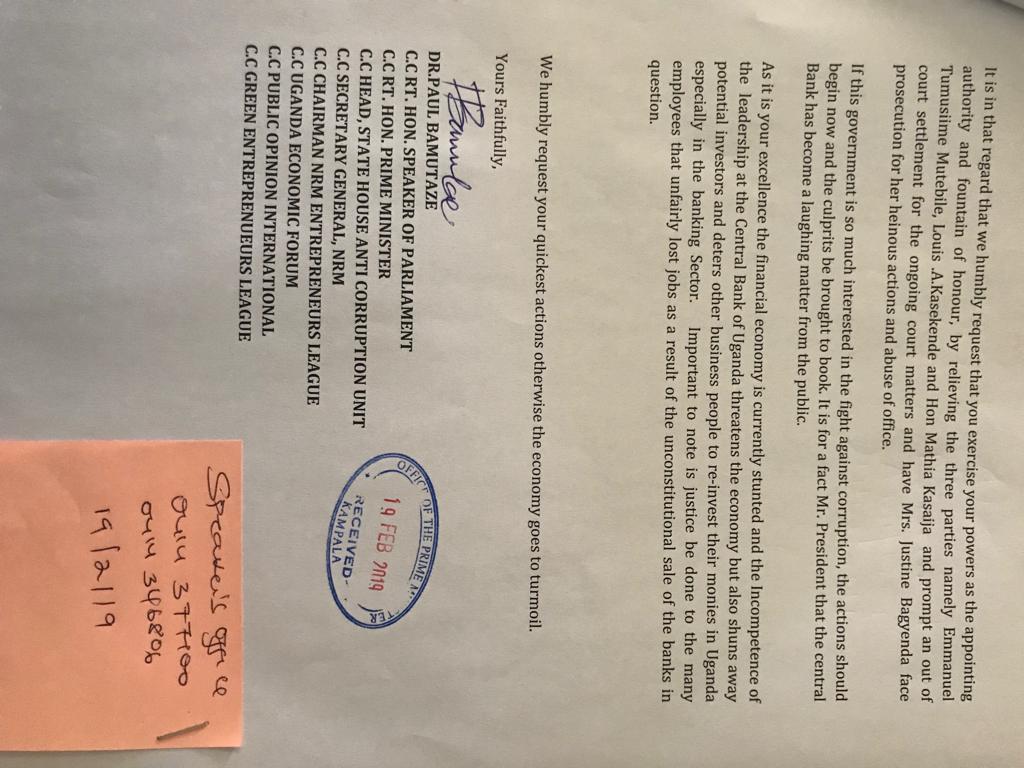
A petitioner has asked President Yoweri Museveni as the appointing authority in the country to sack Bank of Uganda (BoU) Governor Emmanuel Tumusiime-Mutebile and his deputy Dr. Louis Kasekende as well as the Minister of Finance Matia Kasaija for the alleged mismanagement of the affairs at the Central Bank.

“It is in that regard that we humbly request that you exercise your powers as the appointing authority and fountain of honour by relieving the three parties namely Emmanuel Tumusiime Mutebile Louis Kasekende and Hon Matia Kasaija,” wrote Dr Paul Bamutaze.

Dr Bamutaze, a businessman, in his letter dated February 18, 2019 argues that Tumusiime-Mutebile and Kasekende have failed in their duties leading to the mismanagement of the affairs of BoU and illegal sale of properties of defunct banks such as Crane Bank Limited (CBL), Global Trust Bank Uganda (GTBU) and National Bank of Commerce (NBC).

He also argued that former BoU executive director of supervision MS Justine Bagyenda be prosecuted for what he called her heinous acts and abuse of office.

“The petitioner has been following the COSASE…proceedings and was surprised at shocking utterances by the Governor Bank of Uganda that liquidation reports were hidden away from him by his junior staff. This is so worrying as to whether the Governor Bank of Uganda still has any authority over the management and affairs of the Central Bank of Uganda,” Bamutaze wrote.

He says in his letter that Tumusiime-Mutebile, Kasekende and Finance Minister Matia Kasaija have failed to fulfill their administrative, managerial and supervisory roles, making them unfit to hold their positions.

“It is in this regard that we seek your intervention in the following matters and request that you prevail over the Governor Bank of Uganda, Deputy Governor Bank of Uganda and the Minister of Finance who have failed in their supervisory roles in the proper management of the affairs of the Central Bank,” he complained.

He continued that the actions of the three officials have caused so much instability and if not immediately well handled are likely to cause a financial crisis.

Meanwhile the out-going parliamentary Com­mit­tee on Com­mis­sions, Statu­tory Au­thor­i­ties and State Enterprises, (COSASE) let by Chairperson MP Abdu Katuntu is on Wednesday expected to file its final report following the conclusion of its probe into Bank of Uganda over the controversial closure of seven commercial banks such as CBL, GBTU, NBC, Teefe Trust Bank, Greenland Bank, Cooperative Bank and International Credit Bank.

The report will be presented to parliament for debate where recommendations to improve bank of Uganda operations are expected to be aired out by the MPs.

Stories Continues after ad

Finding new ways to lend more to health SMEs in Africa

Bart Schaap, Chief Financial Officer.

Home to 15 per cent of the world’s population, Sub-Saharan Africa receives just 1 percent of global expenditure on healthcare. Governments in the region are increasingly aware that this inequity is hurting economic growth and are embracing universal healthcare to promote a healthy and productive population.

Bart Schaap, Chief Financial Officer at Medical Credit Fund (MCF), notes that public insurance is just one part of the solution for improving health. “It’s one thing to offer universal healthcare to your citizens. But the next question is ‘okay, where can I go?’” The region suffers from a dearth of healthcare facilities, especially ones that provide quality care. For Schaap, the solution is obvious: “If you want to address the great need in Africa for increased capacity—for doctors, beds, facilities—and greater quality in healthcare, you need to provide businesses with funding opportunities and operational advice. You need to look at the supply side.”

It was with this mindset that PharmAccess, a foundation that has been a pioneer in improving access to quality healthcare in Africa, founded Medical Credit Fund (MCF) in 2009. MCF’s mission is to expand lending to small- and medium-sized healthcare enterprises (Health SMEs) to help them grow. Headquartered in Amsterdam, it forges partnerships with local banks to help it manage the loans. A key component of MCF’s approach is delivered through a sister organization, SafeCare, that works with borrowers to improve the quality of healthcare provided. To date, MCF has disbursed some 2,900 loans to hospitals, clinics, diagnostic centers, laboratories, pharmacies, training institutions, and equipment providers in Ghana, Kenya, Liberia, Nigeria, Tanzania, and Uganda and Tanzania for a total value of $51 million.

DIGITAL SOLUTIONS LOWER ING LENDING COSTS

As many of the loans it provides are relatively small, MCF is continually looking for ways to lower administrative costs. Digital technology has been a real boon. With more and more patients in Africa paying for health services via smartphone apps like Kenya-based M-PESA, MCF developed a loan product tailored for the digital era. As Schaap puts it: “We take a percentage of the companies’ digital revenues and this automatically repays their loan. Three months later they get a message saying the loan has been repaid and asking if they want a new one. They repay without even thinking and don’t have to bring cash to the bank.”

A crucial complement to MCF’s loans is the partnership with SafeCare and the technical assistance their experts provide. “For some businesses, it is easy to understand what to buy—a car, a tractor, for example. Healthcare can be more difficult,” says Schaap. “Take medical equipment: ultrasounds range in price from five thousand dollars to fifty thousand dollars. Which model should you buy? What is a good investment?”

With a mission so closely aligned to its own, IFC in 2016, jointly with the World Bank’s Global SME Finance Facility, decided to support MCF by approving a $4.5 million loan. This support helped MCF secure a larger financing package from a variety of investors, including the development finance agencies of the UK and French governments and several other impact- oriented investors. According to Natalia Donde, the IFC investment officer who led that transaction, “MCF is attempting to create a sustainable business model in the healthcare SME lending space, which is essential for increasing access to quality healthcare for a population that needs it most. It is a difficult space and MCF’s work is extremely inspiring as it is truly changing the lives of many people in Africa.”

Lending to healthcare SMEs in Africa brings many challenges. Schaap highlights one that may not be so obvious to those operating outside the sector. “Banks can be reluctant to finance a healthcare business because of the damage it can potentially cause to their reputation,” he said. “If you finance a healthcare facility and they don’t repay, what do you do? Are you going to shut them down and sell their assets?” Schaap says “banks often decide to avoid that reputational risk by simply not financing them—but of course that is not very humane either. MCF’s credit risk appraisal in combination with SafeCare’s quality assessments often gives them the comfort to co-invest in healthcare businesses.”

Default rates for healthcare businesses in Africa is relatively low. Through its history, MCF has had a non-performing loan rate of between three and five percent. “These people don’t disappear just like that. They want to run their business properly,” says Schaap. There is one area, however, where they have a serious knowledge gap. “While other SMEs know how to talk to banks and financiers, very few doctors know the language. That’s why we started MCF— to bridge the gap so they can speak the languages of healthcare and business,” he says.

As for MCF’s future development plans, Schaap believes that tech-enabled solutions hold great promise, given their potential to cut administrative costs and make lending less risky. “We first developed our digital product in Kenya and we plan to expand to other countries. Technology is really changing the landscape. I hope to see many more banks entering this market of social importance,” he says.

Stories Continues after ad

Businesses without a website are the “Walking Dead”

Martin Zwilling

By Martin Zwilling

These days, if your startup does not have an Internet home base up and running, you are not ready for business or potential investors. Customers go there to check on the details of your offerings and verify that you are not a scam, investors look there to check out your management and sales approach, and suppliers expect to find contact information.

There should be no doubt that an Internet presence is as basic to success in business today, as brick and mortar was a hundred years ago. Yet I am amazed to see from recent data that nearly 36 percent of small businesses today still have no web presence at all. These are soon to be the walking dead, and the competitors you can beat today.

In fact, you need to have at least a prototype web site published several weeks before you expect anyone to find yours, since it takes that amount of time for the web search engine “spiders” to find you and index your content. I still remember my disappointment the first time I published my website, did an immediate Google search on the name, and it said my company didn’t exist.

There are many practical reasons for going to work early on your web site. Here are a few:

Register domain name and set up hosting. I’ve said many times that the Internet domain name should be reserved at the same time you incorporate your company name – they need to be the same, or highly related. Yet I still hear stories of companies being well down the road on products and collateral with a given name, only to find out that everything has to be changed because of a domain name conflict or availability problem.

Websites do take time to get done right. I’ve also known startups who have worked for months on the infrastructure of their business – front office, manufacturing, product design, marketing, personnel, and sales – then started work on a web site in parallel with their “grand opening.” Two months later they still didn’t have a web site, and didn’t have a customer. You should allow three months for the design, building, and rollout of your first site, and you can actually build it yourself these days.

Finalizing the web site validates your product plan and sales strategy. Many founders find that building the web site forced them to commit on the product design, set final pricing, define ordering and delivery procedures, and actually schedule and staff the marketing events that they had in mind.

Viral marketing needs a website. Everyone knows that word-of-mouth advertising is an effective and important part of any small business. But word-of-mouth and viral marketing doesn’t work without a web site. On the other hand, don’t assume that viral marketing is the only marketing you will need.

The website can be a source of revenue. If your business and product are as attractive as you believe, the traffic to your web site will build quickly. Now you should monetize that aspect of your business through the use of Google AdSense to display ads for related products and businesses, and get paid for the “click-throughs.”

Your web site will promote your business 24 hours a day, 7 days a week. Like you probably do, many people search for products and services on the weekends and in the evening. They are busy business people and very often this is the best time for them to concentrate on researching a new product or service. As a business owner, there is nothing more satisfying than having several orders and email inquiries waiting for you when you get up in the morning!

In fact, you can set up a web presence these days on social media alone, by creating a company page on Facebook, company profile on LinkedIn, or a free blog with static pages on WordPress. These may not have the globally recognized www.companyname.com domain name, but will certainly put you in touch with the new Internet generation.

I’ve heard all the excuses for not stepping up to this requirement – like I don’t have the time, skills, or money. But believe me, the costs these days are trivial, compared to the benefits. For the first time you have at your disposal the whole world market for whatever product or service you happen to provide. It’s time to turn the light on, and let the world know you exist.

The writer is a veteran startup mentor, executive, blogger, author, tech professional, professor, and investor. Published on Forbes, Entrepreneur, Inc, Huffington Post.

Stories Continues after ad

UN agency plan tackles ‘hidden cost’ of gold, paves way for safer, mercury-free mining

From smartphones to wedding rings, the hidden cost of everyday gold is its threat to human and environmental health, according to a new United Nations-driven initiative launched on Monday that aims to tackle mercury-based mining methods.

As gold production exposes millions of men, women and children globally to toxic levels of mercury every year, a new $180-million Global Environment Facility-backed Global Opportunities for the Long-term Development of the artisanal and small-scale gold mining (ASGM) sector (GEF GOLD) programme will improve conditions for miners across eight countries while slashing harmful mercury emissions.

“The widespread use of mercury in the artisanal and small-scale sector affects the environment and people, particularly in developing countries” said Philippe Scholtès, the UN Industrial Development Organization’s (UNIDO) Managing Director of Programme Development and Technical Cooperation.

The ASGM, which accounts for 20 per cent of the world’s annual gold production, is the single largest source of man-made mercury emissions, responsible for releasing of as much as 1,000 tonnes of mercury to the atmosphere annually.

“Mercury emissions impact health and ecosystems, contaminating the food we eat, the water we drink and the air we breathe,” explained Joyce Msuya, Acting Executive Director of UN Environment(UNEP). “This is a long-term problem we need to confront now” to protect health, provide livelihoods and save the planet, she added.

Moreover, some 15 million people work in the ASGM sector, including 4.5 million women and over 600,000 children.

“By phasing out mercury use and connecting miners to markets for responsibly produced and sourced minerals, GEF GOLD will help to ensure the gold value chain both supports miners and provides consumers with access to ethically produced, environmentally sustainable gold,” said Jacob Duer, Head of UNEP’s Chemicals and Health branch.

Working on the edge

To sate the appetite for gold for jewelry, investment and consumer products, miners and processors often work in harsh conditions without industry protections on pay, health or safety, with many relying on toxic, mercury-based extraction methods.

“It is important to transform the extremely harmful practice using mercury in ASGM to protect the human health and ecosystem,” stressed Abdoulaye Mar Dieye, UN Nations Development Programme, (UNDP) Director of the Policy and Programme Support Bureau.

Studies indicate that ASGM mercury exposure is a major, largely neglected global health problem that put miners and their communities at risk of brain damage; vision and hearing loss; and delayed childhood development.

While ASGM offers employment for rural populations, miners frequently operate on the edges of legality, with ASGM either banned outright or limited by legislation. GEF GOLD intends to secure miners’ livelihoods by supporting regulatory and policy reforms to formalize ASGM across the programme countries – opening market and finance access to increase incomes and enable mercury-free technology.

Additionally, the GEF GOLD programme will work with the private sector to promote compliance with international standards on responsible mineral supply chains.

Spanning eight countries, the five-year programme is a partnership between UNEP, UNDP, UNIDO, the Global Environment Facility, Conservation International and the governments of Burkina Faso, Colombia, Guyana, Indonesia, Kenya, Mongolia, the Philippines and Peru.

Stories Continues after ad
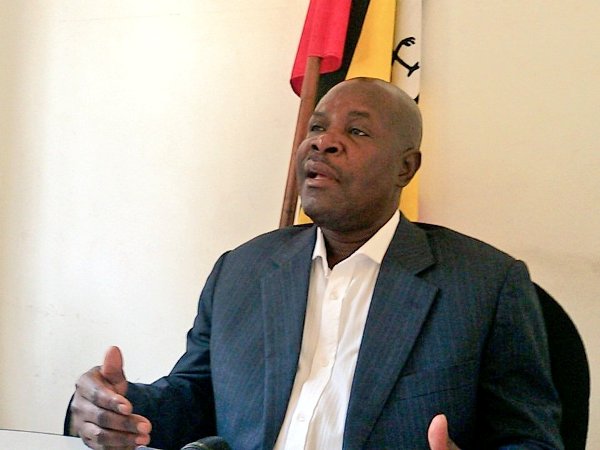
Ugandan national appointed Director United Nations Relief and Works Agency for Palestine refugees

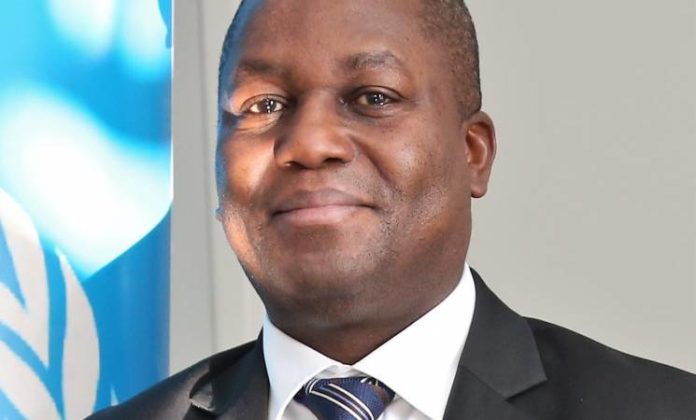
Mr Michael Ebye Amanya

The United Nations Relief and Works Agency for Palestine refugees in the Near East (UNRWA) has appointed Mr. Michael Ebye Amanya a Ugandan national, to the position of Director of UNRWA Affairs in the Syrian Arab Republic as of February 15 2019.

Mr. Amanya joined UNRWA in March 2017 as Deputy Director of Programmes, Syria Field Office. In that role, he supervised the development and implementation of programmes for the 438,000 Palestine refugees in Syria.

“I am excited to be able to continue building on our work with and for the Palestine refugee community of Syria. After eight years of conflict, Palestine refugees continue to be one of the most vulnerable groups in Syria with immense humanitarian needs,” Amanya said. “I look forward to ensuring that UNRWA continues to provide quality services and emergency assistance to support Palestine refugees.”

Amanya has spent more than 25 years working in the humanitarian assistance field, including with the International Rescue Committee and Action Aid. He was the first Regional Director for the Middle East for the International Rescue Committee (IRC) between 2007 and 2010.

Subsequently, he became the IRC’s Regional Director for the Democratic Republic of Congo (DRC) in 2012 and led a programme that provided assistance to 2.5 million displaced and vulnerable Congolese.

Earlier deployments with IRC and Action Aid saw him develop and implement programmes in response to the Rwandan genocide, Darfur conflict, the refugee crisis in Western Tanzania and internal displacement in Northern and Western Uganda.

Amanya received his Bachelor of Arts in social work and social administration and Master of Arts in social sector planning and management from Makerere University in Uganda.

UNRWA is funded almost entirely by voluntary contributions and financial support has been outpaced by the growth in needs

Stories Continues after ad

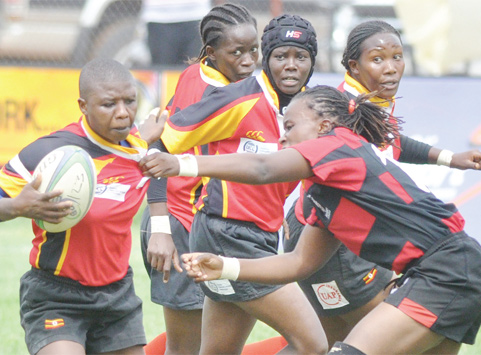
French insurance firm in partnership with Rugby Africa to support women atheletes

Rugby-She-Cranes

French insurance firm, Société Générale and Rugby Africa have agreed to join forces for the next two years to support the development of rugby in Africa, with a particular emphasis on rugby competitions for women and young athletes.

The new partnership is an additional milestone in Société Générale’s ongoing commitment to supporting the development and openness of rugby in France and internationally, especially in Africa.

Rugby Africa is one of the six regional associations of World Rugby, the international body that oversees the organisation of the Rugby World Cup.

The partnership will focus specifically on: World Rugby’s Get into Rugby program, which aims to encourage everyone around the world to take up rugby and the two official competitions for women’s rugby, the Africa Women’s Sevens, and under-20s rugby with the U20 Barthès Trophy

“This partnership is the continuation of two of our long-term commitments: to rugby, of which we have been a reliable partner for over 30 years, and to Africa, with our Grow with Africainitiative, a program central to our priorities that aims to promote the sustainable development of the continent,” said Caroline Guillaumin, Director of Human Resources and Communication for the Group.

She said African rugby was booming, and we intend, in association with Rugby Africa, to implement important rugby development projects as a force for social cohesion.

“This partnership uniting us with Société Générale will instill more vigour in the development of African rugby, especially with young people and women. Currently, around half a million children and teenagers are introduced to rugby every year in Africa,” said Abdelaziz Bougja, President of Rugby Africa.

He said the number of registered female players has more than tripled in recent years in Africa. This partnership is a decisive step forward for Rugby Africa as it brings the necessary investment to support this rapid growth. We thank Société Générale for the confidence they have placed in Rugby Africa and its federations.

Société Générale is a long-standing partner of rugby, a sport with which the Bank shares the common values of team spirit, commitment and respect. The Bank supports the development of all forms of rugby, from the amateur level to the highest professional level.

In France: it is partner to more than 450 amateur clubs in France, the Top 14, PROD2, the French Rugby Federation (FFR) as well as the French national rugby team.

Internationally, it is a major partner and the official bank of the Rugby World Cup for the sixth time, a partner of Rugby India (Indian Rugby Federation) and title sponsor of the rugby sevens national teams in all categories (men, women and junior) since 2017, backer of the association Terres en Mêlées and partner of the Algerian Rugby Federation.

Stories Continues after ad

Cabinet okays physical planners registration bill 2019

Mr. Ofwono Opondo.

Cabinet has approved Physical Planners Registration Bill, 2019 peddled at regulating physical planners and holding them accountable for their professional conduct.

The regulation is in line with the Physical Planning Act 2010 that empowers the local physical planning committee to prohibit or control the use and development of land and buildings in the interests of the proper and orderly development of its area.

The act prohibits a person from carrying out any development within the planning area without obtaining development permission from the committee.

Speaking at Media Centre, government spokesperson, Ofwono Opondo, said Physical planners will play a more effective role in all physical planning matters in the Country within the pretext of the law and regulation.

“There will be enhanced coordination between the physical planning profession and other professionals in the Construction Industry within the Country. Physical planners will be made more responsible and accountable for their professional conduct,” he said.

He said, the physical planning practice will be more responsive to the Country’s Physical Development Plans since the registration of Physical Planner’s will be done an annual basis.

Mr. Opondo said physical planning practice and professional interests of the registered Physical Planners who may wish to operate in Uganda will be regulated and Quack Physical Planners who have defrauded many local Governments and private developers will be eliminated.

Stories Continues after ad

East Africa Crude Oil Pipeline to top EA’s infrastructure projects funding -report

Crude oil pipeline

Uganda and Tanzania’s Tanzania oil and pipeline projects will top this year’s infrastructure transactions in the region, with the two countries seeking over US$7 billion funding for the projects, a new report says.

According to Debtwire’s Africa Project Finance Trend update for 2019, the oil and infrastructure sectors are the most likely to attract interest from investors and financiers this year.

Uganda is expected to top the infrastructure transactions with the US$3.5 billion joint East Africa Crude Oil Pipeline project that will run from in the oil rich district of Hoima on the border with DRC to the Indian Ocean port of Tanga in Tanzania.

Stanbic Bank Uganda, the lead arranger for a US$2.5 billion loan, said that it expects the deal to be concluded in June 2019. The balance of US$1 billion is expected to come from shareholders in the form of equity.

In November 2018, Uganda announced that it expected to have a conclusive financial deal for the joint pipeline with Tanzania by mid-2019, paving the way for its construction after months of delays that have seen Kampala revise its oil production timelines.

Last week, Energy Minister Eng. Irene Muloni hinted that production is likely to start in 2022, a slight delay from the revised date of 2021.

Uganda discovered crude reserves more than 10 years ago, but production has been repeatedly delayed by disagreements with field operators over taxes and development strategy. A lack of infrastructure such as a pipeline and a refinery have also held up output.

China’s CNOOC and France’s Total and Tullow Oil have stakes in the two areas. CNOOC is the operator of Kingfisher block while Total leads the exploration in Tilenga.

“We are preparing for production. We have to build a pipeline for exports and a refinery to add value. So unless those two projects are done we cannot start production,” said Ms Muloni.

In April 2last year, Uganda signed a deal with a consortium, including a subsidiary of General Electric, to build and operate a 60,000 barrel per day refinery that will cost between US$3 billion and US$4 billion. The refinery is expected to be operational by 2023.

Minister Muloni said Uganda would announce its next exploration licensing round May this year.

A final investment decision for the refinery will be taken by September 2020 and the project is expected to be completed in three years’ time, she said.

The crude export pipeline through Tanzania, with a capacity to transport 260,000 barrels a day, will be built by 2022, the minister said.

Stories Continues after ad

Four FUFA Big League teams reach Uganda Cup quarterfinals

Uganda cup trophy

The round of 16 games have been concluded and the quarter-finalists of the 2018/19 Stanbic Uganda Cup quarter finals have been confirmed.

Four sides from the second tier of Ugandan football, the FUFA Big League are still in the competition while the rest are from the Uganda premier League.

Nebbi Central, Wakiso Giants, Kyetume and Proline FC are from the Big League. Express, Vipers, Bright Stars and BUL are the UPL sides left in the competition.

The date for the quarterfinals draw and dates for the games to be played will be communicated.

The winning club of the Uganda Cup will smile home with Shs40 million, runners up Shs20 million, semi-finalists Shs10 million, quarter finalists Shs5 million and Shs2.5 million for each of the clubs that finished at the round of 16 stage.

The host region and ground for the final of the 45th edition of the Uganda Cup will be communicated in due course.

The winner of the competition represents Uganda in the CAF Confederation Cup as per the rules of the competition. KCCA FC are the defending champions.

Qualified teams: Express, Vipers SC, Bright Stars, BUL, Nebbi Central, Wakiso Giants, Kyetume and Proline FC.

Round of 16 results:

Proline FC 2-1 Onduparaka FC

Kitara FC 0-1 Kyetume FC

URA FC 1-2 Bright Stars FC

Vipers SC 1-0 Kiboga Young SC

Nebbi Central FC 1-0 Nkambi Coffee FC

BUL FC 4-1 Bukedea TC FC

Wakiso Giants FC (4) 0-0 (2) Tooro United FC

Express FC (4) 0 – 0 (1) Police FC

Stories Continues after ad