Stanbic Bank
Stanbic Bank
23.9 C
Kampala
Stanbic Bank
Stanbic Bank
Home Blog Page 1387

Unlimited opportunities: Creating more Jobs for young people in emerging market and developing Economies

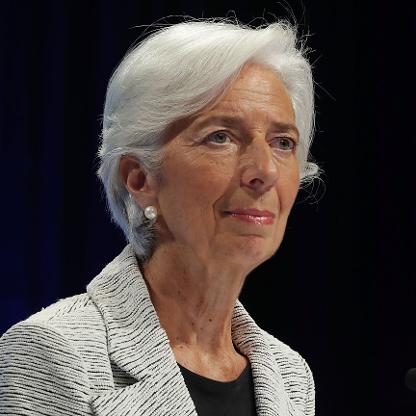
Christine Lagarde

By Christine Lagarde and John Bluedorn

“To define is to limit,” Oscar Wilde once said. But sometimes economists need to use definitions to see the scope of a problem and find ways to lift the limits to success. This is especially true for young people in emerging markets and developing economies. We know that young people are essential to economic development and growth. They make up approximately one-third of the working-age population in the average emerging market and developing economy.

We also know that global youth face tough labor markets and job shortages in countries all over the world. Approximately 20 percent of 15- to 24-year-olds in the average emerging market and developing economy are neither in work nor in school. Compare that to advanced economies where the average rate is 10 percent.

The social and economic costs of this gap are significant. Trust in society tends to be lower in countries with higher levels of youth inactivity, raising their chances of social conflict. A new IMF staff study shows that, if youth underemployment in the typical emerging market and developing economy was brought in line with the average advanced economy, the working-age employment rate would rise by 3 percentage points and economic output would get a 5 percent boost. That is the kind of game change that young people—and all countries—desperately need.

Policies that work for the next generation: How can we get there?

More and better education is part of the solution. But this alone will not be enough. Too many well educated young people struggle to find good jobs in emerging and developing economies.

Drawing on new analyses using both macroeconomic and microeconomic big data (tens of millions of individual-person data points), our research published today points to a series of policies that can help close the gap with advanced economies. These policies will improve job prospects for everyone, but especially for young people not in school.

There are three in particular worth focusing on.

First, greater gender equality in the workplace: Large and persistent gender gaps are a big part of the story behind poorer youth labor market outcomes in emerging market and developing economies. On average, nearly 30 percent of young women in these economies are not working and not in school. This is almost twice the rate for young men in a similar position. Some—but not all—of the discrepancy can be explained by the economic consequences of having children. But laws have a role to play as well. The reality is that when women are legally protected from employment discrimination, their rates of employment and participation improve without hurting men’s chances. For example, if sub-Saharan Africa strengthened its legal protections for women to the average in emerging Europe and Central Asia, we estimate 10-15 percent higher employment and participation rates by young women, thus sharply narrowing the gender gap.

Second, better functioning labor markets: Limiting overly strict labor regulations, ensuring severance payments are not too onerous, and establishing a minimum wage that is not too high compared to the average wage are all associated with improved employment and participation for young people who are out of school—particularly young women. A case study of the recent history of minimum wage reforms in Indonesia helps prove the point. Indonesian provinces that raised formal minimum wages relative to average wages by 10 percent less than other provinces saw 1 to 1.5 percentage point lower youth unemployment rates. These policies benefitted young women the most. These policies also boost the number of formal jobs—which are typically more productive and more desirable—available to young men and women.

Third, more open product markets: Governments can encourage more dynamic markets through greater competition and entrepreneurship. Far too many young people all over the world do not have access to capital and credit required to start their own business and expand an existing one. Lower business start-up costs and administrative burdens for firms, as well as greater openness to international markets, are all associated with better employment outcomes and improved job quality for young people. Our research shows that liberalizing product market regulations from the average level in South and East Asia to the average in Latin America and the Caribbean would increase the participation rate of young men by 5 percent.

No time to waste

The United Nations’ Sustainable Development Goals for 2030 focus two pillars on young people. One is to substantially reduce youth unemployment and the second is to ensure that young people who are out of school have productive and meaningful employment options. We can all see there is still a long way to go. But there is a path to get there.

What is most remarkable—and rare in economics—is that the policy proposals that can help young people do not require a trade-off between younger and older workers. They benefit everyone and help grow a country’s economy in a strong, sustainable way. If we make the right choices now, the potential benefits truly are limitless.

Stories Continues after ad

CSO writes to Museveni on electoral concerns in Uganda

CCEDU Coordinator Crispin Kaheru.

The Citizens’ Coalition for Electoral Democracy in Uganda (CCEDU), a civil society organisation (CSO), has written to President Yoweri Museveni over concerns related to the electoral system in the country, arguing that more remains to be done to rectify the current situation where political office seekers have to pay money in order to be voted.

The letter, dated January 18, 2019, highlights three major majors including monetisation of elections and corruption in electoral processes; integrity of the national voters register and violence during elections.

Among others, CEDDU says there is need to attach electoral democracy on a value system that encompasses competency, integrity and regulating the financing of political party activities to do with elective positions at all levels.

“Your Excellency, as a first step in averting this worrying trend, we must hinge electoral politics on a value system that denotes competency, integrity and vision. Secondly, it is time to regulate campaign financing by setting and implementing limits for campaign spending for elective positions. The Election Campaign Financing Bill, 2018, among other issues, seeks to regulate campaign financing during elections. We, therefore, call on Your Excellency to translate your public condemnation of voter bribery into action, by supporting the expeditious enactment of this law,” the letter reads in part.

Below is the letter.

18th January 2019

H.E Yoweri Kaguta Museveni

President of the Republic of Uganda

Office of the President

Kampala

UGANDA

Your Excellency,

Congratulations on completing the year, 2018. This letter is in line with our tradition of writing to you at the beginning of every year. In our letter to you dated 19th February, 2018, we implored you to take action on two (2) major issues: 1) establishing an independent Constitution review process whose findings and recommendations would be implemented before any subsequent national electoral exercise; and 2) launching a national dialogue process with the purpose of creating a platform for Ugandans, in all their diversity, to agree on shared values, transformative solutions and an integrated development agenda. Your Excellency, we commend your endorsement of the Uganda National Dialogue Process, which you launched on 18th December, 2018, as the country keenly awaits for your efforts to preside over the launch of a credible Constitution Review Commission Process.

Your Excellency, in 2018, Parliamentary, Local Government, as well as administrative units and women council elections were conducted in many parts of the country. These elections highlighted both old and emerging challenges of electoral justice, good practices and many lessons were learnt. Mr. President, in this letter for 2019, we highlight three (3) key challenges that have afflicted elections in the recent past, and propose remedies that we believe will require urgent collective action to restore the integrity of elections in Uganda.

Monetization of elections and corruption in electoral processes:

Your Excellency, incidents of voter bribery plagued elections in 2018. As the Chairman of the NRM political party, you must be concerned as we are, that your party reported various electoral malpractices, including incidents of voter bribery during the Jinja East Constituency by-election that took place on 15th March, 2018. We laud your public condemnation of voter bribery, and we urge you to translate it into tangible actions, because inability to do so, sends mixed messages.

For example, the shillings 5 billion donation to 128 SACCO groups in Rukungiri on Sunday 15th April 2018, weeks prior to the Rukungiri district woman MP by-election, was largely perceived by the public as mobilizing electoral support for your party in the by-election of 31st May 2018 and, therefore, an attempt to influence the voters’ choice using money. In addition, previous elections have been marked by allegations of mismanagement of public resources to fund electoral campaigns.

Your Excellency, it is estimated that the total amount spent by the Electoral Commission, political parties (including NRM and FDC), and candidates (including independent candidates and those from the ‘Go Forward movement’) for the 2016 presidential and parliamentary elections was about 3 trillion shillings (2.4 trillion campaign spending, and about 500 billion spent by the Electoral Commission). This amounts to approximately 12.5% of Uganda’s annual budget.

Your Excellency, one of the implications of using (enormous) public resources to finance personal political ambitions is to give the incumbent(s) an unfair advantage over their opponents. It also creates a cycle of corruption, in that public funds are stolen in order to finance political campaigns, and political victors loot the public coffers to accumulate wealth, recoup their illicit investment in the electoral exercise, and maintain influence over the electorate.

This trend is a grave danger for Uganda’s electoral process, as it undermines the responsibility of citizens to freely choose their leaders and threatens the essence of our democracy. Simply put, the influence of money is warping political choice, and thus the willingness of a political candidate to offer money to the electorate in return for a vote has become the determining factor for many electors, as opposed to the candidate’s competency, integrity or vision – a trend that must be urgently reversed.

Your Excellency, as a first step in averting this worrying trend, we must hinge electoral politics on a value-system that denotes competency, integrity and vision. Secondly, it is time to regulate campaign financing by setting and implementing limits for campaign spending for elective positions. The Election Campaign Financing Bill, 2018, among other issues, seeks to regulate campaign financing during elections. We, therefore, call on Your Excellency to translate your public condemnation of voter bribery into action, by supporting the expeditious enactment of this law.

Integrity of the national voters register: On a different and related note, during the last electoral cycle, the Electoral Commission, working together with other government agencies, took steps to introduce an automatic voter register for all eligible voters in Uganda. Although largely a success, this has not come without problems. There are still challenges that afflict the national voters register. Complaints of ‘ghost’ voters remain. As election practitioners, we are aware that some of the glitches could be technical, arising from how the national voters register is managed – especially after the passing of the Registration of Persons Act, 2015.

Your Excellency, whereas the public is keen on registering for purposes of obtaining a national Identification card (ID), there is not the same enthusiasm to register deaths – when they occur. Equally, there is not the same fervor to deregister voters who are no longer eligible such as persons who have relinquished Ugandan citizenship. This potentially leaves ‘ghosts’ on the register. While we can neither confirm nor contradict the allegations of ‘ghost voters’ in the 15th March 2018 Jinja East Constituency by-election, we are aware of the complexities that arise from streamlining the electoral roll with the National Identification Register.

Your Excellency, in August 2018 when you expressed concern about ‘ghosts’ on the national voters roll, the Electoral Commission instituted a technical committee to investigate your discontent with the integrity of the national voters register. In the spirit of partnership with the Electoral Commission, we will be reaching out to enquire more on this issue and would be grateful if you could share with us any findings that were brought to your attention and your views on how Government can support efforts by the Electoral Commission to address this sensitive and critical question.

It would be equally useful to share the committee’s findings with the relevant election stakeholders to enable a participatory solution-finding exercise. As CCEDU, we are profoundly interested in supporting credible processes intended to genuinely clean the national voters register and help create an enabling environment for citizen participation in our democracy.

Your Excellency, as a matter of emphasis, we stress that, in order to rid the voters register of any ineligible voters, the Electoral Commission and the National Identification and Registration Authority (NIRA) need to collaborate with the wanainchi, especially with regard to publicizing on-going citizen registration exercises, alongside articulating the importance of the registration of deaths and of persons who have left the country or denounced Ugandan citizenship. Citizen vigilance from village to national level will be central in framing a clean and credible national voters register.

The Ministry of Information, Communication and Technology can also play a proactive role in making e-government platforms available to increase awareness among citizens about this important exercise. The government will have to encourage open and meaningful support from local leaders, citizens and civil society in this regard. Together we can address this.

Violence during elections: Your Excellency, a reflection on the history of elections in Uganda indicates an unabated trend of violence. In the past, electoral violence has been a culmination of discontent, frustration and disgruntlement among sections of the electorate and some political actors. Last year, Uganda witnessed hostile political campaigns in Bugiri, and more especially Arua, and this hostility reverberated across the country and beyond.

Like you have rightly noted in the recent past, young people have been exploited to foment violence during electoral periods. We must acknowledge the context that makes this manipulation possible. Among the commonly cited causes of electoral violence is the disquiet among the youth occasioned by their economic plight, as well as severe social pressures and lack of opportunities. During election time, the diverse causes of discontent among the youth, coupled with the high levels of mistrust between the citizens and government; increasing levels of intolerance among political actors and the local population; actions of militia groups; as well as state-security-led intimidation, have triggered violent actions.

Your Excellency, when politicians exploit social schisms such as hate language, intimidation and threats to secure electoral advantage, the inevitable outcome is conflict and violence in what would otherwise be peaceful political processes.

Your Excellency, with specific regard to last year’s election violence, we invite you to support an impartial, transparent and conclusive inquiry into the cause of the violence, including the allegations of stoning the presidential motorcade during the Arua by-election.

Our shared commitment to peace and prosperity in our nation needs to be supported by transparency and the rule of law. Completing investigations and bringing to book all culprits, including those security officials who unlawfully tortured and killed Ugandans in the melee that ensued is critical for us as a society to learn from this episode and do better going forward.

With barely two years left to the 2021 general elections, it is critical that as a country, we (re)-activate indigenous spaces (ebimeeza, barazas, kacoke madit, cokere adit) for sustained strategic dialogues on issues of concern, shared values, and possible solutions. These indigenous public platforms can enable us to share alternative opinions, support fact-finding and healing, and enable every Ugandan to play a constructive role in building trust and confidence in our democratic and development path.

Your Excellency, this is also the time to activate an effective framework for continued civic education alongside a mechanism to track, analyse, document and respond to potential triggers of violence. CCEDU strongly believes that locally rooted solutions will provide acceptable, homegrown, and timely actions, as well as concrete follow up and feedback mechanisms to the emerging and old challenges that fuel electoral violence, thereby guaranteeing more effective conflict and violence prevention and/or response.

Your Excellency, in the National Development Plan (NDP II), your Government recognizes that without free and fair political and electoral processes, key developments cannot be achieved. To this end, the NDP II proposes to “enact laws to strengthen credibility of electoral process in Uganda,” and enhance citizen participation in the electoral process.

We hold the view that laws should be matched with practice. In line with this recommendation, we call upon the Government to urgently begin to enact the necessary electoral reforms and to support practices that promote credible and transparent elections. Implementing the reforms will require the involvement of citizens, Parliament in addition to the Government if we are to create a sustainable transparent electoral process. The sooner we start, the better prepared we will be as a nation to mitigate and overcome any possible risks and threats to our democracy.

Your Excellency, 2019 is an important year in the context of preparing for the next general election according to the Electoral Commission’s strategic plan. It is therefore our desire and that of many Ugandans that you, as the Fountain of Honour, champion laws and practices that guarantee a level playing field for electoral contestations in Uganda; support the establishment of a binding code of conduct for political parties with sanctions; a defined framework for the integration of relevant technology in elections; continuous civic education for all citizens to understand their rights and responsibilities; as well as the re-building of public confidence in institutions that are charged with dispensing democracy and good governance.

If we are to successfully accelerate our journey towards enhanced prosperity for all, we must make sure that it is done in tandem with a national effort to redefine governance, the rule of law and respect for the rights of all citizens. We believe in a Uganda that can provide an enabling environment for its increasingly youthful population to contribute to sustaining peace, development and trade.

We believe in a Uganda informed by a shared value system that can identify and address challenges to peace and development with dignity and respect. We believe in a Uganda that can be an inspiration for the region and the world on a values-based approach to governance, development and security.

Your Excellency, we look forward to your timely and positive response and action on the issues that we have brought to your attention.

Crispin Kaheru

Coordinator, CCEDU

Stories Continues after ad

Gov’t explains recent weather phenomenon on Lake Bunyonyi

The Uganda National Meteorological Authority (UNMA) has explained the recent weather phenomenon that happened on Lake Bunyonyi found in south western Uganda.

In a statement to journalists at the Uganda Media Centre, George William Omwony, a meteorologist with UNMA, said what happened on Lake Bunyonyi on January 21, 2019 was none other than a waterspout, and not a tornado as some members of the public were saying.

“A waterspout is a small diameter column of rapidly swirling air in contact with a water surface and are closely related to other atmospheric phenomenon such as a tornado,” he said.

Mr. Omwony said the common weather phenomenon include wind, cloud, rain, snow, fog and dust storms. Less common events include natural disasters such as waterspouts, tornadoes, hurricanes, typhoons and ice storms.

He said an average waterspout would be around 50 meters in diameter and that it’s associated wind and moves at an average speed of about 40-50 miles an hour (64-80 Km/hr).

He said the lifespan of a typical waterspout on average lasts 5-10 minutes though he said occasionally a large waterspout may persist for up to one hour.

A waterspout is more than likely to stay on the water and be typically harmless. However, sometimes a waterspout may transcend over to land & turn into a full scale tornado that can run havoc on lives and property.

In a video that circulated widely on social media, a waterspout is seen on the shores of Lake Bunyonyi during a heavy downpour. The video left many in shock and awe amid speculation of what might have caused the previously unseen occurrence raising more fears about climate change and its effects.

Stories Continues after ad
Over 110 Ugandans to receive medals at 33rd NRM anniversary celebrations in Tororo

NRM Electoral Commission boss Dr Tanga Odoi.

President Yoweri Museveni at the celebrations to mark the 33rd NRM/A celebrations in Tororo is expected to offer different categories of medals to 114 Ugandans who have offered distinguished services, most importantly those that have sacrificed to protect and defend their motherland Uganda.

“This is a form of appreciating Ugandans who move an extra mile to offer a unique service to their motherland,” the NRM Secretary General Justine Lumumba Kasule told the media on Wednesday at the party’s headquarters in Kampala.

This year’s celebrations whose preparations are in high gear are scheduled to take place in Muwafu Primary School Grounds, Nabuyoga Sub County, Tororo District under the theme: “A moment of glory that set a new Chapter for Unity, Peace and Prosperity in Uganda”.

“Ugandans are therefore invited to come over to Tororo and join the president to celebrate this critical day in the history of Uganda. Ugandans from all walks of life and from all political groupings are invited,” she said.

She said the liberation war which was fought between 1981-86 should not be seen as an end in itself. Rather, she said, was a moment of glory in which the People of Uganda opened a new chapter to rescue themselves from dictatorship and misrule.

The then total terrorism in the country, she said, had bred secondary vices such as: tribalism and sectarianism ideologies. “This created a legacy of bad politics, poor governance, disastrous social development philosophies and practices,” she said.

“In the 33 years, the NRM government introduced participatory democracy where power was given back to the people. We have also continued to witness regular, free and fair elections at National, Parliamentary and Local Council level,” she said.

Uganda, Ms Lumumba said, continues to enjoy unprecedented peace and stability, within her borders, under the NRM regime. “The literacy rate for Ugandans increased from 54 percent in 1991 to 72.2 percent in 2014. This has been made possible with the introduction of Universal Primary Education (UPE) and Universal Secondary Education (USE). Government has continued to construct seed schools in sub-counties without a Government secondary school,” she said.

She said new water mains per annum have increased from less than 100km in 2013 to over 1000 km per annum currently. “As at September 2018, the total network length was 14,838.56 km. Water coverage and sanitation by National Water & Sewerage Corporation (NWSC) covers 238 towns. Service to less-advantaged communities, through installation of public taps is now at 1000 km per annum, compared to 100 km before 2014,” she said.

In terms of provision of bulky water for production, she said a number of irrigation schemes have been improved and water storage capacity increased from 38.86 million m3 in June 2017 to 39.32 million m3 in June 2018.

She said the country has invested in infrastructural development to spur industrial revolution that will make Uganda a modern state by 2040. The investment in Hydropower dams at Karuma, Isimba, Bujagali and road networks are pointers to this vision of building a modern state, she said. “Tororo which was once a quiet town is now becoming an active industrial hub hosting many cement factories, a multibillion phosphate plant at Sukulu among others,” she said.

Stories Continues after ad

Mbire I am not aware of summons, but willing to help police investigate subversive when called upon

MTN Chairman, Charles Mbiire.

The Chairman of MTN Uganda, Charles Mbiire has said he is not aware of police summons but says he is ready to work with authorities when called upon to help in investigating subversive activities if any by employees of the giant telecom.

Relating to two of the company’s staff believed to have carried out subversive activities against Uganda, more so to breach the country’s national security, Mbiire said it wasn’t an agreeable police of the company but said this could be isolated incidents.

“I am not aware of the police summons but I am always available to help the police in issues of national security,” he told Eagle Online.

Earlier it was reported that police had summoned Mbire for interrogation following the recent arrest and deportation of two of the telecom operator’s staff on account of involving in activities that comprise Uganda’s national security.

Sources say Mbire will be questioned on the alleged involvement of MTN’s top officials in the creation of special mobile money accounts through which funds were channeled to facilitate subversive activities in Uganda. “He will appear before police and other security organs for questioning,” a senior officer said.

MTN Uganda staff who were deported and against whom Mbiire would reportedly be interrogated are the Chief Marketing Officer Olivier Prentout and Head of Sales & Distribution Annie Bilenge Tabura for using their who security agencies say used their employment status to plan and breach Uganda’s national security

Security agencies have also invited MTN CEO Wim Vanhelleputte for interrogation as regards the activities of the two deported staff. Meanwhile, authorities also deported MTN’s General Manager in charge of mobile financial services, Elsa Muzzolin back to Italy

Prentout was arrested by police from Entebbe airport on Saturday January 19 shortly after arrival from a business trip abroad while Tabura was picked up unidentified security personnel upon arrival at the MTN headquarters in Kololo on Monday.

MTN in a statement a day ago said they remain committed to respecting the laws of the country. “MTN Uganda, together with all its employees, remains fully committed to operating within and respecting the laws of the country,” the statement reads.

Deputy police spokesperson, Polly Namaye, said security agencies have been monitoring the activities of the duo in close coordination with immigration officials.

“We strongly believe that the deportation of the two foreigners, who were using their employment tools to achieve their ill motives, has enabled us disrupt their intended plans of compromising our national security,” Namaye said in her statement.

In July last year, the Internal Security Organisation (ISO) raided the South African telecoms firm, disconnecting four of its servers. MTN then reported the case as an “illegal intrusion.” MTN said the intruders had accessed the server room after the kidnap of one of their contractors, a Huawei Technologies employee who was forced to grant access.

President Museveni has publicly accused Uganda’s telecommunications for under-declaring calls and revenue earnings. MTN’s 20-year licence granted in 1998 expired last year on October 20 and the second interim licence also expired two days ago.

Renewal of the licence for one of the country’s biggest taxpayers had seemed like it would be a routine process after the regulator, Uganda Communications Commission (UCC) assured the nation that MTN’s licence would be renewed for the next 10 years.

But Museveni recently raised concern over the US $100 million licence fee that was later reduced to US $58 Million by Uganda Communications Commission (UCC).

On Saturday while addressing guests at the opening of the Uganda Revenue Authority (URA) Tower in Nakawa, Kampala, President Museveni said telecom companies were under declaring the number of calls so as to pay less tax. He said they had found that telecoms were under declaring calls made by over two million. This meant that even in taxes to government, they paid less money than they were supposed to pay.

Stories Continues after ad

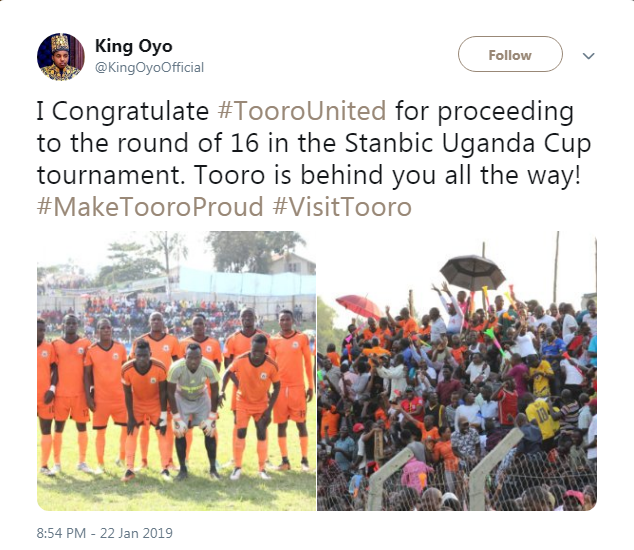
King Oyo congratulates Tooro United for eliminating KCCA from Uganda Cup

Tweet by King Oyo

His Majesty Oyo Nyimba Kabamba Iguru Rukidi IV, the King of Tooro Kingdom congratulated Tooro United FC for eliminating the defending champions from the Stanbic Uganda Cup.

Through his official twitter account, he tweeted, “I Congratulate #TooroUnited for proceeding to the round of 16 in the Stanbic Uganda Cup tournament. Tooro is behind you all the way! #MakeTooroProud #VisitTooro.”

King Oyo also promised that the kingdom will be behind the team as they progress through the tournament.

Tooro United converted all their first three penalty kicks while KCCA FC managed only one of their four in a game played at Buhinga stadium in Fort Portal after a one all draw in normal time.

The team progressed to the round of 16 and will find out their opponents in a draw that will be held on a date yet to be confirmed by the FUFA competitions committee, to fight for a spot in the quarter-finals.

Stories Continues after ad

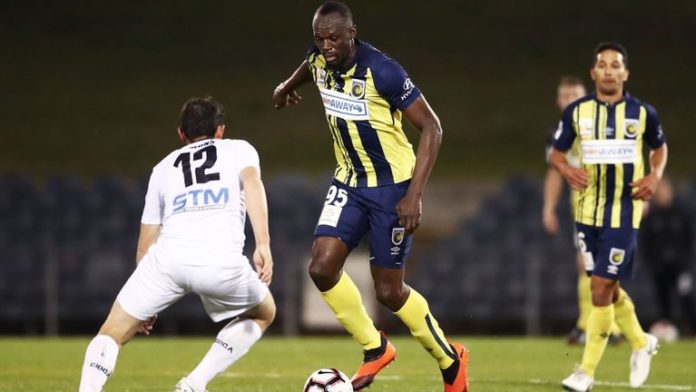
Usain Bolt retires from football after two matches

Usain Bolt playing football

Eight-time Olympic champion Usain Bolt has declared his “sports life over”, frustrated in his bid to begin a post-athletics career in football.

The Jamaican, 32, spent two months training with Australian side Central Coast Mariners, but left in November after the club failed to find financial backing for a professional deal.

“It was fun while it lasted,” said the 100m and 200m world record holder as per BBC Sport. “I don’t want to say it wasn’t dealt with properly, but I think we went about it not the way we should.”

But he added: “You live and you learn. It was a good experience – I really enjoyed just being in a team.”

In October 2018, Bolt scored two goals on his first start for the Mariners in a friendly against Macarthur South West, celebrating with his trademark lightning bolt pose.

The A-League side were not the only team interested in signing Bolt – he turned down an offer from Maltese club Valletta, reportedly because the club could not meet his wage demands.

He had also spent time training with Norwegian team Stromsgodset and German giants Borussia Dortmund.

Bolt, who retired from athletics in 2017, has said his focus now lies with his various commercial endeavours.

“I’m now moving into different businesses, I have a lot of things in the pipeline, so as I say, I’m just dabbling in everything and trying to be a business man now.”

Stories Continues after ad

Holders KCCA FC knocked out of Uganda Cup

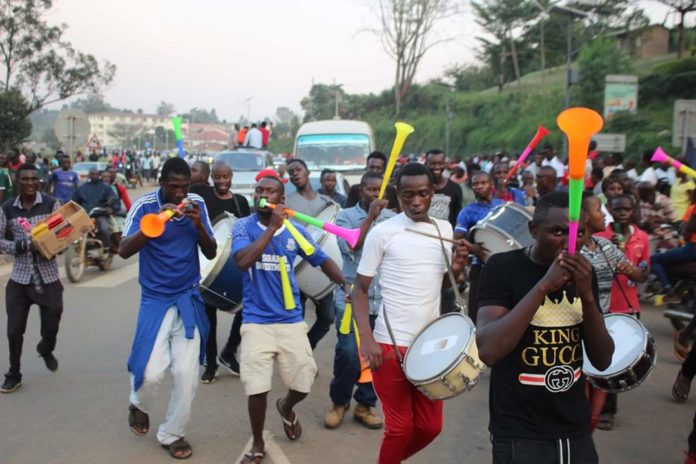
Tooro united fans celebrate on the streets after eliminating KCCA.

The Stanbic Uganda Cup has been KCCA FC’s go-to trophy in recent years – but not this season, after the holders were dumped out of the knockout competition by Tooro United at Buhinga stadium in Fort Portal.

The game ended in a one all draw in normal time with Patrick Kaddu scoring for the Kasasiro boys six minutes into second half but Allan Kayiwa equalized for the hosts 13 minutes from time to force the game into penalties.

Timothy Awany, Hassan Musana and Allan Okello missed their penalties while Muzamiru Mutyaba converted his for KCCA. Issa Mubiru, Mike Kawooya and Wily Kavuma scored all their penalties for the hosts.

Tooro United won the game 3-1 in post-match penalty shootouts and proceeded to the round of 16.

The round of 16 draw will be held on a date yet to be confirmed by the FUFA competitions committee.

The winners of the round of 16 will then progress to the quarter-finals.

The prize money for the competition was increased from Shs90 million to Shs120 million with the winning club smiling home with Shs40 million, runners up Shs20 million, semi-finalists Shs10 million, quarter finalists Shs5 million and Shs2.5 million for each of the clubs that finish at the round of 16 stage.

The host region and ground for the 2018/19 Stanbic Uganda Cup final will be communicated in due time.

The winner of the competition represents Uganda in the CAF Confederation Cup as per the rules of the competition. KCCA FC are the defending champions.

The competition which was commonly known as Kakungulu Cup started in 1971. KCCA FC and Express FC are the most successful clubs in the Uganda cup winning on 10 occasions each.

Qualified teams for the round of 16: Vipers SC, Tooro United, Wakiso Giants, Express, BUL, Police FC, Kyetume, Bright Stars, URA FC, Onduparaka, Proline, Admin, Nkambi Coffee, Kitara, Bukedea Town Council, Kiboga Young.

Stories Continues after ad

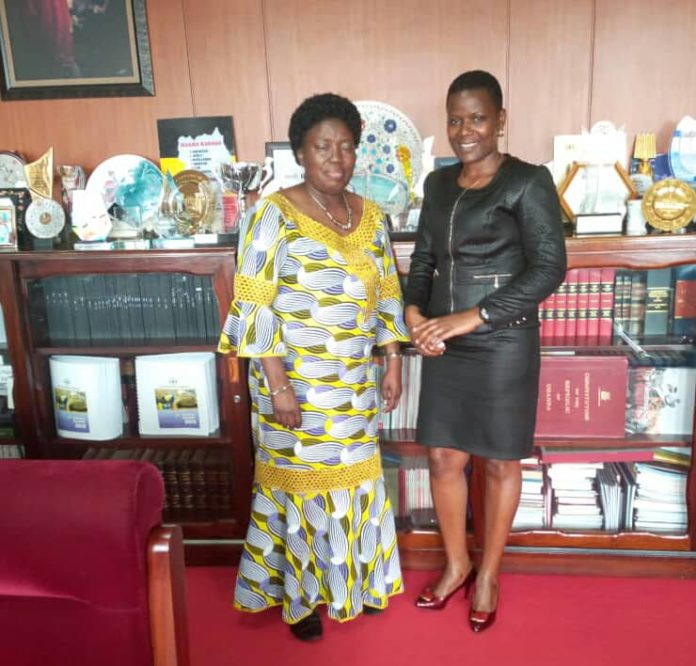
Kadaga commends IAWRT for fight against negative media on Women

IAWRT Uganda Chapter, Nankwanga Eunice Kasirye with Kadaga.

The Speaker of parliament Rebecca Kadaga has commended International Association of Women in Radio and Television (IAWRT) for its determination in the fight against negative Media portrayal of Women.

In a meeting with Kadaga, the head of IAWRT Uganda Chapter, Nankwanga Eunice Kasirye, said Women are regarded as a weaker sex adding that Female journalists are sent for simple stories in press conferences, yet they too can report from war zone areas and other investigative stories the can impact people’s lives.

The meeting was peddled at engaging the speaker to render a hand in the struggle to end gender stereo typing of women in Uganda’s media industry.

“With a gender sensitive media industry, IAWRT is optimistic to creating equity in all sectors and has been at the fore front of creating a sustainable pool of Media Gender mainstreaming ambassadors to influence female journalists,” she said

She also briefed the speaker on the need to create a data base of female media practitioners as well as female News sources to sustainability and collectively uplift the plight of a woman at all levels.

Stories Continues after ad

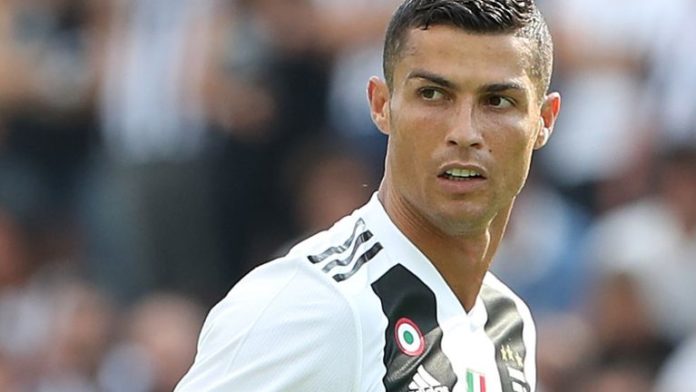
Cristiano Ronaldo pleads guilty to tax fraud, fined £17m

Cristiano Ronaldo

Cristiano Ronaldo has accepted a £17m fine and a suspended 23-month jail sentence after pleading guilty to tax fraud in Spain.

Ronaldo had previously agreed the deal with Spanish state prosecutors and tax authorities but still had to appear in court to sign off the agreement.

Spanish law allows for some sentences under two years to be spent on probation, meaning Ronaldo will not serve any jail time unless he commits a further offence.

The non-violent nature of Ronaldo’s offence means he is unlikely to spend any time at all in jail, serving it on probation instead.

His appearance lasted a matter of minutes but brought a huge media presence to court in Madrid, with judges refusing his request to appear by video or to enter court via a back entrance.

Ronaldo had been accused of defrauding authorities of £12.9m in unpaid taxes between 2011 and 2014, during his time with Real Madrid.

It was claimed Ronaldo, who now plays for Juventus, did not declare income of around £25m from image rights.

The prosecutor also alleged that the forward falsely reported income as coming from real estate, which it said had greatly reduced his tax rate.

Ronaldo’s former Real team-mate Xabi Alonso was also in court on Tuesday, accused of defrauding tax authorities of just under £2m between 2010 and 2012.

Alonso has denied any wrongdoing and told journalists “Yes, all good” as he arrived in Madrid.

Stories Continues after ad