Stanbic Bank
Stanbic Bank
19.1 C
Kampala
Stanbic Bank
Stanbic Bank
Home Blog Page 1390

Uganda drop two places in latest FIFA rankings

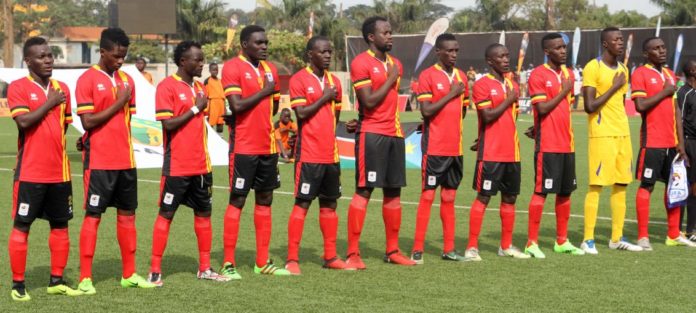
DROPPED TWO PLACES: Uganda-Cranes

Football governing body FIFA has announced the first rankings of 2019 with Uganda dropping by two places to position 77 and 16 in Africa.

The drop comes due to an inactive time with the Cranes not playing any competitive matches for almost two months.

Neighbours Kenya also dropped by one place to 106, while Uganda’s next 2019 Afcon qualifiers opponent Tanzania improved by one slot to 137, Burundi came at 138 and Rwanda also improved by two slots to 135.

The top five countries in Africa remain unchanged; Senegal (24), Tunisia (28), Morocco (43), Nigeria (46) and Congo DR (51).

Belgium, France, Brazil, Croatia, and England also remain unchanged as the best five countries respectively in the world.

Newly crowned Asian champions Qatar have climbed to 55th in the latest FIFA/Coca-Cola World Ranking, gaining 38 places – and reaching their best position since 1993 – on the back of their stunning success in UAE.

North Korea were the worst movers, dropping down by 12 ranks.

The format used by FIFA is named “SUM” as it relies on adding/subtracting points won or lost for a game to/from the previous point totals rather than averaging game points over a given time period as in the previous version of the World Ranking.

The points which are added or subtracted are partially determined by the relative strength of the two opponents, including the logical expectation that teams higher in the ranking should fare better against teams lower in the ranking.

The next FIFA/Coca-Cola World Ranking will be published on 4th April 2019.

Stories Continues after ad

FIFA to investigate former Kenyan defender over match-fixing in world cup qualifier

Ex-harambee defender George Owino.

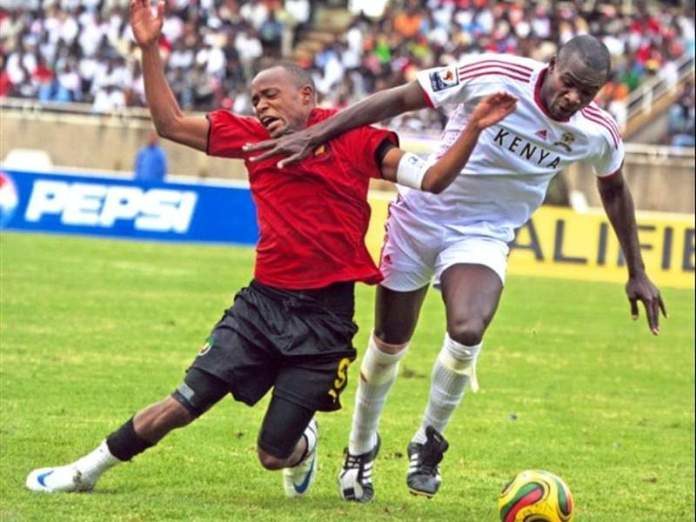
Fifa are investigating a Kenyan footballer on allegations of match-fixing, including a 2010 World Cup qualifier against Tunisia.

The move by football’s world governing body follows a preliminary investigation into the roles of former Kenya international George Owino and convicted match-fixer Wilson Raj Perumal.

The famous 2010 Fifa World Cup qualifier between Kenya and Tunisia that was played on October 11th 2009, is among the matches suspected to have been fixed.

Owino is said to have earned millions between June 2009 and 2011 in a match-fixing scandal that the world football body is investigating at the moment.

Fifa is also said to be in possession of emails that are suspected to be exchanged between the player and Wilson Raj Perumal.

Owino appeared to make with Perumal whereby the Kenyan would be recruited by an unidentified football club in Australia to influence matches.

“The purpose I am gonna bring you there is for business,” Perumal purportedly wrote to Owino in an email dated 27 March 2010.

“But you are to remain loyal to me only… Salary each month 30,000 US. If I say loose (sic) u do as I say. Or else you wont see your salary. DEAL.”

Two days later, an apparent reply from Owino’s account stated: “Fine no problem cz even me a wnt a good life 4 my family so I will do as u say so. is there trials or is jst direct signin.”

The final part of the evidence presented in the Fifa report are emails said to be from Owino in which he admits receiving money from Perumal.

“Yes, thank u very much n may u b blessed,” one such e-mail reportedly stated.

Perumal, who was arrested for match manipulation offences in Finland in 2011, has revealed in the past that he has successfully infiltrated several African countries.

There are further claims that Perumal wanted unidentified games at the Nile Basin tournament in Egypt in January 2011 to be manipulated.

Stories Continues after ad

Uganda is set to host the 64th Commonwealth Parliamentary Conference- Kadaga

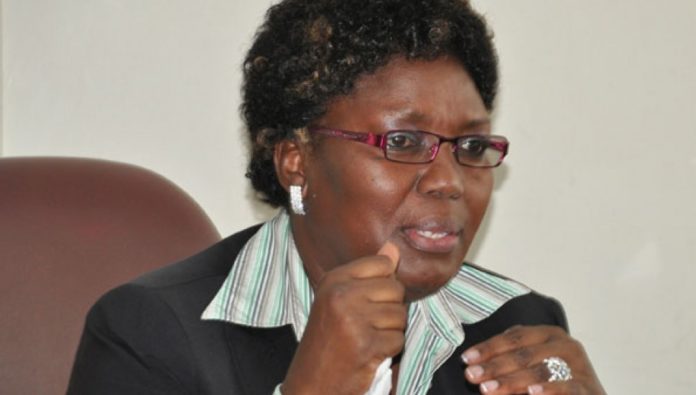
Speaker of Parliament of Uganda, Rebecca Kadaga.

The Speaker of Parliament, Rebecca Kadaga, has said Uganda has made adequate preparations to host the 64th Commonwealth Parliamentary Conference (CPC).

The Conference scheduled for 23 – 29 September 2019 will be held under the theme: ‘Adaption, Engagement and Evolution in a rapidly changing Commonwealth.

“This conference is important for Uganda because we last hosted this conference in 1967. We should encourage the delegates to come in early and take time to enjoy the tourist attractions,” said Kadaga.

Kadaga, who is the CPC President Designate 2018 to 2019, made the remarks while meeting Mr. Akbar Khan, the Secretary General of the Commonwealth Parliamentary Association (CPA), at Parliament Building.

Akbar Khan is in Uganda to assess the progress by the CPA Branch in preparations to host the week-long event. The Conference is expected to be attended by Speakers and Members of Parliament from the different commonwealth countries.

Kadaga said that the conference will extend the brand of Uganda’s tourism, owing to the number of delegates expected to attend the conference from the 53 commonwealth states.

Akbar Khan requested the Speaker to engage government institutions not to impose stringent visa requirements and to provide visas on arrival to delegates.

“I would suggest a provision of delegates getting their visas on arrival in Uganda, because most countries do not have a Ugandan consulate, which could cause delays in getting visas if they apply through other states,” said Akbar Khan.

He also raised concerns about security and transportation within the city for conference delegates, adding that Uganda was doing well on the ease-of-access to transport vis-à-vis traffic congestion.

“In Bangladesh we had a challenge of security and traffic, which are the biggest selling points for delegates. We do not have those issues in Uganda and that will be a positive aspect for delegates to enjoy,” Akbar Khan said.

Kadaga committed to follow up on the issues surrounding visa issuance saying that “We can send a message out to the airlines because some cannot let you board without minimum travel requirements”.

Stories Continues after ad

Uganda’s coffee exports fall 18.6% in January

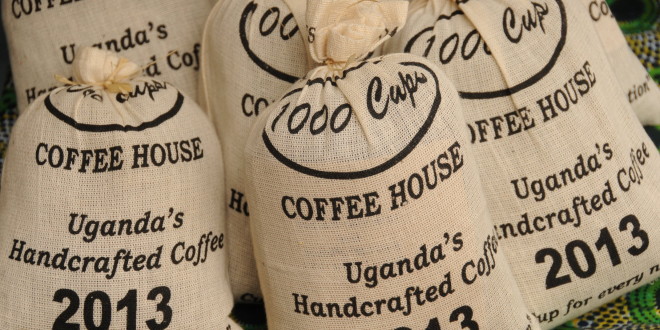
Uganda’s coffee exports in December 2018 fell by 18.6 percent to 314,439 bags compared to December 2017, according to the latest coffee market report produced by the International Coffee Organisation (ICO).

Its total shipments in the first three months of 2018/19 amounted to 1.08 million bags, down 11.2 percent from the same period in 2017/18. Shipments from Uganda in calendar year 2018 decreased by 11.5 percent to 4.22 million bags.

Coffee farmers and exporters have held onto their coffee due to the low coffee prices and competition with Brazilian exports, as well as lower output in some of the regions. The European Union, notably Italy and Germany, remained a major destination for coffee from Uganda, accounting for around 65 per cent of total shipments in 2018.

Uganda is Africa’s number one coffee exporter even though Ethiopia which consumes most of its coffee is the continent’s top producer of the crop.

Uganda grows both Arabic and Robusta coffee, with the former mainly grown on the slopes of Mt. Elgon while the latter is mainly grown in the lowlands of the central and western regions.

In December 2018, world coffee exports amounted to 10.43 million bags, 0.9 per cent higher than in December 2017. Shipments of Brazilian Naturals and Colombian Milds increased by 19.1 per cent to 3.95 million bags and 8.9 per cent to 1.42 million bags, respectively. The two countries are among the top producers of coffee in the world.

According to the report Uganda is among the top producers of coffee six produces of coffee in the 2015-2018.

According to the Uganda coffee roadmap, government plans to plant 300 million trees per year. It’s optimistic this will increase output of coffee from the current 4.5 million 60-kilograms bags to 20 million bags by 2025.

Government is yet to pass the Coffee Bill into law to pave way for new innovations, marketing, quality, production incentives and funding for the sector.

Among the challenges the coffee sector faces include; numerous non-tariff barriers, unsupportive cultural practices, lack of exposure to international best practices, limited social capital, unpredictable policy environment and limited access to information.

Stories Continues after ad

Museveni vows to resolve Acholi- Madi tribal conflicts raging from contested Apaa land

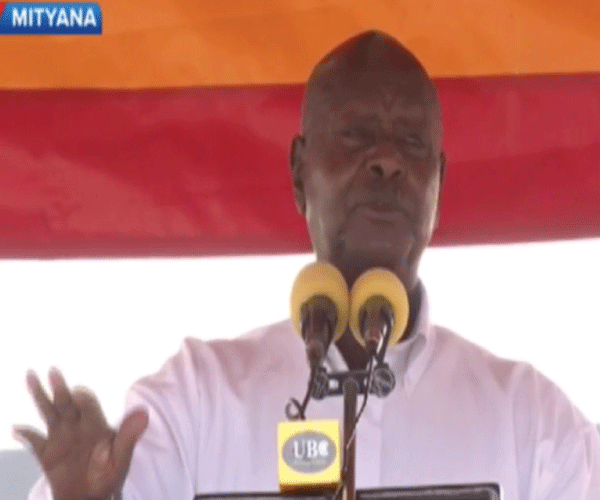
President Museveni addressing those who turned up.

President Yoweri Museveni has for the second time vowed to resolve Acholi- Madi tribal conflicts raging from the contested land in Apaa, Amuru district.

Last year, Museveni constituted a 10 member committee led by the Prime Minister Dr. Ruhakana Rugunda peddled at scrutinizing his proposal that was aimed at restoring peace in Apaa land wrangles.

His decision proceeded an intense land clashes between the Madi and the Acholi after demarcation of contested land boundary between Amuru and Adjumani, forcing over 200 residents out of their homes into the United Nations offices in Gulu.

In a meeting with area leaders in June last year, Museveni apologized for that suffering caused by their leaders bashing them as specialists in telling lies. He vowed that his government will support and stand with the people who told the truth, families of the victims of violence and the injured

Speaking during the celebrations of 38 years of National Resistance Army in Kitgum, Museveni said, Apaa issues are fueled by leaders who want cheap popularity.

“I will go to Amuru to look into the land conflicts. It is true I have been going there during elections. This time I will do it before. Whether Apaa is in Acholi or Madi, what difference does it make provided it is in Uganda?” he said

Museveni assured Ugandans of peace and security and warned anti-security groups saying anybody who thinks he can destabilize Uganda will destroy himself, “We are following those who are killing people in Kampala,” he added.

“Running a country is like treating a patient. You much diagnose a patient first. If the diagnosis is wrong, treatment can’t be right,”

In 2002, Parliament decided to demarcate 827sqkm of the East Madi controlled hunting area into a park reserve meaning no human settlement and no hunting at all.

Stories Continues after ad

MPS chase Dfcu Bank top officials out of parliament over fake documents

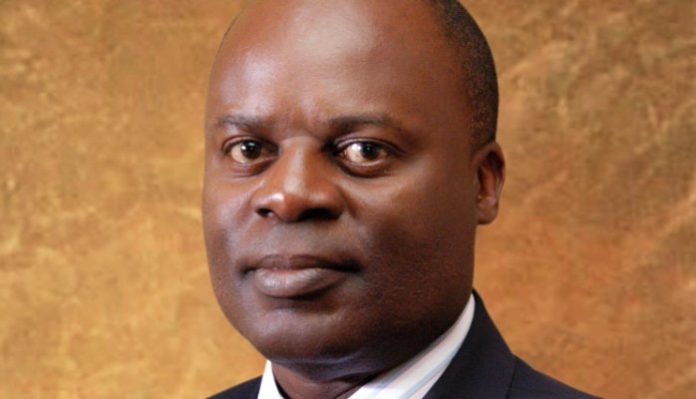
Mr. Jimmy Mugerwa, the board chairman of Dfcu bank who is accused by some shareholders for the bank's poor management.

Parliament’s Committee on Commissions, Statutory Authorities and State Enterprises (COSASE) has Wednesday evening chased away Dfcu Bank officials from parliament for presenting documents which were unconvincing as they were not signed.

Abdu Katuntu, the committee Chairman said MPs would not consider the unsigned documents saying as they are unauthentic with no one to bear responsibility for them.

He challenged the Dfcu Bank legal team to correct the mistakes and report back to parliament on Thursday at 10:00hours. The committee is in the final staging of finishing the probe that started in late October following the Auditor General John Muwanga’s report that faulted the Bank of Uganda (BoU) on closing banks without following due processes.

Dfcu officials led by chairman board of directors Jimmy Mugerwa were appearing before COSASE as witnesses in the closure and purchase of Crane Bank in the ongoing Bank of Uganda probe.

During the meeting, Dfcu’s Mugerwa made a defense presentation in regards to the terms of purchase of Crane bank agreement, however the presentation was backed by fake documents which were neither dated nor signed by the bank authority. This prompted MPs of the committee to kick them out and allow them reorganize themselves.

“Its prudent for this committee to throw out dfcu team because they are so confused and disorganized, they are fidgeting with their own documents. It is in the best interest that dfcu withdraws and reorganizes themselves.

Some of the documents that caused the MPs to chase away Dfcu Bank officials led by Chairman Juma Mugerwa and new MD Mathias Katamba included one on “Fair valued loans and advances of customers of Crane Bank Limited (CBL). The other included schedules of CBL loans and advances.

Mr Muwanga in his report on defunct banks faults Dfcu Bank for engaging in transactions that did not follow proper guidelines as it bought of CBL assets at Shs200 billion, paid in installments. Dfcu Bank also bought the assets of Global Trust Bank without following guidelines as laid in the Financial Institutions Act, 2004.

The sourcing of Dfcu Bank as a buyer of both banks happened over telephone, according to Ben Sekabira, a senior banking officer at BoU. Former director of bank supervision Justine Bagyenda was at the forefront of selling the two banks to their rival Dfcu Bank.

At the time DFCU Bank bought Global Trust Bank in 2014, William Kalema was both on the board of BoU and the board of DFCU Bank.

BoU also sold the two banks to Dfcu Bank well knowing that its staff under the BoU Staff Retirement Benefits Scheme own a percentage of shares in Dfcu Bank which creates conflict of interest.

Former owners of CBL were in parliament Wednesday morning where they said their bank was sold illegally and asked for an independent audit. BoU sold CBL based on the inventory report and due diligence report done by DFCU Bank. The buyers set the price.

The former shareholders led by their Chairman Joseph Biribwonwa and his Vice Sudhir Ruparelia, told MPs Bagyenda, was more interested in selling CBL than saving it as lender of last resort.

Biribwonwa said BoU closed CBL at the time when they were in serious discussions with strategic investors who were willing to put capital in the bank. BoU closed CBL on account of being undercapitalised, a situation officials said put depositors’ money at risk.

Biribwonwa said CBL’s total assets helped Dfcu Bank to grow its assets from Shs1.8 trillion to three trillion Shillings, which was an increase of 67 percent. He wondered why BoU could transfer CBL assets to Dfcu Bank at Shs200 billion interest free yet it denied CBL financial support to remain in business.

CBL opened its doors in Uganda in 1995, growing from one branch to 46 braches spread countrywide as well as spreading into Rwanda.

CBL shareholders also want BoU to refund US$8 billion they gave to BoU as capital contribution among other sums of money.

They were also bitter that BoU paid Shs914 million to MMAKS Advocates for advice on sale of CBL assets and assumption of liabilities as well as paying them commission of Shs3 billion being 5 percent of monies recovered them as CBL shareholders. BoU wants the shareholders to cover the cost incurred by BoU. But they said it is unfair and won’t respond pay the money they see as exorbitant.

They also told the committee that Dfcu Bank made a profit of Shs39.7 billion on the first day it acquired CBL yet BoU claimed it was insolvent.

The former shareholders particularly Sudhir Ruparelia also disputed Shs570 billion passed to Dfcu Bank written off loans even as it was not included in the purchase and assumption of assets agreement.

Stories Continues after ad

CID threatens to arrest journalists over Kasekende defamation case

Dr. Lious Kasekende

The Director of Criminal Investigations through operative Benard Sisye Kiirya has threatened to arrest a number journalists who will fail to record a statement on February 8, 2019 at CID headquarters Kibuli.

Kiirya wrote to journalists of some of the online media houses to record the statements in relation to a case of defamation. “Treat this matter as urgent. Failure to appear will result into your arrest using all possible legal means,” he wrote in a letter dated February 5, 2019 to Mr Richard Wanambwa, the Editor Eagle Online.

The officer did not however, mention the complainant in his letter, something some journalists said was unprofessional. Asked about why police seem to be interested in the arresting journalists, the officer who delivered summons at Eagle said it was the Deputy Governor Bank of Uganda using his influence to make sure journalists are arrested.

A source said lawyers of Dr. Kasekende were the ones that presented the complaint against journalist to the officer. “The lawyers are acting on behalf of Kasekende, a police officer who preferred to remain anonymous said.

He said Kasekende’s lawyers accuse the online media platforms of defaming him as they reported on the on-going probe of BoU over the controversial closure of seven commercial banks between 1993 and 2016.

“Pursuant to section 27A of the Police Act, you are required to report to CRIMINAL Investigations Directorate headquarters in Kibuli on Friday 08th February, 2019 at 10:00hrs to assist in providing valuable information in respect to the matter being investigated. You will report to the Department of Electronic Counter Measures for further guidance,” the letter further reads.

Eagle Online has been reporting about the role played by Kasekende and others in the sale of commercial banks who investigation is still on going. Eagle Online also reported that the IGG was investigating his wealth following leaked documents that showed him transacting billions of shillings but also owning properties in Kampala and Wakiso worth billions of shillings.

Stories Continues after ad

EU calls for enforcement of law to combat FGM in Uganda

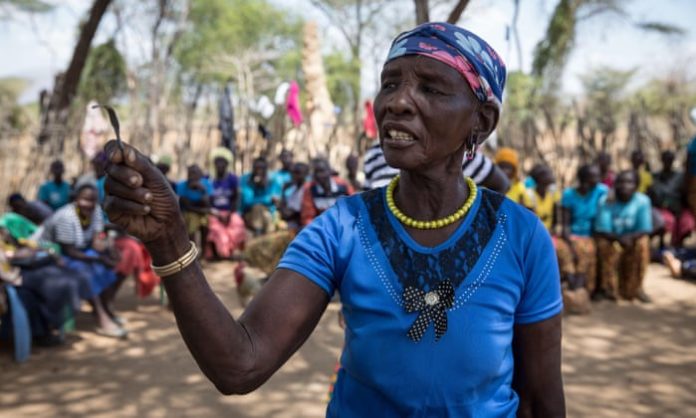
Traditiona FGM surgeon

As Uganda joins the rest of the world to commemorate the International day for zero tolerance to Female Genital Mutilation (FGM), the European Union (EU) delegation to Uganda has urged government enforce the law to fight the bad practice imposed on women in Sebei sub region.

In 2010, Uganda enacted an anti-FGM law under which culprits could be jailed for four to five years once found guilty.

“The European Union Delegation to Uganda would like to reiterate the importance of systematically implementing specific legislation by the Government of the Republic of Uganda which outlaws the harmful practice. In 2010, Uganda enacted The Prohibition of Female Genital Mutilation Act, which criminalises FGM,”

The European Union Delegation to Uganda is shocked by the recent events in Kween and Bukwo districts where a number of girls became victims of FGM. Today, we reiterate the European Union’s firm commitment to support the Government of Uganda and all other actors, both state and non-state, in their efforts to eliminate this harmful practice, said Ambassador Attilio Pacifici.

He said FGM is a fundamental violation of basic human rights and of the dignity of women and girls; it is cruel, inhuman and degrading, and has severe negative consequences in terms of physical and psychological health for FGM survivors for the rest of their lives.

He said EU recognises the challenges the Government of Uganda and other actors face in their strive towards curbing the practice, and support the efforts of all stakeholders to ensure the elimination of FGM. “The European Union’s strong commitment to eradicate worldwide FGM is affirmed in a joint statement here,” he said.

On Monday three UN agencies in Uganda said the practice has drastically gone down in the East African Country.

Evidence shows that over 95 per cent of the communities where FGM was formerly practiced do not support the practice anymore.

The World Health Organisation , the United Nations Children’s Fund and the United Nations Population Fund made the disclosure in a joint statement.

The agencies said that over 200 communities had since 2009 publicly declared abandonment of the practice in Sebei and Karamoja regions, in the eastern part of the country.

“Currently, we see even more diverse community activity the media are fully engaged, the church is strongly outspoken.

“The cultural leaders have come out to denounce the practice, girls and young women are stepping out and saying ‘no’ to FGM,’’ the statement said.

“For several years now, most of the practicing communities of FGM in Uganda have realised that there are absolutely no benefits associated with FGM, but rather far-reaching harmful consequences for the women and girls who are cut,’’ the statement added.

Health experts say FGM, which is seen as a rite of passage into womanhood, is a big threat to women and girls’ rights, including reproductive health, causing prolonged bleeding, infections, and sometimes formation of cysts.

The agencies said recent reports of women and girls in Kween district, eastern Uganda, being forcefully subjected to FGM is a big concern.

Clearly, if women and girls have to be forced against their will to undergo what is presumably a cultural tradition, then something is terribly wrong, they said.

“We are specifically reaching out to the government of Uganda and other stakeholders to see how we can join hands to support girls and women who are now living in fear,’’ the statement said.

“The recent upsurge should not derail efforts to eliminate FGM. Discontinuing the practice is a long and complex process because it requires a total change in behaviour and negative social norms.’’

Stories Continues after ad

UCD to stop the issuance of certificates to new elite Robusta coffee nursery operators

WANTS 'SMART AGRICULTURE PRACTICES': Agriculture Minister Vincent Ssempijja.

Minister of Agriculture, Vicent Ssempijja has revealed that Uganda Coffee Development Authority is moving to stop the issuance of new certificates to new elite Robusta coffee nursery except to operators in drought prone districts in Northern Uganda and parts of North Eastern and Eastern Uganda.

The minister said, the move is aimed at blocking illegal farmers dealing in the activity of giving poor quality seedling to farmers for his is in line with contribution to the attainment of 20 million bags per year target envisioned in the Coffee Road map recently launched by President Museveni.

“Production of coffee seedlings in the Arabica coffee growing districts, in limited quantities, shall continue but under strict guidance from UCDA,” he said adding that the Propagation of Coffee Wilt Disease Resistant clonal cuttings in Robusta Coffee growing areas, shall continue and be scaled up, but under strict guidance from UCDA.

The minister said, Coffee seed gardens shall continue to be certified UCDA on behalf of the ministry and any nursery operator that may wish to privately engage in elite coffee seedlings production must first get clearance from UCDA.

According to Ssempijja, the ministry through Uganda Coffee Development Authority, District Local Governments and operation wealth creation has been implementing a coffee planting programme aimed at raising, distributing and planting 300 million coffee seedlings per year.

He said all coffee nursery operators with elite Robusta coffee seedlings should, with immediate effect should scale down seedlings and production so as not to have any carry over stock and the promotion of multiplication of Coffee Wilt Disease Resistant (CWDR) clonal cuttings through establishment of mother gardens will continue.

“Coffee nursery operators who wish to plant their already raised coffee seedlings in their gardens before the end of the second season of 2019 are free to do so as long as verification by UCDA and District Local Government Officials confirm,”

He said only mature and quality coffee seedlings which will have been certified and are available before the end of the second planting season will be procured by UCDA.

Starting with the second planting season of September-November 2019, he said the Ministry will start scaling down the production and distribution of elite Robusta coffee seedlings to farmers.

Stories Continues after ad

Former Crane Bank owners want independent audit, BoU to account for Shs478b

Chairman Ruparelia Group of companies and former majority shareholders, Sudhir Ruparelia and other shareholders before COSASE.

Former owners of defunct Crane Bank Limited (CBL) have demanded for an independent audit their bank and Bank of Uganda to account for Shs478 billion spent as liquidity support before controversially selling it at Shs200 billion to its rival Dfcu Bank on January 25, 2017.

They said BoU has failed to present documented evidence on where the money came from, how it was used and on which account it was deposited. According to BoU, the said money was used as liquidity support to CBL as well as other costs during the takeover.

In the event that Central Bank intervenes in the failed bank, Section 93 of the FIA 2004 guides that all costs of management by the Central Bank shall be payable by the financial institution and shall be a debt due from the financial institutions to the central bank.

The former shareholders led by their Chairman Joseph Biribwonwa and his Vice Sudhir Ruparelia, told MPs on parliament’s Committee on Commissions, Statutory Authorities and State Enterprises (COSASE) on Wednesday that BoU officials led by the former executive director of supervision Justine Bagyenda, were more interested in selling CBL than saving it as lender of last resort.

Biribwonwa said BoU closed CBL at the time when they were in serious discussions with strategic investors who were willing to put capital in the bank. BoU closed CBL on account of being undercapitalised, a situation officials said put depositors’ money at risk.

Biribwonwa said CBL’s total assets helped DFCU Bank to grow its assets from Shs1.8 trillion to three trillion Shillings, which was an increase of 67 percent. He wondered why BoU could transfer CBL assets to Dfcu Bank at Shs200 billion interest free yet it denied CBL financial support to remain in business.

CBL opened its doors in Uganda in 1995, growing from one branch to 46 branches spread countrywide as well as spreading into Rwanda.

CBL shareholders also want BoU to refund US$8 billion they gave to BoU as capital contribution.

They were also bitter that BoU paid 914 million to MMAKS Advocates for advice on sale of CBL assets and assumption of liabilities as well as paying them commission of Shs3 billion being 5 percent of monies recovered them as CBL shareholders. BoU wants the shareholders to cover the cost incurred by BoU. But they said it is unfair and won’t respond pay the money they see as exorbitant.

They also told the committee that Dfcu Bank made a profit of Shs39.7 billion on the first day it acquired CBL yet BoU claimed it was insolvent.

The former shareholders particularly Sudhir Ruparelia also disputed Shs570 billion passed to Dfcu Bank written off loans even as it was not included in the purchase and assumption of assets agreement.

CBL presented their case to the MPs in the presence of Dfcu Bank’s Chairman, jimmy Mugerwa and former Managing Director Juma Kisaame among other officials who were also expected to defend themselves.

Stories Continues after ad