Stanbic Bank
Stanbic Bank
27.6 C
Kampala
Stanbic Bank
Stanbic Bank
Home Blog Page 1394

MPS quiz Bagyenda, Kirkland rep. on sale of three banks

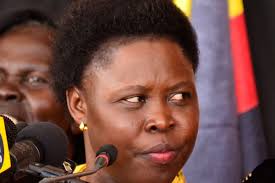
Embattled former Executive Director in charge of Supervision at Bank of Uganda Justine Bagyenda.

MPs on Parliamentary Committee on Commissions, Statutory Authorities and State Enterprises (COSASE) on Friday quizzed former executive director of bank supervision at Bank of Uganda (BoU), Ms Justine Bagyenda and Mr. Denis Kakembo, lead counsel of M/S J.N Kirkland Associates over the controversial sale of loan assets of three banks now defunct.

The three banks whose loans assets were sold were Greenland Bank, International Credit Bank and Cooperative Bank. The loan assets were bought at Shs8.89 billion (US $5.25 million) by a mysterious Nile River Acquisition Company (NRAC) following a 93 percent discount. The debt portfolio sold in amalgamation comprised of Secured, poorly secured, unsecured and unknown loans amounting to Shs135 billion.

According to the Auditor General John Muwanga, the loan portfolio sold included secured loans of about Shs34.6 billion which had valid, legal or equitable mortgage on the real property and were supported with legal documentation.

The Auditor General in his report that the MPs are using to pin BoU staff says the sale of the loans to NRAC resulted in a variance of about Shs126 billion.

According to a letter written by Bagyenda M/S J.N. Kirkland & Associates was contracted by BoU on 17th January 2007 to implement an exit strategy for closed banks’ liquidation. The assignments commenced on January 29, 2007 and were expected to be accomplished within 16 weeks, ending May 2007.

However minutes of the meetings between BoU staff headed by Bagyenda M/S J.N. Kirkland & Associates as regards the sale of loans could not be produced, with Bagyenda saying she could not remember whether they were taken or not.

JN Kirkland & Associates evaluated the remaining assets of the closed banks and identified a suitable firm, M/s Octavian Advisors, LP which earlier had expressed interest to purchase these assets at US$.10 million from BoU. Following further negotiations with BoU, N4/s Octavian Advisors, LP registered NRAC in Mauritius to buy the assets at Shs8.89 billion, even though M/S J.N Kirkland did not present valuation report for assets/loans of the three banks. NRAC later entered into contract with Sil Investments Company to collect the debts on its behalf.

Further MPs established that Octavian Advisors, LP requested to take over the assets of the three banks before the bidding process could begin.

The MPs failed to get documentary evidence on the valuation and collection of the loans by Sil.

Stories Continues after ad

Gov’t embarks on doorto door campaign to curb cholera

Dr Joyce Moriku Kaducu

The State Minister for Health, Dr Joyce Moriku Kaducu has revealed that government has embarked on a door-to-door campaign to treat and curb the spread of cholera in various parts of Kampala.

Dr. Kaducu, who presented a Statement about the cholera outbreak to Parliament, said the epidemic was spreading due to poor hygiene in communities.

“Medical Officers in Makindye and Rubaga divisions are on a door to door sensitization, prevention and search of suspected patients, treating them and asking them to seek further medical treatment,” said Dr. Kaducu.

Dr. Kaducu told Parliament that the ministry had also taken steps to reduce the spread of the disease including the creation of an isolation treatment centre at the Naguru China-Uganda Cooperation Hospital where suspected and confirmed patients were getting medication. She also said the Ministry was restocking cholera medicines in Naguru and Kiruddu hospitals.

She explained that the current outbreak of Cholera was attributed to fecal contamination of the environment since the affected community and households built close to waste drainage channels with inadequate latrine facilities and unhygienic household conditions.

Bunyole West MP James Waluswaka, said many lives have already been lost following the outbreak adding that the situation has been exacerbated by congestion in the city.

The Minister of State for Kampala Capital City, Benny Namugwanya appealed for an increased budget to facilitate better sanitation in Kampala so as to curb the outbreak of such diseases in the country.

“We need more funding to improve the sanitation in the city. The population in the city centres has increased due to rural-urban migration,” Namugwanya said adding that “In the City Centre, for example, we have only 11 toilets used by the public. These are not enough.”

Stories Continues after ad

URA tax revenue collections in November beats target by Shs12b

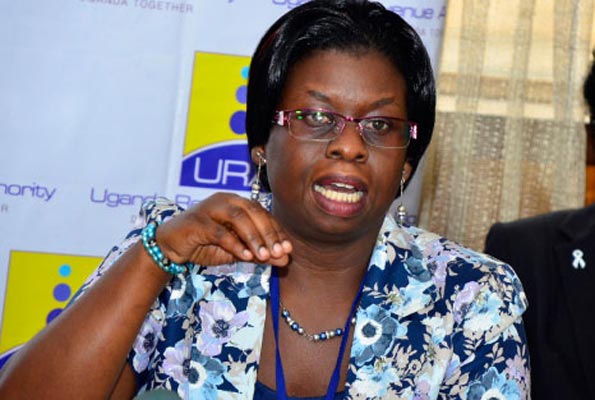
URA Commissioner General, Doris Akol

The Uganda Revenue Authority (URA) in November 2018 collected Shs11.9 billion more when it realised total tax collections of Shs1,264.6 billion against a target of Shs1,252.7 billion, according to the latest Performance of the Economy Report.

According to the report published by the Ministry of Finance, the higher than anticipated tax revenue collection was mainly due to the performance of direct domestic taxes which was above its target by over Shs47.7 billion, thereby offsetting the shortfall in the other two tax categories of indirect domestic taxes and taxes on international trade.

The report show that both taxes on international trade and indirect domestic taxes were below their targets for the month by 3.8 percent and 5.7 per cent respectively. The taxes on international trade transactions were affected by lower value of dutiable imports than what was projected for the month at the start of the financial year.

Direct domestic taxes, on the other hand, were above their target by 13.8 per cent as PAYE, corporate tax, presumptive tax and withholding tax all performed well during the month.

On the other hand, non-tax revenue collections in November were Shs39.3 billion against a target of Shs35.4 billion, which resulted into a surplus of Shs3.9 billion as government charges, fees and licenses generated more revenue than what had been anticipated.

Meanwhile government received in November received grants worth Shs175.8 billion during the month. This was against the projection of Shs170.2 billion, marking a performance of 103.3 per cent. Of the total grants received during the month, Shs164.1 billion was earmarked towards project support activities while Shs11.7 billion was inform of debt relief.

Expenditure

The report says total government spending during November 2018 was Shs1, 770.0 billion against a program of Shs2,185.9 billion. This translates into 19 per cent lower than the projected expenditure levels for the month, mainly on account of externally financed development expenditure which performed at only 42.8 per cent and thereby offsetting domestically financed development expenditure that was higher than its projected levels by 45.2 per cent.

Government expenditure on recurrent items was 2.3 percent lower than its programed levels, largely on account of a downward revision of interest payments for the period.

Stories Continues after ad

10 ways to build trust and loyalty in your business

Martin Zwilling

By Martin Zwilling

Business trust seems to be in short supply these days. Perhaps it’s because we are reminded daily of scams on the Internet that result from unscrupulous businesses and people. Yet if you run a business, you know things won’t get done, and most customers won’t buy, unless they trust you. Thus, it’s critical to your success that you build a culture of trust in you and your business.

It can be done, as proven by the market leaders, including Google and Amazon. According to current reports, both your employees and your customers have to feel they know you, and you know them, before levels of trust can accrue. In other words, it’s all about perceived relationships and actions. In my role as a business advisor and investor, I see this proven over and over again.

Most business leaders intuitively understand this, but many are not so clear on the specific actions and programs they need to initiate to build a trust culture in their business, and have it projected outward to potential customers. Thus I offer the following prioritized initiatives from my own experience to get you started:

Make sure everyone knows the business, good and bad. As I said in the beginning, people don’t trust what they don’t know, so make sure you communicate personally to the whole team, and to customers, your companies’ vision, goals, and challenges. Hiding in the corner office, or sharing only good news, does not build a culture of trust and support.

Be the role model for trust and consistency in your actions. The most effective business leaders today build trusting cultures by being visible, competent, and approachable, in the office and in the community. They are clearly in charge, but they don’t hide challenges, and are honest and vulnerable when dealing with all constituents.

Commit to a “higher purpose” that everyone can relate too. Find a social or environmental issue where you, your team, and your customers can make an impact as part of your business. Keys to this would be something that matches your values, and could benefit from your strengths. Make sure your team and your customers have a role.

Set high but rational team expectations, and follow through. People respond best when they know what needs to be done, and feel challenged, but not broken, by delivery expectations. Follow-through means paying attention to who is contributing, and fixing problems in a timely fashion when expectations are not being met.

Build real relationships with employees and customers. For employees, showing empathy and respect for their ideas and challenges is key. For customers that you encounter, it means listening to their needs, and being supportive of special needs and situations, exceeding their expectations, and showing appreciation for their business.

Empower teams to build their own work processes. Key to any trust culture is a feeling of control of your own destiny. That means providing the tools and resources to do the job, without defining and micro-managing the exact process. Your role is to provide mentoring and support as required. It also means listening and following-up on feedback.

Recognize and reward individual key contributions. The most effective individual recognition is timely positive feedback from you to them, in front of their peers, for going beyond the call and excellence. Annual bonuses tied to production metrics are nice, but these will not generate the long-term trust and loyalty you need to set the culture.

Provide training and mentoring directed at career growth. Employees need to see career growth and investment in the people around them, and feel all have access to the training and guidance to get the same opportunities. Everyone prefers informal feedback on their own performance daily, rather than be dependent only on a formal annual review.

Focus on the whole employee and customer experience. With employees, the whole experience might include providing access to food and relaxation at work, or the opportunity to work from home. For customers, the buying experience goes well beyond support after the sale, to include product selection, web site layout, and feedback.

Enable employee or customer shared ownership. Several reliable reports indicate that, on average, employee-owned firms perform substantially better, and have a stronger trust culture. The same is true of consumer co-operatives, owned by customers and managed democratically with trust, aimed at fulfilling the needs of their members.

With these initiatives, you too can build a culture of trust with your employees, and with your customers. But be aware – trust is like the stock market. It’s hard work to get it to go up, and it can come down overnight if you make one wrong step. Thus, I recommend that you seek to get it right the first time and keep it there. Very few businesses get a second chance to be trusted.

The writer is a veteran startup mentor, executive, blogger, author, tech professional, professor, and investor. Published on Forbes, Entrepreneur, Inc, Huffington Post.

Stories Continues after ad

Somalia seeks to invest in Comesa region

Mr Ahmed Abdirahman Sheikh Nur with Comesa Secretary General Ms Chileshe Kapwepwe

The Charge d’Affaires at the Embassy of Somalia in Lusaka, Mr Ahmed Abdirahman Sheikh Nur has revealed that his country is looking for areas to invest in within the COMESA region.

Ahmed said this in Lusaka when he paid a courtesy call on Secretary General Ms Chileshe Kapwepwe at the COMESA Secretariat. The two-discussed regional integration and possible areas of investments that Somalia can venture into within the region.

Some of the areas of interest mentioned by Ahmed are Livestock, Fisheries and Infrastructure development. He indicated that Somalia has over 50 million heads of cattle and therefore stands to contribute greatly to the leather sector in the region and beyond.

“As we get readmitted to the Common Market, we wish to invest in various sectors such as fisheries, Infrastructure and Livestock. With over 50 million animals in our country, we are sure we can help boost the livestock sector and help the leather sector,” he said.

While welcoming the diplomat, Secretary General Kapwepwe said she looked forward to Somalia fully completing the re-admission process to the Comesa. She said Comesa is read to provide a platform for Somalia to look for potential investment areas in the various sectors.

The Secretary General indicated that supporting Somalia’s investment portfolios in the region will help spur job creation among the youths and women in the region especially that Comesa is supporting investments which are aligned to value addition to the raw materials.

The Somalia Government will soon appoint a new ambassador to Zambia who will also be the Permanent Representative to Comesa.

Stories Continues after ad

Police seek Cristiano Ronaldo’s DNA in rape case

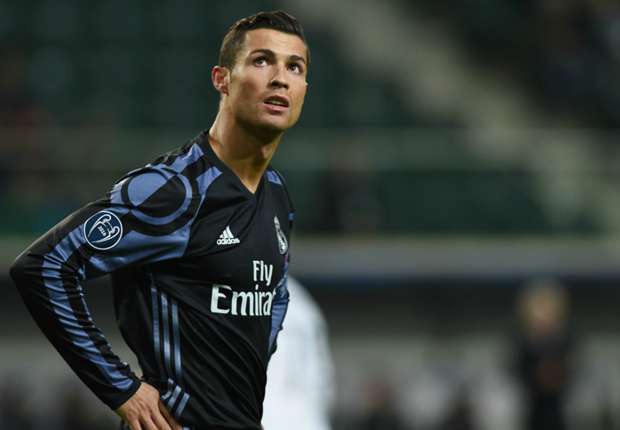
Portuegese International Cristiano Ronaldo.

Las Vegas police investigating a rape allegation against Portuguese soccer star Cristiano Ronaldo have sent a warrant to authorities in Italy requesting a sample of the Portuguese football superstar’s DNA.

“The LVMPD is taking the same steps in this case as in any other sexual assault to facilitate the collection of DNA evidence,” Officer Laura Meltzer said. “We can confirm that an official request has been submitted to Italian authorities.”

The Wall Street Journal reported police sent the warrant to a court in Italy, where Ronaldo plays for famed club Juventus.

The Journal reported investigators want to see whether Ronaldo’s DNA matches DNA found on Kathryn Mayorga’s dress

Mayorga has said in a lawsuit that Ronaldo raped her in a Las Vegas hotel room in 2009 while she repeatedly screamed no. After Mayorga filed suit, police reopened a criminal investigation into the case, which includes results of a medical exam.

“Mr. Ronaldo has always maintained, as he does today, that what occurred in Las Vegas in 2009 was consensual in nature, so it is not surprising that DNA would be present, nor that the police would make this very standard request as part of their investigation,” Ronaldo’s attorney Peter S. Christiansen said Thursday.

Mayorga went to police eight years ago

Las Vegas Metropolitan Police Department spokesman Aden Ocampo-Gomez said in October that in 2009 Mayorga made a complaint but did not provide an assailant’s name or the location of the alleged assault.

She wanted only to report a sexual assault and submit to a medical exam, he said.

Investigators did not follow up with Mayorga and the case was closed shortly thereafter, he said. But the evidence, including images and other information from the exam, is still with police. The case was reopened at the request of Mayorga or someone representing her, Ocampo-Gomez said in October.

Las Vegas police did not comment on Thursday.

Mayorga’s lawsuit accuses Ronaldo, 33, and his camp of taking advantage of her fragile emotional state to coerce her into signing a settlement and nondisclosure agreement in 2009. She claims she received US$375,000 in exchange for her silence. Her lawsuit seeks to void the settlement and agreement.

In October, Ronaldo said he was not a rapist.

“I firmly deny the accusations being issued against me,” Ronaldo wrote on Twitter. “Rape is an abominable crime that goes against everything that I am and believe in.

“Keen as I may be to clear my name, I refuse to feed the media spectacle created by people seeking to promote themselves at my expense.

“My clear conscience will thereby allow me to await with tranquility the results of any and all investigations.”

Stories Continues after ad

Uganda tops in hosting Kenyan banks in EAC

Equity Bank

Uganda still remained the home of highest number of branches of Kenyan domiciled commercial banks, according to Oxford Business Group. The country accounted for 102 locations at the start of 2018, followed by Tanzania (81) and Rwanda (55).

The report said increased expansion of Kenyan banks to the East African region is expected in 2019 which would possibly lead to increased performance.

At the start of 2018, nine Kenyan banks operated a total of 306 subsidiaries in EAC up from 297 a year earlier, the report adds.

Equity Bank led in the region with 104 locations in five countries. Diamond Trust Bank (DTB) operated 70 branches in three countries, while KCB group had 60 branches in five member states.

According to the report, this has boosted Nairobi’s status as an advanced financial centre, helping some of larger banks establish a successful presence in regional markets.

Kenyan bankers said they would expand in 2019 despite a rough operating environment in Tanzania and Uganda that saw a 1.01 per cent decline in profit generated from subsidiaries to Ksh8.79 billion in profits in 2017, down from the Ksh8.88 billion in 2016.

The spread of operations to the region is one the market changes that banks have taken for growth away from the challenges posed by interest rate framework.

Meanwhile a proposed merger between NIC Bank and Commercial Bank of Africa (CBA), if successful is expected to gain wider market share with a customer base of 38 million.

This would also mean a shift in position for the CBA which has operations in the region with potential to spread into new markets across the continent.

Stories Continues after ad
Tshisekedi named DRC president

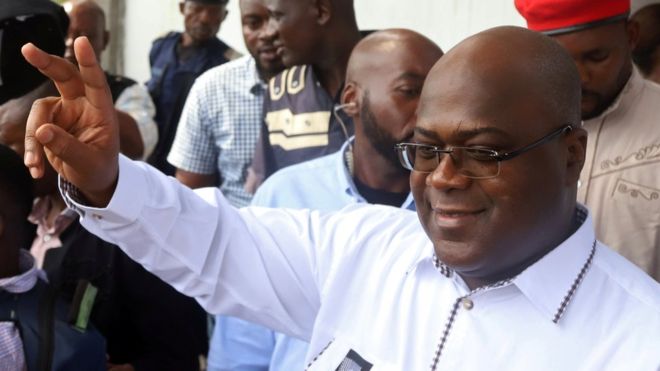
Felix Tshisekedi

Opposition candidate Felix Tshisekedi has won DR Congo’s presidential election, electoral officials say.

The announcement, made overnight, sparked accusations of an “electoral coup” from runner-up Martin Fayulu.

France said the figures did not match results collated on the ground by monitors from the Catholic Church.

The ruling party, whose candidate finished third, has not yet contested the result, sparking accusations of a power-sharing deal with Mr Tshisekedi.

It is an accusation Mr Tshisekedi’s team denies.

If confirmed, Mr Tshisekedi will be the first opposition challenger to win since the DR Congo gained independence in 1960. Current President Joseph Kabila is stepping down after 18 years in office.
The capital Kinshasa and other key cities appeared calm on Thursday, but fears remain that the announcement of the result could trigger unrest. UN chief Antonio Guterres appealed for all parties to refrain from violence.

How was the result announced?
In the early hours of Thursday the head of DR Congo’s National Electoral Commission (Ceni), Corneille Nangaa, said Mr Tshisekedi had received 38.5% of the vote in the 30 December election and had been “provisionally declared the elected president”.

The full results were, with turnout reportedly 48%:

Felix Tshisekedi – 7 million votes
Martin Fayulu – 6.4 million votes
Emmanuel Shadary – 4.4 million votes
The result can still be challenged.

What’s the reaction been?
Mr Tshisekedi vowed to be “the president of all DR Congolese”, saying: “No-one could have imagined such a scenario whereby an opposition candidate would emerge victorious.”

He struck a conciliatory tone with Mr Kabila when addressing supporters at his Union for Democracy and Social Progress party headquarters in Kinshasa.

“I pay tribute to President Joseph Kabila and today we should no longer see him as an adversary, but rather, a partner in democratic change in our country,” he said.

A spokesman for Mr Shadary, who had been Mr Kabila’s hand-picked candidate and was expected to win, accepted the defeat, saying “the Congolese people have chosen and democracy has triumphed”.
Mr Fayulu’s supporters say this backs their suspicion Mr Tshisekedi has cut a power-sharing deal with Mr Kabila. Mr Tshisekedi’s spokesman, Louis d’Or Ngalamulume, said there was “never any deal”.

The BBC’s Africa editor, Fergal Keane, says Mr Tshisekedi is seen by many as the opposition candidate least objectionable to President Kabila and that it is perhaps significant that neither Mr Kabila nor his party have so far voiced any objection to the result.

Mr Fayulu, a former oil tycoon, said the results had “nothing to do with the truth”.

“The Congolese people will never accept such a fraud,” he told the BBC, adding: “Felix Tshisekedi never got 7 million votes. Where did he get them from?”

He said the electoral commission and ruling party had made up the figures to give Mr Tshisekedi – their “protégé” – victory.

French Foreign Minister Yves Le Drian told CNews: “We must have clarity on these results, which are the opposite to what we expected.”

He said the influential Catholic Church, which had 40,000 observers at the election, had found “completely different” results.

The Church warned during polling at the end of last month that there had been irregularities. However, it has not yet publicly commented on the result.

Former colonial power Belgium has expressed its doubts about the result.

Uncertain future
Analysis by Fergal Keane, BBC News, in Kinshasa

Given the deeply polarised nature of politics here, any result was going to leave a divisive aftermath.

Whether Mr Tshisekedi has the intention or the capacity to challenge the powerful hold Mr Kabila enjoys over the army, security services and key ministries will determine whether politics has really entered a new era. He has already spoken of working with Mr Kabila to ensure the success of democracy.

For Mr Fayulu there are difficulties, too. How does he decide to react?

The most likely route for the moment is to try to challenge the result within the 10-day period parties are allowed under the law. Given the closeness of the vote, his supporters will point to claims of irregularities in several areas.

Significantly the Church and civil society have called on citizens to avoid becoming involved in violence – a recognition of the dangers involved in street protests while facing security forces with a reputation for heavy-handedness.

Stories Continues after ad

Mak set to establish institute of geoscience and petroleum

January 7, 2019, Makerere University together with the China University of Petroleum (UPC) signed an agreement to co-establish and operationalize the Institute of Geoscience and Petroleum at Makerere University. The agreement was signed by the Vice Chancellor Prof Barnabas Nawangwe and the Vice President of China University of Petroleum Prof. Jun Yao on behalf of the two universities respectively. The two parties agreed to develop and implement;

1. A curriculum System Construction and Development Plan for both undergraduate and postgraduate-level students of petroleum engineering programs including short professional development courses

2. Teaching – staff training and upgrading plan

3. Students Joint Education Designing and Implementation plan

4. Textbooks compiling and development plan

5. Teaching infrastructure and equipment building plan

6. Internship base establishment and development plan and China University of Petroleum Training Centre Expansion Plan

7. Joint International Lab Establishment and Development Plan

8. Research Capacity Building and Upgrading Plan

9. Academic Exchange Implementation Plan

The agreement activates the Memorandum of Understanding (MoU) that was signed on 19th December 2017 by the two universities to establish the institute of Geosciences and Petroleum. According to Prof. Barnabas Nawangwe, Makerere University is ready to engage in research and build capacity in the area of oil and gas in Uganda and the region.

“We are all aware that Uganda and the nearby countries are exploring oil and they are on the stage of production however, we are facing immense challenges of lack of qualified manpower and expertise in the petroleum industry. Therefore, establishing the Institute of Geosciences and Petroleum at Makerere University will be an open opportunity to carry out research and build capacity in this area,” said the Vice Chancellor.

Prof. Nawangwe commended UPC for its expertise in preparing qualified engineers and technical service personnel for global oil industry through its education and research. “We are happy that you accepted to share with Makerere University your knowledge and experience in geoscience and petroleum,” he said. He thanked the Government of Uganda for working hand in hand with Makerere University to bridge the knowledge gap that exist in the gas and oil sector.

In 2009, Makerere University introduced the Bachelor of Science Programme in Petroleum Geosciences and Production to bridge the knowledge gap that exists in the oil and gas sector in Uganda. The course aims at training Petroleum Geoscientists who can contribute effectively to programmes of exploration and development of petroleum resources.

“At the end of the training, we expect our students to be able to identify the key geological features associated with petroleum resources in the context of their discovery and economic viability; execute and interpret information from remote sensing, geological, geophysical and geochemical data during petroleum exploration; apply geological, geophysical and geochemical knowledge in the development of petroleum resources among others,” he said.

“Petroleum resources have been discovered in the region, in Uganda and Sudan in particular whereas gas has been discovered in the Songo Songo Island and Mnazi Bay in Tanzania. There is little experience in the area of petroleum geoscience and production in Uganda and the region as a whole. There is therefore a need to train local human resource in the development and sustainability of the petroleum industry,” added the Vice Chancellor.

In his remarks, Prof. Jun Yao commended Makerere University for the tremendous research that is carried out in the area of Science, Technology, Engineering and Mathematics (STEM). He looked forward for a successful implementation and operational journey of the establishment of the Institute of Geosciences and Petroleum at Makerere University.

On December 9, 2017 MoU was signed by Prof. Barnabas Nawangwe and the Vice President of China University of Petroleum, Qingdao (UPC) – Prof. Liu Huadong. The MoU stipulated that the universities agreed to jointly apply for funding from international funding agencies to support establishment of state of the art petroleum engineering labs at China University of Petroleum and Makerere University. This fits in well with the appointment of Makerere University as the Centre of Excellence for petroleum and minerals by the Northern Corridor States.

Prof. Jun Yao was accompanied by eight delegates from UPC who proceeded to tour some of the labs at the College of Agricultural and Environmental Sciences (CAES) and College of Engineering, Design, Art and Technology (CEDAT).

Stories Continues after ad
Ugandan gov’t still in talks over construction of SGR

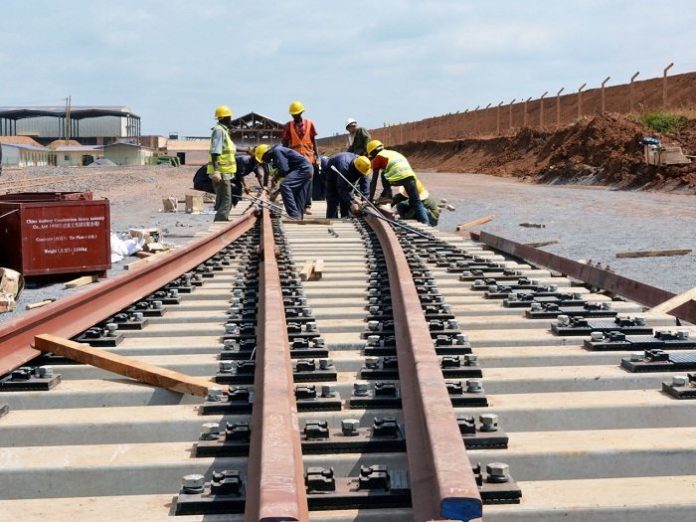
Workers on rail line

The Ugandan government is still in talks with Kenya and the Export-Import Bank of China over the construction of the Standard Gauge Railway (SGR), according to Minister of Finance Matia Kasaija.

One of the major concerns by the financier was whether Kenya would extend its railway to the border with Uganda so that the lines would join, Kasaija told reporters. Kenya is in the process of compensating land owners so as to embark on the line to Naivasha, which is its second phase.

Matia said Uganda had received assurances from Kenya that it would extend the line and the decision has been conveyed to China Exim Bank.

Uganda has started compensating locals who live on the land where the SGR will pass, the minister said.

Last October, Uganda received a 21.5 million euro grant from the European Union to rehabilitate the 375-km railway line from the eastern border town Tororo to the northern district of Gulu.

The planned SGR with an entire length of 1,724 kilometers will consist of four major sections: Malaba-Kampala section, Tororo-Gugu section, Kampala-Mpondwe section, Bihanga-mirama Hills section.

When the SGR is completed, it will link Uganda with neighboring countries of Kenya, Rwanda, the Democratic Republic of Congo and South Sudan.

Stories Continues after ad