Stanbic Bank
Stanbic Bank
18.2 C
Kampala
Stanbic Bank
Stanbic Bank
Home Blog Page 1401

Court orders UPDF to produce Gen.Kayihura’s aide

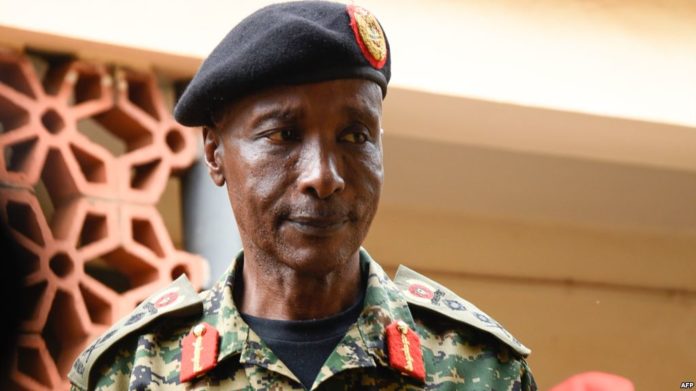
Gem. Kale Kayihura

By Our Reporter

The Civil Division of the High Court in Kampala has ordered the Uganda People’s Defence Forces (UPDF) to produce Enock Buntu National Youth Treasurer for the National Resistance Movement (NRM) and also a former aide to former Inspector General of Police, Gen Kale Kayihura.

Enock Buntu, reportedly went missing on July 9 after he was picked from his home in Mbalwa zone, Namugongo in Wakiso district forcing his brother to petition court over his disappearance.

On Wednesday, Justice Lydia Mugambe issued a habeas corpus in which she ordered the army through the Chief of Defence Forces and the Attorney General to produce Mr.Buntu.

“It is hereby ordered that a writ of habeas corpus is issued to the Chief of Defence Forces to have the body of Enock Buntu produced before Justice Lydia Mugambe at Civil Division of the High Court on the 22nd day of January 2019 to show cause why he should not be released,” the order reads in part.

In August, Bantu’s family members said a group of seven armed men picked Buntu at around 5 am having ordered him to hand over his phones. They also searched his house before driving off with him to an unknown place.

In their habeas corpus application, Buntu’s family said they later learnt that he was incarcerated at the Makindye Military barracks where he is still detained on allegations of being found in possession of a fire arm.

“Since his arrest, Buntu’s relatives have made necessary efforts to have him released on police bond but all efforts have not successful without any lawful justification,” said John Agaba in his habeas corpus application received by the court on October 25.

UPDF is still detaining at least six police officers and one soldier who were said to be close associates of former Inspector General of Police, Gen Kale Kayihura, for half a year without trial and for unknown offences.

The officers are Lt. Col. Peter Musherure, ACP Herbert Muhangi (former Flying Squad Unit commander), SSP Richard Ndaboine (former head of Police Cyber Crime Unit), AIP Jonas Ayebaze, Sgt Abel Tumukunde (an operative in the disbanded Special Operations Unit) and Judas Tadeo, a driver of ACP Jonathan Baroza, who was the personal assistant to Gen Kayihura.
They were arrested between June 11 and 13 this year. Only Col Ndahura Atwooki, the former director of police crime intelligence, was arraigned and charged in a military court.

Relatives of the detained officers said they don’t know where their relatives are or the offences against them. UPDF says investigations against the officers are not yet complete.

In August, Gen Kayihura was also arrested and charged in the General Court Martial with two counts of failing to protect war materials contrary to section 122(1) (2) (d) of the UPDF Act and aiding the kidnap and repatriation of Rwandan nationals. He was later granted bail by the same court.

Stories Continues after ad

Isabel dos Santos and the economic empowerment of African women

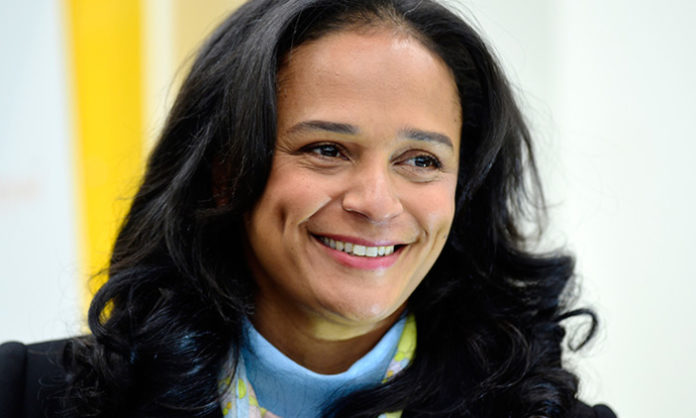
Isabel dos Santos

By Haley Thompson

At a United Nations debate in New York, Isabel dos Santos, who is currently the richest woman in Africa spoke of the economic empowerment of African women as a key to transforming society. This and many of her other hopeful and encouraging messages have inspired many citizens in African countries, mainly young women, to pursue their ambitions in business.

Dos Santos believes that some of the most promising and successful businesspeople in the world have been African because of the continent’s entrepreneurial spirit. This spirit, however, has been weighed down by the stigmatization of women in the workplace. This has robbed the economy of valuable innovators and has barred women from achieving their ambitions. But by ensuring that young women can access the same education, job opportunities, and potential for growth as men, dos Santos believes that she can change this attitude and instill a national confidence in women.

This type of thinking falls in line with her more general philosophy of reform: “First the seed, then the future.” This dictum seems to urge against immediate change and, instead, encourages slow and steady growth. The seeds that Isabel dos Santos thinks ought to be planted are also tied up in the economic freedom of women – by creating jobs, providing training, and breaking sexist stigmas, she believes that women can experience increased financial stability while giving their home countries more influence in the international economy.

Dos Santos’ Vision of an Entrepreneurial Africa

Isabel Dos Santos has spent a lot of time planting these seeds in Africa, focusing her efforts in her home country of Angola where she meets with young people and speaks with them about the power of entrepreneurship. Sometimes, she visits them in small, personable rooms at universities and other institutions, other times in much larger ones during her speeches and debates. Most tellingly, she refers to famous African entrepreneurs as a “great family” and invites everyone with the motivation to work hard and come join them.

She often encourages young women to leverage the world’s increased reliance on technology and artificial intelligence, which she refers to as “digitalization”. She believes working toward innovations in technology is key to increasing Africa’s presence in the international economy while flooding the continent with unique employment opportunities. With just a computer and internet connection, unemployed or underpaid citizens can find more work, sometimes with the higher wages that are more commonplace in developed countries, to support their families and stimulate their local economies.

During a conversation with students at the University of Warwick interested in developing Africa, dos Santos tells a young woman who is eager to accomplish her ambitions “now” that she has to be patient and have not just a goal but a string of subgoals to reach it. She goes on to encourages the student to involve herself as deeply as she can in the decision processes that influence that goal, and also to understand that sometimes it’s important to just focus on school, other times on a career or starting a business. This type of advice for strategic hesitance can be found in many of her speeches.

Isabel dos Santos is the daughter of Jose Eduardo dos Santos, Angola’s long-time former president. Much of her wealth came from her investments and her previous position as the chairwoman of an oil company owned by the state called Sonangol. Dos Santos considers herself an independent businesswoman and investor and has become Africa’s first female billionaire. Forbes ranks her as the 9thwealthiest billionaire in Africa for 2018.

A Beacon of Hope in a Male-Dominated Market

For young businesswomen in various African countries, her success story has been a beacon of hope. But dos Santos has told various reporters that her rise to riches was marred by the sexism she had to endure in a male-dominated African business world. She has no shortage of stories concerning prejudice and discrimination based on her gender, such as during business meetings where the people she’s negotiating with would look to her male assistant, advisor, or lawyer for validation though she already stated her offer. She is also frequently asked what business her husband is in when her wealth is made clear.

Despite her tribulations in the business world, Isabel dos Santos has maintained a charitable and hopeful perspective on life and takes on many projects geared toward improving small communities and local economies. One of these projects was in Humpata, in the province of Huila, where dos Santos helped establish a strawberry field, “planting the seed” to empower citizens. This project gave 120 women a place to work and a new income. On her website, dos Santos says:

“Creating opportunities and employment for women means betting on the progress of the communities themselves. When they thrive, women invest their income in the family, health, and education. I value this as a sense of duty, commitment, and dedication. The impact that women create around them is powerful and transformative.”

She calls on other African entrepreneurs to give back to their countries by investing in similar projects. Though they seem small-scale, she believes that with enough support, this type of philanthropic work can create a value chain large enough to impact the national economy. As a result, smaller communities will have more prosperous citizens and influence. Should those new entrepreneurs be African women, then dos Santos hopes that their success will help chip away at the stigma that women are less competent than men.

This is all part of one of Isabel dos Santos’ larger goals to increase the prosperity of African countries as a whole. She plans to accomplish this by working from the ground up, focusing on the individual, such as the promising young men and woman of various African countries. By empowering them, she is, in turn, empowering their communities. This creates value within towns that have historically not had the chance to prosper, and by strengthening local economies, the national economy itself is bolstered.

“This is the true transformation of a country,” she says. It starts with a little hope and promise, with planting the “seeds”, and then, through the hard work of a community’s individuals, a brighter future can be earned.”

Stories Continues after ad

MPs ask Auditor General to audit BoU over Shs478b spent on Crane Bank Limited

The ground can no longer hold for BoU officials.

Parliament’s committee on Commissions Statutory Authorities and State Enterprises (Cosase) has directed that the Auditor General John Muwanga carry out a special audit on how BoU spent Shs478.8 billion on Crane Bank Limited (CBL) as liquidity support and other intervention costs.

The directive followed the failure by BoU officials to explain how the money was spent. The officials failed to present convincing documents showing how exactly the money was used as it took over the management of CBL between October 2016 and January 2017.

BoU closed Crane Bank on account of being insolvent. It would later sell its assets to Dfcu Bank at Shs200 billion, paid in installments. Dfcu Bank has paid about Shs98 billion of that money.

The committee has been probing BoU for almost a month over the closure and sale of seven commercial banks. The MPs on the committee are using the Auditor General’s report revealed irregularities in the sale of the banks-CBL, Global Trust Bank, Greenland Bank, International Credit Bank, Cooperative Bank, National Bank of Commerce and Teefe Trust Bank.

BoU officials days ago were not on the same page when asked how much undercapitalised Crane Bank was before they took a decision to shut it down. Governor Tumusiime Mutebile admitted he didn’t have the right figure while Ben Ssekabira, the Director Financial Markets Coordination, said it was Shs157 billion

Of the Shs478.8 billion Shs12.20 billion was paid to the providers of legal services, IT services, surveyors’ services among others. However there is Shs 720,406 billion spent on ‘special exercise (CBL). BoU claims Shs 4.8 billion was used to pay terminal benefits of former CBL workers.

Cosase Chairman Abdu Katuntu said BoU should say where the money came from and whether it was properly utilized. He said the documentation so far provided by BoU staff make no sense in as far as accountability and transparency are concerned. “Was this money utilized properly? This is the query here,” he said. “Where did this money come from?” He asked.

Documentations for purposes of verifying. What we got were names schedules and figures.

Katuntu also said his committee want to know whether the Shs478.8 billion was required given that CBL only needed Shs157 billion to stabilise its operations. “Was that money actually required? Did that money pay the customers?” He asked

The BoU deputy governor Dr. Louis Kasekende said the institution welcomed the special audit of Shs478.8 billion.

Stories Continues after ad
Uganda stagnant in latest FIFA rankings

Uganda-Cranes

The FIFA monthly rankings of December 2018 have been released today by the world football governing body.

Uganda Cranes will end the year placed at 75, maintaining their position from last month and 16 on the continent.

Neighbours Kenya also remained at 105, while Uganda’s next 2019 Afcon qualifiers opponent Tanzania also remained at 138, Burundi came at 139 and Rwanda at 137.

The top five countries in Africa are; Senegal (23), Tunisia (26), Morocco (40), Nigeria (44) and Congo DR (49).

Belgium will begin 2019 at the top of the FIFA/Coca-Cola World Ranking, having preserved their single-point lead over France at the table’s summit and emerged as the Ranking’s ‘Team of the Year’.

Brazil (3rd, unchanged), Croatia in fourth and England complete the best five countries in the world.

The month’s biggest movers are Guyana (177th, up 3) whose CONCACAF Nations League qualifier draw against Barbados in September was recently reclassified as a forfeit win due to the Barbadians fielding two ineligible players.

Barbados was the worst mover, dropping by 3 places to position 162.

Europe accounts for 31 of the top 50 teams – two up from December 2017. Asia has also boosted its top-50 numbers from two to three, with these rises coming at the expense of Africa, which saw its representation drop from eight to five.

The next FIFA/Coca-Cola World Ranking will be published on 7th February 2019.

Stories Continues after ad

Unity FM reopened after one month of shutdown

Unity FM radio based in Lira has been re-opened under stringent conditions after one month of closure. The radio was closed down on November 17, 2018 on allegations of inciting violence.

The Unity FM Manager, Sam Atul said the re-opening was associated with very tough and stringent conditions. “…the radio has been re-opened but the conditions are tough. They have suspended five of our staff from presenting any programme for three months, they have also suspended the program titled Yab Wangi. They ordered us to pay a fine of 10 million shillings and reconnection fee of two million shillings, our license has been suspended for six months as well,” said Atul.

In a letter written to the Managing Director of Unity FM dated 17th December 2018, the Uganda Communications Commission (UCC) handed out more conditions to the effect that, “Unity FM shall sign an undertaking not to air content that contravenes the minimum broadcasting standards, Unity FM shall install pre-listening devices, Unity FM’s license shall be put under probation for a period of six months and Unity FM shall suspend the program Yab wangi plus suspending three persons from presenting any programme on Unity FM for a period of three months.”

On November 17, 2018, the then District Police Commander of Lira district Joel, Tubanone ordered for the closure of Unity FM and arrested six (6) Unity FM journalists and two other clients who were found at the station for business. The arrest was allegedly on the orders of the Resident District Commissioner (RDC) Milton Odong for allegedly inciting violence.

Those arrested were Charles Odongo –a technical director, Kenneth Opio -Assistant station manager, Felix Ogwang –a presenter, Moses Alwala -news reporter, Micheal Ogwal -news anchor, Aron Ebwola -producer and Okello Emmanuel Zumulamai and Junior Engola both clients who had brought business to the radio.

The six Unity FM staff were however charged with inciting violence and released on 19th November 2018, have continued reporting to Lira Central Police Station on a weekly basis.

“It is good that Unity FM has finally been reopened. It is however disappointing that the DPC and RDC arbitrarily close down a media house without following the due process of the law, closure of media houses is outside of their sole mandate. Further, the conditions laid down by UCC are so harsh only intended to curtail freedom of expression. Such inhibitive actions against the media house should be challenged in the courts of law,” said the Executive Director of HRNJ-Uganda, Robert Ssempala.

Stories Continues after ad

Don’t despair while building a sustainable business

Martin Zwilling

By Martin Zwilling

Entrepreneurs seem more quickly frustrated these days when their “million-dollar idea” doesn’t turn into a sustainable business overnight. They don’t realize that it takes many skills to build a business under the best of circumstances, and today’s world of instant gratification doesn’t leave room for the patience and practice to develop these skills.

Successful sports figures and musicians have long understood the value of time and practice in perfecting their skills. So why do entrepreneurs think that building a business is intuitively obvious, and should happen overnight? Building a business is a complex task, like building the product or service, and requires the same focus, discipline, and practice to get it right. Even the revered Steve Jobs of Apple didn’t get it all right the first time.

In his classic book, “The Practicing Mind,” Thomas M. Sterner outlines how people learn the necessary skills for any aspect of life, from golfing to business. He emphasizes the importance of a practicing mindset, and provides some clues on how to offset our modern culture of habitual multitasking, short attention spans, and giving up quickly in the face of any setback.

He believes, and I agree, that creating the practicing mind, and acquiring any skill, without stress and futility, comes down to following a few simple disciplines:

Keeping yourself process-oriented. As entrepreneurs, we have a very unhealthy habit of making the product or service the focus, instead of the process of “changing the world,” which was the big vision in the first place. When you focus on the process, and see progress and learning with each small step, all pressure drops away.

Staying in the present. In business, the world of customers and competitors changes every minute, so you learn by iterating and listening, taking all feedback as positive progress, rather than delays and mistakes. Don’t lose touch with your original dream, but fixating on the “final” solution is not productive or satisfying.

Making the learning process your goal. Use the original dream as a rudder to steer your efforts. Success in business comes to those who learn most quickly, and adapt their processes most effectively. Don’t get caught up in achieving the exact product or service of your entrepreneurial dream, because it’s almost always wrong anyway.

Being deliberate, and keep a clear picture of your destination. A random walk does not lead to business success. Deliberate intention is focused on a destination, but realizing that every step need not be predicted. Being deliberate is making each iteration land nearer to the destination, focusing on positive thoughts and positive actions.

Most of the anxiety that entrepreneurs experience comes from the feeling that there is an end-point of perfection in every product and business. The reality is that there is no ultimate product or business, since each improvement or business growth increment brings a whole new set of challenges, requiring more learning, more practice, and more skills.

Practice is required to replace bad and unproductive habits, like too much multitasking, with desirable habits, like solving important challenges more often than the crisis of the moment. Building new good habits is important, since they allow you to do required things effortlessly and without overt planning each time.

Even this is a process that must be practiced. First you have to be self-aware, and decide on what you want to be a habit. Then set up triggers to help you remember the action and the time, and finally make sure you have clear motivation for the action. Practice is the required repetition on this action with patience, until it’s effective and automatic.

Entrepreneurs should not be afraid to use the terms failure and practice interchangeably, since investors usually conclude that startups learn more from failure than from success. Obviously, it’s to your advantage to make your practice steps small ones in time and cost. Successful professionals actually enjoy honing their skills through practice. Are you having fun yet?

The writer is a veteran startup mentor, executive, blogger, author, tech professional, professor, and investor. Published on Forbes, Entrepreneur, Inc, Huffington Post.

Stories Continues after ad

China may take Mombasa port over Sh227bn SGR debt

Mombasa port

Kenya could lose the port of Mombasa to the Chinese government if Kenya Railways Corporation (KRC) defaults in the payment of Sh227 billion owed to Exim Bank of China.

The government borrowed the billions to construct the Mombasa-Nairobi standard gauge railway (SGR), against opposition that the project by China Roads and Bridges Corporation (CRBC), a Chinese State-owned company, could become a white elephant. The country’s sovereignty is now at stake.

THE DEAL

A report by Auditor-General Edward Ouko states that the payment agreement substantively means the revenue of the Kenya Ports Authority would be used to clear the debt.

This is if the minimum volumes required for consignments are not met.

The audit shows that KPA’s revenue was Sh42.7 billion as at June 30, 2018, a 7.9 percent increase from the Sh39.6 billion recorded the previous year.

Related Content
China plans to sell off its African debt
Chinese loans don’t bother me, Uhuru tells CNN
EA now owes China $29.4 billion in infrastructure loans
Trump plots to checkmate China in Africa
“Exim Bank would become a principal over KPA if KRC defaults in its obligations and the Chinese bank exercises power over the escrow account security,” states a management letter sent to the KPA, that Mr FT Kimani signed on behalf of Mr Ouko.

The letter says, “KPA assets are exposed since the authority signed the agreement in which it has been referred to as a borrower under clause 17.5.”

It adds, “Any proceedings against its assets by the lender would not be protected by sovereign immunity since the government waived the immunity on the KPA assets by signing the agreement.”

BIAS

The auditor notes that the agreement is biased since any non-performance or dispute with the bank would be referred to arbitration in China, “whose fairness is resolving the disagreement may not be guaranteed”.

Mr Ouko accuses the KPA management of not disclosing the guarantee documents in its financial statements.

Despite the danger of losing the lucrative port, he recommends that the authority discloses pertinent issues and risks related to the guarantee in the statements.

The KPA is also required to confirm in the management representation letter that its assets are not a floating charge to the government of Kenya loan.

PRECEDENT

In December 2017, the Sri Lankan government lost its Hambantota port to China for a lease period of 99 years after failing to show commitment in the payment of billions of dollars in loans.

The transfer, according to the New York Times, gave China control of the territory just a few hundred miles off the shores of rival India.

It is a strategic foothold along a critical commercial and military waterway.

“The case is one of the examples of China’s ambitious use of loans and aid to gain influence around the world and of its willingness to play hardball to collect,” says the New York Times of December 12, 2017.

In September 2018, Zambia lost its international airport to China over debt repayment.

Stories Continues after ad

Citizen wants Sam Kutesa to resign as Minister of Foreign Affairs

Minister Sam Kutesa

A Ugandan citizen, a one Brian Atuheire has lodged a case in the high court, pleading that the Minister of Foreign Affairs Sam Kutesa vacates office, reasoning that the US$500,000 he received from the Chinese businessman Patrick Ho was a bribe that makes the minister unfit to hold any public office.

Mr. Atuheire lodged the case Kutesa and the Attorney General on December 18, 2018.

Mr. Atuheire wants the Attorney General through the Director of Public Prosecutions to commence investigations against the wealthy minister.

Kutesa is said to have received the money from Ho to help him secure business dealings in railway services, infrastructure construction, fishing, hydro energy, banking and finance for the Chinese conglomerate CEFC (China Energy Co.).

Mr. Atuheire says Kutesa received the bribe paid via wire transfer from HSBC Bank in Hong Kong (China) through an intermediary HSBC, Deutsche Bank in New York (USA) to Stanbic Bank in Uganda on May 6, 2016.

Atuheire contends that How was found guilty after trial before the United States (US) District Judge Lorreta A Preska in the southern district of New York of one count of conspiring to violate the foreign corrupt (practices Act (FCPA) four counts of violating the FCPA, one count of conspiring to commit international money laundering and one count of committing international money laundering.

He argues that President Museveni on December 10, 2018 admitted that Kutesa received the money. Museveni said Kutesa told him the money was meant for a charity.

Stories Continues after ad

You have tainted image of Makerere University – MUASA accuse former council members

Thomas Tayembwa and Bruce Balaba, the two long council members have been singled out MUASA as longest serving and are not eligible for new term at Makerere University Council.

Makerere University Academic Staff Association (MUASA) have accused three former members of the university council of tainting the image of the institution. The members accused are; Thomas Tayebwa, Bruce Balaba Kabaasa and Eng. Dr. Wana-Etyem.

In a letter dated December 19, 2018, Dr. Michael Walimbwa (General Secretary) and Dr. Deus Kamunyu Muhwezi (Chairman), on behalf of the association, warned authorities not to include the three names mentioned above on the new University Council, saying that a vote of no confidence was passed against them and others in August.

Dr. Walimbwa and Dr. Kamunyu say they have received information on secret plans to include Mr. Tayebwa, Mr. Balaba and Dr. Wana-Etyem on the new University Council and as such, they have warned that should that happen members of MUASA will be forced to lay down their tools.

“We would like to warn that should the aforementioned persons be smuggled back to council through “the public window”, MUASA will have no option but to lay down tools until the persons are removed from council,” the letter addressed to the Secretary Makerere University Council reads in part.

They say MUASA General Assembly sitting on August 10, 2018, passed a vote of no confidence in the previous Council, and also resolved that members who served on the council for a period of eight years should not be returned to the new University Council.

“We are aware that there are ongoing clandestine movements to bring back to the incoming council the following people (Tayebwa, Balaba and Wana-Etyem) who have not only overstayed on the Council but have also tainted the image of the university,” reads the letter in part.

They also referred those who want to include the unwanted three names on the Council to the Rwendeire Committee Report which said that members who had overstayed on the are partly responsible for the bad governance of the university.

Stories Continues after ad

Buganda partners with Guoji Corporation to build affordable houses

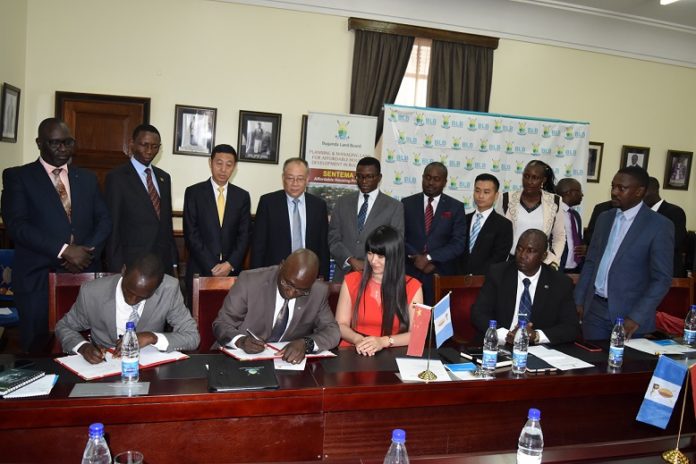
Buganda Kingdom through Buganda Land Board, has signed a Memorandum of Understanding with Guoji Corporation, a Chinese construction Company to build affordable houses at Sentema Busiro for low income earners.

Witnessing the signing ceremony at Bulange Mengo, Katikkiro Charles Peter Mayiga called on the people of Buganda to utilize the availed chance to get houses which range in their earnings.

According to Katikkiro, a one bedroomed house will cost Shs 37 million ($10,000), two bedroomed Shs 72 million ($20,000) and the three bedroomed houses will cost about Shs 107 million ($30,000).

Mayiga assured safety to all squarters on Kabaka land saying no one will evicted as being spread by rumormongers, “Buganda has a big chunk of land which is free of squarters where the project is going to be established,” he said at Mengo.

The project will commence next year and Mr. LI Gang the party committee secretary Director, China Development Bank has assured the Kingdom leadership that by the end of 2019 the first phase of the project will be done.

The CEO of Buganda Land Board, Kyewalabye Male signed on behalf of the Kingdom whereas Mrs. Wendy signed for Guoji corporations.

Stories Continues after ad